

Umashankar Subramanya
1.1K posts

Umashankar Subramanya
@Ashtavkra
Lazy, Retired, Interested in Wildlife, Curious about India- that is Bharat. Views are personal; RTs are no endorsement.
Katılım Haziran 2023
120 Takip Edilen20 Takipçiler


Umashankar Subramanya retweetledi

Umashankar Subramanya retweetledi
Did you know that the U.S. defaulted on its sovereign obligations in 1971 when it unilaterally reneged on dollar-gold convertibility.
Russia defaulted in 1998 and 2022.
Argentina: 9 times since independence.
Pakistan: required IMF bailouts 23 times.
Greece defaulted in 2012.
And India? Zero defaults. Not even in 1991!
Yet Western investors classify India as "emerging risk" and call U.S. Treasuries the "risk-free rate."
This isn't risk analysis. This is cognitive bias a la Daniel Kahneman's book "Thinking, Fast and Slow". Humans systematically overweight culturally proximate information while underweighting statistical patterns that don't fit our mental models.
Western strategic planners trust Western partners not because the data supports it, but because the cultural markers feel familiar.
Three facts that challenge everything about how we assess partnership risk:
FACT 1: Across 5,000 years of recorded history, India has rarely waged wars of territorial conquest. Not in 3000 BCE when the Indus Valley Civilization had technological superiority. Not in 1000 CE when Indian mathematics and metallurgy exceeded Europe by centuries. Not in 2026 when it possesses nuclear weapons and the world's 4th-largest military. Not in 2047 when it projects to be a top-two economy.
Compare: China (annexed Tibet 1950, 14 territorial disputes, South China Sea expansion). Russia (Georgia 2008, Crimea 2014, Ukraine 2022). Europe (500 years of colonial conquest across three continents). U.S. (military interventions in 20+ countries since 1945).
This pattern is observable strategic behavior anchored in the Arthashastra, Kautilya's 2,300-year-old treatise arguing that short-term territorial expansion undermines the systemic conditions for sustained prosperity. The concept of "mandala" (circle of states) recognizes that each power's long-term interest depends on system equilibrium.
FACT 2: India has never defaulted on debt, treaties, or security guarantees since independence in 1947. The most revealing test: 1991 balance of payments crisis. Reserves fell to $1.2 billion = just three weeks of imports. Default appeared certain. Instead, India implemented painful reforms, honored every obligation. India didn't use political costs as an excuse to default. Commitments were kept.
This behavior isn't accidental. It's anchored in the Sanskrit concept of ṛṇānubandhaḥ, that obligations are metaphysically binding across time. The Mahabharata established 2,000 years ago that rulers who break commitments violate cosmic order and create systemic instability.
Philosophy became institutional architecture: investment-grade credit through multiple crises, $600B forex reserves (6th globally), zero defaults on government securities across 77 years.
FACT 3: During COVID-19, India exported 300 million vaccine doses to 110 countries while its own vaccination was incomplete. 96 countries received doses free through "Vaccine Maitri."
Meanwhile: U.S. ordered 1.2 billion doses for 330 million people (4x population). EU ordered 4.6 billion for 450 million (10x population). Canada ordered 400 million for 38 million people (10x population).
Western nations didn't begin international distribution until domestic targets were substantially met.
The distinction? India's Economic Survey 2020-21 quoted Sanskrit: "āpadā hi prāṇa rakṣā hi dharmasya prathama aṅkuraḥ" (in calamity, protecting life is the first duty). Not Indian life. Life in general.
This aligns with Vasudhaiva Kutumbakam (the world as one family), not as rhetoric but as policy. India supplies 60% of global vaccines and 20% of generic medicines normally, maintained production during its own constraints, built digital public infrastructure (UPI processes more transactions than all nations combined) and offers it open-source to developing countries.
WHY THIS MATTERS NOW:
Every CFO, sovereign wealth fund, and policymaker is asking: "Who can we depend on for the next 50 years?"
Ukraine shattered the illusion that economic integration prevents aggression. COVID exposed single-source dependencies. Taiwan reveals semiconductor concentration risk.
The global economy is re-optimizing from efficiency to trust.
But here's where Kahneman's research becomes critical: most strategic planners are making decisions using "System 1" thinking (fast, intuitive, pattern-matching based on cultural familiarity) rather than "System 2" thinking (slow, analytical, data-driven assessment of long-horizon behavioral patterns).
The result? Systematic mispricing of partnership risk.
Strategic planners face a choice:
- China: manufacturing efficiency + demonstrated willingness to weaponize interdependence (sanctions on South Korea over THAAD, Australia over COVID inquiry, Lithuania over Taiwan, Belt & Road debt traps in 60+ countries)
- Russia: resource access + repeated weaponization (invaded Ukraine despite economic integration, cut gas to freeze European cities)
- U.S.: innovation + extraterritorial enforcement (billions in fines on European banks for transactions legal in Europe, CLOUD Act overrides local privacy laws, "America First" tariffs hit Canada, Mexico, EU alongside rivals)
- India: 5,000-year track record of territorial restraint + zero defaults + systemic thinking during crises +
challenges (infrastructure gaps, bureaucratic complexity, uneven state capacity).
The question isn't perfection. It is: which risk profile aligns with 50-year partnership objectives when analyzed through System 2 rather than System 1 thinking?
THE UNCOMFORTABLE TRUTH:
If India's pattern suggests lower long-duration risk, why is trust in India still "emerging"?
Kahneman would predict exactly this outcome. Three cognitive biases at work:
1. **Availability bias:** We assess risk based on vivid, recent, culturally proximate information. NATO expansion incorporated Poland, Czech Republic, Hungary rapidly because they registered as "European." India's democracy, rule of law, English-language business environment gets discounted because cultural markers differ.
2. **Confirmation bias:** Western institutions have decades of frameworks built around current partnerships. New data contradicting established models gets filtered out rather than integrated.
3. **Status quo bias:** Existing relationships are comfortable. The U.S.-Europe alliance, U.S.-Japan partnership, Five Eyes intelligence sharing operate with established protocols. Structural change requires crisis-level disruption to overcome inertia.
The crisis arrived.
For boards evaluating long-term partnerships—semiconductors, pharmaceuticals, digital infrastructure, maritime security, critical minerals—India presents a risk profile worth systematic, System 2 analysis.
Because of demonstrated behavior across sufficient time horizons to be statistically meaningful.
In an era of fragmentation, weaponized interdependence, and trust deficits, historical patterns become predictive indicators.
Kahneman spent decades showing that intuitive judgments systematically diverge from statistical reality. Strategic partnership assessment is no exception.
The question is: Are we assessing risk based on data, or based on what feels familiar?
In the 21st century, power matters. But trust may matter more.
And trust should be measured by track record, not by cultural proximity.
English
Umashankar Subramanya retweetledi

In defense of Indian 🇮🇳 democracy!
During Prime Minister Narendra Modi most successful visit to Norway a minor incident happened. A Norwegian journalist demanded that the prime minister starts holding press conferences. She claimed that Indian democracy is in bad shape.
May be its time to pause? May be its time to be a bit curious to the world’s largest democracy?
Two weeks ago five Indian states and territories held elections. The turn out in the battlefield state of West Bengal was 94%. In the last local election in Norway it was 62%, in many European local elections turn out is below 50%. Can voting in massive numbers be a signal Indians trust their democratic process?
In the same election BJP won big in Assam and West Bengal. It lost even bigger in Kerala and Tamil Nadu. Can this diversity be a signal that Indian democracy is reflecting the will of the people?
The journalist referred to a democracy ranking putting India at 157 in the world, behind many dictatorships and deeply troubled states. When a ranking is so obviously contrary to common sense, why not ask critical questions to those making the ranking rather than demand that leaders shall comment on nonsense? I recommend Salvatore Babones book “Dharma democracy”. The book debunks convincingly the flawed methodology of these rankings.
It was referred to a ranking claiming it’s very dangerous to be a journalist in India. Reality is that it is more dangerous to be journalist in the US and far more dangerous in the vast majority of other nations in the world.
Let’s be real. India is not perfect. Of course there are incidents. India has a population the size of North America, South America and Europe combined. But India is much more peaceful than Europe or the Americas. That’s remarkable - given the ethnic, language and religious diversity of India and the many development challenges.
Unless we consider democracy a form of government only suited for some very small, peaceful and homogeneous Western European nations, may be we should commend Indian democracy?
India is the only major former UK colony which became and has remained a democracy. Its sometimes claimed that the Brits taught India democracy. If that was the case why isn’t Myanmar or Pakistan or the Gulf kingdoms democracies??? Reality is that Indian democracy is both homegrown and extraordinary successful.

English
Umashankar Subramanya retweetledi
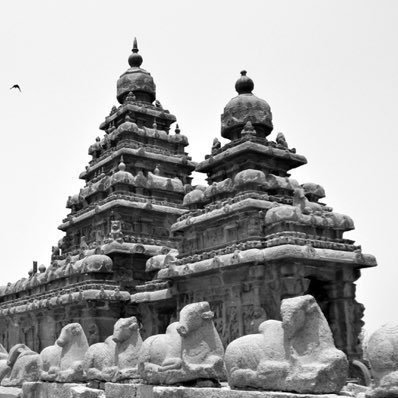
It is deeply unfortunate that individuals with such a poor understanding of Chola history are being projected as “consultants” in the process of bringing back the great Anaimangalam grants, while those who have actually studied the inscriptions and historical context are conveniently ignored.
How irresponsible and audacious is it to casually claim that the grant was “cancelled,” without a shred of inscriptional evidence to support such a statement?
The Chola kings did not arbitrarily mix political developments with religious or charitable endowments. Least of all Rajendra Chola, who explicitly declared that “as long as Adishesha bears the earth upon his hoods, this Dharma shall endure.” Such statements were not ornamental phrases; they reflected the sacred and perpetual nature of these grants.
What the grant given by Kulothunga I ?
The smaller plates by him was specifically related to the tax-free lands of five villages that had earlier been placed under intermediary management or lease arrangements. The envoys from Kadaram (Kedah) requested that these lands be brought under the direct administration of the two Viharas and sought a formal royal order documenting the same. That is the actual context of the inscription.
கிடாரத்தரையன் கேயமாணிக்க வளநாட்டுப்பட்டனக்கூற்றத்து சோழகுலவல்லி பட்டனத்து எடுப்பித்த ராஜேந்த்ர சோழப்பெரும்பள்ளிக்கும் ராஜராஜப்பெரும்பள்ளிக்கும்[ப்]பள்ளிச்சந்தமான ஊர்கள் “பழம்படியந்தராயமும் வீர சேஷையும் பன்மை பண்டை வெட்டியும் குந்தாலியும் சுங்கபேரமும்” உள்ளிட்டனவெல்லாம் தவிர்ந்தமைக்கும் முன்பு பள்ளிச்சந்தங்கள் காணியுடைய காணிஆளரைத்தவிர இப்பள்ளிச்சங்கத்தார்க்கே காணி யாகப்பெற்றமைக்கும் தாம்ரசாஸனம் பண்ணித்தர வேண்டுமென்று கிடாரத்தரையர் தூதன் ராஜவித்யாதர ஸ்ரீ ஸாமந்தனும் அபிமானோத்துங்க ஸ்ரீ ஸாமந்தனும் விண்ணப்பம் செய்ய இப்படி
This was never some dramatic “restoration” of a supposedly cancelled original grant of Rajaraja Chola, as is now being falsely projected.
What we are witnessing today is a disturbing trend where those who make the loudest noise, abuse the Cholas, and push distorted narratives are elevated as authorities. Sad state of affairs.

English
Umashankar Subramanya retweetledi

The irony of self-appointed academic gatekeepers calling others “mediocrity” is that many of them have built entire careers on ideological policing rather than expanding public understanding of history.
@vikramsampath may not satisfy every methodological preference of the academic Left, but dismissing him as beneath engagement is intellectual arrogance masquerading as scholarship.
This is especially rich coming from circles that spent years attacking “popular history” while simultaneously failing to produce historians who can communicate with ordinary Indians outside cloistered seminars and citation cartels.
Sampath’s work, whether one agrees with every conclusion or not, is extensively researched, publicly debated, widely read, and serious enough to provoke sustained criticism from academics themselves. You do not write thousands of words rebutting someone you secretly believe is irrelevant.
More importantly, there is something deeply revealing about the instinct here: not rebuttal, not critique, but social excommunication. The attitude seems to be that history belongs to a tiny priesthood, and any attempt to challenge entrenched narratives is “noise.”
That mentality is precisely why public trust in sections of academia has collapsed.
And let us be honest: Indian historiography has hardly covered itself in glory over the past few decades. Entire generations were raised on selectively sanitised narratives, civilizational discomfort, ideological filtering of sources, and an almost theological reluctance to revisit inherited assumptions.
So spare us the performance of scholarly purity.
If your first instinct when encountering a rival interpretation is contempt rather than engagement, you are not defending scholarship. You are defending turf.
Everyone is entitled to opinions. But in academia, what ultimately matters is the quality of argument, evidence, and method, not sneering dismissals or performative condescension. If there are serious scholarly disagreements, make them rigorously and publicly. Personal disdain is not a substitute for intellectual critique.
Samyak Ghosh 🌈@GhoshSamyak
One of the worst predicaments of being a professional historian today is that you are expected to engage with this mediocrity. The Print has a habit of publishing pieces that no respectable scholar in the field will even read. Not surprised they carried this to create some noise!
English
@girishbt They had certain values and principles! Which has become rare now!
English
My Father was Mathematics Teacher in High school and retired in year 1991. I did my high school education at the same school. He used to frame question papers in Mathematics and Biology being in the same house. Not a single day I used to come to know who has framed question papers. That was the dedication teachers used to have in the olden days. Things have got completely derailed in education sector. #NEET #NEET_MOSA.
English
Umashankar Subramanya retweetledi

In the mid-1990s, a young researcher from Cornell University sat down to write a business plan for an internet startup. He had absolutely zero corporate training, did not understand even 'A' of the accounting. His name was Badri Seshadri. Alongside a rogue collective of global cricket fans, he was trying to solve a desperate problem: how to get ball by ball sports data to immigrant students stranded in the West who were starved of radio commentary.
They did not have high-speed cloud infra/massive server farms. Working out of cramped university dorms, they manually coded a primitive text-based scoring network. They did not just build a popular website; they accidentally invented the global blueprint for modern digital sports broadcasting, long before Silicon Valley/ESPN even knew what a live-stream was.
When Cricinfo started in 1993-94, the World Wide Web was an empty landscape. The platform began as a completely decentralized project run by volunteers across different time zones. Badri Seshadri (BTech from IIT-M, PhD from Cornell) brought the raw, structural discipline of an engineer to this chaotic volunteer network. He realized that if cricket fans wanted real-time scores, they could not rely on slow, graphical web pages.
They utilized IRC (Internet Relay Chat) & primitive server bots to sync text data across the world. A volunteer watching a TV screen in England/India would manually type a ball's outcome, & Badri’s backend logic would instantly broadcast that line of text to thousands of terminal screens across continents.
By the late 1990s, the Dot-Com Boom went into absolute overdrive. Cricinfo had evolved from a passion project into a massive corporate entity attracting immense global capital. Investors suddenly threw unimaginable fortunes at internet startups. At its peak, the platform raised a massive funding round, & the team burned through ~$1M/month in an incredibly short span trying to scale operations globally.
When the historic Dot-Com Bubble burst in 2000, tech companies vanished overnight. Cricinfo hit an incredibly rough patch. Of the original 5 co-founders, the corporate pressure & financial chaos caused almost all of them to splinter away. Badri was left virtually alone at the helm, steering a bleeding ship through a graveyard of dead internet startups.
The ultimate proof of Badri's architecture was that the oldest institutions in cricket could not defeat his platform; they had to buy it to survive.The Defiance: For over a century, the British publication Wisden was considered the undisputed "Holy Book of Cricket." But Wisden's heavy print books were utterly obsolete compared to Badri's instantaneous digital archive.
In 2003, realizing they were completely losing the digital war, the Wisden Group bought Cricinfo. A few yrs later, the global sports broadcasting colossus ESPN acquired it, turning Badri's scrappy dorm-room project into the core of their global digital sports empire (ESPNcricinfo).
Most tech founders who sell their companies for millions stay in Silicon Valley to become VCs. Badri took his wealth & did something entirely counter-cultural. He moved right back to Chennai & co-founded New Horizon Media. Badri realized that while India had a massive hunger for knowledge, the mainstream publishing industry was failing to provide serious scientific & educational content in regional languages.
Badri Seshadri is the ghost in the code of every single sports application on our phone today. He is the man who looked at a fraudulent financial spreadsheet, ignored the traditional corporate rules, & built a digital monument out of raw passion for a game. He could have spent his life sitting in ivory towers at Cornell/collecting massive checks in California. Instead, he chose to fight the dot-com crash, outmaneuver the British cricket establishment, & return to Chennai to write science textbooks for kids. He proved that an Indian mind does not need a Silicon Valley permission slip to alter global media forever.

English
Umashankar Subramanya retweetledi

Her name was Vijayalakshmi Ramanan.
She was born on February 27, 1924, in Madras. Her father was a World War I veteran and public health official. At 15 years old, she was already an A-Grade artist with All India Radio, performing Carnatic music live on national broadcasts.
She enrolled at Madras Medical College and graduated as its best outgoing student in 1948. She went on to specialise in Obstetrics and Gynaecology.
In 1955, her husband, a Wing Commander in the Indian Air Force, brought home an application form and encouraged her to apply.
She did.
She was commissioned into the Indian Army Medical Corps and immediately seconded to the Indian Air Force.
There was no uniform for women in the IAF. None had ever served before. She designed one herself: a blue sari in Air Force colours paired with a tan blouse.
That uniform later became the standard issue for every woman officer in the Indian Air Force.
She was the first woman ever commissioned as an officer in the Indian Air Force.
She served through three wars: 1962 against China, 1965 against Pakistan, and 1971 against Pakistan again. She treated injured soldiers and ran military hospitals through all three conflicts.
Her husband died in 1971. She raised her two children alone while continuing her military duties without interruption.
She retired as Wing Commander in 1979. She then set up a private clinic in Bengaluru and treated patients free of charge well into her eighties.
In 1977, she was awarded the Vishisht Seva Medal for distinguished service of a high order.
She died on October 18, 2020.
She was 96 years old.
Every woman officer in the Indian Air Force who came after her wore a version of the uniform she designed for herself.
Follow for stories India deserves to remember.

English
Umashankar Subramanya retweetledi

A heartening moment from Hollongapar 🐒
A year after installing the arboreal canopy bridge, a Hoolock Gibbon is now using it to safely cross the railway track.
A small but significant example that shows how science led interventions can make a real difference in conservation.
English
Umashankar Subramanya retweetledi
If ancient Indian logicians were alive today, they would view our 70 billion parameter models as bloated legacy code & would be leading the charge in extreme model pruning.
1000s yrs ago, the linguist Panini faced a huge infra constraint: the human memory. To preserve the entirety of Sanskrit grammar w/o losing a single bit of data, he wrote the Ashtadhyayi.
It is a framework of < 4000 algorithmic rules (sutras) that functions exactly like a modern compiler. It is so highly optimized that the entire source code of the language can be stored in a few KBs of memory.
Panini invented an algebraic notation system using auxiliary markers (Anubandhas) that act exactly like pointers & metadata tags in programming. He achieved infinite linguistic generation with near-zero compute cost.
Sridhar Vembu@svembu
AI inference cost (which we pay in dollars) may rival our oil import bill and blow up our current account deficit. Great post on that below. What is the solution? I believe that high developer productivity can be achieved without the high AI inference bill. We have to invent our way out of trouble. Stay tuned.
English
Umashankar Subramanya retweetledi

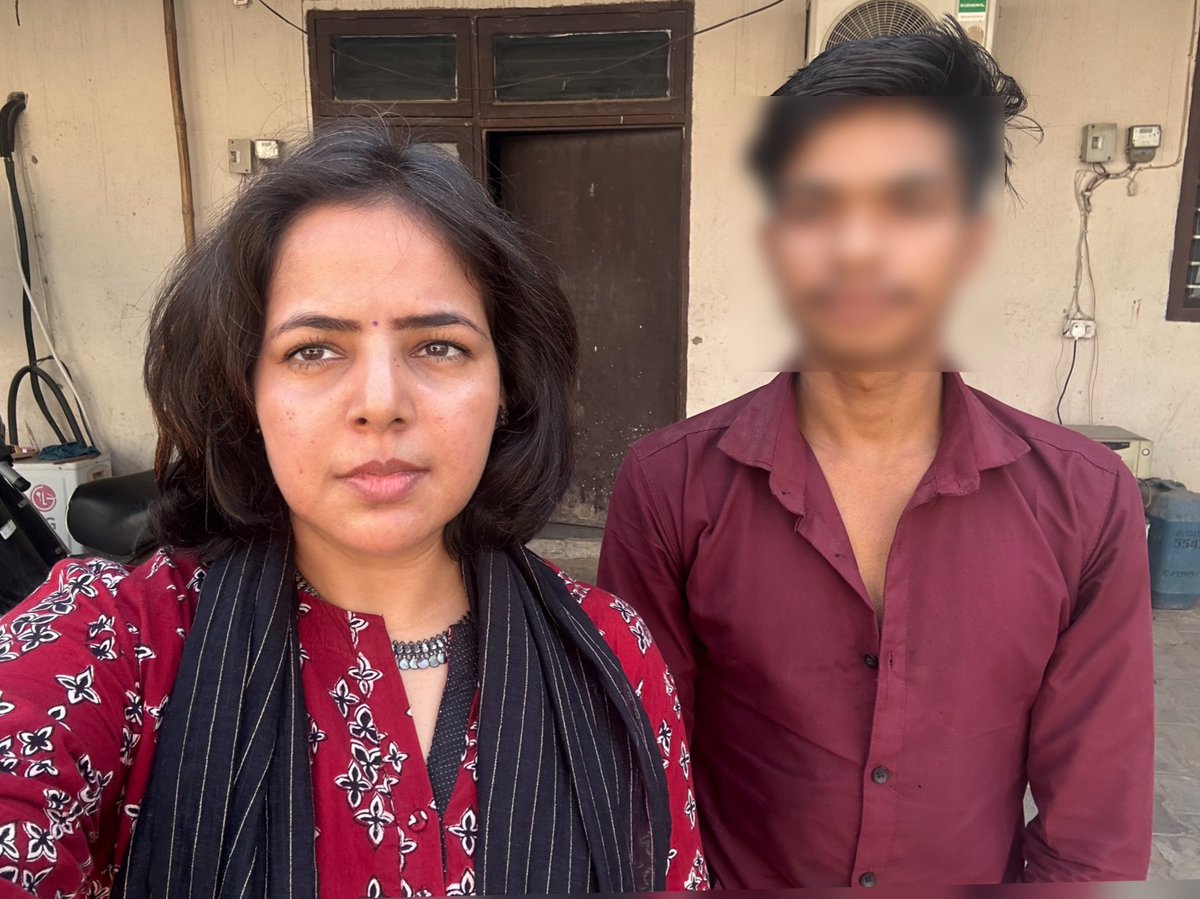
Today I met Vivek Kumar, who was kidnapped when he was in Class 3, converted to Islam, circumcised, fed beef, enrolled in a madrassa
At age of 17, he was being prepared to be sent to a Gulf country when Aadhaar biometrics revealed his real details to an alert official
Vivek was reunited with his parents after 9 long years
It was after his case that @KanoongoPriyank ordered all govt-aided madrassas in UP to furnish details of their students from Hindu families, which is now being opposed by a lobby in Allahabad high court
Vivek, who is from a scheduled caste, has learnt nothing other than memorising Arabic verses all these years
At 20, he now wants to pursue school and we @sewanyaya are helping him
Have recorded an interview of him which I will soon post
Counselled him for long - he was shocked to learn about the truth and tactics of conversion rackets and how youths are being radicalised to join terror outfits
English

Umashankar Subramanya retweetledi
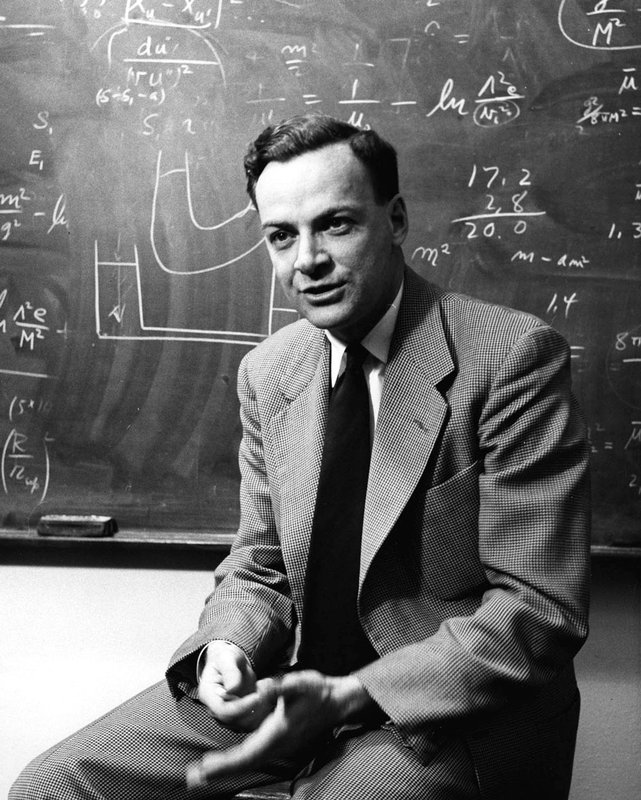
11th May is Prof. Richard Feynman's birth anniversary. There is a legendary anecdotes involving a random Indian grad student at the University of Kentucky named Bharath Srinivasan. In the 1980s, Bharath got into an argument with a peer about whether time is a scalar/a vector quantity.
Instead of looking it up, he cold-called Feynman’s office at Caltech. Miraculously, Feynman picked up. When he heard the student’s name & accent, he did not hang up. Instead, he spent 2 hrs discussing the philosophy of time & also about India with Bharath.
Finally, after about 2 hours, Feynman indicated that he had to go, & Bharath’s response was, “Oh, Dr. Feynman, this has been great & thanks for talking to me. May I call you again some time?”
Feynman replied, “No.”
English
@joybhattacharj Thanks for sharing this🙏🏼
Genius by James Gleick is a biography of Richard Feynman. Very nicely brings out his life and legacy. I would recommend this to everyone, in particular to science students.
English
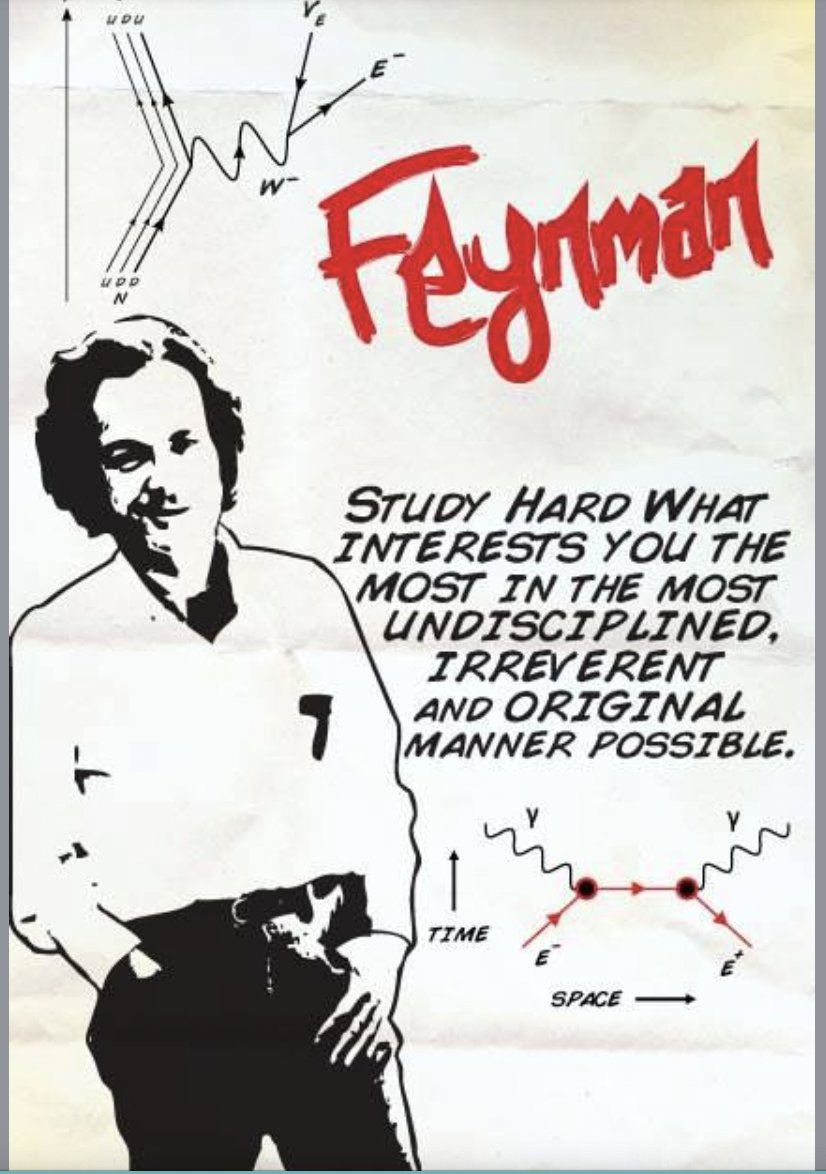
Why having fun is so so important.
It was in a Cornell university cafeteria in the late 1940s that a high spirited student threw a plate in the air. As it went up, a young physics professor was watching, and was suddenly fascinated by the way it wobbled.
At that point, Richard Feynman just finished a gruelling time at Los Alamos working on the American nuclear bomb, had just lost his wife to tuberculosis and felt totally burnt out as a theoretical physicist. He had lost all interest in research, felt a bit repelled by physics and decided that he would just enjoy teaching and play with the subject for his own entertainment.
As the plate went up, he saw it wobble, and noticed the red medallion of Cornell in the centre went around faster than the outside. Intrigued, he started researching, and soon worked out the equations determining the plate's motion.
He went to renowned physicist Hans Bethe and showed him the results. And Hans asked him why he was spending valuable time working on the motion of a dinner plate. And Feynman told him that he was working just for the fun of it, and just kept digging deeper into the mystery of wobbles.
From there, his thoughts moved to electron orbits and then quantum electrodynamics and the research that he did over the next few years in that direction finally won him a Nobel Prize in 1965.
Richard Feynman was finally unlocked when he decided to go back to why he loved physics in the first place and started having fun again with his research.
His 108th birth anniversary today.
English
Umashankar Subramanya retweetledi
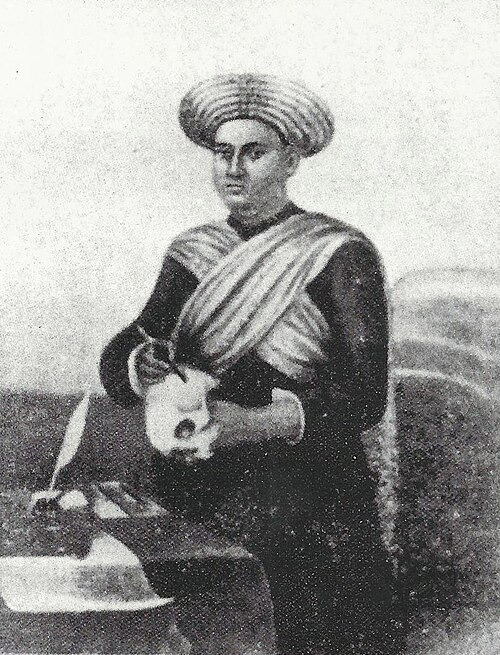
Imagine a room bolted from the inside, guarded by soldiers, & thick with the scent of formaldehydic dread. In the center stood a Brahmin scholar who was about to trade his salvation for a scalpel. He touched what was forbidden, & in that 1 bloody stroke, he turned a medieval colony into the medical capital of the East.
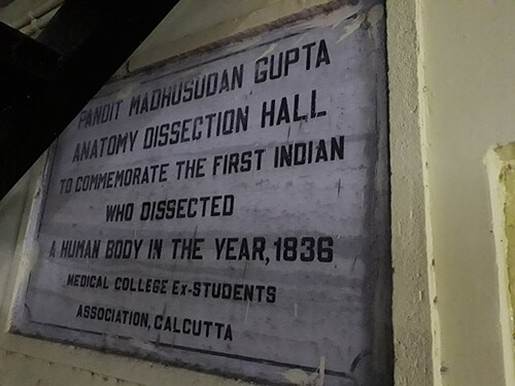
On a winter morning in 1836, the sound of a 50 gun salute echoed from Fort William. It was not for a King; it was for a Brahmin who had just picked up a knife to touch the untouchable.
In the early 1800s, India was a land of profound medical paradoxes. We had the Sushruta Samhita, a text that described plastic surgery 1000s yrs ago, yet by the 19th century, the actual practice of human dissection was considered the ultimate spiritual suicide. To touch a corpse was to become unclean; to cut 1 was to risk excommunication.
The British East India Company was convinced they would never produce an Indian surgeon. They assumed the Native Mind would always choose ritual over the scalpel. They were looking for a rebel, but they found a Pandit. 10th Jan, 1836. The air in Calcutta was thick with tension. Rumors had spread that the newly established Medical College was going to defile the sacred human form. Outside the college gates, a restless crowd gathered. Inside, the British administration was so terrified of a riot that they stationed armed guards at every entrance & bolted the doors of the anatomy shed from the inside.
Pandit Madhusudan Gupta, a scholar of both Sanskrit & Ayurveda, stood over a wooden table. Beside him were 4 students: Umacharan Sett, Rajkrishna Dey, Dwarakanath Gupta, & Nobin Chandra Mitra. The students were trembling. If they did this, they could never go home. They would be outcasts.
Gupta did not hesitate. He picked up the scalpel & made a clean, deep incision into the chest of the cadaver. At that moment, he was not just cutting skin; he was cutting through 1000s yrs of social iron.
The British were watching from the shadows. When the word reached the Governor-General, Lord Auckland, that the 1st touch had been successful, he did not just send a letter of congratulations. He ordered a 50 gun salute to be fired from the ramparts of Fort William.
It was a sound usually reserved for the arrival of a Viceroy/the victory of a war. In this case, it was a salute to the victory of Empiricism over Taboo. The British knew that with that 1 cut, Madhusudan Gupta had just birthed the future of Indian medicine.
To his descendants, Madhusudan remained a complex figure. He was a man who translated Gray’s Anatomy into Sanskrit, trying to bridge the gap b/w ancient wisdom & modern science.
But the Ghostly"truth is that for a long time, he was a man who lived b/w 2 worlds. He was a hero to the college, but a spectral figure to the orthodox society of Calcutta. He died in 1856 from a dissection wound infection... the very science he championed ended up claiming his life. He literally gave his blood to the profession.
He was the Brahmin who sacrificed his caste to save a nation’s health. Every time an Indian surgeon picks up a scalpel today, they are echoing the heartbeat of Madhusudan Gupta, the man who touched the dead so the living could survive.
English
@ijnani I used to go to post office and pay license fee for our Bush radio! Our Raleigh cycle had a license plate!
English

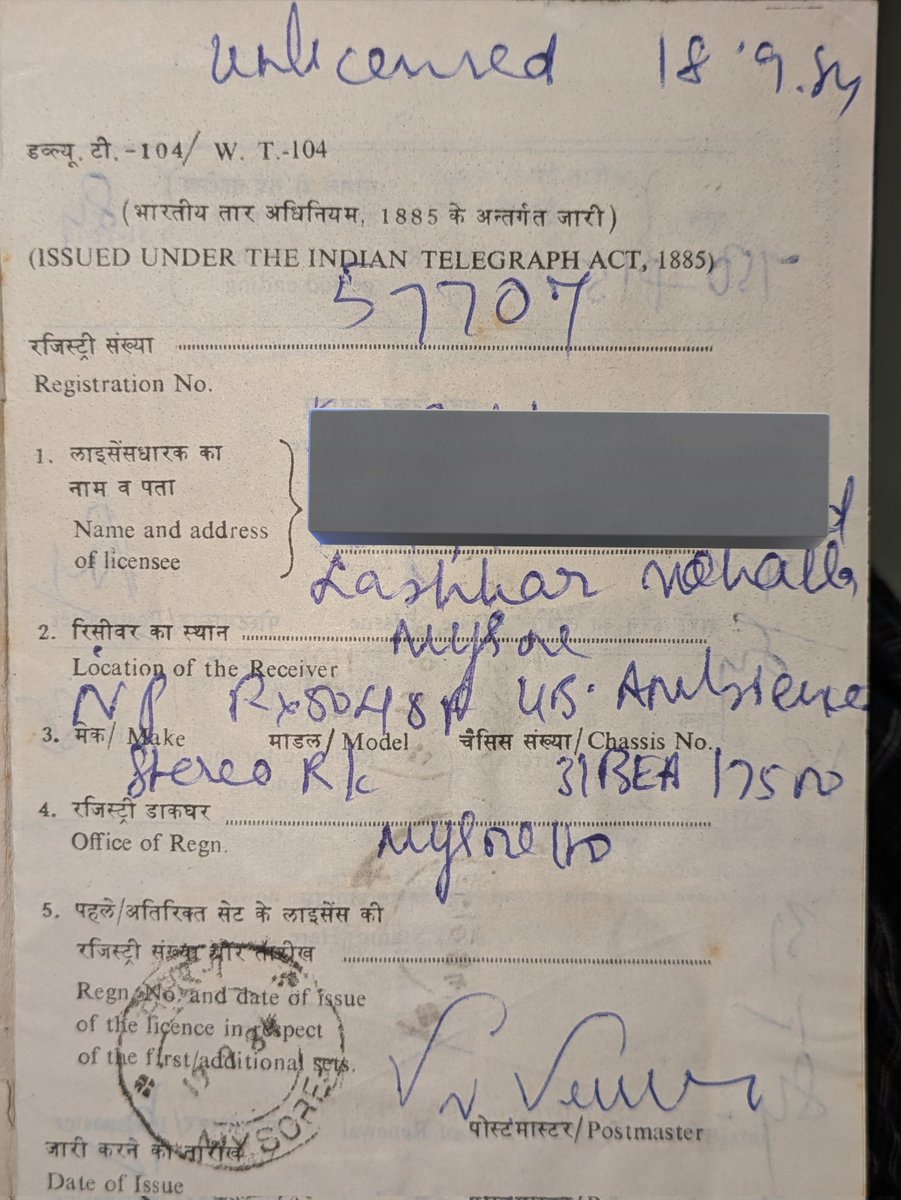
Found another record.
Our radio licence (broadcast reciever) was issued in my grandfather’s name under the Indian Telegraph Act, 1885. Back when owning a radio actually required government permission.
A small piece of history from Mysore.
(Yes, the radio/tape recorder still works.)
#NationalPanasonic #Panasonic


ಮೀಮರ್ ಮುತ್ತಣ್ಣ@ijnani
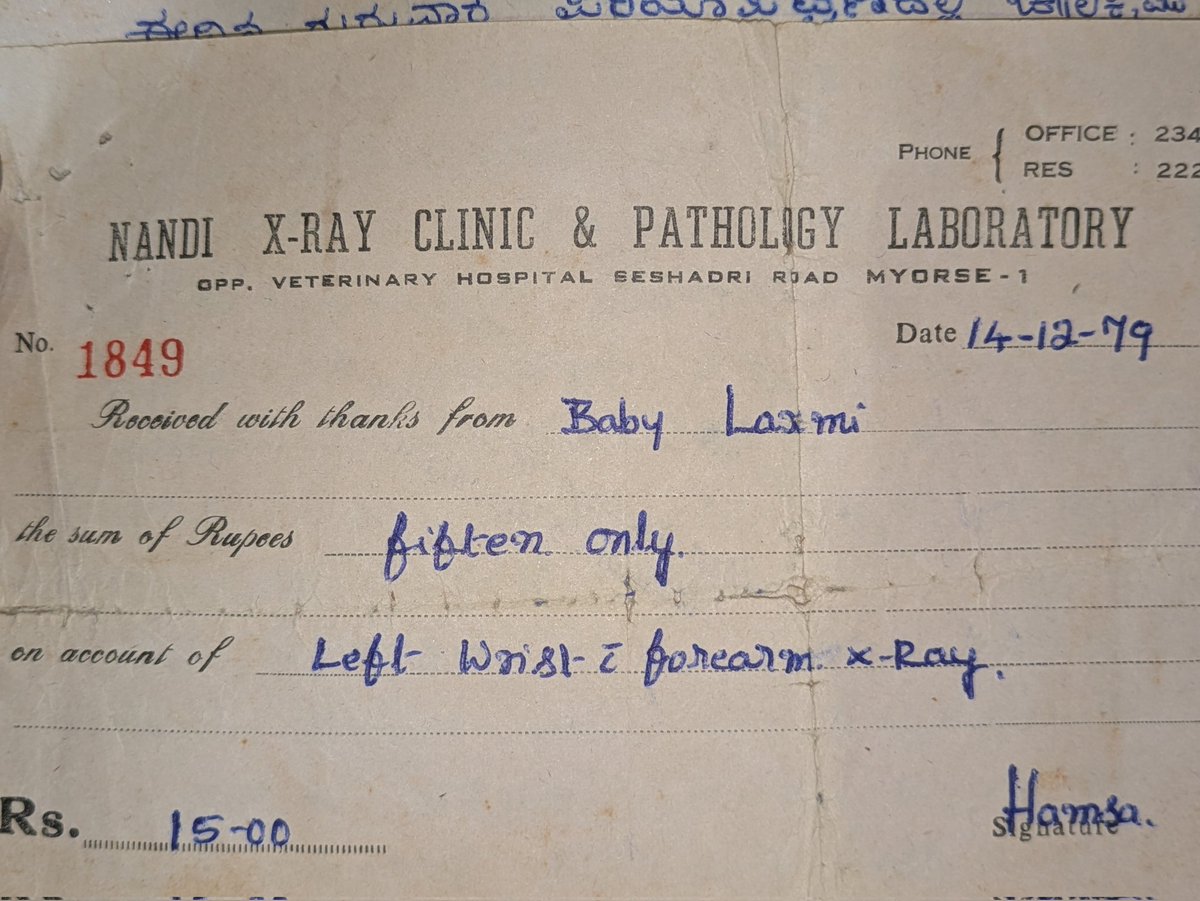
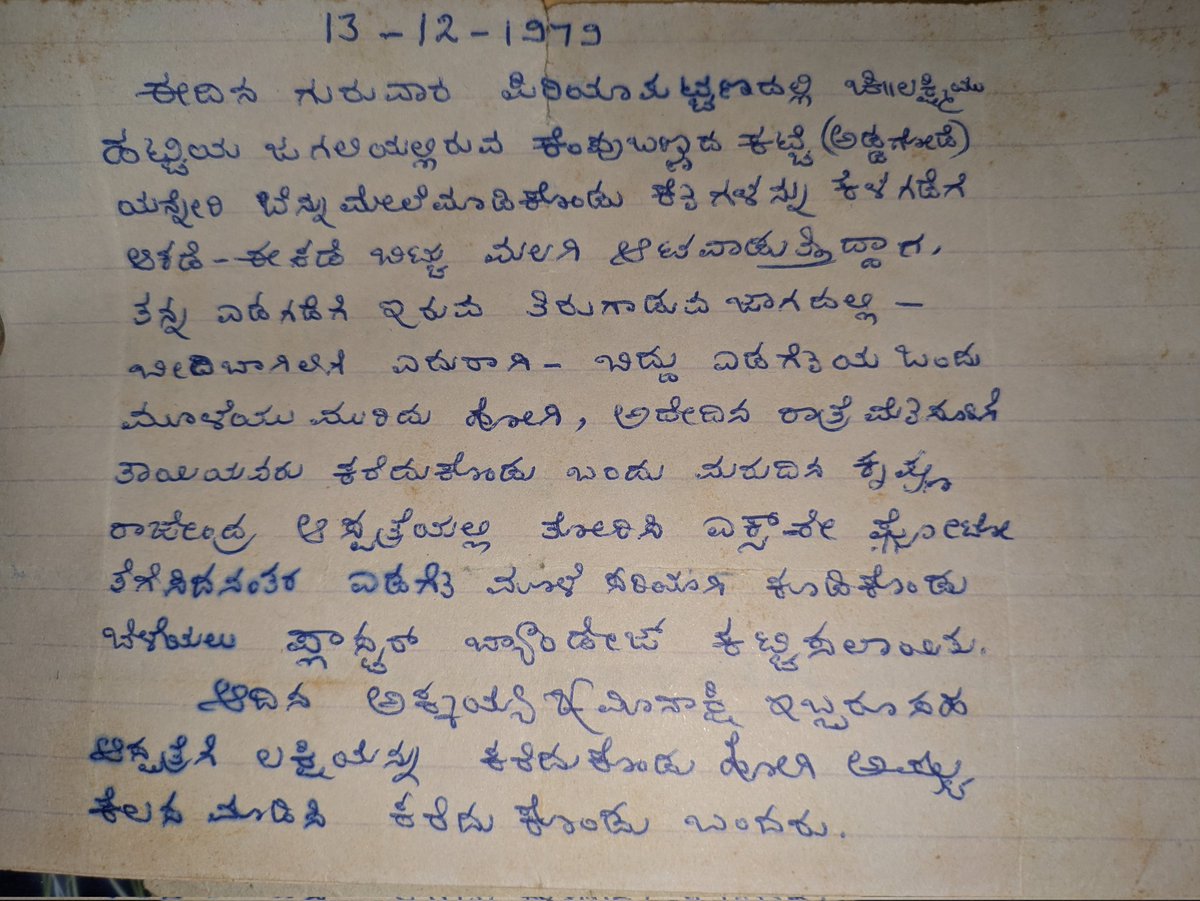
When my sister was just about two years old, she fell and broke her left forearm. In 1979, an X-ray of the wrist and forearm cost Rs. 15. My dad noted the incident at the time, and we found it today in our old trunk.
English
When my sister was just about two years old, she fell and broke her left forearm. In 1979, an X-ray of the wrist and forearm cost Rs. 15. My dad noted the incident at the time, and we found it today in our old trunk.
English
Umashankar Subramanya retweetledi
Dear Mr. T.M. Krishna,
I rarely find myself compelled to draft extensive critiques, as I generally respect the diversity of human ideology. However, I am moved to write because I find your specific brand of "anti-establishment" sentiment so deeply hardwired that it appears to bypass logic and reason entirely.
It seems the moment you adopted an anti-BJP stance, your worldview narrowed into a singular, obsessive pursuit: "Find the Fault." This lens functions much like the reflexive hostility seen in the archetypal rivalries of mother-in-law versus daughter-in-law, or the geopolitical friction between India and Pakistan. You look for flaws without evaluating the specifics of the event itself. This cognitive bias is so powerful that it likely obscures your own lack of objectivity.
Even within your own profession—where I acknowledge your genius in Carnatic music despite my lack of formal expertise—you have used the art form as a "garb." Under the guise of democratization and spreading music, you have instead sowed seeds of animosity and negativity. To be blunt: taking Carnatic music to the slums, in the manner you have, feels as incongruous as introducing sprinting to the blind—it lacks a fundamental understanding of the medium and the audience.
You are treading a path already worn thin by others, most notably Kamal Haasan. Much like him, you have traded intellectual integrity for a hollow platform. We have watched Haasan dissolve from a cinematic icon into a political stooge, sacrificing his supposed "values" just to secure a seat at the table of power. His trajectory serves as a cautionary tale: when one’s identity is built solely on being "anti," they eventually become a pawn for the very structures they claimed to transcend, ending up bereft of both credibility and character.
Standing in opposition to everything does not cast you as a noble rebel; it merely makes you look foolish. I write this to urge you to stop opposing things blindly. Self-induced blindness is a condition for which there is no clinical cure, and there are no transplants for a soul that has ceased its search for truth.
In a concert, we all look forward to the Thani Avartanam, where the percussionist showcases their independent brilliance. However, a Thani is only "grand" when it respects the Kala Pramanam (the steady beat) and the other artists on the stage. You, however, seem to be playing a solo that ignores the rest of the ensemble. You have forgotten that music, like life, requires a shared respect for the platform. In this regard, one must admire the steadfastness of Ranjani and Gayatri. They reminded us that the Music Academy must remain an academy of Music—a sanctuary for the Deva Gana—and not a playground for partisan politics. Their clarity of purpose highlighted the flaw in your performance: you cannot claim to honor the art while deconstructing the very traditions that gave you a voice.
As you approach your Mangalam, remember that a performance riddled with Apa-Swaras (wrong notes) cannot be saved by a loud finish. As the great Saint Tyagaraja sang:
"Endaro Mahaanubhavulu, Andariki Vandanamulu" (There are many great souls; to all of them, I offer my salutations.)
If you cannot find it in your heart to salute the greatness in others because of your political blinkers, then your music has lost its soul. Seek the harmony of Sama-Bhava, or risk your legacy becoming a mere footnote of discord.
Regards
Kishore Subramanian
What’s App Number :- 9841066265 ( If you want to respond further on this )
@ranjanigayatri
English