Every great scientist is a storyteller.
I interview Nobel winners on @Into_Impossible🎙️
Chancellor's Prof. @UCSanDiego | Pilot | Wrote: Losing the Nobel Prize
"You can't imagine the feeling when you get that result and you start redoing it over and over..."
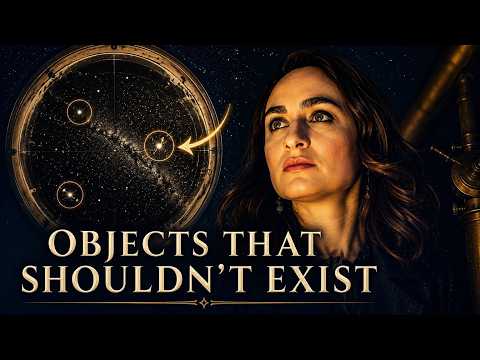
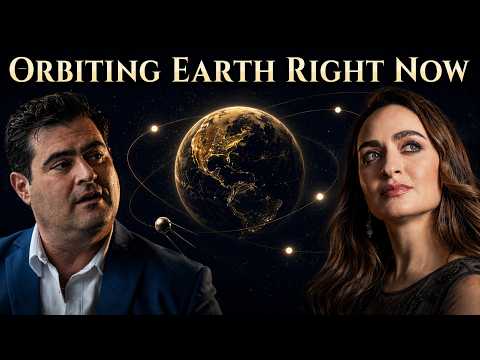
@DrBeaVillarroel joined me to break down her most mind-bending research, including the unexpected anomaly she calls her most beautiful result.
Which claim is most compelling?
Clip here: youtu.be/qmM3OF23C9g?su…
Full episode: youtube.com/watch?v=D4jvdr…
@rosscoulthart@DrBeaVillarroel Ross, did you do any research to verify the provenance of this video or investigate what Kip actually sounds like these days?
This serves to undermine Beatriz’s claims and your credibility.
This year I ran a small heretical pedagogical side-hustle.
I was unusually strict with my students: use AI for everything except exams, and collaborate constantly, to build, to play, to explore. Just do not copy.
I braced for the academic equivalent of hate mail. After all, my colleagues at Ivy League institutions forbid AI in all situations!
Instead I just read my teaching reviews and felt something rare in higher education: gratitude, relief, and a dangerous temptation to double down next year.
Students already drown in theories, equations, derivations, and repetition. I refuse to add more rote recital to the pile. So in class I do experiments. Real demos. Even simple spectroscopy, which ought to be mandatory...especially in classes like quantum mechanics and cosmology, almost none of my colleagues do this. That still astonishes me.
The reviews were disarmingly human:
“Amazing class taught by a thought-provoking professor who really understands and cares about student learning and growth.”
“Good class.”
“Just listen to lectures, those are interesting.”
“Nothing to improve, it was a good class.”
“Professor Keating always came to class with great energy and this encouraged me to show up all the time and pay attention. He always was excited to teach us and was very helpful when it came to any questions we had throughout the quarter.”
“Thank you for everything professor.”
Apparently forcing students to use the future while showing them physics in the present is less unpopular than advertised.
People think physicists must love science fiction.
Ironically, as an experimental physicist I often enjoy it less.
The moment a movie like Contact unveils a giant spinning gizmo that “creates a wormhole,” my brain starts asking what equation it’s supposed to satisfy. Five minutes later I’m peer reviewing fictional engineering like a Referee #2 Roger Ebert I can’t help it.
Why haven't we found aliens yet? | @ShawnRyan762
There are an estimated 10²⁴ planets out there — and still, total silence. Brian explains why: our farthest-traveled spacecraft, Voyager, has only gone one light-day from Earth in 55 years. Our own radio signals have barely reached 90 light-years into a galaxy that's 100,000 light-years across. We're not just alone-looking — we're basically deaf and blind.
Have we already passed the "Great Filter" that wipes out civilizations before they're ever found? Or are we being watched, and simply not worth the visit?
Watch the full conversation to find out: youtube.com/watch?v=33JuOH…