Commonwealth Fusion Systems

871 posts

Commonwealth Fusion Systems banner
Commonwealth Fusion Systems

Commonwealth Fusion Systems

@CFS_energy

On a mission to deliver clean fusion energy fast enough to meet humanity’s biggest challenges with SPARC® and ARC™.

Devens, Massachusetts, USA Katılım Mart 2017
360 Takip Edilen20.4K Takipçiler
Commonwealth Fusion Systems retweetledi

Bloomberg Green
Bloomberg Green@climate·
Commonwealth Fusion Systems has applied to connect the US power grid to what may become the world’s first commercial fusion plant bloomberg.com/news/articles/…
English
3
14
35
2.8K
Commonwealth Fusion Systems retweetledi
Bob Mumgaard
Bob Mumgaard@BobMumgaard·
@Energy_Zap made waves a few days ago by announcing a dramatic change to its mission. Instead of just pursuing fusion energy, it’s expanding into fission. In other words, instead of concentrating its effort on combining the lightest elements, it’ll simultaneously work on splitting them apart, too, with a new spin on the technology used in traditional nuclear energy for decades. (See their announcement here: zapenergy.com/announcement). It’s a dramatic departure that came along with a new CEO. I hope one thing that won’t change is Zap’s efforts to advance the science of the shear-stabilized z-pinch in a step-by-step, quantitative, and clear manner as they have always done. Zap, like the majority of the fusion companies, has demonstrated its commitment to sharing its scientific results through peer-reviewed research. It’s the best way to show you’re on the right track when developing a new technology, whether fusion or some new flavor of fission. I’ve always looked forward to reading about the progress in triple product from the team, and I look forward to seeing new science that’ll show Zap’s approach is progressing, even though the focus is now broader. That’ll help reassure investors and researchers that Zap has reason to remain committed to fusion energy. From my experience, I’m convinced that blending fission and fusion is a generally bad idea. Sometimes hybrid designs are the worst of both worlds, not the best of both worlds, and a hybrid fission-fusion machine will have all the difficulties of fusion’s plasma physics and fission’s safety and regulatory constraints. In our experience at CFS, the fission personnel, materials, regulations and tools are misaligned with the needs of fusion. Everything is different — as expected given the actual reactions are inverted! Saying fission and fusion both involve neutrons glosses over deep differences in physics and engineering, whether with separate machines or a device using both processes. Zap has a lot of work to hire staff and develop its technology. Even with today’s favorable political climate for small modular reactors, I don’t see how a Zap fission approach will speed up its commercialization work. Fission is a crowded space, with incumbents that are years ahead, and have teams, technology, and projects.
English
0
2
4
538
Commonwealth Fusion Systems
Thanks for spotlighting this news. For those unaware, this application isn't just filling out some paperwork. It's engineering, planning, and design work that lets @pjminterconnect properly evaluate our power plant and others that all want a place on the grid. And we have to apply now to make sure the grid will be ready for the Fall Line Fusion Power Station in Virginia to start generating electricity in the early 2030s.
English
0
0
14
515
Commonwealth Fusion Systems
“Over and over we meet long-term milestones, like securing our supply of high-temperature superconducting (HTS) tape, delivering our first prototype magnet, building a factory, and taking delivery of long-lead equipment,” said CFS Chief Commercial Officer Rick Needham, speaking to @POWERmagazine's @DarrellProctor1 about our application to connect our first ARC fusion power plant to the @pjminterconnect grid near Richmond, Virginia. “Each of these milestones opens up the door to the next critical milestone,” Needham said. “As we get close to completing SPARC and then running it, we’re now also turning our focus to commercialization with the design and development of our first ARC power plant.” #FusionEnergy
Commonwealth Fusion Systems tweet media
English
2
7
44
3.5K
Commonwealth Fusion Systems
“Even though fusion might feel like it’s far off, it’s actually not that dissimilar a timeline from any of the other energy sources that people are talking about,” our CEO and Co-founder @BobMumgaard tells Ella Nilsen of @CNN. But plugging in power plants takes years of preparation. That’s why we just applied to connect our Fall Line Fusion Power Station to the grid operated by @pjminterconnect, the largest wholesale power market in the United States. It’s a serious step — and it’s what’s required to ensure the grid is ready for us by when we plan to start selling power in the early 2030. #FusionEnergy
English
2
4
39
1.7K
Commonwealth Fusion Systems
@Montebianco114 Here's our Chief Science Officer @BrandonSorbom on tritium supply: reddit.com/r/fusion/comme… Until we breed it ourselves, we'll source from CANDU reactors: reddit.com/r/fusion/comme… Here's our CEO @BobMumgaard on breeding tritium in our power plants: x.com/CFS_energy/sta…
Commonwealth Fusion Systems@CFS_energy

“Fusion uses tritium, but it also makes it as it goes. It’s sort of like a sourdough starter. You use it and then regenerate it— that’s been shown to work in various labs. So to do it, you need a little bit of starter. Right now, that starter comes mostly from fission power plants.” That’s CFS CEO and Co-founder @BobMumgaard in a recent interview with @Reuters' @TimoGard, addressing one of the common misconceptions about our approach to fusion energy. Tritium is one of the two forms of hydrogen we use to generate energy in our SPARC fusion machine and then eventually in our ARC power plant. It's difficult to imagine an energy source that produces its own fuel, but that's precisely what the ARC power plant will do with tritium. The other form we need, deuterium, can be filtered from seawater. The two also discussed the fusion's journey from lab experiment to a carbon-free, safe, steady power source for the globe; how regulation, private support, and government support each play a role in fusion’s progress; and how CFS is headed from assembling SPARC today to turning it on in 2027. #FusionEnergy

English
0
0
2
241
Commonwealth Fusion Systems
Today, Commonwealth Fusion Systems (CFS) announced a new major step in our commercialization effort: We’ve applied to plug our first ARC fusion power plant into the grid. This crucial move — a substantial technical effort, not just some paperwork — shows that CFS is successfully navigating the complexities of delivering power, not just generating it. And it won’t be just any grid: We picked the country’s biggest wholesale power market, @pjminterconnect, whose power infrastructure spans 13 states and offers a capacity of 182,000 megawatts (MW). We’ll be playing in the big leagues. This application is a significant technical achievement that required extensive design, planning, and engineering work. By detailing how our power plant will work and how it’ll behave on the grid, PJM will be able to fit it into the grid simulations that are part of the application process. In short, we know how to hook fusion power plants to the grid, and this application shows it. At the same time, we’re busy building our SPARC fusion demonstration machine in Devens, Massachusetts. The commercialization work must proceed in parallel with the SPARC work to meet our deadline of getting watts on the grid in the early 2030s. It can take four to six years between grid interconnection application and power generation. In addition, CFS announced a new name, the Fall Line Fusion Power Station, for our facility in Chesterfield County, Virginia. The name signifies transition: the county and Richmond sit atop a geological boundary called the Fall Line where the rocky, elevated Piedmont region drops down into the flat, sandy Tidewater coastal plain. Historically, Virginians built mills at the Fall Line to harness the kinetic energy of the James River rapids. With the Fall Line Fusion Power Station, we’ll harness a different form of energy — the clean, safe, secure power of fusion. #PowerMoves #FusionEnergy
Commonwealth Fusion Systems tweet media
English
7
33
125
11.4K
Commonwealth Fusion Systems
Commonwealth Fusion Systems@CFS_energy·
“Fusion uses tritium, but it also makes it as it goes. It’s sort of like a sourdough starter. You use it and then regenerate it— that’s been shown to work in various labs. So to do it, you need a little bit of starter. Right now, that starter comes mostly from fission power plants.” That’s CFS CEO and Co-founder @BobMumgaard in a recent interview with @Reuters' @TimoGard, addressing one of the common misconceptions about our approach to fusion energy. Tritium is one of the two forms of hydrogen we use to generate energy in our SPARC fusion machine and then eventually in our ARC power plant. It's difficult to imagine an energy source that produces its own fuel, but that's precisely what the ARC power plant will do with tritium. The other form we need, deuterium, can be filtered from seawater. The two also discussed the fusion's journey from lab experiment to a carbon-free, safe, steady power source for the globe; how regulation, private support, and government support each play a role in fusion’s progress; and how CFS is headed from assembling SPARC today to turning it on in 2027. #FusionEnergy

Commonwealth Fusion Systems tweet media
English
3
5
28
2.3K
Commonwealth Fusion Systems
Commonwealth Fusion Systems@CFS_energy·
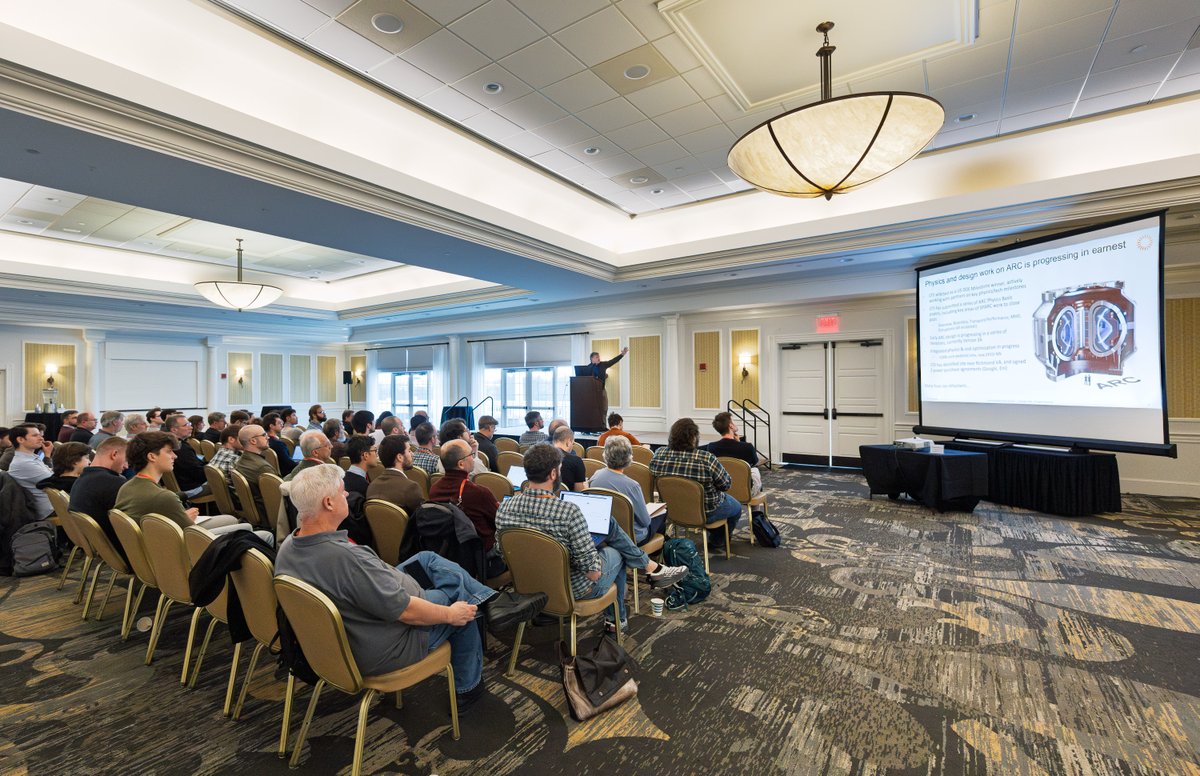
We just wrapped up our second Boundary Collaborators Workshop — a conference that lets Commonwealth Fusion Systems (CFS) experts meet with peers from universities, national labs, and companies whom we invite over to dig into the physics of our fusion machines. Over four days in Devens, Massachusetts, this group got a chance to talk about the finer points of getting what we need out of our SPARC demonstration machine and its successor, the ARC fusion power plant. SPARC and ARC are machines called tokamaks, and the energy they produce will come from combining the particles in a superhot cloud of fusion fuel particles called a plasma. Inside these tokamaks, the core of plasma will be very hot — more than 150 million degrees Celsius. But the temperature will drop toward the edge of the plasma, a region that’s the focus of a specialty called boundary physics. There, the plasma’s particles will encounter physical hardware, so we’ll have to carefully manage the plasma’s heat in that region. It’s a big challenge: That edge plasma could deliver 100 times more heat than what the heat shield of an astronaut’s re-entry vehicle has to endure while dropping through the Earth’s atmosphere. But clever physics techniques let us lower that heat to bearable levels. In practice, how well we manage heat at the plasma’s edge strongly influences how well the fusion process works in the plasma core. The Boundary Collaborators Workshop lets us and collaborating researchers tackle these challenges. That’s important work as we prepare to operate SPARC and explore new boundary physics options for ARC. To learn more, check the link to a blog post about the conference in the comments. #FusionEnergy #SPARC #physics
Commonwealth Fusion Systems tweet media
English
2
5
21
1.7K
Commonwealth Fusion Systems
Commonwealth Fusion Systems@CFS_energy·
CFS CEO and Co-founder @BobMumgaard recently spoke with @PeterDiamandis at the 2026 @Abundance360 Summit about CFS' progress toward fusion energy and how major breakthroughs happen. Says Bob: "Think about flight. Flight felt impossible — and then it was almost immediately inevitable after the Wright brothers." Breakthroughs like commercial fusion energy don't happen overnight. They can only be achieved by understanding what needs to be done — breaking down a massive problem into distinct parts and attacking each one individually. And that's exactly what's happening in fusion energy right now. Footage credit: Abundance 360 #FusionEnergy #Energy
English
1
10
31
2.9K
Commonwealth Fusion Systems
Commonwealth Fusion Systems@CFS_energy·
“Unlocking fusion energy is not simply a technological milestone, but it is the foundation of energy security, economic competitiveness, and geopolitical power in the twenty-first century,” concludes the @CSIS. “The United States retains a critical advantage in scientific leadership and private investment, but that lead is narrowing as China invests aggressively in deployment infrastructure and ecosystem development,” CSIS says. “The Trump administration clearly recognizes these stakes with the Department of Energy’s new Genesis Mission and establishment of a dedicated Office of Fusion. But this prioritization must be matched by significant federal investment or else the United States risks surrendering a technology it pioneered to a strategic competitor.” Read more from the CSIS here: csis.org/blogs/perspect… #FusionEnergy
English
6
15
78
3K
Commonwealth Fusion Systems retweetledi
Reuters Events
Reuters Events@reutersevents·
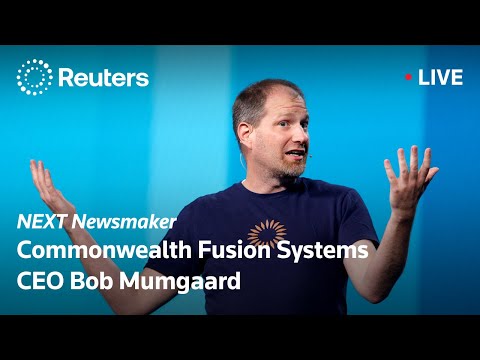
The race for commercial fusion is on. @CFS_energy CEO @BobMumgaard joins @Reuters Tim Gardner to explain how fusion is moving from theory to timeline - and what it means for energy security and climate goals. 🗓️ Apr 21 | ⏰ 10am EDT 👉bit.ly/4sqDaC2
Reuters Events tweet media
English
0
2
9
1.1K