
Clemente Pinilla-Torremocha retweetledi
Clemente Pinilla-Torremocha
1.9K posts


Clemente Pinilla-Torremocha
@clemenfishman
Economist (macro, applied). From Zaragoza with nuance. All opinions are my own.
Katılım Mart 2012
965 Takip Edilen406 Takipçiler

Clemente Pinilla-Torremocha retweetledi

At this point, banana republics and developing country dictators have higher standards of conduct and less corruption.

English
Clemente Pinilla-Torremocha retweetledi

Algo sabíamos los españoles sobre los beneficios de la siesta....ahora esperando al estudio comparando las power-naps (siestas de 5-15min) con las que se pegan algunos, que al despertar estás más atontado que .....
Massimo@Rainmaker1973
Skip your daily nap, shrink your brain. A study by researchers from University College London and the University of the Republic in Uruguay has found that people who habitually take daytime naps tend to have significantly larger total brain volume—a key indicator of brain health that typically declines with age and is associated with reduced dementia risk. The team used Mendelian randomization, a method that leverages genetic variants (present from birth) that make people more likely to nap regularly. By analyzing brain MRI scans and health records from more than 35,000 participants in the UK Biobank, they discovered that those genetically inclined to nap had brain volumes corresponding to 2.6 to 6.5 fewer years of aging. While this doesn’t definitively prove that napping itself enlarges the brain, the genetic approach helps rule out many lifestyle-related confounding factors, providing stronger evidence of a potential causal relationship than traditional observational studies. Notably, the researchers found no link between napping predisposition and performance on tests of reaction time, memory, or visual processing. However, previous studies have shown that short naps can deliver immediate cognitive benefits. The study lacked specific data on nap duration, but prior research suggests naps of 30 minutes or less provide the greatest advantages while minimizing disruption to nighttime sleep. This is the largest study to date linking regular napping with brain structure. Although further research is needed in more diverse populations, the findings bolster the idea that a brief daytime rest may help preserve brain volume and support long-term cognitive health.
Español
Clemente Pinilla-Torremocha retweetledi

FT Exclusive: Traders made bets worth half a billion dollars in the oil market about 15 minutes before Donald Trump’s post touting 'productive' talks with Iran sent the price of crude tumbling ft.trib.al/5jnFcCt

English
Clemente Pinilla-Torremocha retweetledi

one of the dumbest things i keep seeing on twitter lately is "you wrote this with ai" as some kind of gotcha
i personally still write most of my posts myself because i enjoy it and it helps me organize my thoughts. but it is probably not the best use of my time and there will come a point where it makes no sense to keep doing it (just like it already makes no sense not to use ai for coding)
every day i see people in creative roles using ai to do more and better work. but then there are also people in the creative space with this kind of "fetishization of artisanal suffering", as if the value of a text were in how much you struggled to write it rather than whether it says something worth saying. to these people i would say: just try it. even for someone who writes fiction for a living, ai can help a lot. maybe not for the final text if you are a purist, but there is huge value in using it to bounce ideas, do worldbuilding, and research the universe around your novel, for instance
the reality is that most of us are not brilliant writers and, as with everything, there is an opportunity cost. more than a few people who come at you with the "but but ai" could stand to use it a lot more before spouting so much nonsense (unless, of course, their comparative advantage lies in spouting nonsense)
English
Clemente Pinilla-Torremocha retweetledi

You know me, I am no conspiracy theorist. But it surely looks like the Trump administration is trying to prove Larry right about his 2023 forecast. Or, alternatively, that Larry knew in 2023 that Trump would win the election and go to war against Iran. Or even, that Larry is behind the election of Trump and the Iran war just in order for his forecast to be right.
Olivier Blanchard@ojblanchard1
Larry: Are you becoming chartist? 😀(I kind of remember that something happened at the end of the 1970s, like a trippling of oil prices, which might be vaguely relevant. Do u expect it to happen again?)
English
Clemente Pinilla-Torremocha retweetledi

Christopher Sims, an economist whose work transformed how central banks understand cause and effect in the economy, has died at 83. on.wsj.com/47Sosfo
English
Clemente Pinilla-Torremocha retweetledi

R.I.P. Chris Sims.
I have so many fond memories of our years together at Princeton and of so many joyful meetings over the years. As Markus wrote, he was a wonderful person: kind, generous, thoughtful.
A small story: we co‑advised several PhD students. We had a system. Chris met them at 4pm, I met them at 5pm. They always walked into my office a bit stunned. Chris had shown them all the ways their drafts didn’t quite answer the question. I would then help them process his comments. By the end, the students were excited about all the avenues for progress that Chris had opened. Being Chris’ “interpreter” for our students was a great honor that I treasure to this day.
Markus K. Brunnermeier@MarkusEconomist
R.I.P. Christopher Sims (21 Oct. 1942 - 14 March 2026) - a giant in macroeconomics and one of the finest human beings I have ever met -
English
Clemente Pinilla-Torremocha retweetledi

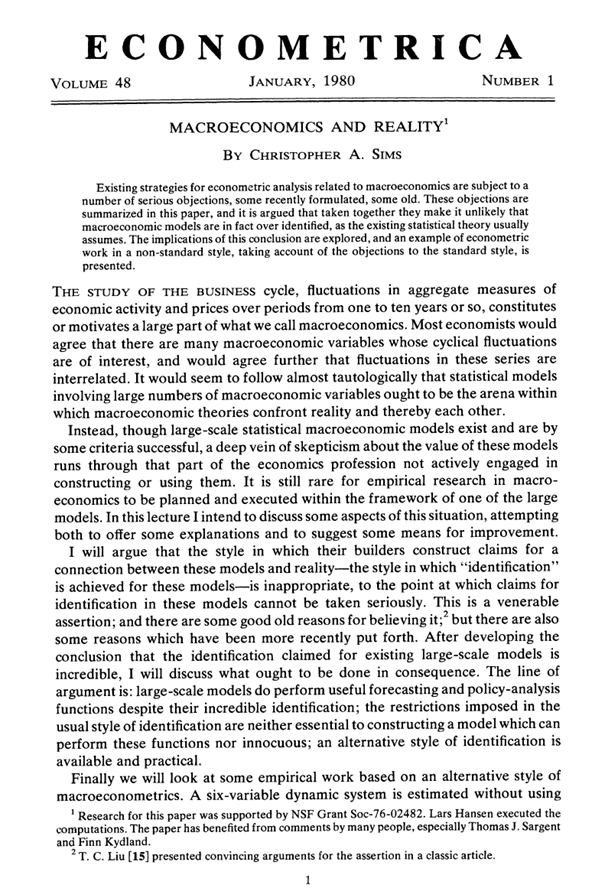
Christopher Sims, RIP.
A giant of macroeconomics has left us.
Here is his homepage:
princeton.edu/~sims/
English
Clemente Pinilla-Torremocha retweetledi

R.I.P. Christopher Sims (21 Oct. 1942 - 14 March 2026)
- a giant in macroeconomics and one of the finest human beings I have ever met -

English
Clemente Pinilla-Torremocha retweetledi
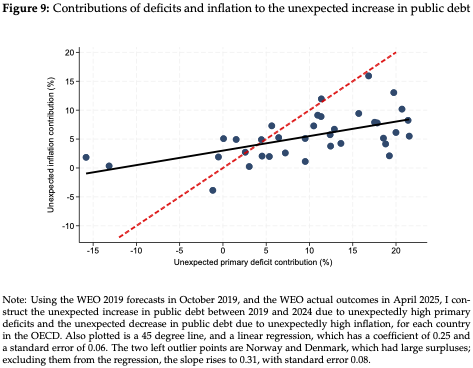
How much did public deficits contribute to the inflation surge of 2021-24?
A popular argument notes that inflation rose in the US by almost as much as in other OECD countries. Yet, the US had a large fiscal stimulus in 2021 that most other countries did not. Therefore, the US fiscal stimulus did not contribute to the inflation surge. Is that right? No, it is not.
To inspect this claim, you can use expectations data. By virtue of its mandate, the IMF is one of the best forecasters of fiscal variables and all economists pay attention to them. The IMF also forecasts inflation; during 2021-24, it was as right or as wrong as other institutions or surveys.
Start from the IMF's forecasts in October of 2019 for the next 5 years of how much public debt would grow and what would be fiscal deficits, interest rates, inflation, and growth rates. Then look at the IMF April 2025 reports of those actual variables. Subtract one from the other and you have how much of the unexpected increase in public debt was due to unexpectedly high deficits, unexpectedly high interest rates, unexpectedly low growth rates and unexpectedly high inflation.
The plot compares the unexpected high deficits with the unexpected high inflation terms for OECD countries, using the common units of their impact on the public debt.
For countries that ran higher unexpected fiscal deficits, inflation was also unexpectedly higher.
Some countries had their stimulus early, others only later. Somer larger, other smaller. Some had more, others less inflation. The accounts of the government let you consistently sum these differences over the 5 years to look beyond timings and to use consistent units. Thinking in terms of surprises and using expectations data allows you to compare countries with very different fiscal trajectories.
More generally, in all models and theories of inflation, including fiscal account, expectations are crucial. Using expectations data to inspect them is very informative.
Note: as with the initial claim, the plot is a correlation, not a causal statement.
Sources:
(i) Section 4 in Reis "Why Did Inflation Rise and Fall in 2021-24? Channels and Evidence from Expectations"
(ii) This simple exercise is inspired on the analysis of Barro and Bianchi “Fiscal Influences on Inflation in OECD Countries, 2020-23.”
English
Clemente Pinilla-Torremocha retweetledi
hoy lanzo que-estudio.es: una nueva herramienta interactiva para explorar datos de empleo y salarios de egresados universitarios, por carrera y universidad
incluye los nuevos datos de la cohorte 2019-2020 (sacados hoy!)
👇👇
que-estudio.es
Español
Clemente Pinilla-Torremocha retweetledi

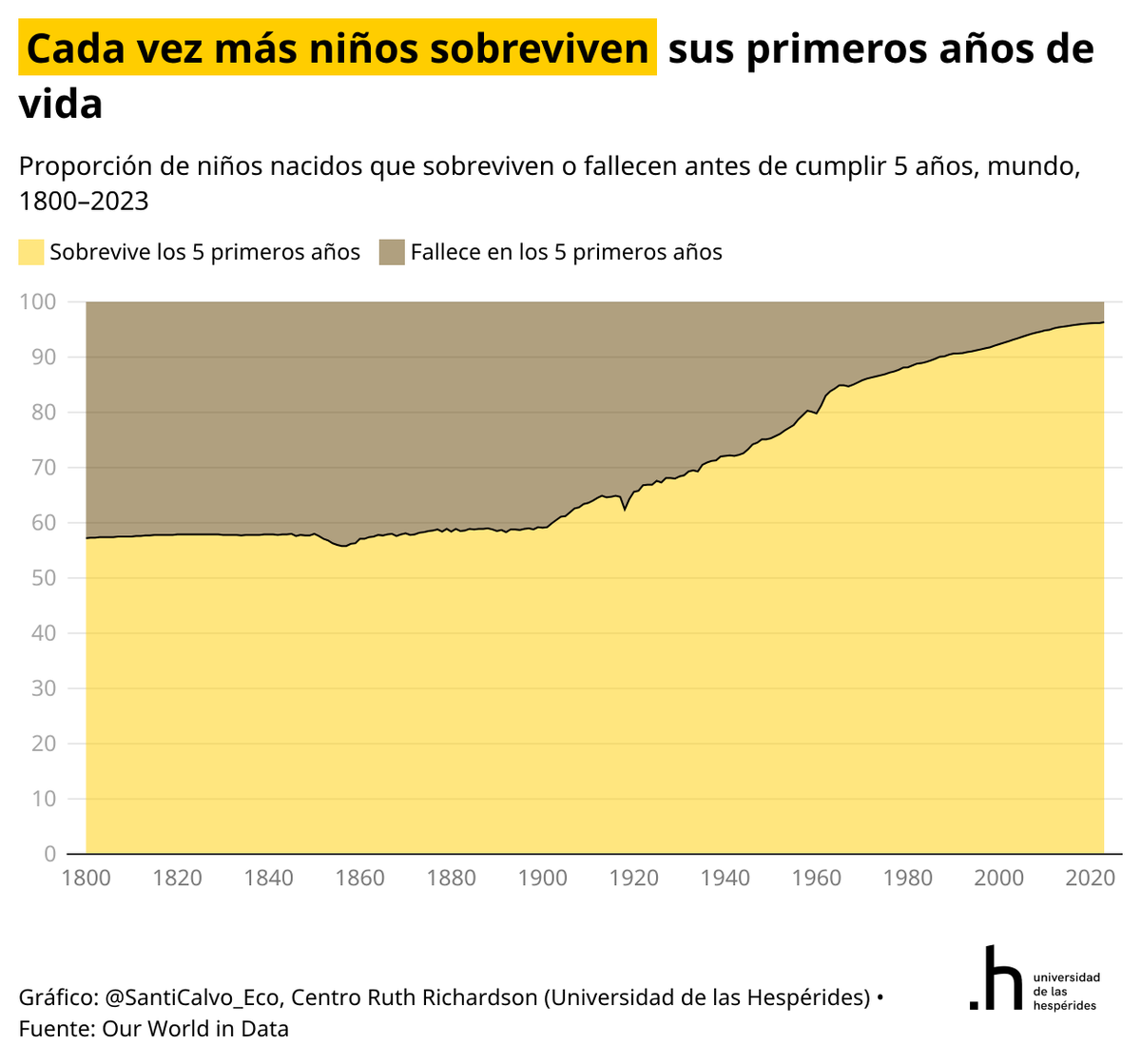
En 1800, más del 40% de los niños nacidos en el mundo morían antes de cumplir 5 años. Hoy, esa cifra es inferior al 4%.
Es uno de los logros más importantes de la historia de la humanidad. Y casi nadie lo sabe.
Español
Clemente Pinilla-Torremocha retweetledi

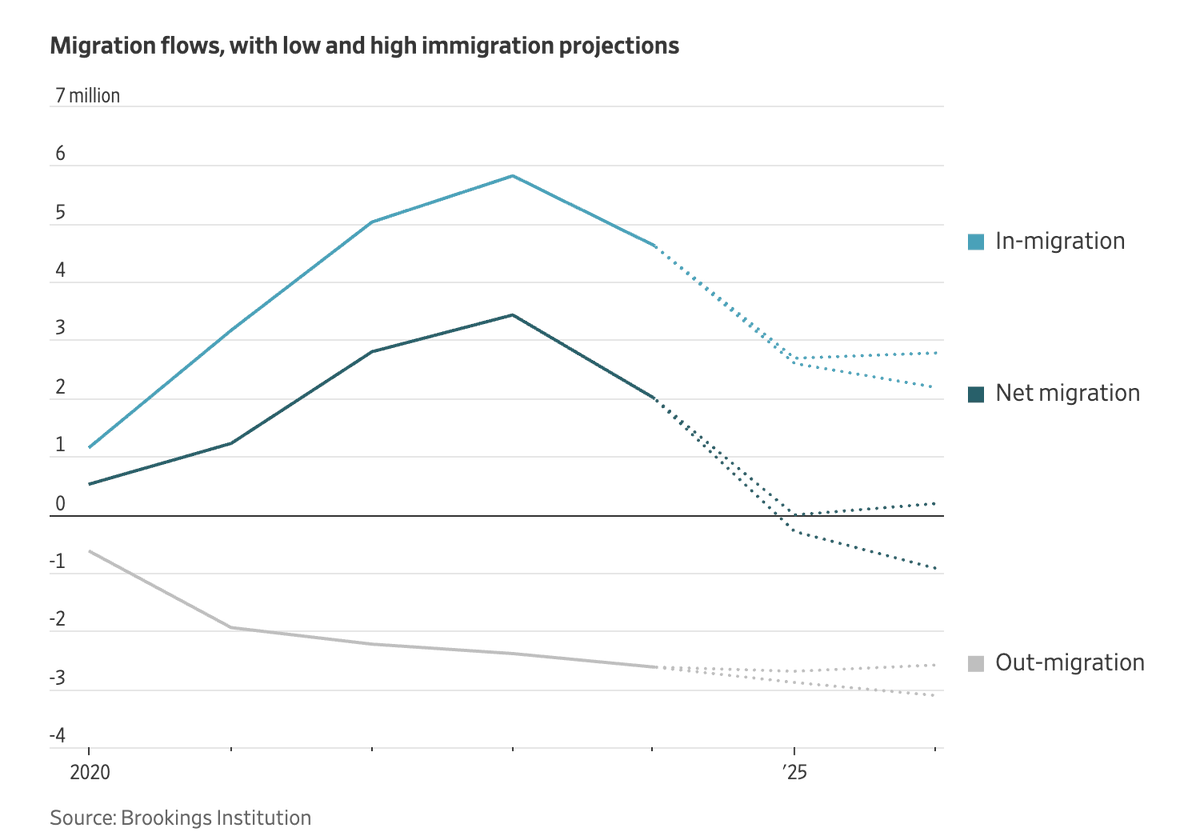
Americans are leaving America—and the exodus shows no sign of stopping, by Drew Hinshaw and Joe Parkinson
wsj.com/us-news/americ… @WSJ
English
Clemente Pinilla-Torremocha retweetledi

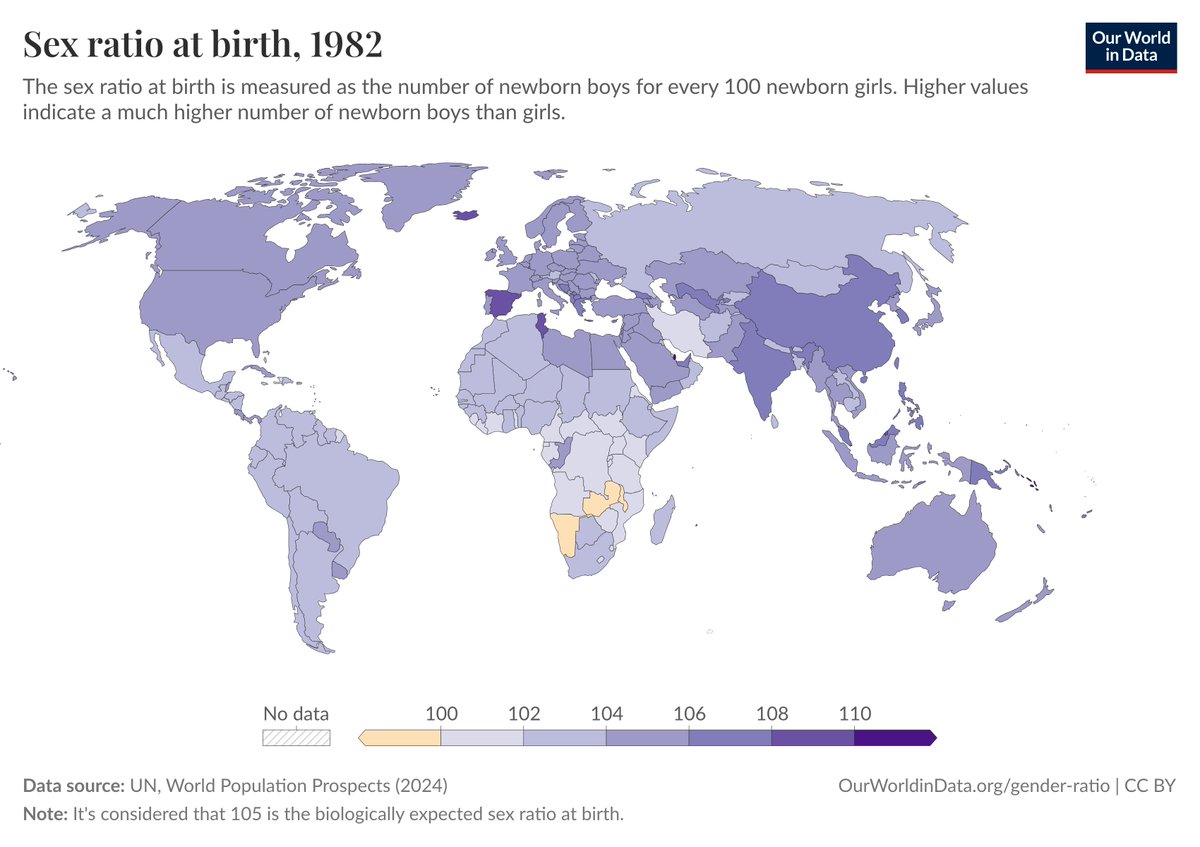
According to official birth registry data, in 1981 Spain had the highest sex ratio in the world (109 boys per 100 girls). Prior work attributed this anomaly to demographic/behavioural patterns. In a new WP, we show the high ratio is due to data errors 🧵with @manuelbagues 1/n
English
Clemente Pinilla-Torremocha retweetledi

Clemente Pinilla-Torremocha retweetledi
para satisfacer el male urge de estar monitoring the situation de la criminalidad en tu ciudad desde el sofá: ya están disponibles los datos de 2025 en datoscrimen.es
datoscrimen.es/?2-28
Español
Clemente Pinilla-Torremocha retweetledi

Nothing is quite as European as demanding that your emergency WW3 meeting must only occur during normal office hours.
Ursula von der Leyen@vonderleyen
Following the ongoing situation in Iran, I am convening a special Security College on Monday. For regional security and stability, it is of the utmost importance that there is no further escalation through Iran’s unjustified attacks on partners in the region.
English
Clemente Pinilla-Torremocha retweetledi

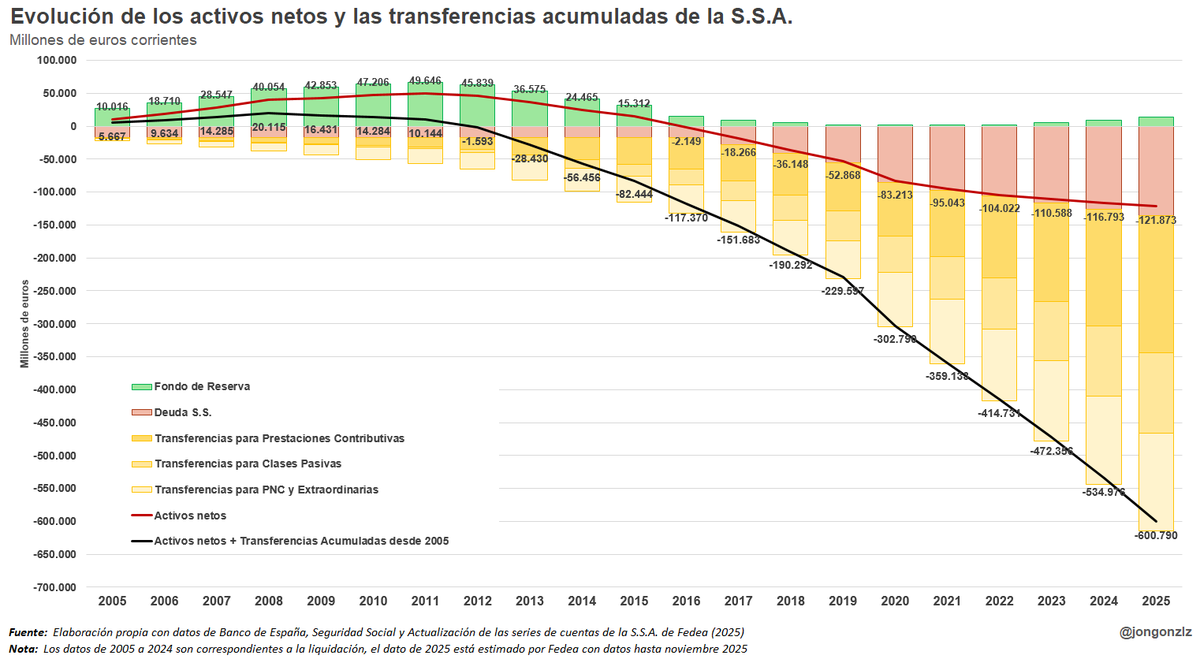
El Gobierno lo único que ha elevado es la imposición al trabajo para seguir incrementando esa "hucha" ficticia y la cuantía de las pensiones.
Al mismo tiempo la deuda se ha incrementado en más de 90.000M€ y las transferencias acumuladas en estos 7 años son más de 300.000M€.
Público@publico_es
El Gobierno eleva hasta los 14.060 millones de euros los fondos de la hucha de las #pensiones, que apenas llegó a tener poco más de 2.000 en 2020 ✍️ Por @jorgeotero99 #Echobox=1772177162-1" target="_blank" rel="nofollow noopener">publico.es/economia/hucha…
Español
Clemente Pinilla-Torremocha retweetledi
very striking chart by @lymanstoneky on korean births! fixing marital shares to 2000 levels suggests korea would today have 2.4x as many babies, with the entire decline accounted for by falling marriage rates rather than falling marital fertility. however, i wonder whether concluding from this that pronatal policy worked and that the problem is fundamentally one of coupling is a bit of a stretch.
in a society where nearly all births occur within marriage, the fundamental question is whether marriage is really exogenous to fertility preferences. it could just as well be that declining marriage rates are simply the channel through which a preference for fewer children shows up.
if that is the case, saying "if marriage hadn't declined, births would be stable" is a bit like saying "if people who didn't want kids had gotten married anyway, they would have had kids." would they? the counterfactual doesn't hold because you can't transplant marriage rates from 2000 into 2023 korea and assume those additional married couples would have behaved like the (increasingly selected) couples who do marry today. the marginal marriages that disappeared were probably lower-fertility marriages.
is korea today a better place to have kids? maybe. but even if conditions for parents have improved on some margins, that doesn't mean they've improved enough to offset either the rising value of the outside option or a genuine shift in preferences over children themselves.
Lyman Stone 石來民 🦬🦬🦬@lymanstoneky
We can use this to do a decomposition exercise. What would Korean births 2000-2023 have looked like 1) in reality vs 2) if marital shares by age had been chained to 2000 values vs. 3) if fertility rates by age and marital status had been chained to 2000 values The answer is striking. If you chained age-and-marital-status-specific fertility rates to 2000 levels, Korean fertility would be LOWER than it is today! Because Korean mASFRs really did rise in recent decades! Because guess what? Pronatal policy worked! Korea became a much better place to have kids! But fewer people were coupled and thus exposed to having kids. You can see the orange line tells us if Korean birth rates had their observed trajectory, but marital shares had been chained at 2000 levels, Korea today would have 2.4 TIMES as many babies! 2.4 TIMES! Declining married share explains the entire decline in Korean birth totals since 2000!
English