Dr. Sean Mackey

2.9K posts

Dr. Sean Mackey banner
Dr. Sean Mackey

Dr. Sean Mackey

@DrSeanMackey

Redlich Professor at Stanford University • Chief of @StanfordPain • Physician-scientist focused on patient-centered pain, neuroscience, and outcomes research

Stanford, CA Katılım Kasım 2014
316 Takip Edilen8.1K Takipçiler
Dr. Sean Mackey retweetledi

Stanford Pain Medicine
Stanford Pain Medicine@StanfordPain·
Gabapentin has been an effective medication for many people living with pain. It is particularly helpful for neuropathic pain when used thoughtfully. A new @WSJ report explores why use grew so quickly and where the evidence is strongest (and weakest). The piece also covers what patients should know about side effects, interactions, and tapering. As @DrSeanMackey notes: “It became the moral and regulatory safe harbor for clinicians under pressure to treat pain while cutting back on opioids.” on.wsj.com/460GefM

Stanford Pain Medicine tweet media
English
3
6
11
1.4K
Dr. Sean Mackey retweetledi
Gadi Gilam גדי גילעם جدي جيلام
Happy to share one of our latest studies (1)! Led by Post-Doc (now Asst. Prof.) @ Marine Granjon and in collaboration with @noelvest and @DrSeanMackey, we used latent profile analysis to identify four distinct anger profiles in people (n=735) with chronic pain.
Gadi Gilam גדי גילעם جدي جيلام tweet media
English
1
4
5
728
Dr. Sean Mackey
Dr. Sean Mackey@DrSeanMackey·
Our latest paper @NatureComms reviews the relationships between sleep and pain. Research shows that poor sleep worsens pain; pain worsens sleep. Clear area for better understanding these relationships and improving care. (free download) nature.com/articles/s4385…
Dr. Sean Mackey tweet media
English
8
41
156
10.7K
Dr. Sean Mackey
Dr. Sean Mackey@DrSeanMackey·
@ibdgirl76 @PeterAttiaMD You raise good points. While we touched on opioids, we did not do a deep dive. Nor did we do a deep dive on the hundreds of other pain related treatments. Meant to be an introduction and hope it was of help to some people.
English
0
0
1
24
Bev Schechtman🇮🇱
Bev Schechtman🇮🇱@ibdgirl76·
Around 1:52:00 @PeterAttiaMD. It’s interesting how you both said w Vioxx that it was dangerous for those most susceptible, that they threw the baby out w the bath water - but although opioids actually fit this exactly, you don’t see it that way. Studies show rate of addiction, OD, doctor shopping, are very small - but that’s not how it’s portrayed. I’d love it if you’d discuss the opioid crisis addressing the true stats and those harmed by throwing the baby out w the bathwater. @DrSeanMackey Thank you for your comment on nociplastic pain including fibromyalgia. Much appreciated that someone said it out loud. Truly. open.spotify.com/episode/1Ige1J…
English
1
11
28
434
Dr. Sean Mackey
Dr. Sean Mackey@DrSeanMackey·
This quote came from an interview, likely on the Huberman Lab Podcast (hubermanlab.com/episode/dr-sea……), where I was discussing the science of pain. Taken out of context, I understand it sounded dismissive or upsetting. We’ll do better to provide full context in the future. Pain isn’t just signals from the body — those are nociception. Pain is how your brain interprets those signals. It’s a subjective, whole-person experience — and that’s what we treat. In that interview, I explained the complexity of pain: how it begins as signals in the body, is shaped by processing in the spinal cord, and ultimately becomes the experience of pain in the brain. Why does this matter? Because our treatments target different parts of this system. Take shoulder pain and to keep brief and not comprehensive, just focusing on a few medications: NSAIDs (like ibuprofen or naproxen) act on inflammation in the shoulder but also alter signaling in the spinal cord and brain. Duloxetine, an FDA-approved treatment for some pain conditions, mainly affects the brain and brainstem. Opioids do not act directly in the shoulder — they target spinal cord and brain circuits that process pain. This framework also applies to physical rehabilitation, mind-body treatments, procedures, and more. The most effective approach often combines multiple treatments tailored to the person. Understanding pain pathways is essential to developing safer, more effective treatments. That’s what drives our work. Our mission is to reduce pain and its impact — together, with you.
English
0
0
4
134
Stanford Pain Medicine
Stanford Pain Medicine@StanfordPain·
“What goes on in your shoulder is not pain – that’s nociception. Those are electrical signals, electrochemical impulses being transmitted and that is to be distinguished from the subjective experience of pain that you have.” – @DrSeanMackey
English
29
7
24
13K
Dr. Sean Mackey
Dr. Sean Mackey@DrSeanMackey·
This quote came from an interview, likely on the Huberman Lab Podcast (hubermanlab.com/episode/dr-sea…), where I was discussing the science of pain. Taken out of context, I understand it sounded dismissive or upsetting. We’ll do better to provide full context in the future. Pain isn’t just signals from the body — those are nociception. Pain is how your brain interprets those signals. It’s a subjective, whole-person experience — and that’s what we treat. In that interview, I explained the complexity of pain: how it begins as signals in the body, is shaped by processing in the spinal cord, and ultimately becomes the experience of pain in the brain. Why does this matter? Because our treatments target different parts of this system. Take shoulder pain, for example: NSAIDs (like ibuprofen or naproxen) act on inflammation in the shoulder, but also alter signaling in the spinal cord and brain. Duloxetine, an FDA-approved treatment for some pain conditions, mainly affects the brain and brainstem. Opioids do not act directly in the shoulder — they target spinal cord and brain circuits that process pain. This framework also applies to physical rehabilitation, mind-body treatments, procedures, and more. The most effective approach often combines multiple treatments tailored to the person. Understanding pain pathways is essential to developing safer, more effective treatments. That’s what drives our work. Our mission is to reduce pain and its impact — together, with you.
Stanford Pain Medicine@StanfordPain

“What goes on in your shoulder is not pain – that’s nociception. Those are electrical signals, electrochemical impulses being transmitted and that is to be distinguished from the subjective experience of pain that you have.” – @DrSeanMackey

English
22
5
29
6K
Dr. Sean Mackey
Dr. Sean Mackey@DrSeanMackey·
Did you know you can look up any physician to see if they've received payments from drug or medical device companies? The site is "Open Payments" (openpaymentsdata.cms.gov). It collects and publishes data on financial relationships between these companies and healthcare professionals, including payments for research, meals, travel, gifts, or speaking fees. When controversy around opioids and pharmaceutical industry relationships arose over a decade ago, I chose to stop all consulting and financial relationships. As a result, my Open Payments reporting remains at $0 (see attached report). I mention this because occasionally my opinions prompt accusations that I am financially influenced by industry entities. To clarify: I'm salaried by Stanford University, and I receive no additional personal compensation from federal research grants—they support research staff and project costs at Stanford. Importantly, my decision isn't a critique of those who do engage in industry relationships. These collaborations can be valuable, helping to make products safer and more effective. I simply made a personal choice to avoid financial ties altogether.
Dr. Sean Mackey tweet media
English
0
5
18
888
Dr. Sean Mackey
Dr. Sean Mackey@DrSeanMackey·
🧠 Chronic pain isn't just physical—it can erode quality of life in profound ways. Melanie Thernstrom writes a deeply personal essay in @WSJ highlighting the intersection of pain, despair, and resilience, shedding light on a silent epidemic affecting millions. #ChronicPain #MentalHealth wsj.com/health/healthc…
English
15
49
209
20.5K
Dr. Sean Mackey retweetledi
Stanford Pain Medicine
Stanford Pain Medicine@StanfordPain·
Advancing Patient Engagement in Pain Research In clinical research, patients are usually study participants, not collaborators. But a recent paper highlights the benefits of involving patients as full partners in pain research. Here’s what it means and why it matters. (1/10) @PAINthejournal
Stanford Pain Medicine tweet media
English
4
21
63
6.3K
Dr. Sean Mackey
Dr. Sean Mackey@DrSeanMackey·
Breaking Barriers: Addressing Opioid Stigma in Pain & Opioid Use Disorder (OUD). See our just published Perspective in @PAINthejournal bit.ly/4eGjDq7 (free download). Led by Karly Edwards. Why it matters: Opioid stigma fuels inequities in chronic pain and opioid use disorder (OUD) care, worsening outcomes and access to treatment. Driving the news: Using the Health Stigma and Discrimination Framework, we explored how stigma impacts patients with chronic pain and OUD: Drivers: Restrictive policies limit access to medications for OUD (e.g., methadone, buprenorphine), increasing stigma and overdose risks. Intersecting Stigmas: Chronic pain amplifies stigma, creating barriers to care and fostering discrimination. Stigma contributes to poor health, increased pain, and mistrust in medical systems. State of play: Evidence-based recommendations include: Reforming OUD treatment policies to increase accessibility and reduce burden. Educating providers to reduce stigma and improve care for pain and OUD. Promoting patient-centered care models, integrating telehealth and harm reduction approaches. The bottom line: Destigmatizing opioid use and improving integrated care are critical to saving lives amid the opioid crisis. Read more in Pain for actionable solutions.
English
15
8
19
2K
Dr. Sean Mackey
Dr. Sean Mackey@DrSeanMackey·
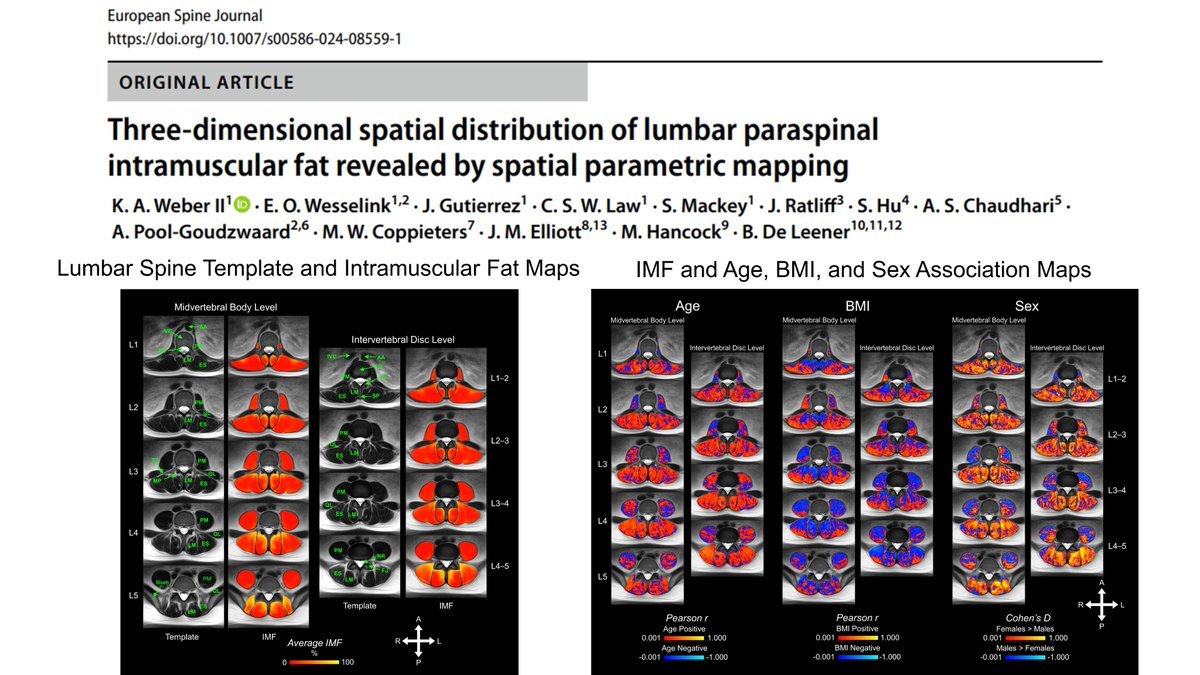
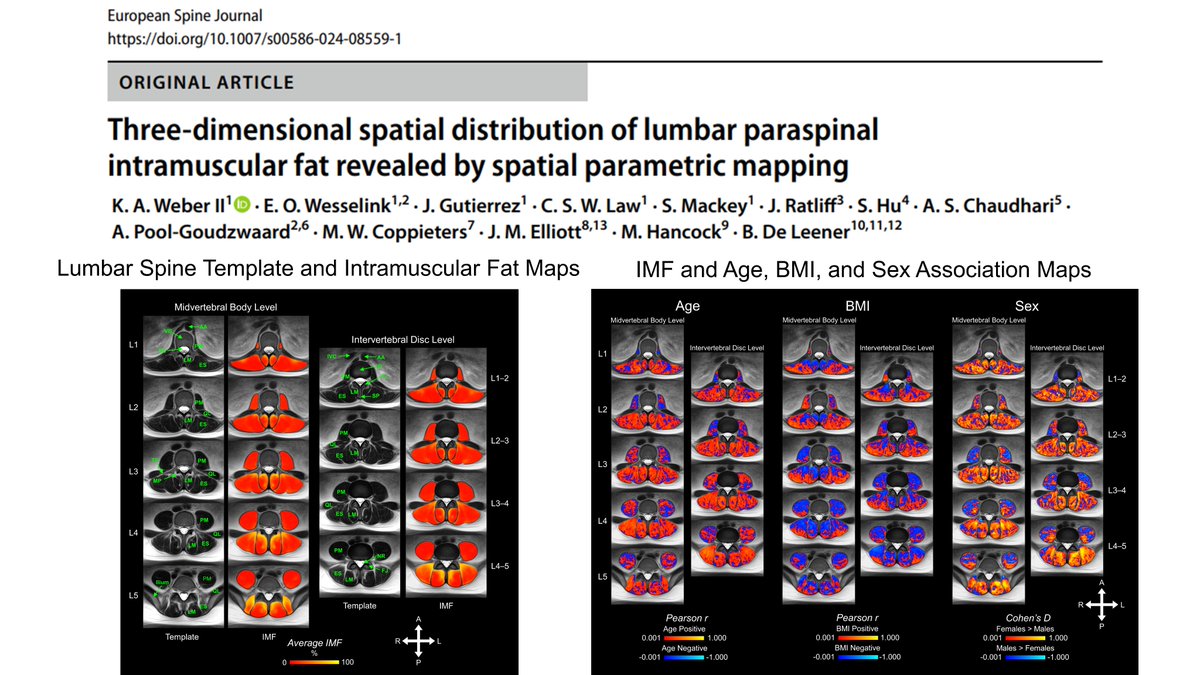
Innovative research maps lumbar muscle health in 3D led by @DrKenWeber bit.ly/3YYQeSj 🧠 Why it matters: Intramuscular fat (IMF) in lumbar paraspinal muscles plays a critical role in low back pain (LBP). This study unveils the first 3D spatial distribution of IMF, offering insights into LBP recovery and spine health. 📊 By the numbers: IMF distribution varies by muscle: Lumbar multifidus and erector spinae show higher IMF at specific regions, while psoas major is evenly distributed. Associations with age, BMI, and sex reveal spatially distinct patterns. 🔬 Key finding: Traditional muscle-wide assessments miss nuanced IMF variations. 3D mapping may enhance understanding of spine pathology and tailored treatments. 📍 What’s next: Future studies should explore diverse populations and treatment impacts to refine spatial parametric mapping in spine care. #LowBackPain #SpineHealth #MedicalResearch
Dr. Sean Mackey tweet media
English
2
6
20
1.8K
Dr. Sean Mackey
Dr. Sean Mackey@DrSeanMackey·
We conduct many online studies on pain. Unfortunately, unscrupulous people are gaming the system for the money we reimburse for these studies. We screen out these bots and people. However, it is imperfect and time consuming. I apologize to anyone we mistakenly screen out who is legitimately trying to participate.
English
2
0
19
2.1K
Dr. Sean Mackey retweetledi
Katie Martucci PhD
Katie Martucci PhD@DrKatieMartucci·
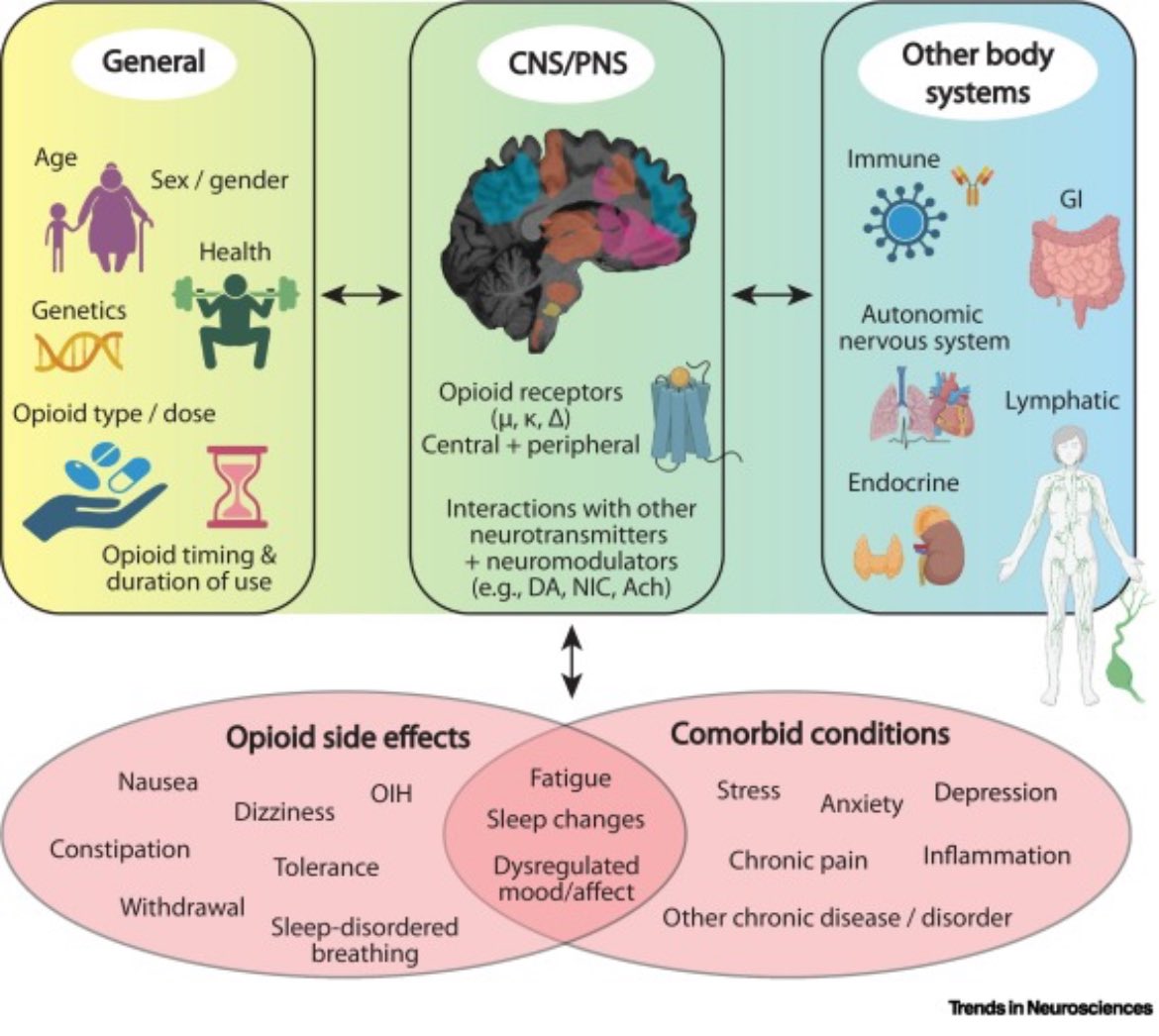
Now published online!🎉 New @TrendsNeuro article reviewing the latest cutting-edge science and what we still need to know about how opioids 💊impact the human brain.🧠 ⭐️Open Access⭐️until July 6th via this Share Link:
authors.elsevier.com/a/1j6DRbotq3zH…
Katie Martucci PhD tweet mediaKatie Martucci PhD tweet mediaKatie Martucci PhD tweet mediaKatie Martucci PhD tweet media
English
2
15
34
5.8K