Michelle Wille

27.6K posts

Michelle Wille banner
Michelle Wille

Michelle Wille

@DuckSwabber

Avian influenza & avian virome ecology | "Expert in Ducks" - spam mail | "Walking encyclopedia for avian influenza" - CVdS | (she/her)

Melbourne, Victoria Katılım Şubat 2014
4.1K Takip Edilen5.5K Takipçiler
Michelle Wille retweetledi

Sinem Toraman Turk
Sinem Toraman Turk@SinemTrmnTurk·
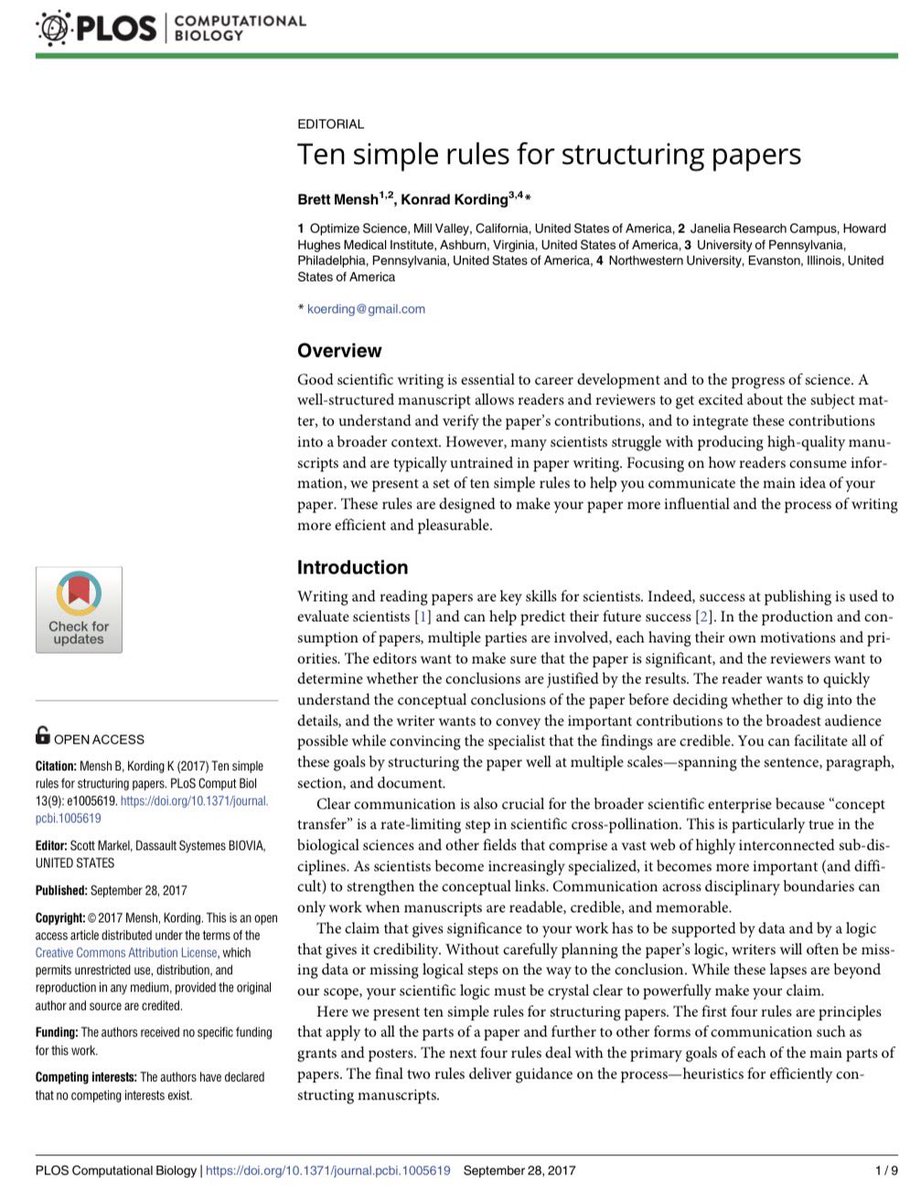
Bu 👇🏼 makaleyi Yale’de hibe proje yazma dersinde önermişlerdi. Makale/proje için geçerli olduğunu düşünüyorum. Özeti: 1. Tek bir ana mesaja odaklanın Makale tek bir merkezi katkı etrafında dönmeli. Başlık da bu mesajı net vermeli.Okuyan biri 1 yıl sonra bile ana fikri hatırlamalı
Sinem Toraman Turk tweet media
Türkçe
7
138
1K
69.8K
Michelle Wille retweetledi
Matt Dancho (Business Science)
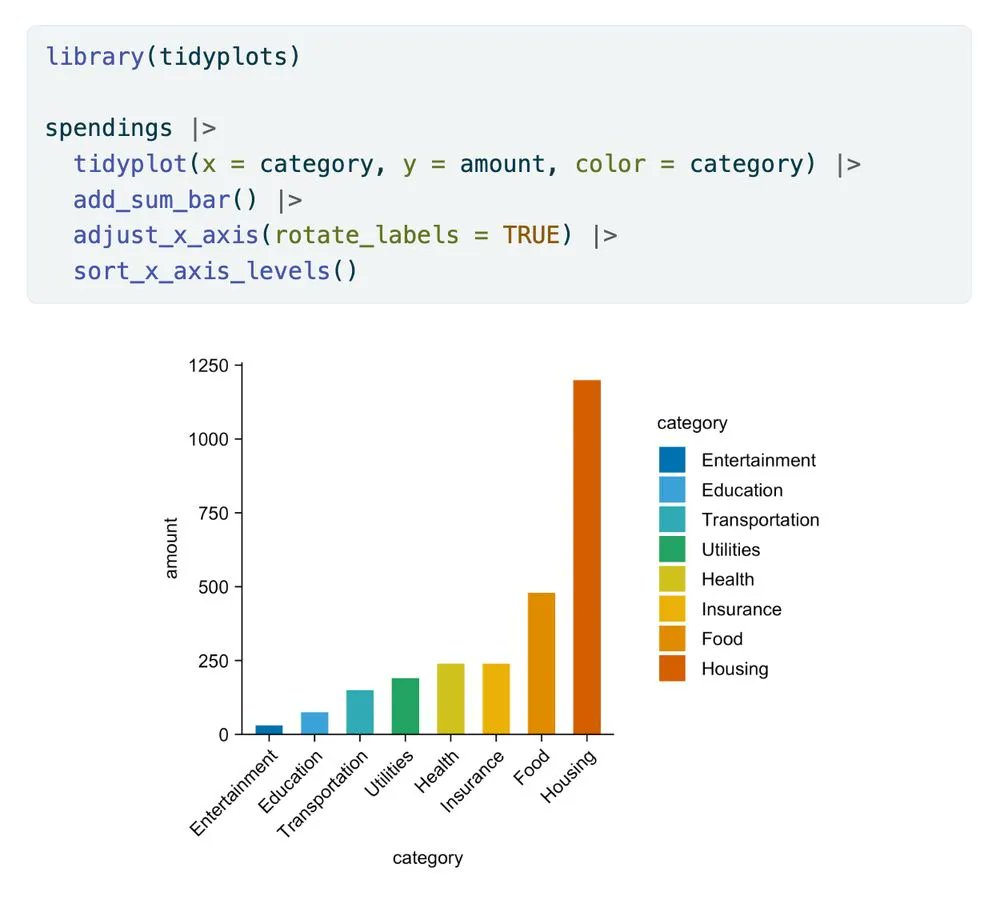
Understanding regression models is essential in data science. In 4 minutes, I'll demolish your confusion. Let's go:
Matt Dancho (Business Science) tweet media
English
8
235
1.4K
118.8K
Michelle Wille retweetledi
Stu Weiss
Stu Weiss@stu_weiss63·
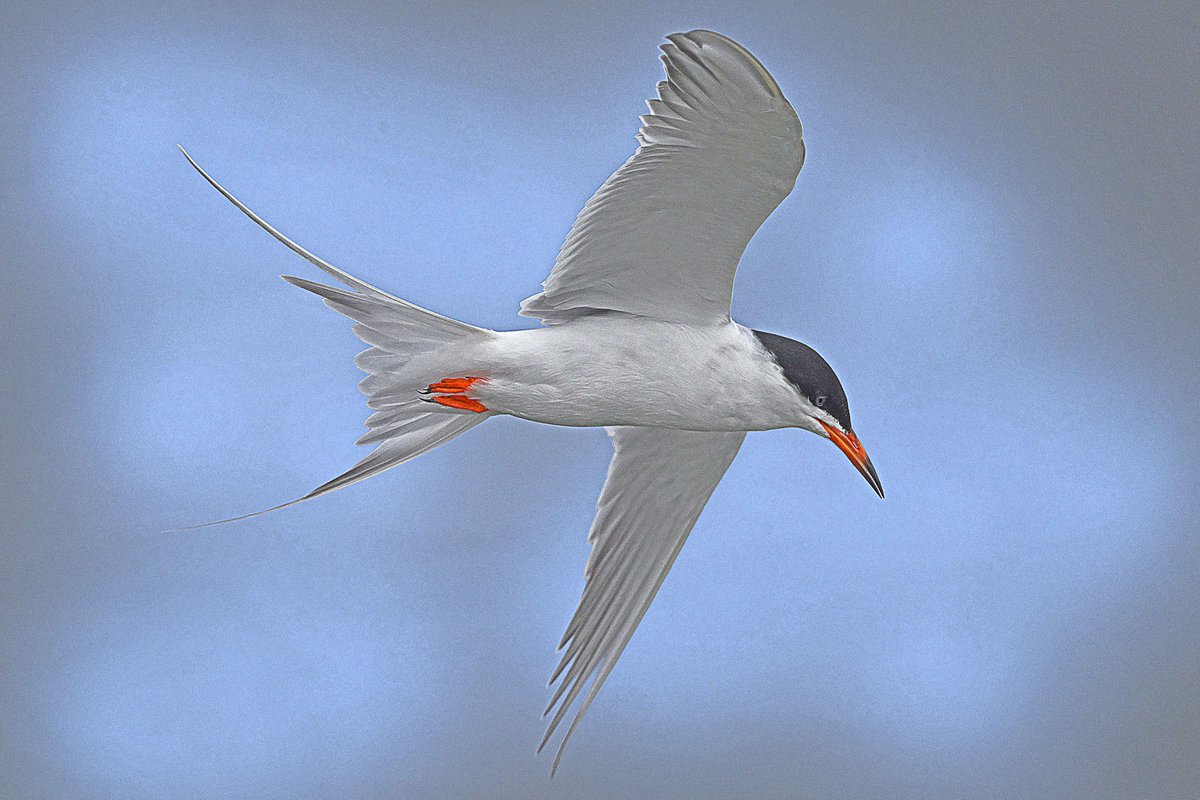
Forsters Tern as graphic art. Forsythe NWR, NJ.
Stu Weiss tweet media
English
1
10
124
1.2K
Michelle Wille retweetledi
Sayed Abdel-whab (ORCID: 0000-0003-2103-0922)
Systems biology reveals H5N1 pathogenesis in ducks: RIG-I, TLR, NF-κB, and JAK/STAT pathways form a central antiviral network. Key hub genes (e.g., STAT1, RIG-I, IRF7) drive host response → targets for intervention. 🔗 doi.org/10.3390/ijms27…
English
0
4
6
472
Michelle Wille retweetledi
Sayed Abdel-whab (ORCID: 0000-0003-2103-0922)
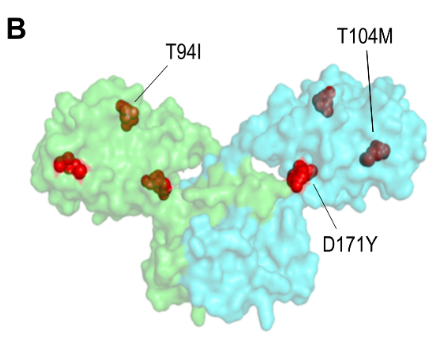
Small changes, big effects → zoonotic risk Seal-to-mammal adaptation in avian flu, including current 2.3.4.4b H5N1, is increasingly evident. NS1 is conserved, but few mutations can strongly enhance IFN antagonism, stability, & replication in human cells journals.asm.org/doi/10.1128/jv…
Sayed Abdel-whab (ORCID: 0000-0003-2103-0922) tweet mediaSayed Abdel-whab (ORCID: 0000-0003-2103-0922) tweet media
English
3
6
14
815
Michelle Wille retweetledi
Joachim Schork
Joachim Schork@JoachimSchork·
AI-assisted coding directly inside your R session? Yes, it’s possible. With the gander package, you can interact with AI without leaving R. Set up your environment, connect your API key (for example, ChatGPT or Claude), and start writing prompts. Why use gander: 🔹 Stay focused without switching tools 🔹 Speed up repetitive coding tasks 🔹 Get immediate feedback on your code and questions 🔹 Keep everything in one consistent environment 🔹 Work directly with your current R objects and data The visualization below shows an example of a gander workflow: setting up the package, creating a heatmap with ggplot2, adjusting the colors, and making the result interactive with plotly, all through gander prompts and without writing the code yourself. In a recent Statistics Globe Hub module, you will learn step by step how to use gander for AI-assisted coding in R, write effective prompts, and apply it to real data science workflows. The Statistics Globe Hub is an ongoing learning program focused on practical skills in statistics, data science, AI, and programming with R and Python. More info about the Statistics Globe Hub: statisticsglobe.com/hub #AI #DataScience #RStats #Coding #Programming #DataAnalytics #statisticsglobehub
GIF
English
0
20
112
5.1K
Michelle Wille retweetledi
Reviewer3
Reviewer3@reviewer3com·
It's finally out! The first benchmark of a dedicated AI manuscript reviewer. When we first launched R3 in June, AI review was still taboo. Since then, more tools have launched and more researchers have started experimenting with AI on their papers! But how do these tools actually compare, both to each other and to human reviews? We wanted to contribute a benchmark to help the field make sense of all the recent progress! We compare publicly available human reviews with R3 and frontier LLMs on thousands of papers -- across social science, life science, and computer science research.
Reviewer3 tweet media
English
2
12
47
4.3K
Michelle Wille retweetledi
Huiluo Cao 曹慧荦
Huiluo Cao 曹慧荦@hlcao·
Benchmarking of shotgun sequencing depth reveals the potential and limitations of shallow metagenomics and strain-level analysis | Nature Microbiology nature.com/articles/s4156…
English
0
12
28
2.5K
Michelle Wille retweetledi
@KAPPA-FLU
@KAPPA-FLU@KappaFlu·
Emergence of D1.1 reassortant H5N1 (clade 2.3.4.4b) in North America signals an evolutionary shift since mid-2024 linked to faster spread, expanded host range, increased reassortment, bovine spillover, & severe human infections, including non-farm workers. biorxiv.org/content/10.648…
English
0
5
7
699
Michelle Wille retweetledi
@KAPPA-FLU
@KAPPA-FLU@KappaFlu·
Avian H5N1 (2.3.4.4b) infects mammary tissue across beef & dairy breeds: Angus, Holstein, Limousin. Both avian (α2,3) & human (α2,6) receptors present. The udder: an unexpected mixing vessel for influenza A reassortment. doi.org/10.64898/2026.…
English
0
3
4
340
Michelle Wille retweetledi
@KAPPA-FLU
@KAPPA-FLU@KappaFlu·
Good news & a warning: Seasonal H1N1 infection boosts antibodies against H5N1 clade 2.3.4.4b... but NOT against clade 2.3.2.1a. Cross-protection wanes by day 90. Your flu history matters depending on the H5N1 clade. doi.org/10.1080/222217…
English
0
3
2
233
Michelle Wille retweetledi
@KAPPA-FLU
@KAPPA-FLU@KappaFlu·
H5N1 reassortment isn't random, it's seasonal. Ducks, geese & the Central flyway drive new genotypes as LPAI cases rise. Spillover genotypes B3.13 & D1.1 emerged during peak mixing. Time to rethink pandemic risk assessment doi.org/10.64898/2026.…
English
0
4
9
431
Michelle Wille retweetledi
Erik Karlsson
Erik Karlsson@E_A_Karlsson·
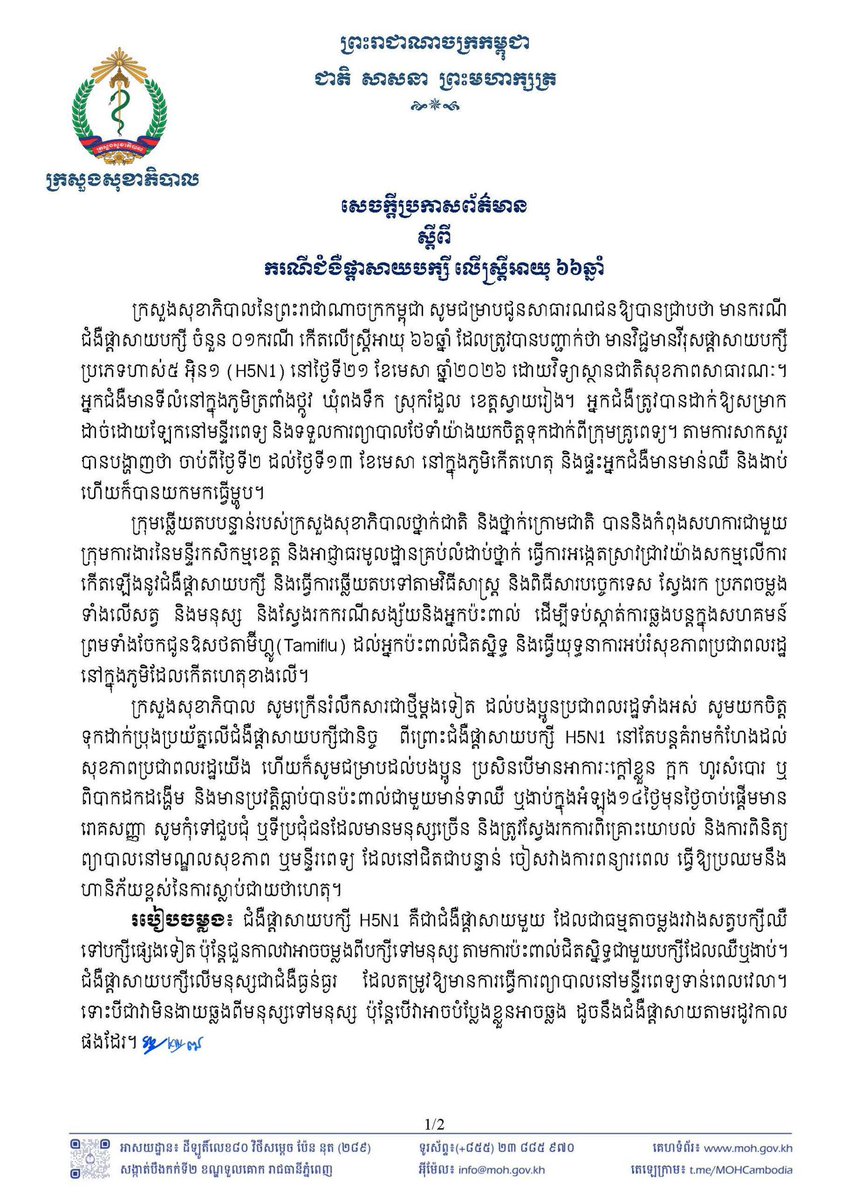
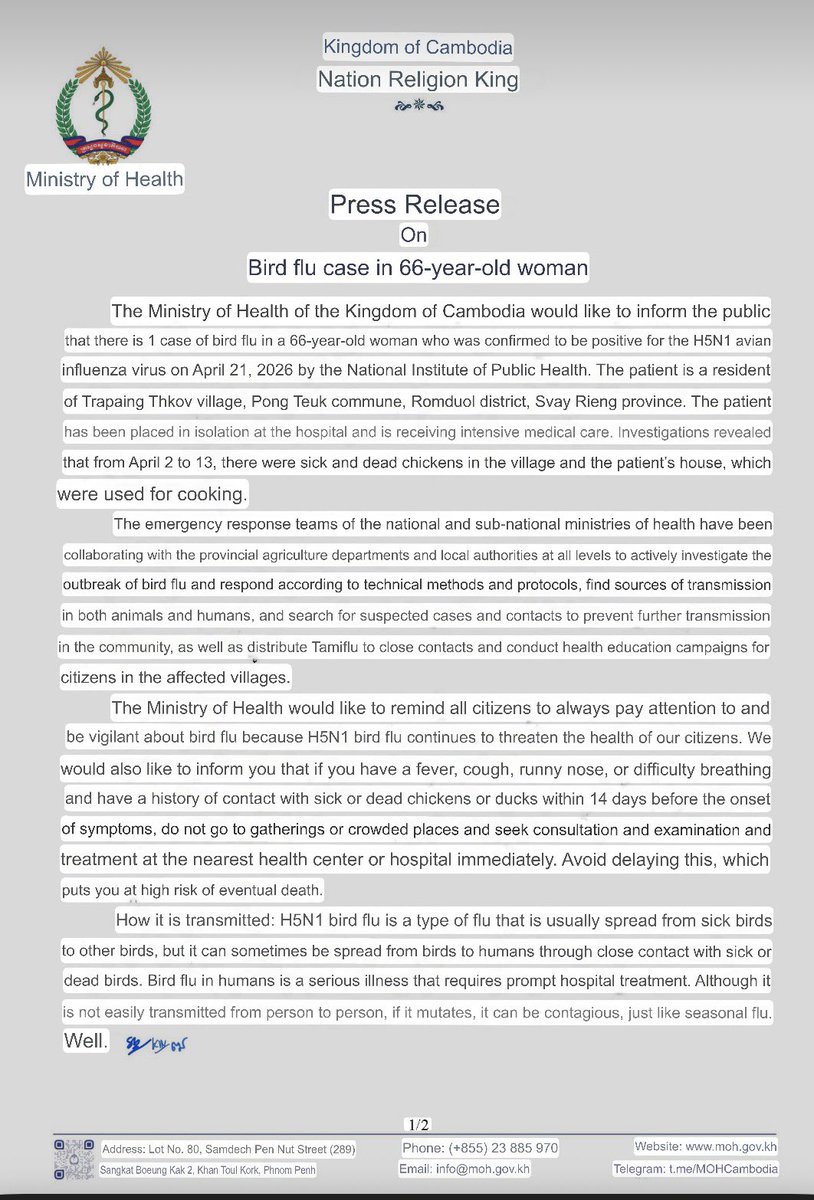
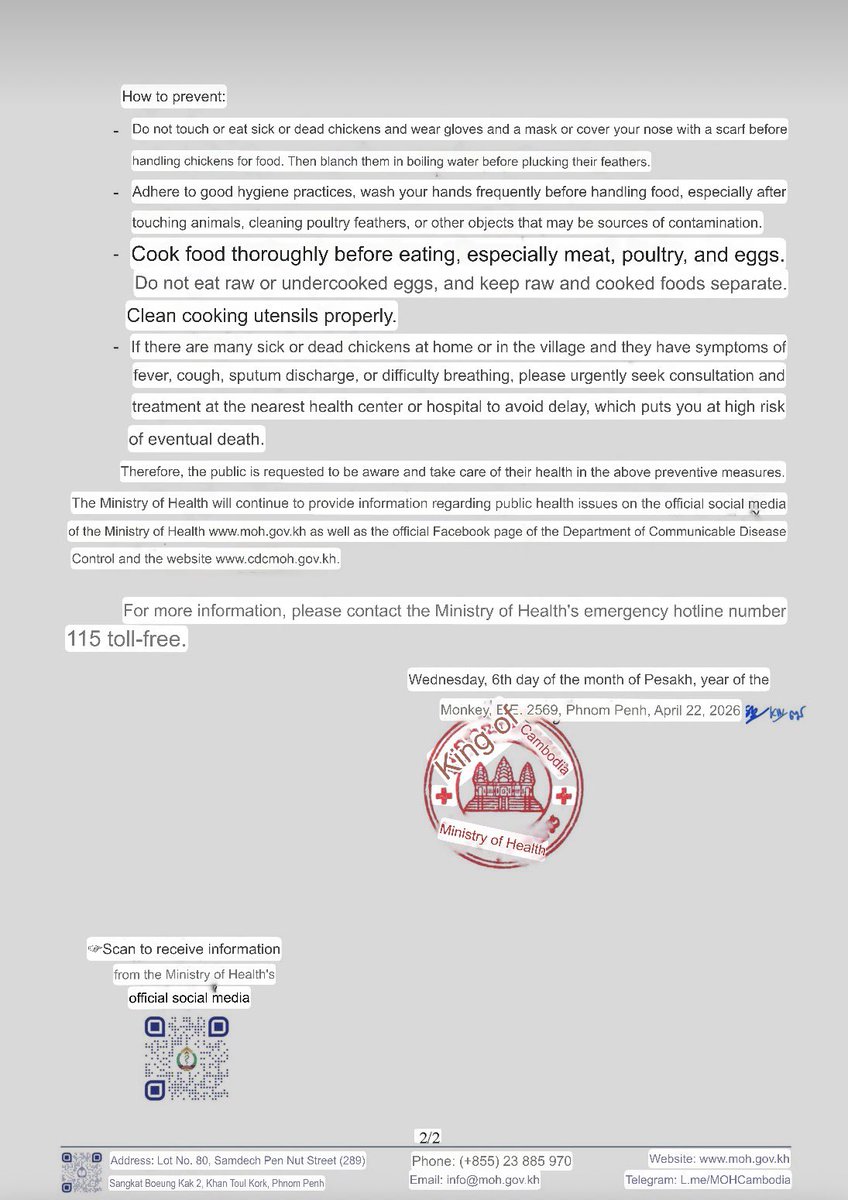
4th human #H5N1 case of 2026 in #Cambodia A 66-year-old woman from Svay Rieng province, currently hospitalized and receiving treatment. 2026: 4 cases, 0 deaths Since 2023: 38 cases, 15 deaths (CFR 39.5%) Since 2004: 94 cases, 52 deaths (CFR 55.3%)
Erik Karlsson tweet mediaErik Karlsson tweet mediaErik Karlsson tweet mediaErik Karlsson tweet media
English
2
26
47
3.3K