
fotobuni

141K posts

fotobuni banner
fotobuni

fotobuni

@fotobuni

Photographer, arty crafty, book reader, encouraging community, networks, inclusivity, Kettle always on.

Katılım Şubat 2014
2.6K Takip Edilen1.9K Takipçiler
fotobuni retweetledi
Beatlesfab4ever
Beatlesfab4ever@Beatlesfab40·
I'm Only Sleeping - The Beatles 1966. This video was directed by Em Cooper and uses oil paint on celluloid. It was commissioned by The Beatles (Apple Corps/Universal Music) for the rerelease of Revolver in 2022. The video won a Grammy award in 2024. #Beatles #TheBeatles
English

4
137
698
17.6K
fotobuni retweetledi
Fascinating
Fascinating@fasc1nate·
In February 2015, BBC journalist Stuart Flinders was in Liverpool asking passersby about the 1967 Merseyside derby. By chance, he stopped Tommy Lawrence, unaware that he was the former Liverpool goalkeeper who had actually played in the match. When asked if he remembered the game, Lawrence smiled and replied, “I do, I played in it.” The exchange quickly went viral, charming fans with its mix of humility and perfect timing. Lawrence, affectionately known as “The Flying Pig,” died in January 2018. The moment endures as a much-loved piece of football folklore, capturing the magic of football’s shared memory.
English
20
233
2.9K
194.2K
fotobuni retweetledi
Marie
Marie@m77481070·
« Je voulais simplement essayer de vivre ce qui jaillissait spontanément de moi. Le monde était une bulle de savon, un opéra, une joyeuse absurdité. » Hermann Hesse
Marie tweet media
Français
1
27
73
1.5K
fotobuni retweetledi
Karga
Karga@kuzgun79·
Karga tweet media
ZXX
1
142
974
10.6K
fotobuni retweetledi
ALEXIS ™I ❤️🇷🇼•
Twenty caterpillars found in British gardens, hedgerows, and woodland — from the spectacular to the almost invisible. Most of these will become a butterfly or moth you would want to see flying. Knowing which is which is the first step to leaving them where they are. 🌿 Swallowtail (Papilio machaon britannicus) — green with black bands and orange spots. Norfolk Broads only. Fully protected. If found: leave it. Peacock (Aglais io) — glossy black with white dots and fine black spines. Feeds on nettles in groups. Painted Lady (Vanessa cardui) — yellowish-green with black spines and yellow lateral spots. Red Admiral (Vanessa atalanta) — black with branched black spines and pale lateral markings. Nettles. Large White (Pieris brassicae) — yellow-green with black spots in rows. The one that eats your cabbages. Comma (Polygonia c-album) — dark brown with white or orange markings and branched spines. Hops and nettles. Death's Head Hawk-moth (Acherontia atropos) — large, vivid yellow-green with purple-blue diagonal stripes and a curved horn. A rare migrant. Privet Hawk-moth (Sphinx ligustri) — the largest British hawk-moth larva. Green with white and purple diagonal stripes, prominent horn. Fox Moth (Macrothylacia rubi) — densely furred, dark brown-black with orange-brown bands. Moorland and heathland. Garden Tiger (Arctia caja) — the woolly bear. Dense long black and rusty-red hairs. Feeds on many low plants. Oak Processionary Moth (Thaumetopoea processionea) — grey-brown with dense white hairs in procession lines on oak. Established in London and SE England. NOTIFIABLE — report to the Forestry Commission. Do not approach or touch. Lappet Moth (Gastropacha quercifolia) — large, grey-brown, with lateral lobe-like flaps, feeding on hawthorn and blackthorn. Cabbage Moth (Mamestra brassicae) — smooth green to brown, an inconspicuous pest larva in brassicas and other crops. Silver Y (Autographa gamma) — looping green larva with fine white lines. A common migrant. Magpie Moth (Abraxas grossulariata) — pale yellow-white with black spots and an orange lateral stripe. Leopard Moth (Zeuzera pyrina) — cream with black spots, bores into woody stems and branches. Hummingbird Hawk-moth (Macroglossum stellatarum) — green or brown with yellow lateral stripes and a blue-tipped horn. A common summer migrant. Brimstone (Gonepteryx rhamni) — bright vivid green, cylindrical, on buckthorn. Perfectly camouflaged. Brown-tail Moth (Euproctis chrysorrhoea) — white and brown with red spots and tufted hairs. Irritating hairs — handle with gloves and eye protection. Small Tortoiseshell (Aglais urticae) — black with white spots and branched black spines, feeding on nettles in colonies.
ALEXIS ™I ❤️🇷🇼• tweet media
English
0
23
53
1.2K
fotobuni retweetledi
Art or Other Things
Art or Other Things@ArtorOtherThing·
Thistle, 1886 Fidelia Bridges
Art or Other Things tweet media
English
3
167
841
15.3K
fotobuni retweetledi
The Husky
The Husky@Mr_Husky1·
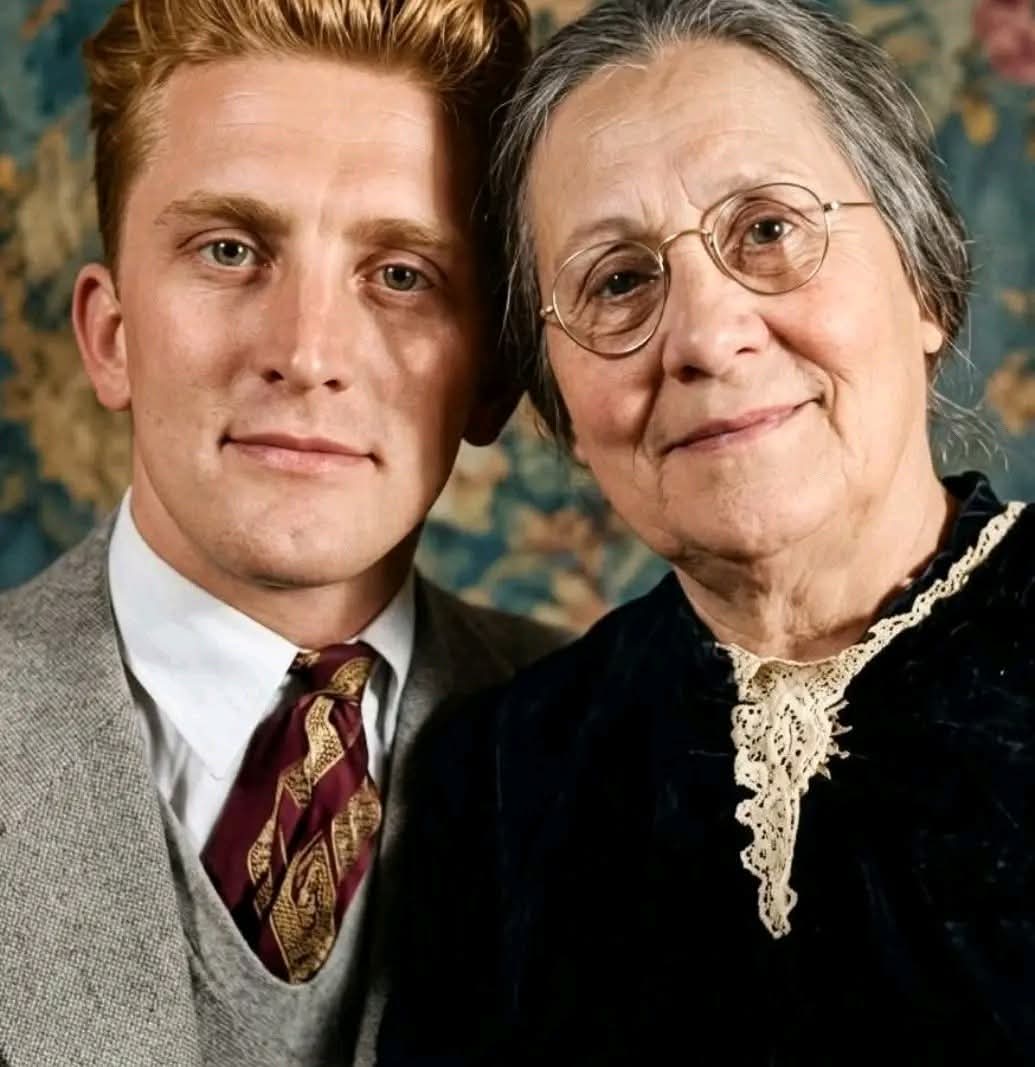
She was called "Hey, you" by her own husband. Never by her name. Never once. Her name was Bryna. She crossed an ocean with nothing — no education, no English, no guarantee of anything — just a ticket bought by a man named Herschel who had promised her a better life in America. They settled in Amsterdam, New York, a working-class mill town far from the dreams she had carried on that ship. The better life never came. Herschel collected rags and scraps for a living. What little he earned disappeared into alcohol and card games. He was cold, rough, and careless — the kind of man who raises his voice and never raises his children. Bryna raised them herself. Six daughters and a son, in a house where hunger was a regular visitor. She couldn't read or write. She took in laundry. She scrubbed floors. And when even that wasn't enough, she walked to the Jewish butcher with a quiet, dignified request: "The bones you don't need — may I have them?" She'd take those discarded bones home and boil them for hours. That thin soup fed her family for days. Her youngest son, Issur — everyone called him Izzy — watched all of this. He watched his mother fight for them with everything she had and nothing in her hands. And somehow, impossibly, he told her he wanted to be an actor. She didn't laugh. She didn't tell him to be practical. She looked at this poor ragman's boy from a town nobody had heard of, and she believed him. Izzy left. He struggled. He clawed his way forward. And eventually, the world came to know him as Kirk Douglas — one of Hollywood's greatest stars. Spartacus. Paths of Glory. Lust for Life. A legend. But he never forgot the soup made from bones. He never forgot the woman who made it. When Kirk formed his own film production company, he didn't name it after himself. He named it Bryna Productions — after her. In 1958, Bryna Productions released The Vikings, one of the biggest films of the year. And Kirk had something he needed to show his mother. He took her to Times Square. Among all those lights, all that noise, all that impossible American spectacle — he stopped in front of a massive billboard and pointed. BRYNA PRESENTS THE VIKINGS. Her name. Enormous. Illuminated. Seen by thousands of strangers every single day. The woman who had never learned to read her own name stood in Times Square and wept. Not from pain, for once. From joy. A few months later, in December of 1958, Bryna passed away peacefully — her son by her side. Her last words to him were not of fear or regret. They were a mother's instinct, right to the very end: "Izzy, son, don't be afraid. This happens to everyone." Even dying, she was still trying to protect him. Kirk Douglas went on to live 103 years. He became a Hollywood icon, a philanthropist, the father of actor Michael Douglas. He achieved things that boy boiling bones for soup could never have imagined. But he said it his whole life: she was the reason. Every single time. Every film bearing the words "A Bryna Production" was never really a business credit. It was a love letter. Written in lights. From a son who never forgot that his mother fed a family on bones — and somehow still found enough love left over to fuel a legend. She deserved to have her name in lights. And her son made absolutely certain she lived to see it.
The Husky tweet media
English
97
988
4.7K
102.2K
fotobuni retweetledi
Dr Rachel Clarke
Dr Rachel Clarke@doctor_oxford·
This may seem arcane, but it’s a deeply concerning & spectacularly cynical move from this government to sideline NICE - the National Institute for Health and Care Excellence - whose role is vitally important in protecting NHS patients from the lobbying clout of the Pharma industry lobby. Until now - and since 1999 - NICE has made independent, evidence-based decisions about which medicines constitute value for money for the NHS to buy. Largely free from political manipulation, it’s renewed internationally as a model of how to protect patients against excessive drug company prices. It enables the NHS to strike hard bargains with Big Pharma. But @wesstreeting has just used a statutory instrument in parliament (that no-one has voted on) to award himself power to dictate what the NHS pays for drugs, overriding NICE’s vital role in insulating the NHS from pharmaceutical price gouging. Why would he do something so self-evidently bad for patients? Because, it seems, this is a price the government is willing to pay to do a deal with Trump on US-UK drug pricing. What an outrageous power grab for a man who claims to care about patients. Already hospitals up and down the country are cutting staff and closing services under pressure to make cost savings. But every pound spent on, essentially, increasing profits for US Pharma is money that *doesn’t* get spent on nurses, doctors and treatments we know are good value for money. As the editor of the BMJ, @KamranAbbasi, wrote this week, this: "will end up harming vulnerable people to boost the profits of already obscenely profitable drug companies." Starmer has shamelessly caved in to the White House. Even the former Tory Health Secretary, Andrew Lansley, now a Lord, has joined forces with Labour and Lib Dem MPs opposing Streeting’s power grab. Truly an appalling move from a government that claims they’re rebuilding the NHS while, in this case, blatantly undermining our abilities to provide cost-effective care.
Dr Rachel Clarke tweet media
English
72
1.2K
1.6K
42.1K
fotobuni retweetledi
The New Yorker
The New Yorker@NewYorker·
A cartoon by Rose Anne Prevec.
The New Yorker tweet media
English
2
80
673
30.3K
fotobuni retweetledi
Gail Myerscough
Gail Myerscough@GailMyerscough·
If I’m being honest, I’m feeling pretty down about my small business. I’m working so hard but it’s been very quiet. It’s bloody difficult at the moment. Please have a look at what I do and repost to spread the word. gailmyerscough.co.uk
English
14
237
236
18.7K
fotobuni retweetledi
Wholesome
Wholesome@wholesome_X_·
Life is more beautiful when you have friends who know how to be friends.
English
106
3.2K
35.3K
1M
fotobuni retweetledi
Science girl
Science girl@sciencegirl·
The man who went viral for carrying his corgi in a backpack is now using the same idea to help rescue dogs get noticed—toting them around to boost their chances of adoption. 📹 kittytime
English
189
3K
24.6K
364.8K
fotobuni retweetledi
あざみ
あざみ@mi_nminmi_·
あざみ tweet media
ZXX
2
315
3.5K
50.1K
fotobuni retweetledi
The Dr. Logos ©
The Dr. Logos ©@TheDoctorLogos·
Japanese Ink Drawing Style🇯🇵🖤 by iachmairart
English
0
15
205
9.8K
fotobuni retweetledi
The Husky
The Husky@Mr_Husky1·
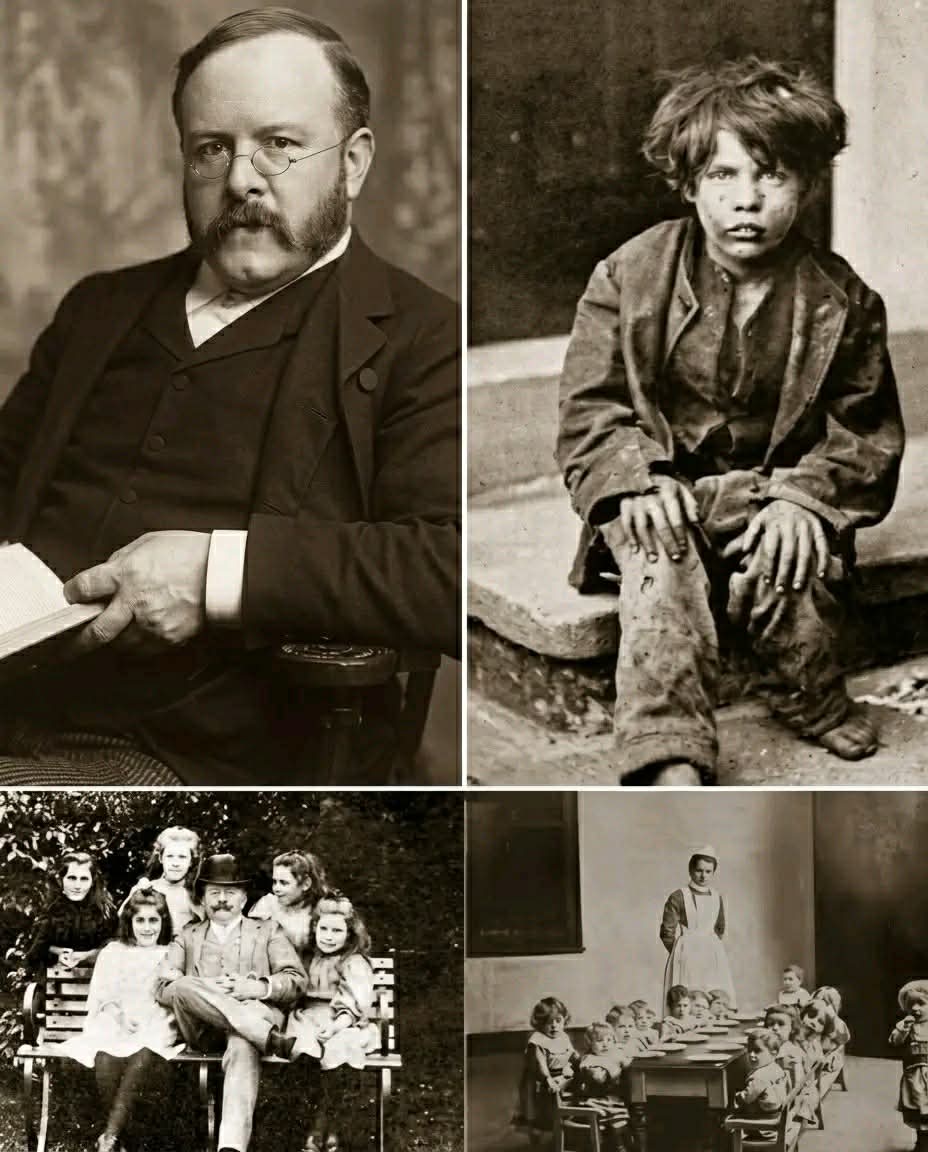
A 7-year-old boy slept under a bridge in London. No shoes. No food. No one who knew his name. A young stranger stopped and asked him a simple question — and what the child said next changed history forever. His name was Jim. The year was 1866. London was choking under black factory smoke, and the East End was a maze of sewers, starvation, and invisible children. Jim was one of them — filthy clothes, matted hair, eyes that held pain no child should ever know. Thomas Barnardo was just a 21-year-old medical student, quietly preparing to travel to China as a missionary. Then he met Jim crouched in a doorway, shivering. "Are there more like you?" Thomas asked. "Heaps of 'em, sir," Jim whispered. "More than I can count. We sleep where the dogs won't go." A few days later, Jim was dead. He died alone in the cold, another child the city had simply forgotten to notice. Thomas Barnardo never boarded that ship to China. Instead, in 1870, he opened a small home for abandoned boys in East London. Above the door, he hung a sign that read: "No destitute child will ever be refused admission." One night, the home was full and he turned a boy away. Two days later, that same child was found dead from hunger and cold. Thomas wept. He made a vow he never broke: the door would always open. When critics told him he was crazy and would run out of money, he kept building. More homes. Foster families. Vocational training. He gave street children — children people called "rats" — a trade, a name, and a future. He didn't ask for papers. He didn't ask for backgrounds. He simply opened the door. By the time Thomas Barnardo died in 1905, he had rescued more than 60,000 children from the streets of Britain. Today, Barnardo's is still one of the UK's largest children's charities — still keeping a dead boy's whispered words alive, 160 years later. Everything began with one man who stopped walking, looked down, and truly saw a child that the rest of the world had decided wasn't worth seeing. Tag someone who still believes one person can change everything. 💙
The Husky tweet media
English
133
2.5K
10.3K
341.1K
fotobuni retweetledi
monty python every day
monty python every day@pythonsdaily·
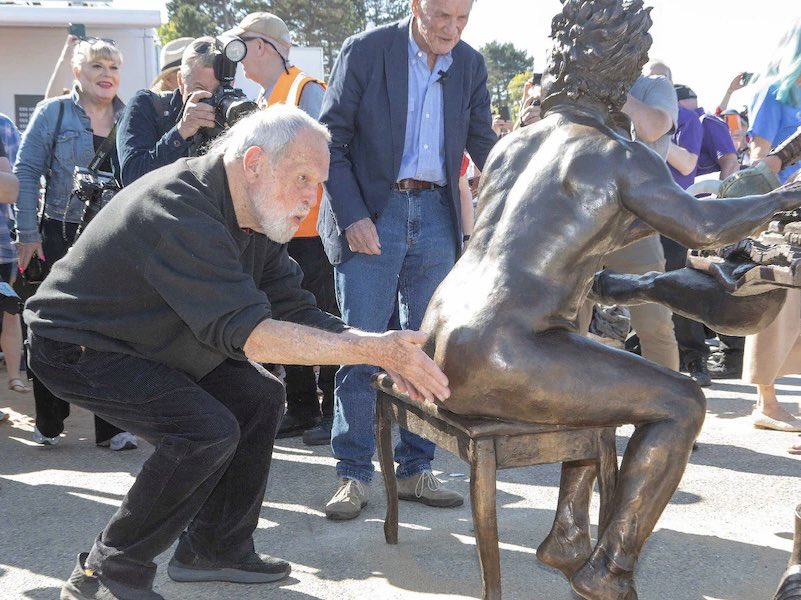
Terry Jones statue was unveiled in Colwyn Bay today with Carol Cleveland, Michael Palin and Terry Gilliam in attendance
monty python every day tweet mediamonty python every day tweet media
English
32
298
2.2K
132.8K
fotobuni retweetledi
deaayundita
deaayundita@deaayunditaa·
Making little spoons with willow twigs with the kids on Labor Day was so much fun 😉
English
400
533
1.7K
149.9K
fotobuni retweetledi
Bella
Bella@natural77384672·
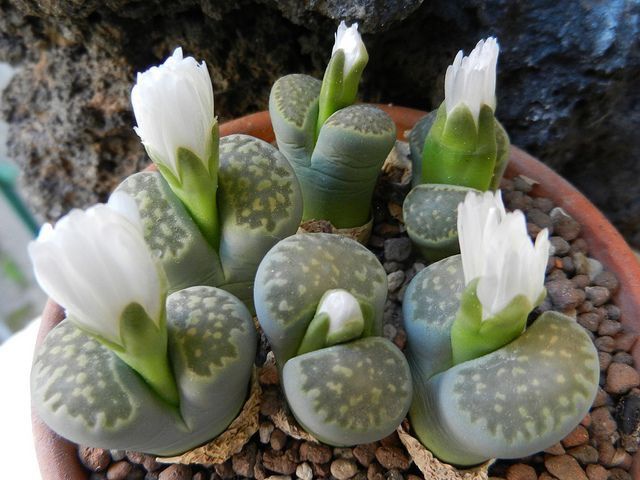
Succulents With White Flowers
Bella tweet media
English
0
37
451
4.2K