Chairman Meow retweetledi
Chairman Meow
1K posts

Chairman Meow retweetledi

A Danish scientist counted bugs on the same windshield, same road, same conditions, every year for 20 years. By year 20, 80% of the insects were gone.
In Germany, a group of volunteer bug scientists did something even bigger. They set traps in 63 nature reserves, not farms, protected land, and weighed everything they caught. Same traps, same method, 27 years straight. The total weight of flying bugs dropped 76%. In midsummer, when insects should be peaking, it was 82% gone. A follow-up in 2020 and 2021 checked again. No recovery.
In the UK, they literally ask drivers to count splats on their license plates after a trip. The 2024 count came back 63% lower than just 2021. Three years.
A 2020 study pulled together 166 surveys from 1,676 locations around the world. Land insects are disappearing at roughly 9% every ten years.
Here’s where it hits your plate. About 75% of the food crops we grow depend on insects to pollinate them, everything from apples to almonds to coffee. One 2025 study modeled what a full pollinator collapse would look like: food prices jump 30%, the global economy takes a $729 billion hit, and the world loses 8% of its Vitamin A supply.
Birds are already feeling it. North America has lost 2.9 billion birds since 1970. A study from just weeks ago found half of 261 bird species on the continent are now in serious decline, and the losses are speeding up in farming regions. The birds that eat insects lost 2.9 billion. The birds that don’t eat insects? They gained 26 million. That ratio tells the whole story.
One of the German researchers behind the 27-year study drives a Land Rover. He says it has the aerodynamics of a refrigerator. It stays clean now.
MAVERICK X@MAVERIC68078049
I am sure many of you have noticed this.
English
Chairman Meow retweetledi

Majority of Indians have no real life outside of work, no interests, no hobbies nothing.
Whatever interests or hobbies if you can call them that,we have is mostly sedentary kind, binging on Netflix, or endlessly scrolling on Social Media.
Even when we go out on weekends, it's mostly performative, just to show off on Instagram, but no real effort to learn about the place visited.
When you really have no life outside of work, any place will be boring, not just Bengaluru, even Melbourne or London would feel the same.
abhinav@AbhinavXJ
It's not even my 3 months in banglore, but slowly realising there ain't much to travel here, except cafe and pubs hopping

English
Chairman Meow retweetledi

Interesting Fact: These athletes get paid an extra $100k for every time they break a world record. That's why Duplantis always breaks it by 0.01m in every other major event. 🤣🤣
The Khel India@TheKhelIndia
Mondo Duplantis breaking 6.31 WR 🤩🤯
English
Chairman Meow retweetledi

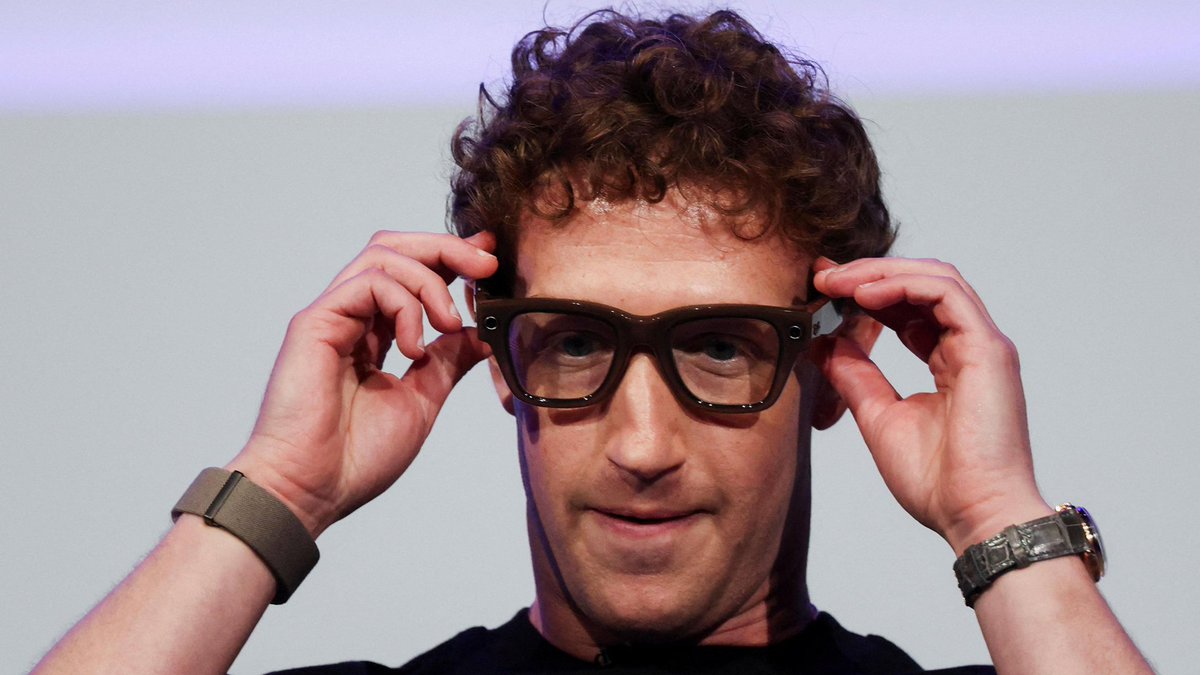
JUST IN: Meta sold 7 million Ray-Ban smart glasses in 2025 alone.
Workers in Kenya are watching the footage.
Not metadata. Not anonymized clips. The actual videos. People undressing. People in bathrooms. People having sex. Bank cards. Medical documents.
The blurring is supposed to protect privacy. It fails constantly. The contractors see everything.
Here is the part that should stop you cold: You did not buy the glasses. You did not agree to the terms of service. You did not consent to anything. But if someone wearing Meta glasses walks into your bedroom, your bathroom, your doctor's office, your home, a contractor on the other side of the world may be watching you right now.
The person wearing the glasses consented. Everyone else in the room did not.
Meta's defense is that this is all disclosed in the privacy policy. They are technically correct. Buried in language so dense that 99% of users never read it. And even if they did, it would not matter, because the terms govern the wearer's data. Not yours. You are not a party to the contract. You are the product being annotated.
Millions of AI-enabled cameras walking around in public. Recording constantly. Uploading to servers. Reviewed by humans earning a few dollars an hour to label your most intimate moments so the algorithm gets smarter.
This is not a bug. This is the business model.
The EU is already asking questions. MEPs submitted formal inquiries to the Commission this week demanding answers on GDPR compliance. The problem is obvious: European data protection law requires consent from data subjects. Bystanders are data subjects. Bystanders never consented. The entire architecture violates the regulation by design.
Meta's response has been silence and a reference to terms of service that do not apply to the people actually being filmed.
Google Glass died because people called the wearers "Glassholes" and banned them from bars. Meta solved the social problem by making the glasses look normal. They did not solve the privacy problem. They hid it.
Seven million units sold in 2025. The installed base is accelerating. Every unit is a potential surveillance node operated by someone who may not understand what they are feeding into the system and reviewed by contractors who see everything the algorithm cannot process.
The question is not whether this becomes a scandal. The question is whether the scandal arrives before or after the glasses are on 50 million faces.
Watch the EU. If Brussels moves on GDPR enforcement, Meta faces a choice: disable human review in Europe and cripple the AI training pipeline, or accept fines that could reach billions. Neither outcome is priced into the stock.
The glasses are selling faster than ever.
The contractors keep watching.
And somewhere right now, someone you have never met is looking at footage of you that you never knew existed.

AI at Meta@AIatMeta
Introducing Aria Gen 2, next generation glasses that we hope will enable researchers from industry and academia to unlock new work in machine perception, contextual AI, robotics and more. Aria Gen 2 details + sign up for availability updates ➡️ go.fb.me/8rku3b
English
Chairman Meow retweetledi

The math on this project should mass-humble every AI lab on the planet.
1 cubic millimeter. One-millionth of a human brain. Harvard and Google spent 10 years mapping it. The imaging alone took 326 days. They sliced the tissue into 5,000 wafers each 30 nanometers thick, ran them through a $6 million electron microscope, then needed Google’s ML models to stitch the 3D reconstruction because no human team could process the output.
The result: 57,000 cells, 150 million synapses, 230 millimeters of blood vessels, compressed into 1.4 petabytes of raw data. For context, 1.4 petabytes is roughly 1.4 million gigabytes. From a speck smaller than a grain of rice.
Now scale that. The full human brain is one million times larger. Mapping the whole thing at this resolution would produce approximately 1.4 zettabytes of data. That’s roughly equal to all the data generated on Earth in a single year. The storage alone would cost an estimated $50 billion and require a 140-acre data center, which would make it the largest on the planet.
And they found things textbooks don’t contain. One neuron had over 5,000 connection points. Some axons had coiled themselves into tight whorls for completely unknown reasons. Pairs of cell clusters grew in mirror images of each other. Jeff Lichtman, the Harvard lead, said there’s “a chasm between what we already know and what we need to know.”
This is why the next step isn’t a human brain. It’s a mouse hippocampus, 10 cubic millimeters, over the next five years. Because even a mouse brain is 1,000x larger than what they just mapped, and the full mouse connectome is the proof of concept before anyone attempts the human one.
We’re building AI systems that loosely mimic neural networks while still unable to fully read the wiring diagram of a single cubic millimeter of the thing we’re trying to imitate. The original is 1.4 petabytes per millionth of its volume. Every AI model on Earth fits in a fraction of that.
The brain runs on 20 watts and fits in your skull. The data center required to merely describe one-millionth of it would span 140 acres.
All day Astronomy@forallcurious
🚨: Scientists mapped 1 mm³ of a human brain ─ less than a grain of rice ─ and a microscopic cosmos appeared.
English
Chairman Meow retweetledi

Anyone who puts crows with pigeons and considers it the worst of the avian world, doesn't know an iota about how nature works.
On any given day, the crows supercedes pigeons in environmental utility. Pigeons are environmental minimalists, offering little functional diversity, while crows are sanitation workers of nature. Pigeons in India are heavily subsidized by humans for its survival, as a seed eater, while the crows clean up carcasses of dead animals, thrive on clearing rodents, insects, and other small animals due to their omnivorous nature.
Crows are highly sensitive, intelligent, and adaptable birds, making them excellent, proactive indicators of environmental health. Crows are known to abandon cities and places where air pollution levels reach dangerous levels of toxicity. Due to their ability to eat anything and everything possible, mass deaths of crows in an area are indicators of underlying spread of diseases. Due to their resilience, departure of crows from an area is used as an indicator of environmental degradation, indicating disturbed ecosystem. Plus, due to their opportunistic feeding pattern, a sudden increase in their population in the area indicates a large amount of solid waste is poorly managed and could give rise to unhygienic conditions in the later period.
Snehal 🍁@Snehalsays_03
The worst two birds in India
English
Chairman Meow retweetledi

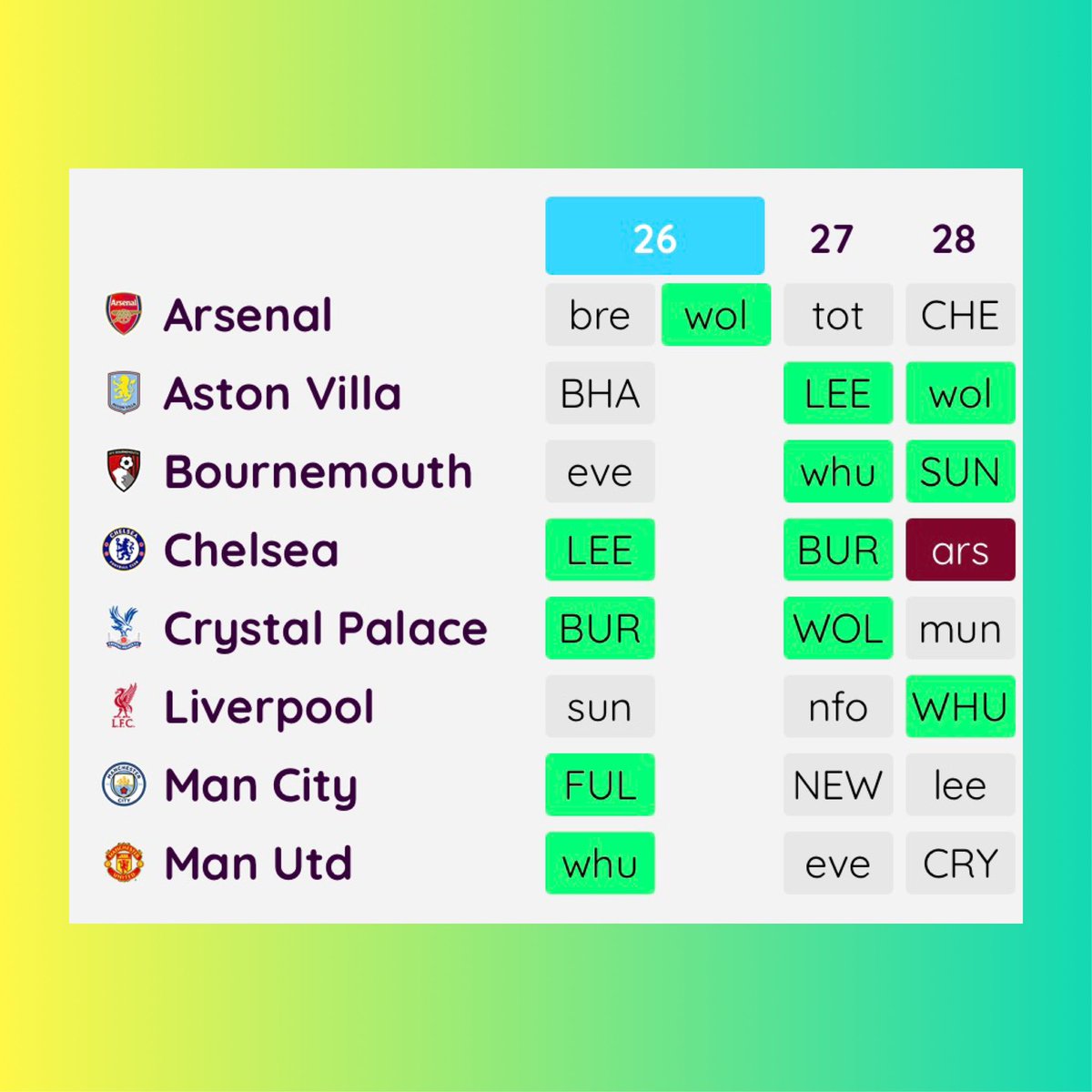
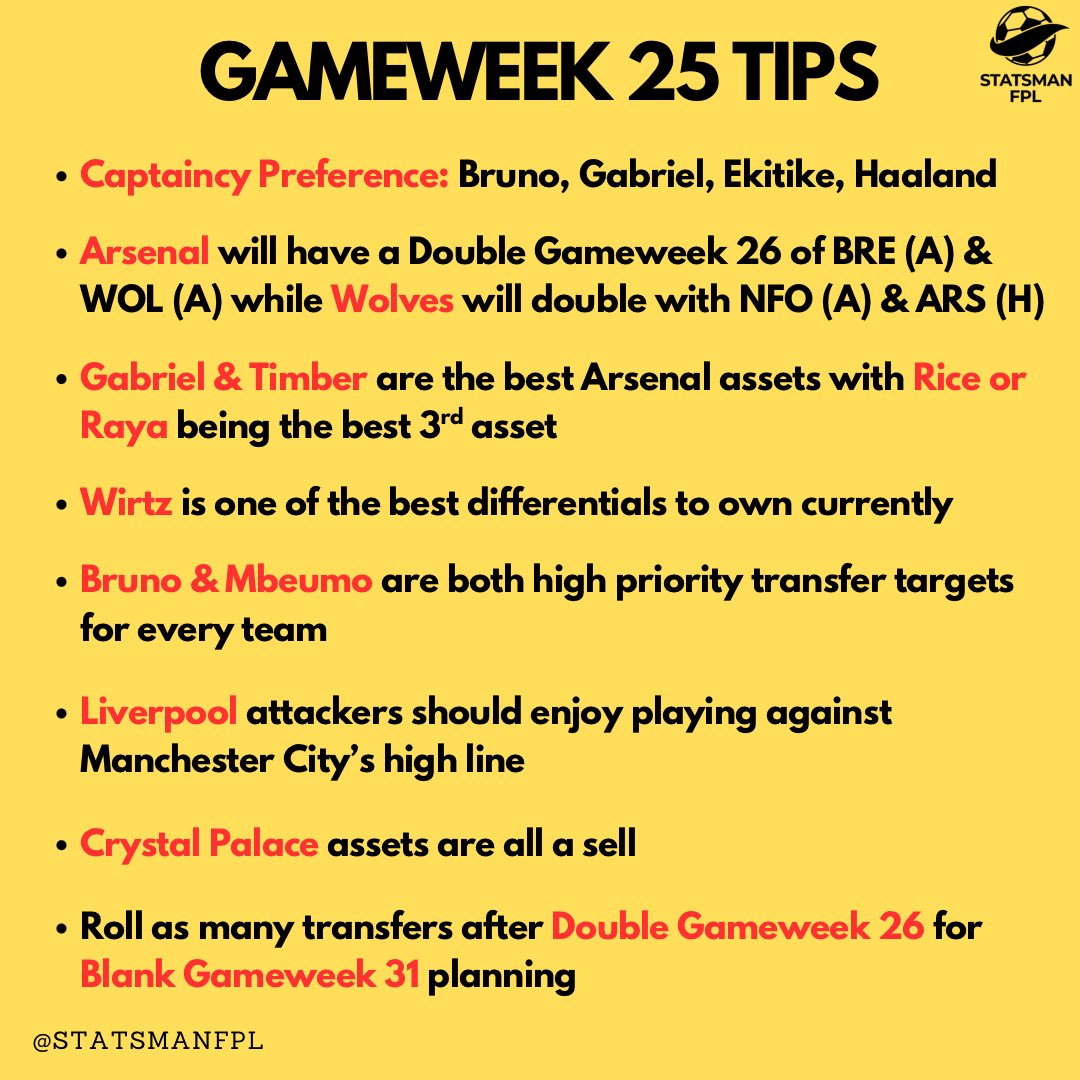
The perfect FPL plan for the next 3GWs, very short term ✅
1. ARS : Gabriel, Timber, Rice, Gyokeres
2. AVL : Cash, Rogers, Tammy (if Watkins isn't fit)
3. BOU : Adli, Kroupi, Senesi, Hill
4. CHE : Chalobah, Enzo, Palmer, JP
5. CRY : Munoz, Lacroix, Richards, Sarr
6. LIV : Ekitike, Wirtz
7. MCI : Haaland, Guehi, Cherki, Semenyo
8. MUN : Bruno, Mbeumo, Cunha

English
Chairman Meow retweetledi

@aakashgupta theguardian.com/environment/20…
They are most likely not 400+ years old nor are they fully blind - that figure for age comes from a dubious carbon dating procedure not generally considered appropriate for dating the age of animals due to lack of precision at relatively small timespans
English
Chairman Meow retweetledi