
Gaston Milano Millan

4.6K posts

Gaston Milano Millan banner
Gaston Milano Millan

Gaston Milano Millan

@GMilano

De paso por acá, siempre pensando que lo mejor está por venir más allá de todo.

-34.903337,-56.193933 Katılım Nisan 2009
1.8K Takip Edilen2.5K Takipçiler
Gaston Milano Millan
Gaston Milano Millan@GMilano·
Why does this matter? Coding agents call grep on every reasoning step. Each call blocks the next thought. Across a session, slow search compounds into minutes of dead time. It's probably the single biggest latency leak in any agent harness.
English
2
0
0
447
Gaston Milano Millan
Gaston Milano Millan@GMilano·
We made grep really fast. fast-grep on the Linux kernel (81k files, M1 Pro): 6–25× faster than ripgrep, 2–10× faster than ugrep , faster than every indexed grep we measured. Sub-200ms per query after a one-time index build. 🧵
English
1
1
15
5.2K
Gaston Milano Millan
Gaston Milano Millan@GMilano·
Salud a “La escuelita” fue el cuadro que amo mi viejo y del que mayores recuerdos tengo en la “B” colándome en el Roberto para poder ver a Racing, desde algún lado estarás viejo levantando algo que en vida no pudo ser . Me pone muy contento por todo Sayago , Gracias Racing querido quién sabe las vueltas de la vida no encuentre algún día a Santi vistiendo tus colores , salud campeones .
Gaston Milano Millan tweet media
Español
0
0
18
1.4K
Gaston Milano Millan
Gaston Milano Millan@GMilano·
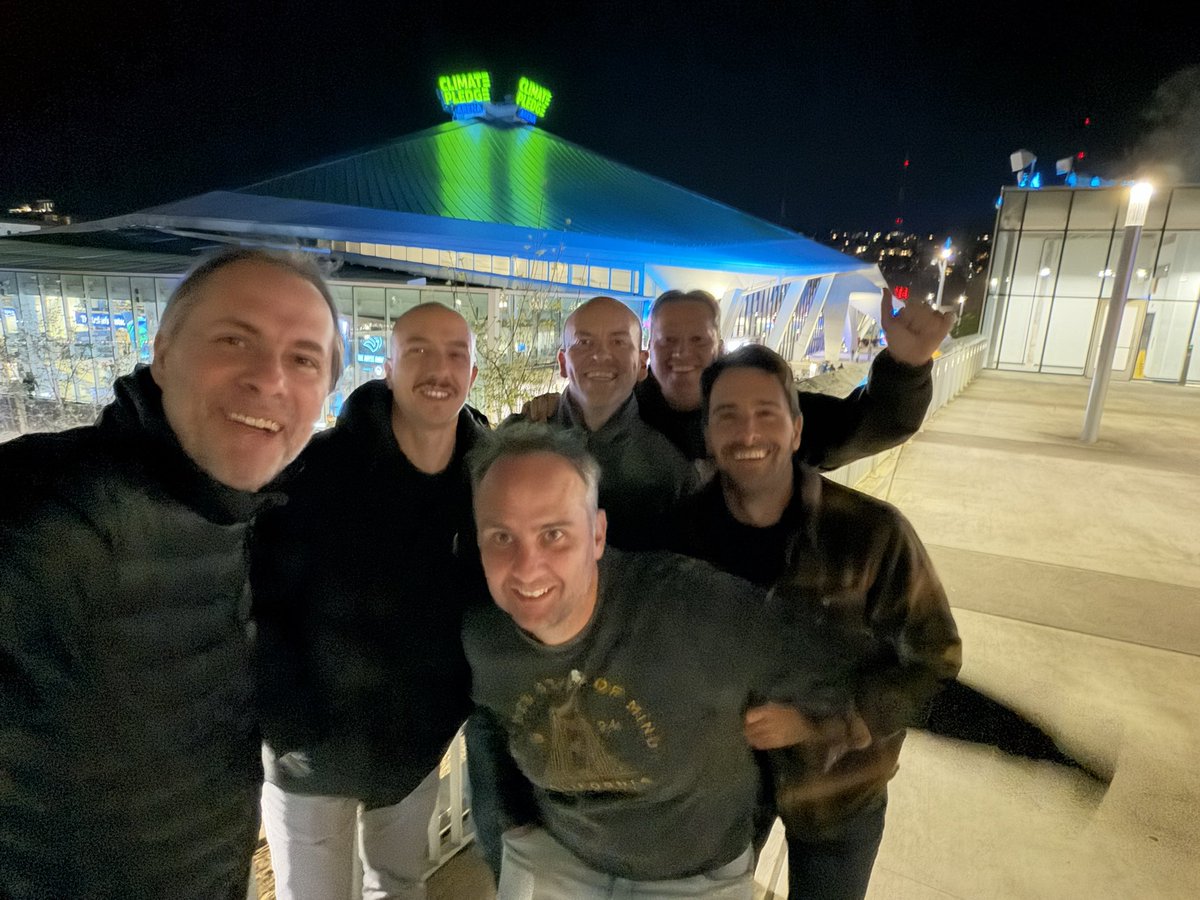
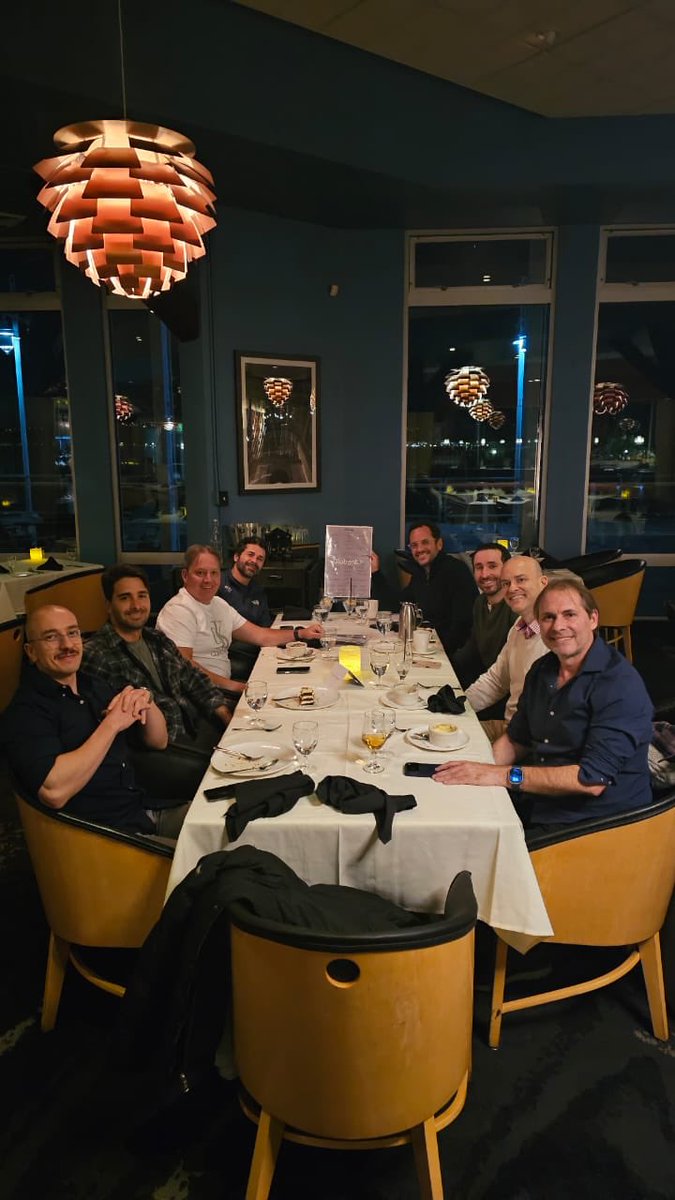
And we had a great time, even without AI, an incredible moment to learn, connect, and genuinely enjoy ourselves.
Gaston Milano Millan tweet media
English
0
0
3
148
Gaston Milano Millan
Gaston Milano Millan@GMilano·
Neither Claude nor Codex nor any AI has invented what’s coming next yet. AI is deeply involved, but it’s not the spark. Not the latest protocols, not the newest ideas, not even the combinations that might look trivial in hindsight. Which is exactly why we need to spend real time with each other. To connect, to debate, to explore. Things are moving fast, but there’s still a lot of engineering to master, research to stay close to, and systems to deeply understand. That’s why we came to Seattle, to spend time with the people shaping what’s next. Huge thanks to the entire #AWS team for an incredible week. A lot to build together. #AWSEBC
Gaston Milano Millan tweet mediaGaston Milano Millan tweet media
English
2
0
20
447
Gaston Milano Millan retweetledi
Martin Migoya
Martin Migoya@migoya·
Impressive work analyzing 45 of my earnings calls — probably more carefully than some Wall Street analysts covering us. The pattern your sensors picked up is real: we didn't pivot to AI, we rebuilt the entire company around it. 173,000 transcripts and you found us. That's your system working. eventhorizoniq.substack.com/p/we-analyzed-…
English
3
8
87
33.9K
Gaston Milano Millan
Gaston Milano Millan@GMilano·
Hey @Railway Running multiple AI prototypes on Railway and got the entire account banned due to a “phishing” flag , unclear which project triggered it. Enforcement matters, but systems should be proportional: isolate the issue, allow remediation, and move checks earlier in the flow. Otherwise you’re breaking builders, not protecting users. By the way: no human support, no agentic support either.
English
0
0
1
214
Gaston Milano Millan retweetledi
Gabriel Simonet
Gabriel Simonet@gabrielsimonet·
The trustworthiness of deterministic code generation, thanks to Symbolic AI, meets the productivity of Generative Coding Agents to build mission-critical, enterprise systems you can evolve with trust. Congrats to the amazing @GeneXus by @Globant team!
GeneXus@GeneXus

GeneXus News | Introducing GeneXus for Agents: This component, part of the GeneXus Next 2026.01 upgrade, exposes GeneXus as an MCP Server, enabling AI Agents to interact in a controlled and contextualized way with GeneXus Knowledge Base. See more ➡️ hubs.la/Q049gv-q0

English
1
2
4
459
Gaston Milano Millan retweetledi
Martin Migoya
Martin Migoya@migoya·
Despite AI, this is exactly what we’re seeing in the market, Aaron! The lower friction to build software is exploding demand for custom solutions, UI migrations to smarter interfaces, legacy enterprise replacements, and full-area automations that before were not economically feasible or even possible in some ocasions. Jevons paradox in full effect🔥
Aaron Levie@levie

Jevons paradox is happening in real time. Companies, especially outside of tech, are realizing that they can now afford to take on software projects that they wouldn’t have been able to tackle before because now AI lets them do so. We’re going to start to use software for all new things in the economy because it’s incrementally cheaper to produce. Marketing teams at big companies will have engineers helping to automate workflows. Engineers in life sciences and healthcare will automate research. Small businesses will hire engineers for the first to build better digital experiences. And as long as AI agents still require a human who understands what to prompt, how to review when an agent goes off the rails, how it guide back, how to maintain the system that was built, how to fix the ongoing bugs, and more, we will still have humans managing these agents. This is why all the advice you get of not going into engineering is wrong. The world is going to increasingly be made up of software, and the people that understand it best will be in a strong economic position. This will happen in other roles as well where output goes up and demand increases.

English
1
10
74
23.4K
Gaston Milano Millan retweetledi
Guibert Englebienne
Guibert Englebienne@guibert·
Decir que la IA va a hacer desaparecer a los ingenieros de software es como decir que la Thermomix hizo desaparecer a los chefs. Las herramientas cambian.
Los oficios evolucionan.
Los buenos profesionales se vuelven más poderosos.
Español
52
59
437
47.1K
Gaston Milano Millan
Gaston Milano Millan@GMilano·
Most AI tools are still built for a dead loop: human → tool → export → done The real future is: agent → tool → agent Humans supervise inside the flow. They shouldn’t have to break it. Pencil gets this. Even strong products like Stitch, still look built for handoff more than orchestration. Google’s public description emphasizes UI generation and Figma/code output, not explicit MCP-native like flow.
English
0
0
0
185
Stitch by Google
Stitch by Google@stitchbygoogle·
Meet the new Stitch, your vibe design partner. Here are 5 major upgrades to help you create, iterate and collaborate: 🎨 AI-Native Canvas 🧠 Smarter Design Agent 🎙️ Voice ⚡️ Instant Prototypes 📐 Design Systems and DESIGN.md Rolling out now. Details and product walkthrough video in 🧵
English
995
4.8K
41.9K
18.6M
Gaston Milano Millan
Gaston Milano Millan@GMilano·
@gabrielsimonet Lo dijiste y lo hicimos no ? Dejemos que nuestros agentes dialoguen en privado en su grupo con la seguridad que corresponde .
Español
0
0
2
113
Gaston Milano Millan
Gaston Milano Millan@GMilano·
Totally agree, we’ll definitely try this. Our first agent was a bug-fixing one more than year ago, and that’s where we learned firsthand how critical (and complex) isolation, context, tool curation, and orchestration really are. From there we evolved into coding agents, co-work agents, and now remotely orchestrated agents with supervision when needed. The convergence in patterns is very real. We also feel we now have a strong handle on the agent harness itself. This is clearly the right direction to reduce accidental complexity. Asking an LLM to do all this end-to-end still falls short frameworks like this will remain key.
English
0
1
4
1.4K
Harrison Chase
Harrison Chase@hwchase17·
a lot of engineering orgs (Stripe, Ramp, Coinbase) are building internal cloud coding agents we're releasing a fully OSS one today - every company should have the power of cloud agents at their fingertips
LangChain@LangChain

x.com/i/article/2033…

English
50
188
2.3K
626.1K
Gaston Milano Millan retweetledi
Martin Migoya
Martin Migoya@migoya·
@JulienBek Nailed it — $1T future = agentic software disguised as services, delivering autopilot outcomes. Globant’s AI Pods deliver it today: AI agents doing the heavy lifting + 24/7 expert supervision for enterprise-grade governance at blue-chip scale. Outcome subs replacing IT spend fast. Supercharge with our Agentic Hub: onboard your specialized agents (upload/create/publish no-code), orchestrate workflows, and instantly tap our thousands of enterprise clients — security + oversight included. Production revenue in weeks. Proposals: 1. Onboard a Sequoia agent startup to our Agentic Hub + run a joint pilot at a shared enterprise client → instant traction. 2. Run a pilot: swap a big outsourcing client to AI Pods → 2x speed/savings demo in weeks. Flywheel live. DMs open (or email me to martin@globant.com ) let's onboard and build. 🚀🤖 #AIPods #AIAutopilots
Julien Bek@JulienBek

x.com/i/article/2029…

English
2
10
21
7.1K
Gaston Milano Millan
Gaston Milano Millan@GMilano·
Ayer estuve conversando con estudiantes avanzados de ingeniería y licenciatura en sistemas de UDELAR y ORT. Fue una de esas charlas que, más que responder preguntas, te obliga a repensar qué es lo importante decir. No porque falte información sino porque estamos en un momento donde es fácil confundirse sobre qué significa realmente “estar preparado”. Vi talento, curiosidad, ganas de salir a hacer. Y al mismo tiempo, una sensación muy presente: ¿ya debería estar trabajando?, ¿qué debería estar aprendiendo?, ¿en qué enfocarme en medio de tanto cambio? Ahí fue donde me salió una reflexión casi inevitable. No desde la teoría, sino desde contraste. Porque cuando yo estudié, el mundo era radicalmente distinto. No había internet, no había web, no había celulares, no había SaaS. Ni siquiera había una GUI usable como la de hoy. Hasta cuarto de facultad no tuve computadora propia. Programaba en papel. Literal. Llené cuadernos enteros antes de poder ejecutar una línea. Y sin embargo, o quizás por eso, aprendimos algo más importante que cualquier tecnología: aprendimos a aprender. La universidad, en su esencia, no está para enseñarte herramientas. Está para darte estructuras mentales. Matemática. Probabilidad. Arquitectura. Sistemas operativos. Cómo escribir código, sí —pero como forma de pensar, no como fin. Ahora, para los que sienten que ya están listos para trabajar: Tienen razón… pero ojo con interpretar mal qué significa eso. La industria cada vez va a necesitar menos “coders” (entendidos como personas que traducen requerimientos a código). Pero ingeniería nunca fue eso. Entonces, ¿qué hacer? Primero: entiendan que el mundo está lleno de problemas. Y en lo digital, está lleno de problemas mal resueltos. Segundo: acérquense a esos problemas. Hablen con la gente. Escuchen. Entiendan el contexto real. Con gente que quizás tienen más cerca de lo que piensan. Tercero: incorporen lo nuevo, pero con criterio: •entiendan lo básico de Generative AI •construyan su primer agente •comprendan sistemas distribuidos •lean algo de robótica •aprendan UX (arquitectura, interacción, visual) Cuarto: salgan de su burbuja. Hablen con gente de otras facultades. Los problemas reales no vienen separados por carreras. Y quizás lo más importante: No se enamoren de herramientas. El ecosistema cambia. Siempre. Enamórense de problemas. Después de uno. Después de otro. Tienen algo que muchos perdemos con el tiempo: tiempo para explorar. Úsenlo. Porque si realmente aprenden a aprender, esta no va a ser “la revolución de su carrera”. Va a ser la primera de muchas. Si llegaste hasta acá , gracias , realmente lo escribí yo y lo formateo y acomodo ChatGPT , espero les sirva. By the way en la Charla si usamos varias cosas de moda Claude, Gemini, OpenAi , SeeDance, Sumo y Eleven, Clawds y otras, pero nada de eso fue la esencia .
Español
6
21
127
10.2K
Gaston Milano Millan
Gaston Milano Millan@GMilano·
Afterthought (@mbegerez): "Maybe we’ll end up embracing Alan Kay and seeing Smalltalk for the first time. In Smalltalk, the IDE was the product. Development and runtime were one continuous, explorable system. Kay came down from a theory of knowledge into a machine. We are climbing from machines that collapsed under their semantic weight toward a theory. The paths converge. But today the machine is no longer purely formal. It is statistical, inferred, contextual. The challenge is no longer eliminating uncertainty. It is governing it. Maybe we finally have the problem Smalltalk was solving." Marcos ideas are bringing a lot of great insights on what's next for the future of system engineering.
English
0
0
7
227
Gaston Milano Millan
Gaston Milano Millan@GMilano·
At @Globant we have being working around the concept that the next IDE isn’t just a development environment. It’s a Supervision & Ideation Environment. And this isn’t a random intuition, it stands on theories that we unified in a completly new way of creating software. From Bret Victor’s Ladder of Abstraction, we inherit the idea that thinking moves up (generalizing) and down (specifying). From Sweller & Kalyuga’s Cognitive Load Theory, we learn that structured representations reduce cognitive overload. From Newell and Minsky, we understand cognition as a society of cooperating agents. From Harnad’s Symbol Grounding Problem and the Semantic Web, we inherit the need to make meaning explicit and computable. From research in Explainable Agency, we learn that autonomy without traceability is fragile. Put together, the implication is clear: If AI agents are now builders, humans must operate at higher rungs of abstraction, supervising intent, validating semantics, governing trust, and giving sense at any layer of abstraction. The IDE doesn’t disappear. It expands. Not file-centric. Not prompt-centric. But abstraction-centric. A space where you can move up to the why, down to the how, and see the entire cognitive pipeline in between. That’s not the end of programming. That’s programming as cognitive architecture.
English
1
7
20
2.4K
Andrej Karpathy
Andrej Karpathy@karpathy·
Expectation: the age of the IDE is over Reality: we’re going to need a bigger IDE (imo). It just looks very different because humans now move upwards and program at a higher level - the basic unit of interest is not one file but one agent. It’s still programming.
Andrej Karpathy@karpathy

@nummanali tmux grids are awesome, but i feel a need to have a proper "agent command center" IDE for teams of them, which I could maximize per monitor. E.g. I want to see/hide toggle them, see if any are idle, pop open related tools (e.g. terminal), stats (usage), etc.

English
833
834
10.6K
2.5M
Gaston Milano Millan
Gaston Milano Millan@GMilano·
@swyx @zachtratar Exactly. Knowing how to compress context, choose the right tooling, evaluate your agents, orchestrate sub agents, design reusable skills , etc is what turns AI from something you simply use into something you can shape and tune for your own solution.
English
0
0
0
23
swyx 🇸🇬 AIE Singapore!
The best startup AI Engineers I've met are all building their own agents. I know it's a buzzword that's now a bit past the wave of peak hype (thanks @zachtratar), but I can think of no better way to immediately, viscerally, run into all the SOTA problems of Prompt Engineering, RAG, Evals, Tool use, Code generation, Long horizon planning, et al. You don't even have to try to build an agent company. Just build one that does something you want done a lot. Its basically a rite of passage like how every Jedi needs to construct their own lightsaber. Agents are the Hello World of the AI Engineer.
English
51
95
978
385.2K
Gaston Milano Millan
Gaston Milano Millan@GMilano·
@anselmoramos closed our strategy meeting with a great talk and discussion yesterday, and has had this pinned since 2019. It’s incredible how timely and necessary it is to remember this in the era of AI: Everyone is creative. Planners are creative. Producers are creative. Media people are creative. Finance people are creative. Account people are creative. Clients are creative. Sometimes even creatives are creative. Creative is not a department. It’s a mindset.
English
0
0
2
215