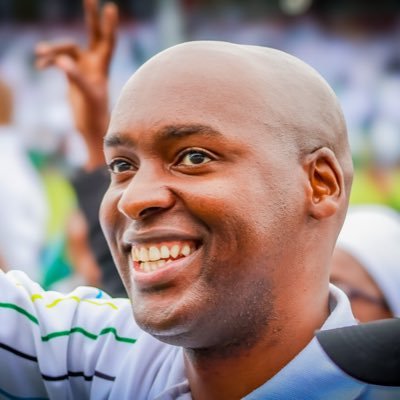
Sizwe SikaMusi@SizweLo
Many South Africans believe that “The Law” is made by Parliament—that the people they vote into office are the ultimate lawmakers in a democratic Republic. This is not true.
Yes, Parliament passes laws, the executive signs them, and various institutions give them effect. But “The Law”—the jurisprudential system that governs us—is not under democratic control.
South Africa is a judicial supremacy, a constitutional order where unelected judges have the final say on the laws of the land. This is not rule of law; it is rule by judges. And we should name it for what it is: a judicial dictatorship.
South Africa follows a hybrid common law system, deeply influenced by British traditions. In such systems, case law—not statute—forms the foundation of legal interpretation. Because the courts set legal precedent and interpret the law, they don’t merely “apply” it; they shape, define, and create it.
In South Africa’s context, this role of the judiciary is compounded by the fact that the Constitution is the supreme law, and the Constitutional Court is its priesthood. Parliament may pass legislation, but the judiciary decides whether that legislation lives or dies.
Let’s imagine a majority of voters support a political party that promises to amend the Constitution, say, the property clause in Section 25, in order to redress apartheid-era dispossession. They win two-thirds of the seats in Parliament and push through the amendment through legal and constitutional channels. Everything has followed the will of the people.
But then, a well-resourced interest group that stands to lose property or power challenges the amendment in court. And here’s the kicker: the Constitutional Court may strike down a constitutional amendment—yes, an amendment to the very Constitution it claims to be upholding by declaring it “unconstitutional.”
This is not a hypothetical danger; it is a real one. That’s how a handful of unelected judges can override the will of millions of voters. This is called a “constitutional democracy.” But what does that term really mean?
In an interview, Advocate Muzi Sikhakhane offers a powerful critique of this very phrase. He argues that it’s no accident “constitutional” comes before “democracy.” The adjective modifies the noun, meaning it’s not a democracy in the full sense, but a specific type, a constrained one.
“There’s a reason,” he notes, “why the system is not called ‘democratic constitutionalism.’” According to Adv Sikhakhane, this is because so-called “constitutional democracies” are structured around a deep mistrust of majorities. They are designed to restrict the power of democratically elected governments, limiting what the majority can do, even when acting through legal means.
In his words, “constitutional democracy distrusts majorities.”
But if the terms were reversed to “democratic constitutionalism”, then the priority would be different: democracy would come first, and the Constitution would follow as its expression.
In democratic constitutionalism, “You first accept that the majority is an important component for protection,” Adv Sikhakhane contends. Crucially, he links this formulation to the racial history of postcolonial societies like ours.
“Liberal democracies use ‘constitutional democracy’ because they are not trusting of Black majorities that emerge from the colonial political setup,” he argues. In other words, constitutional supremacy serves as a tool to manage and neutralise the democratic aspirations of the formerly colonised.
This is not unique to South Africa. In Kenya, Zambia and Ghana, attempts to undertake radical land reform or nationalise key industries were routinely shot down by courts citing “constitutional violations”—often under pressure from donor countries or foreign investors.
Courts in these contexts did not stand as shields for the poor, but as guards for elite property rights.
To this end, South Africans are taught to worship this domination by the judiciary as sacred. The media, legal elite and academic class warn us never to “attack the judiciary” or cause a “constitutional crisis.” Criticism of judicial overreach is treated as heresy, especially coming from African political voices.
The public has been indoctrinated to believe that politicians, particularly Black ones, are inherently corrupt, while judges are incorruptible sages beyond political influence.
This is obviously a myth. Judges are not angels. They are people, and they operate within political and class contexts. To imagine they are immune to bias, ideology, or pressure is wilful naiveté.
Let’s take a concrete example. In 2017, under Public Protector Thuli Madonsela, the North Gauteng High Court affirmed that her office had the power to direct other organs of state:
“There is nothing in neither the Public Protector Act nor the Ethics Act that prohibits the Public Protector from instructing another organ of state to conduct a further investigation...” —Judge President Dunstan Mlambo.
In 2020, under Public Protector Busisiwe Mkhwebane, the same court—led again by Judge Mlambo, ruled that: “The Public Protector Act and the NPA Act are clear that she has no power to direct the NDPP to investigate any criminal offence...”
What changed? The law? No. What changed was the Public Protector—from one admired by elites to one relentlessly discredited. So, too, did the court’s tone and conclusions shift. Consistency, it seems, is optional—and legal “reasoning” bends toward political convenience.
Legal apologists will throw sand in our eyes with some Latin, toss around “stare decisis” and hide contradictions behind academic jargon. But the plain truth is clear: judges are not neutral, and the law is not a fixed object—it is a battleground.
So what is the alternative? Parliamentary supremacy.
In a real democracy, elected representatives, not courts, must have the final say. The people must be sovereign, not judges cloaked in legalism.
This does not mean abandoning protections for the vulnerable. But we must distinguish between oppressed minorities (racial, gendered, sexual) who need protections, and elite minorities (Apartheid beneficiaries, corporations, landed interests) who need limits.
Failing to make that distinction allows the privileged to mask their advantages as rights, and courts to act as guardians of inequality.
Elite minorities, cite a concept they call the “tyranny of the majority” to justify why those who could not win elections are somehow a vulnerable minority needing protection.
Except, this American language of minority protection was originally designed to shield elites from redistribution by suppressing majority rule. (See James Madison, in Federalist No. 10).
The US Constitution itself along with its South African counterpart were crafted as counter-majoritarian documents, intended to protect wealth and privilege rather than foster democracy.
As political theorist Sheldon Wolin argued, modern democracies risk becoming “inverted totalitarianisms”—systems where elite minorities dominate marginalised majorities under the disguise of democratic procedure.
This is what is happening in South Africa. The courts are (ab)used to uphold property rights, shielding private interests and disciplining populist challenges to privilege.
The concept of “minority rights” is frequently hijacked to defend the interests of the privileged few, while majority demands are dismissed as populism or mob rule.
Furthermore, South Africa has elevated the judiciary into a priestly caste, above criticism, above democracy, above accountability. This is not a safeguard. This is authoritarianism in legal robes.
As Adv Muzi Sikhakhane’s critique reveals, “constitutional democracy” is not a neutral or innocent term—it is a legal-political mechanism built to protect certain interests against democratic transformation. It is designed to secure stability for the few, not justice for the many.
Unfortunately, the current system has made Parliament a mascot. Ministers continue to pose, MPs pretend to debate, but the real power lies with unelected judges who cannot be voted out and who face no meaningful public scrutiny.
Until the people confront this imbalance and reclaim democratic sovereignty, South Africa will remain a democracy in name only—a Republic ruled not by its people but by its robes.
To claim true democratic sovereignty, South Africans must reject judicial supremacy not in favour of chaos, but in favour of accountable people-driven government, one where no institution, not even the judiciary, stands above the people.