
jt❤️🤍❤️

15.6K posts

jt❤️🤍❤️ banner
jt❤️🤍❤️

jt❤️🤍❤️

@jtes77

Perth, Western Australia Katılım Mayıs 2013
400 Takip Edilen590 Takipçiler
jt❤️🤍❤️ retweetledi
Met Gala 2026
Met Gala 2026@the_metgala·
Sad news : Zendaya will not attend the Met Gala this year. She did receive an invitation, but she has simply chosen not to go for reasons that remain unknown. She is currently in New York, which makes her absence even more surprising. It’s truly disappointing
Met Gala 2026 tweet mediaMet Gala 2026 tweet mediaMet Gala 2026 tweet mediaMet Gala 2026 tweet media
English
14
31
475
29.7K
jt❤️🤍❤️ retweetledi
Science girl
Science girl@sciencegirl·
Morgan Freeman transformed his 124-acre Mississippi ranch into a haven for bees after becoming concerned about their decline. Starting in 2014, he brought in dozens of hives and filled the land with bee-friendly plants like clover, lavender, and magnolia turning it into a thriving refuge for pollinators. What began as a personal passion has grown into a meaningful conservation effort. Bees are responsible for pollinating around 80% of flowering crops, and a single colony can visit hundreds of millions of flowers in a day. Without them, entire ecosystems, and much of our food supply, would be at risk.
Science girl tweet media
English
125
1.4K
6.1K
132.6K
jt❤️🤍❤️ retweetledi
The Figen
The Figen@TheFigen_·
Just found the lucky duck! ✨ Hopefully it brings you lots of good luck.
English
77
184
1.5K
34.7K
jt❤️🤍❤️ retweetledi
Buitengebieden
Buitengebieden@buitengebieden·
Nope.. 😂
English
64
276
2.9K
77.6K
jt❤️🤍❤️ retweetledi
The Figen
The Figen@TheFigen_·
Super Lemon, known as the sourest Japanese candy in the world, is cracking everyone up with the wild reactions from people all around the globe! 😂
English
496
1.5K
12K
1.2M
jt❤️🤍❤️ retweetledi
cats with powerful impression 🐾
Why is this orange packing up a friend?😂 IG📸 : nguyendu.3stars
English
9
104
1.6K
40.5K
jt❤️🤍❤️ retweetledi
Buitengebieden
Buitengebieden@buitengebieden·
Boing, boing, boing.. 😅
English
75
1.1K
9.2K
148.9K
jt❤️🤍❤️ retweetledi
Buitengebieden
Buitengebieden@buitengebieden·
He may be old, but he still loves to dig a hole on the beach.. 🥺
English
219
1.5K
32.4K
372.5K
jt❤️🤍❤️ retweetledi
Science girl
Science girl@sciencegirl·
The crystal clear waters of Okinawa, Japan
English
491
3.4K
21.1K
383.7K
jt❤️🤍❤️ retweetledi
Buitengebieden
Buitengebieden@buitengebieden·
The way he’s walking.. 😅
English
290
1.7K
13.3K
258.8K
jt❤️🤍❤️ retweetledi
Wonder of Science
Wonder of Science@wonderofscience·
The muskox, native to the Arctic, can endure temperatures as low as -40° thanks to its dense, insulating fur. They can also shut off thermal regulation in their lower limbs, maintaining cooler temperatures in them to reduce heat loss. 📽: Felix Belloin
English
11
74
534
53.2K
jt❤️🤍❤️ retweetledi
Science girl
Science girl@sciencegirl·
The natural colours of Polymita picta snails found in Cuba
English
57
327
1.6K
50K
jt❤️🤍❤️ retweetledi
Science girl
Science girl@sciencegirl·
A waterfall that looks like a silver curtain
English
84
741
3.2K
60.7K
jt❤️🤍❤️ retweetledi
Science girl
Science girl@sciencegirl·
Vittorio Reggianini was an Italian artist known for painting silk and satin with striking realism, each work a carefully composed, elegant scene.
English
45
515
4.2K
84.8K
jt❤️🤍❤️ retweetledi
Science girl
Science girl@sciencegirl·
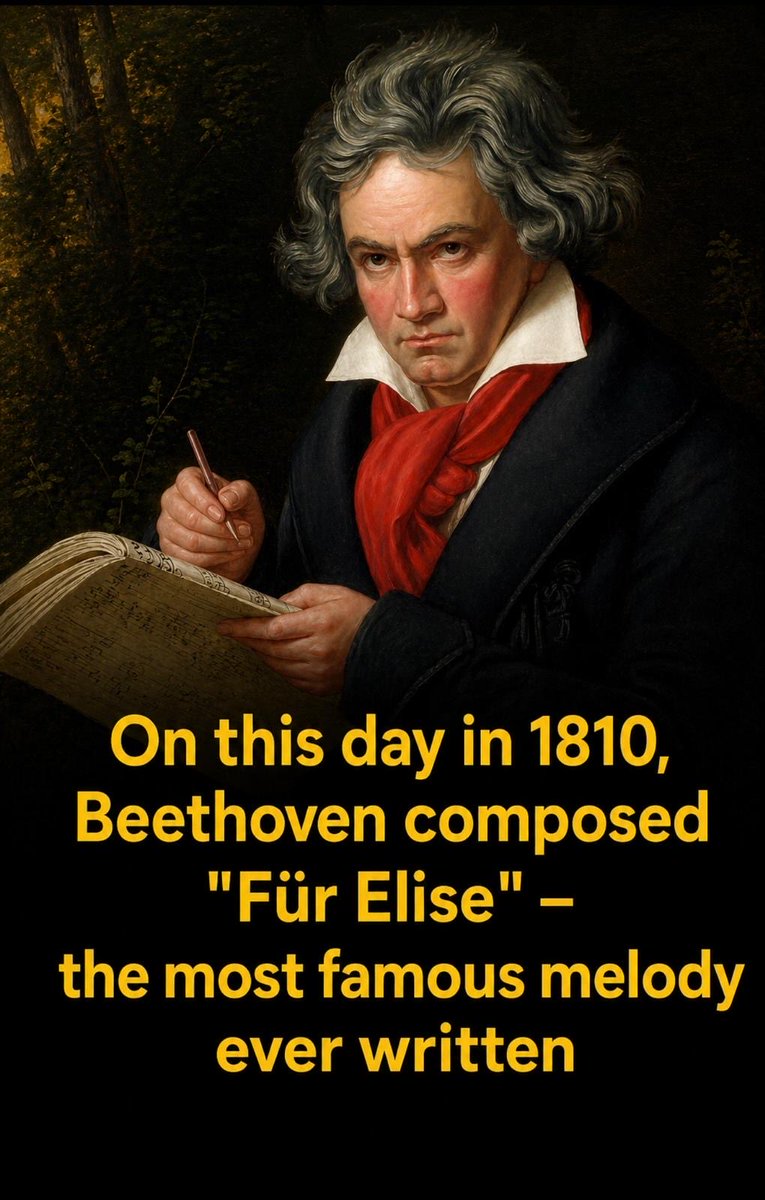
Beethoven composed Für Elise 216 years ago today, on April 27, 1810. Ludwig van Beethoven wrote this short piano piece, which would later become one of the most instantly recognisable melodies in classical music. What makes it so memorable isn’t just its history, but how it interacts with the brain. The opening phrase is built on a simple, stepwise pattern that feels familiar almost immediately. It repeats in a way that gives the listener a sense of stability, but it also introduces small, unexpected changes that prevent it from becoming predictable. That mix of repetition and variation is exactly the kind of structure the human brain tends to lock onto. When we listen, the auditory system picks up the pattern while predictive networks constantly try to anticipate the next note. Each slight deviation from expectation creates a tiny “surprise signal,” which helps strengthen attention and memory encoding. Rhythm also plays a key role. The spacing between notes creates natural pauses, giving the brain time to process what it has just heard. Research in music cognition suggests that melodies with clear structure and moderate complexity are especially likely to become “earworms” — tunes that replay in your mind long after they’ve finished. Interestingly, Für Elise wasn’t published during Beethoven’s lifetime. It only surfaced decades after his death, in 1867. The identity of “Elise” is still uncertain, and the piece itself is relatively simple compared to his major works. Yet that simplicity may be exactly what allowed it to endure and become so universally recognisable.
Science girl tweet media
English
41
169
655
50.2K