
Sabitlenmiş Tweet
JtotheAY
47.9K posts


JtotheAY
@JtotheAY
Professional human. sick of narratives AkA; Singing Rifle, Scalper, wifi refrigeration enthusiast, Goobered twice, once saved.
BFE Ohio Katılım Şubat 2024
2K Takip Edilen1.7K Takipçiler
@Pasquall2 @philthatremains Just train dogs to be sensitive to the motor noises. Way simpler and scalable.
Terminator touched on this.
English

@philthatremains There will be signs, it takes more to be human than looks. The uncanny valley will appear in how it moves, how the eyes move, how it speaks.
If all else fails, they may weigh more than the average person of the same size. Or better yet, go swimming with it.
English


JtotheAY retweetledi

@warhelaphant I'll give you that... no excuse not to have brisket though lol
English

English

@ShamashAran @ingelramdecoucy I hate to think how much that cost, if this one costs $180.
Oof, and you got sales tax there.

English


The "camera work" is just me holding my phone trying to simultaneously lift a grill lid like a retard
Proctorius@Proctorius
@agave_redux Didn’t even notice it, was entranced by the bagpipes and camerawork. Then it was just, juicy steak….
English


I shouldn't share this cause I want to be greedy.
But greedy and " poor " dont mix. Or so im told.
X9@X9_redux
Every shirt is unique in it's own way. This is probably the only drop.
English

Can they be emaciated and sculpted at the same time?! 👀😳
New York Post@nypost
Demi Moore’s toned arms take center stage on Cannes Film Festival 2026 red carpet trib.al/DYJYRNx
English

Sen. Dianne Feinstein (D-CA) had a Chinese spy in her office.
Rep. Eric Swalwell (D-CA) dated a Chinese spy.
Mayor Eileen Wang (D-CA) is a Chinese spy.
How many more?
Fox News@FoxNews
NEW: California mayor resigns after being charged with acting as an illegal agent of China. Eileen Wang has agreed to plead guilty as she faces up to 10 years in prison, according to federal prosecutors. They say she secretly worked to advance pro-Beijing messaging in the U.S., allegedly spreading propaganda tied to the Chinese government.
English


Nolan had a good run.
He's cooked.
There goes whatever little creativity still remained in Hollywood.
Pop Base@PopBase
Christopher Nolan explains his choice to cast Travis Scott in ‘The Odyssey.’ “I cast him because I wanted to nod towards the idea that this story has been handed down as oral poetry, which is analogous to rap” (time.com/article/2026/0…)
English



Some one is doing the lord’s work right now. He already got yeeted again. 😂💀😂💀
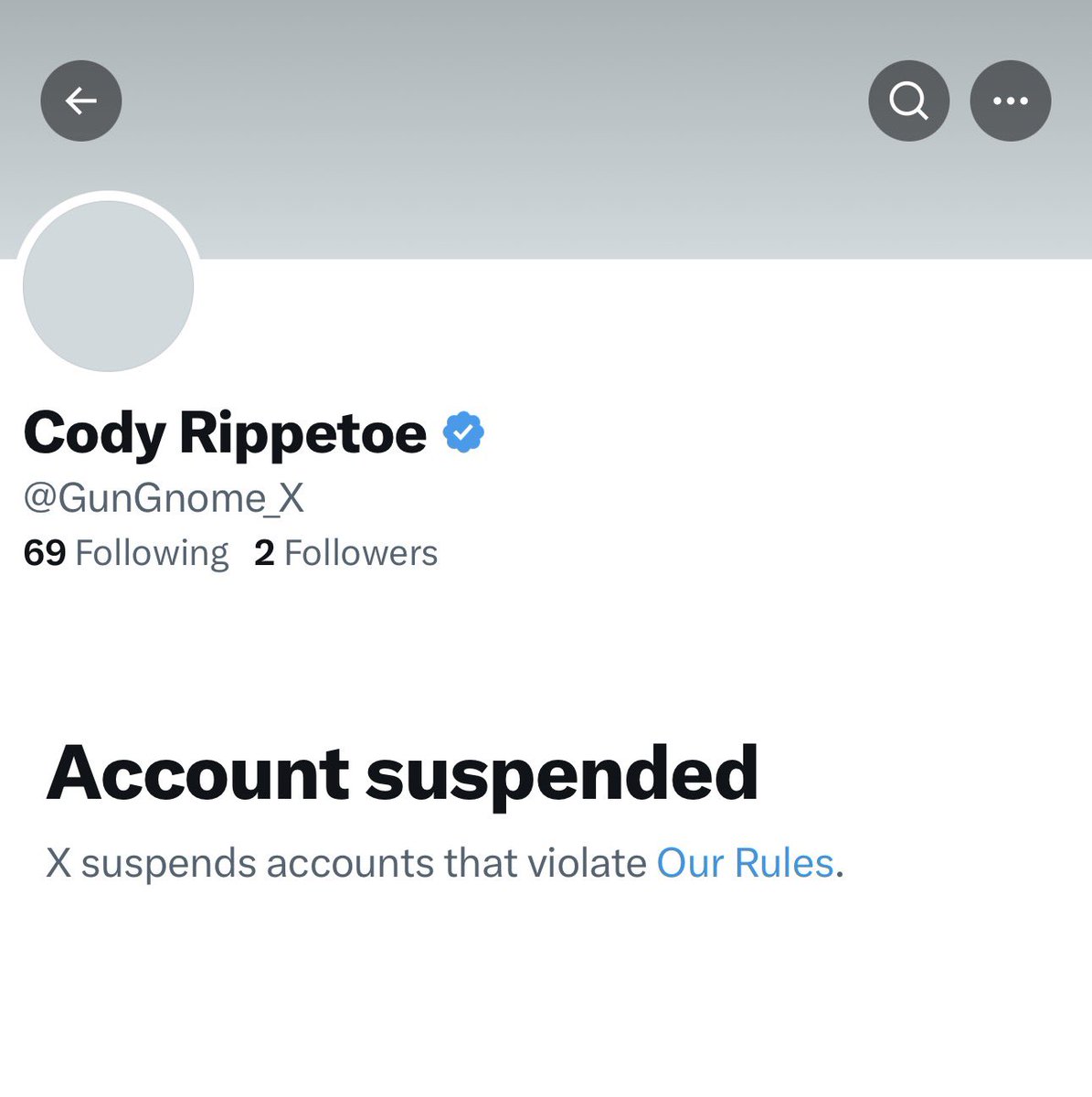
NotWill@NotWill42
Goodbye Cody Rippetoe. I hope you punch air until your fat diseased heart gives out. 🖕
English
I could probably be QPd hundreds of times and it would get hundreds of views.. lol.
The algo is a fickle mistress.
English
@ttunlehs @soulgroove42 I find this true now and again.
It really came down to what I wanted from games changed. And mostly what else I wanted to do that actually is useful or meaningful.
English
Video games really have just been absolute trash recently.
I think I am finally over them.
GIF
English