Kevin Pho, M.D.

70.9K posts

Kevin Pho, M.D. banner
Kevin Pho, M.D.

Kevin Pho, M.D.

@kevinmd

Physician | https://t.co/ymdHK4O5hQ | The Podcast by KevinMD

Nashua, NH, north of Boston Katılım Aralık 2007
18.4K Takip Edilen150.2K Takipçiler
Sabitlenmiş Tweet
Kevin Pho, M.D.
Kevin Pho, M.D.@kevinmd·
The health care system is failing to listen to the people who actually run it. Let's change that. Most medical media is either highly technical specialty education or corporate PR. But what about the daily reality? What about the lived experiences of the doctors, nurses, and patients wrestling with a broken system right now? That is why I created The Podcast by KevinMD. It is the web's only daily medical podcast. 15 minutes a day, 7 days a week. We do not just interview famous guests. We pull from a massive network of frontline workers to discuss the real issues: AI in clinical practice, the economics of primary care, physician burnout, and deeply personal patient stories. If you want fast, human, clinician-facing insight into the culture of medicine, this is your new daily habit. Stop scrolling and start listening to the voices that matter. How to subscribe is in the comments. 👇 #MedTwitter #Healthcare #DigitalHealth #Nursing #MedEd #HealthPolicy #KevinMD #PhysicianBurnout
Kevin Pho, M.D. tweet media
English
4
4
9
2.9K
Kevin Pho, M.D.
Kevin Pho, M.D.@kevinmd·
Medicine is a shame based profession. We stigmatize struggles, encourage isolation, and demand flawlessness. To survive, physicians develop a powerful defense mechanism: perfectionism. But perfectionism is not a commitment to excellence. As Dr. @jillian_rigert explains on The Podcast by KevinMD, it is a self destructive belief system fueled by a single thought: "If I do everything perfectly, I can avoid judgment and blame." This creates a devastating cycle for high achievers. You go to an Ivy League school. You complete a grueling residency. You become an attending. Yet, the pervasive emptiness and the feeling of "never enough" remains. Why? Because you cannot achieve your way out of toxic shame. When we misdiagnose toxic shame as standard burnout, we apply the wrong solutions. We try to fix a spiritual and existential crisis with more workaholism, which the medical system happily normalizes and rewards. Healing begins when we stop seeking worthiness through our CV. It requires acknowledging the systemic demand for perfection and choosing authentic connection and self compassion instead. Episode is in the comments. #MedTwitter #PhysicianBurnout #HealthcareLeadership #MoralInjury
Kevin Pho, M.D. tweet media
English
2
0
2
257
Kevin Pho, M.D.
Kevin Pho, M.D.@kevinmd·
The hardest decision a medical student can make is choosing not to match. We are conditioned to believe the medical training pipeline is a one way street. You sacrifice your twenties, survive the clerkship years, match into a residency program, and emerge as an attending. Stepping off that path is almost always labeled as a failure or a tragic waste of potential. Christopher Nmai decided to challenge that exact narrative. He was a Harvard graduate on track for a competitive career in interventional cardiology. Then a major health diagnosis forced him to experience the healthcare system as a patient. That perspective shifted everything. He realized that the rampant burnout in medical education was incompatible with his own long term wellbeing. So he did the unthinkable. He finished his medical degree and voluntarily opted out of the match. Now he is leveraging his medical expertise in the startup, consulting, and artificial intelligence spaces. His story on The Podcast by KevinMD highlights a massive blind spot in medical education. Schools heavily prepare students for clinical practice but offer almost no guidance for those who want to innovate in private equity, medical writing, or health tech. A medical degree is an incredibly versatile asset. It is a tool to solve massive systemic problems, not a lifelong contract to endure clinical burnout. Episode is in the comments. #MedTwitter #PhysicianBurnout #HealthTech #MedicalEducation
Kevin Pho, M.D. tweet media
English
3
2
6
853
Kevin Pho, M.D.
Kevin Pho, M.D.@kevinmd·
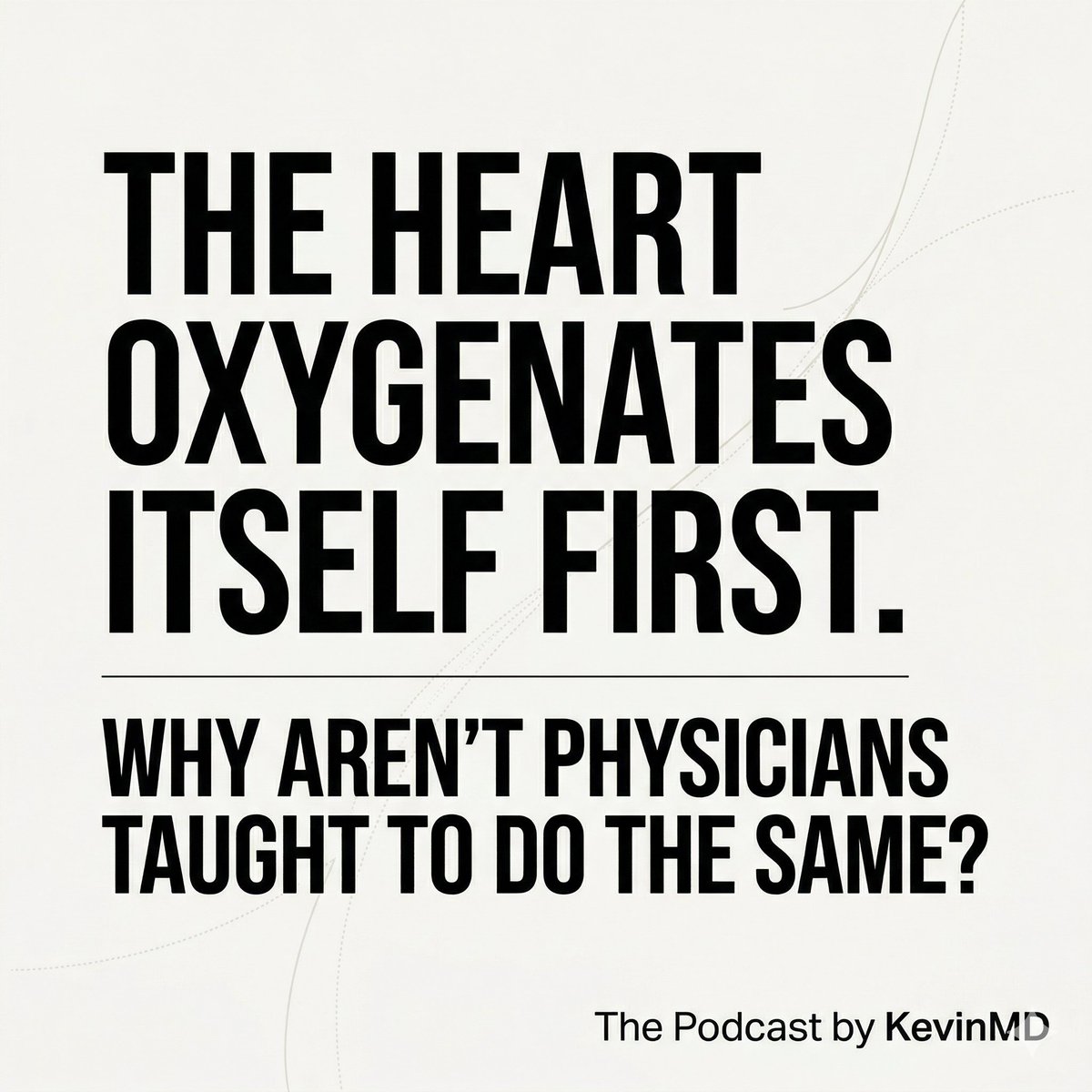
The heart oxygenates itself first. The first branches of the ascending aorta are the left and right coronary arteries. Yet the culture of medicine actively trains physicians to do the exact opposite. In a recent conversation on The Podcast by KevinMD, integrative pediatrician Dr. Mary Wilde exposed a deeply ingrained flaw in how we build doctors. When she asked medical students to complete a simple renewal activity, they did not feel relieved. They felt terrified. They were afraid that stepping away from their books for even a moment would cause them to fall behind. There is always more to know. There is always another patient. This fear of pausing hardens into muscle memory. We become attending physicians stuck on a treadmill of servitude, churning through volume in a disembodied state. We ignore the warning signs until we experience the ultimate red flag of burnout: empathy loss. When we lose our empathy, our clinical tires are wearing unevenly. We are completely out of alignment. Dr. Wilde argues that the most courageous and productive thing a physician can do is to intentionally stop. Stepping away does not make you a worse doctor. It is the exact mechanism that restores the clarity and connection required to heal others. Episode is in the comments. #MedTwitter #PhysicianBurnout #MedicalEducation
Kevin Pho, M.D. tweet media
English
2
1
5
627
Kevin Pho, M.D.
Kevin Pho, M.D.@kevinmd·
One of the most limiting ideas in medicine is that there is only one respectable way to build a career. This episode pushes back on that. Trevor Cabrera describes locum tenens as more than temporary coverage or a pay increase. In his experience, it created something a lot of physicians are missing: choice. Choice over schedule. Choice over geography. Choice over how long to stay. Choice over when to pivot. That matters because burnout is not always just about workload. Sometimes it is about losing autonomy. Sometimes it is about feeling trapped in a path you never had time to question. Sometimes it is about getting so deep into the structure of medicine that you lose sight of why you went into it in the first place. The most compelling point in this conversation is simple: There is no single linear path in medicine. For physicians, trainees, and health care leaders, that is not a small idea. It changes how we think about career design, retention, and professional fulfillment. Episode is in the comments. #LocumTenens #PhysicianBurnout #CareerInMedicine #KevinMD
Kevin Pho, M.D. tweet media
English
2
0
2
524
Kevin Pho, M.D.
Kevin Pho, M.D.@kevinmd·
A lot of midlife women are not failing weight loss advice. They are following advice that may be physiologically mismatched to this stage of life. In this episode of The Podcast by KevinMD, Marsha Shepherd Whitt challenges a message clinicians and patients have heard for years: eat less, move more. Her point is uncomfortable because it cuts straight to a common assumption in medicine. If a woman in perimenopause or menopause is eating less, exercising more, and still not losing fat, the reflex explanation is often discipline, aging, or noncompliance. But what if the body is doing exactly what it is designed to do under stress? In her framing, midlife physiology becomes more conservation-oriented. Recovery is slower. The body is more protective of fat. Muscle and bone are harder to maintain. So the same strategy that once looked correct can leave someone more tired, more hungry, and less strong. That shifts the clinical question. Not: Why isn't she trying harder? But: Are we giving advice that matches the physiology in front of us? The practical takeaway is what makes this discussion useful. Focus less on suppressing intake. Focus more on restoring regulation through food, stress, light exposure, and sleep. Agree or disagree with every detail, this is the kind of conversation health care needs more of because it changes how we talk to patients when standard advice is not working. Episode is in the comments. #Menopause #Perimenopause #MetabolicHealth #MedicalEducation
Kevin Pho, M.D. tweet media
English
3
1
2
711
Kevin Pho, M.D.
Kevin Pho, M.D.@kevinmd·
No one is going to come save you. That line is the center of this episode of The Podcast by KevinMD, and it lands because it names something many physicians feel but rarely say out loud. Hospice and palliative care physician Sarah Wittry joins physical therapist and physician advocate Kim Downey for a conversation about infertility, foster care adoption, early attending life during COVID, and the impossible feeling of being pulled apart by medicine and motherhood at the same time. What makes the episode work is that it does not stay abstract. It gets specific about what actually changes things: Getting clear on what is yours to control. Paying attention to what drains you and what restores you. Naming your core values. Using those values to make decisions and set boundaries. Accepting that fear may still be there when you do it. Kim adds another important layer. Physicians often spend years proving themselves, pleasing others, and following paths that were handed to them. At some point, you have to chart your own. That is the real tension here. Not whether physicians know boundaries matter. Most do. It is whether they are willing to tolerate the discomfort that comes with saying no, cutting back, stepping away, or choosing a different definition of success. In palliative care, Sarah sees how often regret comes from inaction. That makes this conversation hard to ignore. Episode is in the comments. #WomenInMedicine #PhysicianWellbeing #PalliativeCare #KevinMD No one is going to come save you. That line is the center of this episode of The Podcast by KevinMD, and it lands because it names something many physicians feel but rarely say out loud. Hospice and palliative care physician Sarah Wittry joins physical therapist and physician advocate Kim Downey for a conversation about infertility, foster care adoption, early attending life during COVID, and the impossible feeling of being pulled apart by medicine and motherhood at the same time. What makes the episode work is that it does not stay abstract. It gets specific about what actually changes things: Getting clear on what is yours to control. Paying attention to what drains you and what restores you. Naming your core values. Using those values to make decisions and set boundaries. Accepting that fear may still be there when you do it. Kim adds another important layer. Physicians often spend years proving themselves, pleasing others, and following paths that were handed to them. At some point, you have to chart your own. That is the real tension here. Not whether physicians know boundaries matter. Most do. It is whether they are willing to tolerate the discomfort that comes with saying no, cutting back, stepping away, or choosing a different definition of success. In palliative care, Sarah sees how often regret comes from inaction. That makes this conversation hard to ignore. Episode is in the comments. #WomenInMedicine #PhysicianWellbeing #PalliativeCare #KevinMD
Kevin Pho, M.D. tweet media
English
1
0
1
398
Kevin Pho, M.D.
Kevin Pho, M.D.@kevinmd·
Health care has become better at saving people once they are already in trouble. That does not mean we have become good at catching trouble early. This episode of The Podcast by KevinMD gets at a hard truth in cardiac care: we have invested heavily in reacting to disease, but not enough in preventing the ED visit, the admission, the family panic, and the slow march toward emergency. The most useful idea here is not "more monitoring." It is better monitoring that answers the next clinical question quickly and clearly. Not 100 data points. Not another stream of alerts. Not a report no one has time to read. Just the decision that matters: Does this patient need a bed? Does this patient need cardiology? What should happen next, and why? That matters because most clinicians are not short on data. They are short on time. And patients do not benefit from a wearable that creates more fear without context. A good tool should help clinicians act sooner, especially for people who live far from specialty care and often do not get evaluated until the problem is much bigger. The promise of remote patient monitoring is not more technology for its own sake. It is fewer late catches, fewer false alarms, and more useful intervention before the crisis. Episode is in the comments. #RemotePatientMonitoring #Cardiology #DigitalHealth #PhysicianLeadership
Kevin Pho, M.D. tweet media
English
2
0
3
499
Kevin Pho, M.D.
Kevin Pho, M.D.@kevinmd·
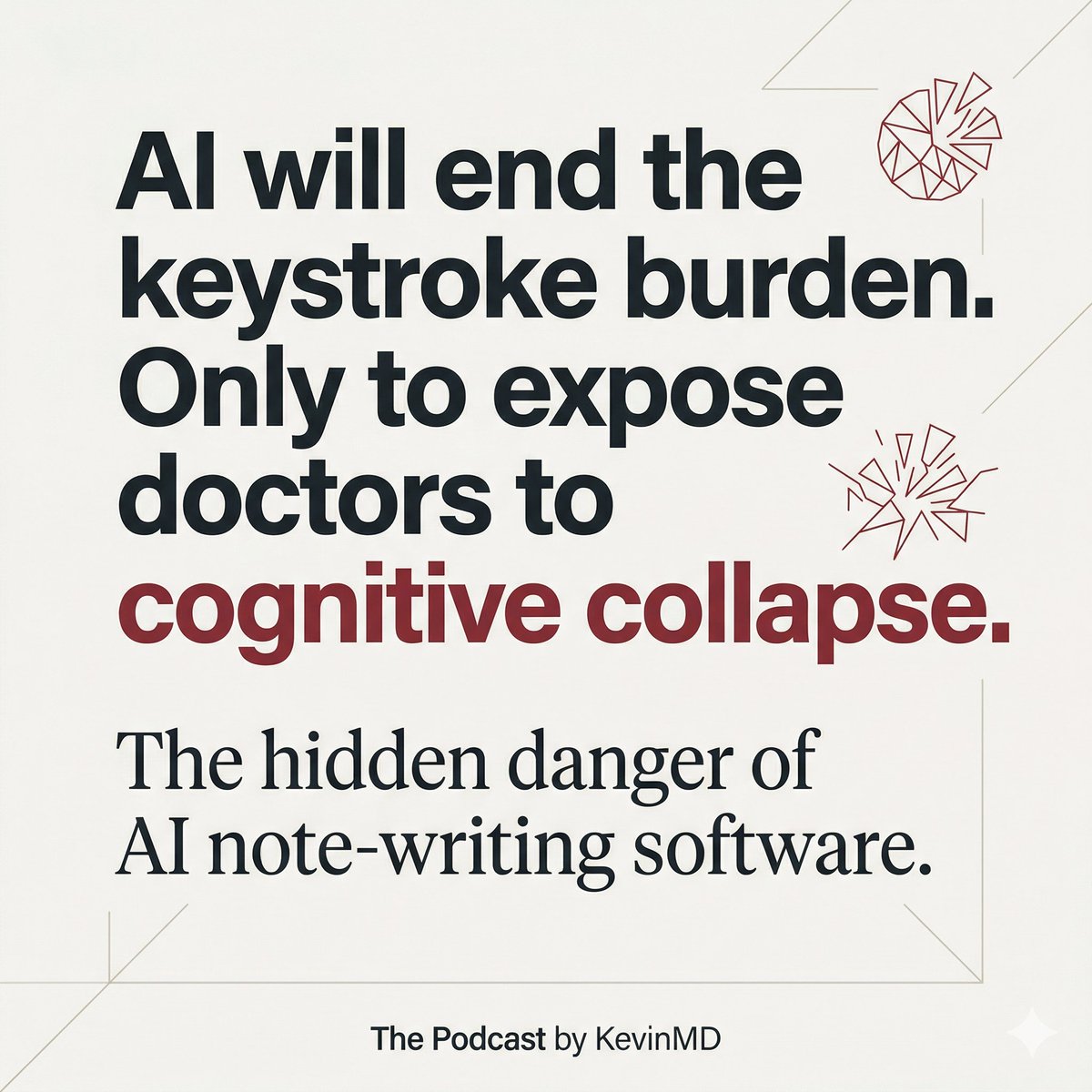
Ambient AI scribes are the biggest breakthrough in clinical documentation in a decade. They will absolutely cure the charting backlog. But they will introduce a much more dangerous form of physician burnout. Dr. Dike Drummond explains the incoming crisis. Right now, clinical documentation acts as a natural speed limit. It physically stops you from seeing 40 patients a day. Keystrokes are the bottleneck. When an AI scribe cuts your charting time by 50 percent, your employer will immediately realize they can increase your patient volume for pure profit. We are going to trade a typing limitation for a brain limitation. Doctors will face overwhelming decision fatigue and compassion fatigue. You can only handle so many complex medical histories back to back without a pause. The advice? Be an early adopter of AI tools. But be prepared to set hard boundaries with the C suite before the volume expectations spiral out of control. Episode is in the comments. #HealthTech #PhysicianBurnout #MedicalAI
Kevin Pho, M.D. tweet media
English
9
10
25
2.1K
Kevin Pho, M.D.
Kevin Pho, M.D.@kevinmd·
We are prescribing powerful weight loss drugs without measuring the most important metric: muscle mass. Physical therapist Maureen McBeth has tested the body composition of countless patients who lost 50 pounds on GLP-1s. The results? Dangerously low skeletal muscle and exceptionally high body fat. The scale says they are healthy. Their bodies say they are depleted. When we lose weight too fast without dosed strength training and adequate protein, we destroy our metabolic engine. BMI is not adequate to measure this. The standard bathroom scale can actually be dangerous if it tricks you into starving yourself when fluid levels fluctuate. GLP-1s are a phenomenal medical tool. But they need guardrails. Patients need proper objective measurements, exercise prescriptions, and nutritional support. Stop letting the drug do all the work. Episode is in the comments. #MedTwitter #GLP1 #PhysicalTherapy #MetabolicHealth
Kevin Pho, M.D. tweet media
English
2
4
9
817
Kevin Pho, M.D.
Kevin Pho, M.D.@kevinmd·
The medical system thrives on your imposter syndrome. It is not a personal failing. It is a feature of your training. From medical school onward, physicians are conditioned to view uncertainty as dangerous. We are trained to find exactly how we do not belong. If you do not know the answer, you are supposed to hide it and study until you do. This constant hypervigilance forces doctors to overwork, second guess decisions, and never say no. The system benefits from this endless anxiety right up until the point of burnout. In a recent episode of The Podcast by KevinMD, Dr. Jessie Mahoney explains why we must stop blaming individuals for systemic conditioning. We need to replace a culture of shame and guilt with one of curiosity and self compassion. Episode is in the comments. #MedTwitter #ImposterSyndrome #PhysicianWellness #MedicalCulture
Kevin Pho, M.D. tweet media
English
2
4
19
1.3K