Manuel Martín @ 🏠 retweetledi
Manuel Martín @ 🏠
8.8K posts

Manuel Martín @ 🏠
@manolakis
Software Engineer at ING https://t.co/kjsMl8B3Dh
Madrid Katılım Haziran 2008
389 Takip Edilen493 Takipçiler
Manuel Martín @ 🏠 retweetledi

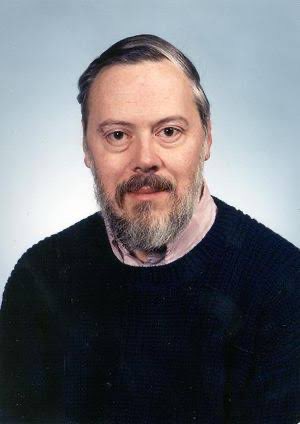
Dennis Ritchie created C in the early 1970s without Google, Stack Overflow, GitHub, or any AI ( Claude, Cursor, Codex) assistant.
- No VC funding.
- No viral launch.
- No TED talk.
- Just two engineers at Bell Labs. A terminal. And a problem to solve.
He built a language that fit in kilobytes.
50 years later, it runs everything.
Linux kernel. Windows. macOS.
Every iPhone. Every Android.
NASA’s deep space probes.
The International Space Station.
> Python borrowed from it.
> Java borrowed from it.
> JavaScript borrowed from it.
If you have ever written a single line of code in any language, you did it in Dennis Ritchie’s shadow.
He died in 2011.
The same week as Steve Jobs.
Jobs got the front pages.
Ritchie got silence.
This Legend deserves to be celebrated.

English
Manuel Martín @ 🏠 retweetledi

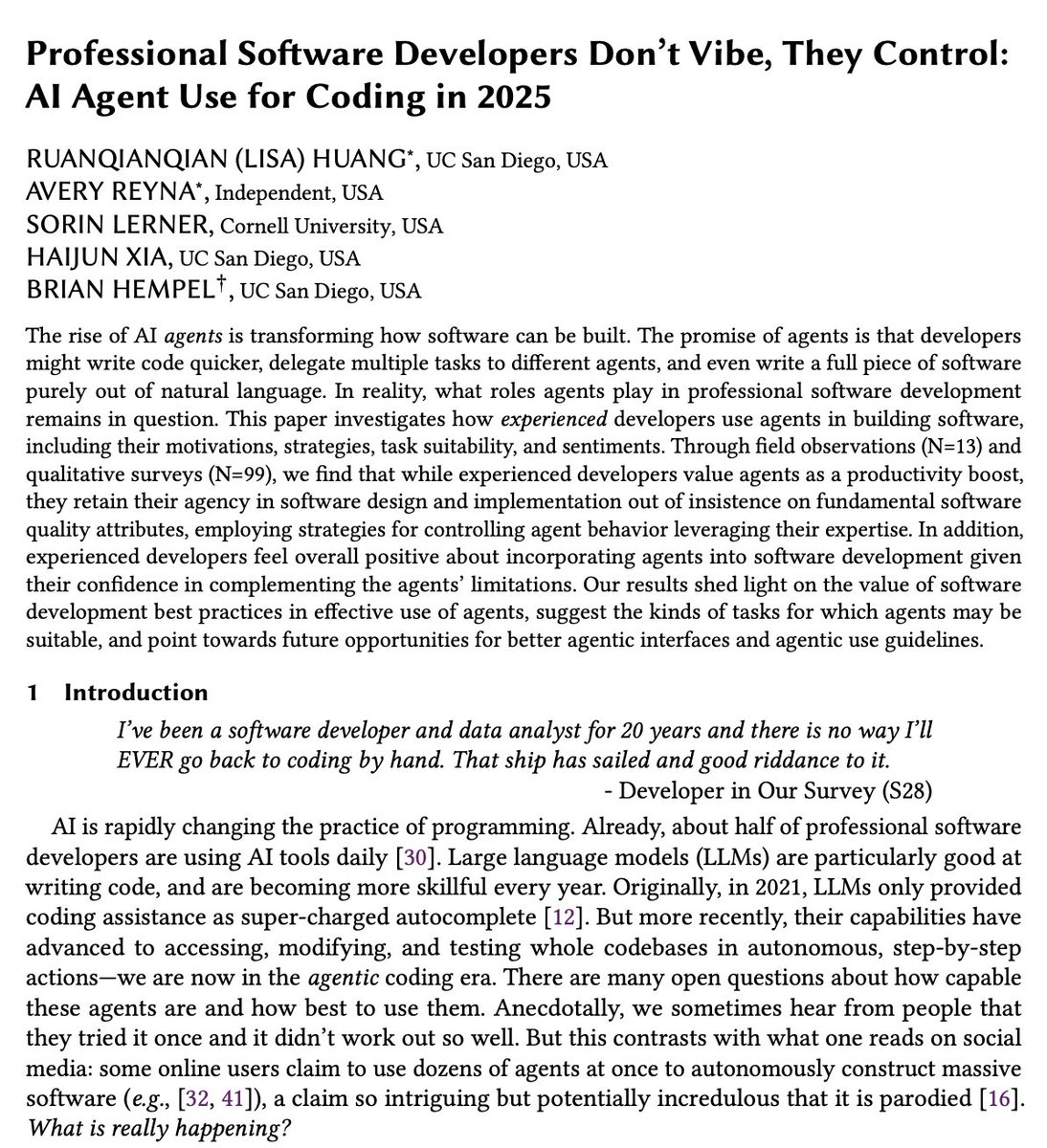
A new study just blew up the entire "vibe coding" movement.
Researchers from UC San Diego and Cornell tracked 112 experienced software developers using AI agents in their actual jobs. The finding is the opposite of every viral demo on your timeline.
Professional developers don't vibe code. They control.
Here's what they actually found.
The researchers ran two studies. 13 developers were observed live as they coded with agents in real production work. 99 more answered a deep qualitative survey. Every participant had at least 3 years of professional experience. Some had 25.
The viral pitch of agentic coding goes like this. Hand the agent a vague prompt. Don't read the diff. Forget the code even exists. Trust the vibes. Andrej Karpathy coined the term. Tens of thousands of developers on X claim to run "dozens of agents at once" building entire production systems hands-off.
The data says almost nobody serious actually works that way.
Here is what experienced developers do instead.
→ They plan before they prompt. They write out the architecture, the constraints, and the edge cases first, then hand the agent a tightly scoped task.
→ They review every diff. Not because they're paranoid. Because they've seen what happens when you don't.
→ They constrain the agent's blast radius. Small, well-defined tasks only. The moment a problem touches multiple systems or has unclear requirements, they take over.
→ They treat the agent like a fast junior dev that needs supervision, not a senior engineer that can be trusted alone.
The researchers also found something darker buried in the data.
A separate randomized trial they cite showed that experienced open source maintainers were 19% slower when allowed to use AI. A different agentic system deployed in a real issue tracker had only 8% of its invocations result in a merged pull request.
92% failure rate in production. 19% productivity drop for senior devs.
The viral demos lied to you.
The paper's biggest insight is in one sentence: experienced developers feel positive about AI agents only when they remain in control. The moment they let go, quality collapses, and they know it.
This matches what every serious shop has quietly figured out. The developers shipping the most with AI right now aren't the ones vibing. They're the ones with the strictest review processes, the tightest task scoping, and the clearest mental model of what the agent can and cannot do.
Vibe coding makes for great Twitter videos.
It does not make great software.
The next time someone tells you they let Claude build their entire SaaS in a weekend, ask them how much of that code they've actually read.
The honest answer separates real engineers from the demo crowd.

English
Manuel Martín @ 🏠 retweetledi

Programming used to put me into FLOW state often. That’s a big part of why I fell in love with it. Late night missions building games, apps, whatever, it felt great.
Mihaly Csikszentmihalyi has a great quote on this:
“The best moments in our lives… occur when a person’s body or mind is stretched to its limits in a voluntary effort to accomplish something difficult or worthwhile.”
AI has kind of nuked the personal challenge part of that. I don’t fall into those same FLOW states nearly as often anymore. It’s a strange position to be in because I’m undeniably more productive, but some of the joy is gone. I still love building software, but now the enjoyment comes more from seeing products come to life and have real-world impact than from the actual process of writing the code.
I’ll miss the deep flow states that came from fighting code for hours into the night, but I feel like I do need to find new areas that still offer that same sense of challenge.
English
Manuel Martín @ 🏠 retweetledi

Tennis players live 9.7 years longer than sedentary people.
Not 9.7 months. 9.7 years. Nearly a decade.
The Copenhagen City Heart Study tracked 8,577 people for 25 years and ranked every sport by how much life it adds.
Badminton: 6.2 years. Soccer: 4.7. Cycling: 3.7. Swimming: 3.4. Jogging: 3.2.
Tennis almost triples jogging.
A separate study of 80,000 adults found racket sports cut all-cause mortality by 47% and cardiovascular death by 56%. Swimming hit 41%. Aerobics hit 36%.
The question is why racket sports destroy everything else.
Three mechanisms stack on top of each other.
First, the physical demands. A tennis rally requires explosive sprints, lateral cuts, and sustained aerobic output. You're training fast-twitch and slow-twitch muscle fibers simultaneously. Most cardio only trains one system.
Second, the cognitive load. You're reading spin, predicting angles, adjusting position, and executing motor patterns in real-time. Your brain is solving spatial puzzles at 80+ mph. That hand-eye coordination and strategic processing builds neural connections that protect against cognitive decline.
Third, and this is the one researchers keep coming back to: you literally cannot play alone. Every racket sport requires another person on the other side of the net. That forced social interaction triggers neurochemical benefits that solitary exercise cannot replicate. Strong social connection alone increases your chance of longevity by 50%.
Jogging is you and your thoughts. Tennis is you, a strategic opponent, and a community.
Dr. Daniel Amen is right. The data is overwhelming. If you want the single highest-ROI activity for a longer life, pick up a racket.
English
Manuel Martín @ 🏠 retweetledi

why does telling Claude your idea feel easier than telling actual people 💀
be honest…
#Claude #DevMemes #ProgrammerHumor #AITools #AI
English
Manuel Martín @ 🏠 retweetledi

We've just made Gradius, except it's 100% ASCII based, you can even save your screenshots as .txt files.
13Z: The Zodiac Trials ➡️ Wishlist on Steam!@13z_game
I'm making Hades, except it has co-op, and is inspired by Eastern mythology!
English
Manuel Martín @ 🏠 retweetledi

👨🔬 Científicos españoles consiguen eliminar completamente el cáncer de páncreas gracias a la combinación de tres fármacos
👀 Un avance en modelos animales contra uno de los tumores más agresivos y con mayor tasa de mortalidad.
Toda la información aquí 🔗 eleconomista.es/salud-bienesta…
Español
Manuel Martín @ 🏠 retweetledi

Nada, en la apple store, me han dicho que mala suerte, error 4013, algo de la pantalla y que mueren, poco que hacer. Así que tienes el ipad encima de la mesa, le das a actualizar, siguiente versión mínima y ahí se queda... y todo normal? en serio? @Apple
Dani Garcia 🧑💻 - HumosNo@danihuge
No puedo creer, que tenga un ipad encima de la mesa que acabo de usar, veo que tengo una actualización, le doy a actualizar y se queda en bootloop. Ni soft reset, ni hard reset, ni leches reset, ni dfu, ni nada. ¿Podré revivirlo? Help!! ipad 7 Wifi. obsolescencia programada?
Español