
Max Roser

21.3K posts

Max Roser banner
Max Roser

Max Roser

@MaxCRoser

Data to understand global problems and research to make progress against them. Founder of @OurWorldInData / Professor at @UniofOxford's @BlavatnikSchool

Oxford Katılım Haziran 2012
1.4K Takip Edilen273.4K Takipçiler
Max Roser retweetledi

Our World in Data
Our World in Data@OurWorldInData·
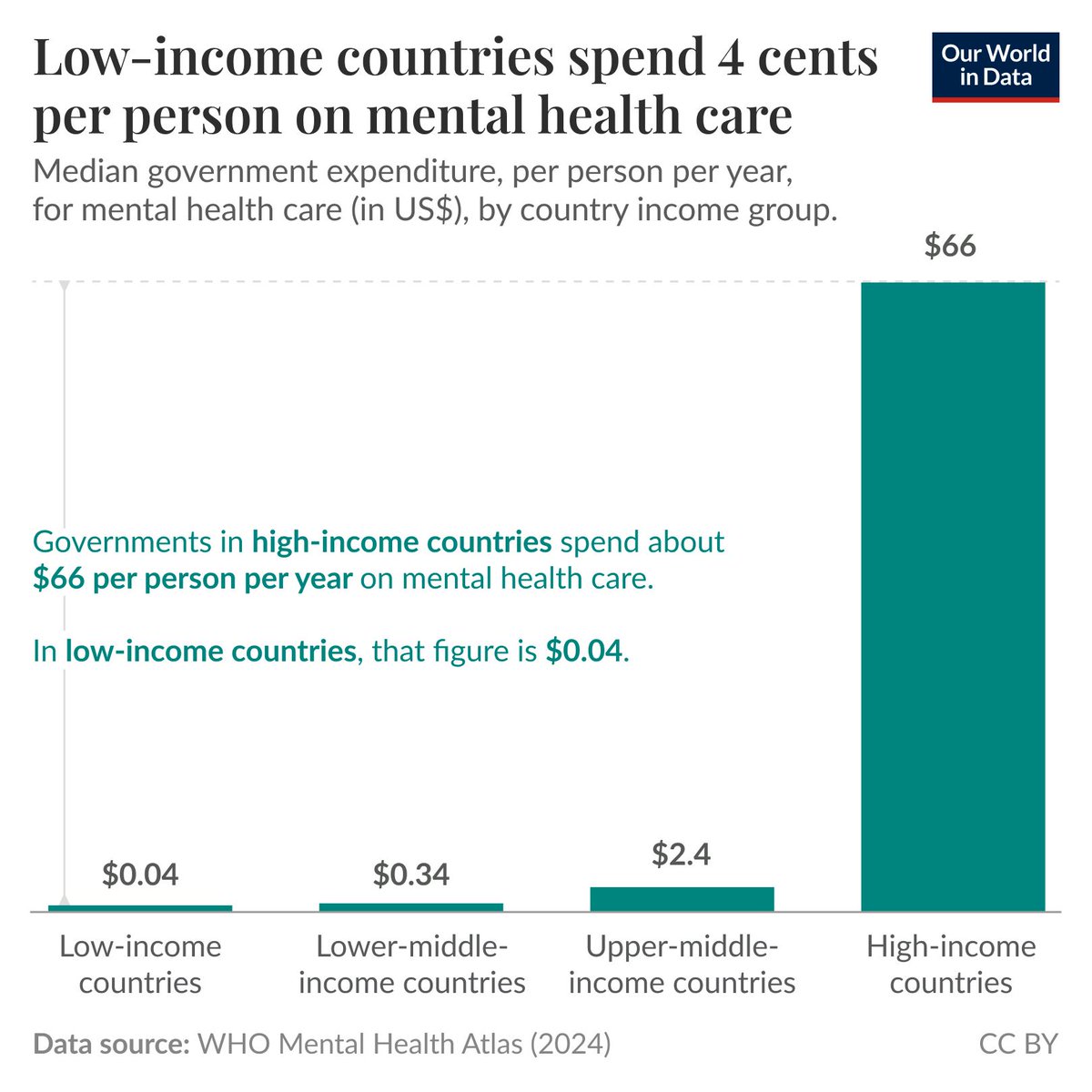
Mental health care is scarce everywhere — but in poor countries, it barely exists. Depression, anxiety, and other mental health problems are common everywhere. They are not confined to any particular income level. But access to care is rare. In much of the world, people who struggle with their mental health have almost no psychologists or psychiatrists to turn to. Mental health care is scarce in all places, but it is much scarcer in poor countries. Governments in high-income countries spend about $66 per person per year on mental health care, as the chart shows. In low-income countries, that figure is $0.04. This gap in spending reflects a gap in people. As the WHO’s latest Mental Health Atlas highlights, there is roughly one psychiatrist per million people in low-income countries. High-income countries have 70 times more. A recent study in the Lancet Psychiatry estimated that globally, only 9% of people with major depressive disorder receive a “minimally adequate treatment”. In high-income countries, it is 27%; in Sub-Saharan Africa, just 2%. Hundreds of millions of people in poorer countries live with treatable conditions and have no access to a psychologist or psychiatrist. It is one of the largest gaps in global health — and one that receives remarkably little attention or funding. There are efforts to close this gap without waiting for the workforce to catch up. One approach is to train lay counsellors — people without formal clinical qualifications who learn to provide psychological support. Randomized trials in India and Zimbabwe have shown this can be effective for depression. Another approach is to use technology: apps and, increasingly, AI-based tools that can extend the reach of limited clinical expertise. These are not substitutes for a functioning mental health system, but in places where that system barely exists, they offer a starting point. (This Data Insight was written by @MaxCRoser.)
Our World in Data tweet media
English
4
46
123
15.9K
Max Roser retweetledi
Benjamin Todd
Benjamin Todd@ben_j_todd·
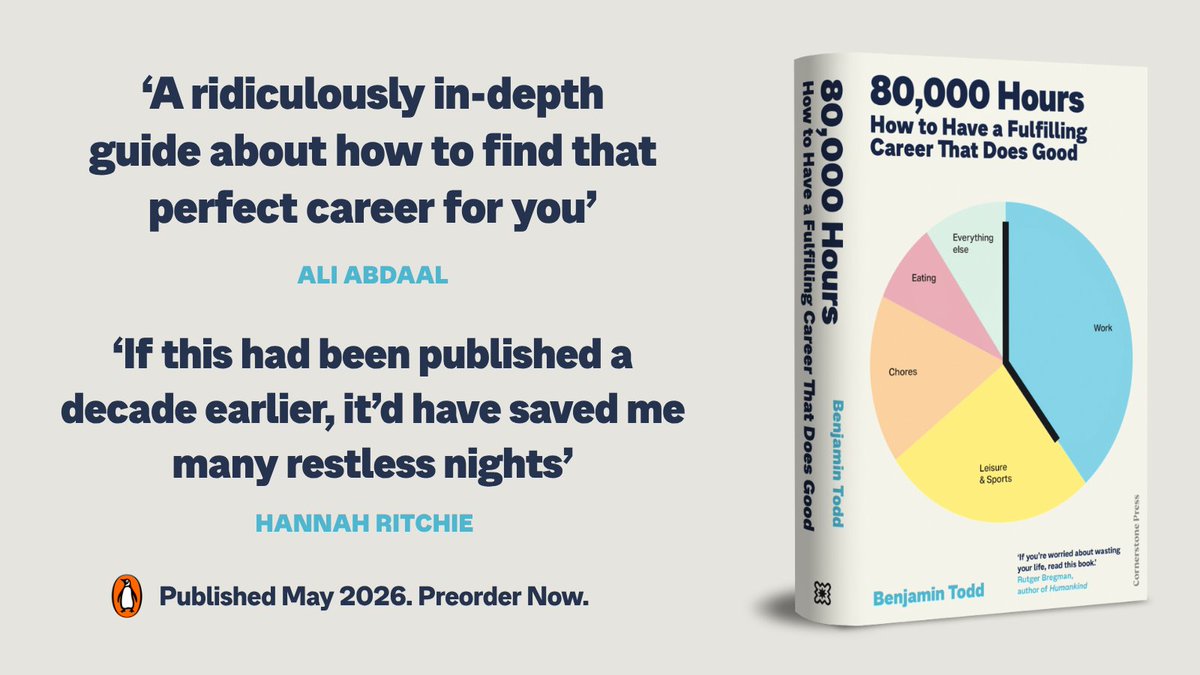
I wrote 80,000 Hours ten years ago because I was frustrated at how terrible career advice can be. Today it’s even worse: still focused on traditional paths like law & medicine when we face AGI. To fix that, Penguin are publishing a fully updated edition.
Benjamin Todd tweet media
English
17
46
310
39.2K
Max Roser
Max Roser@MaxCRoser·
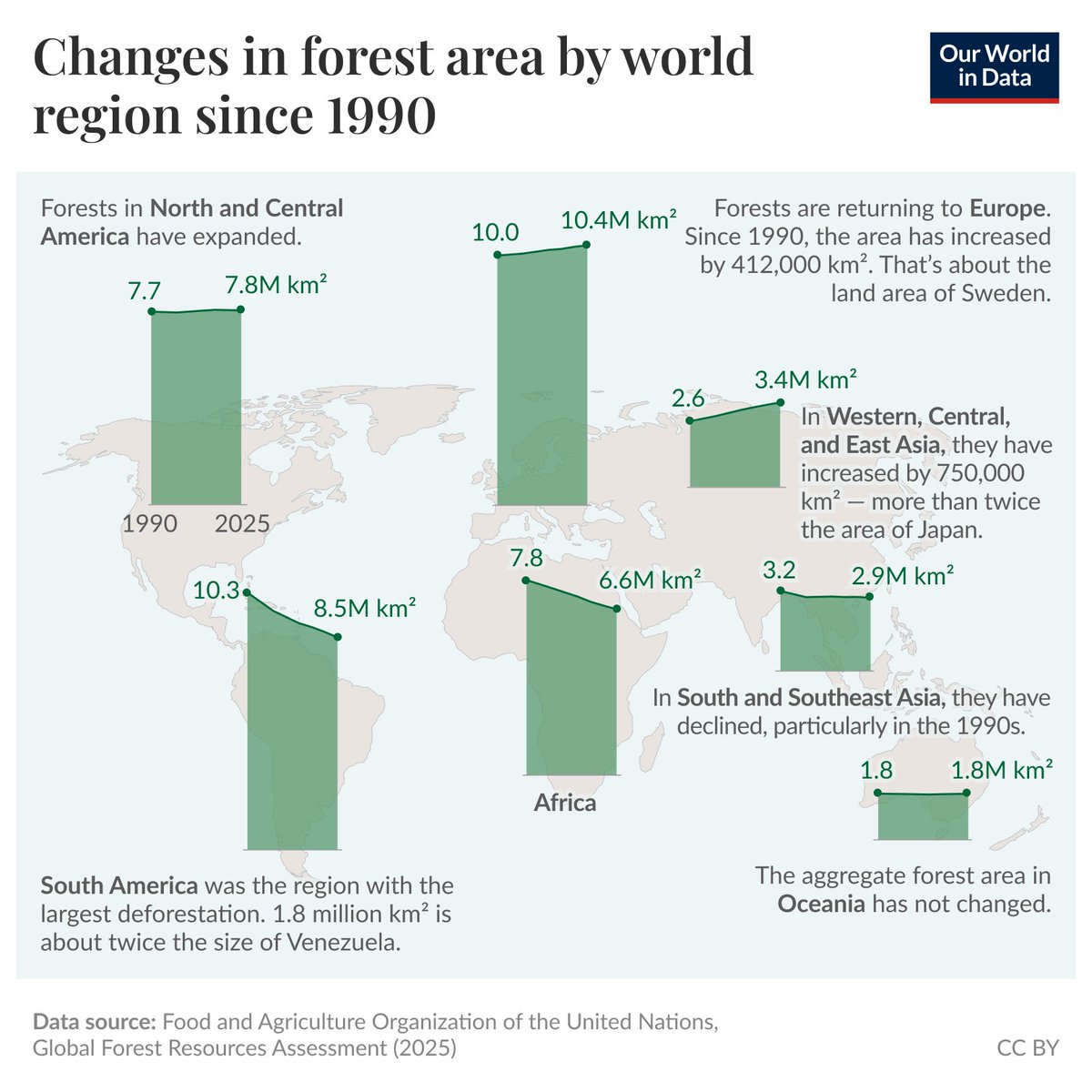
In the past, forests around the world were cut down on a massive scale around the world — but this is no longer the case. Deforestation continues in large parts of South America and Africa, while the forested area has expanded in Europe, North and Central America, and large parts of Asia.
Max Roser tweet media
English
12
43
164
28.5K
Max Roser
Max Roser@MaxCRoser·
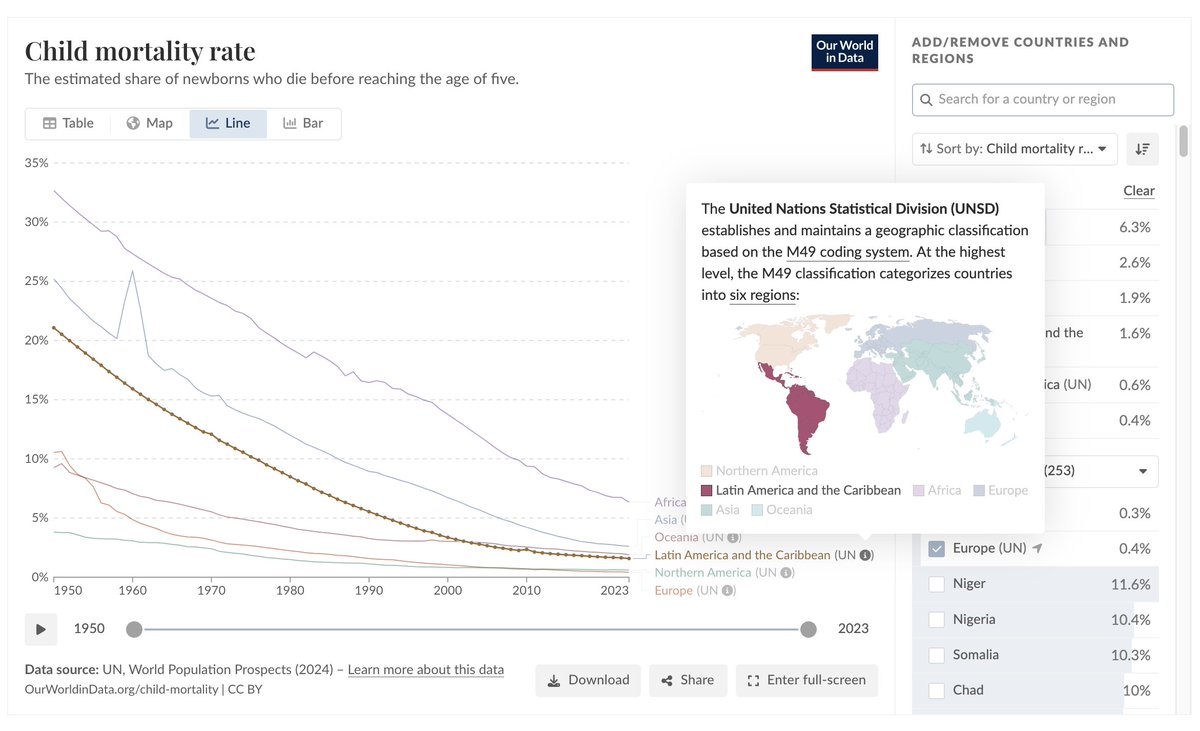
Love this new little feature on Our World in Data. When you view data for world regions defined by providers such as the WHO or the UN, a new tooltip appears. It explains how the region is defined and shows it to you on a small world map.
Max Roser tweet media
English
1
12
64
13.9K
Max Roser retweetledi
Our World in Data
Our World in Data@OurWorldInData·
✍️ New article: Tracking historical progress against slavery and forced labor: a long-run data view For much of history, forced labor was widespread and brutal. Tens of millions of people were made to work under the threat of violence or punishment. The situation today is very different. Many governments have ended their own use of forced labor, changed laws, and now prosecute those who use it. Some forms of forced labor and human trafficking still exist—but they are much less common than in the past. The chart summarizes how these massive changes unfolded across the globe. It shows for each point in time how many countries had not yet abolished “large-scale” forced labor, meaning forced labor that was common and entrenched—tolerated, enabled, or imposed by authorities, rather than isolated abuse. To measure this specific form of large-scale forced labor, we rely on expert assessments from the Varieties of Democracy (V-Dem) project, based at the University of Gothenburg, in Sweden. What the chart shows has been well documented in the many excellent books by historians and social scientists. What we add to this is a quantitative, bird’s-eye perspective on the global history of slavery and forced labor. The decline of forced labor is one of the biggest social and economic changes in history. It gave many millions of people much more freedom to live their lives. This shows that large changes to our societies and economies are possible—even those that were once unimaginable. Summarizing changes of this scale in a single chart is challenging. Forced labor can take many different forms; legal rules and real-world practices often don’t match, and no country is completely free from forced labor.
Our World in Data tweet media
English
2
64
226
23K
Max Roser retweetledi
Our World in Data
Our World in Data@OurWorldInData·
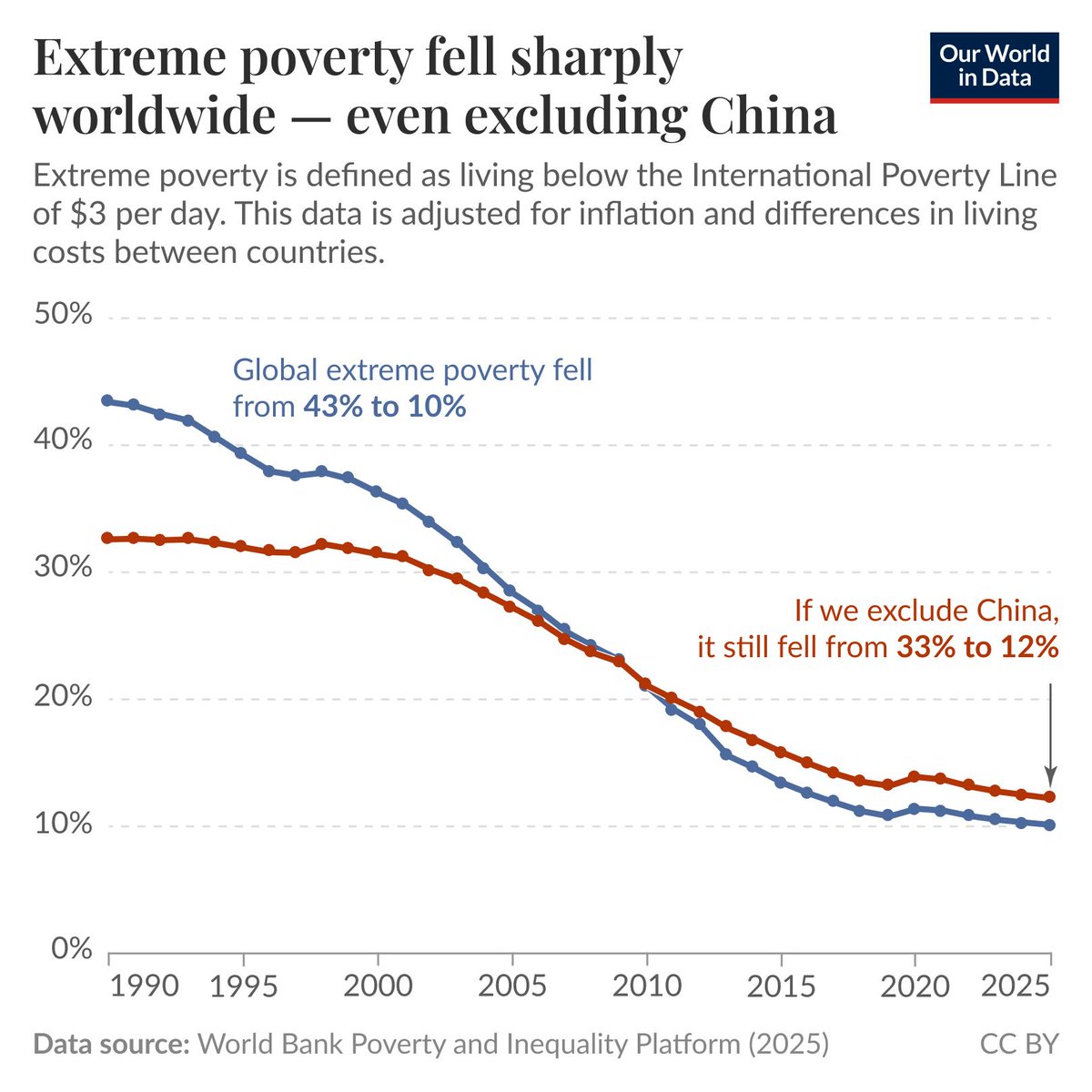
Was the global decline of extreme poverty only due to China? The share of the world population living in extreme poverty has never declined as rapidly as in the past three decades. The decline in China was particularly fast, and given that one in six people in the world lives there, we’re often asked whether the decline in global poverty was only due to the decline in China. The chart shows the data that answers this question. In blue, we see the global decline. In red, we see the decline if we exclude China from the data. In the world outside of China, 33% lived in extreme poverty in 1990; by 2025, this share was down to 12%. The large economic growth that lifted 940 million Chinese people out of extreme poverty since 1990 was a major contributor to the global decline in poverty. But the non-Chinese world also achieved a very large reduction. It is not true that the global decline in poverty was only due to China. Extreme poverty has declined in China and the rest of the world. (This Data Insight was written by @MaxCRoser and @parriagadap.)
Our World in Data tweet media
English
47
225
794
111.9K
Max Roser
Max Roser@MaxCRoser·
Many researchers see AI-generated research as a threat. A zero-sum situation where we will lose out from this new technology that can increasingly do what we do. This project takes a positive-sum perspective: What kind of valuable, important work can we do now thanks to AI?
D. Yanagizawa-Drott@YanagizawaD

A new project. RQ: Can we automate policy evaluation? Not today, obviously. But maybe soon. To reliably, cheaply and quickly figure out what policies work and don't work, seems potentially super valuable to society. ape.socialcatalystlab.org

English
2
13
61
26.3K
Max Roser
Max Roser@MaxCRoser·
The latest data shows that 92.5% of all investments in new electricity generation capacity worldwide went into renewables. [This is for 2024 and comes from IRENA.]
English
11
23
166
41.1K
Max Roser retweetledi
Ethan Mollick
Ethan Mollick@emollick·
Having used a lot of LLMs, it is clear that there was a real advantage to being a well-regarded source on the internet in the early 2020s, an opportunity to get AIs to respect you that may never come again. When they can, models love using Our World in Data, CEPR, NBER, etc.
English
15
19
416
38.2K
Max Roser
Max Roser@MaxCRoser·
@s8mb How is it better than a chart with two lines?
English
32
2
769
31.8K
Max Roser
Max Roser@MaxCRoser·
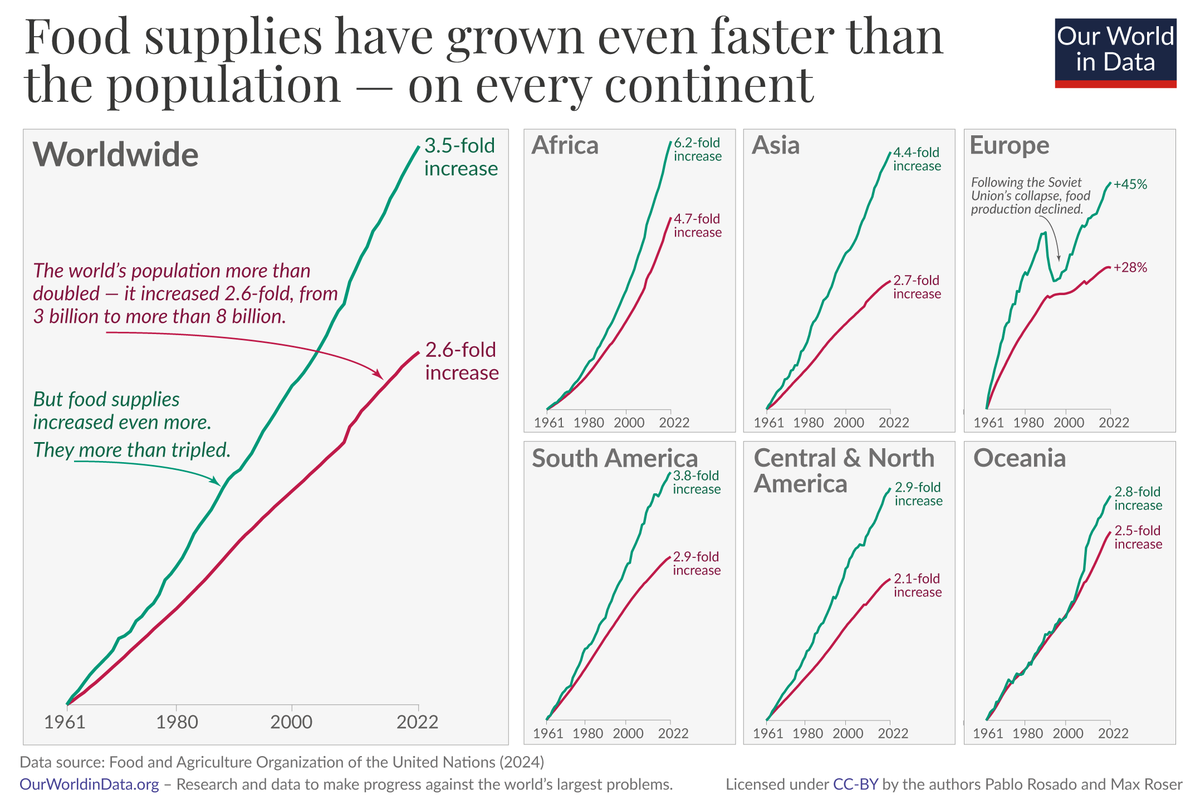
This chart documents one of humanity’s greatest achievements, in my view. We just lived through the fastest population growth in history. It would have been impressive if food supplies had merely kept pace — but on every continent, they grew even faster than the population.
Max Roser tweet media
English
24
195
690
44.5K
Max Roser retweetledi
Kiko Llaneras
Kiko Llaneras@kikollan·
✨ The world isn't getting worse. It's getting better. It's not perfect—not even a good place. But of all the global scenarios we've actually known (not imagined or wished for), this is the best. 44 facts to start 2026 with optimism👇
Kiko Llaneras tweet media
English
4
120
282
79.1K
Max Roser retweetledi
Our World in Data
Our World in Data@OurWorldInData·
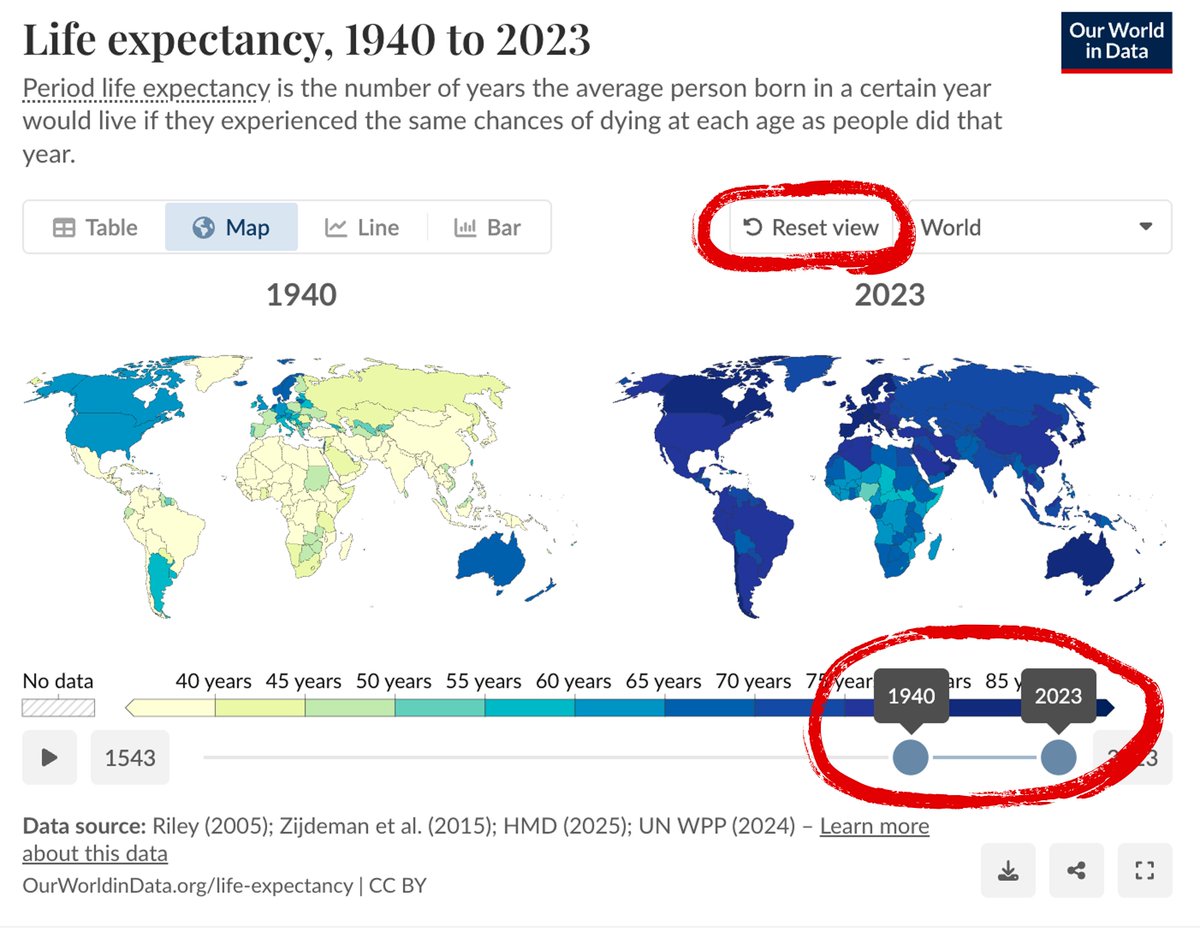
🔧 New feature: you can now view two maps showing different years side by side! A useful way to look at change over time for an indicator is to view two maps showing different years side by side. Sophia Mersmann, our Senior Data Visualization Engineer, recently upgraded our data viz tool to be able to do this! To view two maps, just click on the timeline at the bottom to add a second time handle. You can then drag that handle left and right on the timeline to change the years shown. To go back to a single map, you can either drag one handle back onto the other, or click “Reset view” at the top (only available on larger screens).
Our World in Data tweet media
English
4
35
220
16.3K
Max Roser retweetledi
Lewis Bollard
Lewis Bollard@Lewis_Bollard·
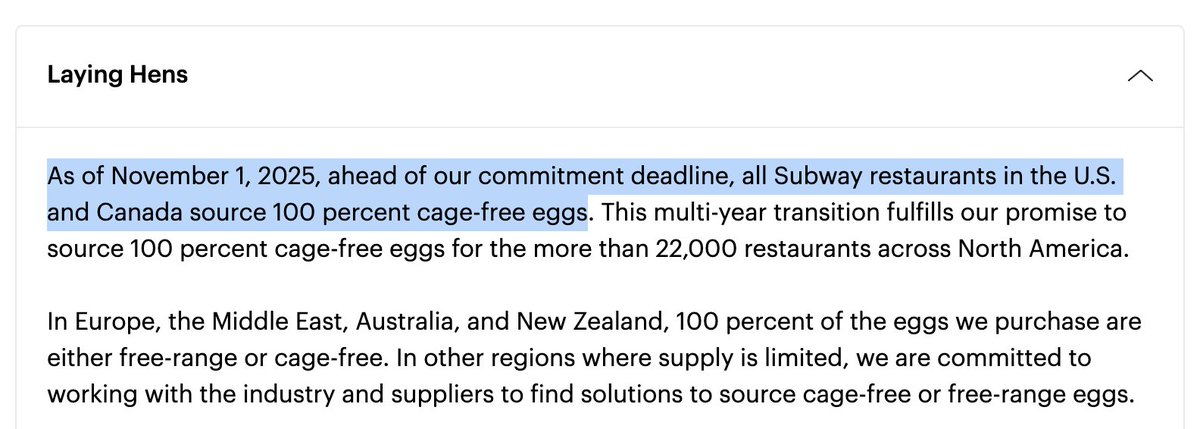
America's two top fast fast chains -- Subway and McDonald's -- are now 100% cage-free. I remember when, in 2007, we thought it was a big win that Burger King agreed to go 5% cage-free. Battery cages, one of the cruelest human inventions, are now firmly on the way out.
Lewis Bollard tweet media
English
14
48
339
17.3K
Max Roser
Max Roser@MaxCRoser·
This is what the peninsula looked like in 1900.
Max Roser tweet media
English
2
0
7
5K
Max Roser
Max Roser@MaxCRoser·
For Our World in Data, I've this article on how we can become the first generation that achieves a world in which forests expand — great to see how this looks in practice in a place where this has already been achieved. ourworldindata.org/global-forest-…
English
3
16
37
10.6K
Max Roser
Max Roser@MaxCRoser·
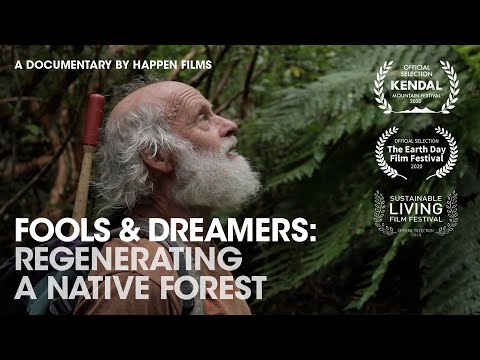
"The problems are immense, but the solutions are immense too." I loved this short documentary about botanist Hugh Wilson, who spent thirty years protecting and growing a forest in New Zealand. youtube.com/watch?v=3VZSJK…
YouTube video
YouTube
English
5
9
46
14.3K
Max Roser retweetledi
Max Roser
Max Roser@MaxCRoser·
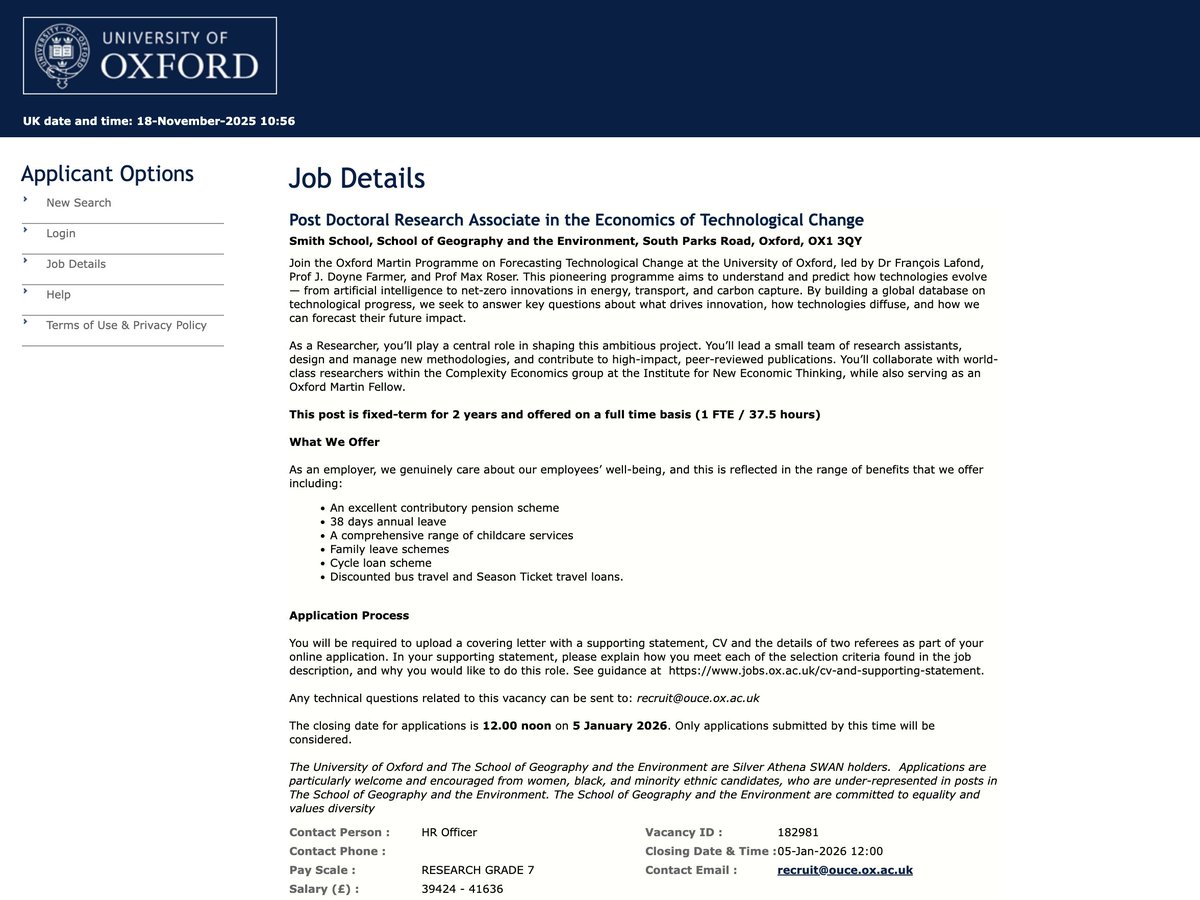
We are now looking for a fourth colleague to join our team — a Postdoctoral Researcher at @UniofOxford. It is a great position for a researcher with a broad interest in technology who enjoys carefully building a comprehensive database on technological change. You will be working with my colleagues @Doyne_Farmer, @F_Lafond_, and me at the new @OxMartinSchool Programme on Forecasting Technological Change. If you are interested, we would love to hear from you! And if you know someone, I would appreciate if you share the job offer with them. Thank you.
Max Roser tweet media
English
4
36
83
56.6K