mungamwachiro

126.8K posts

mungamwachiro banner
mungamwachiro

mungamwachiro

@mmunga_

☭ Work Life

Kilifi~Nyika (Paga Dzala)☭ Katılım Kasım 2011
5.9K Takip Edilen3.6K Takipçiler
mungamwachiro retweetledi
杜晓晖DU Xiaohui
杜晓晖DU Xiaohui@DGAfrica_MFA·
As you may have known, the first 24 tons of South African apple under #ZeroTariffPolicy arrived in Shenzhen on 1 May. I was able to buy some of them from a supermarket in Beijing today. Delicious!

杜晓晖DU Xiaohui tweet media
English
50
570
2.3K
37.2K
mungamwachiro retweetledi
NOBUNAGA🇯🇵🏯_夏樹蒼依
In Japan, children clean their own schools. Every day. After lunch. About twenty minutes. Classrooms. Hallways. Toilets. Not because the schools are too poor to hire someone. Because in 1947, this country decided that cleaning your own space is part of becoming a person. The cleaning rag is on the school supply list. Right next to the pencils. Egypt teaches it now. So does Indonesia. So does Mongolia. Think about the last time you watched a seven-year-old mop a floor without complaining. Japan does that in every elementary school in the country. Not as punishment. As education.
NOBUNAGA🇯🇵🏯_夏樹蒼依 tweet media
English
1.4K
16.4K
53.7K
918.1K
mungamwachiro retweetledi
Willis Evans Otieno
Willis Evans Otieno@otienowill·
Finance Bills used to arrive with reliefs, incentives and hope for ordinary citizens. Nowadays, people read them like horror trailers like, waiting to discover which new tax, levy or burden is coming next.
English
14
1.1K
2.7K
21.7K
mungamwachiro retweetledi
The Kenyan Vigilante
The Kenyan Vigilante@KenyanSays·
Paying someone a salary of under KSh 30,000 in Nairobi for a 9-to-5 job, 5 to 6 days a week, should be declared illegal and inhumane!
English
38
1.1K
4.3K
59K
mungamwachiro retweetledi
Moe
Moe@moneyacademyKE·
Matatu operators in Nairobi have announced a 50% fare hike nationwide after fuel prices went up by EPRA. They also say all PSVs will go on strike from Monday over rising fuel costs affecting operations.
English
102
1.8K
6K
85K
mungamwachiro retweetledi
Mukite
Mukite@Mukiteee·
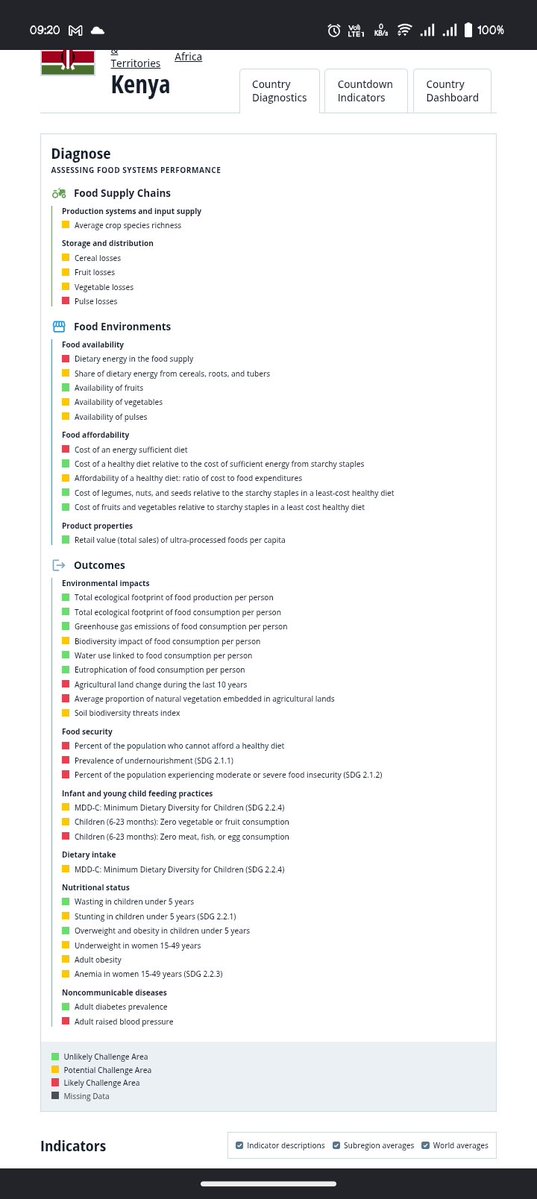
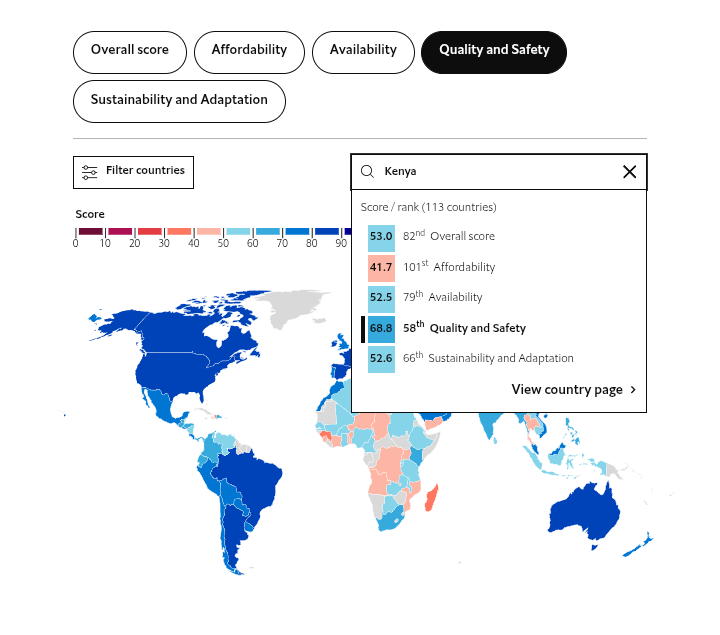
Mtu akiweza soma tweets zenu hawezi jua we are seriously food insecure & poor na barely above the average score in worthwhile metrics (F2). For our nutrition na future generations, we need to get the national GM crop area to about 5% or more
Mukite tweet mediaMukite tweet media
ㄖchibo@0chibo_

10 to 20 years from now if nothing changes mtasahau how real organic food huonja. Your children watakuwa wanakula food za Bill Gates. Nitawauzia surplus at premium rates 🤣


English
12
29
46
2.5K
mungamwachiro retweetledi
𐌁𐌉Ᏽ 𐌕𐌉𐌌𐌉
Why are ethical questions always like, ‘Is it ethical to steal bread to feed your starving family?’ and not, ‘Is it ethical to hoard bread while families are starving?
English
219
3.6K
24.1K
199.7K
mungamwachiro retweetledi
David Cant
David Cant@davidgcant·
"Accidents don't just happen - they're caused." That's right. And yet the cause is almost always blamed on worker behaviour, rarely on systemic pressure, poor design, or management decisions.
English
2
4
7
192
mungamwachiro retweetledi
Faith Odhiambo
Faith Odhiambo@FaithOdhiambo8·
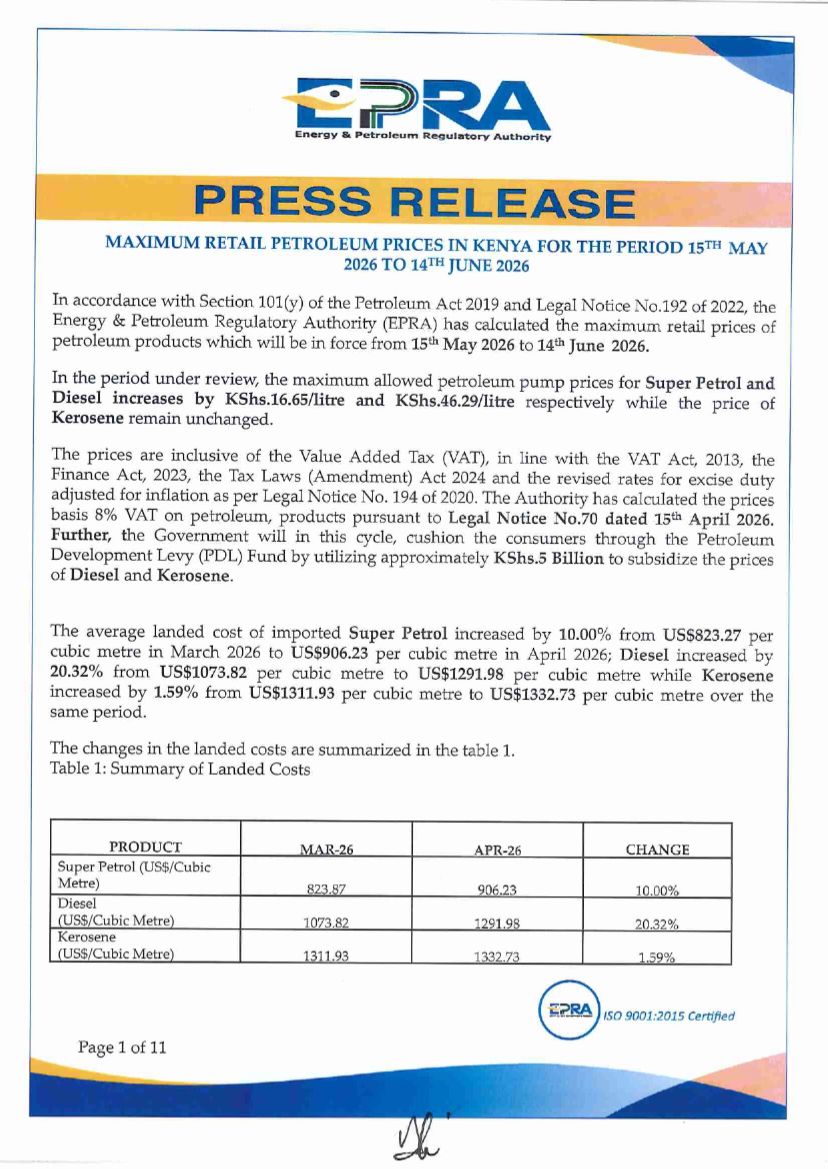
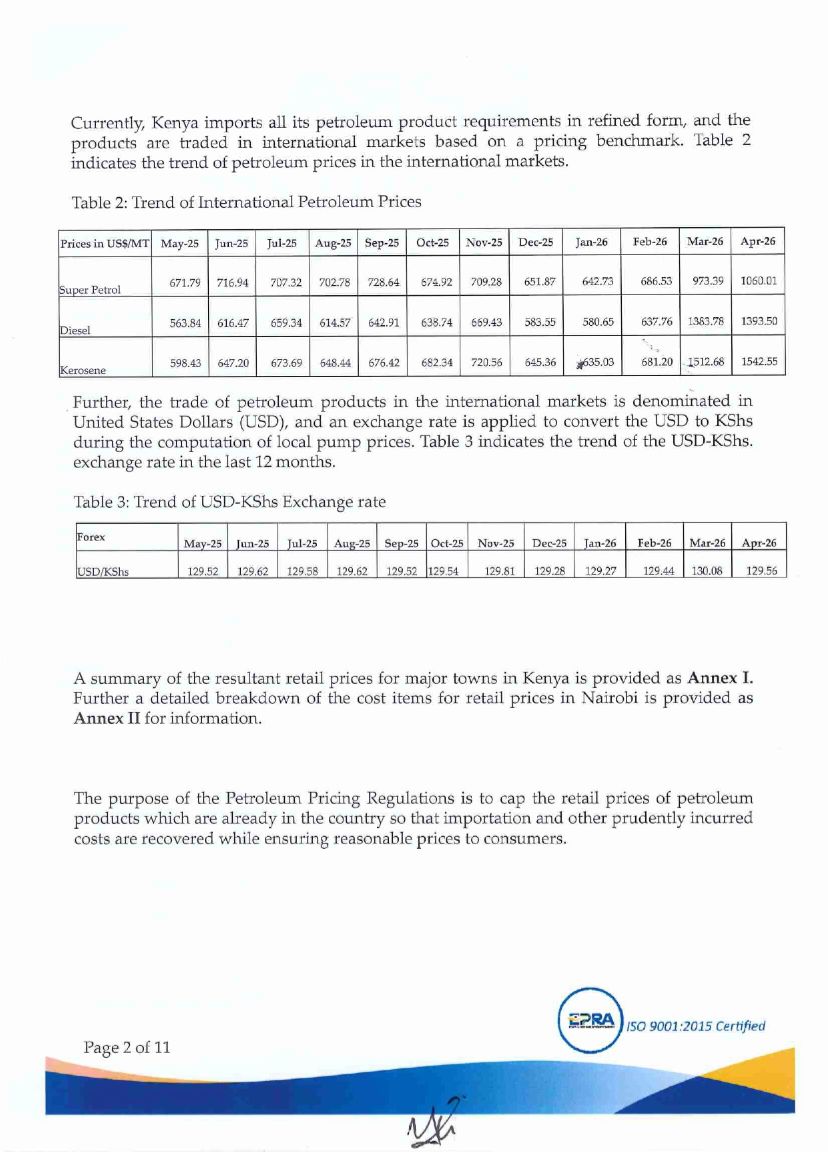
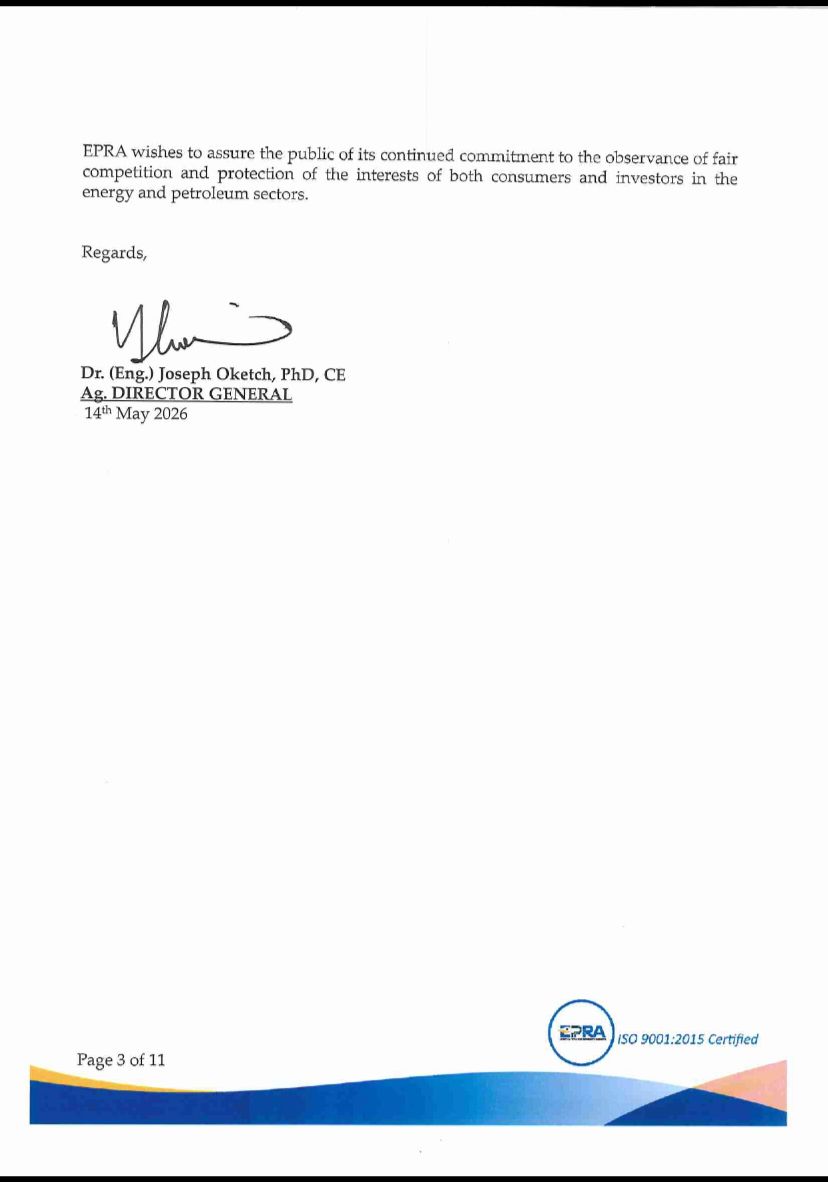
@EPRAKenya has released its Press Release for the period 15th May to 14th June 2026 pursuant to Section 101(y) of the Petroleum Act, 2019. Super Petrol goes up by Ksh.16.65 and Diesel by Ksh.46.29 per litre. EPRA states that the landed cost of Diesel surged by 20.32% which means it has increased from US$1,073.82 to US$1,291.98 per cubic metre. The Government has deployed Ksh.5 Billion from the Petroleum Development Levy Fund, a fund built from levies Kenyans already pay at the pump, to cushion Diesel and Kerosene. That cushion is clearly not enough. Of concern is that VAT on petroleum has now been pegged at 8% pursuant to Legal Notice No.70 of 15th April 2026, down from 16%. That reduction should have meaningfully softened these prices. Yet here we are. Two consecutive brutal cycles. Kenyans have a right under Article 35 of the Constitution to interrogate every line of this document. The PDL Fund is public money. Its deployment must be transparent and accountable. We will keep watching.
Faith Odhiambo tweet mediaFaith Odhiambo tweet mediaFaith Odhiambo tweet media
English
76
871
1.7K
76K
mungamwachiro retweetledi
BRAVIN YURI
BRAVIN YURI@BravinYuri·
And because reading culture is already dying, you can see even Grade 6 students having a problem reading, the why, is a story for another day, many people will not investigate deeper. They will consume whatever is summarized for them, whatever trends, whatever appears first on their feed, whatever authority tells them is true. A society that stops reading deeply becomes easier to program emotionally, politically, and psychologically. This is why I believe the conversation about technology is bigger than convenience. It is about control, memory, access, dependency, and the future of independent thought itself. Maybe I am wrong which I doubt I am. Maybe this pattern leads somewhere harmless, but I doubt it is. But when I observe the direction things are taking, I cannot help but ask: What happens to freedom of thought when humanity no longer owns knowledge physically, but only rents access to it digitally? AI will play a critical role in rewriting that history.
English
6
17
30
1.3K
mungamwachiro retweetledi
BRAVIN YURI
BRAVIN YURI@BravinYuri·
There is something I have been observing for a long time now and the more I watch society evolve, the more the pattern keeps revealing itself. We once lived in a world where paper was central to knowledge. Libraries existed everywhere, shelves were filled with books, newspapers circulated freely, and people physically owned information. You could hold knowledge in your hands, store it in your house, pass it down to your children, underline pages, revisit ideas decades later, and no one could alter what was written on your copy unless they physically took it from you. Then industries like Pan Paper collapsed and slowly, the foundation of paper culture began weakening. Next came the rapid rise of technology. Audiobooks emerged. PDFs became common. Soft copies became the norm. Social media shortened attention spans. Video replaced reading. Entire generations began consuming information in fragments rather than in depth. Today, many people barely read complete books anymore. A headline, a short clip, or a summarized thread is enough to shape opinions. Technology then pushed deeper into schools. Notes became digital. Assignments moved online. Tablets and screens started replacing exercise books in some places. And if you remember in Kenya we were even scammed under the laptop project. Saitan! Cloud storage has become more important than physical archives. Step by step, society is normalizing the idea that knowledge no longer needs to physically exist. Then came the global climate change push. Save trees. Reduce paper usage. Digitize systems. Go green. And while environmental conservation is important, I cannot ignore the direction this pattern seems to be taking. What happens when environmental arguments, technological dependence, and policy-making eventually merge into one? I believe a time may come when governments and institutions will begin pushing directives, much like the Type C charger transition for iPhone, where physical books are gradually phased out in the name of efficiency, modernization, and environmental conservation. It will sound progressive. It will sound necessary. It will sound responsible. At first, people will celebrate the convenience. “Why carry books when everything is online?” “Why cut trees for paper?” “Why print when a tablet can store thousands of books?” But convenience often hides dependency. Because once society fully depends on digital access for knowledge, ownership of information changes completely. You no longer truly own knowledge. You merely access it through systems controlled by corporations, governments, internet providers, and digital platforms. A physical book in your house cannot suddenly disappear because someone changed a server policy. A printed page cannot be remotely edited overnight. But digital information can be altered silently, restricted instantly, or erased completely without most people even noticing. And that is where my concern deepens. A future where hard-copy books become rare is also a future where access to information becomes conditional. To read, you may need subscriptions. To research, you may need internet access. To learn history, you may need approval from centralized platforms. Knowledge slowly stops being a right and starts becoming a controlled service. Then comes the most dangerous part of all: the rewriting of history. History has always been shaped by those with power, but physical archives created resistance against total manipulation because old books, newspapers, and documents remained scattered across homes, libraries, and institutions worldwide. They became evidence that could not easily be erased. But in a fully digital world, information becomes fluid. Edits become invisible. Narratives can be adjusted gradually. Uncomfortable truths can disappear from search engines. Entire generations may grow up only knowing the version of reality that algorithms choose to prioritize.
English
29
157
319
13.5K
mungamwachiro retweetledi
Julz💃🏾
Julz💃🏾@julleberry·
The SAPs of the 1990s ruined Kenya and made us a drinking nation by scrapping off funding to social spaces, aka town halls and libraries! The only social spaces left are bars and wines & spirits! Kenya has tumbled down the rabbit hole!
Nairobi, Kenya 🇰🇪 English
15
196
384
7.2K
mungamwachiro retweetledi
MC Squared
MC Squared@mcsquared34·
MC Squared tweet media
ZXX
213
7.5K
38.9K
226.2K
mungamwachiro retweetledi
David Cant
David Cant@davidgcant·
Safety first is not a reality.
English
2
5
6
192
mungamwachiro retweetledi
Alfayaz 11
Alfayaz 11@Alfayaz11·
Good people of Nairobi, today we are celebrating the 1st anniversary of several potholes in the city and true to my word, I said cake is a must. My brother @MuriraKinoti @KURAroads we celebrate you. Enjoy the white forest cake. #ReclaimNairobi
Alfayaz 11 tweet mediaAlfayaz 11 tweet mediaAlfayaz 11 tweet media
English
85
721
1.5K
45.3K
mungamwachiro retweetledi
Caroline Oduor
Caroline Oduor@OduorACaroline·
@Kenyajudiciary 1. The policy is remarkably clear that AI SHALL NOT replace judges. The Judiciary positions AI strictly as a decision-support tool and not a substitute for judicial reasoning, discretion, or constitutional interpretation.
English
1
3
14
1.1K
mungamwachiro retweetledi
Caroline Oduor
Caroline Oduor@OduorACaroline·
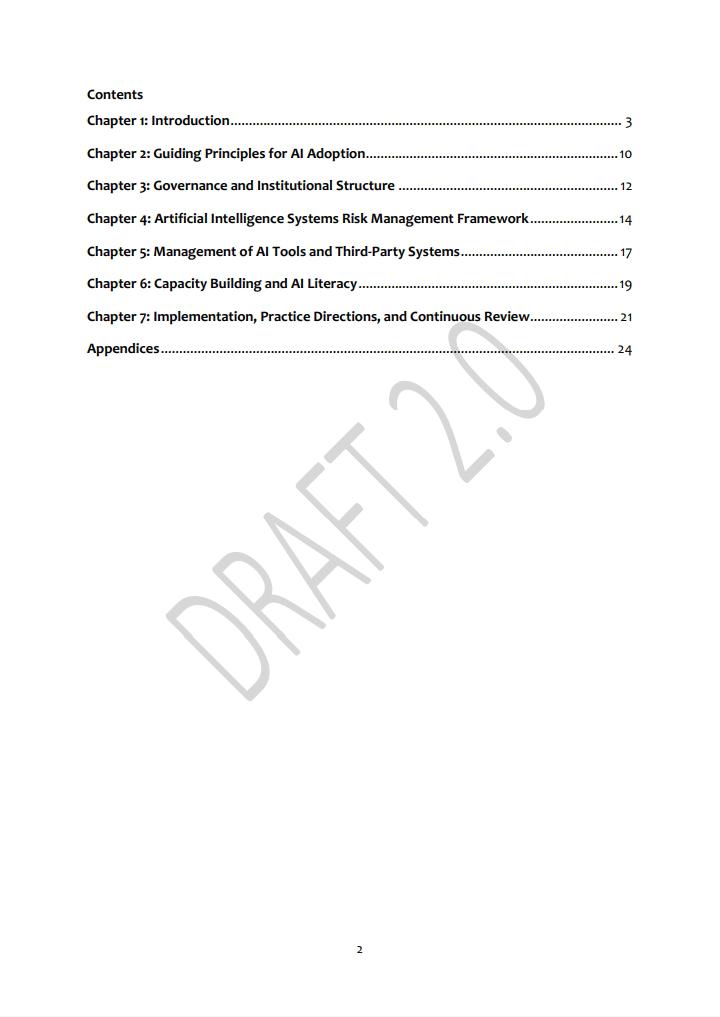
The Judiciary @Kenyajudiciary has released what might be one of the most consequential governance documents of our digital era: the Draft Judiciary AI Policy. A constitutional blueprint on how AI may enter the administration of justice without compromising judicial independence, fair trial rights, privacy, or human dignity. A thread. 🧵
Caroline Oduor tweet mediaCaroline Oduor tweet media
English
9
102
242
17.2K
mungamwachiro retweetledi
Stanley Macharia
Stanley Macharia@StanleyMachaari·
Train yourselves to see systems. Systems produce the same results consistently. Capitalism will always have the same economic results no matter who you elect.
English
31
2.7K
10.8K
110.7K
mungamwachiro retweetledi
KALRO
KALRO@kalromkulima·
The KALRO Beef Research Centre, located in Mariakani, Kilifi County, is pleased to invite stakeholders to its open week exhibitions on 15th May 2026. The event will showcase cutting-edge technologies and innovations in beef breeds, pastures & fodders, value addition, and animal health management among others. Come learn from the experts! Entry is Free #kalroopenweek2026
KALRO tweet media
English
1
4
11
472
mungamwachiro retweetledi
Bonnie Mwangi, CPA, LLM, MBA
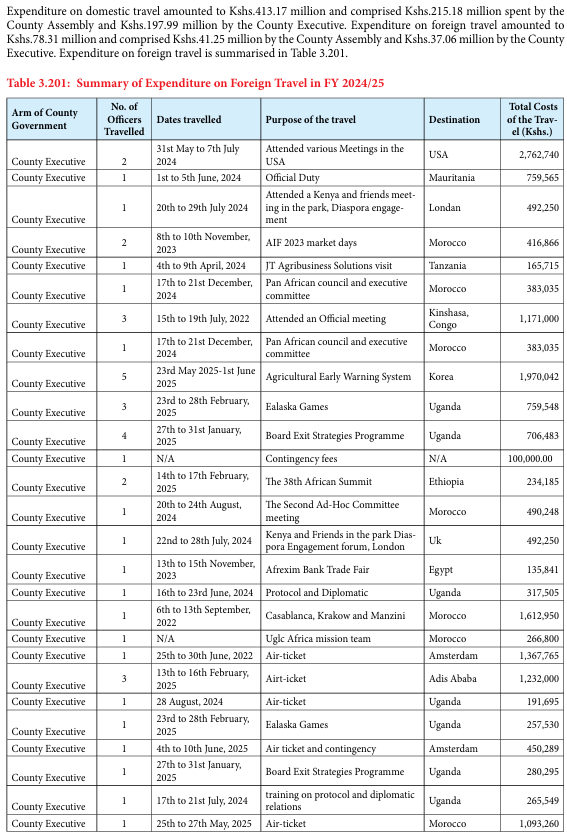
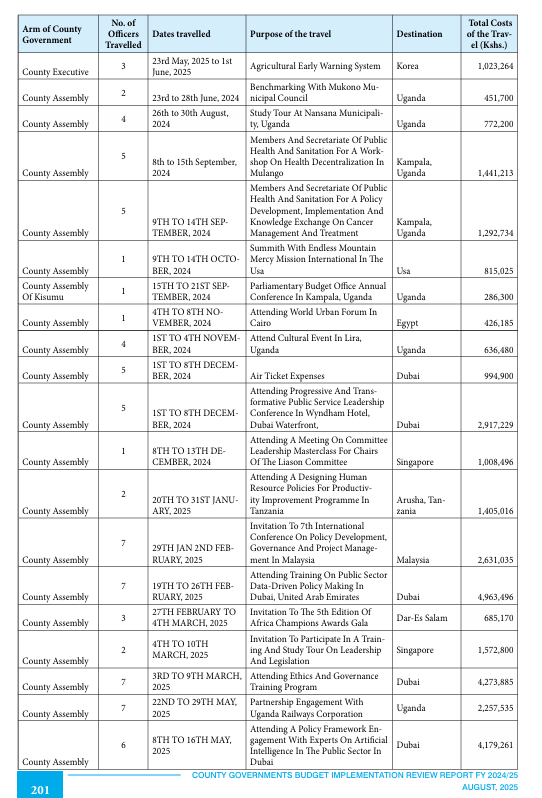
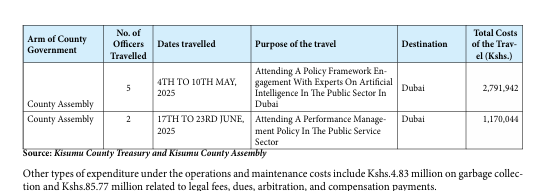
When a "professor" exhibits less common sense than a standard eight drop out, we have a problem on our hands. It takes three pages to document FOREIGN trips by the County of Kisumu. Just the foreign component. USA. Mauritania. Tanzania. Morocco. DRC. Korea. Uganda. Uganda again. Ethiopia. Egypt. Absolutely unbelievable recklessness in the handling of taxpayer funds. KSH 491 million in wasteful travel. There were several trips, lasting about 9 days each, in which people from @AnyangNyongo said they travelled to London, to: Meet Kenyans at the park. In London. That was the given reason. Each charged about KSH 500,000 to citizens. For these trips. This amount is almost twice the annual income of the average citizen in Kisumu County. In a county that has 40% poverty rate, which spent exactly ZERO in bursaries in 2024-2025. That same county spent 63% of every shilling it had, on salaries for the 1% the county employs. 63%, when the legal limit is 35%. Serving citizens, is a faint afterthought. Change, Must Come. @KisumuCountyKE
Bonnie Mwangi, CPA, LLM, MBA tweet mediaBonnie Mwangi, CPA, LLM, MBA tweet mediaBonnie Mwangi, CPA, LLM, MBA tweet media
English
9
96
137
6.3K