Ich bei einem Date mit ihr: „Tolles Pferd hast Du da. Reiten ist auch ein super Hobby. Würde Dein Pferd gerne mal kennenlernen. Aber sag mal: Was hältst Du eigentlich von millionenfacher Remigration?“
Ich bin zu ihm gefahren ans nördliche Ende Deutschlands. Ein Haus an der Ostsee, 2000 Jahre alte Antiquitäten und ein offenes Strafverfahren. Prof. Dr. Sucharit Bhakdi war Institutsdirektor, Träger des Verdienstordens von Rheinland-Pfalz und Berater eines Ministerpräsidenten. Einer der meistzitierten Mediziner Deutschlands. Dann kam Corona und plötzlich war dieser Mann eine Gefahr für die nationale Sicherheit Amerikas. Sein Buch wurde von Amazon gelöscht, sein Brief an die Kanzlerin 10 Millionen mal aufgerufen und in 10 Sprachen übersetzt.
Sein Ruf systematisch zerstört. Er wurde freigesprochen, also klagen sie weiter. In diesem Gespräch redet Bhakdi über mRNA, globale Machtstrukturen und den Nürnberger Kodex. Und darüber, warum er sich nach all den Jahren immer noch nicht brechen lässt. Zum Abschluss sprechen wir über etwas, das in keinem seiner anderen Interviews vorkommt: Was ein Buddhist mit thailändischen Wurzeln und ein christlicher Deutscher über Gott, Wahrheit und Gewissen denken.
🎧 Der ganze Podcast auf Youtube:
youtu.be/2oUrYeORUOU
🎧 Der ganze Podcast auf Spotify:
open.spotify.com/episode/06msGk…
How to make Amish ibuprofen
This tincture is good up to a year, no need to refrigerate but you can if you'd like. Keep in a cool, dry, dark place.
You can take it straight or add a few drops to water or tea if you prefer a milder taste.
You need to watch Kenneth Clark’s 1969 docuseries, Civilisation. He covers the fall of Rome up to the mid 20th century. It’s 13 parts and 11 hours long, but it’s incredible.
Have I ever mentioned the history we were taught in school was a massive lie?
Well here's a new one for you...
In her book, "To The American Indian", Che-na-wah Weitch-ah-wah (Lucy Thompson), a highly-renowned historian of the Yurok Indian tribe (a sub-group of the greater Klamath Indian tribe of Northern California), details a highly-advanced White race of people that already inhabited North America when the Indians arrived.
If you've been keeping up with the #Tartaria playlist on my Rumble channel, you already knew all about this civilization and its people, who were intentionally wiped from the official historical timeline for reasons you will learn as you dive down the #OldWorld rabbit hole. Get caught up on that HERE 👇rumble.com/playlists/Hk7U…
And those "giants" she writes about in the 2nd/3rd attached pages? I know it sounds nuts, but don't write it off yet...there are some VERY fascinating threads to pull on about that, some of which you've probably come into contact with in your own life without even realizing it. Check out my #Giants Rumble playlist 👇
rumble.com/playlists/Ohj0…
You can find the full book, "To The American Indian" by Lucy Thompson (1856), where these pages are pulled from, HERE 👇
archive.org/details/toamer…
Reddit discussion 👇
reddit.com/r/Tartaria/com…
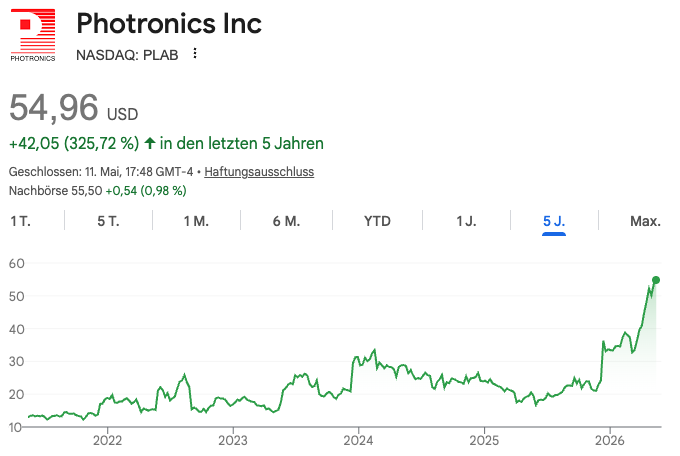
Jede Nvidia-Chip wird aus einer Schablone gedruckt. Diese Schablone heißt Photomask. Ohne sie gibt es keinen Chip, keine KI, kein Rechenzentrum. Photronics baut genau diese Schablonen seit 1969 und ist heute einer der weltweiten Marktführer in einem Nischenmarkt mit hohen Eintrittsbarrieren, den fast niemand kennt. Der Kurs hat gerade ein Allzeithoch markiert und die Umsätze für High-End-IC-Masken steigen durch den AI-Boom zweistellig. Das Schöne dabei ist dass die Aktie noch immer unter ihrem historischen Bewertungsniveau handelt.
Das gefällt mir als langfristiger Investor. Monopolartige Stellung, kaum Wettbewerb im High-End-Segment, starke Margen von 35 Prozent brutto. Das Einzige was mich leicht zwickt ist das Insider-Verkaufsvolumen der letzten Wochen. Nichts Dramatisches, aber das schaut man sich besser genauer an bevor man kauft.
$PLAB
(Keine Anlageberatung)
THIS IS WHAT A $450,000 - $700,000 QUANT INTERVIEW LOOKS LIKE
Here's what they asked:
1. You have 6 shoes - two each of sizes 4, 5, and 6. What's the probability of randomly selecting 3 acceptable pairs (differing by at most one size) without replacement?
2. K balls are distributed among 3 baskets at random - where K is determined by the first heads on a fair coin flip. What's the probability none of the 3 baskets remain empty?
3. What does the resulting value of 9/10 represent?
4. Walk me through your solution methodology.
They're testing whether you think in probability distributions or in outcomes
The quant intern who answered these correctly is now earning more than most doctors
The math behind every one of these questions is the same math that powers prediction market edge
Watch the interview.
Then read the article below on how to apply this exact thinking to Polymarket
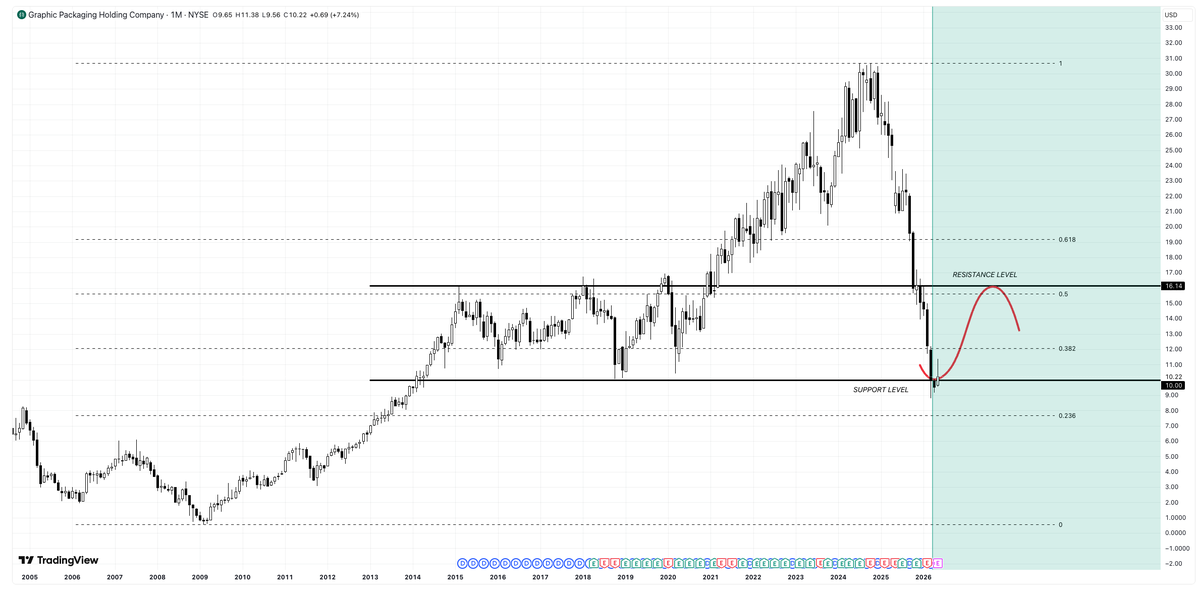
Du hältst gerade eine Coca-Cola Dose in der Hand. Der Karton darum, der McDonald's Kaffeebecher, die Cornflakes-Schachtel beim Frühstück. Alles von derselben Firma hergestellt. Das Unternehmen verpackt buchstäblich das tägliche Leben von Milliarden Menschen und niemand kennt den Namen.
Zu den Kunden zählen Anheuser-Busch, PepsiCo, Coca-Cola, General Mills, Nestle, Kellogg, McDonalds, Chipotle und Johnson & Johnson. Das ist kein Nischenbusiness. Das ist die unsichtbare Infrastruktur des Supermarktregals.
Deutsche Bank hat das Unternehmen als den wahrscheinlichsten Übernahmekandidaten durch Private Equity im gesamten Verpackungssektor bezeichnet. Insider kaufen. Der Kurs hat nach dem Q1-Beat über 10 Prozent zugelegt.
Die Schulden sind real und machen mir kein schlechtes Gewissen das zu sagen. Das Verhältnis von Gesamtschulden zu Eigenkapital liegt bei rund 1,67, aber die Zinsdeckungsquote von 6,1x zeigt, dass das Unternehmen die Situation im Griff hat. Für mich ist das eine klassische Value-Situation: ein langweiliges, stabiles Business mit soliden Cashflows, das der Markt gerade so behandelt als würde es untergehen. Das tut es nicht. Ich beobachte.
GPK hat jahrelang riesig investiert. Allein 2024 über 1,2 Milliarden Dollar Investitionen, 2025 noch über 900 Millionen. Das neue Werk in Waco, Texas wurde fertiggestellt und hat die Recyclingkapazität um 500.000 Tonnen erweitert. Problem: Gleichzeitig gibt es branchenweite Überkapazitäten durch diese jüngsten Kapazitätserweiterungen sowie sinkende Nachfrage nach Karton. Man hat also teuer gebaut genau dann, als der Marktpreis für Karton unter Druck geriet.
Die Investitionsausgaben fallen dieses Jahr drastisch auf 450 Millionen Dollar, gegenüber über 900 Millionen in 2025. Damit dürfte der freie Cashflow auf 675 bis 700 Millionen Dollar steigen. Das Unternehmen ist also nicht in einer Krise, es hat zu viel auf einmal investiert und der Markt straft das hart ab. Ob das eine Value-Falle oder eine echte Chance ist, hängt davon ab wie schnell sich die Überkapazitäten im Markt abbauen und die Margen sich erholen. Es bleibt spannend..
KGV aktuell: ca. 6,5
KGV historisch (10 Jahre): ca. 18,0
(Keine Anlageberatung)
Macht das hier bloß nicht, auch wenn es extrem effektiv ist 5 Liter Wasser mit 350ml Essig-Essenz, 1KG Salz und etwas Spüli (damit es besser am Unkraut haftet) zu mischen um damit Unkraut für lange Zeit einfach und kostengünstig (unter 1€ für 5 Liter) zu bekämpfen - das ist nämlich verboten 🚫!
Cutting a lemon releases the same chemical that cleaning sprays put into the air. A 2008 office experiment found that peeling oranges produced 50 times more tiny pollution particles than spraying a citrus cleaner. This trick runs on the same chemistry.
When you cut a lemon, an oil called limonene drifts off the peel into the air. Orange peel oil is 90 percent limonene; lemon peel is similar. Your room also has a small amount of ozone, the same gas you smell after a thunderstorm, constantly leaking in from outside. When limonene meets ozone they react, and the products include tiny particles that lodge deep in your lungs, plus small amounts of hydrogen peroxide and formaldehyde. The UK’s cleaning products industry body agrees: you get more exposure peeling an orange than spraying a citrus cleaner.
Now the salt. Salt does absorb water from the air, but only when the room is very damp. Table salt barely does anything until humidity climbs past 75 percent, which is unusually muggy indoors. Hardware-store damp packets like Damp Rid don’t use table salt. They use calcium chloride, a different kind of salt that pulls in roughly its own weight in water. A teaspoon of table salt on a lemon does effectively nothing.
The trick does cover up smells, that part is real chemistry. The lemon’s oils grab onto smelly molecules from cooking, smoke, and bathrooms, and partly cancel them out. An air freshener does the same.
The hack itself goes back centuries. It draws on the Feng Shui salt cure, a Chinese tradition of placing salt in a corner of the home to soak up bad luck. Citrus appears in the same tradition as a symbol of cleansing. The “this will change your life” line is folk ritual with a chemistry story bolted on that doesn’t hold up.
If you actually want cleaner air at home, the answers are boring. A HEPA filter, the kind in air purifiers and vacuums, traps 99.97 percent of particles too small for the eye to see. A Taiwan study found a portable HEPA cleaner cut a home’s indoor air pollution roughly in half. The black charcoal in some filters absorbs smelly gases. Cracking a window for a few minutes does both, for free.
☁️ CLOUD BREAD 🍞 Only 2 Ingredients! (High Protein, Low Carb)
Just tried this viral fluff and it’s insane. Light as a cloud, tastes like actual bread, zero guilt. Perfect for keto, high-protein diets, or just when you’re craving something fresh out the oven.
Recipe (makes 1 loaf):
• 3 eggs (yolks + whites separated)
• 150g Greek yogurt (or lactose-free)
• Pinch of salt (optional)
How to make it:
1. Whip egg whites to stiff peaks (electric mixer works best).
2. Mix yolks + Greek yogurt until smooth.
3. Gently fold whites into yolk mix (don’t overmix – keep it airy!).
4. Pour into parchment-lined loaf tin.
5. Bake at 170°C / 340°F for 25-30 min until golden.
6. Cool slightly, slice & enjoy.
Macros (whole loaf approx): ~300 kcal | 33g protein | ~5-7g carbs | ~15g fat.
This thing pulls apart like fresh sourdough but it’s basically pure protein. Game changer for breakfast, sandwiches, or snacking.
If you ever have made this feel free to reply.
Und genau hier liegt das Problem:
„Ich arbeite Vollzeit und verdiene genug, um meine vier Kinder zu ernähren. Mein monatliches Einkommen liegt über dem Durchschnitt. Ich tauche in keiner Statistik als Problemfall auf. Und doch komme ich finanziell nur aus einem einzigen Grund zurecht: weil ich keine Miete zahlen muss.
Vor zwanzig Jahren habe ich unsere Wohnung gekauft und renoviert. Für eine identische Wohnung im selben Komplex zahlte unser Nachbar damals unter 600 Euro Miete. Er hatte einen alten Mietvertrag. Vor zehn Jahren verstarb er. Die Wohnung wurde renoviert, und die heutigen Bewohner zahlen monatlich 1800 Euro. Das könnte ich mir nicht leisten. Der Staat würde es allerdings übernehmen, wenn ich im Sozialsystem wäre. Irgendwie stimmt das Gefüge nicht. (...)
Ich habe ausgerechnet, wie [im Transfersystem zu leben] bei mir in Zahlen aussähe. Meine „Bedarfsgemeinschaft“ besteht in dieser Berechnung aus vier Teenagern und mir. Bei einer Miete von 1800 Euro käme ein anerkannter monatlicher Bedarf von 4517 Euro heraus. Diese Summe bekäme ich also, wenn ich keine anderen Einnahmen hätte, vom Staat. Und das ist nur die Basis. Denn zusätzlich gibt es zweckgebundene Mittel für Klassenfahrten, Schulbücher, Sportverein oder Nachhilfe. Setze ich die Höchstsätze für Schulbedarf und angemessene Sätze für etwa Klassenfahrten, Fahrtkosten, Ausflüge und Mittagessen an, komme ich auf eine gesamte Leistung des Staates an mich in Höhe von rund 70.000 Euro jährlich. Das ist netto für kaum einen Erwerbstätigen zu erwirtschaften.“
Energy expert Dr. Lars Schernikau: It sounds simple… until you do the math.
• 1 GWh battery = 700,000 tons of mined materials
• Takes 450 GWh to build (450x its capacity)
• Stores as much as 400 tons of coal
Hours of storage. Massive mining, degradation & risks.
This doesn’t fix intermittency, it multiplies the destruction.
‘Batteries are an environmental nightmare’.
Indians believe they have a right to demand bobs and vagene. However, they have yet to understand the difference between the acquiescent Anglo and the defiant southern Slav.