Muttski

942 posts

Muttski banner
Muttski

Muttski

@neilmutton

Have learnt a lot about a lot of things along the way. Leave things better than you found them.

Surrey UK Katılım Temmuz 2009
552 Takip Edilen151 Takipçiler
Muttski retweetledi
Sama Hoole
Sama Hoole@SamaHoole·
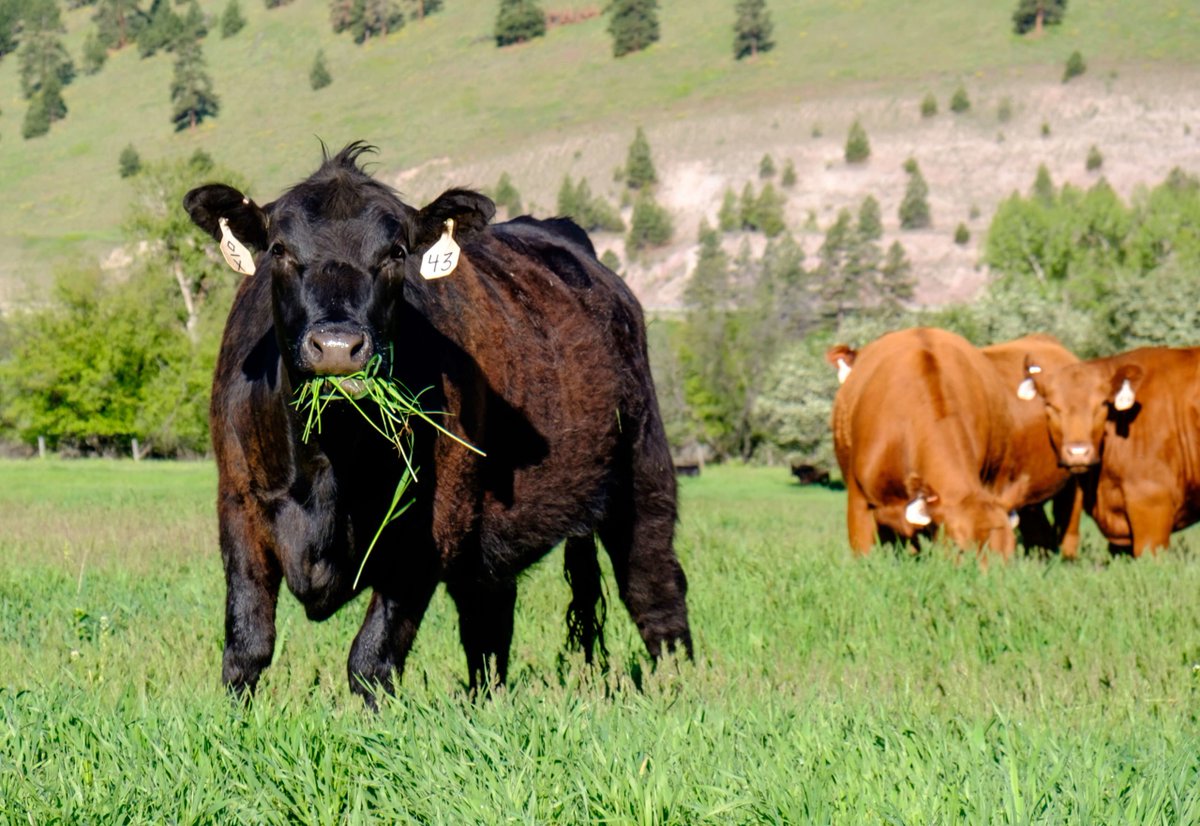
In 1946 the British government introduced free school milk for every child in the country. One third of a pint, every school day, from the age of five to the age of fifteen. The milk was whole. Full-fat. From British dairy herds. It was delivered to the school gate in small glass bottles with foil caps and left on the doorstep in metal crates, where it sat in the sun until morning break if the weather was warm and developed a slightly suspect taste that an entire generation of British adults can still describe with uncomfortable precision. The generation that grew up on school milk was, by every anthropometric measure, the healthiest generation of British children ever recorded. Average height increased. Bone density improved. Dental health, despite the sugar in everything else, improved. Iron deficiency rates among school-age children dropped. The growth charts that the Ministry of Health had been keeping since the war showed a consistent, measurable, year-on-year improvement that tracked precisely onto the introduction of the milk programme. In 1971 Margaret Thatcher, then Education Secretary, cut free school milk for children over seven. The tabloids called her Thatcher the Milk Snatcher. She was vilified. She kept the policy. The next generation of British children, the ones who grew up without the daily third of a pint, were measurably less healthy than the one before. The growth charts show it. The dental records show it. The conscription medicals, while they lasted, showed it. The thing the milk had been providing, the calcium, the vitamin D, the vitamin A, the complete amino acid profile, the conjugated linoleic acid, the fat-soluble nutrients that a growing skeleton requires in order to reach its genetic potential, was no longer arriving at morning break in a glass bottle with a foil cap. It was replaced, eventually, by nothing. Or by a carton of fruit juice. Or by a packet of crisps from the vending machine that appeared in the school corridor in the 1990s. The generation that drank the milk is now in its seventies and eighties. They are, on average, taller, stronger-boned, and longer-lived than the generation that came after them. The milk was not magic. The milk was milk. It was the thing the body needed, delivered at the time the body needed it, at a cost the government considered acceptable until it didn't. The cost of not providing it has been rather higher.
Sama Hoole tweet media
English
1.3K
4.4K
16.9K
1.5M
Muttski retweetledi
Carnivore Aurelius ©🥩 ☀️🦙
let me get this straight almond milk kills 4 billion bees a year, over 1.3 trillion gallons of water per year go to California almonds and it uses 10% of ALL of California's water.... yet eating steak and drinking cow's milk is unsustainable? wake the f up people.
Carnivore Aurelius ©🥩 ☀️🦙 tweet media
English
151
3.9K
12.2K
98.5K
Muttski retweetledi
Sandy Tregent
Sandy Tregent@SandyofSuffolk·
The nanny state rumbles on. Also known as communism. When I was 7 in 1965, because my divorced mum worked, I had to get the bus to school on my own clutching my 2d for the return fare. If I lost it, I'd have to walk 4 miles home. Mum taught me from a very early age all about independence and resilience because, she said, 'nobody else will look after you'. So I was taught to tie my laces, tell the time, read, write and do my times tables before I started school at 5. All through my life, mum taught me everything. How to cook, sew, knit, clean, budget, how to garden, do my make-up, check the oil in my car, wallpaper the bedroom and even tile the bathroom. It's served me well. And every day I'm thankful I had a mum like mine. Because one day we might all need to know how to look after ourselves, whether because of divorce, death or just from choice. And the earlier we're taught these things by our parents, the better. That's why I'm so against this over-reach by the state to feed kids breakfasts, brush their teeth, toilet train them, teach them how to use cutlery and generally take the role of a good parent. All this mollycoddling and health and safety gone mad is nothing short of control. And why? And what next? Evening meals at school, or teaching them to wash their hair at school? All of the everyday things in a child's life are the responsibility of the parents, not the school. School is there to teach academic knowledge and skills like woodwork for the more practical children. The more everyday things a school takes over doing, the more teaching assistants they have to employ, costing a fortune. And the more time schools spend teaching children how to use a knife and fork, the less time they've got to teach them what they should be learning. It's time people took back control of their own lives. The nanny state has already gone too far. Take responsibility for yourself and your own children. Like my mum did. You won't regret it. And one day when they're adults, your kids will thank you.
English
164
334
1.5K
23.4K
Muttski retweetledi
Sama Hoole
Sama Hoole@SamaHoole·
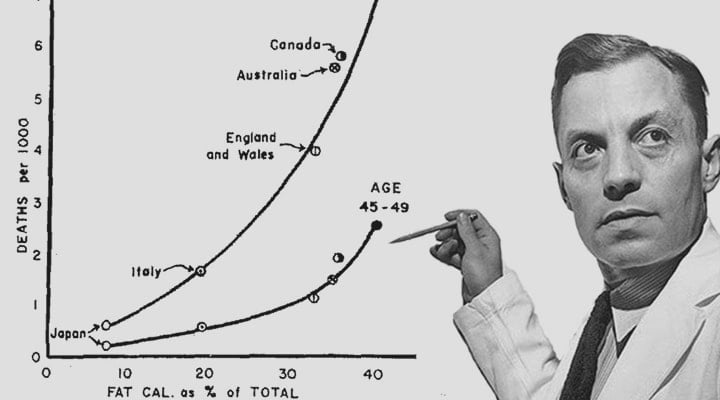
In 1953 an American physiologist called Ancel Keys stood up at a World Health Organization conference in Geneva and presented a graph. The graph plotted fat consumption against heart disease mortality in six countries. The United States at the top. Japan at the bottom. A smooth upward curve in between. The room was convinced. The graph would go on to define global nutrition policy for the next seventy years. There was one small problem with the graph. Keys had data from twenty-two countries. He chose six. The other sixteen, which included France and Switzerland eating vast quantities of butter and cheese with low heart disease, and countries like Chile eating almost no animal fat and having high heart disease, did not produce the line he wanted. So they were not on the graph. When this was pointed out, in print, at the time, Keys did not engage with the science. He launched a career. He became chair of the American Heart Association's nutrition committee. He got himself on the cover of Time magazine. He organised the Seven Countries Study, a sequel to the cherry-picked six, which selected populations and time points that would confirm his hypothesis and excluded those that would not. Crete was measured during Lent. The comparisons were, by design, not fair. Then he did the thing that turned him from a scientist into a politician. He went after the opposition. Dr John Yudkin, a British physiologist, published a book in 1972 called Pure, White and Deadly, arguing that sugar was a better fit for the heart disease data than fat. His data covered more populations, more years, and more accurately matched the rise in cardiovascular mortality across the twentieth century. Keys called him, in print, a charlatan. He used his position at the AHA to block Yudkin's research from conferences. He pressured editors. He lobbied funders. Yudkin's grants dried up. His reputation was systematically dismantled by a man who was, at this point, not doing science but running a protection racket for a hypothesis. Yudkin died in 1995 in obscurity. His work has since been quietly vindicated. Nobody has apologised. Meanwhile the American Heart Association, funded since 1948 by a $1.7 million donation from Procter and Gamble (makers of Crisco, a product that urgently needed a reason for Americans to stop cooking with lard), adopted Keys's recommendations and issued them as medical advice. The American public complied. Butter consumption collapsed. Margarine tripled. Seed oils, negligible in 1950, became the dominant cooking fat. The food industry reformulated thousands of products to remove fat and replace it with sugar, because the fat was the enemy and the sugar was not. American obesity rates, stable for fifty years, began to climb in 1977, the year the McGovern committee translated Keys's hypothesis into federal guidelines. They have not stopped climbing since. Type 2 diabetes followed. Metabolic syndrome followed. Fatty liver disease, which barely existed in 1950, became endemic. The entire constellation of chronic metabolic disease now occupying every doctor surgery in the developed world tracks, almost perfectly, onto the adoption curve of the guidance Keys spent his career promoting. He retired to Italy, drank olive oil, ate cheese, lived to 100, and described himself in interviews as a pioneer. He was a pioneer. He pioneered the practice of producing a predetermined conclusion from selective data, destroying the reputations of anyone who noticed, and using institutional capture to convert the conclusion into policy. Ancel Keys was not wrong the way scientists are sometimes wrong. Ancel Keys was wrong the way politicians are wrong. Deliberately. Profitably. Without consequence. You are still eating the consequences now.
Sama Hoole tweet media
English
117
1.5K
3.3K
105.9K
Muttski retweetledi
Aakash Gupta
Aakash Gupta@aakashgupta·
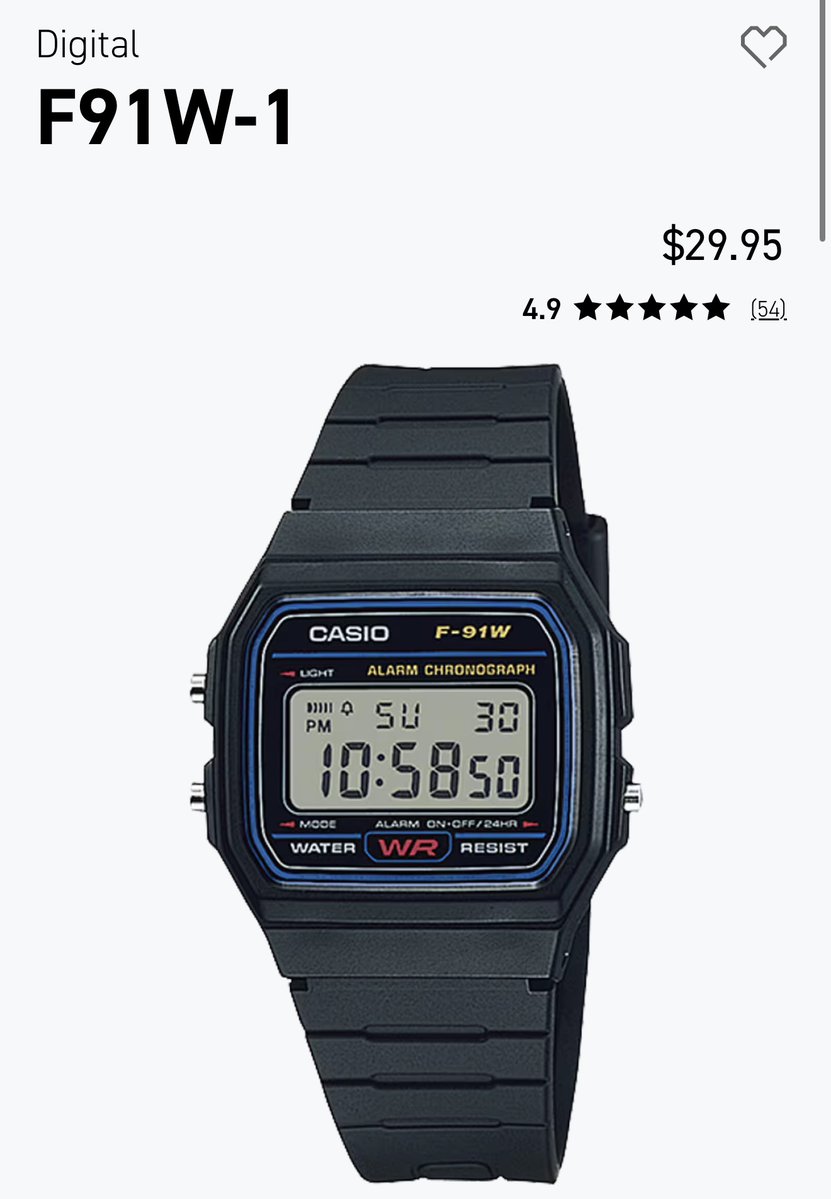
The Casio F-91W costs $30 and runs on the exact same chip from 1989. Same case. Same plastic strap. Same module 593. Casio has sold over 100 million of them. The product strategy here might be the most counterintuitive lesson in consumer electronics. The bull case for killing this watch and building something new looks overwhelming. Apple Watch does health monitoring, GPS, cellular, fall detection, notifications, apps. It's a computer on your wrist. The F-91W tells time, has an alarm, and runs a stopwatch. On feature count alone, it should have been extinct by 2018. Instead it's having its strongest years. Casio shipped 2.3 million F-91Ws in 2025. Tech workers are actively replacing their Apple Watches with them. And the reason isn't nostalgia. Total cost of ownership tells part of the story. The F-91W battery lasts 7 years. Replace the watch every decade for $30. That's $3 per year. Apple Watch needs daily charging, a new model every 3-4 years at $400+, and a paired iPhone to function. Over a decade: $30 vs $1,200+. But the real driver is cognitive. No notifications. No update prompts. No charging anxiety. No red dots. You strap it on your wrist and it tells you the time. For people who spend 10+ hours a day staring at screens, removing one more screen from their body is the actual upgrade. Then there's the business math Casio accidentally perfected. Module 593, the chip inside every F-91W, hasn't changed since 1989. Same tooling. Same manufacturing line. Same bill of materials for 37 years. Zero R&D spend on a product generating $70M+ in annual retail revenue. The margins on a product with no engineering costs are absurd. The product design lesson that most tech companies will never accept: iteration is an assumption, not a law. Ship, measure, iterate, ship again. The F-91W is proof that the highest-margin product strategy might be building something so complete that iteration becomes unnecessary. Obama wore one. A teenager in Lagos is wearing one right now. Same watch. Same chip. Same $30.
Aakash Gupta tweet media
English
11
27
180
19.2K
Muttski retweetledi
Give A Shit About Nature
Give A Shit About Nature@giveashitnature·
No one is asking for this. Potatoes, already perfectly packaged by nature, now individually wrapped in plastic. Why add plastic to something that doesn’t need it? We need less plastic packaging and more common sense.
Give A Shit About Nature tweet mediaGive A Shit About Nature tweet media
English
267
887
4.3K
46.7K
Muttski retweetledi
Super 70s Sports
Super 70s Sports@Super70sSports·
I don’t know the pressure of playing the back nine on Sunday at the Masters, but I do know the pressure of standing on the 18th tee needing a 6 to break 100 while playing a decaying range ball because I chunked two Titleists in a pond at 17. I assume it’s more or less the same.
Super 70s Sports tweet media
English
186
591
10.3K
414.2K
Muttski retweetledi
Joe Pompliano
Joe Pompliano@JoePompliano·
Rory McIlroy is an investor in Whoop, wears one of the company's wristbands while playing, and allows the brand to share his data periodically. Here are some of his Masters highlights: • 24,000+ steps on Sunday • 91,000+ steps during the tournament Rory's heart rate spiked to 135 BPM during his tee shot on 18, dropped to 121 BPM during his approach shot, fell further to 105 BPM during his winning putt, and then jumped back up to 150 BPM during his celebration. His resting heart rate for the week was 47-49 BPM. Rory says he follows a strict routine during the PGA Tour season to ensure proper rest and recovery: • No caffeine after 2 PM • Last meal at least 2 hours before bed • Magnesium and theanine for sleep quality • Blue-light-blocking glasses in the evening • Sauana or Epsom salt bath when available • Cool room temperature for sleep He follows the same three-hour routine before every round: arrive at the course → warm up in the gym → eat breakfast → hit balls on the range → putting green. Rory says he believes his focus on longevity will help him play another 10+ years at a high level, and his physiological age on Whoop is now 1.5 years younger than his actual age. Plus, it turned out to be a pretty good investment. Rory initially invested in Whoop in 2020 when the company was valued at $1.2 billion. While we don't know exactly how much he invested, Whoop recently raised another round at a $10.1 billion valuation. That's an 8.4x multiple in five years. Not bad, not bad.
Joe Pompliano tweet mediaJoe Pompliano tweet media
English
220
983
20.2K
4M
Muttski retweetledi
Matt Van Swol
Matt Van Swol@mattvanswol·
Say what you want about The Masters... But there is nowhere else on planet earth where you will see a photo of humans like this where not a single one of them is looking at a phone. Truly one of the most beautiful things.
Matt Van Swol tweet media
English
450
1.7K
29.6K
756.2K
Muttski retweetledi
David Turver
David Turver@7Kiwi·
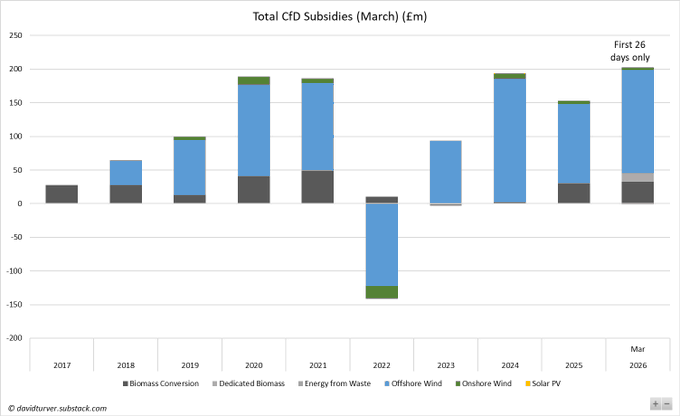
You have to torture the data to arrive at this conclusion. In reality we've paid record CfD subsidies for the month of March in 2026. Proof renewables are more expensive than gas, even with carbon taxes added.
David Turver tweet media
Nicolas Fulghum@nicolasfulghum

🇬🇧 UK clean power records in Q1 2026 are pushing up domestic electricity generation while reducing the impact of high gas prices. Q1 stats: - Record Q1 wind output at 28.7 TWh - Highest domestic power generation since 2022 - Second-lowest gas generation in 11 years

English
4
24
64
2.2K
Muttski retweetledi
Sama Hoole
Sama Hoole@SamaHoole·
The Midwestern United States was, until relatively recently, sitting on top of some of the deepest topsoil on earth. Ten thousand years of prairie. Bison, fire, deep-rooted grasses, the slow accumulation of organic matter into a layer of black soil sometimes two feet thick. Soil that farmers in other parts of the world would have wept at the sight of. Then the plough arrived. In 2021, a team from the University of Massachusetts used satellite imagery and LiDAR to measure what was left. Their finding: roughly a third of the Corn Belt, around 30 million acres, has completely lost its A-horizon. The carbon-rich topsoil is simply gone. Scraped off the hilltops by a hundred and fifty years of tilling and rain, washed downslope, into rivers, into the Gulf. The USDA had previously estimated that none of those same fields had lost their topsoil. None. The satellites disagreed. Every year, the United States loses around five tons of soil per acre. Ten times the rate at which it forms. A layer as thick as a dime, peeled off every twelve months, across tens of millions of acres, and sent downhill. The crops being grown on this land, the corn and soy that replaced the prairie, are in large part used for ethanol, high fructose corn syrup, and livestock feed. The livestock feed portion is the only one that gets criticised in polite company. The prairie took ten thousand years to build. We scraped a third of it off in under two hundred. The people currently telling us to grow more crops instead of raising cattle are, presumably, unaware that the crops are already eating the ground they stand on.
Sama Hoole tweet media
English
80
803
2.7K
54.5K
Muttski retweetledi
Carnivore Aurelius ©🥩 ☀️🦙
Just 100 years ago Grass fed beef was just beef Raw milk was just milk Organic produce was just produce Free range eggs were just eggs Filtered water was just water Whole food was just food Pasture raised chicken was just chicken Wild caught fish was just fish Raw honey was just honey Sourdough was just bread Natural clothes were just clothes We've fallen so far and are now charged a premium to get back
English
34
465
1.8K
26.2K
Muttski retweetledi
Paul Weston
Paul Weston@PWestoff·
The Royal Navy by numbers: Frigates: 7. Available: 3 Destroyers: 6. Available: 1 - HMS Dragon (broken). Naval Manpower (excluding Royal Marines): 20,000 Admirals : 40 Commodores: 90 MOD Civil Servants: 55,000 Clown Service - destroyed by politicians. forcesnews.com/services/navy/…
English
531
2.8K
9.5K
203.6K
Muttski retweetledi
Ben Aveling- Radmore Farm
Ben Aveling- Radmore Farm@Radmore_farm·
Every time supermarket beef shrinks in the pan — now you'll know why. I'm a working British farmer who doesn't supply supermarkets, which means I can tell you what farmers inside the supply chain can't. Modified potato starch is being added to beef at the processor level — not by the farmer — specifically to retain injected water weight. Legal. Declared. Buried in small print. This is food fraud UK hiding in plain sight. I'll show you exactly how the system works, what to look for on the label, and what you can do about it. Want real meat? Shop now : radmorefarmshop.co.uk Find your local farm: produceandprovide.co.uk
English
46
1.4K
3.1K
112.1K
Muttski retweetledi
Sama Hoole
Sama Hoole@SamaHoole·
The most successful rebranding of agricultural runoff in modern history. - Oats are a grain. Oat milk is oats liquefied with enzymes and then diluted until they pour. - The primary ingredient, after water, is a starch slurry. You are paying premium prices for warm starch water. - The enzymatic processing converts starch to maltose. A glass of oat milk triggers roughly the same glycaemic response as a glass of Ribena. The barista version has added oil. - That oil is usually rapeseed or sunflower. Seed oil. In your morning coffee. Presented as the health-conscious choice. - Oats contain avenin, a prolamin protein structurally similar to gliadin in wheat. Cross-reactivity with gluten sensitivity: documented. - Phytic acid content binds zinc and iron. The trace minerals on the label are largely unavailable. The bioavailability of plant iron from oats versus haem iron from beef: approximately 3% versus 25%. - Most commercial oats are glyphosate-desiccated prior to harvest. Residue testing in oat products has been consistent enough to generate several rounds of investigative journalism and at least one class action. The grain that spent six thousand years as livestock fodder is now the ethical breakfast. The cow that ate it is the problem.
Sama Hoole tweet media
English
56
611
2K
43.3K
Muttski retweetledi
Javier Ballesteros
Javier Ballesteros@J_Ballesteros1·
Feliz cumpleaños papá 🎂 Should’ve been 69 today ❤️
Javier Ballesteros tweet media
Español
436
614
11.1K
214.6K
Muttski retweetledi
James Melville 🚜
James Melville 🚜@JamesMelville·
The 90th Masters Tournament has begun with ceremonial tee shots from Jack Nicklaus (86 years old), Gary Player (90 years old) and Tom Watson (76 years old) - who have a combined total of 11 Masters victories between them. ⛳️
English
664
2.1K
29.1K
2M
Muttski retweetledi
Andrew Neil
Andrew Neil@afneil·
The nut zero zealotry of Ed Miliband. A new occasional series. [feel free to add]. Fertiliser prices and shortages are soaring because the petrochemical industries of the Gulf states are major global suppliers but the Strait of Hormuz, through which they export, is closed. Not good for the spring planting season. Undaunted the UK will introduce a levy on imported carbon-intensive fertiliser as part of its costly obsession with cutting emissions, even when the impact is slight. At a time when we should be increasing food security government policy is to penalise farmers further.
English
206
1.6K
6.7K
271.6K
Muttski retweetledi
No Farmers, No Food
No Farmers, No Food@NoFarmsNoFoods·
Keir Starmer said this in 2023: “Every day seems to bring a new existential risk to British farming. “Losing a farm is not like losing any other business, you can’t come back…you deserve better than that.” Instead, he betrayed farmers.
English
473
2.6K
6.5K
79.5K