
John Nornlen retweetledi

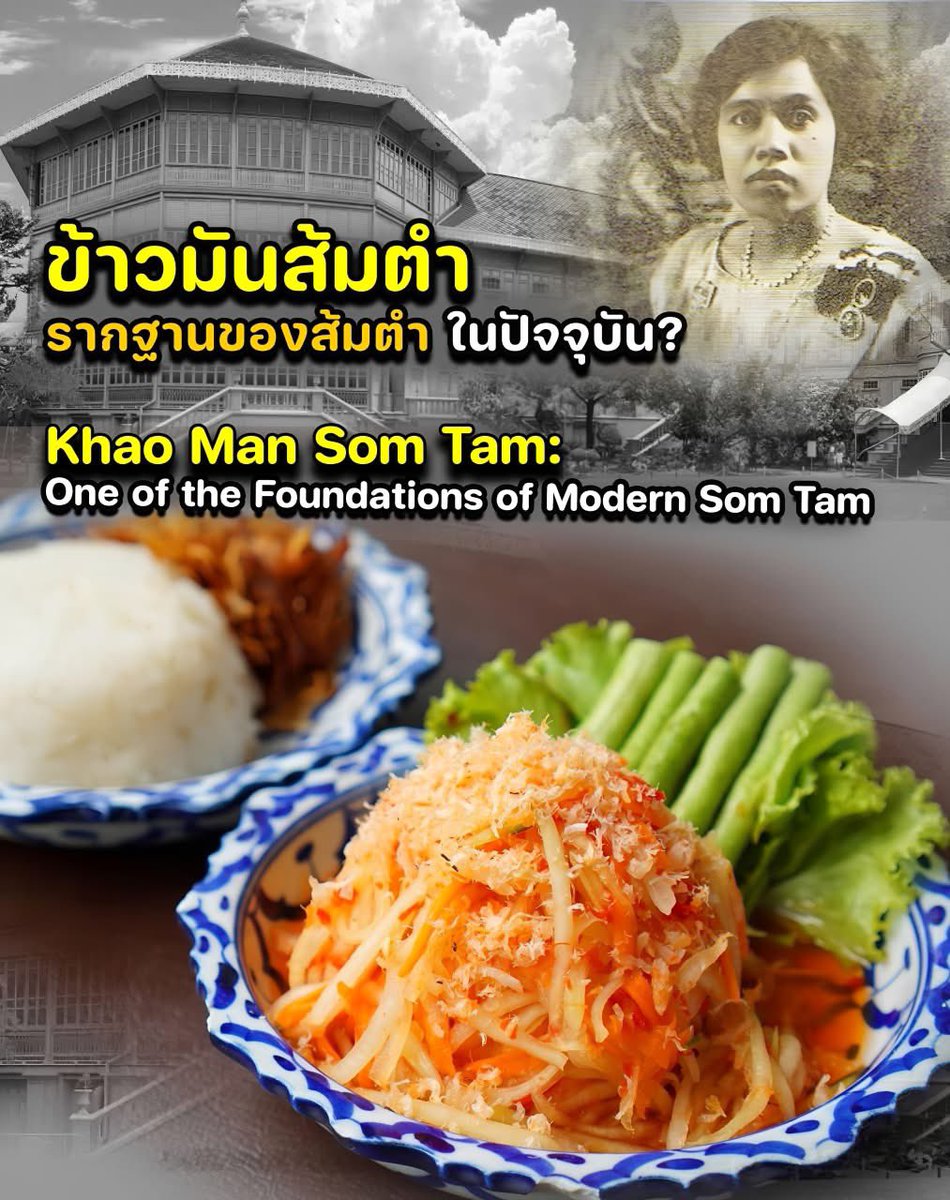
🇹🇭 #ข้าวมันส้มตำ รากฐานของส้มตำในปัจจุบัน? 👇 "Khao Man Som Tam": (ข้าวมันส้มตำ) One of the Foundations of Modern Som Tam
“Khao Man Som Tam” is a traditional Thai dish that has long been popular, particularly since the reign of King Chulalongkorn (Rama V). It is recorded in the cookbook Tamrap Sai Yaowapha (“ตำรับสายเยาวภา”) compiled by Her Highness Princess Yeawapha Phongsanit, a daughter of King Chulalongkorn (Rama V). As such, it is considered a documented dish with a history spanning approximately 60–100 years, and possibly with even older cultural roots.
The Khao Man Som Tam set typically consists of:
1. Khao man (coconut rice) – rice cooked in coconut milk
2. Som Tam (Papaya Salad) – an early form resembling central Thai som tam, with a balanced sweet-and-sour taste
3. Side dishes, such as shredded pork, salted beef, or sweet stir-fried shredded meat
4. Tamarind chili paste and Thai chicken curry
This set reflects a culinary structure that emphasizes a balanced harmony of flavors fatty, sweet, sour, and salty in a single meal.
Historical Characteristics of Som Tam in the Past. The som tam served with khao man differs from modern Thai som tam in several ways:
1. Green papaya was finely shredded into thin strips.
2. The ingredients were mixed (“tossed”) rather than pounded in a mortar.
3. The main ingredients included green papaya, dried chilies, garlic, palm sugar or granulated sugar, fish sauce, ground dried shrimp, and small pieces of lime. (Some versions may have included roasted ground peanuts, but this was not considered part of the original recipe).
Khao Man and Flavor Structure
The rice was cooked in coconut milk and lightly seasoned with sugar and salt to achieve a soft, aromatic richness. When eaten with chicken curry and sweet side dishes, it creates a balance between the richness of the rice, the sweetness of the meat dishes, and the sweet-and-sour profile of som tam, which helps cut through the overall richness of the meal.
Cultural Culinary Influences: Some food scholars suggest that the Khao Man Som Tam set may have developed through a fusion of:
1. Traditional Thai culinary practices involving “som tam”-style pounded or mixed dishes
2. The use of coconut milk in cooking, influenced by Muslim–Persian culinary traditions that historically interacted with Siam
This fusion resulted in a distinctive dish that balances rich coconut rice with the bold flavors of som tam.
Scholarly Perspectives.
Food expert Krit Luehlamai offers the following observation: “…The arrangement of dishes consumed together in this manner is similar to Muslim meal sets such as nasi lemak. It is therefore assumed that this influence may have existed since the Ayutthaya period…”
Meanwhile, Kittisak Sarehm provides another perspective: “…Khao Man Som Tam may have originated from Khao Man Gai Kaeng in Songkhla, which is a dish similar in nature to the Malay nasi lemak…”
“ข้าวมันส้มตำ” เป็นอาหารไทยโบราณที่ได้รับความนิยมมาช้านาน โดยเฉพาะในสมัยรัชกาลที่ 5 โดยมีการบันทึกไว้ในตำรา “ตำรับสายเยาวภา” ของพระเจ้าบรมวงศ์เธอ พระองค์เจ้าเยาวภาพงศ์สนิท พระธิดาในรัชกาลที่ 5 จึงถือเป็นสำรับอาหารที่มีหลักฐานยืนยันความเป็นมายาวนานราว 60–100 ปี และอาจมีรากทางวัฒนธรรมที่เก่ากว่านั้น
องค์ประกอบของสำรับข้าวมันส้มตำ
• ข้าวมัน (ข้าวหุงกะทิ)
• ส้มตำมะละกอ (ลักษณะคล้ายส้มตำภาคกลางในปัจจุบัน รสเปรี้ยวหวานกลมกล่อม)
• เครื่องแนม เช่น หมูฝอย เนื้อเค็ม หรือเนื้อฝอยผัดหวาน
• น้ำพริกส้มมะขาม และแกงไก่
สำรับดังกล่าวสะท้อนรูปแบบอาหารที่ให้ความสำคัญกับความสมดุลของรสชาติระหว่างความมัน หวาน เปรี้ยว และเค็มในมื้อเดียว
ลักษณะของส้มตำในอดีตที่รับประทานร่วมกับข้าวมันมีความแตกต่างจากส้มตำไทยในปัจจุบัน
1. มะละกอถูกสับเป็นเส้นเล็ก
2. ใช้วิธี “คลุก” แทนการตำด้วยครก
3. วัตถุดิบหลักประกอบด้วย มะละกอ พริกแห้ง กระเทียม น้ำตาลปี๊บหรือน้ำตาลทราย น้ำปลา กุ้งแห้งป่น และมะนาวหั่นชิ้นเล็ก (บางตำรับอาจมีถั่วลิสงคั่วป่นเพิ่มเติม แต่ไม่ถือเป็นองค์ประกอบดั้งเดิม)
English