Oxygen

3.3K posts

Oxygen banner
Oxygen

Oxygen

@Oxygen_Token

Saving forests | Democratizing investment in carbon credit production via blockchain tokenization | $OM token = 1m² native forest | 30k+ hectares protected

Argentina Katılım Mayıs 2025
469 Takip Edilen1.2K Takipçiler
Sabitlenmiş Tweet
Oxygen
Oxygen@Oxygen_Token·
This is La Florencia in Argentina 🇦🇷 , the forest we’re protecting. 🌳🌳 #oxygentoken #Argentinas #FOREST
English
5
6
29
4.3K
Oxygen
Oxygen@Oxygen_Token·
How we treat the natural world says more about us than it does about nature itself. Most people will never meet a jaguar, an elephant or an ancient tree personally. Yet the decision to protect them still matters. Not because ecosystems can speak for themselves. But because empathy is one of the few things separating stewardship from destruction. A society that becomes comfortable ignoring suffering, collapse and extinction eventually stops recognizing value in anything beyond immediate profit. Conservation begins long before policy. It begins with what people refuse to stop caring about.
Oxygen tweet media
English
0
0
0
21
Oxygen
Oxygen@Oxygen_Token·
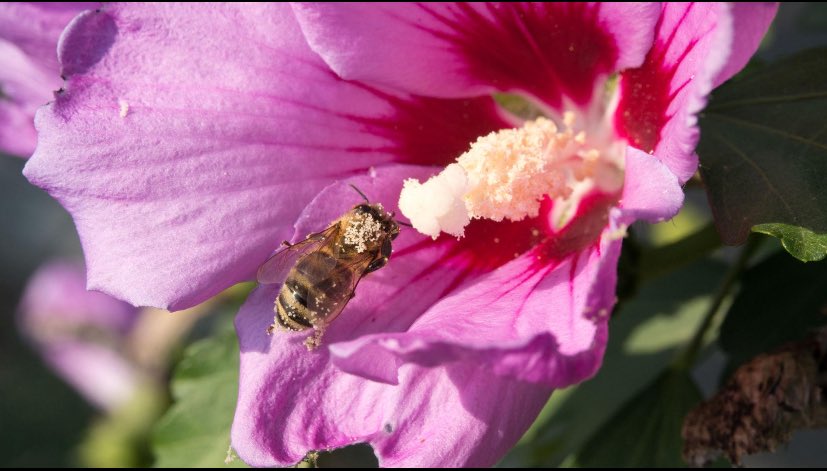
60–62% of commercial honeybee colonies in the US were lost between 2024 and 2025. More than 1 million bee colonies disappeared. It is one of the most severe pollinator collapse events recorded in modern agriculture. And the consequences go far beyond honey. 🧵
Oxygen tweet media
English
1
5
6
98
Oxygen
Oxygen@Oxygen_Token·
The European Union has officially launched the Carbon Removal Certification Framework (CRCF), the world’s first government-backed certification framework for carbon removals. The framework entered into force in 2024, and the European Commission recently adopted its first certification methodologies for permanent carbon removals. The first certified projects are expected as implementation begins. For years, voluntary standards such as Climate, Community and Biodiversity (CCB) certifications helped establish credibility for nature-based carbon projects by verifying climate impact alongside biodiversity and community benefits. The CRCF introduces a government-backed certification structure with formally approved methodologies and accredited verification systems. The shift reflects a broader change across carbon markets. Buyers are increasingly demanding stronger transparency, verification, and measurable environmental integrity from carbon removal projects. The market is evolving from broad sustainability claims toward stricter proof and accountability. Projects that invested early in measurable, high-integrity conservation standards may ultimately be best positioned for this transition.
Oxygen tweet media
English
1
1
2
26
Oxygen retweetledi
Oxygen
Oxygen@Oxygen_Token·
A world without bees is not a world without honey. It is a world with collapsing ecosystems, reduced crop diversity and far less food security. A world without many of the fruits, nuts and plants that both humans and wildlife depend on. Bees are not just insects. They are part of the invisible infrastructure that keeps ecosystems and food systems alive.
Oxygen tweet media
English
1
11
22
173
Oxygen retweetledi
Oxygen
Oxygen@Oxygen_Token·
Australia has established a new national park in New South Wales aimed at improving habitat connectivity for koalas and other native wildlife. The new Coffs Harbour National Park was designed not only to protect forest habitat, but also to reconnect fragmented landscapes that had been divided by decades of logging and land clearing. Conservation scientists emphasize that koalas depend on connected ecosystems to move between habitats, find mates and maintain healthy genetic diversity. When forests become isolated, wildlife populations can become increasingly vulnerable to inbreeding, local population decline and habitat stress. Koalas were officially listed as endangered in parts of eastern Australia in 2022 after major population declines linked to habitat destruction, disease, vehicle strikes and climate related heat stress. The project reflects a broader conservation principle that habitat connectivity can be just as important as the total size of protected areas. Protecting ecosystems is not only about preserving isolated patches of nature. It is also about keeping landscapes connected enough for life to continue moving through them.
Oxygen tweet media
English
1
1
5
63
Oxygen
Oxygen@Oxygen_Token·
A butterfly found only in Jamaica is now being considered for endangered species protection as its forest habitat continues to disappear. The butterfly lives only in Jamaica’s limestone forests, ecosystems increasingly threatened by deforestation, habitat fragmentation, invasive species and climate related environmental change. The US Fish and Wildlife Service recently proposed listing the species under the Endangered Species Act as concerns grow over the survival of its remaining habitat. Scientists estimate between 10 - 15 million insect species may still remain undocumented worldwide, while many ecosystems are disappearing faster than they can be fully studied. Every species lost carries ecological relationships that took millions of years to evolve.
Oxygen tweet media
English
1
1
1
32
Oxygen
Oxygen@Oxygen_Token·
9/9 A world without bees is not a world without honey. It is a world with collapsing ecosystems, reduced crop diversity, and far less food security. A world without many of the fruits, nuts, and plants that both humans and wildlife depend on. Bees are not just insects. They are part of the invisible infrastructure that keeps ecosystems and food systems alive.
Oxygen tweet media
English
0
0
0
10
Oxygen
Oxygen@Oxygen_Token·
8/9 We already know many of the main drivers behind pollinator decline. So why are pesticide-intensive systems, habitat destruction, and large-scale monocultures still expanding globally? Who should carry the greatest responsibility for protecting pollinators: governments, corporations, or consumers?
English
1
0
0
11
Oxygen retweetledi
GO GREEN
GO GREEN@ECOWARRIORSS·
Fact that millions of American allows themselves to be poisoned speaks volumes This poison does not stay in the forest Its seeps into rivers lakes and waterways and eventually into your mouth in the water you drink But hey lets not upset billionaires
Massimo@Rainmaker1973

The U.S. Forest Service is spraying glyphosate (Roundup) across tens of thousands of acres of national forests this spring to support commercial timber production. Following wildfires, forests naturally regenerate with diverse shrubs, wildflowers, and wildlife. However, a recent investigation reveals that the Forest Service and private logging companies are routinely applying the herbicide to eliminate competing native vegetation, favoring commercially valuable species such as Douglas fir and sugar pine. This practice has created large areas with significantly reduced biodiversity, often described as "dead zones", where insect, bird, and plant populations have sharply declined. Glyphosate, classified by the World Health Organization as a probable human carcinogen, has seen its use in California national forests quintuple over the past two decades, reaching a record 266,000 pounds in 2023. Local communities, environmental groups, and residents are raising concerns about potential impacts on water quality, endangered species (including salmon and rare foxes), and public health. Critics argue that prioritizing industrial timber production over ecological diversity conflicts with the broader mission of national forests as public lands. The issue has intensified debates over forest management, balancing economic interests with long-term environmental and community health.

English
5
110
185
1.9K