
Peter Obi
7.8K posts
Peter Obi
@PeterObi
Former Governor, Anambra State. LP Presidential Candidate, 2023. Tweets by him are signed -PO.
Nigeria Katılım Ekim 2018
81 Takip Edilen5.6M Takipçiler
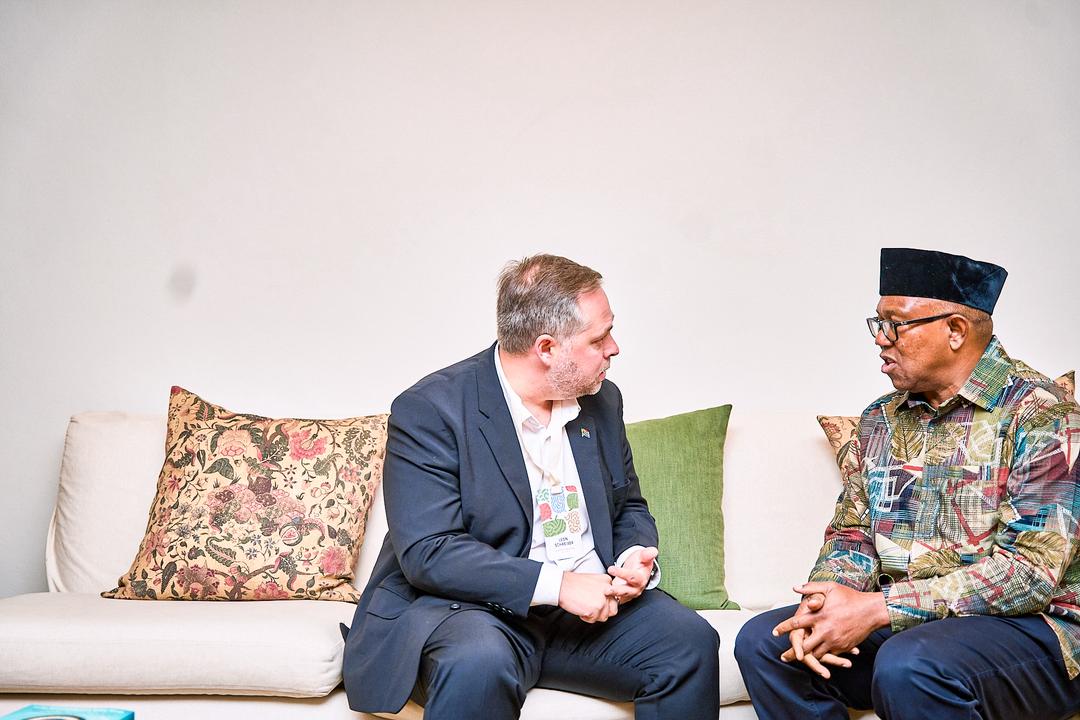


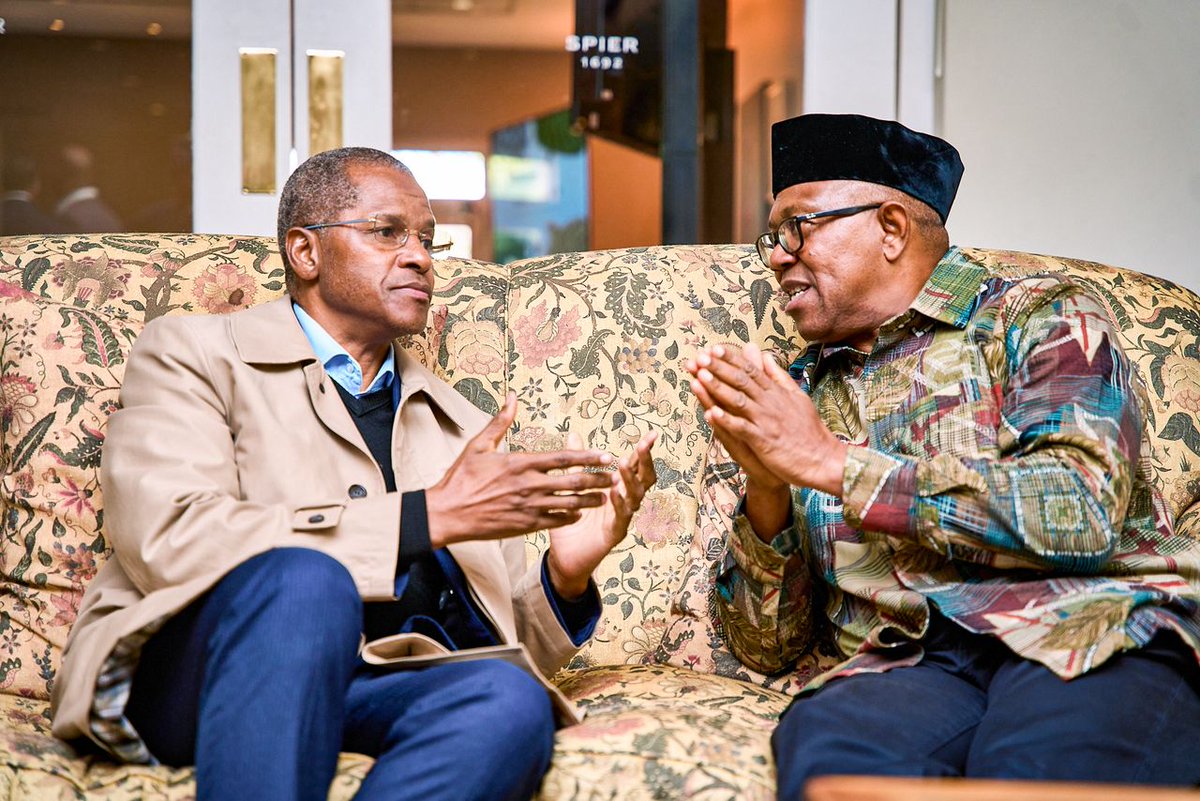
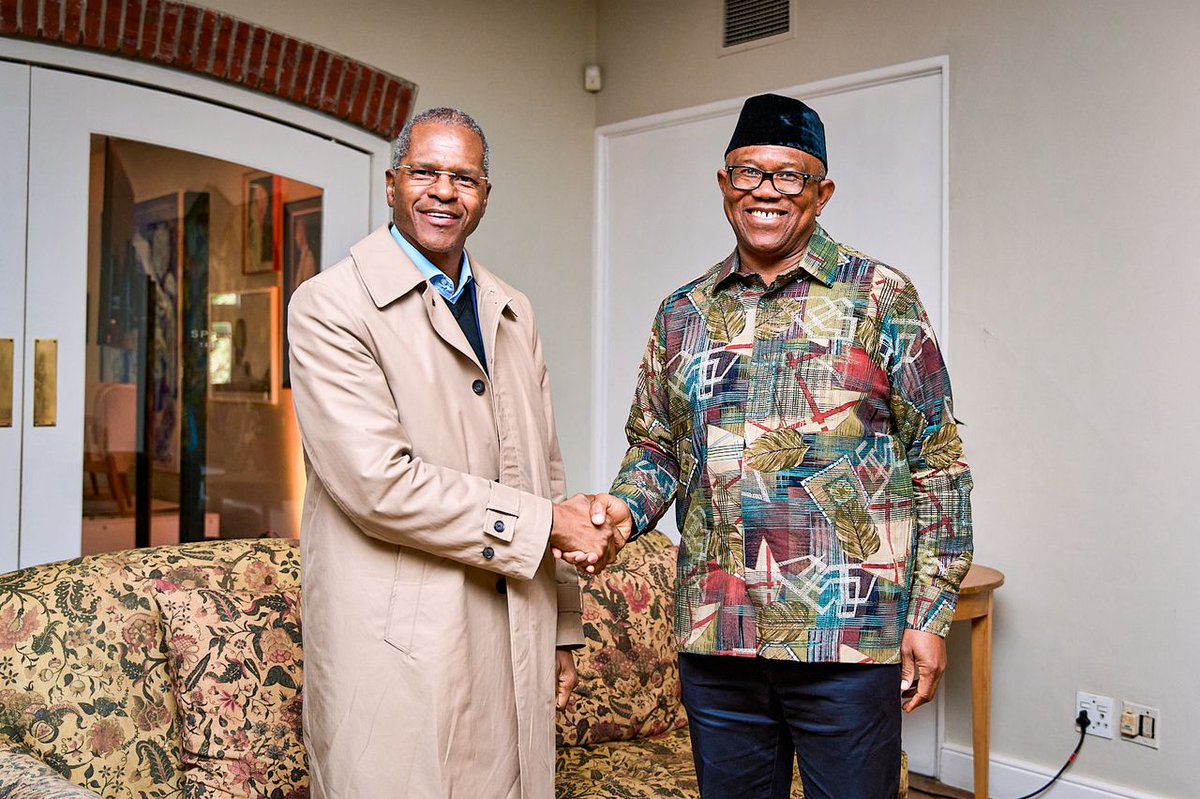
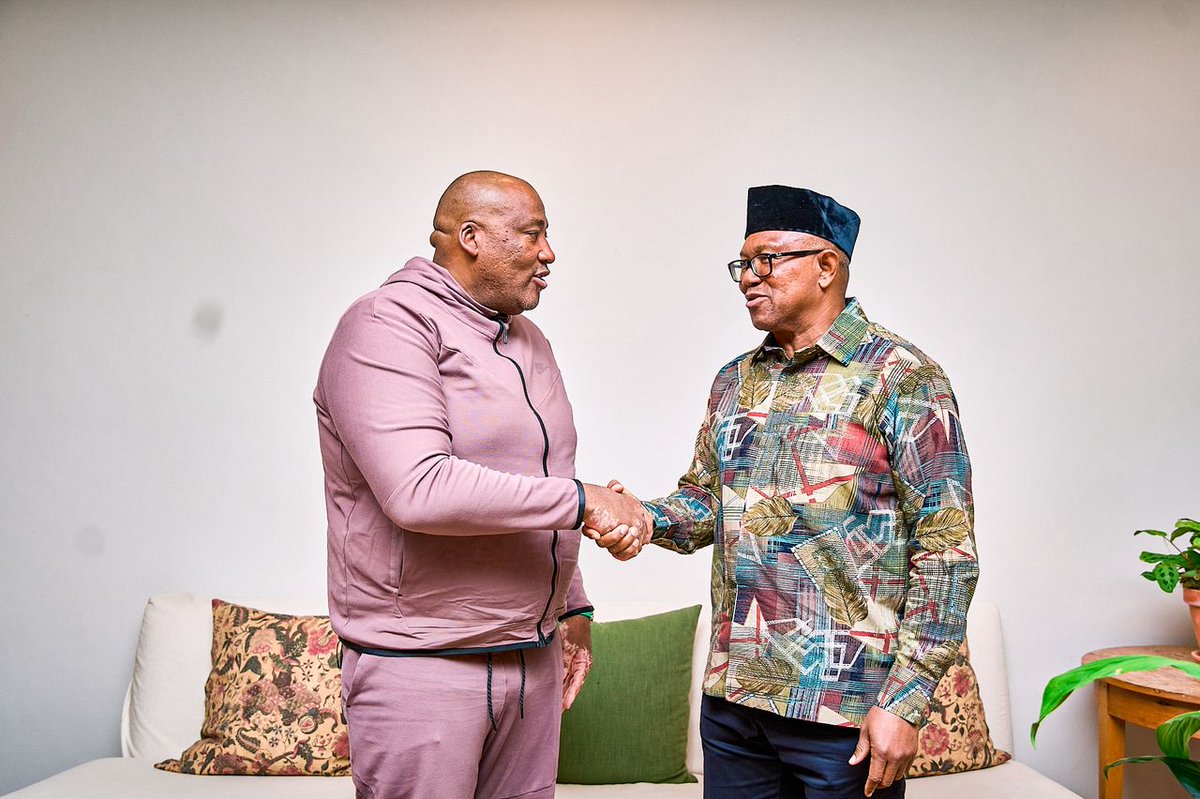
After speaking with Nigerians in Cape Town yesterday, I was able to have meaningful discussions this morning with three South African ministers and political party leaders regarding the ongoing challenges related to immigration, regional collaboration, and fostering peaceful coexistence between our nations.
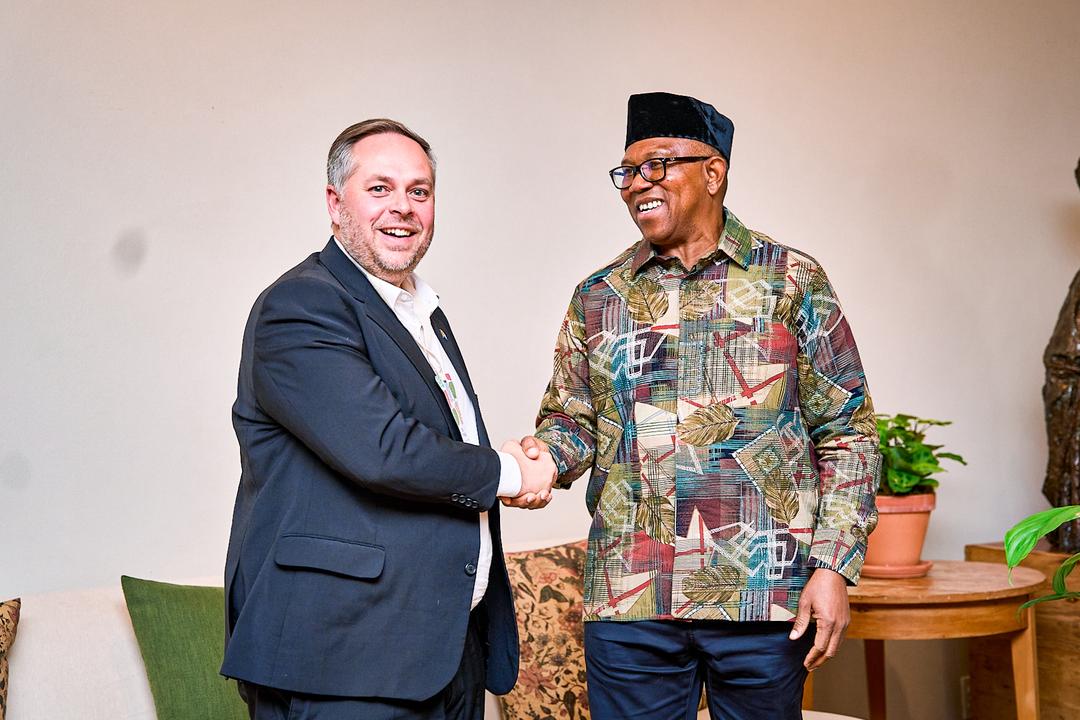
I had the pleasure of meeting with Mr Leon Schreiber, the South African Minister of Home Affairs and a prominent figure in the Democratic Alliance; Mr Velenkosini Hlabisa, the Minister of Cooperative Governance and Traditional Affairs and leader of the Inkatha Freedom Party (IFP); and Mr Gayton McKenzie, the Minister of Sports, Arts and Culture and leader of the Patriotic Alliance (PA).
Our conversations were productive and candid, focusing on the current challenges that affect both countries—particularly those related to migration, economic strains, youth unemployment, security issues, and the rising tensions faced by African foreigners in South Africa.
I firmly believe that Nigeria and South Africa, both prominent African nations, must enhance dialogue, bolster cooperation, and seek solutions based on justice, mutual respect, and adherence to the rule of law. In challenging times, leaders and citizens alike need to demonstrate responsible leadership, compassion, and restraint.
We collectively stressed the importance of law-abiding behaviour, avoiding violence, resisting hate or provocation, and allowing lawful institutions to address grievances through democratic and constitutional processes, regardless of the challenges we face.
The progress of Africa hinges on our ability to create unity, foster economic inclusivity, invest in our communities, and uphold the dignity of every African, no matter where they live. -PO
English

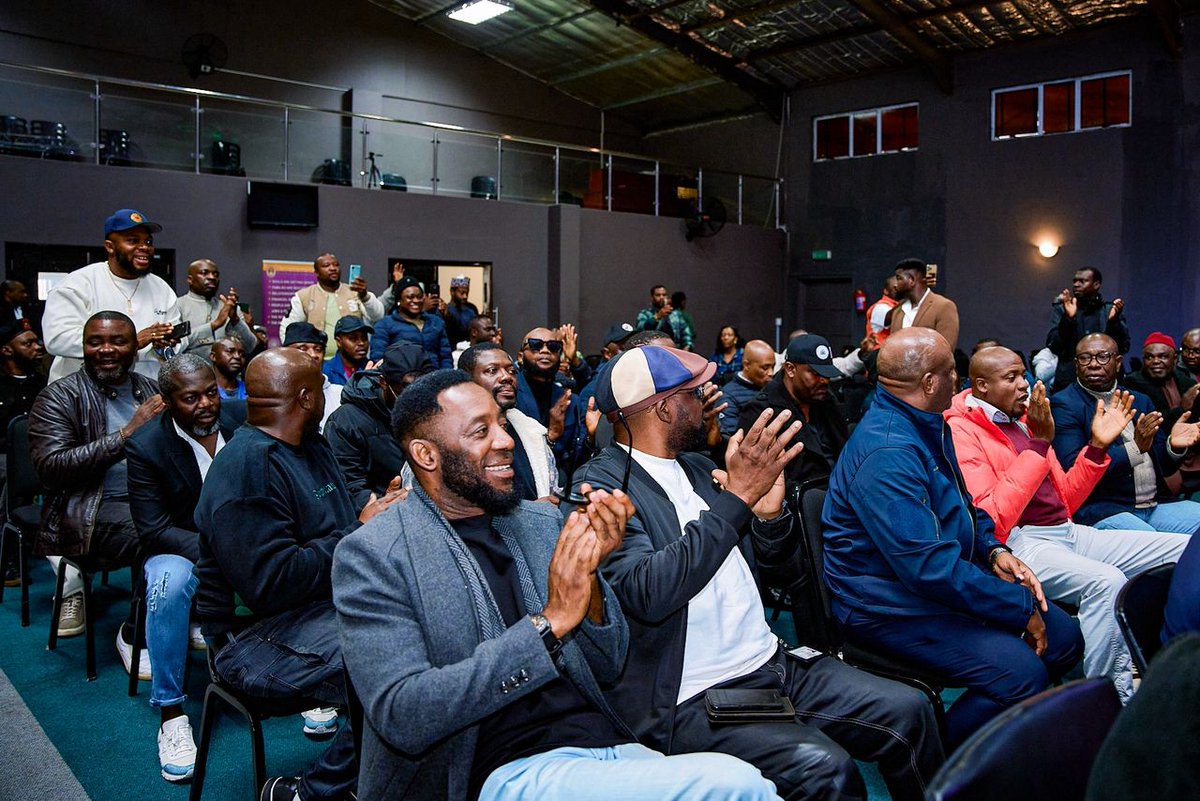

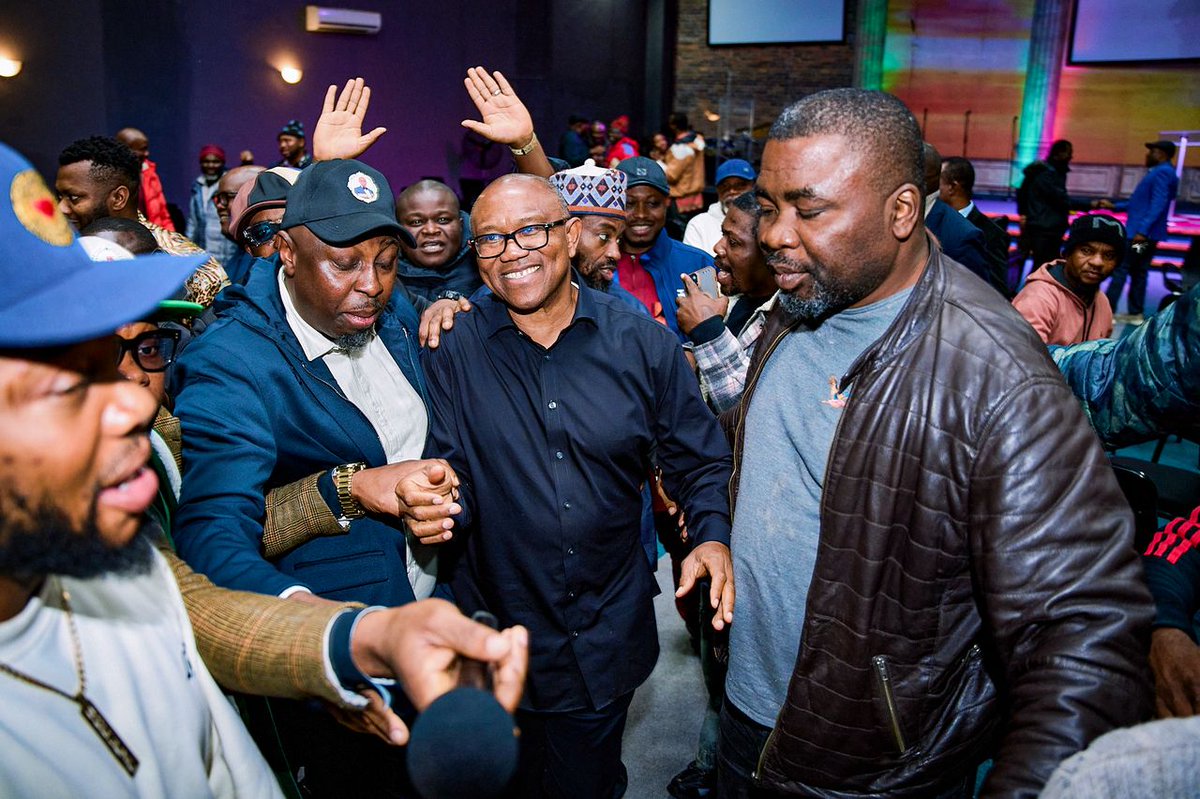
Earlier today, I arrived in Cape Town, South Africa, to take part in the Spier Dialogue 2026, an important event centred on the future of Africa and the urgent challenges facing our continent and the globe.
The Spier Dialogue occurs at a crucial time as Africa grapples with significant issues in governance, democracy, economic inclusion, urbanisation, migration, and leadership. However, it also highlights the vast opportunities presented by the energy and creativity of our young population.
As leaders and stakeholders gather from various regions, I look forward to partaking in insightful discussions, especially as I have the privilege of addressing attendees tomorrow on policies geared toward growth.
Africa’s future should not be characterised by poverty amid abundance or by division instead of development. It is time for us to transition from consumption to production, from divisive politics to politics built on competence and compassion, and from mere promises to tangible progress that serves everyday citizens.
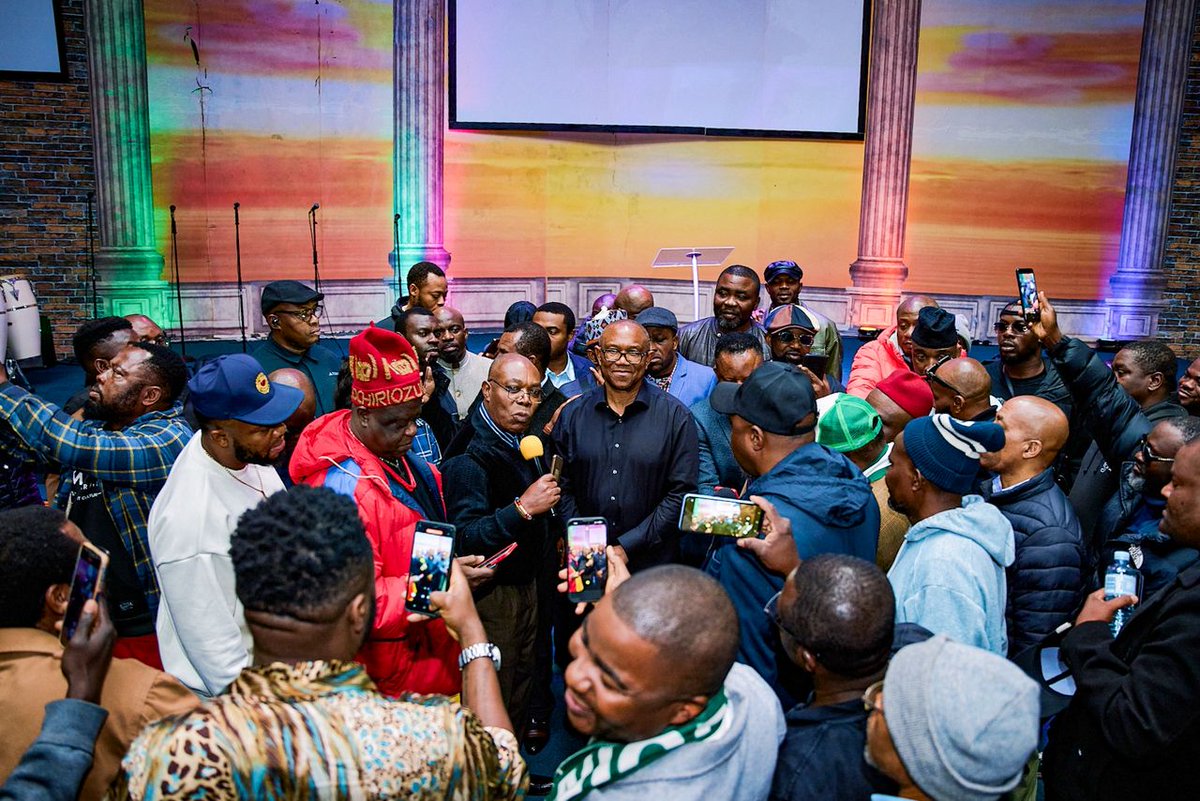
Upon my arrival, I had the opportunity to meet with the Nigerian community in Cape Town for a heartfelt discussion about the recent challenges affecting African expatriates in South Africa, resulting in over two hours of fruitful dialogue.
I remain dedicated to advocating for a New Nigeria and a New Africa—one where governance genuinely serves the people, where the youth are equipped with education and opportunities, and where leadership is founded on integrity, service, and sacrifice.
A New Nigeria POssible. -PO


English
Our Children Deserve Enhanced Learning Environments.
Today, May 21st, I had the opportunity to visit Practising Primary School in Agulu, my hometown, which has been a cornerstone of education since its establishment in 1922. Unfortunately, the school suffered significant damage from a fire last year, resulting in the loss of a historical building that had educated generations.
During a previous visit, I committed to supporting the school's reconstruction and to helping create a modern, supportive environment for the students.
This morning, I was pleased to return and deliver an initial amount of 10 million Naira to help initiate the rebuilding process. Education is a crucial investment for any community, and restoring schools is essential for renewing hope and ensuring a brighter future.
I also took the time to engage with the students, encouraging them to take their education seriously. Their future will be shaped by the discipline, effort, and dedication they demonstrate today.
A New Nigeria is POssible. -PO


English
Education Challenge: Not Funding but failure of leadership and Accountability.
The recent comments made by the Minister of Education are quite alarming. Despite receiving nearly 80% of educational donor funding over the last ten years, the North-West and North-East regions still show the lowest literacy and numeracy rates in Nigeria.
This issue goes beyond just a lack of funding; it highlights failures in leadership, accountability, and governance. Financial resources alone do not guarantee proper education. What truly makes a difference in education is the responsible and transparent management of these funds, aimed at achieving tangible results and a genuine commitment to developing human capital.
We cannot continue to commend government budgets, donor contributions, and various intervention programs while millions of children in Nigeria still lack basic reading and writing skills, which are essential for thriving in today's world. The real tragedy lies not just in the numbers, but in the lost potential of countless children whose futures are being compromised by systemic inefficiency and corruption.
Nigeria’s most valuable asset is not its oil, politics, or propaganda. It resides in the human capital of our youth. A country that overlooks education is essentially setting itself up for cycles of poverty, insecurity, unemployment, and instability in the future.
The Minister’s statement should prompt a national dialogue on how public funds and donor contributions are utilised. Every kobo spent on education must lead to clear improvements in literacy rates, school enrollment, teacher performance, and overall learning outcomes. Anything less is unacceptable.
Countries that have developed successfully, or are on the fast track to development, have made substantial investments in education. Nations like China, India, Indonesia, Vietnam, and Bangladesh have recognised the invaluable impact of education on progress and growth.
Now, Nigeria must transition from mere discussions about education to achieving real outcomes. We need to construct schools, train teachers, modernise educational systems, enhance monitoring processes, and ensure every intervention directly benefits the children it is meant to serve, rather than being siphoned off by political intermediaries and bureaucratic systems.
A nation’s progress is closely linked to the quality of its education system.
A brighter future for Nigeria is achievable! -PO
English
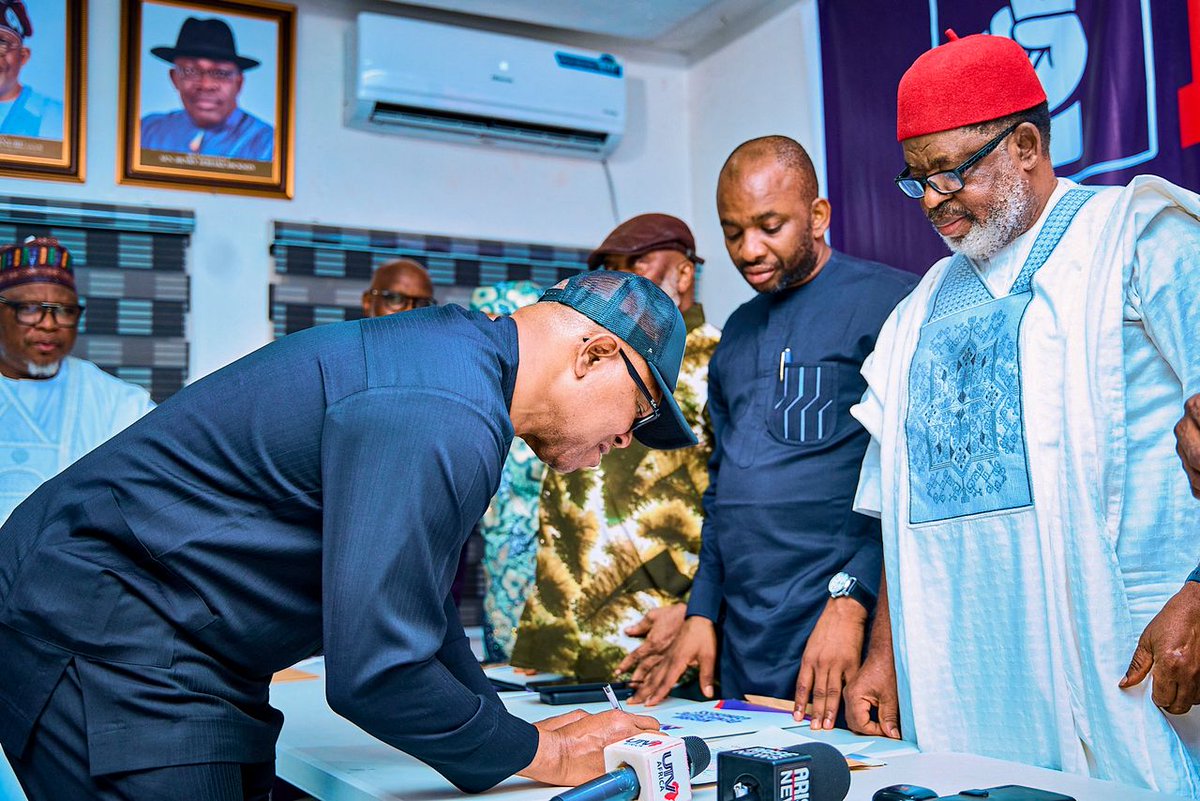


Yesterday, May 19th, in Abuja, I attended the Presidential screening organised by our party, which took over two and a half hours. They carefully reviewed all my documents, including my degree certificates, NYSC credentials, and age declarations.
During the process, I also addressed questions regarding my vision for a new Nigeria and the type of leadership our nation urgently needs right now. Following this, I was cleared and received the presidential nomination form I had previously paid for.
I would like to commend the screening committee, led by former governor Sam Egwu, for their thorough and professional approach. Additionally, I appreciate our party's leadership for upholding the democratic process.
A New Nigeria is POssible. - PO


English
A Nation Losing Its HUMANITY.
Some events shatter a society so deeply that words are no longer enough to express the shock; the brutal killing of a teacher and the horrific rape and murder of an elderly woman are among such tragedies. These are not isolated incidents but signs of deeper moral and social decay.
How did we get here? How did we reach a point where teachers are hunted and killed, and the elderly—custodians of memory and wisdom—suffer such dehumanising violence?
This is more than a security crisis; it is a failure of collective humanity. We have become desensitised, consuming tragedy briefly and moving on, allowing indifference to normalise the unacceptable.
To the families affected, I share in your grief. But grief alone is not enough.
We must demand accountability and urgent systemic change. If such atrocities no longer move us to action, then we risk losing our shared humanity. -PO
English
Debt Servicing, Borrowing, and Nigeria’s Fiscal Priorities
During his recent foreign tour, President Bola Ahmed Tinubu stated that Nigeria will spend about $11.6 billion on debt servicing, a figure that should concern anyone interested in the country’s economic future and long-term development.
There is nothing inherently wrong with borrowing when it is guided by prudence and directed toward productive investment. Countries such as Japan, the United Kingdom, the United States, the United Arab Emirates, Singapore, and Indonesia are all heavily indebted, yet their borrowings are largely channelled into education, healthcare, infrastructure, and innovation - sectors that generate long-term economic returns and sustain repayment capacity. As a result, despite high debt levels, their obligations remain more manageable because they are tied to measurable productivity.
Nigeria’s situation, however, is markedly different. A huge proportion of past borrowing has been directed toward consumption, with limited visible or sustainable developmental outcomes to justify the scale of indebtedness.
It is also important to note that a huge portion of the debt currently being serviced was accumulated under the Tinubu administration itself, while borrowing has continued at a significant pace. The administration’s recent external borrowing alone includes about $6 billion (from First Abu Dhabi Bank in the UAE—$5 billion, and UK Export Finance via Citibank London—$1 billion), a further $1.25 billion under consideration from the World Bank, and an additional $516 million arranged through Deutsche Bank, bringing the latest known external loan commitments to roughly $7.8 billion. In addition, domestic borrowing through monthly bond issuances continues to add to the overall debt stock.
Against this backdrop, Nigeria’s 2026 budget shows that health is ₦2.46 trillion, education is ₦2.56 trillion, and poverty alleviation is ₦865 billion, giving a combined total of about ₦5.885 trillion for these three critical sectors. By comparison, debt servicing at about $11.6 billion (approximately ₦17–₦18 trillion, depending on exchange rate assumptions) is almost three times higher than the total allocation to health, education, and social protection combined. This imbalance highlights a troubling fiscal reality in which debt obligations increasingly crowd out investment in human capital and poverty reduction. Moreover, even within the limited allocations to these sectors, funds may not be fully released, and a significant portion of what is eventually released could be misappropriated.
Ultimately, the central issue is not borrowing itself, but whether borrowed funds are being converted into measurable productivity, inclusive growth, and improved living standards. Without this, debt servicing shifts from being a temporary fiscal obligation to a long-term structural burden that constrains development and deepens economic vulnerability.
A New Nigeria is POssible. -PO
English
“There can be no keener revelation of a society’s soul than the way in which it treats its children.” — Nelson Mandela
Yesterday, the global community marked the International Day of the Boy Child. For me, it was a day of sober reflection on the future of the boy child in a nation like ours, where the horrible spate of insecurity, mass abductions, hunger, and inadequate investment in health and education constantly jeopardise the lives and futures of our children.
It is generally believed that our children are the leaders of tomorrow, and rightly so. However, one wonders how our children will lead society tomorrow if we fail to secure their lives and future today. From severe hunger and malnutrition to a lack of basic education and primary healthcare; from worsening levels of insecurity and mass abductions to alarming rates of moral decadence in society—the boy child faces numerous existential challenges from birth.
For him to become a responsible and productive member of society, the boy child must be given a sound basic education, empowered with productive skills, and mentored with the right progressive values that help build a better society.
In the words of Frederick Douglass: “It is easier to build strong children than to repair broken men.” We must stop the neglect and abuse we unleash on our boy children and begin to secure their lives and invest in their future for the sake of our collective future as a nation. As I have always maintained, the society we abuse today will take its revenge on us tomorrow.
And to every boy child out there: do not give up on your dreams. We are on a journey toward building a nation that not only secures your life and invests in your future, but also helps you grow and fuels your dreams so that you can embrace global opportunities that match your talents and aspirations.
Happy International Day of the Boy Child.
A New Nigeria is POssible! -PO
English
I extend my sincerest condolences to the High Command and Leadership of the Nigerian Military and the Police over the tragic loss of our courageous officers.
It is with deep sadness that I acknowledge the heartbreaking death of 17 brave police officers, alongside an unspecified number of soldiers, who made the ultimate sacrifice during the recent terrorist attack on a military school in Yobe State. At this moment of profound sorrow, the entire nation stands in solidarity with the leadership of the Armed Forces, the Police, the affected commands, and the wider security community.
Every security personnel killed is a tragedy to our nation. Every fallen officer represents a family thrown into grief, children left without parents, and communities robbed of those sworn to protect them.
The Federal Government must ensure adequate compensation, support, and long-term welfare for the families of all those who paid the supreme price in service to our nation.
A nation cannot continue to normalise the killing of its security personnel and innocent citizens without urgent, decisive, and strategic action. We must confront insecurity with sincerity, professionalism, and the political will necessary to protect lives and restore public confidence.
To the families of the fallen heroes, I offer my deepest and most heartfelt sympathies. We mourn with you, and we honour the courage and sacrifice of your loved ones. May their souls rest in eternal peace. -PO
English
Sad: Schoolchildren Now ‘Pawns in Ransom Economy’
There is nothing more heartbreaking for a nation than an inability to protect its children. The recent attacks and kidnappings of students from two schools—in Mussa Village, Askira/Uba LGA, Borno State (North-East) and Ahoro-Esinele community, Oriire Local Government Area, Oyo State (South-West)—mark a grave crisis that threatens the future of the nation. Beyond the immediate terror of these acts, they represent a significant infringement on the basic right to education and a safe upbringing. The fear of further abduction often leads children—especially girls—to permanently leave school.
The ongoing “out-of-school” crisis is alarming in itself, and it is likely to worsen due to these distressing incidents.
In areas frequently affected by such attacks, education systems often deteriorate. Fear becomes a substantial obstacle to school enrollment, adding to the already high number of children currently not attending school.
Ensuring the safety of schools is not just a logistical issue; it is a moral obligation. Protecting the next generation demands a blend of community-led intelligence, the physical strengthening of educational facilities, and a transparent justice system that holds wrongdoers accountable.
For the actualization of a new Nigeria that is POssible, we must make the safety, education, and wellbeing of our children a priority. -PO
English
State visits by Leaders are not tourism, and diplomacy is not a fashion parade. Every foreign trip undertaken by a government must deliver measurable benefits to the people, including investments, technology transfer, trade agreements, factory expansion, industrial partnerships, and job creation.
During President Trump’s recent visit to China, the American delegation reportedly included a few top government officials, and many of the biggest figures in global business and technology:
Consequently, huge trade deals worth several billion dollars including about 200 Boeing orders were achieved.
The list of the entourage included
1. Donald J. Trump – President of the United States
2. Marco Rubio – Secretary of State
3. Pete Hegseth – Secretary of Defence
4. Elon Musk – CEO, Tesla & SpaceX
5. Jensen Huang – CEO, Nvidia
6. Tim Cook – CEO, Apple
7. Larry Fink – CEO, BlackRock
8. Stephen Schwarzman – CEO, Blackstone
9. Kelly Ortberg – CEO, Boeing
10. Brian Sikes – CEO, Cargill
11. Jane Fraser – CEO, Citigroup
12. Larry Culp – CEO, General Electric
13. David Solomon – CEO, Goldman Sachs
14. Sanjay Mehrotra – CEO, Micron Technology
15.Cristiano Amon – CEO, Qualcomm
16. Dina P. McCormick – President of Meta
17. Ryan McInerney – CEO, Visa
18. Michael Miebach – President, Mastercard
19. Jim Anderson – CEO, Coherent
20. Jacob Thaysen – CEO, Illumina
That is how serious nations approach diplomacy, by aligning foreign policy with economic expansion, industrial growth, innovation, and national productivity.
I hope that lessons can be learned from these recent visits comparing them with the President of Nigeria’s recent state visit to the United Kingdom.
A large entourage of politicians, aides, and government officials travelled, yet Nigerians are still asking a simple question: what exactly did Nigeria bring home?
Which factories are coming to Nigeria?
What power, technology, manufacturing, agricultural, or industrial agreements were secured?
How many direct jobs will this visit create for Nigerian youths?
What investments were attracted?
What measurable economic outcomes can the ordinary Nigerian point to?
The delegation reportedly included:
1. President Bola Tinubu
2. Senator (Mrs) Tinubu
3.12 governors
4.9 ministers
5.7 members of the National Assembly
6. Over 20 senior State House staff
7. Over 30 security personnel
8. Over 10 domestic staff
9. Several supporters and associates
It is not enough to ride horses, wear matching uniforms, attend royal banquets, and release glossy photographs. Symbolism without substance cannot feed hungry citizens.
Today, Nigeria is in decline, battling serious insecurity, food insecurity, unemployment, a weakened naira, declining industrial productivity, and worsening poverty.
At a time when millions of Nigerians struggle daily to afford food and survive economic hardship, every kobo spent on foreign trips must produce tangible national value: investments, factories, jobs, exports, infrastructure, and economic opportunities.
Nigeria needs leadership that is focused less on optics and more on productivity; less on ceremony and more on measurable economic results.
A New Nigeria is POssible. -PO
English
Celebrating Responsible Leadership.
Today, I join millions of Nigerians, sons and daughters of Onitsha Kingdom, and all lovers of culture, wisdom, and responsible leadership in celebrating His Majesty, Igwe Nnaemeka Alfred Achebe, CFR, the revered Obi of Onitsha, as he marks his 85th birthday.
At 85, His Majesty remains a shining symbol of dignity, intellect, humility, and westernised service. His reign has continued to demonstrate that traditional institutions are not relics of the past, but vital pillars for peace, moral leadership, cultural preservation, and national development.
The Obi of Onitsha's life remains a strong reminder that leadership is about character, discipline, compassion, and service to humanity. In a society where values are increasingly challenged, His Majesty continues to stand tall as a moral compass and a bridge between tradition and modern nation-building.
As a highly accomplished professional before ascending the throne, and now one of Nigeria’s most respected traditional rulers, the Obi of Onitsha has shown that excellence, integrity, and patriotism can coexist in leadership.
On this remarkable milestone, I sincerely pray that God Almighty grants His Majesty good health, wisdom, peace, and strength as he continues to serve humanity.
Happy 85th Birthday, Your Majesty.
May your reign continue to flourish in peace, honour, and greatness.
-PO

English
My dear Brother, Dr. Datti Baba-Ahmed,
I am deeply shocked and saddened by the sudden passing of your beloved brother, Jallul Baba-Ahmed, yesterday. My heart goes out to you and your entire family.
Please accept my heartfelt condolences. I pray Almighty Allah grants him eternal rest in Al-Jannah Firdaus and gives you and your family patience and strength to bear this painful loss.
I stand with you in this difficult time.
With deepest sympathy,
-PO
English
I received with sadness the heartbreaking news of the passing of young and talented Nollywood actor Alexx Ekubo, whose death has left the Nigerian entertainment industry and millions of admirers across the country mourning.
On behalf of myself and everyone who values the immense contributions of our young creatives to nation-building, I extend my heartfelt condolences to his family, friends, colleagues in Nollywood, and the countless fans whose lives he touched through his craft.
At moments like this, we are reminded once again of the fragility of life and the importance of living with kindness, compassion, and a sense of purpose. Though his journey was cut short, the memories he created and the joy he brought to many through his performances will continue to live on.
I pray that God Almighty grants his family the strength and comfort to bear this painful loss, and may his gentle soul rest in perfect peace. -PO
English
Teargas in a Hospital, a Thoughtless Act.
I have just read the recent troubling reports of how the operatives of the Economic and Financial Crimes Commission (EFCC) allegedly stormed the University of Uyo Teaching Hospital in a bid to arrest Professor Eyo Ekpe, a professor of cardiothoracic surgery and deputy chairman of the hospital’s medical advisory committee.
While I understand and respect the fact that the EFCC, and indeed, all other government agencies have their constitutional rights to do their jobs without interference, the manner in which some of these jobs are carried out is often deeply troubling.
Reportedly, the EFCC operatives who stormed the hospital shot some teargas canisters within the hospital premises which sent medical staff and patients running for safety. This thoughtless act greatly compromised the general safety in the hospital environment and further jeopardised the health of the medical personnel and the sick people in the hospital.
I have always said that the most fundamental intangible asset upon which any nation functions effectively is the rule of law and order. The disorderliness allegedly demonstrated by the EFCC operatives at the hospital must not be encouraged. Nothing justifies the use of teargas canisters in a fragile hospital environment. Do we not realise that our hospitals are part of our most critical contributors to development?
We must also learn to respect the lives and dignity of our citizens. If a Professor of Cardiothoracic Surgery is arrested in such a demeaning manner in a hospital environment, what signals are we sending to other medical professionals working hard to keep our health sector afloat? It is reported that Nigeria has only 80 cardiothoracic surgeons serving its 230 million people, and the Prof Eyo Ekpe is the only one in Akwa Ibom State.
Let us learn to do better. Let us condemn and eschew the rascality and disorderliness that have continued to characterise some of our public offices and bring in civility in the discharge of our duties.
A New Nigeria is POssible. -PO
English