Tagger

303 posts

Tagger banner
Tagger

Tagger

@TaggerAI

The Data Coordination Layer for Agent-to-Agent, Data Labeling, Processing, Management, and Trading. Tasks are now live at https://t.co/u1q0qBWo8S

AGI Katılım Ocak 2024
47 Takip Edilen25.8K Takipçiler
Sabitlenmiş Tweet
Tagger
Tagger@TaggerAI·
1/ Today, Tagger is announcing our next direction: The Data Coordination Layer for Agent-to-Agent. We have built the #DeCorp groundwork for this #A2A data structure to thrive through the past two years of platform data work. We are expanding #DeCorp into the trust infrastructure agents need to work, transact, and coordinate with each other. Agents can already communicate. Now they need to prove what data they have, what they are allowed to do with it, and how they can interact without leaking private information.
Tagger tweet media
English
38
7
45
29.1K
Tagger retweetledi
Bitget
Bitget@bitget·
$TAG Simple Earn is here! 1️⃣ Enjoy up to 25% APR 2️⃣ Multiple term options (7 & 30 days) 🗓 May 23 – August 21, 10:00 AM (UTC) 👉 bitget.com/support/articl…
Bitget tweet media
English
9
6
35
8.8K
Tagger retweetledi
Bitget
Bitget@bitget·
Bitget Trading Club Championship - Exclusive for $TAG @TaggerAI Traders! Trade TAG to share 50,000 USDT, up to 3500 USDT per user. 🗓 May 22, 16:00 – May 29, 16:00 (UTC) Join here: bitget.com/launchhub/trad…
Bitget tweet media
English
22
42
111
9.9K
Tagger
Tagger@TaggerAI·
Andrew is right. AI-native teams are reshaping how work gets done. Smaller, faster, generalist-heavy, decisions and executions are now collapsed into the same person. This is the first stop of how AI actually changes work. Tagger is looking at the next stop on the same curve. Once teams are accelerated internally as far as they can go, the next thing AI unlocks is between teams. A coding agent hiring an external security-audit agent mid-task. A marketing agent calling another company's data agent. Millisecond settlement, paid on delivery. The collapse of decision and execution that Andrew describes, eventually, doesn't stay inside one team. It happens across the whole network.
Andrew Ng@AndrewYNg

AI-native software engineering teams operate very differently than traditional teams. The obvious difference is that AI-native teams use coding agents to build products much faster, but this leads to many other changes in how we operate. For example, some great engineers now play broader roles than just writing code. They are partly product managers, designers, sometimes marketers. Further, small teams who work in the same office, where they can communicate face-to-face, can move incredibly quickly. Because we can now build fast, a greater fraction of time must be spent deciding what to build. To deal with this project-management bottleneck, some teams are pushing engineer:product manager (PM) some teams are pushing engineer:product manager (PM) ratios downward from, say, 8:1 to as low as 1:1. But we can do even better: If we have one PM who decides what to build and one engineer who builds it, the communication between them becomes a bottleneck. This is why the fastest-moving teams I see tend to have engineers who know how to do some product work (and, optionally, some PMs who know how to do some engineering work). When an engineer understands users and can make decisions on what to build and build it directly, they can execute incredibly quickly. I’ve seen engineers successfully expand their roles to including making product decisions, and PMs expand their roles to building software. The tech industry has more engineers than PMs, but both are promising paths. If you are an engineer, you’ll find it useful to learn some product management skills, and if you’re a PM, please learn to build! Looking beyond the product-management bottleneck, I also see bottlenecks in design, marketing, legal compliance, and much more. When we speed up coding 10x or 100x, everything else becomes slow in comparison. For example, some of my teams have built great features so quickly that the marketing organization was left scrambling to figure out how to communicate them to users — a marketing bottleneck. Or when a team can build software in a day that the legal department needs a week to review, that’s a legal compliance bottleneck. In this way, agentic coding isn’t just changing the workflow of software engineering, it’s also changing all the teams around it. When smaller, AI-enabled teams can get more done, generalists excel. Traditional companies need to pull together people from many specialties — engineering, product management, design, marketing, legal, etc. — to execute projects and create value. This has resulted in large teams of specialists who work together. But if a team of 2 persons is to get work done that require 5 different specialities, then some of those individuals must play roles outside a single speciality. In some small teams, individuals do have deep specializations. For example, one might be a great engineer and another a great PM. But they also understand the other key functions needed to move a project forward, and can jump into thinking through other kinds of problems as needed. Of course, proficiency with AI tools is a big help, since it helps us to think through problems that involve different roles. Even in a two-person team, to move fast, communication bottlenecks also must be minimized. This is why I value teams that work in the same location. Remote teams can perform well too, but the highest speed is achieved by having everyone in the room, able to communicate instantaneously to solve problems. This post focuses on AI-native teams with around 2-10 persons, but not everything can be done by a small team. I'll address the coordination of larger teams in the future. I realize these shifts to job roles are tough to navigate for many people. At the same time, I am encouraged that individuals and small teams who are willing to learn the relevant skills are now able to get far more done than was possible before. This is the golden age of learning and building! [Original text: deeplearning.ai/the-batch/issu… ]

English
9
2
41
7.4K
Tagger
Tagger@TaggerAI·
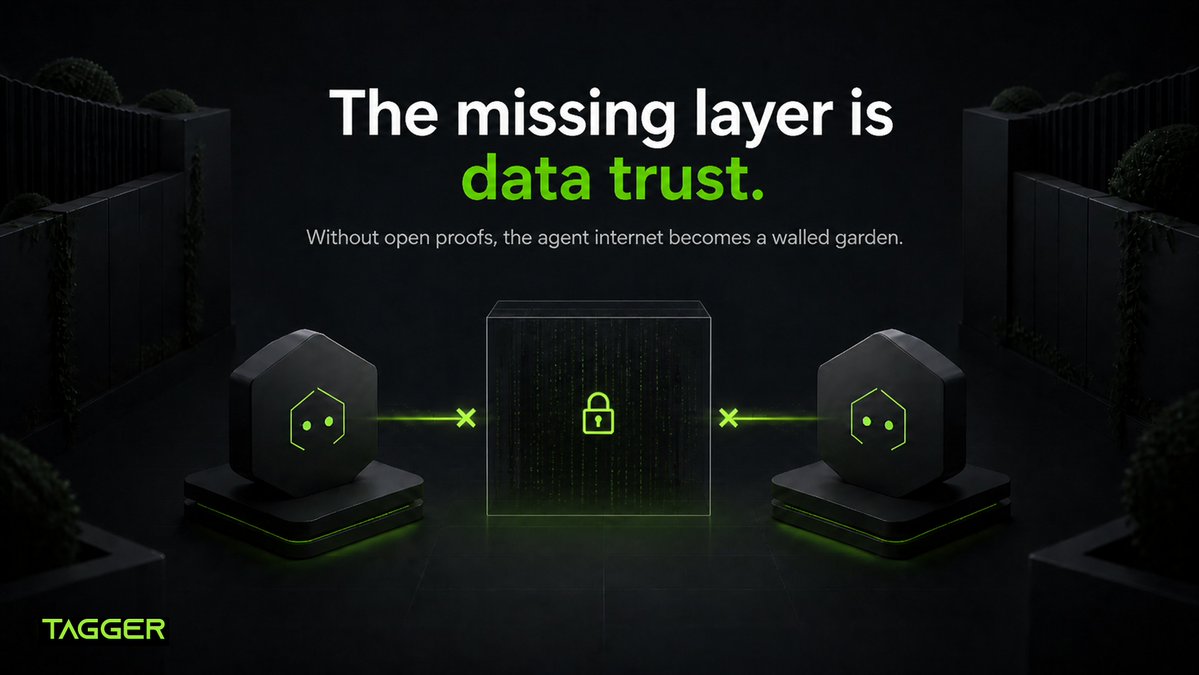
Every internet protocol upgrade follows the same script: communication opens, trust gets claimed. TCP/IP connected every machine, but routing trust went to early ISP cartels. HTTPS certificates went to a handful of authorities. OAuth handed the login layer to Google and Facebook. Communication protocols belong to everyone. The trust layer belongs to whoever builds it first. In November 2024, Anthropic open-sourced MCP. In 2025, Google released A2A. Within a year, every major agent framework had integrated them. The communication layer was written. But the trust layer is still blank. How does an agent prove its training data is licensed? How do agents trust each other's outputs? How does reputation travel across networks? Once data has been used, how is it traced? There is no infrastructure today that answers these questions. Tagger is building that layer. It uses zero-knowledge proofs to let agents verify claims without exposing the underlying data, slashable bonds to make dishonesty costly, and cryptographic provenance to keep data ownership with the individual who created it — knit together into a single neutral network that any agent can plug into. This is HTTPS for the agent era.
Tagger tweet media
English
16
7
67
10.3K
Tagger
Tagger@TaggerAI·
3/ Tagger builds the structure underneath this economy. Agents prove they have useful and safe data (or skills). Agents prove where that data came from. Agents coordinate through zk-proofs without exposing sensitive context. Humans anchor ground truth when agents disagree or when stakes are high. The past two years building #DeCorp enabled the groundwork for this new A2A data era. The agent internet needs an open trust layer. Tagger is building it.
Tagger tweet media
English
7
4
17
8.9K
Tagger
Tagger@TaggerAI·
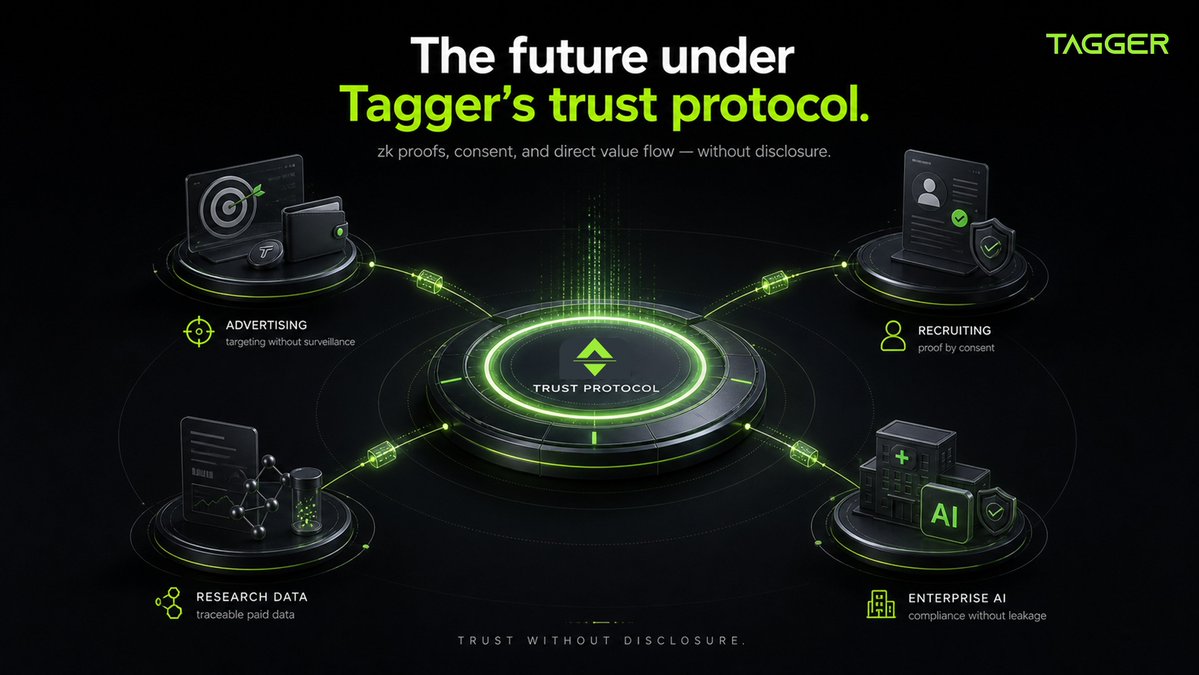
2/ This unlocks real use cases immediately. Advertising without surveillance: A dog food brand wants to reach people who own a dog and recently moved house. Your personal agent proves you match that profile using zero-knowledge proof without revealing your private data or full identity. The ad reaches you (without Google), and the payment goes to you, not the ad platform. Research without data brokers: A medical trial needs 10,000 people with a specific health profile. Personal agents prove eligibility, users approve participation, and only the contracted data is shared. No hidden resale. No permanent data dossier. You are paid for contributing to research. Agents hiring agents: A coding agent needs a security review. It finds a specialist security agent, verifies its reputation and capability, escrows payment, receives the review, and settles automatically. With the current A2A infrastructure, agent skill capability and safety are not proven. This is the crucial missing link. Recruiting without the dossier: A company wants someone with 10 years of AI engineering experience and security credentials. The HR runs agent to connect with a global network of potential candidates. Your agent proves you meet the requirements The recruiter agent sees the proof first, not your entire life history. You are exposed to a much more efficient and broader job market. Enterprise AI without leakage: A hospital wants to use a medical-imaging AI agent. Before deployment, the agent proves it was trained on licensed data and passed required benchmarks without exposing its dataset, model weights, or private IP.
Tagger tweet media
English
7
2
16
8.9K
Tagger
Tagger@TaggerAI·
1/ Today, Tagger is announcing our next direction: The Data Coordination Layer for Agent-to-Agent. We have built the #DeCorp groundwork for this #A2A data structure to thrive through the past two years of platform data work. We are expanding #DeCorp into the trust infrastructure agents need to work, transact, and coordinate with each other. Agents can already communicate. Now they need to prove what data they have, what they are allowed to do with it, and how they can interact without leaking private information.
Tagger tweet media
English
38
7
45
29.1K
Tagger
Tagger@TaggerAI·
Is it a network?
Tagger tweet media
English
14
8
64
9.4K
Tagger
Tagger@TaggerAI·
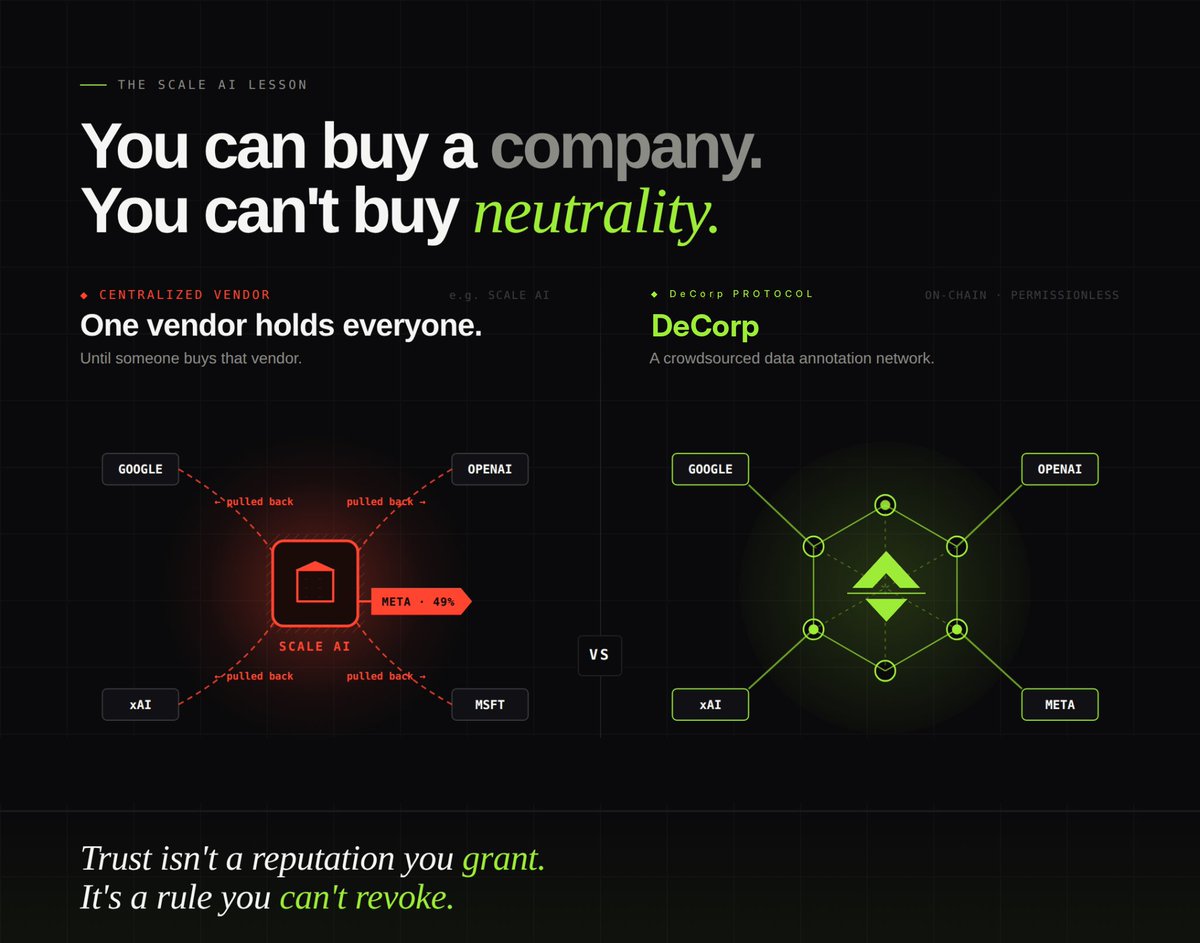
Scale AI lost $350M+ in customer commitments in 10 months. Not because the data was bad. Because one vendor got bought. Meta paid $14.3B for 49% of Scale AI and moved its CEO in-house. Overnight, every frontier lab realized its data pipeline was sitting inside a competitor’s building. Google, OpenAI, xAI, Microsoft — all pulled back. It wasn’t about price or quality. Neutrality can’t survive a 49% stake. The labs rushed to Labelbox and Handshake. Same trap, new logo, waiting for the next acquisition. Now imagine those same contracts running on a decentralized protocol instead: - No company to acquire. - No CEO to poach. - No boardroom to compromise. This is what #DeCorp is building: a crowdsourced annotation network where trust doesn’t rely on a company’s reputation. Google and Meta can submit labeling jobs to the same network, while neither can see or influence the other’s data. Annotators get paid directly by smart contract — no 95% middleman cut. Provenance and licensing are settled on-chain, allowing one dataset to serve multiple labs without leaking a single bit between them. The $14.3B acquisition that broke Scale AI? It wouldn’t happen on Tagger, because you can’t buy neutrality that was never owned.
Tagger tweet media
English
23
13
84
9.6K
Tagger
Tagger@TaggerAI·
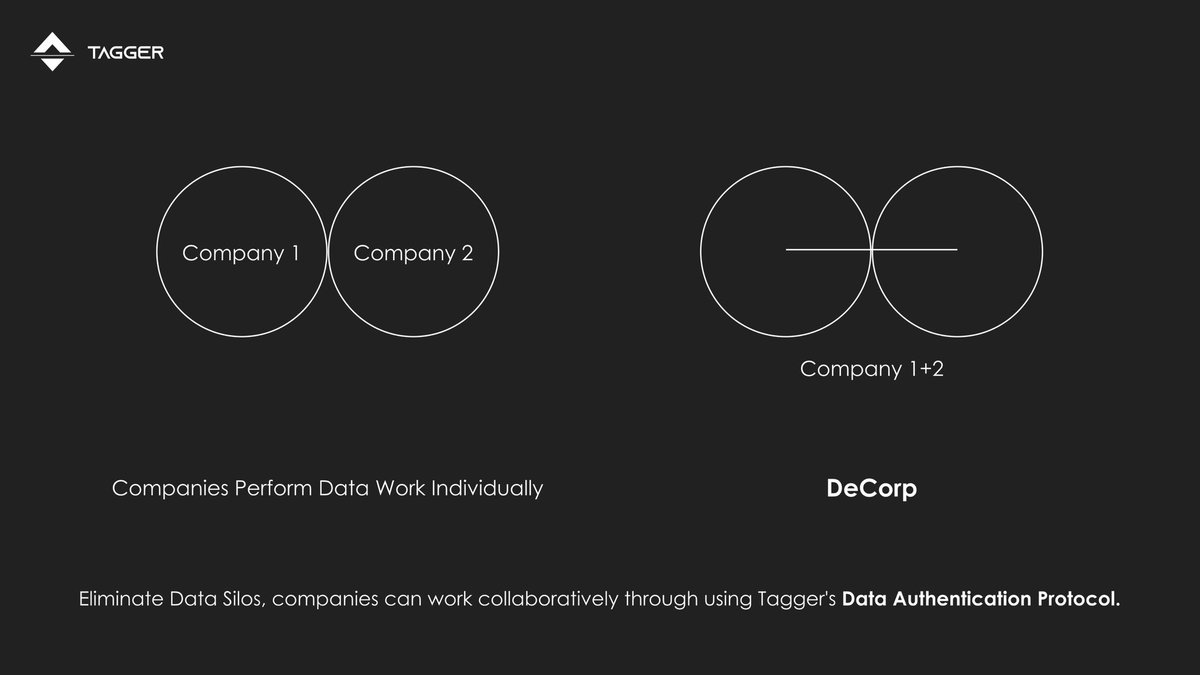
In the traditional AI corporate model, each company is forced to build its own isolated data estate, repeating the same labor behind closed walls. This is wasteful by design. Tagger’s Data Authentication Protocol proposes a simpler truth where data work should be verifiable, permissioned, and composable across organizational boundaries, so that value created once does not need to be recreated again and again. #DeCorp extends this logic into production. Instead of different firms operating as disconnected silos, multiple parties can contribute to a shared, authenticated data process while preserving ownership and access control. What we build is decentralized in participation, rigorous in verification, and far more efficient than the legacy model it replaces.
Tagger tweet media
English
17
11
24
9.4K
Tagger
Tagger@TaggerAI·
Data has become the scarce resource, yet access to it is still negotiated through layers of trust, paperwork, and intermediaries. This creates a market where ownership is unclear and permissions are brittle. A system that cannot grant and verify access in a simple, auditable way will not scale to the demands of machine intelligence. #DeCorp treats access as a native property of the dataset itself. Grant Access to Data is expressed through a Data Passport (DP) and enforced with layered permissions for different parties. These parties include creator, reviewer, buyer, and operator. This is all done without a management layer to arbitrate every step. When access should end, Burn DP ends it.
Tagger tweet media
English
14
4
24
10.7K
Tagger
Tagger@TaggerAI·
Traditional data factories (or most corporate systems) are built as top-down hierarchies, and incentives inevitably drift. Coordinators capture the upside while workers are treated as a cost to be minimized. This leads to lower-quality data, opaque value capture, and a system that quietly taxes everyone downstream. #DeCorp fairly compensate contributors for measurable contribution so fair work produces fair pay, fair pay produces fair data, and fair data produces fair AI, without requiring trust in a central operator’s discretion.
Tagger tweet media
English
17
6
27
22.1K
Tagger
Tagger@TaggerAI·
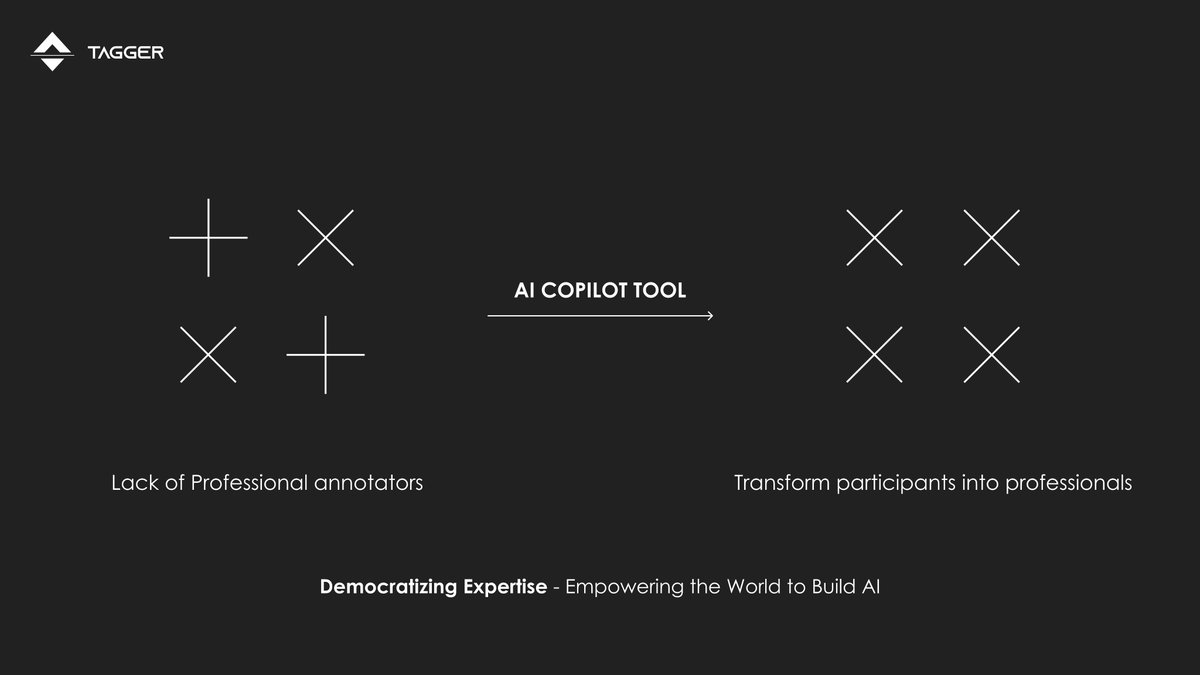
Professional annotator scarcity is a structural AI bottleneck. When expertise is scarce, cost and latency rise non-linearly. #DeCorp unlocks latent capability with protocol + tooling. AI Copilot doesn’t replace humans. It standardizes work and quality, and scales the workforce.
Tagger tweet media
English
3
3
25
9.4K
Tagger
Tagger@TaggerAI·
In tradition models, data lives in isolated vaults - duplicated, withheld, and governed by trust in intermediaries. This creates silos, friction, and waste: the same work repeated, the same insights locked away, the same progress delayed. #DeCorp creates a fundamental change that focuses on authenticated data sharing as a native primitive. Instead of relying on permissioned gatekeepers, participants can collaborate permissionlessly while preserving integrity, proving what the data is, where it came from, and that it has not been tampered with. This allows a system that enables “sharing,” while also dissolving silos, making coordination rational, enabling AI to compound faster by forging inter-company data collaboration work.
Tagger tweet media
English
12
6
24
15.1K
Tagger
Tagger@TaggerAI·
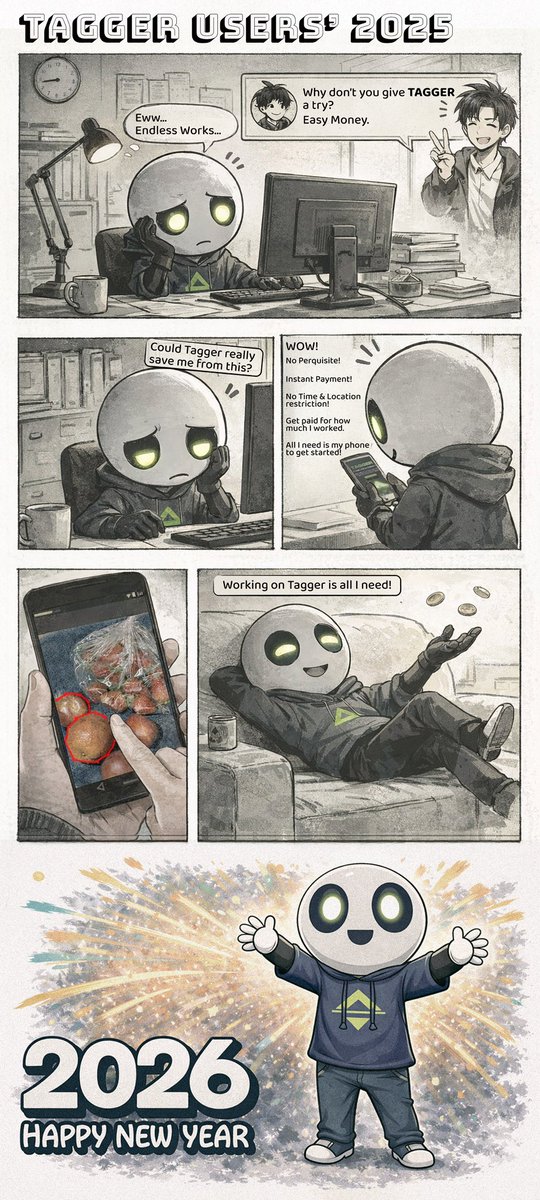
The community and contributors lie at the center of #DeCorp. The year has been all about you, and it will continue to be so for 2026! It's lovely to see a community-created artwork to summarize the past year. We wish everyone the best. Keep DeCorping!
Tagger tweet media
English
12
6
42
12.7K
Tagger
Tagger@TaggerAI·
It’s been a tremendous year for #DeCorp. This year, we built from the ground up, growing a strong base of data workers and trusted enterprise data clients. Thank you to everyone for your contributions and support. Wishing you all the best in the year ahead. Merry Christmas! 🎄
Tagger tweet media
English
15
6
34
14.4K
Tagger
Tagger@TaggerAI·
Traditional corporate structure runs from the top-down, with workers typically earning 10% of each dollar value they generate. At #DeCorp, contributors are equal with no management layers and intermediaries on top cutting the cake. Instead, the pipeline is managed by algorithms.
Tagger tweet media
English
8
5
22
15.5K
Tagger
Tagger@TaggerAI·
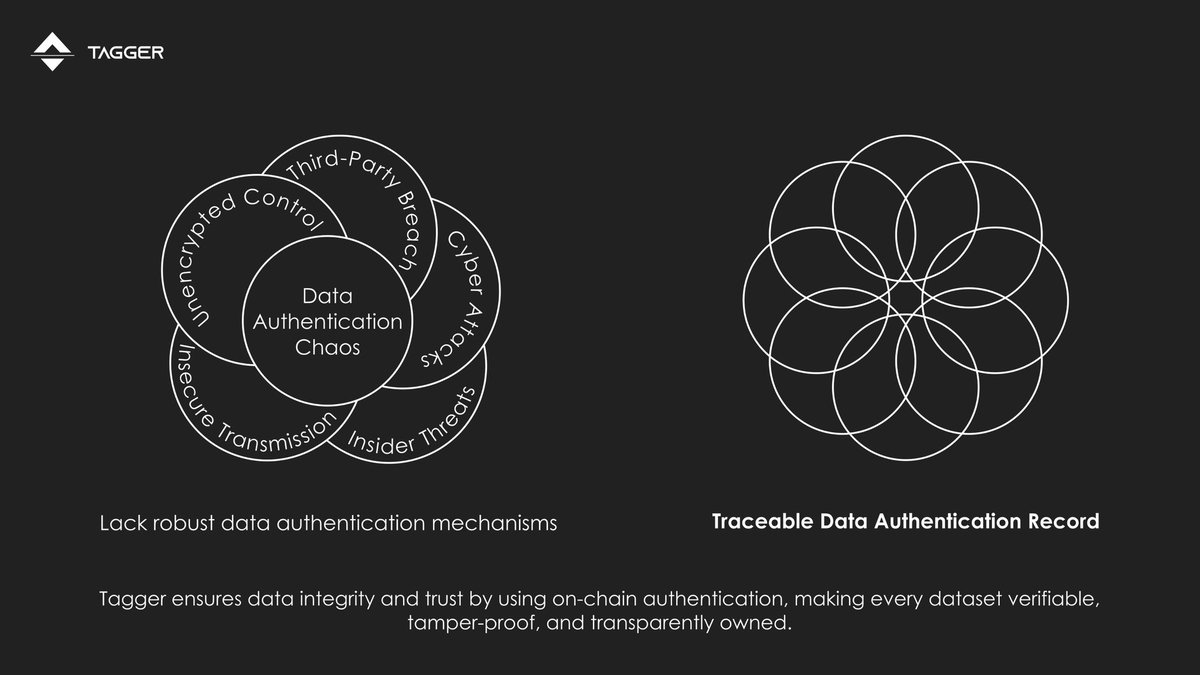
On the business-to-business side, Tagger solves a critical bottleneck in the AI data industry: lack of data trust. AI data are often even more prone to misuse, theft, and alterations than regular IPs. They form one of the largest branch of AI advancement, and yet, companies still work behind closed doors to prevent data leakage, spending millions each year to protect data. This is much simpler in #DeCorp, enabling an authenticated data management system that enables cross-company collaborations and traceable data management rights.
Tagger tweet media
English
12
1
21
78.4K
Tagger
Tagger@TaggerAI·
We are pleased to announce that $TAG will be listed on @Aster_DEX Spot. In conjunction with this listing, we are opening a trading competition with a total prize pool of $100,000 (split evenly between $ASTER and $TAG). Campaign Details Window Dec 5, 10:00 UTC to Dec 12, 23:59 UTC. Qualification Requirements To remain eligible for rewards, you must meet both criteria: Hold: Maintain a balance of 444 $ASTER (Spot + Perpetual) throughout the entire campaign window. Trade: Accumulate a minimum of $4,000 in trading volume on the TAG/USDT Spot pair. Prize Allocation Rewards are distributed pro-rata based on your share of total trading fees contributed during the event. Note: Rewards are capped at 3% of the total prize pool per user.
Tagger tweet media
Aster 🥷@Aster_DEX

$TAG ( @TaggerAI ) is listing on Aster. 📊🤖 🕒 Dec 5, 10:00 UTC – Dec 12, 23:59 UTC 🎁 $50,000 in $ASTER + extra $TAG rewards 📈 1.2x boost for TAG/USDT Spot trading during the campaign To qualify: 🔶 Hold 444 $ASTER on Aster (Spot + Perpetual) for the entire campaign window (Dec 5, 10:00 UTC – Dec 12, 23:59 UTC). Holdings from concurrent Aster campaigns count toward this requirement. 🔶 Trade ≥ $4,000 TAG/USDT Spot volume on Aster (Perpetual volume not counted). 🔶 Rewards allocated pro-rata by your share of TAG/USDT Spot trading fees, capped at 3% of the prize pool per user. Market makers excluded. About Tagger ( @TaggerAI ): Tagger is a DeCorp AI data solution platform for data labeling, processing, management, and trading, running full-stack data pipelines with partners like Huawei Cloud, BVCI, BlueSky Carbon, ReadiiTel, and more. Details 👉 @AsterDEX/9ad1d9c040e6" target="_blank" rel="nofollow noopener">medium.com/@AsterDEX/9ad1… Check out our ongoing campaigns 🎮 asterdex.com/en/rocket-laun…

English
13
2
28
45K
Tagger
Tagger@TaggerAI·
Data Passport governs permissions and authorization for data management and transfer. This enables safer and more efficient internal data management for companies while also opening the door for cross-company data collaboration (something that's almost never done in traditional corporate structure due to trust issues). AI trainers and data cleaners can be granted right to data access only while data are held by management layers in a company. Layered permissions with different rights can also be granted. Data passports can also be burnt, transferred in a trade, or even sold in a "usable but not visible" form. This forms a crucial B2B infrastructure for #DeCorp.
Tagger tweet media
English
9
2
23
14.1K