Terence Shen

13.5K posts

Terence Shen banner
Terence Shen

Terence Shen

@Terenceshen

Independent China analyst & Journalist | Commentator on foreign policy, national security, human rights and East Asia | YouTuber 1M+|@munkschool alumni

Katılım Şubat 2011
5.6K Takip Edilen410.6K Takipçiler
Terence Shen
Terence Shen@Terenceshen·
The crash of China Eastern Flight 5735 was deliberate, carried out by pilot Zhang Zhengping. From what I know, he was one of the most experienced pilots in China and had recently been demoted. The person who demoted him was reportedly the father of Yang Hongda, the other pilot on the same flight.
Flightradar24@flightradar24

Responding to a FOIA request the NTSB released data regarding the crash of China Eastern flight 5735 in 2022 this week. Flight data recorder data show fuel switches moved to CUTOFF and downward force on the FO’s control column. flightradar24.com/blog/flight-tr…

English
0
3
48
5.9K
Terence Shen
Terence Shen@Terenceshen·
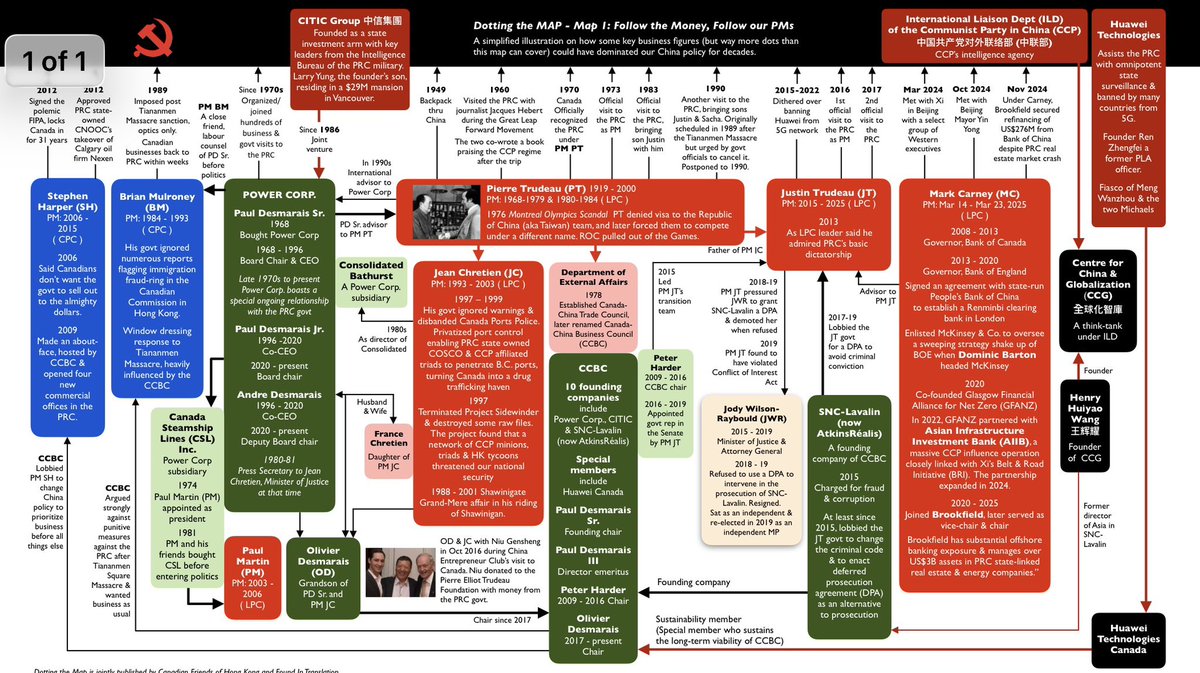
A brief history of how the Chinese Communist Party infiltrated Canadian politics and worked to influence policymaking. The creator of this chart, who lives in Canada, chose to remain anonymous out of fear of transnational repression.
Terence Shen tweet media
English
14
275
497
11.3K
Terence Shen
Terence Shen@Terenceshen·
BREAKING: The State Department has reportedly fired 200 U.S. Foreign Service Officers today, according to former U.S. Ambassador to China @RNicholasBurns . Still too early to jump to conclusions. We need more details on who was affected and why the decision was made.
English
0
2
19
3.6K
Terence Shen
Terence Shen@Terenceshen·
When Chinese diplomats pressured Canadian officials to cancel Shen Yun performances, how did you respond? Did you stand up to defend our freedoms?
Prime Minister of Canada@CanadianPM

On #WorldPressFreedomDay, we recognise the fundamental role of a free press in strengthening our democracy. At all hours and on every front, they define and defend our values. Canada will always stand for a free and independent media, and for the values that protect it.

English
1
16
99
8K
Terence Shen
Terence Shen@Terenceshen·
President Trump said he will raise the case of Jimmy Lai when he meets Xi Jinping in Beijing.
English
0
5
60
4.7K
Isabella Anderson
Isabella Anderson@IsabellaAn67·
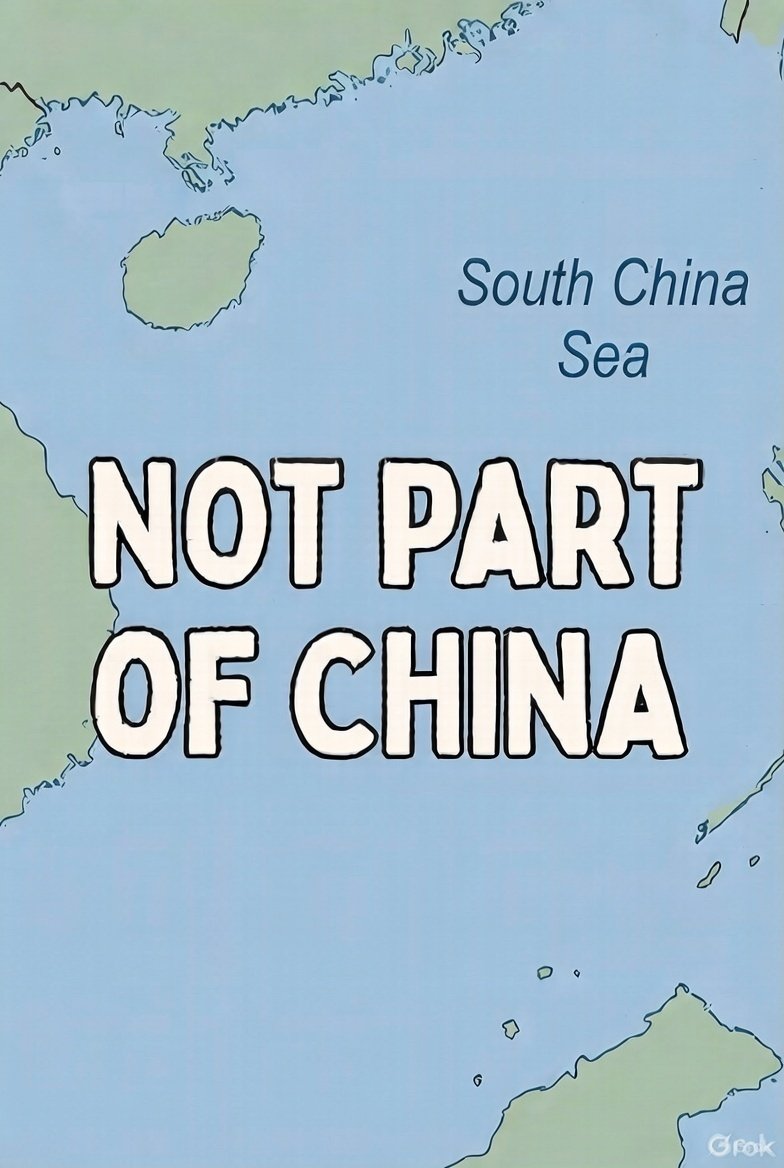
South China Sea ❌ Southeast Asia Sea✔️
Isabella Anderson tweet media
English
49
109
401
7.5K
Terence Shen
Terence Shen@Terenceshen·
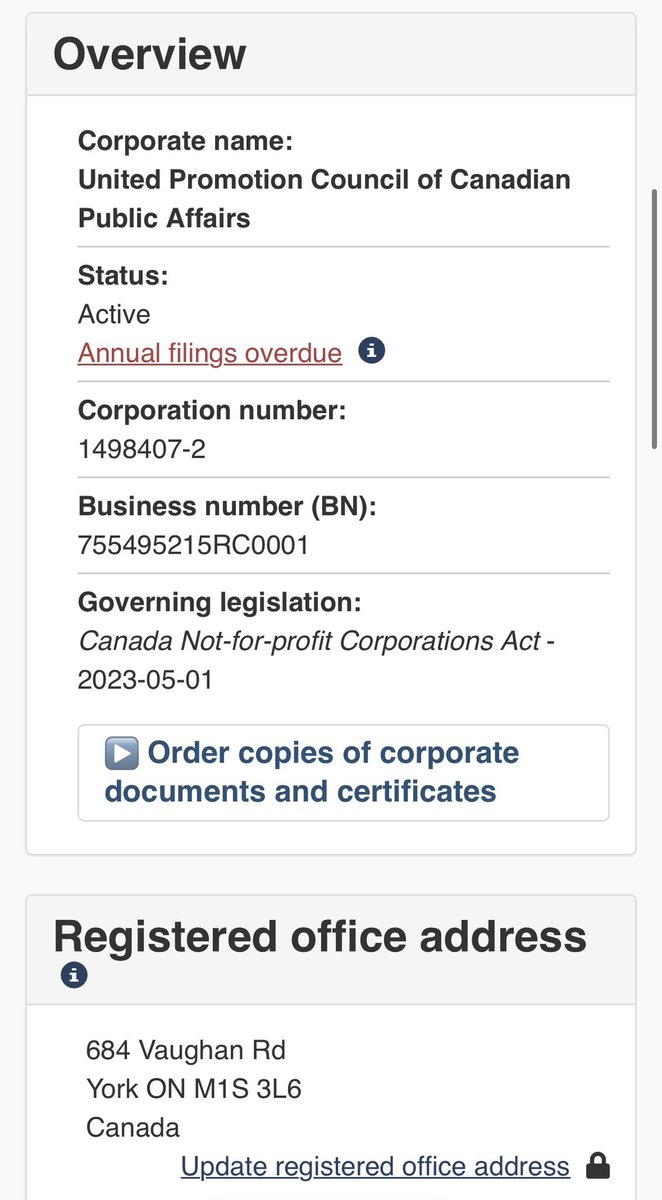
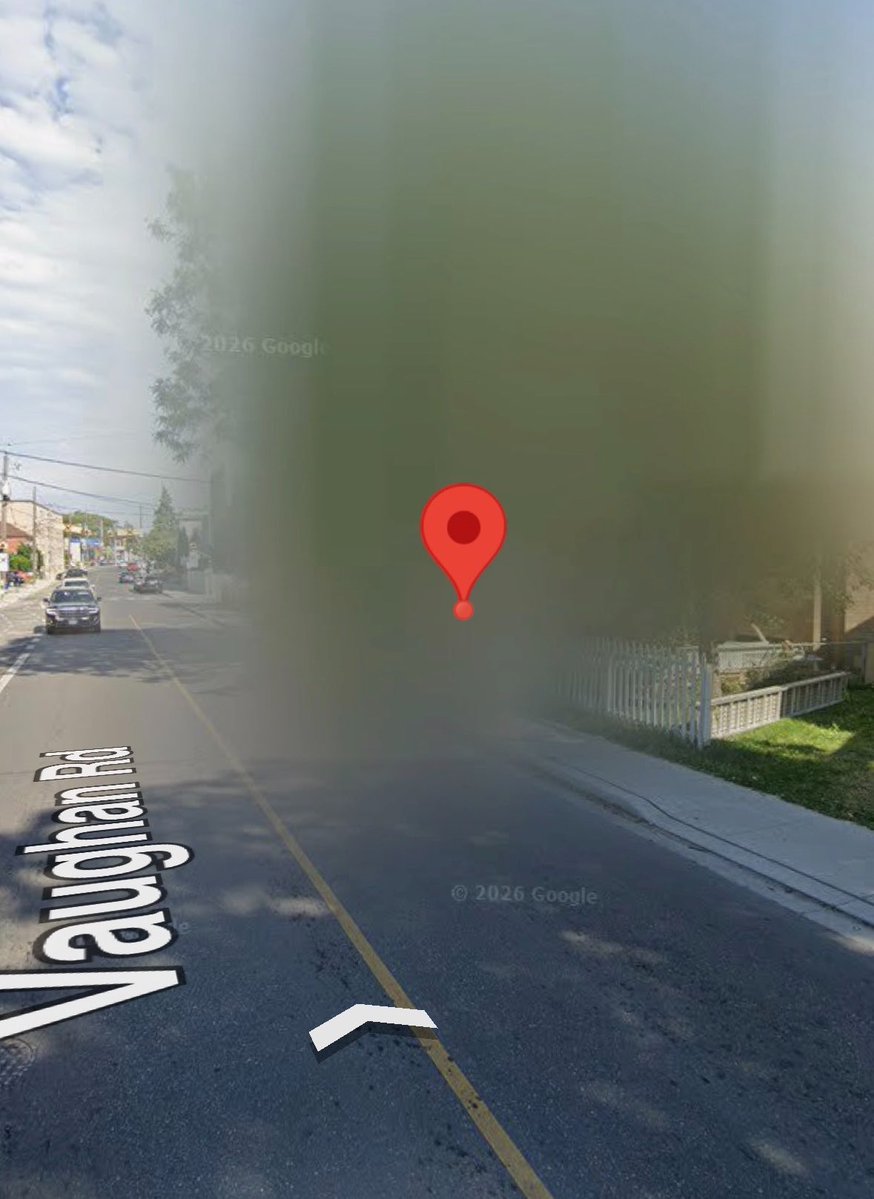
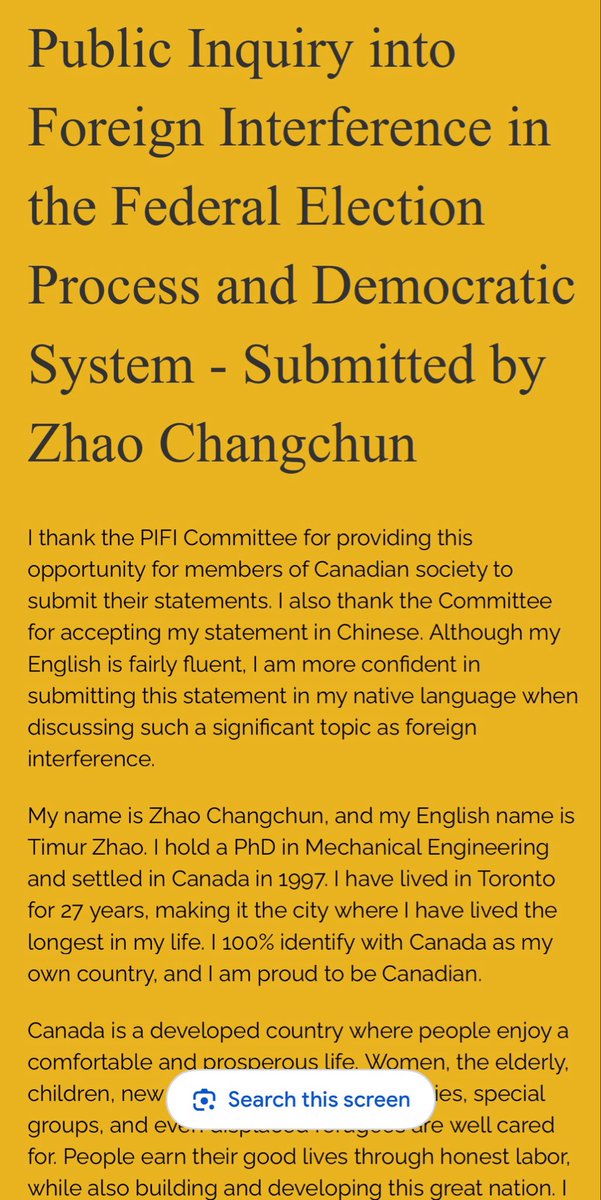
Follow up: CUAME’s Scarborough fundraising partner is the United Promotion Council of Canadian Public Affairs (UPCCPA). Federal incorporation records suggest links to a group known as the “Commission Marking the 100th Anniversary of the Chinese Exclusion Act,” founded by Jian Zhang. Zhang is a former engineer at Nokia and Nortel who later returned to China to work for a company in Shenzhen. He has also been featured by CCP state media People’s Daily as a promoter of Chinese culture in Canada. The organization’s registered address appears blurred on Google Maps, and public records indicate it matches the address of one of its directors, Changchun Timur Zhao. Zhao has publicly defended certain pro-CCP politicians and characterized scrutiny of foreign interference as racism. Both Zhang and Zhao have also publicly supported former MPP Vincent Ke following media reports alleging his involvement in activities related to Chinese government interference in Canadian elections, including claims he received approximately $50,000 from the Chinese Consulate-General in Toronto for election-related purposes.
Terence Shen tweet mediaTerence Shen tweet mediaTerence Shen tweet media
Terence Shen@Terenceshen

EXCLUSIVE: A Chinese Group Facing Questions Over Foreign Influence Is Now Fundraising in Canada Tomorrow in Scarborough, a group called CUAME — Canadians United Against Modern Exclusion — is throwing a fundraising gala at Casa Deluz Banquet Hall. Tickets run $188 a head, $1,880 for a table of ten, $5,000 for a VIP table. The event has already been picked up by at least two Chinese-language media outlets. One report comes from a Toronto-based correspondent affiliated with Chinese Communist Party's Central Television, while another appears on a news website that features columns by Michael Chan, a Canadian politician often described as China-friendly, as well as coverage of community organizations such as the Chinese Canadian Alliance for the Promotion of Peaceful Reunification of China (Toronto Area), which has been described as part of a broader united front or pro-Beijing network, and related events. On paper, it looks like any other community fundraiser. It’s also the kind of event a group that may have links to foreign governments can use to build networks, win access, and expand its footprint in Canada. CUAME was launched last year by a number of well-known figures in the Chinese Canadian community. It pitches itself as a civil liberties shop pushing back against “foreign interference hysteria,” “national security overreach,” and fear of “the other.” But once you start reading what the group actually publishes — and look at who’s behind it — the pitch starts to wobble. Among the figures reportedly tied to CUAME are Senator Yuen Pau Woo and former senator Victor Oh, both long viewed by critics as among the most Beijing-friendly voices in Canadian politics, alongside former MP Paul Chiang, who stepped down after a controversy over remarks related to China. Read their public statements side by side and a pattern emerges: a lot of the arguments line up neatly with talking points you’d recognize from China-related policy debates in Canada. That isn’t proof of coordination. But it’s a pattern worth asking about. CUAME’s central pitch is straightforward. Canada, the group argues, isn’t really dealing with foreign interference — it’s dealing with “modern exclusion.” People are being unfairly targeted, the argument goes, just for having “benign ties” to foreign entities. Canada does have a real history of discrimination, from the Chinese Exclusion Act to the internment of Japanese Canadians. That history matters. But it shouldn’t be used to blur a different question: how does a country deal with covert or undisclosed political activity tied to foreign actors? That distinction is the whole game. Canada’s foreign interference rules are about transparency, not identity. They’re aimed at undisclosed political activity linked to foreign governments — not at people because of where they come from. When every conversation gets reframed as Sinophobia or exclusion, it gets harder to ask basic questions without getting branded a bigot for asking them. And that’s where the deeper issue sits. Influence today is rarely loud or obvious. More often it’s about shaping how a debate gets talked about — which words people reach for, what becomes uncomfortable to question. Push the conversation off “foreign interference” and onto “exclusion,” and you’re not just joining the debate. You’re rewriting its terms. CUAME’s own report leans heavily on historical injustice — racism against Black Canadians, Indigenous communities, and Muslims, particularly after 9/11. These are serious histories that deserve serious engagement on their own merits. But mapping them directly onto today’s national security debate isn’t a neutral move. It’s a rhetorical pivot, and a powerful one. There’s a well-documented pattern in how foreign governments — China most prominently — try to shape political outcomes outside their borders. Analysts and official reports have repeatedly described the use of community organizations, business associations, and cultural groups to do outreach, cultivate political relationships, and steer public debate around elections and policy. That work isn’t always direct, and it isn’t always visible. It often runs through narratives, networks, and advocacy that look completely independent on the surface but track closely with the interests of a foreign state. Which is exactly why transparency matters. Set against that backdrop, CUAME’s framing — and the network it’s building — raises real questions. Recasting foreign interference as “modern exclusion” is a powerful rhetorical move on its own. Building the donor base and political proximity that a $188-a-head gala generates is another kind of move entirely. CUAME has also brought one or two Muslim and Iranian participants into its public-facing roster, which lets the group present itself as a broader coalition of minority communities defending shared interests. That framing runs into trouble pretty quickly. Concerns about the presence and activities of actors linked to the Iranian regime, including the Islamic Revolutionary Guard Corps, have already produced real unease, and real opposition, inside parts of the Iranian Canadian community. Many of those voices are themselves calling for stronger safeguards against foreign state influence. That’s the contradiction. CUAME frames the issue as exclusion and fear of the other. Voices from inside the very communities it claims to speak for are raising the opposite concern: that foreign state influence is bleeding into Canada’s democratic space, and that the country isn’t paying enough attention. Against that, CUAME’s claim to broadly represent minority communities and their interests gets harder to square with what those communities actually sound like. One last detail worth noting: the venue for this fundraiser, Casa Deluz Banquet Hall, has also served as a regular location for Chinese consulate events, including Communist China's National Day receptions.

English
1
21
58
17.4K
Clown World ™ 🤡
Clown World ™ 🤡@ClownWorld·
A woman films outside a modern Chinese shopping plaza and catches storefronts with hilariously off-brand names like GUGCU, McDona, ICUIS VUTION, HERME RWES, FENDING, and BAKES STAR. The knockoffs look almost legit from a distance. Peak China bootleg game. Which misspelling wins for you?
English
288
473
3.1K
537.3K
Terence Shen
Terence Shen@Terenceshen·
Glad to meet Mrs. Sophie Luo @luoshch. Her husband, Ding Jiaxi, a Chinese human rights lawyer, has been imprisoned for his advocacy on civil rights and government transparency. She is tirelessly working to secure his release and supporting others fighting for justice and freedom.
Terence Shen tweet mediaTerence Shen tweet media
English
1
13
122
9.1K
Terence Shen retweetledi
Sam Cooper
Sam Cooper@scoopercooper·
Stand with Taiwan and Japan against PRC coercion. Tell your politicians, email and call them today, Ottawa’s “strategic” partnership with PRC is rejected by voting citizens. No one voted for it. Canadians don’t take direction from Beijing on what waters and lands we travel.
UnveiledChina@Unveiled_ChinaX

China's ambassador just told Canada which of its MPs are allowed to travel and which international waters its navy is allowed to sail through. And he delivered that message right after Canada handed Beijing a trade deal. In an interview published May 1, 2026, Chinese Ambassador Wang Di warned Ottawa that sending parliamentarians to Taiwan or transiting warships through the Taiwan Strait would damage the new "strategic partnership" signed by Prime Minister Carney in January. He called the Taiwan Strait transits "harassment and even provocation." He described any official contact by Canadian MPs with Taiwan's government as "hurtful." To be precise about what is actually being demanded here: China is telling a G7 democracy that its elected representatives cannot visit a democratic island, and that its navy cannot sail through an international waterway that the entire world recognizes as such. Not Chinese territorial waters. An international strait. Canada has transited that waterway 11 times under Trudeau and once under Carney. Every single transit was legal. Every single one prompted a protest from Beijing. Two Liberal MPs quietly cut short a Taiwan trip in January specifically to avoid complicating Carney's Beijing visit. The CCP's approach to partnerships is consistent and documented: offer economic incentives, extract political concessions, then expand the list of concessions. Canada signed a trade deal and received, in return, a formal list of things its parliament and military are no longer supposed to do. #Canada #CCP #China #Taiwan #TaiwanStrait #CanadianPolitics #Sovereignty #Geopolitics #FreedomOfNavigation

English
108
1.1K
2.2K
57.2K
Terence Shen
Terence Shen@Terenceshen·
@zaobaosg 看标题就知道是大外宣记者庄慧良写的。
中文
3
1
199
5.1K
联合早报 Lianhe Zaobao
中国大陆4月推出惠台措施,台湾政府以“国安”为名冷处理,旅游业者怒吼“以政围商”。然而,在政策原地打转之际,台湾越来越多年轻人已绕过禁令,走进小红书里的中国大陆,当亲眼所见颠覆了刻板印象时,他们正用自己的脚,一步一步改写对两岸的认知。 #Echobox=1777756648" target="_blank" rel="nofollow noopener">zaobao.com.sg/news/china/sto…
联合早报 Lianhe Zaobao tweet media
中文
75
10
165
48.9K
Terence Shen
Terence Shen@Terenceshen·
BREAKING: China has issued a ban blocking compliance with U.S. sanctions targeting five Chinese firms, including Hengli Petrochemical in Dalian, over Iran-related oil trade. Authorities say companies in China must not recognize or enforce the U.S. measures, calling them illegitimate. Let’s wait and see how Trump responds.
Terence Shen tweet media
English
46
64
267
86.7K
Terence Shen
Terence Shen@Terenceshen·
Brand-new Chinese EVs have just arrived in Toronto, Canada. Doug Ford @fordnation accurately called them “spy cars.” The Trump administration may not allow them to cross the border into the U.S.
Terence Shen tweet mediaTerence Shen tweet media
English
397
319
1.1K
250.8K
Terence Shen
Terence Shen@Terenceshen·
The photo of the year angered the CCP! Despite China pressuring some African countries to block Taiwanese President Lai @ChingteLai ’s visit to Eswatini, Taiwan’s only diplomatic ally in Africa, he made the trip two weeks later anyway. It underscored Taiwan’s determination to maintain its independence from the PRC and revealed the limits of China’s influence.
Terence Shen tweet media
English
16
18
208
7.1K
Terence Shen
Terence Shen@Terenceshen·
Senator Yuen Pau Woo isn’t happy about what I wrote. That tells me I got it right. Instead of engaging the facts on foreign interference and transnational repression, some pro-CCP politicians play the victim. What does “modern exclusion” even mean? And the last sentence is FACT.
Terence Shen tweet media
English
6
43
136
8.8K
Yuen Pau Woo
Yuen Pau Woo@yuenpauwoo·
1/2. @Terenceshen has provided an excellent example of modern exclusion. His post is a catalogue of conjecture and insinuation designed to demonize supporters of @CUAMECANADA The clincher is in his last sentence:
Terence Shen@Terenceshen

EXCLUSIVE: A Chinese Group Facing Questions Over Foreign Influence Is Now Fundraising in Canada Tomorrow in Scarborough, a group called CUAME — Canadians United Against Modern Exclusion — is throwing a fundraising gala at Casa Deluz Banquet Hall. Tickets run $188 a head, $1,880 for a table of ten, $5,000 for a VIP table. The event has already been picked up by at least two Chinese-language media outlets. One report comes from a Toronto-based correspondent affiliated with Chinese Communist Party's Central Television, while another appears on a news website that features columns by Michael Chan, a Canadian politician often described as China-friendly, as well as coverage of community organizations such as the Chinese Canadian Alliance for the Promotion of Peaceful Reunification of China (Toronto Area), which has been described as part of a broader united front or pro-Beijing network, and related events. On paper, it looks like any other community fundraiser. It’s also the kind of event a group that may have links to foreign governments can use to build networks, win access, and expand its footprint in Canada. CUAME was launched last year by a number of well-known figures in the Chinese Canadian community. It pitches itself as a civil liberties shop pushing back against “foreign interference hysteria,” “national security overreach,” and fear of “the other.” But once you start reading what the group actually publishes — and look at who’s behind it — the pitch starts to wobble. Among the figures reportedly tied to CUAME are Senator Yuen Pau Woo and former senator Victor Oh, both long viewed by critics as among the most Beijing-friendly voices in Canadian politics, alongside former MP Paul Chiang, who stepped down after a controversy over remarks related to China. Read their public statements side by side and a pattern emerges: a lot of the arguments line up neatly with talking points you’d recognize from China-related policy debates in Canada. That isn’t proof of coordination. But it’s a pattern worth asking about. CUAME’s central pitch is straightforward. Canada, the group argues, isn’t really dealing with foreign interference — it’s dealing with “modern exclusion.” People are being unfairly targeted, the argument goes, just for having “benign ties” to foreign entities. Canada does have a real history of discrimination, from the Chinese Exclusion Act to the internment of Japanese Canadians. That history matters. But it shouldn’t be used to blur a different question: how does a country deal with covert or undisclosed political activity tied to foreign actors? That distinction is the whole game. Canada’s foreign interference rules are about transparency, not identity. They’re aimed at undisclosed political activity linked to foreign governments — not at people because of where they come from. When every conversation gets reframed as Sinophobia or exclusion, it gets harder to ask basic questions without getting branded a bigot for asking them. And that’s where the deeper issue sits. Influence today is rarely loud or obvious. More often it’s about shaping how a debate gets talked about — which words people reach for, what becomes uncomfortable to question. Push the conversation off “foreign interference” and onto “exclusion,” and you’re not just joining the debate. You’re rewriting its terms. CUAME’s own report leans heavily on historical injustice — racism against Black Canadians, Indigenous communities, and Muslims, particularly after 9/11. These are serious histories that deserve serious engagement on their own merits. But mapping them directly onto today’s national security debate isn’t a neutral move. It’s a rhetorical pivot, and a powerful one. There’s a well-documented pattern in how foreign governments — China most prominently — try to shape political outcomes outside their borders. Analysts and official reports have repeatedly described the use of community organizations, business associations, and cultural groups to do outreach, cultivate political relationships, and steer public debate around elections and policy. That work isn’t always direct, and it isn’t always visible. It often runs through narratives, networks, and advocacy that look completely independent on the surface but track closely with the interests of a foreign state. Which is exactly why transparency matters. Set against that backdrop, CUAME’s framing — and the network it’s building — raises real questions. Recasting foreign interference as “modern exclusion” is a powerful rhetorical move on its own. Building the donor base and political proximity that a $188-a-head gala generates is another kind of move entirely. CUAME has also brought one or two Muslim and Iranian participants into its public-facing roster, which lets the group present itself as a broader coalition of minority communities defending shared interests. That framing runs into trouble pretty quickly. Concerns about the presence and activities of actors linked to the Iranian regime, including the Islamic Revolutionary Guard Corps, have already produced real unease, and real opposition, inside parts of the Iranian Canadian community. Many of those voices are themselves calling for stronger safeguards against foreign state influence. That’s the contradiction. CUAME frames the issue as exclusion and fear of the other. Voices from inside the very communities it claims to speak for are raising the opposite concern: that foreign state influence is bleeding into Canada’s democratic space, and that the country isn’t paying enough attention. Against that, CUAME’s claim to broadly represent minority communities and their interests gets harder to square with what those communities actually sound like. One last detail worth noting: the venue for this fundraiser, Casa Deluz Banquet Hall, has also served as a regular location for Chinese consulate events, including Communist China's National Day receptions.

English
5
3
18
1.7K
Terence Shen
Terence Shen@Terenceshen·
JUST IN: Is China safe? Reports of another violent vehicle attack in China. On May 1, a car plowed into pedestrians in Chengdu in what appears to be a random assault. The suspect was reportedly armed with a knife when detained, with casualties possibly exceeding a dozen. Authorities are calling it a traffic incident. Just over a month ago, a similar vehicle attack with a bulldozer in Beijing’s Fangshan district caused multiple casualties, but details were heavily suppressed. When repeated attacks are framed as isolated “accidents,” it allows China to continue portraying itself as one of the safest countries in the world in official propaganda.
Terence Shen tweet mediaTerence Shen tweet media
English
25
27
204
26.8K