Sabitlenmiş Tweet
Codex
361 posts


Codex
@trycodex
The one API for your entire blockchain data stack. Codex provides real-time, enriched data for 60M tokens across 80 networks and 410M wallets.
Get started for free 👉 Katılım Nisan 2024
462 Takip Edilen1.3K Takipçiler
@MrJettip @ggdotxyz @RelayProtocol happy to be powering the data so y'all can focus on shipping product!
English

GM! 👋
Been building a crosschain social trading platform @ggdotxyz powered by @RelayProtocol and @trycodex for the last couple months.
Creators can share alpha and earn transaction fees from their posts. Traders get real-time alpha + a way to fact-check the best creators.
Here’s some features shipped so far:
• Telegram bot that broadcasts brand new theses
• Feed with all the calls + plenty of filter menus
• Leaderboards: Top traders (PNL) and top callers
• Full token discovery just like dexscreener
• Crosschain trading
• Copy buy functionality
• And much more…
I'll be also focusing more on traders: Better tools, better alpha, more data.
Working on an Agentic swarm powered by @rei_labs that lurks in the trenches to find the next early runners. It’s fed with on-chain data, metrics, and social sentiment data from Grok.
It scores trending new mints and writes down a full assessment so traders have a clear summary to make calculated decisions. Whether it’s swing trading or longer slow-cook opportunities.
This is just the beginning.
What features would you want to see next? 👀
English


@TheGridData Great to be partnered with you to massively improve token metadata!
English

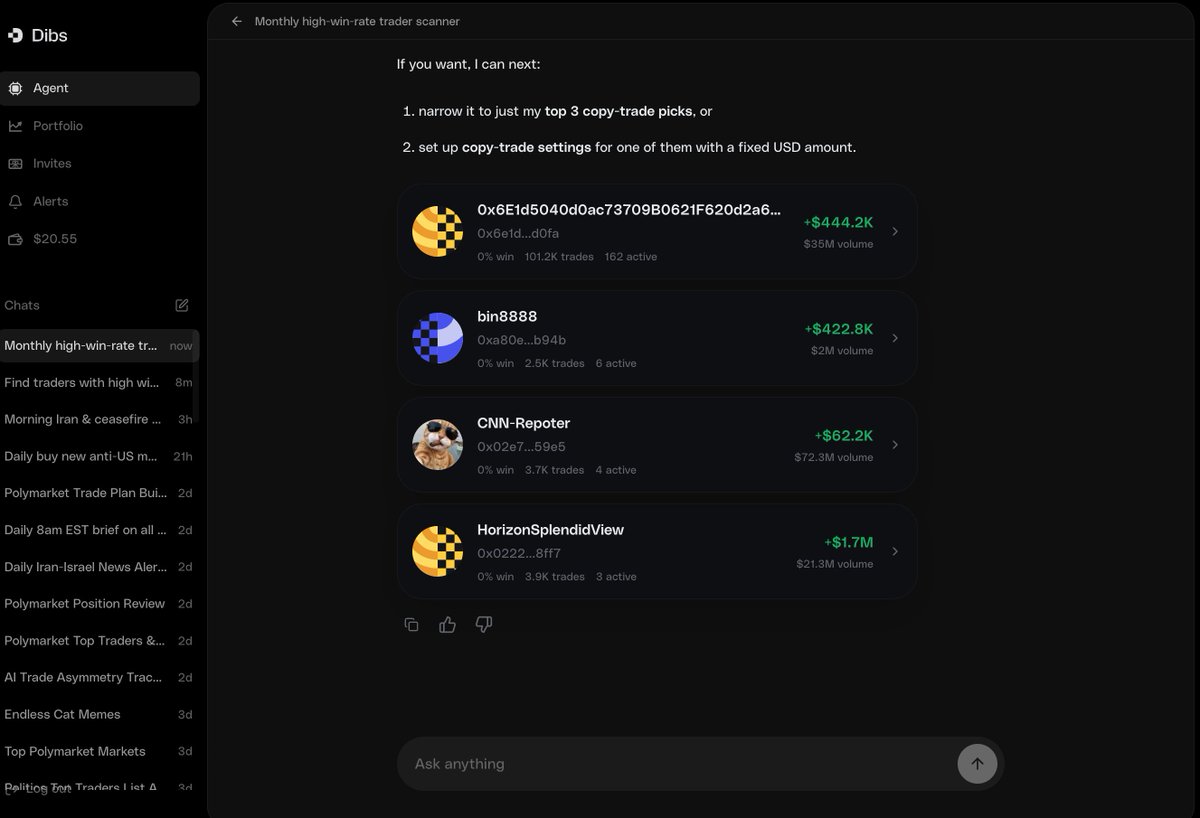
The @usedibs agent just merged data from @trycodex and @Polymarket 🚀
This is mostly helpful for investigating who to copy trade, and get a sense of the trader's background before copying them!
English



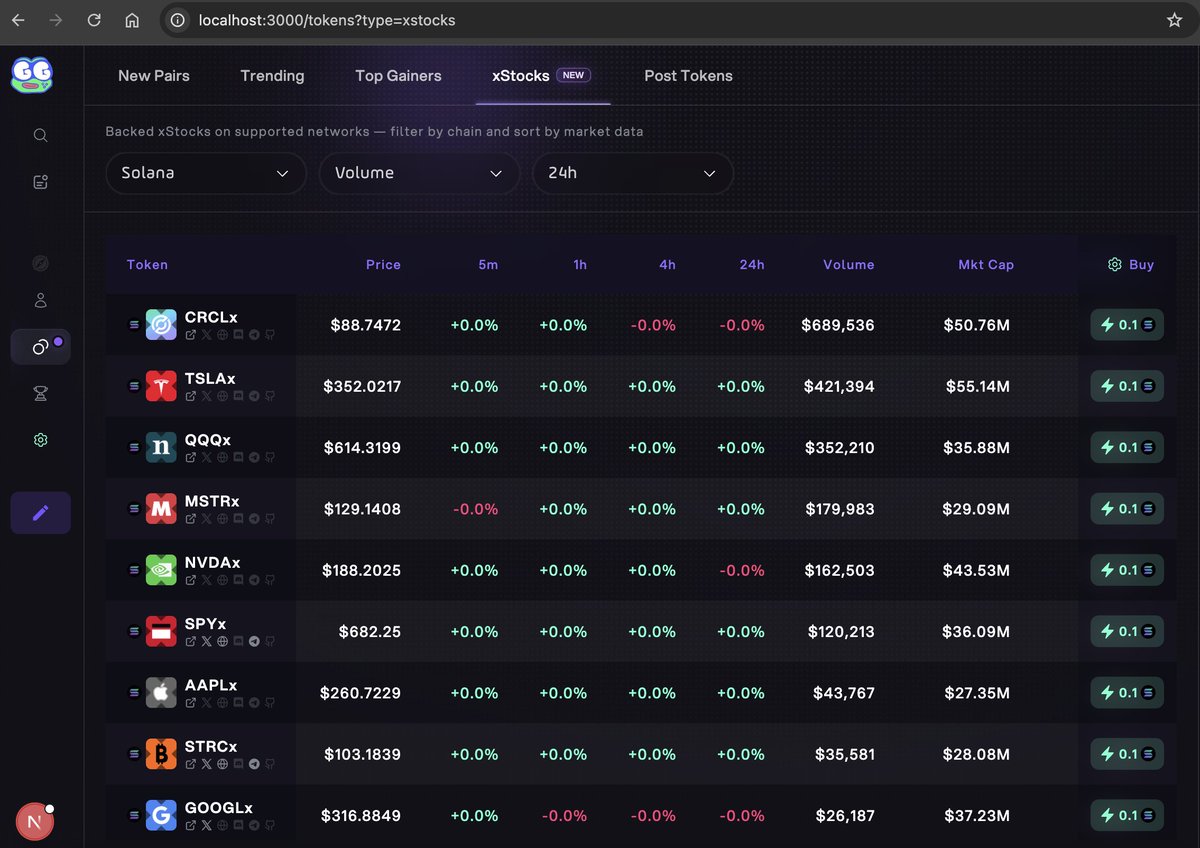
Tokens and predictions fully powered by Codex data 🤘
Defined@definedfi
Every trading terminal looks exactly the same. @definedfi's new private beta, (re)Defined, gives you complete control to customize how you want to trade. Think Bloomberg Terminal for everything crypto. Spot. Perps. Predictions. One wallet. 5 quick videos showing its power:
English


Codex retweetledi

Howdy, friends!
Trading terminals force you into their layouts like a one-size-fits-all sweater
@definedfi’s private beta (Redefined) lets you customize everything you like
Think Bloomberg Terminal for crypto
Spot. Perps. Predictions. One wallet.
Here's 5 quick videos:
English
Trenching made easy:
- The dashboard shows the top 50 trending new tokens, pulled with @trycodex
- Tokenomics and onchain assessment + scoring powered by @rei_labs
- Sentiment assessment and scoring powered by Grok with native 'X-search' tool.
- Token page shows a chart with markers and the full assessments from the agents
English
Following our partnership announcement, the Codex project is now live on the Hermes Subnet.
Validators are generating challenges based on @trycodex data, with miners competing to solve and optimise performance in real time.
Now the network goes to work.
English
OKX's L2 just got Aave. Now it has real-time data infrastructure too.
If you're building on X Layer, our API is ready with filtering, trending, charts, transactions, pairs, metadata and much more.
Check out codex.io to get started with a free API key and start building today!
Defined@definedfi
.@XLayerOfficial is now live on Defined! @okx has 50M users, and they're pushing them on-chain through X Layer. You can now track and trade all of it on Defined. Check out trending X Layer tokens here 👇 defined.fi/tokens/discove…
English