greg

1.6K posts

greg banner
greg

greg

@wright

Katılım Şubat 2010
2.6K Takip Edilen1.2K Takipçiler
greg retweetledi
François Chollet
François Chollet@fchollet·
Sufficiently advanced agentic coding is essentially machine learning: the engineer sets up the optimization goal as well as some constraints on the search space (the spec and its tests), then an optimization process (coding agents) iterates until the goal is reached. The result is a blackbox model (the generated codebase): an artifact that performs the task, that you deploy without ever inspecting its internal logic, just as we ignore individual weights in a neural network. This implies that all classic issues encountered in ML will soon become problems for agentic coding: overfitting to the spec, Clever Hans shortcuts that don't generalize outside the tests, data leakage, concept drift, etc. I would also ask: what will be the Keras of agentic coding? What will be the optimal set of high-level abstractions that allow humans to steer codebase 'training' with minimal cognitive overhead?
English
171
383
3.3K
319.9K
greg retweetledi
Prachee Avasthi
Prachee Avasthi@PracheeAC·
Big day! We just dropped our 100th🎉 publication @ArcadiaScience! Check out our latest👇 Our first coherent Raman spectroscopy dataset in live fission yeast at subcellular resolution thestacks.org/publications/d… An evolution-informed bioprospecting framework to facilitate mining the tree of life for bio-utility thestacks.org/publications/p… A Bayesian strategy for collecting biological data to maximize information gain thestacks.org/publications/i…
English
0
7
21
4K
greg retweetledi
Niko McCarty.
Niko McCarty.@NikoMcCarty·
When Ed Boyden and Karl Deisseroth were developing optogenetics, they apparently sat down and wrote out all the ways they could think to control a living cell: Small molecules ... magnets? ... sound ... light ... They settled on light because it has a high spatial resolution and there are many light-sensitive proteins in nature. It is easy and cheap to buy lasers that one can shine at cells with pinpoint precision to turn them on- or off. Many organisms, including single-celled ones, have also evolved clever systems to navigate based on light, or to sense prey by tracking shadows; these systems were ultimately adapted into optogenetics. I like this story because it shows that there are many ways to interact with lifeforms. When I talk to people outside bioengineering, though, their mind naturally gravitates toward small molecules as *the* way to control cells, develop drugs, and so on. But why should that be the case? Bioengineers are now developing incredible tools based on all kinds of physical forces, many of which I suspect will eventually become useful therapeutics. I’m particularly excited about gas vesicles, for example, which are a type of protein shell (first discovered in algae floating in a German lake) that traps gas and thus can be seen inside the body using ultrasound. There are also mechanosensitive ion channels, which open or close in response to slight mechanical disturbances (such as those triggered by soundwaves). Other groups are developing magnetogenetic tools; a way to control the functions of proteins, even inside the body, using magnets. All this to say that life is physical, cells are made of atoms, and organisms can be modulated in many different ways. The most exciting tools often come from these non-obvious forces.
Niko McCarty. tweet mediaNiko McCarty. tweet media
English
11
69
457
36.8K
greg retweetledi
Arcadia Science
Arcadia Science@ArcadiaScience·
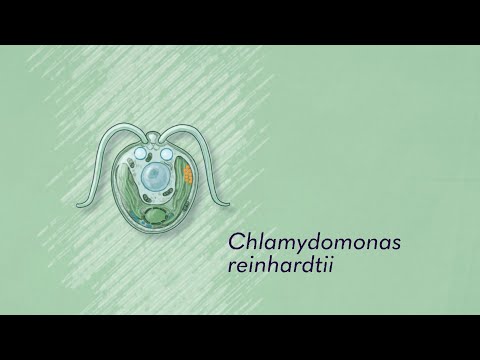
’Tis the season to be green 🌲 Our latest organism spotlight is Chlamydomonas reinhardtii — a tiny algae with a long history of punching above its weight in scientific discovery. Happy holidays! youtube.com/watch?v=cUscLH…
YouTube video
YouTube
English
1
3
10
7.8K
greg retweetledi
Brae M Bigge
Brae M Bigge@BiggeBrae·
🦠 @ArcadiaScience is hiring a cell biologist to join our team and phenotype diverse organisms! I’m at #CellBio2025 this week if you want to learn more, but if it sounds interesting apply!! If this isn’t a perfect match, check out our other roles. App👇 jobs.lever.co/arcadiascience…
English
0
7
11
2.2K
greg retweetledi
NASA Solar System
NASA Solar System@NASASolarSystem·
BREAKING: Sugars essential for life have been found in pristine asteroid Bennu samples collected by NASA’s OSIRIS-REx spacecraft. Combined with previous detections of amino acids and nucleobases, we see that life’s ingredients were widespread throughout the solar system: go.nasa.gov/48MTu9i More on the study led by Yoshihiro Furukawa of @TohokuUniPR⤵️
GIF
English
720
10.7K
50.8K
11.7M
greg retweetledi
Ryan York
Ryan York@ryanayork·
As always feedback is more than welcome. We want to chat about and explore this area with the community! [7/7]
English
0
1
3
172
greg retweetledi
Michael Eisen
Michael Eisen@mbeisen·
I share this enthusiasm for both model organisms and Drosophila, but the bigger tragedy of modern biology is our abandonment of the study of obscure biology just at the time when our ability to do so has become so powerful. Indeed many of the discoveries cited here came originally from experiments and observations in what we would call non-model organisms. Chromosome theory came from sea urchins and grasshoppers (and was validated in Drosophila), RNAi was first described in petunias and Neurospora before the mechanism began to be illuminated in nematodes, circadian clock genetics was worked out in flies, but a lot of important work was done in dinoflagellates.
Dr. Catharine Young@DrCatharineY

A few things that fruit fly research has allowed: Modern genetics itself - the entire idea that genes sit on chromosomes comes from fruit fly work. RNA interference- one of the most powerful tools in molecular biology Circadian rhythms - our entire understanding of the biological clock came from fruit fly research. Neurodegenerative disease models and cancer genes and pathways Without basic research - biotech would not exist at all.

English
10
34
214
29.5K
greg retweetledi
Sri Kosuri
Sri Kosuri@srikosuri·
Super thoughtful read. I've watched Seemay and Prachee build Arcadia next door to us over the years. What's been impressive to me is (1) how hard it is and (2) their willingness to confront what's working and what's not and make hard changes when required.
seemay chou@seemaychou

We’ve been heads down @ArcadiaScience for a bit but the @arenabioworks news this week caused me to dump thoughts. hard things are hard; don’t be such a fucking hater. Reflections on parallels w our own institutional experiment here open.substack.com/pub/seemay/p/b…

English
2
3
43
17.8K
greg retweetledi
Prachee Avasthi
Prachee Avasthi@PracheeAC·
🚨New job alert! We’re trying to put some tailwind behind developing out some of our new molecular, organismal, and high dimensional phenotyping capabilities @ArcadiaScience and are launching an effort to fuel the fire. But first I need a project director to oversee it. If you’re a PhD scientist with technical skills spanning these areas and also have project/people management experience, I’m looking for you! Apply now, or if you know someone else that would be a good fit, kindly pass along the job ad below! 👇
English
1
14
27
7.7K
greg retweetledi
HARY🔬
HARY🔬@Necomani·
今度こそ出会えたか!? 繊毛を束ねたぶっとい毛を足のように使って歩く驚愕の単細胞生物『ミズヒラタムシ』に! #PondLifeSeries -11
日本語
7
70
414
73.4K
greg retweetledi
Dwarkesh Patel
Dwarkesh Patel@dwarkesh_sp·
Notes from Chapter 1 of The Vital Question by future guest Nick Lane. In the intro he lists out the motivating questions: Why are bacteria so relatively simple despite being around for 4 billion years? Why is there so much shared structure between all eukaryotic cells despite the enormous morphological variety between animals, plants, fungi, and protists? Why did the endosymbiosis event that led to eukaryotes happen only once, and in the particular way that it did? And why is all life powered by proton gradients? Nick says all these questions are connected. Chapter 1: Lane says there’s 2 different philosophies on what bottlenecks evolutionary exploration: the niches made available by the environment, OR the internal structure necessary to exploit those niches. Textbook view is that the environment constrains exploration, whereas structure is flexible and can accommodate once the right environment is in place. Nick Lane thinks it’s the opposite. There’s been 2 big oxidation events - the first one (2.4 billion years ago) paved the way for eukaryotic cells. The second one (600 million years ago) led to the Cambrian explosion, resulting in all the variety in animals and plants and other complex life we see. So it seems the environment is central. Once you get a bunch of oxygen up in the air and into the oceans, you can start making all kinds of cool shit. But hold on. Here's what you'd expect to see if the environment was the key constraint: With this key unlock of aerobic respiration, different brands of bacteria independently evolve towards greater complexity to fill the new niches opened up (one masters osmotrophy and branches off into fungi, another photosynthesis, another phagocytosis, etc). However, you don’t see this. Instead you see that all complex life emerges from a single common eukaryotic ancestor (2.2 billion years ago). There is no independent convergent evolution towards this kind of complexity (bacteria have had 4 billion years to evolve this kind of complexity, and have stayed remarkably similar through the whole time). In fact, once you do get this key structural unlock, eukaryotic organisms proliferate widely, filling niches ranging from 100 feet long blue whales to 0.8 meter long picoplankton. What’s more: - The amount of shared structure between all eukaryotic cells is remarkable. They have almost all the same organelles and components. Nick writes: “Most of us couldn’t distinguish between a plant cell, a kidney cell and a protist from the local pond down the electron microscope.” - There’s no intermediate proto-eukaryotes, which have some, but not all, of the functionality available to eukaryotic cells. This is wild given how evolution works. We have an extensive record of the incremental upgrades between photoreceptive amoebas and mammalian eyes. Why don’t we have proto-eukaryotic cells which reproduce via meiosis but don’t have compartmentalized nucleuses, or have mitochondria but no cytoskeleton? Nick argues that the fact that no such subset of eukaryotic traits exists suggests that it is not structurally possible to survive with only some fraction of eukaryotic equipment - you need the whole package all at once. Obviously this raised the question of how the whole package was evolved at once. Which I think he will address in future chapters. Some questions for Nick: - If his view is that structure was the main bottleneck, and we’ve had eukaryotes for 2.2 billion years, then why didn't we have all these animals and shit for 2 billion years? Why did they only arise 600 million years ago (aka the Cambrian explosion)? - Nick argues that eukaryotic cells are a much more significant unlock than multi-cellularity. Multi-cellularity evolved independently dozens of times, but we only have evidence of one event like the emergence of the first eukaryotic cell. If multi-cellularity evolved independently so many times (between fungi, slime molds, algae, etc etc), do we see interesting differences based on the situations in which they evolved? Do they regulate the differentiation of cells, the organization of the body differently, and communication between tissues differently? TODO look it up later. A tangential thought. This whole debate about whether structure or environment matters more seems analogous to the discussion in ML of whether architecture or data matters more. And there it seems like data is quite crucial, but for meta-learning and generality to kick off, the architecture has to make it possible for information to flow in the right way. For example, in context learning is a kind of meta-learning that arises only once the model has the capability to attend to hundreds of previous tokens, which became tractable with transformers.
Dwarkesh Patel tweet media
Dwarkesh Patel@dwarkesh_sp

Would be fun to do a reading club for books/papers I'm going through to prep for interviews (or just interested in reading regardless). Best way to organize? Twitter Live? Discord/Slack? Or just tweet thoughts and have people discuss in comments? Something else?

English
41
70
942
200.5K
greg retweetledi
Prachee Avasthi
Prachee Avasthi@PracheeAC·
Right now is the best chance the scientific community has ever had to end the artificial scarcity of academic journals. Check out my new op-ed urging @NIH @NIHDirector_Jay to disallow taxpayer dollars towards journal publication fees — something both publishers and scientists have played a role in perpetuating. The last day for public comment on this topic is Monday, Sept 15. It’s time to unleash science. Links in 🧵
English
14
58
202
51.7K
greg retweetledi
seemay chou
seemay chou@seemaychou·
Are you an ML researcher/engineer hoping to learn frontier biology? We’re looking for folks @ArcadiaScience to help build quantitative bio models w us. Our quest: find the MVP bio data required if it’s structured by evolution. Come for a stint to dig in! jobs.lever.co/arcadiascience…
English
3
15
89
12.1K
greg retweetledi
seemay chou
seemay chou@seemaychou·
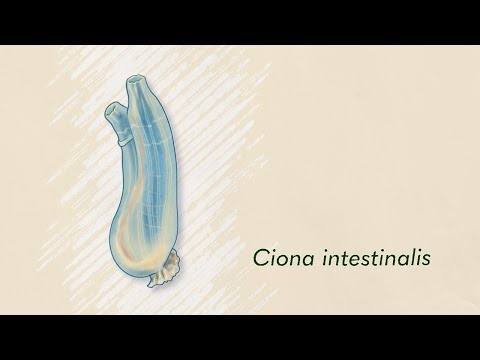
Most importantly, first in our new series of organismal spotlight shorts (open source illustrations coming soon!). Sea squirts! youtube.com/watch?v=-E9Te1…
YouTube video
YouTube
English
2
12
71
9.3K