Building Culture

2.7K posts

Building Culture banner
Building Culture

Building Culture

@Build_Culture

Brick masonry & mass-wall experts. Crafting iconic masonry structures that last centuries. Award-winning designers; community creators; health & eco conscious.

Oklahoma City, OK, USA Entrou em Nisan 2016
425 Seguindo28.1K Seguidores
Tweet fixado
Building Culture
Building Culture@Build_Culture·
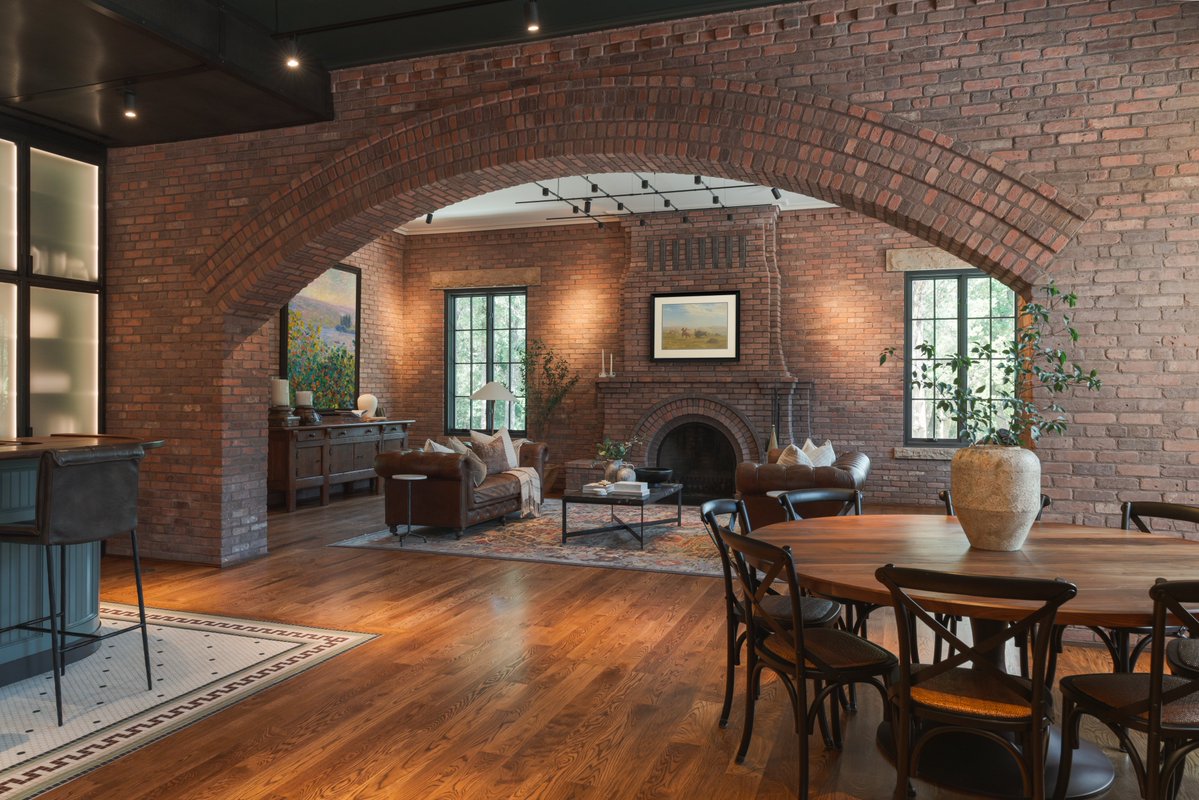
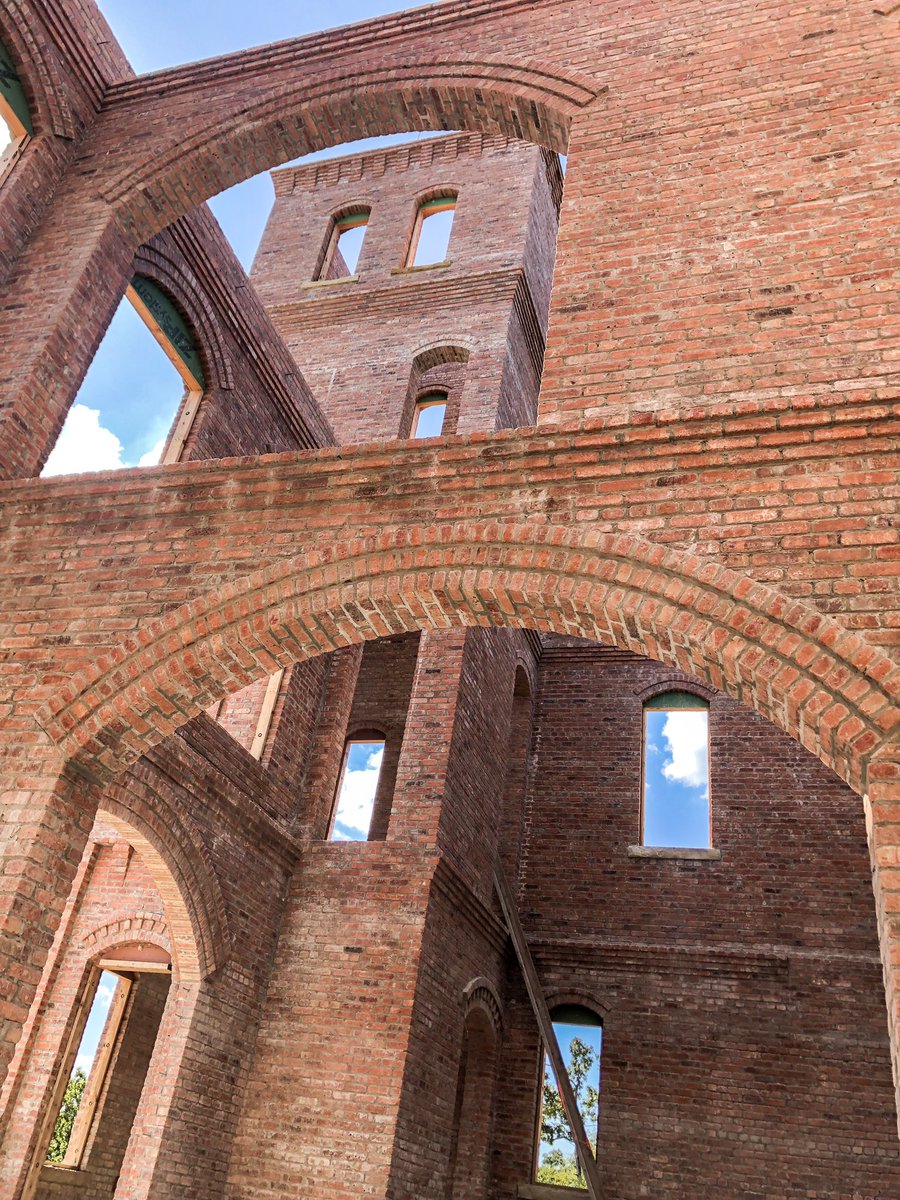
One of our favorite photos of all time from a project. We completed in 2020. There is 60’ tower overlooking a lake. But standing inside pre-framing, getting to take in all 160,000 brick at once, is frankly amazing.
Building Culture tweet media
English
21
96
1.3K
86.9K
Building Culture retweetou
Austin Tunnell
Austin Tunnell@AustinTunnell·
I’m not out on the jobsite a whole lot anymore—but whenever it comes to the brickwork, that’s where I’m still heavily involved. On Townsend, we are doing a chamfered corner (45 degree angle), and most masons today will either cut the angle into the face of the brick, exposing a cut edge which looks really different than a finished edge, OR will just butt the brick together, not lapping it, and leave a continuous joint that will start to pull apart—which also looks bad (and lets water in). We always want to lap our brick for proper “bonding”. It’s way better functionally, and also looks much better. That’s what we are doing here, laying out all of our brickwork, particularly how we are handling these chamfers, and making sure we aren’t going to end up with any tiny brick “slivers”. A little attention to detail goes a long way here. People often ask why our buildings look so different, or comment that our buildings look “old” (in a good way). This is one of the reasons: we are practicing good masonry techniques, and while most people don’t actually know what details to look for when looking at a brick building, they sense it. There are a number of other reasons modern brick buildings typically look crappy compared to older brick buildings, and this is one of them!
English
22
6
238
32.3K
Building Culture retweetou
Austin Tunnell
Austin Tunnell@AustinTunnell·
An awesome podcast with @jansramek, Founder and CEO of California Forever. They're building the next great American city. It's an incredibly ambitious and exciting project. It may be in California, but I think it's relevant to the entire country. It can prove that we can build walkable neighborhoods and cities, at scale, in the 21st century. Full episode on Apple, Spotify and Youtube, The Building Culture Podcast. Here is a short trailer. It's time to build! 🇺🇸🇺🇸🇺🇸
English
6
9
55
7.6K
Austin Tunnell
Austin Tunnell@AustinTunnell·
For a quick project overview now that we’ve broken ground: Townsend is a ~1-acre mixed-use infill project in a growing, walkable district in the Oklahoma City metro (downtown Edmond). It includes 2 live-works + 18 townhomes for sale, plus ~13,000 SF of mixed-use commercial that we’re holding long-term with investors and operating as a professional workspace: apolloworkspace.com We call this “inner-block development.” We aren’t just lining buildings along a street – we’re shaping a sequence of inner-block spaces. When you’re standing inside the project, you're in your own little world. This is where the magic happens. And it’s why we love ~3/4-acre+ sites: you can create a real, coherent “place”. A pocket neighborhood with its own identity. Do this within an already growing, walkable district, a place within a place, and that’s our thesis at Building Culture. Walkable places are the most valuable real estate over the long term. In walkable places, demand often increases with supply. The more people move there, the more businesses and services the area can support – and the better it gets. We want to leverage this by focusing our efforts on several walkable districts across the OKC metro, building the undersupplied “missing ingredients” of great walkable places. We’ve broken Townsend into three phases to manage risk and use equity efficiently. We just broke ground on the Phase 1 commercial: demo ➡️ grading ➡️ utilities ➡️ foundation…then the structural masonry starts this spring. That’s when things start getting reeeally cool. Building Culture is the architect, GC, and lead developer on the project. We have 30 individual investors who’ve joined us to help make this happen, and we’re immensely grateful. More to come as we build.
Austin Tunnell tweet media
English
80
122
1.8K
148.2K
Building Culture retweetou
Austin Tunnell
Austin Tunnell@AustinTunnell·
We completed the equity raise and closed the construction loan yesterday evening. We’re wasting no time: we’re breaking ground today. It’s time to BUILD! Stay tuned.
Austin Tunnell tweet media
English
125
77
3K
1.9M
Building Culture retweetou
Austin Tunnell
Austin Tunnell@AustinTunnell·
“Cities shouldn’t just be great for the ambitious and adventurous at 25. They should be places where those same people can build a life at 35, too.” This is so on point. Many Americans rightly think cities aren’t for families…but that’s because we stopped BUILDING them for families. And while I do appreciate much of the YIMBY message (net good), I also think we need to be critical about what KIND of housing we are building. Not all housing is good housing. A city of only multi-family apartment buildings (as they’re built today) isn’t a city. It’s a collection of human storage units. That’s not to say big apartments are bad. But that ONLY big apartments are bad (which is virtually all new housing construction outside of suburban homes). Cities need design, beauty and humanity etched into every nook and cranny we can. And part of that beauty and humanity is incorporating children and families. Anecdotal, but something I’ve noticed holds generally true: If you make a place cool for kids and their parents (where both enjoy being there) it suddenly becomes a place for everyone—even the teens, singles and empty-nesters. I think there is something about having children around that can be life-giving and wholesome and bring out the best in people. To conclude: 1) Hardware dictates what kind of software can run, and we’ve built hardware that’s incompatible for families in our cities. 2) The built world is the human habitat. We shouldn’t treat it so flippantly as to simply say “anything that adds housing is good”. We actually do need GOOD housing. That doesn’t make it easy, and we shouldn’t be puritanical about it. There are real obstacles and limitations, and progress isn’t linear. But it SHOULD be the vision.
Bobby Fijan@bobbyfijan

Very pleased to have contributed to the first issue of this new venture with @voxdotcom & @Arnold_Ventures: How Cities became places for the wealthy and/or childless … but how we can change that, by building housing designed FOR young couples and families. My mission is to build housing for Families so people can have kids and stay in the City they love I believe a primary reason people delay having a baby isn’t (just) culture and it's certainly not preference: It’s that the “cost” of doing so is moving out of your neighborhood, or out of the City entirely. Cities make it easy to be a young professional and extremely difficult to imagine being a parent. And that matters far beyond individual families. Seeing kids in a city signals something powerful to everyone else: "You can have kids here. It actually works." That visibility lowers the psychological barrier to family formation. The same way seeing dogs tells you a neighborhood is pet-friendly. Kids also support the essential civic institutions cities need to thrive, especially public schools. But developers today are mostly great at building two things: apartment buildings and mass planned single-family communities. They are not good at building the “missing middle” housing, the formats that actually fit the life stage when people are deciding whether they can stay in their neighborhood and start a family. That’s the gap I want to fill. I’m designing and building homes specifically for couples who love their neighborhood and want to feel comfortable enough to stop trying not to have kids: Small 3BR/2BA rowhouses, 2BR/1BA apartments. Baby Maybe housing: Homes with just enough space, one extra room, and the confidence that you could have a baby without being forced to leave everything you’ve built your life around. And after that first baby becomes a toddler, the decision for a family to stay will depend on schools, parks, transit, childcare, and safety. But in that crucial first stage, when babies are small and when a couple is asking whether parenthood fits into city life, having the right kind of home can be literally life-changing. Cities shouldn’t just be great for the ambitious and adventurous at 25. They should be places where those same people can build a life at 35, too.


English
7
25
314
53.2K
Building Culture retweetou
Austin Tunnell
Austin Tunnell@AustinTunnell·
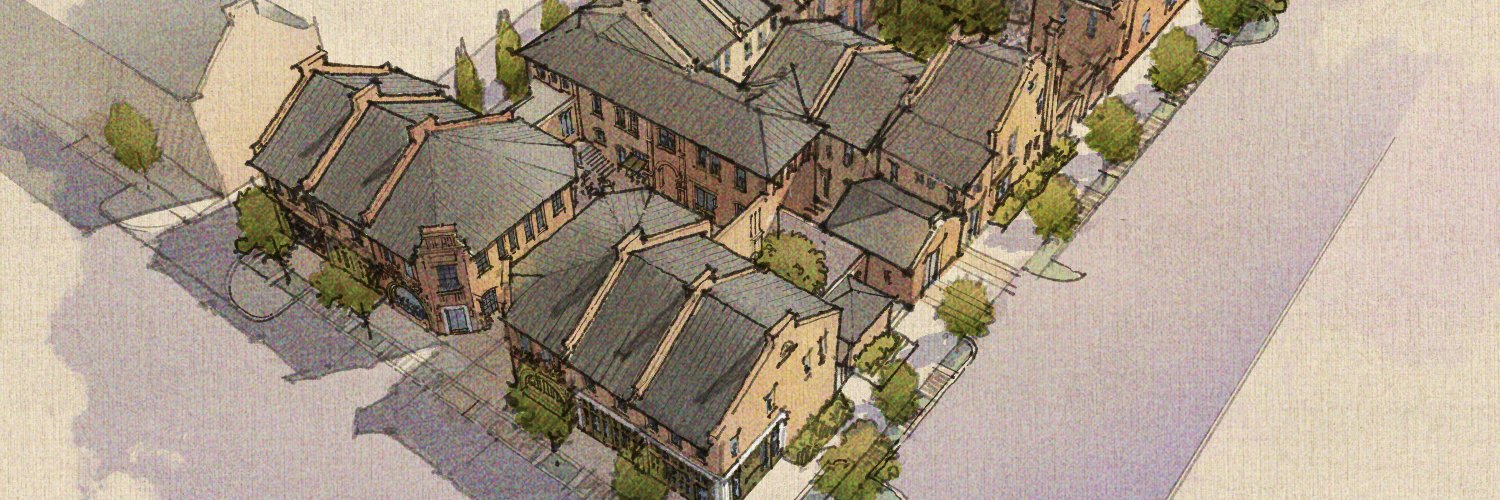
Have been itching to reveal this: rendering of our residential courtyard for Townsend, our infill mixed-use project getting ready to break ground. 12 townhomes surrounding a few connected courtyards with layered gardens and brick pavers. So. Dang. Beautiful. This is actually a highly accurate rendering of what we are doing architecturally—we use our real designs and detailing from sketchup as the backdrop, and collaborate with an amazing illustrator (JJ Zanetta) to bring it to life. We have a ton of fun working together. He actually knows how to capture the FEEL of it. Even the varying pavement, etc, is all from the plan; that’s not just superficial detail in a rendering. We’ve designed the outdoor space with as much thought as each floor plan and facade. And we are also leaving some space for design to evolve as the project unfolds. We are imagining more free standing planters and pots that enclose each home’s front “patio” for a semiprivate space that’s also lush and can be tended, but didn’t make sense in rendering. We opted for a central garden rather than some fire pit, table, outdoor kitchen or “amenity” in the center of the courtyard; we have more public space nearby with our commercial courtyards, AND it’s already walkable to 30+ F&B options if you want a “gathering space”. It’s tempting to create “usable” amenities, and sometimes you should, but here, the central courtyard is a beautiful space to enter and exit your home, to look out your window and glimpse, a place to sit outside, and if you WANT to engage with someone across the way you can, but there is also a barrier in between and it makes it optional. It’s balancing privacy + option for interaction—in a stunningly beautiful and peaceful setting. I cannot wait to build this with our team. It’s been a tremendous amount of work over nearly 2.5 years to be on the edge of breaking ground. But it’s going to be so much fun. And it’s also going to blow people away. I promise you: this will be some of the best walkable infill in the country.
Austin Tunnell tweet media
English
95
92
2K
128.6K
Building Culture retweetou
Austin Tunnell
Austin Tunnell@AustinTunnell·
The built environment = the human habitat. Every policy, incentive, and regulation that influences the built environment should start and end with this understanding. Humans, like any living creature, have ideal conditions we flourish under and adverse conditions that degrade our species, individually and collectively. The goal needs to be a human habitat that maximizes human flourishing. Everything else, and I mean everything, should flow downstream of that ultimate “why”. Yet, when is the last time you heard a city councilor, fire marshall, traffic engineer, planning department, public works dept, professional board or regulator verbalize this? This is a problem. If you can’t define what success looks like…
English
6
13
63
9K
Building Culture
Building Culture@Build_Culture·
Stitched together some footage for a new website we are working on with footage of old projects. Fun to look back! Just can’t beat brick masonry construction.
English
12
72
696
104.9K
Building Culture
Building Culture@Build_Culture·
“Why don’t you just build affordable housing?” It sounds simple – until you run the numbers. Without heavy subsidies, the math doesn’t pencil. Regulations pile on, labor costs skyrocket, and the frustration grows, not because developers don’t want to build affordably, but because the system makes it nearly impossible. If we’re serious about solving housing, we need to get honest about the cost drivers and rethink how homes get built in the first place. Episode 45 of The Building Culture Podcast is out now. Tune in and join the conversation. @AGampel1 @buildwithcuby
English
1
0
20
4.3K
Building Culture
Building Culture@Build_Culture·
A solid brick home with clean lines and lasting strength.
Building Culture tweet media
English
16
20
635
21K
Building Culture
Building Culture@Build_Culture·
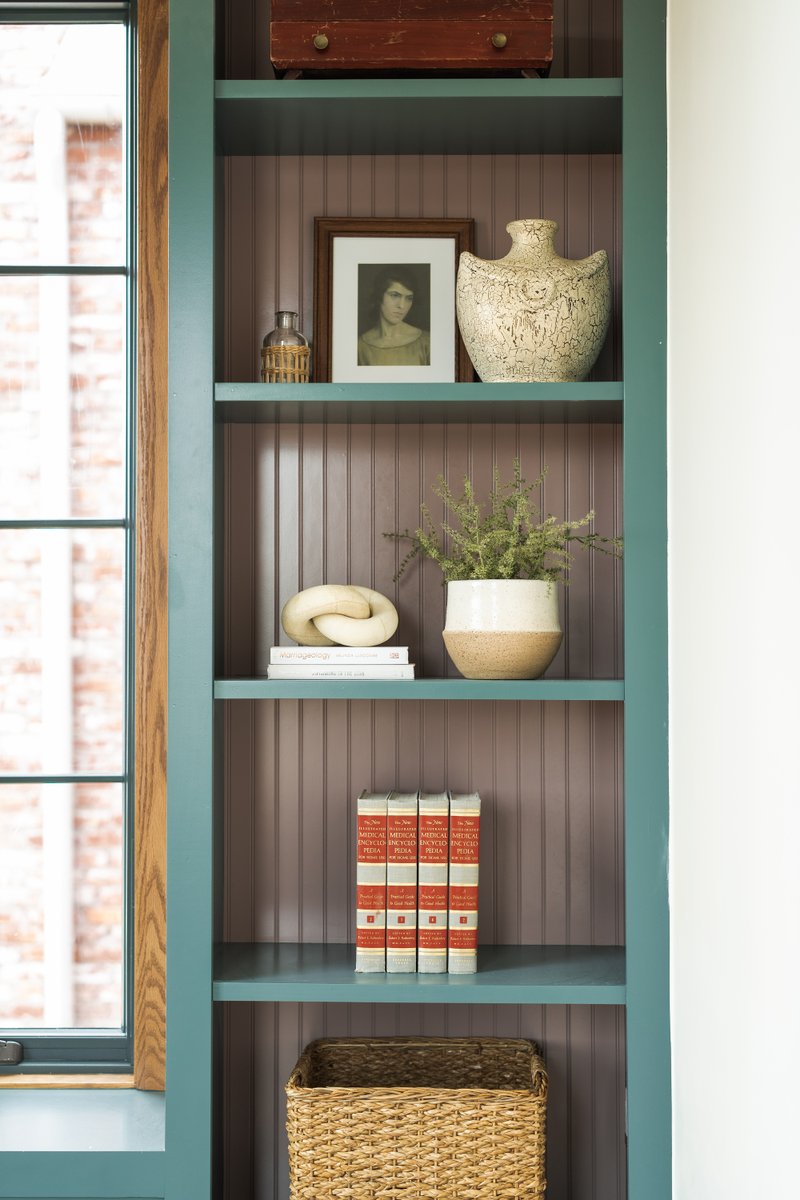
A place for books, photos, and everything that feels like home.
Building Culture tweet media
English
0
2
20
5.6K
Building Culture
Building Culture@Build_Culture·
Most people think the future of construction is prefab or 3D printing. But what if it's something different? Aleksandr Gampel and Cuby Technologies are reimagining how we build homes with Mobile Micro-Factories. They're obsessed with process and making industry-shifting impact through thousands of micro optimizations. They're the Toyota of construction. Aleksandr is co-founder and COO of Cuby Technologies. We talk housing affordability, innovation at scale, and why rethinking how we build might be the key to solving one of today’s biggest crises. Episode 45 of The Building Culture Podcast is out now – tune in and tell us what you think. @AGampel1 @buildwithcuby
Building Culture tweet mediaBuilding Culture tweet mediaBuilding Culture tweet media
English
1
1
15
8.8K
Building Culture retweetou
Austin Tunnell
Austin Tunnell@AustinTunnell·
Just look at this arch... Our largest to date at 18' wide (2nd one). Substantial buttressing at ends to counteract thrust. Notice how we play with the direction and depth of the brick in the arch to create detail and shadow. Stupid simple, but adds so much richness.
Austin Tunnell tweet media
English
131
103
3.4K
216.9K
Building Culture
Building Culture@Build_Culture·
What happens when you cross a general contractor with 22 subcontractors and then park a factory next door? That’s the analogy behind Cuby Technologies – a mobile microfactory designed to tackle the biggest cost driver in homebuilding: skilled labor. By reducing the labor burden, they’re rethinking how we deliver housing at scale. It’s not theory. It’s deployment. Episode 45 of The Building Culture Podcast is out tomorrow, tune in wherever you get your podcasts. @AGampel1 @buildwithcuby
English
0
2
10
3K
Building Culture retweetou
Austin Tunnell
Austin Tunnell@AustinTunnell·
Help us build the world we all want to see – one beautiful, walkable block at a time. We’re closing the final $1M for Townsend. DM me for the deck; introductions welcome. Let’s set a higher bar for American neighborhoods!
Austin Tunnell tweet media
English
7
31
557
33.1K