Ed Sander | China Digital Retail Report

26.5K posts

Ed Sander | China Digital Retail Report banner
Ed Sander | China Digital Retail Report

Ed Sander | China Digital Retail Report

@EdSander

China Digital Retail Analyst @ https://t.co/D081LPfNQa, Public Speaker @ https://t.co/SROoyEP5la , Study Tour Leader @ https://t.co/049MdPDaww

The Netherlands Entrou em Mart 2010
67 Seguindo3.8K Seguidores
Ed Sander | China Digital Retail Report
TL;DR: JOYBUY It's been a busy week, publishing two articles on the launch of JD's Joybuy and doing numerous interviews with the international press about the platform. If your week was just as busy, you might not have had time to read the articles on China Digital Retail Report. But you can watch the Notebook-generated summary video of the first article below. Full article: chinadigitalretailreport.substack.com/p/why-jdcom-ne… . The video of part 2 will follow later.
English
0
1
4
366
Ed Sander | China Digital Retail Report
I don't remember them doing so. It was mostly selling food, including many Asian packaged goods and smaller appliances like phones and smart watches. Ochama wasn't successful, and it became more of an Asian diaspora store as a result. Joybuy (and the Ceconomy acquisition) is much more linked to JD's goal to bring 1,000 Chinese brands to the global market. chinadigitalretailreport.substack.com/p/why-jdcom-ne…
English
1
1
2
64
🇺🇸eyxjsbxk
🇺🇸eyxjsbxk@ecavbfnacm·
@EdSander @Chaleck Thanks! Did Ochama also sell major appliances like dishwashers and laundry machines? What was the price then? How did that impact local brands?
English
1
0
1
31
🇺🇸eyxjsbxk
🇺🇸eyxjsbxk@ecavbfnacm·
Look at Joybuy (Jingdong in 🇪🇺), not Temu scraps anymore, big name 🇨🇳 brands major appliances, £200 dishwashers and laundry machines installation&removal included, how could Bosch or Siemens last over 2026??? Did Starmer/ Merz go to China to beg for it??? @Chaleck reuters.com/business/retai…
🇺🇸eyxjsbxk tweet media🇺🇸eyxjsbxk tweet media🇺🇸eyxjsbxk tweet media
English
1
1
1
171
Ippokratis Boboras
Ippokratis Boboras@IppokratisBob·
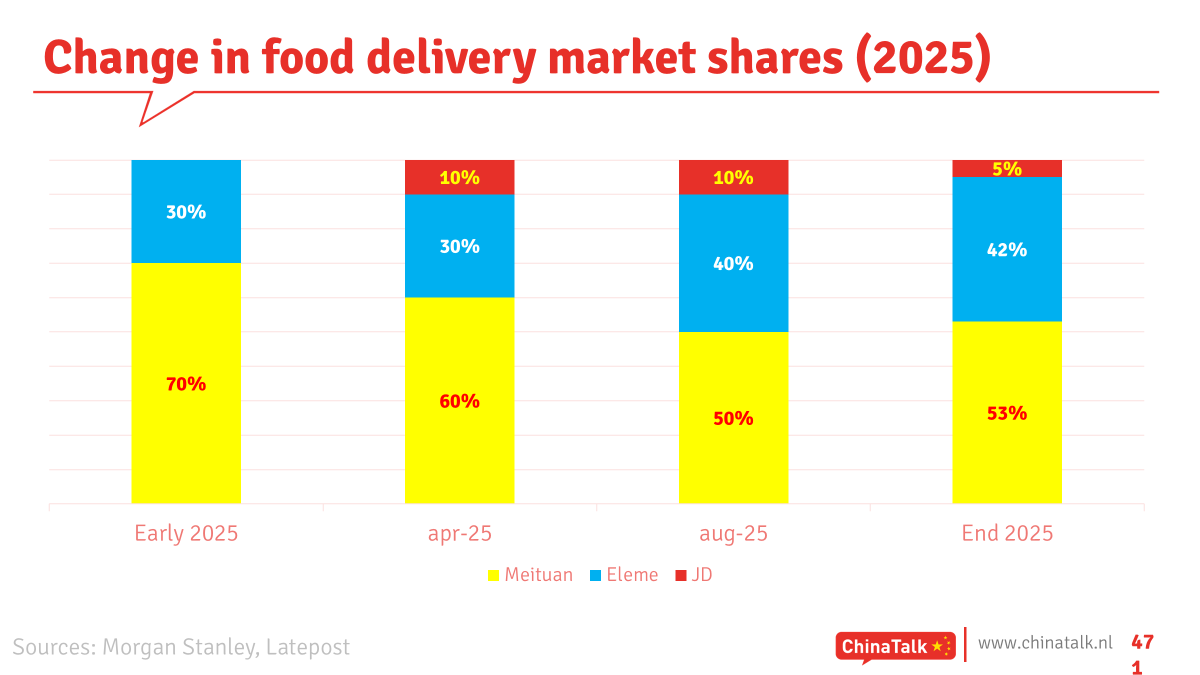
I think Eleme had less than 30% in the recent years. I read that at the moment as a number of transactions (or users) in total it's 45% - 45% and 10% to JD. Meituan in GMV market share is still the leader as you mentioned. In previous calls they said that with that 20-25% share they used to have, they couldnt scale and be actually profitable. So that extra 20% worths actually a lot more than in absolute terms because at this level they can have economies of scale work for them. They invested CNY50B for that. They also said they still keep market share if not gaining more. And they also said that they keep improving the unit numbers. No matter the exact numbers, they said they expect extra 1T GMV annually in 3 years from quick commerce. What's the EBITDA margins at scale as a % of GMV. I guess around 5%? That's 50B annually for a 50B investment. Even if it happens in 5 years, it's a good investment, without including any cross-selli ng synergies. On the ecommerce side, I think the most important thing is for China to finally increase their consumption as a % of GDP, they are stuck for the last 4-5 years on a zero inflation environment with low consumption. Their last 5-year plan had consumption and capital markets as important goals through 2030. Both are super crucial for their economy to go to the next level. Once this gets started, their ecommerce biz will thrive for years to come. On the AI segment, the upside is unknown, there are many assymetrical bets like the chip business, qwen app, etc.
English
2
0
1
27
Ed Sander | China Digital Retail Report
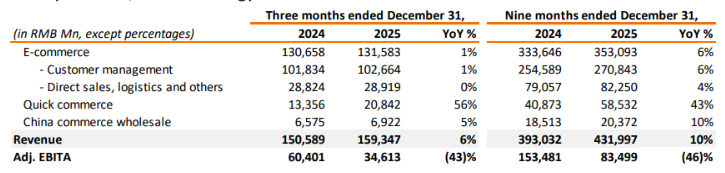
The impact of the food delivery/instant retail war on Alibaba's e-Commerce Group results in Alibaba's first three fiscal quarters. Revenue increased 10%, partially driven by 43% growth in quick commerce, but this isn't that much in absolute terms and was gained at enormous subsidy costs. Profitability almost halved in the first three fiscal quarters. One reason for the quick-commerce investments is the synergy with traditional e-commerce. Growth was 6% there; only slightly better than the 2025 market growth for physical product e-commerce (5.2%). I wonder if it was worth the investment.
Ed Sander | China Digital Retail Report tweet media
English
4
1
16
1.2K
Ed Sander | China Digital Retail Report
They did not gain 45% market share; they already had 30% with Eleme. Also that's based on GTV and food delivery not instant retail of physical goods. And it was captured by heavy subsidising milk tea and such. Meituan maintained 70% market share in the RMB 30+ segment and it remains to be seen if Taobao can retain the extra 15% when discounts stop. As far as I'm concerned, the jury is still out.
English
1
0
0
45
Ippokratis Boboras
Ippokratis Boboras@IppokratisBob·
@EdSander They gained 45% market share in instant commerce and they guide for incremental 1T GMV in that sector in 3 years. With scale kind of margins, I think it is worth it.
English
1
0
0
44
A.J. Button
A.J. Button@AJButton2·
@EdSander They said before launching this investment cycle that the AI part of the spending would continue for three years
English
1
0
2
275
Ed Sander | China Digital Retail Report
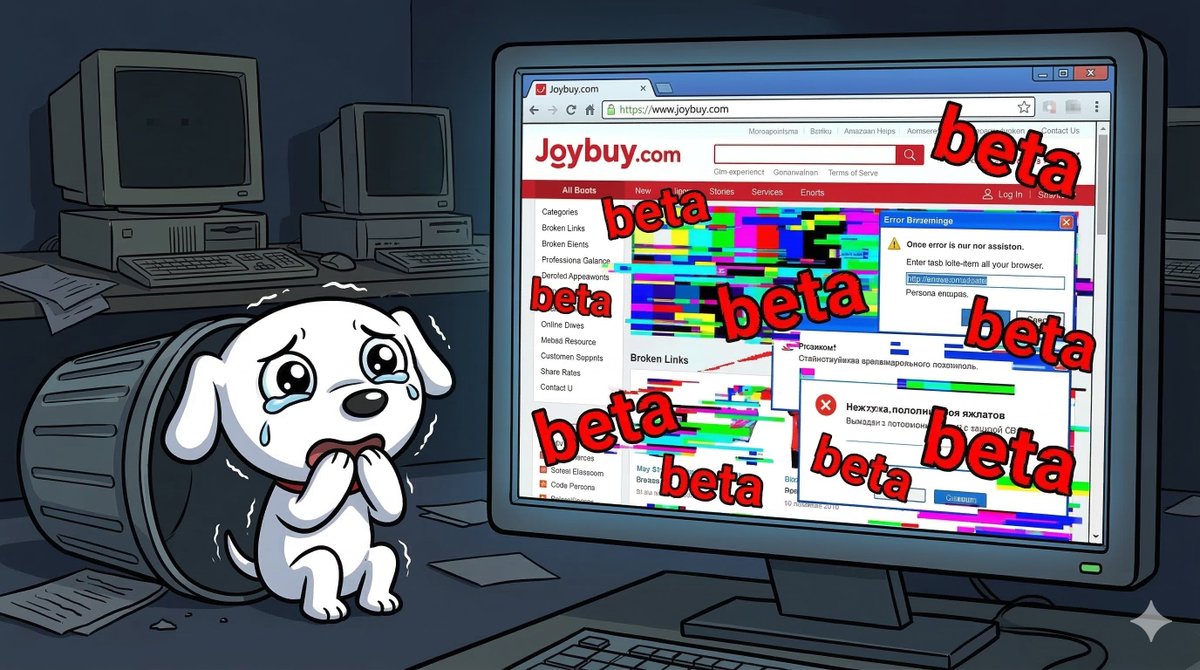
I gave Joybuy the benefit of the doubt after its official launch. I was wrong. Yesterday I published part 2 of my evaluation of Joybuy, JD's 'new' platform in Europe. Although I didn't pull any punches when criticising their Beta phase, I ended the article on a slightly more positive note. Maybe there was hope that the shortcomings on the Joybuy website would disappear, and we would see a decent platform after the official launch last Monday. After all, some of the staff members had assured me that there was already a lot of improvement when I spoke to them last week. Today, I used the app for the first time after the official launch. After surfing through the app for 15 minutes or so, I'd had enough. I have to say, it's still something JD should be deeply ashamed of. I don't think I have seen ANY screen that didn't have extremely off-putting machine translations, words wrapping at random places, confusing explanations, missing punctuation, Dutch reviews containing words that don't even exist in the language, very limited selections in certain categories, category filters that show irrelevant products... The thing that baffles me most is that JD had 4 years to get things right: 3.5 years with Ochama and another half-year with the migrated Joybuy site in beta. I plan to write another article about the state of affairs in a few weeks, but for now, I can say there has been insufficient improvement compared to the situation I described in part 2. JD can boast all it wants about how amazing its logistics service is, but as long as it can't fix the consumer-facing front end, it has no place in the European e-commerce landscape. In part 2, you can see many examples of flaws in the Dutch website and a compilation of horrendously bad adverts. Link in comments. chinadigitalretailreport.substack.com/p/why-jd-needs…
Ed Sander | China Digital Retail Report tweet media
English
0
1
5
411
Ed Sander | China Digital Retail Report
Why JD needs to do a better job with Joybuy - Part 2: Joybuy 'Beta' About one year ago, JD launched a new iteration of its Joybuy web shop in the UK. A few months later, Ochama was rebranded to Joybuy in the Netherlands, Germany, Belgium, France and Luxembourg. Ochama users had to download a new app and create a new account. Ochama had been plagued by flaws in strategy and marketing communication. Would Joybuy do better? In this second article, I evaluate Joybuy’s first year, from the day the website went live in the UK to the formal launch on March 16th. chinadigitalretailreport.substack.com/p/why-jd-needs…
Ed Sander | China Digital Retail Report tweet media
English
0
0
3
378
Ed Sander | China Digital Retail Report
A RANT ABOUT JD’S JOYBUY That's me back in April 2022, presenting at the Industributiedinner of Distrifood. I was invited to share my thoughts on Chinese e-commerce players, specifically the new entrant Ochama, an initiative by the Chinese giant JD. I didn't pull any punches and made it clear that, based on what I had seen in the previous 3 months, Ochama would be a failure. Some people in the audience said I was too harsh. Distrifood had been the only media outlet to be critical. The reason? Like me, they had tried it out themselves. Three years later, Ochama had become a niche player, used mostly by the Asian diaspora because it sold Asian food products. Some Dutch people I knew also used it, mainly to buy large quantities of instant noodles that were not available elsewhere. I have described the many things Ochama did wrong in an article I published on China Digital Retail Report yesterday (chinadigitalretailreport.substack.com/p/why-jdcom-ne…). A year ago, JD launched a new iteration of their Joybuy website, and in August, Ochama rebranded to Joybuy in NL, BE, FR, LUX and DE. In a second article I will publish soon, I will show how Joybuy repeated many of the same mistakes that Ochama made. In the countries where it replaced Ochama, I consider this unacceptable and disrespectful to the niche group of customers it had been serving. Yesterday, after being in 'beta' for a year in the UK and over half a year in the other countries, Joybuy officially launched. And I see the same thing happening as in early 2022. The media are copy-pasting Joybuy's press release, and I see few mentions of Ochama or the 'beta sites' and little critical thinking. The only exception is a handful of e-commerce magazines questioning the feasibility of some of Joybuy's claims. While Joybuy has polished up some of the biggest errors (and, as I suggested, removed some disastrous YouTube videos that I will analyse in the second article), the whole thing feels the same as Ochama's launch. JD might be throwing more resources at it this time, but localisation of communication is still flawed, even after the 'beta' phase was closed. And significant grocery categories, such as fresh dairy products, are missing. Joybuy claims to be a one-stop-shop player, but nobody is going to buy half of their groceries with Joybuy and half with Albert Heijn, Picnic or Jumbo. And same-day delivery USP is unavailable to most consumers. It might seem that I'm on a crusade against Joybuy, but I'm not. I would much rather see JD succeed than some other Chinese players that I write about. In China, JD is a much more trustworthy player. But that doesn't come across on Ochama and Joybuy. So, if I'm on a crusade, it is against mediocrity, failing to deliver on what you promise, disrespecting consumers by not localising enough, and the media just eating up everything they receive in press releases. And I sincerely hope that Joybuy has proven me wrong in a year or so when I say that this will go the same way as Ochama.
Ed Sander | China Digital Retail Report tweet media
English
0
0
5
547
Vrouwen
Vrouwen@VrouwenS·
In Nederland en vijf andere Europese landen kun je vanaf vandaag terecht bij onlinewinkel Joybuy.nl Het bedrijf wil bestellingen die voor 11.00 uur geplaatst zijn dezelfde dag bezorgen. Dat lukt voorlopig slechts in delen van het land.
Vrouwen tweet media
Nederlands
1
0
0
94
Ed Sander | China Digital Retail Report
How do Temu's operational models differ around the world? Temu has several operational models, the most important ones being: ▶️ Fully managed: merchants ship their goods to a Temu warehouse, and Temu takes care of logistics, pricing and marketing. Temu typically launches this model in new markets and initially ships orders directly to consumers from warehouses in China by aeroplane. However, when countries respond with import taxes or cancellation of de minimis rules, Temu deploys local 'forward warehouses' and stores the goods in these countries/regions. This lowers import taxes, speeds up delivery and allows for more bulky goods. ▶️ Semi-managed model: the merchant is asked to send the goods to local warehouses and is also responsible for last-mile delivery. Temu still sets prices and handles marketing. Warehouses and delivery companies need to be certified by Temu. The advantages are the same as with forward warehouses, but Temu no longer bears the logistics costs. This model is mainly used by merchants who already sell on Amazon or on independent brand websites. The local-to-local model is a variant for local brands. The semi-managed Y2 model is a variant in which merchants are allowed to ship from Chinese warehouses after receiving the order. As shown in the chart below, the share per model varies by country. In the US, the semi-managed model has been the leading model since the cancellation of the de minimis tax exemption in May 2025. In Brazil, semi-managed is also high because of high import taxes on DTC packages. In other markets, the fully managed model is still leading, showing that these markets (still) have more lenient import tax regulations. Note, though, that significant portions of fully managed can already be stored in local forward warehouses. This chart also shows the potential impact of the EU cancelling its 150-euro import tax exemption. For more insights into Temu's development, check out my latest Temu Watch #12 report: techbuzzchina.substack.com/p/temu-watch-1… Next week, I will be publishing Temu Watch #13, which explains what we should expect from Temu in 2026. To receive this, subscribe to China Digital Retail Report: chinadigitalretailreport.substack.com/subscribe
Ed Sander | China Digital Retail Report tweet media
English
0
0
1
284
Ed Sander | China Digital Retail Report retweetou
Ed Sander | China Digital Retail Report
A FAREWELL PRESENT - FREE TO READ: TEMU WATCH #12: UPDATE ON MARKETS, ADVERTISING & LOGISTICS STRATEGIES In my latest Temu Watch report, I am sharing new insights into the global progress of Pinduoduo’s Temu. The report was compiled from over 15 interviews with Chinese experts close to Temu. I share updates on Temu’s business development across global regions, as well as the progress of different operational models, merchant margins, advertising spending in the last quarter, and adjustments to logistical processes. Because this is my last publication for Tech Buzz China, I am making the report, which is normally paywalled, available as a free gift to everyone who has supported me over my 3.5 years with Tech Buzz. The report also includes information on how you can continue to follow me and receive future Temu Watch editions. Meanwhile, we need to gain a true understanding of these platforms, and I hope my work for Tech Buzz China has helped. Do share it with others who need to stay informed about Temu (and other Chinese webshops). techbuzzchina.substack.com/p/temu-watch-1…
Ed Sander | China Digital Retail Report tweet media
English
0
1
3
414
Ed Sander | China Digital Retail Report
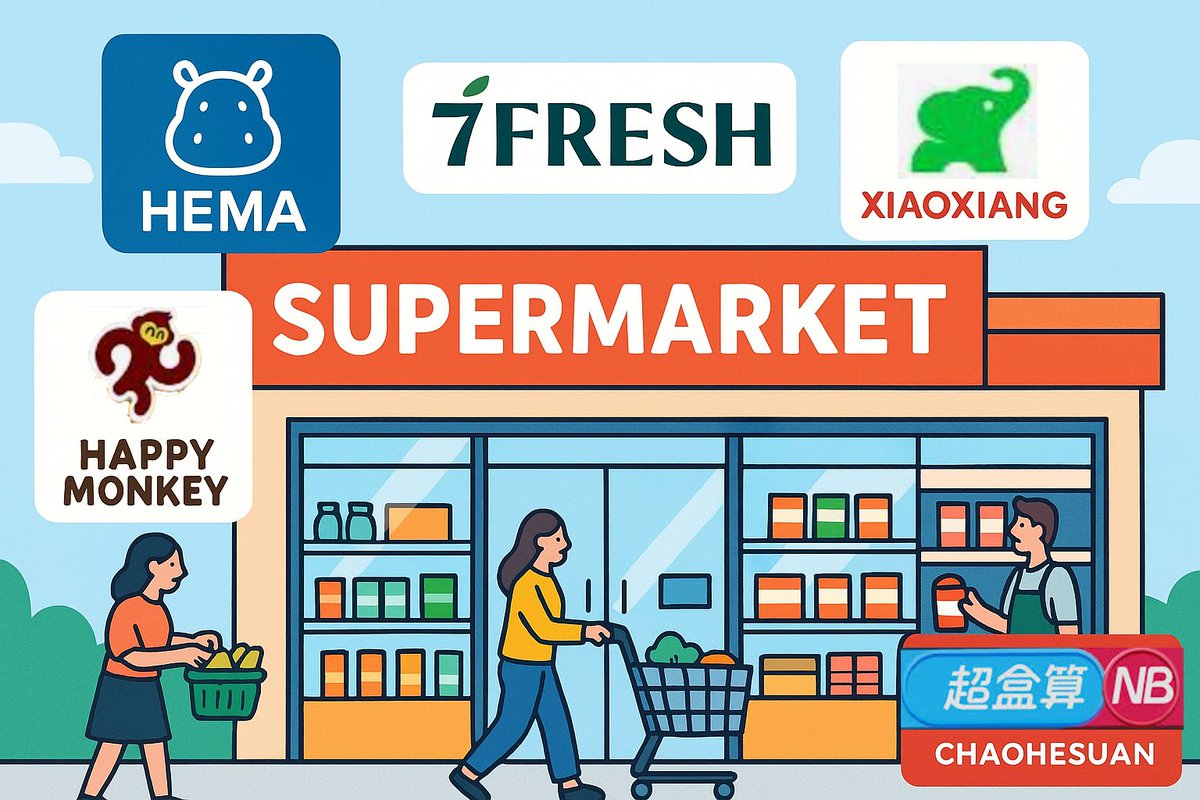
Why is offline becoming the battleground for Chinese internet giants? In recent years, the front-end warehouse (‘dark store’) sector has entered a stage of competition for existing customers. The pure online model faces many bottlenecks, such as high customer acquisition costs, a lack of consumer experience, and weak repeat purchase growth. As a result, offline physical stores have become a battleground for instant retail platforms. Find out more at China Digital Retail Report: @chinadigitalretailreport/note/c-227101994" target="_blank" rel="nofollow noopener">substack.com/@chinadigitalr
Ed Sander | China Digital Retail Report tweet media
English
0
0
3
257