Anjula Dwivedi

471 posts

Anjula Dwivedi banner
Anjula Dwivedi

Anjula Dwivedi

@HeyAnjula

Making AI feel unfair Open for collaboration

Entrou em Mayıs 2026
20 Seguindo420 Seguidores
Anjula Dwivedi
Anjula Dwivedi@HeyAnjula·
LeetCode was HARD until I Learned these 15 Patterns: 1. Prefix Sum 2. Two Pointers 3. Sliding Window 4. Fast & Slow Pointers 5. LinkedList In-place Reversal 6. Monotonic Stack 7. Top ‘K’ Elements 8. Overlapping Intervals 9. Modified Binary Search 10. Binary Tree Traversal 11. Depth-First Search (DFS) 12. Breadth-First Search (BFS) 13. Matrix Traversal 14. Backtracking 15. Dynamic Programming Patterns
Anjula Dwivedi tweet media
English
0
0
1
26
Anjula Dwivedi
Anjula Dwivedi@HeyAnjula·
Former Meta top-tier engineer: "I don't review the code anymore. I got to a point where I never catch anything the agents don't catch." He runs 20-30 agents at once and ships 20-40 PRs a day, work that used to take a full team a month. In 55 minutes he explains everything he knows and builds a fully working workflow from scratch. Watch it, then read the full guide on building loops below.
English
0
0
4
137
Anjula Dwivedi
Anjula Dwivedi@HeyAnjula·
Andrej Karpathy’s “LLM Wiki” vision just escaped the whiteboard and turned into a real desktop app. Meet Tolaria. A native knowledge workspace where humans + AI agents work together inside plain markdown files. No cloud lock-in. No weird proprietary format. No accounts. Just files you actually own. But the craziest part is how it was built: → 100,000+ lines of code → Tauri + React + Rust stack → 3,000+ tests with 85% coverage → 70+ architecture decision records → 9.9/10 code health score And every vault is a Git repo with built-in visual history. It even ships with an MCP server out of the box, so Claude Code can directly read + edit your knowledge base like it’s a second brain. This feels less like “note-taking software” and more like the blueprint for AI-native operating systems. Open source. Free forever. Insane work by Luca Rossi. Repo👇 github.com/refactoringhq/…
Anjula Dwivedi tweet media
English
0
4
18
390
Anjula Dwivedi
Anjula Dwivedi@HeyAnjula·
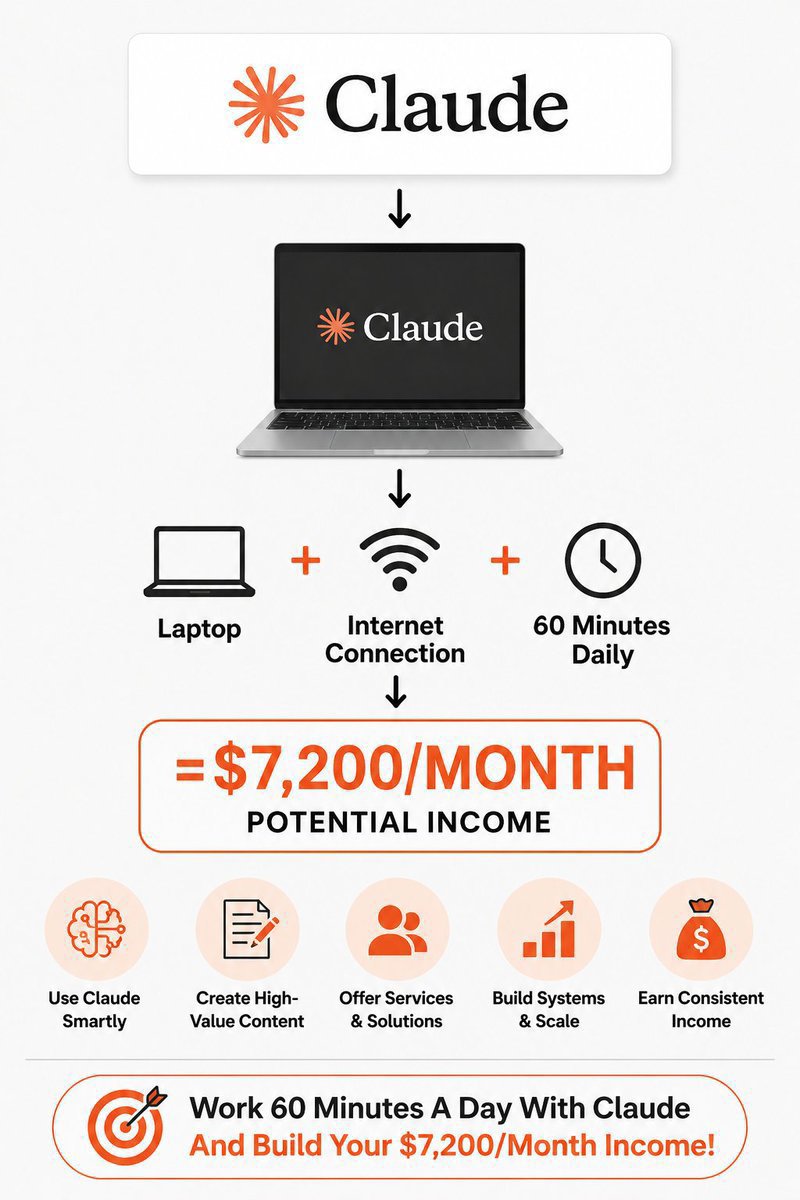
🚨 Claude just changed the game. All you need is: -A laptop -Internet connection -60 minutes a day That’s enough to build a $7,200/month online income stream using AI. No coding. No expensive setup. No years of experience. Inside you'll discover: ✅ The exact asset ✅ My full workflow ✅ The Claude prompts I personally use ✅ How to scale to $15K/month ✅ How beginners can start fast Most people still use AI for fun… But smart creators are quietly using Claude to: • Create digital products • Offer AI services • Write viral content • Automate work • Build online income streams Usually, I sell this detailed guide for $128… But today you can get it FREE. Want it? Like this post Comment “AI” Follow me to receive it in DM Available FREE for 48 hours only.
Anjula Dwivedi tweet media
English
2
11
32
331
Anjula Dwivedi
Anjula Dwivedi@HeyAnjula·
Prompt 9: The Full Winston Audit — Run The Whole System This is the master pass. Instead of one heuristic, you run your entire talk through every rule Winston taught at once, and get back a brutal, prioritized fix list. Use this last, after you've drafted — it's the difference between a talk that's 'fine' and one that commands the room. "You're going to audit my entire talk using Patrick Winston's complete 'How to Speak' system. Be a demanding coach — I want it better, not flattered. Here is my full talk (script, outline, or detailed notes): [PASTE EVERYTHING]. Audience and setting: [WHO + WHERE + HOW LONG]. Audit it against every heuristic and score each 1-5: 1. Opening — does it make an empowerment promise, or waste the first minute on a joke / throat-clearing? 2. Cycling — are critical ideas delivered ~3 times from different angles, so drifters still catch them? 3. Verbal punctuation — are there enough on-ramps and mini-summaries for people who zone out? 4. Fences — is my core idea clearly distinguished from similar ones and clearly MINE? 5. Questions / suspense — am I actively pulling the audience in, or just talking at them? 6. Inspiration — does the audience get to FEEL their own progress, and does my passion show? 7. Tools — is each part on the right medium (board/prop/slide), with no text-walls I'd read aloud? 8. The close — is the ending strong and memorable, or a limp 'thank you'? For EACH: give the score, the single highest-leverage fix, and a rewritten example showing the fix applied. Then end with the ONE change that would improve the whole talk most if I only had time for one. Rank everything by impact — I want to know what to fix first."
English
0
0
0
21
Anjula Dwivedi
Anjula Dwivedi@HeyAnjula·
Prompt 8: How To Stop — Never End On "Thank You" Winston's most quoted rule: do not end with 'thank you.' It's a weak, reflexive close that implies the most valuable thing you offered was the audience's own patience. The final words are prime real estate — use them to deliver one last hit of value, a memorable line, a call to your ideas, or a light human note (a small joke can send people out smiling and remembering you fondly). The last sentence is the one they carry into the hallway. Make it count. "Coach me using Patrick Winston's 'how to stop' principles from 'How to Speak.' Ending on 'thank you' is a wasted opportunity — it suggests the best thing I offered was their attention. The close is prime real estate: it should deliver a final piece of value, a memorable line, a call to my ideas, or a warm/light note that makes people leave smiling and remembering me. My talk's central message: [PASTE]. The feeling or action I want the audience to leave with: [DESIRED TAKEAWAY]. Do this: 1. Write me 4 strong closings, none relying on 'thank you,' each leaving the audience with something real: one that lands a final memorable line, one that issues a clear call to action or to my ideas, one that delivers a last useful insight, and one that ends on a light, human, slightly funny note. 2. For each, tell me what it makes the audience feel as they walk out. 3. Recommend the best fit for my message and audience, and explain why it'll outlast the others in memory. 4. Give me the precise final sentence — the literal last words I say — polished so it has rhythm and lands clean. 5. Warn me off any ending that fizzles, over-explains, or undercuts the talk. The last line should feel like a door closing with a satisfying click, not a trailing mumble."
English
1
0
0
21
Anjula Dwivedi
Anjula Dwivedi@HeyAnjula·
The single most-watched lecture in MIT's history isn't about AI, code, or physics. It's a 60-minute talk titled "How to Speak," delivered by Professor Patrick Winston — who ran it every January for 40 years until he passed away in 2019. Generations of MIT students were told: go watch this before you do anything else with your career. His opening claim was almost offensive in how blunt it was: "Your success in life will be determined largely by your ability to speak, your ability to write, and the quality of your ideas — in that order." Speaking. Above your ideas. From an MIT professor. So I did something with it. I broke his entire lecture down into a system and handed it to Claude. Now before any talk, pitch, interview, or presentation, Claude coaches me using Winston's exact heuristics — the same ones he spent four decades refining. Here are the 9 prompts. Each one is a rule he taught, weaponized
Anjula Dwivedi tweet mediaAnjula Dwivedi tweet media
English
1
4
21
476
Suryansh Tiwari
Suryansh Tiwari@Suryanshti777·
This is terrifying 🤯 Lovable, Replit, and Base44 aren't selling you apps. they're selling you a hostage situation. your backend lives on their cloud. your data plays by their rules. the day you outgrow them, you don't "export" — you rewrite everything from scratch. that's the business model. the lock-in IS the product. and the app they hand you? a gorgeous prototype that dies the second real traffic hits it. "production-ready" is the biggest lie in AI right now. @modelencecom just shipped mobile — one prompt, web AND native, shared backend, on an open-source framework. auth, database, cron jobs, monitoring wired in by default. you pull the code local, you own it, you deploy anywhere, you leave whenever. YC-backed. open-source. zero hostages. everyone else is renting you a demo. link's below 👇
English
15
21
68
2.2K
Anjula Dwivedi
Anjula Dwivedi@HeyAnjula·
What’s really changing here: TRAE isn’t just improving coding… It’s redefining how work gets done across roles not just developers. From a coding assistant → a full AI work agent.
English
0
0
0
20
Anjula Dwivedi
Anjula Dwivedi@HeyAnjula·
Then I switched to Code Mode. Prompted it: → Build a full AI startup website → Modern, responsive design (home, products, blog, contact) → Add CTAs, newsletter signup, social links → Include copy, headlines, and 3 blog posts It didn’t just suggest ideas it shipped real code. No manual coding. Just execution. ✅
English
1
0
0
35
Anjula Dwivedi
Anjula Dwivedi@HeyAnjula·
🚨 AI is moving beyond coding tools. Trae AI just launched SOLO, a standalone AI agent that not only writes code but also does - research - analysis - documentation - strategy, and execution That’s how AI goes from tools → full workflow agents:
English
5
14
37
1.1K