Rocket_Joe

1.6K posts

Rocket_Joe banner
Rocket_Joe

Rocket_Joe

@Joe6Rocket

Spaceflight and Sci-Fi fan. Future Aerospace or Space Systems career. Telling stories through KSP posts.

Entrou em Eylül 2022
1K Seguindo104 Seguidores
Rocket_Joe
Rocket_Joe@Joe6Rocket·
@HipernovaStar @wenchance The thing is that astrophage can be used as a ludicrously efficient heater. Even using conventional propellants, you could theoretically make an engine comparable to a nuclear gas core rocket without any radioactivity.
English
1
0
1
10
Hipernova
Hipernova@HipernovaStar·
@Joe6Rocket @wenchance Some considerations would have to be made with that, Astrophage is incredibly efficient because you're using what is essentially a photon drive. The problem is that it doesn't provide much thrust, only around 60 kilonewtons per spin drive.
English
1
0
0
11
Rocket_Joe
Rocket_Joe@Joe6Rocket·
@NoLifeJordan69 We should keep ML-2, upgrade ML-1, do EUS as well as a common bulkhead stage, and build LC-39C as God intended.
English
0
0
1
14
Rocket_Joe
Rocket_Joe@Joe6Rocket·
@SpaceArchivist_ I will be making something like this once I stop my KSP install from crashing.
English
1
0
1
48
Archivist
Archivist@SpaceArchivist_·
what if we saved money by shortening SLS, using 4-seg SRBs, and launching crew to the ISS with it
English
4
0
17
644
Rocket_Joe retweetou
Jackgonelol
Jackgonelol@jackywacky_3·
“Humanity’s next great voyage”
English
7
287
2K
31.2K
Rocket_Joe retweetou
NASA
NASA@NASA·
These two images were taken by @astro_reid only minutes apart. The stark difference is the result of camera settings. In the first, a longer shutter speed let in much more light from Earth, while the shorter shutter speed in the second emphasizes our planet's nighttime glow.
NASA tweet mediaNASA tweet media
English
574
7.2K
46.8K
2M
Rocket_Joe retweetou
NASA
NASA@NASA·
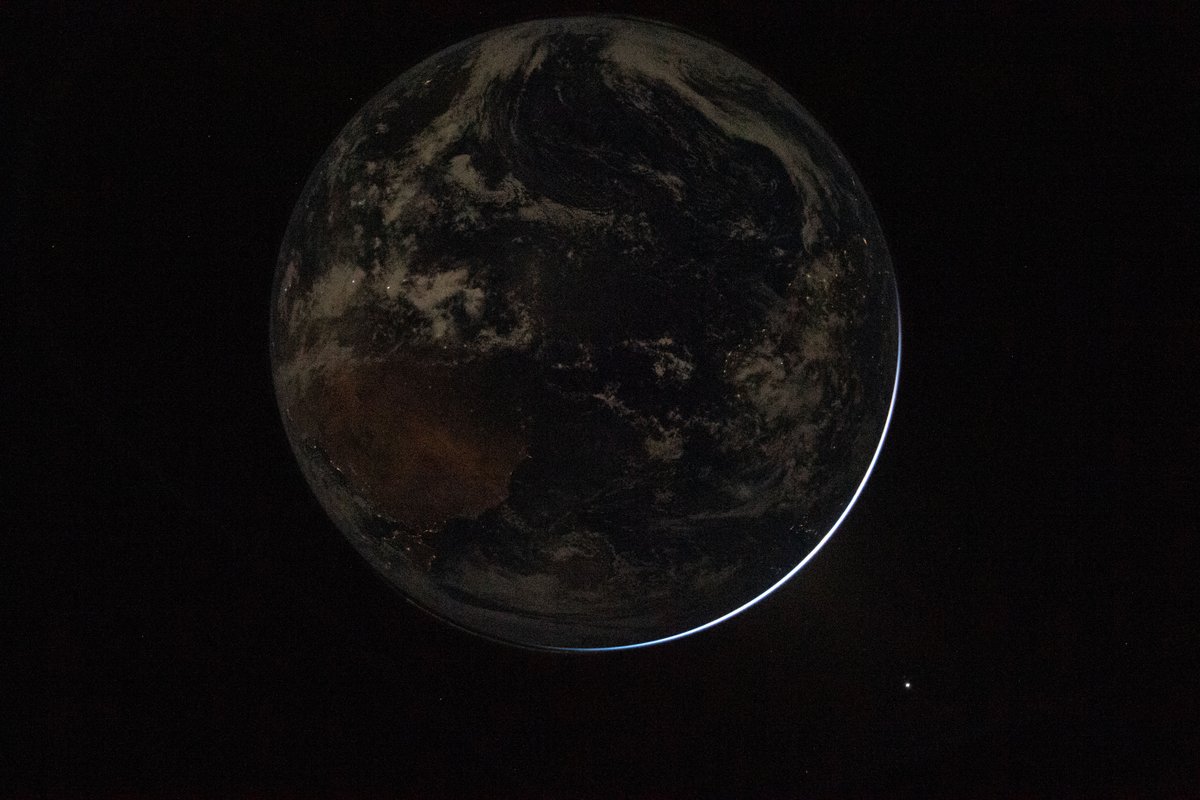
Even in darkness, we glow. In this image of Earth taken by the Artemis II crew, we can see the electric lights of human activity. In the lower right, sunlight illuminates the limb of the planet.
NASA tweet media
English
3.8K
42.6K
302.8K
8.1M
Rocket_Joe retweetou
Andrew McCarthy
Andrew McCarthy@AJamesMcCarthy·
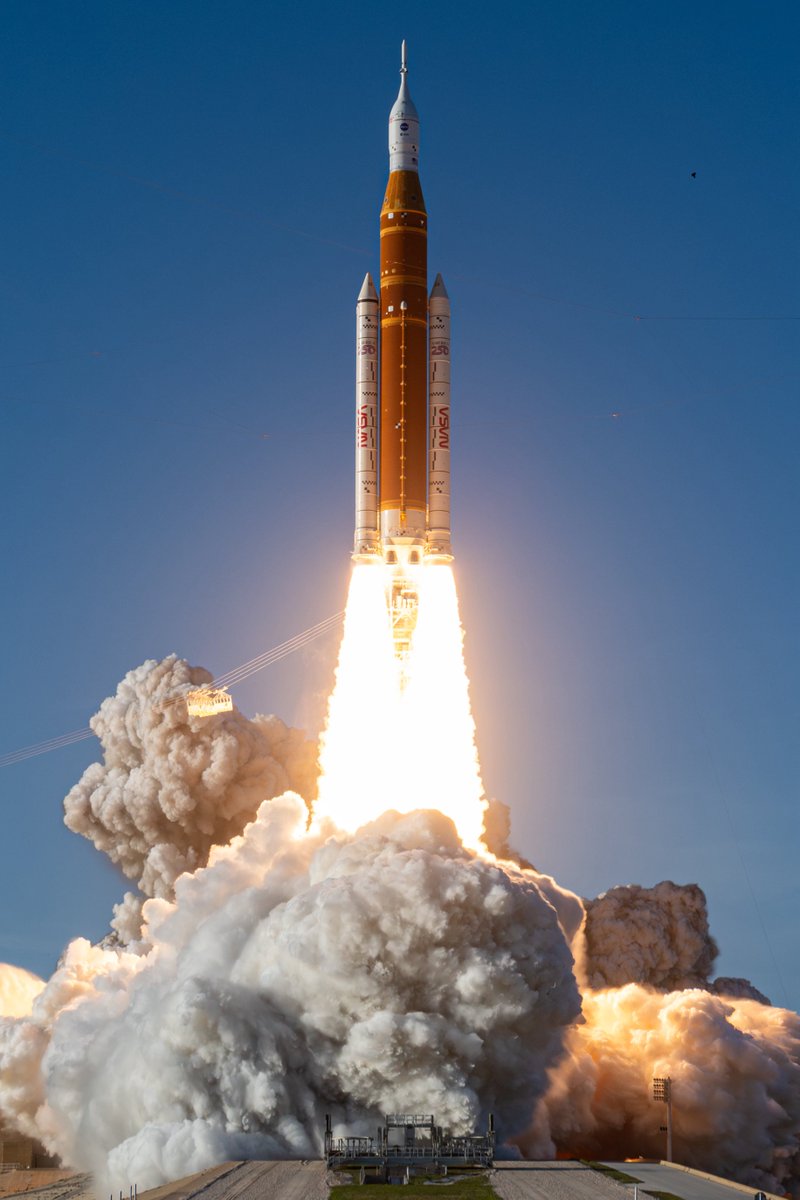
Pleased to share my favorite high-resolution capture of the Artemis II launch- the moment the SLS is clearing the tower, captured by a sound-triggered camera placed near the pad. I'll have prints linked in my bio for this one, and here's a short thread about how it was captured
Andrew McCarthy tweet media
English
415
3.5K
27.5K
1.5M
Rocket_Joe retweetou
NASA
NASA@NASA·
We see our home planet as a whole, lit up in spectacular blues and browns. A green aurora even lights up the atmosphere. That's us, together, watching as our astronauts make their journey to the Moon.
NASA tweet media
English
4.6K
63K
294.9K
65.3M
Rocket_Joe retweetou
NASA
NASA@NASA·
Good morning, world! 🌎 We have spectacular new high-resolution images of our home planet, all of us looking back through the Orion capsule window at our Artemis II astronauts as they continue their journey to the Moon.
NASA tweet media
English
3.3K
28.7K
181.1K
8.4M
Rocket_Joe
Rocket_Joe@Joe6Rocket·
@NoLifeJordan69 @HenSomeMan Insulting somebody who’s showing how excited they are about space travel, so pointless for him to be doing.
English
0
0
12
570
Rocket_Joe retweetou
National Geographic
Just 1,500 feet (457 m) from the Artemis II launch, we deployed our special high-resolution, slow-motion camera to record the blast-off in jaw-dropping detail at 2,000 frames per second. Find out how we did it: on.natgeo.com/0BXGmi
English
77
905
4.7K
298.7K
SLS
SLS@ScottLikedSLS·
Starliner but with Airbus built Service module, there fixed it!
English
1
0
32
1.1K
Rocket_Joe retweetou
Blue Origin
Blue Origin@blueorigin·
Lunar Permanence will require using resources on the Moon rather than hauling them from Earth. Our in-situ resource utilization system extracts oxygen from lunar regolith to create breathable air for astronauts and propellant for refueling landers and fuel cells. It also produces iron, aluminum, silicon, construction materials, and even solar power systems. The materials for a Moon base are produced right where they’re needed, and at much lower cost than being brought from Earth.
English
50
300
2.6K
113.8K
Rocket_Joe retweetou
Max Evans
Max Evans@_MaxQ_·
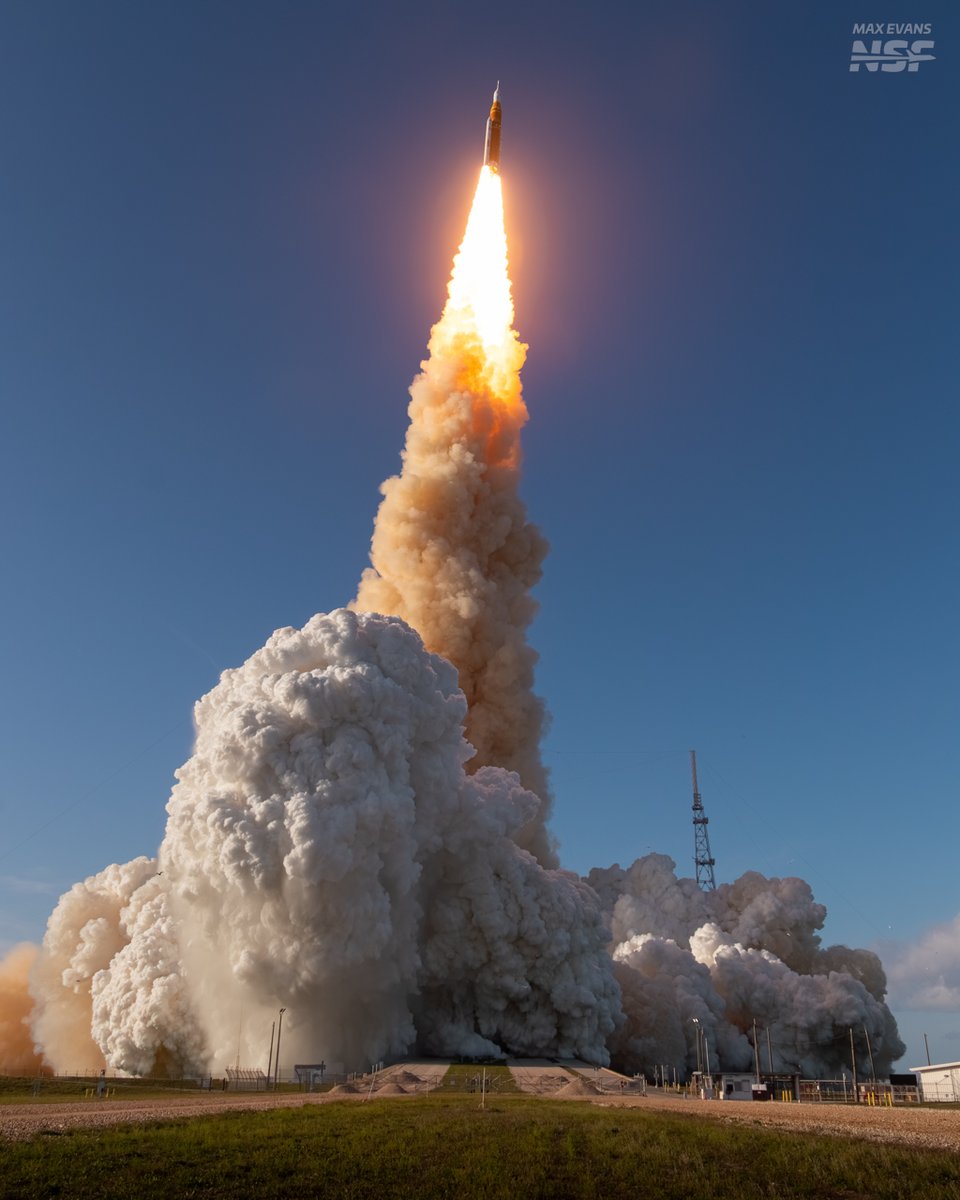
Houston, Integrity, good roll pitch.
Max Evans tweet media
English
9
167
1.6K
71.1K
Rocket_Joe retweetou
John Kraus
John Kraus@johnkrausphotos·
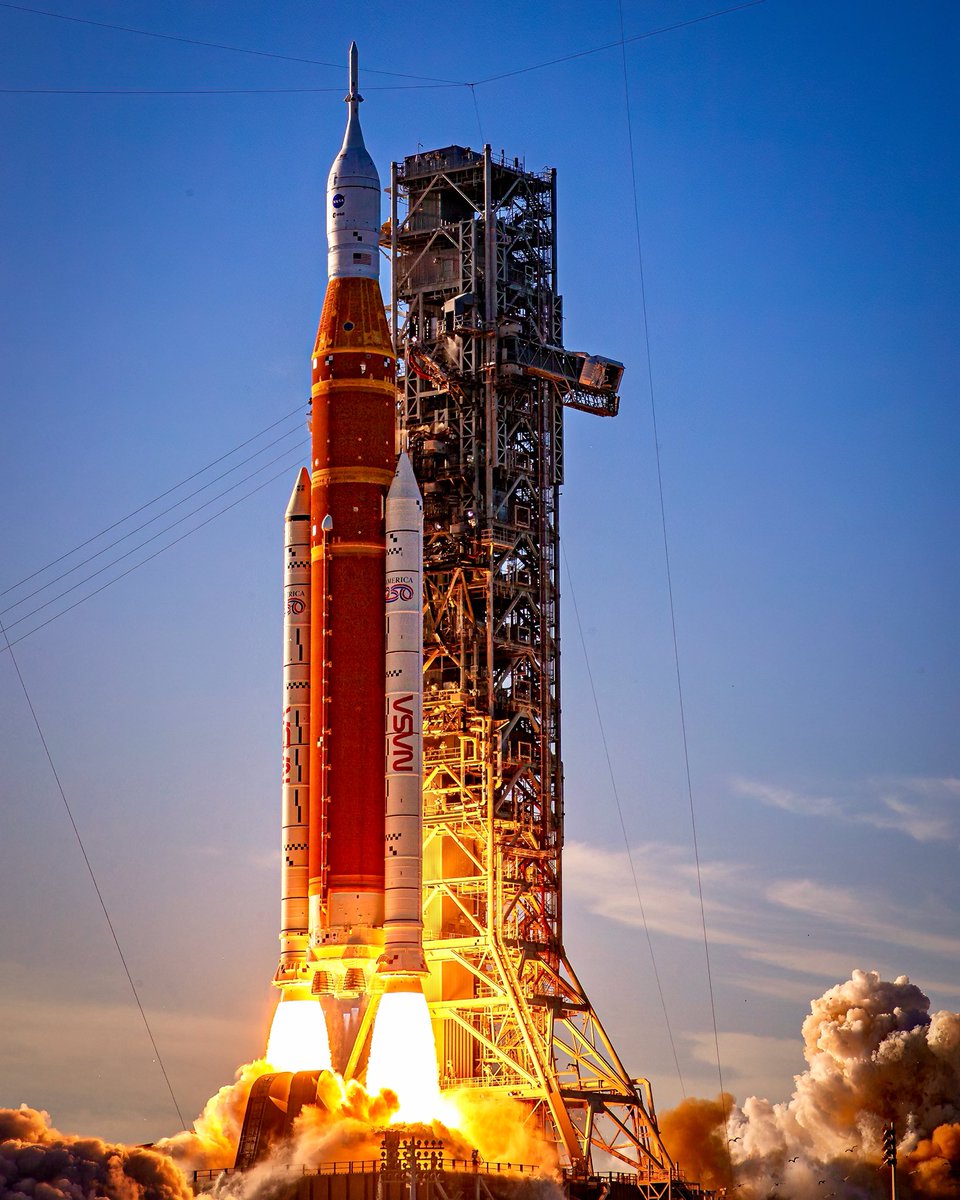
Humanity began its return to the lunar environment after 53 years at 6:35pm ET yesterday with the liftoff of Artemis II
John Kraus tweet media
English
41
297
2.8K
86.9K
Rocket_Joe retweetou
Erik Kuna 🚀
Erik Kuna 🚀@erikkuna·
This is the shot you can’t get from the press site. This camera was sitting a few football fields from the SLS rocket at Pad 39B for days before launch, baking in the Florida sun, surviving rain, humidity, and whatever else the Cape threw at it. No photographer behind the viewfinder. Just a camera, a sound trigger, and a bet. The way pad remotes work: you set your camera up days in advance, dial in your composition, lock everything down, and walk away. You don’t touch it again until after the launch. The shutter fires on sound activation with a @MiopsTrigger smart+ trigger. With SLS, the four RS-25 engines ignite six seconds before the solid rocket boosters, so the camera is already firing before the vehicle even leaves the pad. You get home, pull the card, and find out if you nailed it or if a bird landed on your lens two days ago and left your a present and you got 400 photos of soemthing crappy. There’s no formula for protecting your gear this close. Some photographers build wooden boxes with doors that pop open. Some use plastic bags and tape. Some do plastic or metal barn door rigs on hinges. I tend to leave mine open just in plastic rain covers because boxes limit my composition and setup time, but that means your cameras are more exposed to the elements and whatever energy and debris comes off the pad. You’re basically gambling a camera body every time you set one. That’s what I love about this genre. There’s no playbook. You make it up as you go. Every time is an adventure. 📸 credit: me for @SuperclusterHQ - Artemis II pad remote | ~1,000 ft from Pad 39B | Kennedy Space Center
Erik Kuna 🚀 tweet media
English
755
5.7K
47.5K
1.2M