TechKatystudt Mechazilla

6.1K posts

TechKatystudt Mechazilla banner
TechKatystudt Mechazilla

TechKatystudt Mechazilla

@Katystudt

Technology, 3D printer, models Starbase OLIT mechazilla, starship, photography and 3D model maker .

North germany Entrou em Nisan 2014
1.1K Seguindo434 Seguidores
TechKatystudt Mechazilla retweetou

Sawyer R.
Sawyer R.@thenasaman·
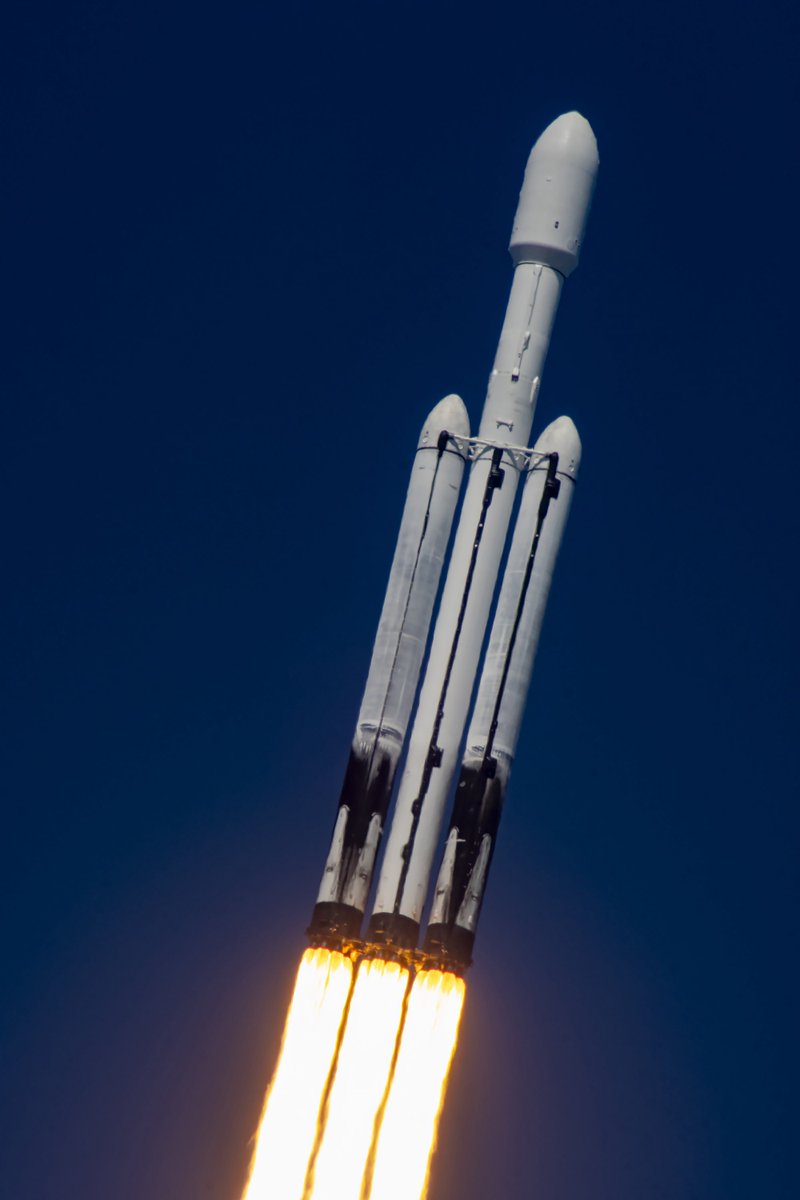
Inside this payload fairing is the first payload Falcon Heavy will launch since 18 months ago. ViaSat-3 F3 is set for launch NET 10:21am EDT Monday! But what is this payload? You can learn about it in my latest @NASASpaceflight article! 📰: nasaspaceflight.com/2026/04/viasat…
Sawyer R. tweet media
English
3
23
250
14.4K
TechKatystudt Mechazilla retweetou
ChromeKiwi
ChromeKiwi@AshleyKillip·
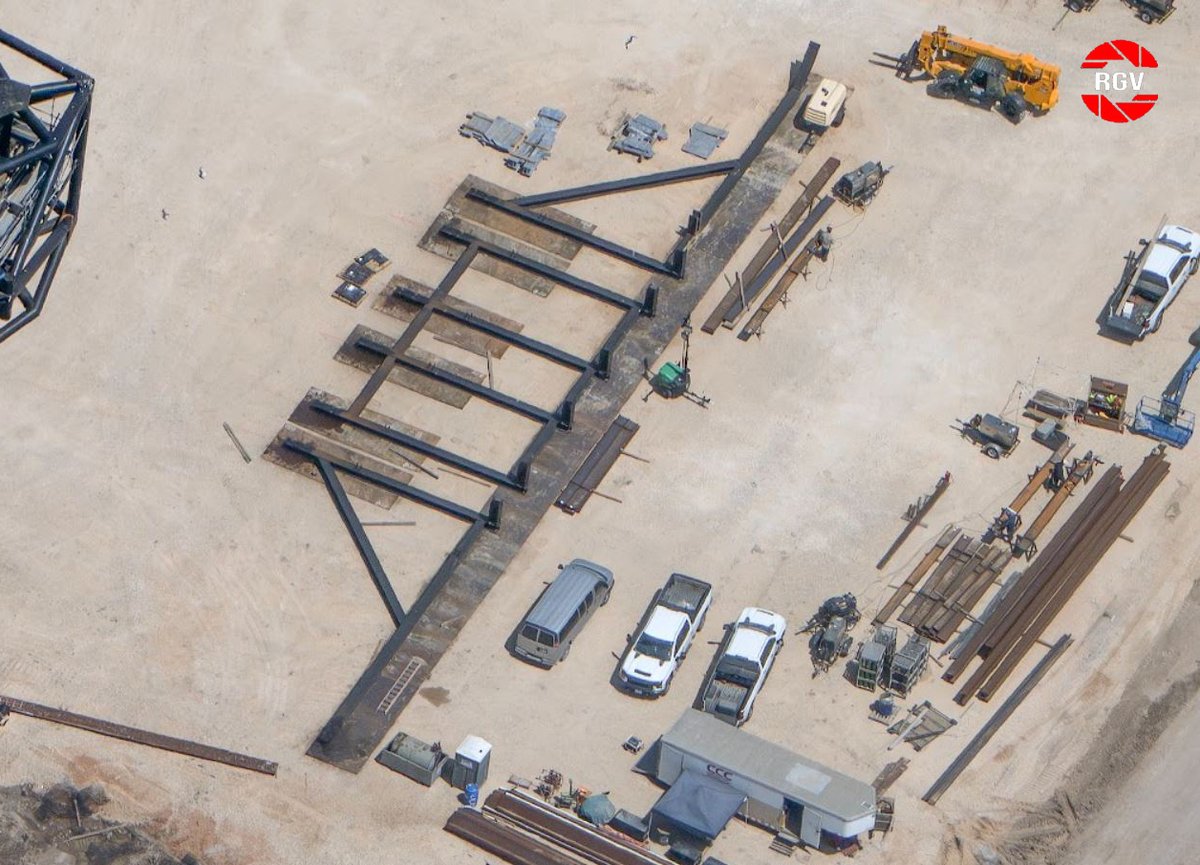
It looks like a jig is being constructed at Pad 1 for pre-assembly of the GSE bunker (green) while groundwork continues on the flame trench. Once complete, the whole frame can be hoisted into place and bolted down so fit-out can start. Processes like this done side by side drastically cut down on total build-out time. At Pad 2, construction of the bunker started once the concrete foundations were complete, and steel was added in single sections. Thanks to @RGVaerialphotos
ChromeKiwi tweet mediaChromeKiwi tweet media
English
1
14
278
6.1K
TechKatystudt Mechazilla retweetou
Julia Bergeron
Julia Bergeron@julia_bergeron·
Behind the scenes of remote camera setup for tomorrow's Falcon Heavy launch of the ViaSat-3 F3 mission. It's been awhile and there will be a lot of lenses ready to catch the moment. nsf.live/spacecoast for live views of Cape happenings
English
30
69
874
43.7K
TechKatystudt Mechazilla retweetou
Sawyer Merritt
Sawyer Merritt@SawyerMerritt·
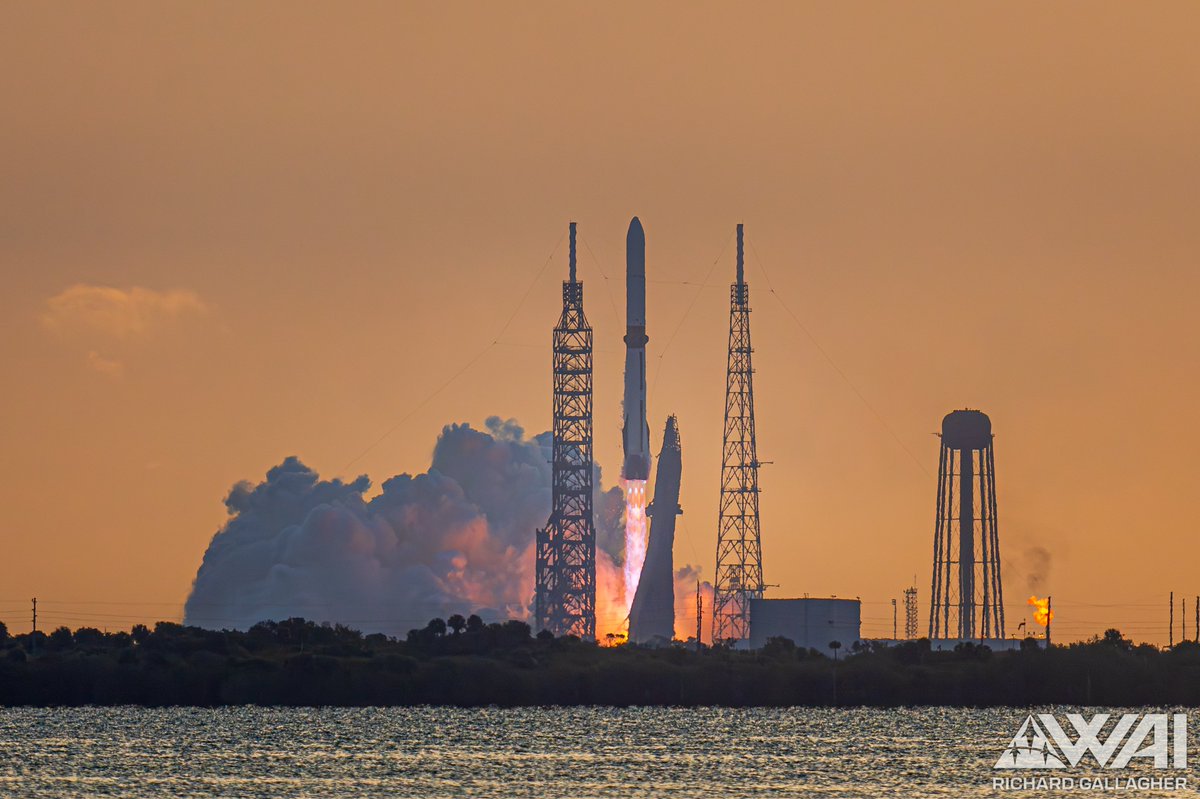
First @SpaceX Falcon Heavy launch in 1.5 years is happening tomorrow at 10:21 AM ET! One of the side boosters on this mission previously supported SDA-0A, SARah-2, Transporter-11, and 18 Starlink missions, and the second previously supported launch of the GOES-U mission. The two side boosters will land on SpaceX’s Landing Zones 2 and 40 (LZ-2 and LZ-40) at Cape Canaveral Space Force Station in Florida.
Sawyer Merritt tweet mediaSawyer Merritt tweet mediaSawyer Merritt tweet media
English
68
228
2.6K
77.6K
TechKatystudt Mechazilla retweetou
SpaceX
SpaceX@SpaceX·
Falcon Heavy is at pad 39A in Florida ahead of tomorrow’s launch of the @viasat-3 F3 mission. The 85-minute launch window opens at 10:21 a.m. ET → spacex.com/launches/viasa…
SpaceX tweet media
English
238
837
5.5K
223.2K
TechKatystudt Mechazilla retweetou
Dima Zeniuk
Dima Zeniuk@DimaZeniuk·
The evolution of Starship Huge progress made. Flight 12 is next
English
28
64
497
8.3K
TechKatystudt Mechazilla retweetou
Jake (Max-Q) 🏴󠁧󠁢󠁷󠁬󠁳󠁿
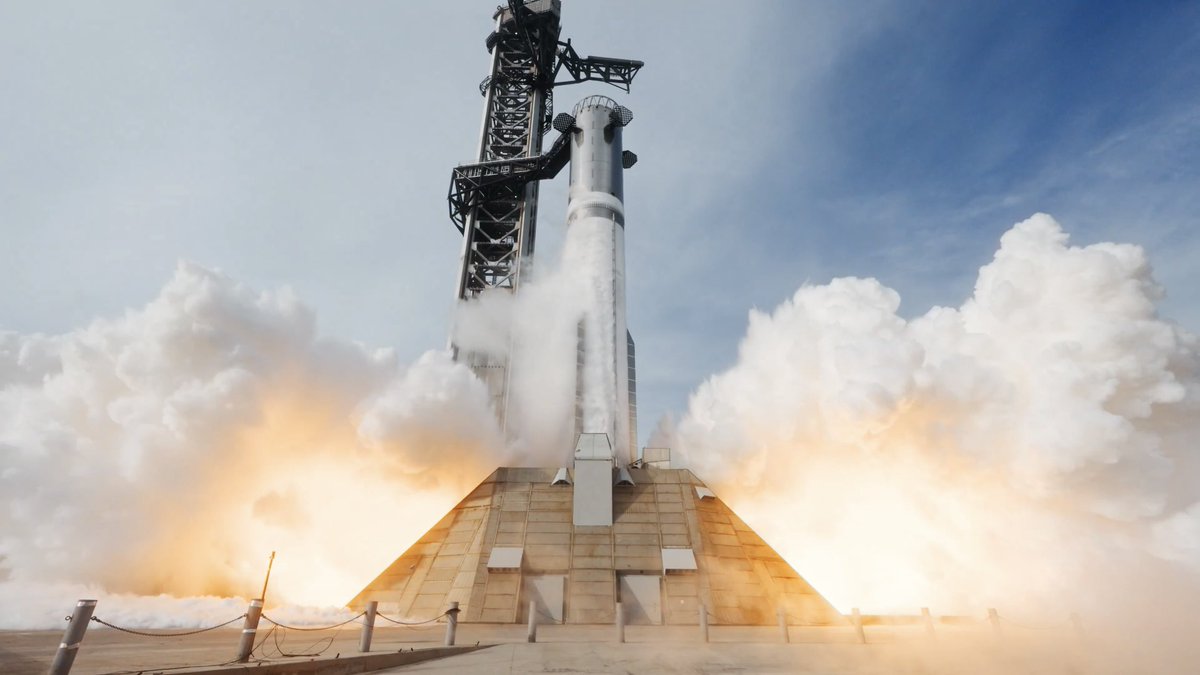
STARBASE PAD 2 LAUNCH TOWER GSE TESTING Ground Support Equipment (GSE) testing of the Starbase Pad 2 Launch Tower is currently underway! We currently see the Liquid Oxygen (LOX) side of the tower venting, along with frost appearing on the LOX supply line. We also expect to see frost start to appear on the Liquid Methane (LCH4) supply soon! This is part of the testing that needs to be performed to bring the Launch Tower fully online ahead of full stack testing and launch. @NASASpaceflight | nsf.live/starbase
English
3
34
323
20.6K
TechKatystudt Mechazilla retweetou
Greg Scott
Greg Scott@GregScott_photo·
SpaceX will attempt to launch the Falcon Heavy rocket tomorrow morning at 10:21am EDT from NASA's LC-39A. This will be the 12th launch of a Heavy and the 1st since Oct 2024. It will be carrying the ViaSat-3 F3 satellite. The center booster will be expended into the Atlantic while the 2 side boosters with return to land at LZ-40 & LZ2 approx 8 mins later. my📸USSF-44
Greg Scott tweet media
English
53
295
3.1K
119.4K
TechKatystudt Mechazilla retweetou
Goose
Goose@megagoose11·
OH MY GOD
English
2
35
1.1K
45.6K
TechKatystudt Mechazilla retweetou
Scott Manley
Scott Manley@DJSnM·
Yesterday while driving to the airport for a training flight I heard @NASAAdmin talking about the impact flashes observed by Artermis II crew on the dark side of the moon. Specifically I heard these described as 'Micrometeorites' and thought they would be bigger, so it got my brain running on estimating the actual size of these objects based on what I knew. By the time I got to the airport 10 minutes later I had concluded the mass of these impactors is kilograms, so not 'micro' meteors, and that's not a dig at Jared by any means, for his EVA on Polaris Dawn he had almost certainly discussed micrometeorites, things the size of a grain of sand, that could damage the suit. But, what I really want to talk about is the mental arithmetic I did while driving, because I do these order of magnitude estimates for all sorts of questions. So I don't have any deep understanding of how bright the flashes would have been to be visible to the crew, I don't have a deep understanding of human visual acuity. But I started from the assumption that this is comparable to a faint star appearing for a second or so. I know the absolute magnitude of the sun is 4.8, that's how bright the sun appears at 10 parsecs. That's towards the fainter end of stars, and if one appeared for a fraction of a second it might register. I know a Parsec is 206265AU. (and 206265 is number of arc seconds in a radian). I also know the solar constant at earth is about 1370W/m^2. So to get the solar flux at 10 parsecs I'd have to divide by 2062650^2 - but that's too much math, just approximate to (2*10^6)^2 - or 4x10^12. dividing 1370 by 4 is roughly 350 or 3.5x10^2 Which puts solar illumination at 10parsecs at about 3.5x10^-10 W/m^2 So that's my standard light flux for 'faint star'. Let's now assume the flash lasts 1 second to avoid adding extra math, change watts into joules. Now, reverse this and figure out the energy of the object on the moon, for that we'd need to know how far they were from the moon. And I didn't carry that around in my head, but, I knew the closest approach was about 4000 miles, and the eclipse was past closest approach. So I used the number of 10,000km because that's 10^7m making the math easy - I need the square of that so 10^14. To figure out the energy emitted we take the energy per square meter and multiply it by the surface area of the sphere with a radius equivalent to astronaut's viewing distance. Take that 3.5x^-10J and multiply it by 4xPIx10^14 4 Pi is about 12.5, so I use 3.5x12.5 as about 40 (because I know 12.5x4 = 50). It's about 7% low but I don't care for small errors. So total energy is 4x10^5J. But that's just the energy that comes out as light, the energy of an impactor mostly goes into other forms, I learned this while making my video on @NASAAmes Vertical Gun Range. I know it's between 0.01-1% of the kinetic energy that comes out as light. So, using 10^-3 that gives impactor energy of 4x10^8J Now figure out the impactor mass, impact speeds are 10-15km/sec, remember kinetic energy goes as v^2. Now you might think that 10km/sec gets you a nice factor of 10^8, but then you need to multiply the mass by a factor of 2 (because of 1/2 m v^2). But if you use 14.14km/sec then that eliminates the factor of 2, and puts the velocity closer to the high end. So, point is I just adjust the energy by 10^8 and leave the 4 part as my mass estimate. 4kg of course. Not a micrometeorite. So, my mass estimate for an impactor is on the order of a few kilograms, but there's massive error bars here, because I don't know how bright the flashes looked to the astronauts, I don't have a detailed model of the human visual system or the luminance conversion efficiency of meteorites. I have an order of magnitude estimate I did in my head while driving, and 90% of the process is just multiplying by powers of 10, simply adjusting the exponent. Sure you have to carry numbers around like the solar constant, absolute magnitude of the sun etc. But I bet many of you have esoteric numbers you carry around in your heads. I then proceeded to go flying and feel soundly humbled by ATC overloading my brain.
Scott Manley tweet media
English
89
94
1.7K
98.9K
TechKatystudt Mechazilla retweetou
Tony Bela - InfographicTony
Tony Bela - InfographicTony@InfographicTony·
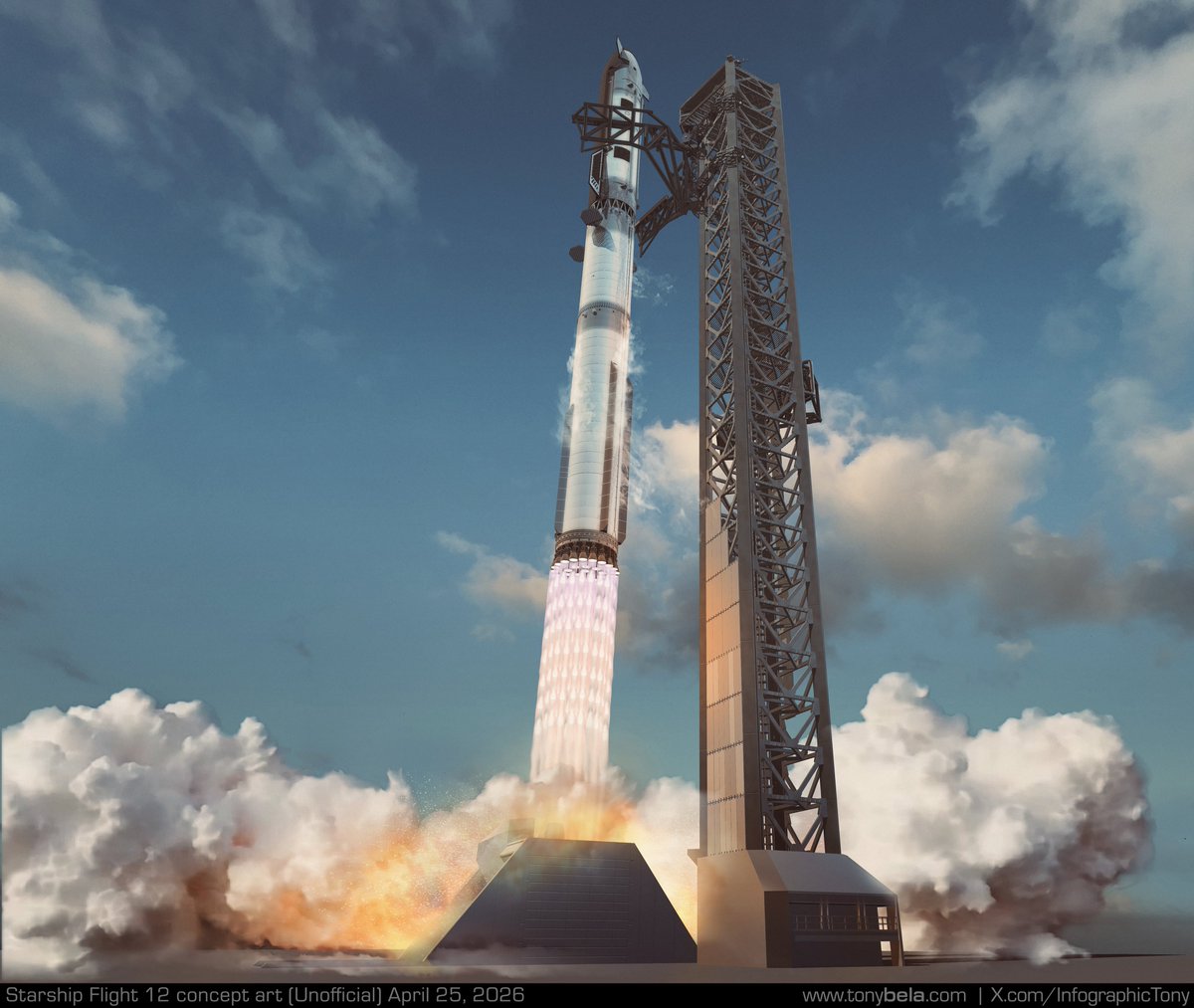
Hopefully not too much longer to wait for Starship Flight 12. My (unofficial) infographic is coming soon, meanwhile, here is a sneak peek.
Tony Bela - InfographicTony tweet media
English
9
22
230
4.6K
TechKatystudt Mechazilla retweetou
BRANDON M. WYNN
BRANDON M. WYNN@BrandonMWynn·
This sequence is FUCKING UNBELIEVABLE…bravo SpaceX production team. Bravo.
IGW@interstellargw

BREAKING: @SpaceX has just dropped the first episode of a new Starship docu-series; “Test Like You Fly” The 25 minute episode features never before seen footage from Starbase, and covers the on-going development of Starship V3… Watch Here: spacex.com/content/starsh…

English
9
74
1.7K
80.3K
TechKatystudt Mechazilla retweetou
Goose
Goose@megagoose11·
WOAW THE PERSPECTIVE SHIFT
English

3
30
789
9.5K
TechKatystudt Mechazilla retweetou
Avid Space
Avid Space@LabPadre·
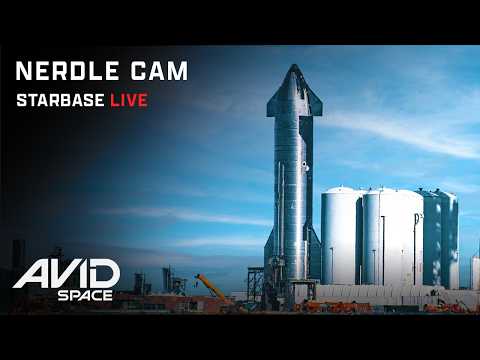
More testing at Pad-2 this evening. The cryogenic pipework leading up the tower to the SQD has been spotted with frost and the tower vent has been active. our Nerdle cam has had a great view. youtube.com/live/edq_1W5lP…
YouTube video
YouTube
English
3
32
563
18.7K
TechKatystudt Mechazilla retweetou
Ezekiel Overstreet 🚀
Ezekiel Overstreet 🚀@EzekielOverstr1·
Seeing the trivent actually vent is surreal!
English
2
9
144
5.7K
TechKatystudt Mechazilla retweetou
NSF - NASASpaceflight.com
NSF - NASASpaceflight.com@NASASpaceflight·
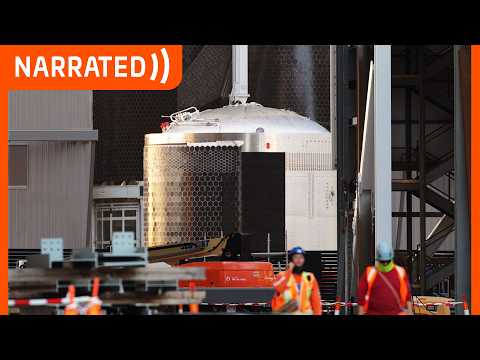
Starships are lining up for upcoming flights from Starbase (and potentially KSC via barge), with production underway through at least Ship 48 and Ship 41 (Flight 14) already in stacking. ➡️youtu.be/gsQdK7gC6FM
YouTube video
YouTube
English

9
76
915
48.2K