Kenneth Geers

21K posts

Kenneth Geers banner
Kenneth Geers

Kenneth Geers

@KennethGeers

Analyst

Brazil Entrou em Eylül 2011
910 Seguindo5K Seguidores
Kenneth Geers retweetou
Black Hole
Black Hole@konstructivizm·
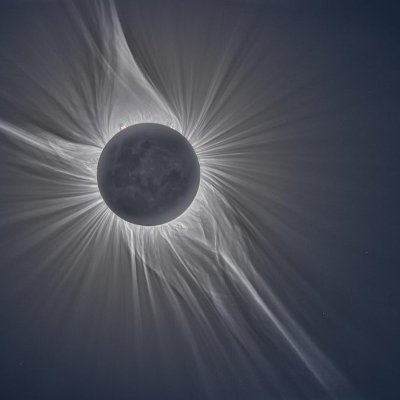
Artemis II Over the Giant Orientale Basin
English
93
993
6.7K
153.7K
Kenneth Geers retweetou
Black Hole
Black Hole@konstructivizm·
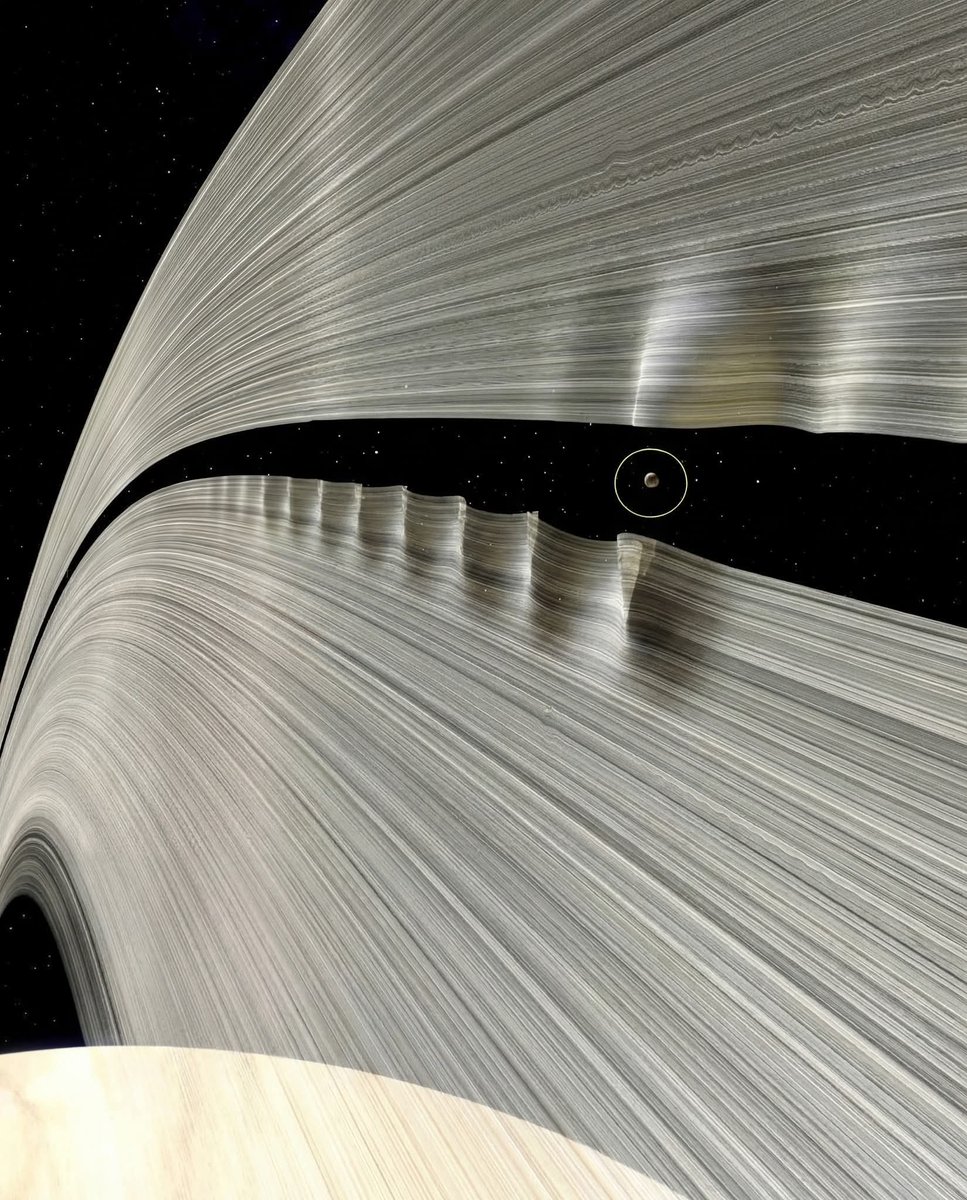
A tiny Moon making massive waves in the massive rings of Saturn. If you think you're too small to make an impact, look at Daphnis. A tiny speck of dust causing 1.5-mile high waves in a ring system 175,000 miles wide.
Black Hole tweet media
English
13
155
966
25.2K
Kenneth Geers retweetou
Astronomy Vibes
Astronomy Vibes@AstronomyVibes·
🚨 James Webb Space Telescope (JWST) has captured the Sombrero Galaxy in extraordinary detail.
English
14
157
779
20.7K
Kenneth Geers retweetou
Black Hole
Black Hole@konstructivizm·
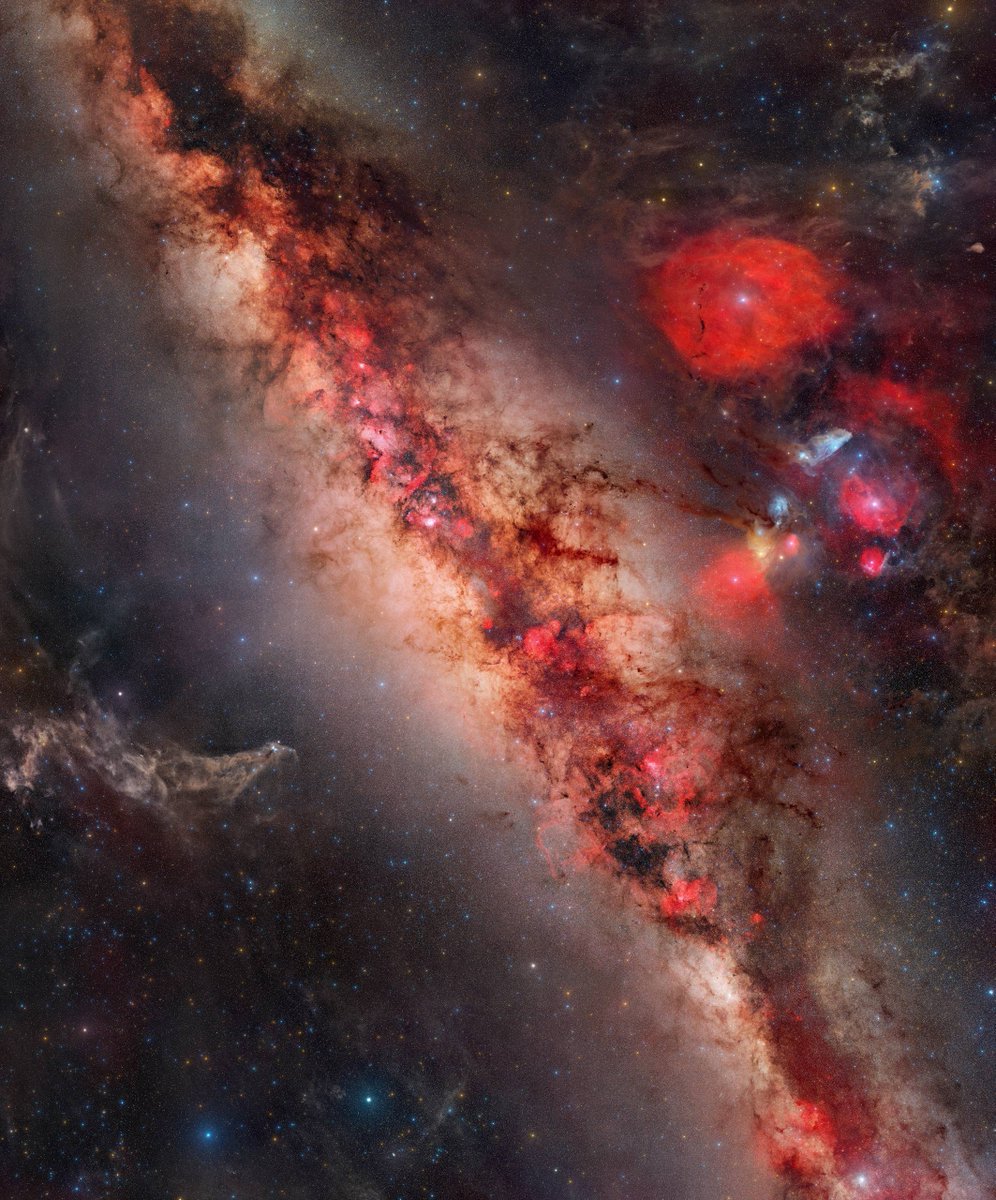
A stunning image of the center of the Milky Way from astrophotographer Jakob Zahner! This shot features a mind-boggling 103 hours of exposure time!
Black Hole tweet media
English
8
64
314
5.9K
Kenneth Geers retweetou
Curiosity
Curiosity@CuriosityonX·
800 billion stars. This is Sombrero Galaxy. 31 million light-years away from us.
English
164
1.2K
9.1K
401.1K
Kenneth Geers retweetou
Amazing Physics
Amazing Physics@amazing_physics·
⚡️This is the clearest image ever taken of Saturn’s North Pole. A perfect hexagonal storm is raging for decades now and it is over 30,000km across. First spotted by Voyager 1 back in 1980s. 📷 NASA
Amazing Physics tweet media
English
70
486
2.3K
47.4K
Kenneth Geers retweetou
PolitiCrack,
PolitiCrack,@AnalistaClara·
Después de viajar 9 años, 5 meses y 27 días, la nave espacial New Horizons sobrevoló Plutón y logró estas imágenes😯. ¿Es i creible verdad?
Español
218
2.1K
10.4K
603.3K
Kenneth Geers retweetou
Night Sky Now
Night Sky Now@NightSkyNow·
The sun looks just like a pixel compared to some of the biggest stars in the known universe.
Night Sky Now tweet media
English
72
371
1.5K
41.3K
Kenneth Geers retweetou
Night Sky Today
Night Sky Today@NightSkyToday·
🚨: The observable universe is more than 93 billion light-years wide… yet humans have only traveled 1.3 light-seconds away from Earth.
Night Sky Today tweet media
English
84
307
1.4K
70.6K
Kenneth Geers retweetou
Curiosity
Curiosity@CuriosityonX·
800 billion stars captured in one frame. This is Sombrero Galaxy captured by Hubble. 31 million light-years away from us.
Curiosity tweet media
English
248
1.7K
8.9K
223.5K
Kenneth Geers retweetou
Night Sky Today
Night Sky Today@NightSkyToday·
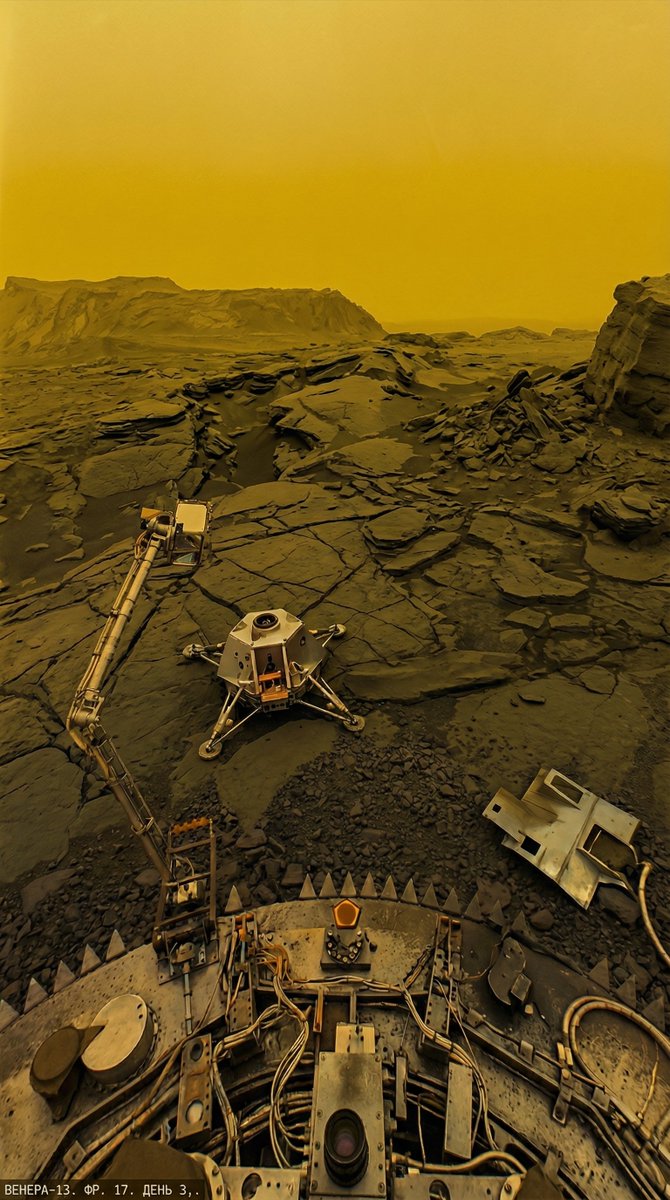
🚨: Clearest Image ever taken of the surface of Venus.😮 Venera-13 spacecraft survived for 127 minutes before succumbing to the Planet’s extremely harsh atmosphere.
Night Sky Today tweet media
English
69
287
2K
66.4K
Kenneth Geers retweetou
Night Sky Today
Night Sky Today@NightSkyToday·
Earth, Jupiter and Venus seen from Mars.😮 225 million miles away from us.
Night Sky Today tweet media
English
89
980
6.1K
90.3K
Kenneth Geers retweetou
Black Hole
Black Hole@konstructivizm·
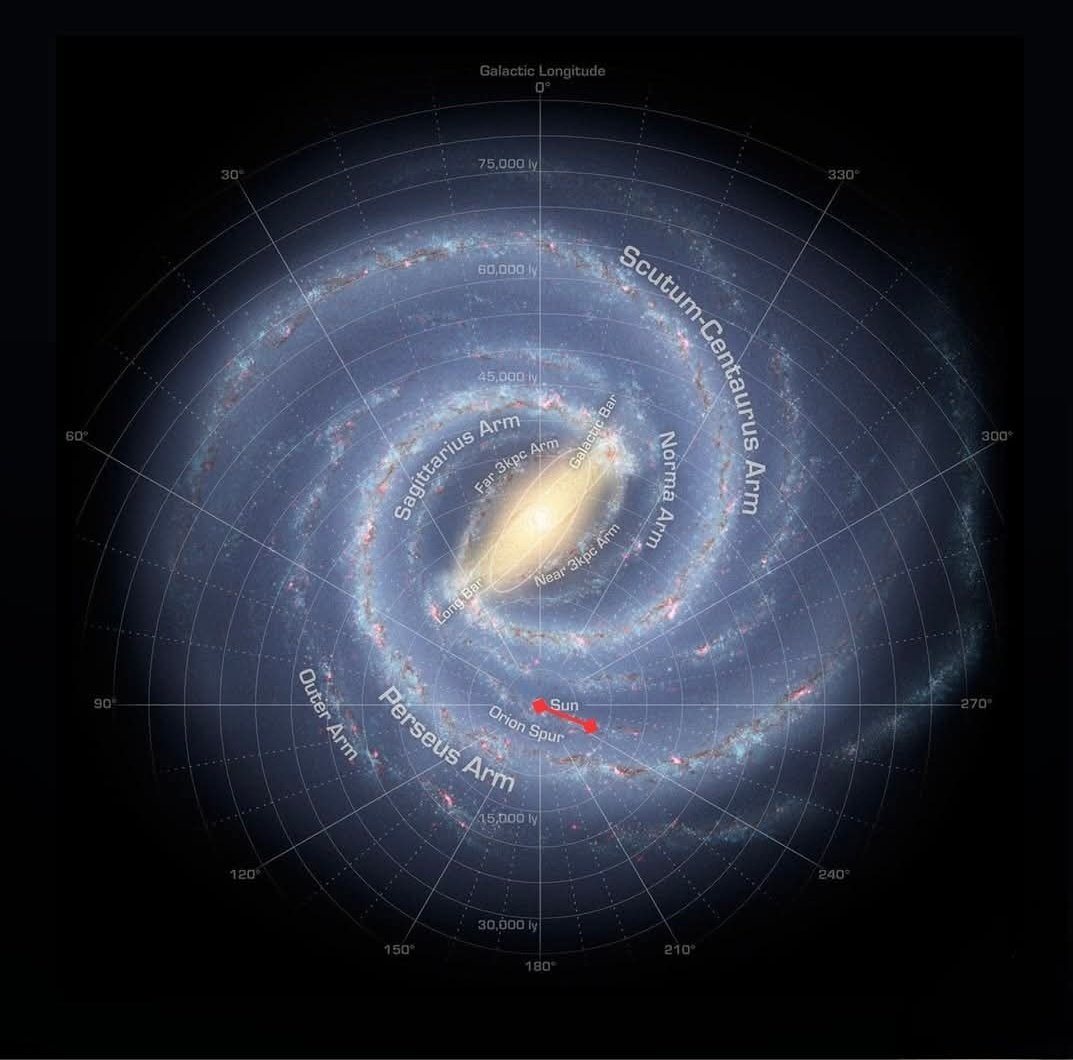
Who knows which galaxy we live in?
Black Hole tweet media
English
170
252
1.4K
51.4K
Kenneth Geers retweetou
Black Hole
Black Hole@konstructivizm·
The James Webb Space Telescope (JWST) has revealed a stunning cosmic structure nicknamed the "Cosmic Vine"—a remarkably narrow, vine-like filament linking at least 20 galaxies across a staggering 13 million light-years. This glowing chain, captured in infrared light, existed at a redshift of about 3.44, when the universe was roughly 2 billion years old (less than 15% of its current age), offering one of the most vivid glimpses yet into the early cosmic web.Far from a random scattering, these galaxies align like beads on a string along a dense thread of dark matter. This filament serves as a gravitational "highway," channeling cold gas flows that fuel intense star formation and rapid galaxy growth. Some galaxies in the vine are still bursting with new stars, while others appear to have already exhausted their gas supplies—likely due to early, violent mergers.This discovery is thrilling because it demonstrates how large-scale structures assembled with surprising speed and efficiency in the young universe. Simulations long predicted these filamentary networks as the scaffolding for galaxy clusters, but spotting such a coherent, massive example so early provides direct evidence that tests and refines models of dark matter clustering, gas dynamics, and baryonic physics.JWST's unparalleled sensitivity in the infrared has allowed astronomers to detect faint, distant members of these structures that previous telescopes couldn't resolve, transforming theoretical predictions into concrete observations. It sharpens our understanding of why certain galaxies ballooned into giants while others remained small, and how the vast cosmic networks we see today—spanning hundreds of millions of light-years—first took root in the infant universe.Sources: NASA/ESA/CSA James Webb Space Telescope; studies published in arXiv/preprint (2023), with coverage in outlets like, and related astronomical journals.To help visualize this breathtaking find:These images showcase JWST's view of the Cosmic Vine and similar early filaments, highlighting the thread-like alignment of galaxies against the deep cosmic backdrop.
Black Hole tweet media
English
35
328
1.5K
62.4K
Kenneth Geers retweetou
Curiosity
Curiosity@CuriosityonX·
🚨: We used to think our home was a circle. Then, a comet. Now we know the truth: We live inside a cosmic croissant. This is the Heliosphere—the jagged, electric boundary between us and the crushing pressure of the infinite dark.
English
335
1.4K
9.1K
692.1K
Kenneth Geers retweetou
Wonder of Science
Wonder of Science@wonderofscience·
The view from the surface of a Comet, an alien landscape captured by the Rosetta spacecraft during its visit to Comet 67P. 📽: ESA/Rosetta/Jacint Roger
English
40
224
1.2K
59.3K
Kenneth Geers retweetou
Black Hole
Black Hole@konstructivizm·
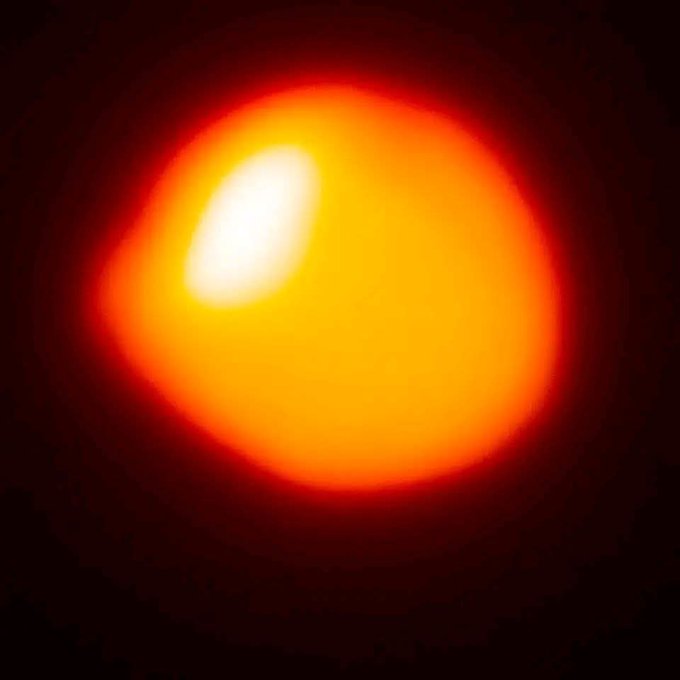
BREAKING: You are looking at the sharpest picture ever of a star 'outside' our solar system. This is Betelgeuse! JWST
Black Hole tweet media
English
61
199
2.1K
53.3K
Kenneth Geers retweetou
Curiosity
Curiosity@CuriosityonX·
🚨: The RED line shows how far the Voyager 1 spacecraft will travel... in 1 million years
Curiosity tweet media
English
75
292
2.2K
91.9K
Kenneth Geers retweetou
Night Sky Now
Night Sky Now@NightSkyNow·
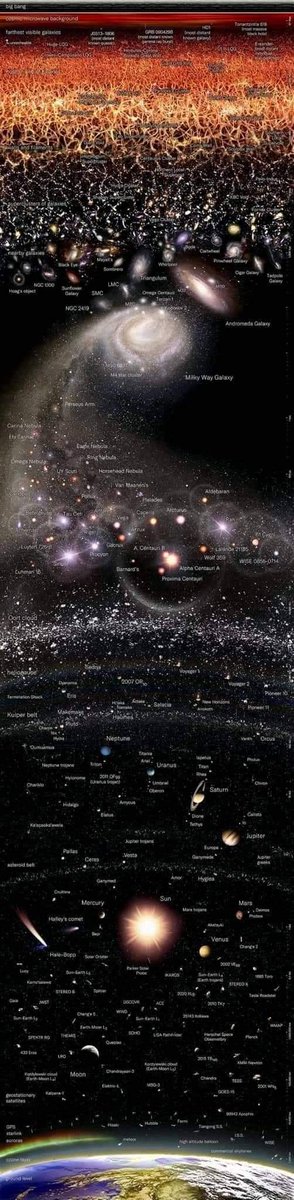
This is the Entire Observable Universe so far. Tap on the pic to get the full view. It starts at Earth, expands to our solar system, then our galaxy, then our galaxy among other galaxies, then billions and billions of galaxies.
Night Sky Now tweet media
English
55
691
2.4K
64.4K
Kenneth Geers retweetou
Curiosity
Curiosity@CuriosityonX·
Earth VS Biggest star ever discovered VS TON 618
English
53
305
1.8K
108.9K