Presidential candidate Dr. Cornel West says no more #reparations studies and calls for boycott of Wells Fargo until reparations are paid. @CornelWest@Reparations_NRL
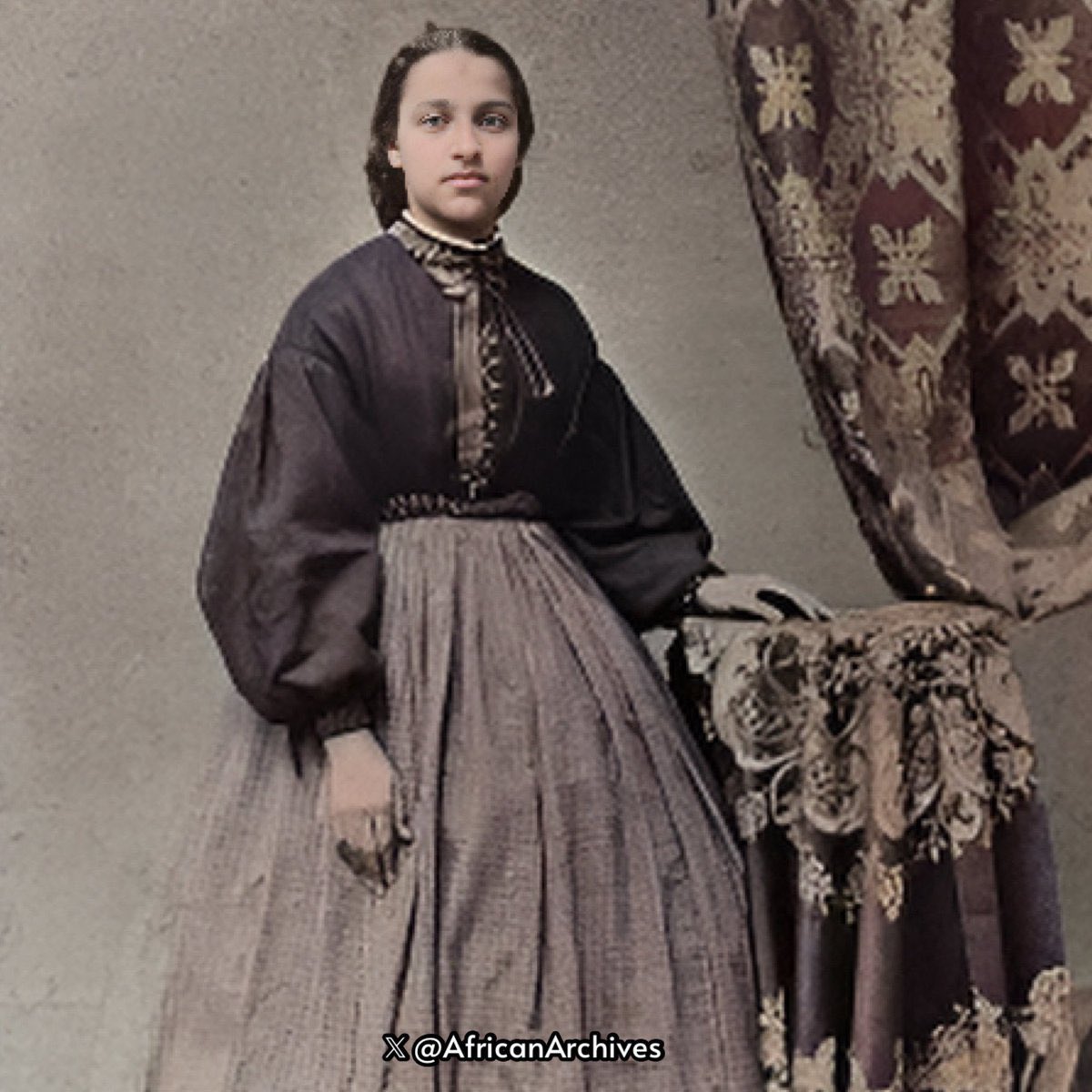
On this day in 1862, Mary Jane Patterson made history when she became the first black woman to receive a college degree when she graduated from Oberlin College.
She was also the first black principal at America's first public high school for black students. (Preparatory High School for Colored Youth known today as Dunbar High School, Washington, D.C.)
—Born in Raleigh, North Carolina, she was the oldest of seven children.
In 1856, she and her family moved to Oberlin, Ohio, where they joined a growing community of free Black families who worked to send their children to the college. Her father worked as a master mason.
For many years, the family boarded large numbers of Black students in their home.
In 1862, Patterson graduated from Oberlin College, earning her historic degree.
On September 21, 1864, she applied for a position in Norfolk, Virginia, at a school for Black children.
On October 7, 1864, E. H. Fairchild, principal of Oberlin College's preparatory department from 1853 to 1869, wrote a recommendation for an "appointment from the American missionary Association as a ... teacher among freedmen."
In this letter, Fairchild described Patterson as "a light quadroon, a graduate of this college, a superior scholar, a good singer, a faithful Christian, and a genteel lady. She had success is teaching and is worthy of the highest ... you pay to ladies."
The following year, she became an assistant to Black educator Fanny Jackson in the Female Department of the Institute for Colored Youth in Philadelphia.
In 1869, Patterson accepted a teaching position in Washington, D.C., at the newly organized Preparatory High School for Colored Youth -- later known as Dunbar High School.
She served as Dunbar's first Black principal from 1871 to 1874.
During Patterson's administration, the name "Preparatory High School" was dropped, high school commencements were initiated, and a teacher-training department was added.
Her commitment to thoroughness as well as her personality helped her establish the school's strong intellectual standards.
Patterson also devoted time and money to other Black institutions in Washington, especially to industrial schools for young African-American women, as well as to the Home for Aged and Infirm Colored People.
Her achievements as a leading Black educator influenced generations of African-American students and paved the way for other Black female educators.
if you love our content, please consider supporting our page on AfricanArchives.Support (follow the ko-fi page too for weekly posts roundup)
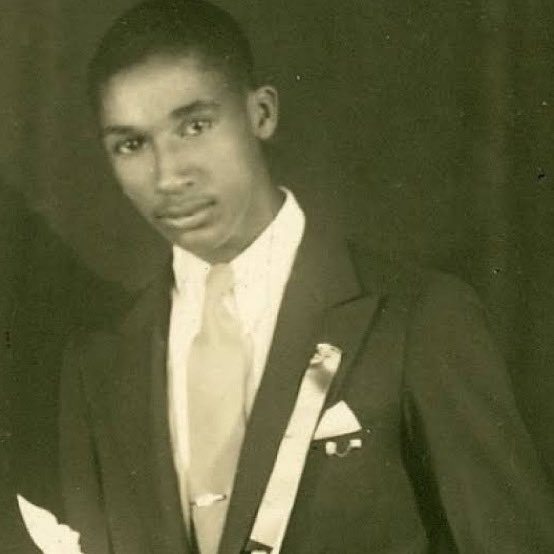
In 1938, Lloyd Gaines filed a lawsuit after being denied admission to the University of Missouri Law School in 1935 because he was black.
The Court ruled in his favor & required Missouri to admit him or set up a black law school.
He disappeared 3 months later never to be found.
—Lloyd Lionel Gaines was born to the Gaines family in northern Mississippi in 1911. One of eleven children, seven of whom survived illness and accident, he moved with his widowed mother and siblings to St. Louis after the premature death of their father. They found a better, although not easy, life for themselves in Missouri. Gaines excelled in his studies graduating as valedictorian in 1931 from Vashon High School. At Lincoln University in Jefferson City, he graduated with honors and was President of the senior class, while participating in many extra-curricular activities and working to pay for his schooling.
Despite his outstanding scholastic record, the University of Missouri School of Law denied Gaines admittance in 1936 solely on the grounds that Missouri's Constitution called for "separate education of the races." By state law, Missouri would have been required to pay for Gaines to attend the Universities in Iowa, Kansas and Nebraska, but Gaines was determined to fight for the right to attend law school in his own state university. He sought legal assistance from the National Association for the Advancement of Colored People (NAACP), which had been working systematically to overturn the ignominious precedent of "separate but equal" established in Plessy v. Ferguson in 1896. Together, they challenged the University of Missouri's admissions policies. In 1938, Gaines won his case before the United States Supreme Court in State of Missouri ex rel Gaines v. Canada, paving the way for a series of cases that would lead to Brown v. Board of Education's outlawing segregation in public education. In March 1939, only three months after his Supreme Court victory, Lloyd Gaines was last seen in Chicago. He disappeared at age 28 with his promise of attending law school in Missouri unfilfilled. Lloyd Gaines was never to be seen or heard from again.
🖊️As the only admin behind this page, I try to research to educate. If you appreciate this effort, you can support to help the page thrive on ko-fi.com/africanarchives. Your support is deeply appreciated! (Or just the ko-fi page for articles/posts roundup)
I finally caught it on tv y’all. Omg I’m crying…🙏🏽🤯😱😭😭 I been playing this #Talkbox for over 20 Years. And I am so thankful I never gave up. 🙌🏽🙌🏽🙌🏽😭😭😭😭Thanks so much for all the love on my first @Apple commercial!!!💯🙏🏽 God is so amazing man..#mrtalkbox#20YearsOfTalkbox (LINK IN Below FOR MY 20 Year Anniversary & Live Recording)! shoutout.wix.com/so/feOplxX9g?l…
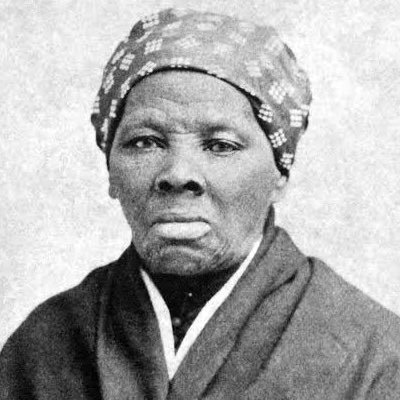
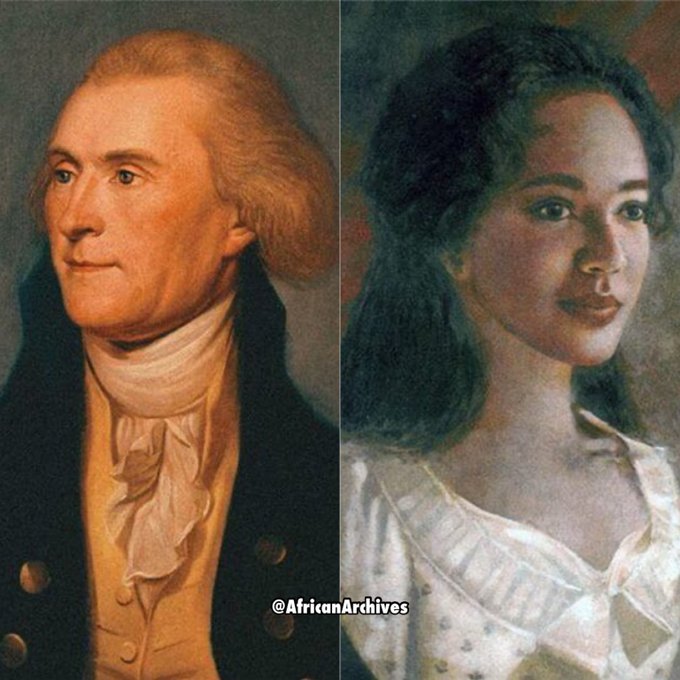
Sally Hemings, the woman Thomas Jefferson enslaved.
She was called his "mistress," but how can you be a mistress when you were enslaved, a child, and could not consent? Had absolutely no choice?
A THREAD