Martin Sebena

3.2K posts

Martin Sebena

Martin Sebena

@MartinSebena

Germany, China, and the space in between | @HKUniversity PhD

Zürich & Hong Kong Entrou em Ağustos 2014
613 Seguindo504 Seguidores
Tweet fixado
Martin Sebena
Martin Sebena@MartinSebena·
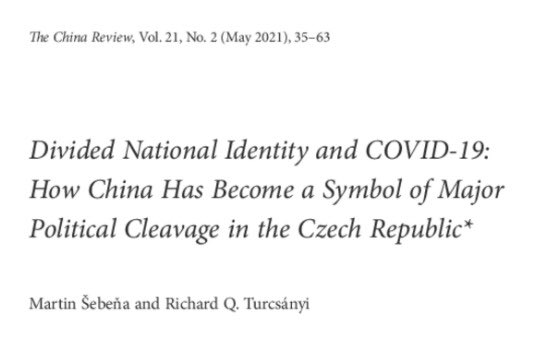
No matter how the Czechs approached China, the Western media would always relate their actions to their Communist past In a new paper in China Review we explain that the Czech thinking about China is informed by a complex identity discourse @RQTurcsanyi jstor.org/stable/27019009
Martin Sebena tweet media
English
2
7
25
0
Martin Sebena
Martin Sebena@MartinSebena·
@HuJirui Vy ste napísal druhý Tweet v case keď som ja písal tento. Všimol som si to, až keď som to postol.
0
0
0
13
Jiří Hudeček
Jiří Hudeček@HuJirui·
@MartinSebena Američané útoky na energetickou infrastrukturu zatím jen vyhrožují, Izrael provedl jeden nálet na to plynové pole. Jak to myslíte, že jsem se nevyjádřil k americkým a izraelským válečným zločinům? Vždyť píšu, že je nepopírám.
Čeština
2
0
0
37
Martin Sebena
Martin Sebena@MartinSebena·
Nevyjadrili ste sa k: - americkým a izraelským vojnovým zločinom - výroku “prakticky všechno” Ak necielili na jadrove zariadenia, tak Daily Mail klame a preháňa (neprekvapivo) - ale mne išlo o to poukázať práve na to pokrytectvo v ich reportingu. Momentálna izraelsko-americká stratégia stojí na útokoch na civilnú infraštruktúru (energetiku). Sú na to s Iránom rovnako.
2
0
0
33
Jiří Hudeček
Jiří Hudeček@HuJirui·
@MartinSebena Právě že neútočili na jaderné zařízení, ale na civilní objekty v sousedním městě. Ano Íránci útočí i na radary a vojenské základny, ale na tom nestojí jejich strategie. Největší šanci způsobit Američanům, Izraelcům a jejich spojencům škody mají při útocích na nevojenské objekty.
Čeština
2
0
0
34
Martin Sebena
Martin Sebena@MartinSebena·
Pardon ale Izrael a USA prví zaútočili na civilne ciele - zariadenie na odsoľovanie vody. Oni začali s páchaním vojnových zločinov. Toto by ste v prvom rade nemali prehliadať. A USA sa vyhráža útokmi na energetickú sieť - otvorene hovoria o tom, ako chcú pachat vojnové zločiny. Taktiež treba povedať ze výrok “prakticky všetko” je donebavolajuce klamstvo, lebo Irán útočil na americké vojenské ciele po celom regióne - vojenské HQ, radary, lode, atd. To sú legitímne ciele vo vojne. Ak je útok na iránske jadrove zariadenie legitímny, tak je legitímny aj ten na Izrael (v ktorom majú nepriznaný jadrový program) (Nijako to neospravedlňuje Irán, ale šokuje ma, že pisete jednostranne ako po redakčnej linii Economistu)
1
0
1
34
Jiří Hudeček
Jiří Hudeček@HuJirui·
@MartinSebena Prý to bylo jen to město cca 10 km od samotného jaderného zařízení. Prakticky všechno, co Írán dělá, jsou čisté válečné zločiny - útoky na civilní cíle, asi se nelze divit v jejich situaci asymetrické obrany, ale ani to přehlížet.
Čeština
2
0
0
186
Martin Sebena retweetou
Bruno Maçães
Bruno Maçães@MacaesBruno·
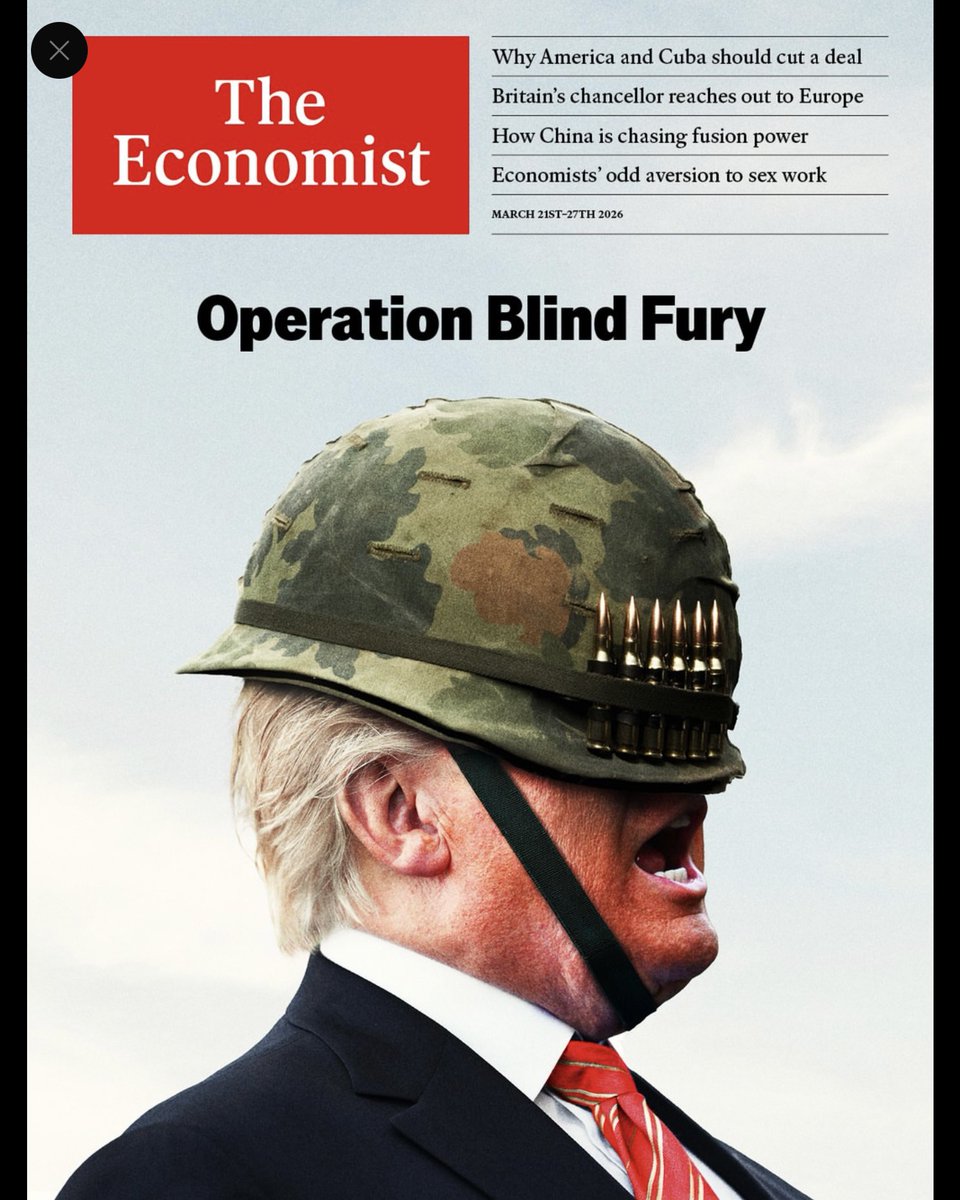
Two weeks apart (this is now an Economist genre)
Bruno Maçães tweet mediaBruno Maçães tweet media
English
1
833
5.9K
207.4K
Martin Sebena
Martin Sebena@MartinSebena·
@IsabellaMWeber Pandemic-era facemask diplomacy becomes the Iran war-era solar panel diplomacy
Indonesia
0
0
1
187
Martin Sebena
Martin Sebena@MartinSebena·
V polovici roku 2025 dosiahol Taiwan smutny milnik - odvtedy je na ostrove viac aut nez ludi.
Martin Sebena tweet media
1
0
2
109
TosPros
TosPros@TomosPros·
@MartinSebena Obama dovedl Severní Koreu k jaderným zbraním
Čeština
1
0
0
46
Martin Sebena
Martin Sebena@MartinSebena·
Výborná analýza od šéfa Obamovho tímu na Irán. Problém je, že Izraelu vyhovuje forever war, ktorá prinúti USA držať veľkú časť armády v regióne. Scenár, ktorý nevyhovuje nikomu inému. Uvidíme aký vplyv bude mať Netanjahu na Trumpa.
Ilan Goldenberg@ilangoldenberg

Three weeks into the war with Iran, a number of observations as someone who spent years war-gaming this scenario. 1. The U.S. and Israel may have produced regime transition in the worst possible way. Ali Khamenei was 86 and had survived multiple bouts of prostate cancer. His death in the coming years would likely have triggered a real internal reckoning in Iran, potentially opening the door to somewhat more pragmatic leadership, especially after the protests and crackdown last month. Instead, the regime made its most consequential decision under existential external threat giving the hardliners a clear upperhand. Now we appear to have a successor who is 30 years younger, deeply tied to the IRGC, and radicalized by the war itself – including the killing of family members. Disastrous. 2. About seven years ago at CNAS, I helped convene a group of security, energy, and economic experts to walk through scenarios for a U.S.--Iran war and the implications for global oil prices. What we’re seeing now was considered one of the least likely but worst outcomes. The modeling assumed the Strait of Hormuz could close for 4–10 weeks, with 1–3 years required to restore oil production once you factored in infrastructure damage. Prices could spike from around $65 to $175–$200 per barrel, before eventually settling in the $80–$100 range a year later in a new normal. 3. One surprising development: Iran is still moving oil through the Strait of Hormuz while disrupting everyone else. In most war games I participated in, we assumed Iran couldn’t close the Strait and still use it themselves. That would have made the move extremely self-defeating. But Iran appears capable of harassing global shipping while still pushing some of its own exports through. That changes the calculus. 4. The U.S. now finds itself in the naval and air equivalent of the dynamic we faced in Iraq and Afghanistan. It’s a recipe for a quagmire where we win every battle and lose the war. We have overwhelming military dominance and are exacting a tremendous cost. But Iran doesn’t need to win battles. They just need occasional successes. A small boat hitting a tanker. A drone slipping through defenses in the Gulf. A strike on a hotel or oil facility. Each incident creates insecurity and drives costs up while remind everyone that the regime is surviving and fighting. 5. The deeper problem is that U.S. objectives were set far too high. Once “regime change” becomes the implicit or explicit goal, the bar for American success becomes enormous. Iran’s bar is simple: survive and keep causing disruption. 6. The options for ending this war now are all bad. You can try to secure the entire Gulf and Middle East indefinitely – extremely expensive and maybe impossible. You can invade Iran and replace the regime, but nobody is seriously going to do that. Costs are astronomical. You can try to destabilize the regime by supporting separatist groups. It probably won’t work and if it does you’ll most likely spark a civil war producing years of bloody chaos the U.S. will get blamed for. None of these are good outcomes. 7. The other escalatory options being discussed are taking the nuclear material out of Esfahan or taking Kargh Island. Esfahan is not really workable. Huge risk. You’d have been on the ground for a LONG time to safely dig in and get the nuclear material out in the middle of the country giving Iran time to reinforce from all over and over run the American position. 8. Kharg Island can be appealing to Trump. He’d love to take Iran’s ability to export oil off the map and try to coerce them to end the war. It’s much easier because it’s not in the middle of IRan. But it’s still a potentially costly ground operation. And again. Again, the Iranian government only has to survive to win and they can probably do that even without Kargh. 9. The least bad option is the classic diplomatic off-ramp. The U.S. declares that Iran’s military capabilities have been significantly degraded, which is how the Pentagon always saw the purpose of the war. Iran declares victory for surviving and demonstrating it can still threaten regional actors. It would feel unsatisfying. But this is the inevitable outcome anyway. Better to stop now than after five or ten more years of escalating costs. Remember in Afghanistan we turned down a deal very early in the war with the Taliban that looked amazing 20 years later. Don’t need to repeat that kind of mistake. 10. The U.S. and Israel are not perfectly aligned here. Trump just needs a limited win and would see long-term instability as a negative whereas for Netanyahu a weak unstable Iran that bogs the U.S. down in the MIddle East is a fine outcome. If President Trump decided he wanted Israel to stop, he likely has the leverage to push it in that direction just as he pressured Netanyahu to take a deal last fall on Gaza. 11. When this is over, the Gulf states will have to rethink their entire security strategy. They are stuck in the absolute worst place. They didn’t start this war and didn’t want it and now they are taking with some of the worst consequences. Neither doubling down with the U.S. and Israel nor placating the Iranians seems overwhelmingly appealing. 12. One clear geopolitical winner so far: Russia. Oil prices are rising. Sanctions are coming off. Western attention and military resources are shifting away from Ukraine. From Moscow’s perspective, this war is a win win win. 13. At some point China may have a role to play here. It is the world’s largest oil importer, and much of that supply comes from the Middle East. Yes they are still getting oil from Iran. But they also buy from the rest of the Middle East, and a prolonged disruption in the Gulf hits Beijing hard. That gives China a real incentive to help push toward an end to the conflict.


2
0
15
1.1K
Martin Sebena
Martin Sebena@MartinSebena·
@MichalLiptak Jj to sú tie trhliny. Bod 3 o tom že Irán stále vyváža ropu ma napadol okamžite. Ale čo myslim ze môže byt pravda je že Američania idú podľa stratégie (a nie len hurá systémom), ktorá je ale nedostačujúca.
0
0
0
26
Michal Lipták
Michal Lipták@MichalLiptak·
Ilan Goldenberg@ilangoldenberg

This article is compelling and smart. I’ve seen it forwarded around a lot. Let’s walk through why it’s wrong.  1. The author argues that Iran’s military infrastructure especially its drones and missiles are being systematically taken apart.  True. But in the aftermath who is going to keep it that way? After the 12 day war Israel and Trump declared Iran’s capacity to make war “obliterated” and set back for a generation. Less than a year later they went back to war because of how quickly Iran was rebuilding. This campaign is much more comprehensive, but the same problem still applies. How to avoid being stuck in the aftermath in a “mow the lawn” scenario where the US has to expend tremendous assets that could be directed elsewhere in the world - especially towards the Indopacific. And where the region operates at a new unstable normal where all previous taboos on military action are off. 2.  He argues that the nuclear infrastructure had to be disassembled because one president after another had just let Iran’s nuclear program grow. Not true. Obama had managed to dramatically and verifiably reduce Iran’s nuclear capacity through the JCPOA. Trump killed that. 3. He argues Iran is self harming by stopping its own oil from going through the Strait of Hormuz. This was always an assumption before the war, but they’ve managed to shut down the Strait for everyone else while still exporting 1 million bbls per day of their own stuff.  That makes this much more sustainable.  4. He Argues that Iran’s proxy networks are dramatically weakened. True, but also as we’ve learned from previous conflicts they will regenerate and it’s impossible to root them out with a military strategy alone if there is no political follow up to create a better alternative. That is why Israel is on the verge of a major campaign in Lebanon only a year and a half after supposedly setting back Hezbollah for a generation. These fights are costly Pyrrhic victories that will just need to be fought again and again and again unless there is a political strategy to consolidate victory which both Israel and the US have failed at since October 7th.  5. Finally, the author argues that we need to ignore the President’s own words about regime change and the Iranian people rising up and focus on what the military is doing.  But that’s not how war works. War is fought to achieve a political objective. If there is no clear objective set out by the political leadership it’s impossible to translate battlefield victories into a consolidated win.  By setting the bar at regime change Trump has made it extraordinarily hard for the US to be perceived as winning even if the military executes the plans. Perception is a big part of the battle in war. And again the costs are incredibly high. And as the author argues, the only way this works is if there is a plan to contain and keep Iran down in the aftermath. Do we have any faith in Trump to do that? Again that is going to be incredibly expensive and require a presence like what the US left in the Middle East after the first Gulf War to contain Saddam.  That’s something we could afford in 1991 when the US was a unipolar power. But not in 2026 when we have a real competitor in China that we need to manage.  aljazeera.com/amp/opinions/2…

QME
1
0
0
71
Maseva
Maseva@Maseva10·
@MartinSebena Tak snad už je po smrti, takže snad už žádný.
Čeština
1
0
0
75
Martin Sebena retweetou
Martin Sebena
Martin Sebena@MartinSebena·
Karpathy si myslí, že AI vie zo 60% nahradiť prácu učiteľov v materskej škôlke. Za mňa je to všetko, čo je treba o tomto nezmyselnom cvičení vedieť.
Kaito | 海斗@_kaitodev

5 minutes ago, @karpathy just dropped karpathy/jobs! he scraped every job in the US economy (342 occupations from BLS), scored each one's AI exposure 0-10 using an LLM, and visualized it as a treemap. if your whole job happens on a screen you're cooked. average score across all jobs is 5.3/10. software devs: 8-9. roofers: 0-1. medical transcriptionists: 10/10 💀 karpathy.ai/jobs

2
0
12
510