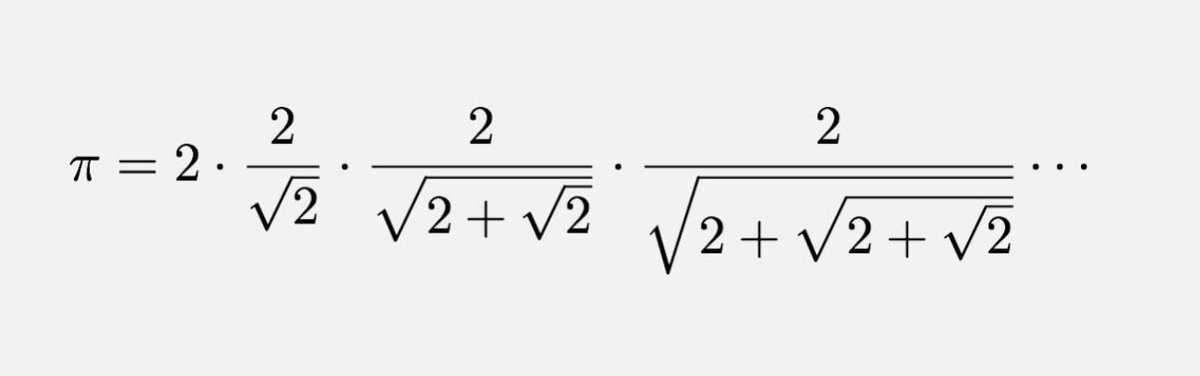
If your idea of math is boring, you're in for a surprise with François Viète. This 16th-century French genius revolutionized algebra.
Before Viète, algebra was written out in long, confusing sentences. He introduced the use of letters to represent unknowns, laying the foundation for modern algebraic notation.
But wait—there’s more! He was also a cryptanalyst, cracking secret codes during the French Wars of Religion. Talk about a versatile mind!
Viète’s work didn’t stop at algebra or cryptography. He made significant contributions to trigonometry, geometry, and even astronomy.
His methods were so groundbreaking that he was nicknamed the Father of Modern Algebra.
So next time you solve for x, give a nod to François Viète for making it all possible.
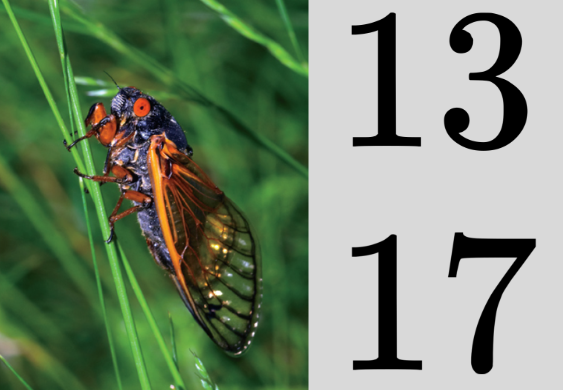
Certain cicadas display a startling behavior: their emergence from the soil is synchronized with periods that are usually prime numbers, such as 13 and 17. Sometimes, more than 1.5 million individuals emerge within a single acre over a short interval of time.
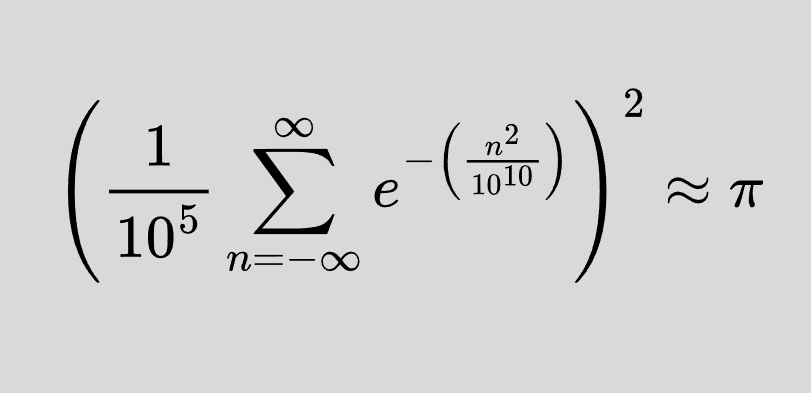
The following little-known formula yields the correct decimal digits of π to an astonishing 42 billion places; however, it is not an exact formula for π. In other words, it is only a very high-precision approximation. The symbol ≈ denotes an approximation
(Borwein and Borwein, Strange Series and High Precision Fraud, 1992).