The Pan-European Journal

154 posts

The Pan-European Journal banner
The Pan-European Journal

The Pan-European Journal

@PanEuropeanJrnl

Pan-European News Magazine affiliated w/ @AveEuropae Columns | Commentary | Infographics

Europe Entrou em Mayıs 2024
778 Seguindo12.6K Seguidores
The Pan-European Journal
The Pan-European Journal@PanEuropeanJrnl·
What makes writers like Montaigne, the French moralists - e.g. La Rochefoucauld, Chamfort, Rivarol - Gracián, Lichtenberg, Schopenhauer, and Nietzsche so compelling? They are, above all, brilliant psychologists and unflinching anthropologists of the human condition - not merely observers of how people feel, but diagnosticians of how people actually are. They are united in more than outlook and temperament. Many of them witnessed the unravelling of Scholasticism and Christian dogma, and their thought carries the mark of that collapse; others wrote in the wake of Revolution and the upheavals of industrial modernity. They inherited a world stripped of settled answers and wrote with full knowledge of that loss. The aphoristic form, for them, is not merely a stylistic preference - it is a philosophical stance, the only honest response to an age of permanent flux. "Man is indeed an object miraculously vain, various and wavering," Montaigne wrote. "It is difficult to found a judgement on him which is steady and uniform."
The Pan-European Journal tweet mediaThe Pan-European Journal tweet media
The Pan-European Journal@PanEuropeanJrnl

All answers as to who or what man actually is point to one fundamental anthropological truth: every answer serves human beings in their quest for self-preservation. The multiplicity of views, outlooks, and conceptions of things hints at something deeper - that human beings are creatures who cannot not compete, cannot not seek to impose their self-conception, cannot not build hierarchies. And yet they are also creatures who genuinely need community, genuinely need rule, and are genuinely capable of elaborating the most sophisticated cultural and moral frameworks. Those frameworks, however, are never simply what they claim to be.

English
0
4
11
298
The Pan-European Journal
The Pan-European Journal@PanEuropeanJrnl·
Once again, Putin and his ex-Soviet kleptocrats are not beating the allegations from the pro-European Right. If he's invoking Alexander the Great, is he also invoking the man's fate? Maybe this "security buffer" against "civil strife" isn't worth the price - or is he willing to sacrifice Russia just to prolong his tenure? Something for our liberal acquaintances at home to chew on: what, ultimately, distinguishes him from the so-called "adults in the room" ruling the West when it comes to this topic?
Visegrád 24@visegrad24

Putin encourages "mixed marriages" between Slavic Russians and non-Slavic Russians as a "security buffer" against civil strife. This is Putin the Eurasianist

English
4
8
36
1.6K
The Pan-European Journal
The Pan-European Journal@PanEuropeanJrnl·
"When the Swedish army plundered Prague in 1648 brought back home with them the Codex Argentus, the 5th century Gothic Bible. The 'new Goths' were reclaiming the past they were in a process of inventing. The stunning victories over the Habsburg and Catholic armies seemed to confirm the manifest destiny of the Swedish people. The cult of the Goths which was started by Johannes Magnus was adopted with enthusiasm by Erik XIV and Gustavus Adolphus to celebrate the martial qualities of the Swedes. Gustavus Adolphus himself appeared dressed as king Berik at the tournament to mark his coronation in 1617. In his famous farewell to the Riksdag before leaving for Pomerania in 1630, he reminded the audience that they were descendants from the ancients Goths 'who conquered almost the whole earth and brought many kingdoms into subjection.'" A great example of a man deeply conscious of his own origins and possessed of a strong historical - or mythical - consciousness; one which animated his soul, guided his actions, and inspired tens of thousands of men to march into battle for his sake
The Pan-European Journal tweet mediaThe Pan-European Journal tweet media
The Golden One@TheGloriousLion

I often think of our old kings. Whenever I am tired, I think of them. Whenever things are uncomfortable, I think of them. I must admit that I am ashamed of Sweden as it looks today. But things can change as long as there is a will. It is not over. No surrender!

English
1
6
34
1.4K
The Pan-European Journal retweetou
The Pan-European Journal
The Pan-European Journal@PanEuropeanJrnl·
All answers as to who or what man actually is point to one fundamental anthropological truth: every answer serves human beings in their quest for self-preservation. The multiplicity of views, outlooks, and conceptions of things hints at something deeper - that human beings are creatures who cannot not compete, cannot not seek to impose their self-conception, cannot not build hierarchies. And yet they are also creatures who genuinely need community, genuinely need rule, and are genuinely capable of elaborating the most sophisticated cultural and moral frameworks. Those frameworks, however, are never simply what they claim to be.
The Pan-European Journal tweet mediaThe Pan-European Journal tweet media
The Pan-European Journal@PanEuropeanJrnl

The driving force behind Joseph de Maistre's thought is his anthropology, which is sound and historically grounded. This is because the Christian notion of original sin is far more realistic than any tabula rasa conception of man. Maistre's thought emerges from the age of mass politics and totality unleashed by the Revolution. In many respects, this marks a transition in "right-wing thought": the worship of the ancien régime and an absolutist conception of sovereignty as a countermeasure against Revolution. The old defence of estates, rights, and societas civilis became untenable once its "metaphysical" and sociological foundations were destroyed. We see this reaction directly in Maistre, and in Donoso Cortés it morphs into total despair as it takes the form of arbitrary dictatorship - something Schmitt himself criticises him for. Among devout Christian reactionaries especially, a form of eschatology still influences their thinking, which gives rise to a kind of kathetonic thinking that I would argue is psychologically damaging because it produces what in contemporary zoomer parlance might be called "doomerism." When the forces of fate - and the movement they produce through time - are seen as a dissolving force that "cannot be stopped" but only "restrained," the result is a rabid authoritarianism that amounts to little more than a band-aid, meant to let a half-dead corpse draw a few more breaths in an otherwise miserable world conquered by "paganism." This is one reason why devout reactionaries and conservatives, when true to their beliefs, often end up neurotic. To take Maistre seriously beyond his anthropology - and thus beyond his view of power - is less a serious political stance than a form of romanticism. It is also worth noting that people often cite Maistre's essay On Sovereignty as a key work of right-wing thought, when the "real" Maistre is better found in the Saint Petersburg Dialogues. The former is an early, post-revolutionary work, containing a curious mix of different strains of thought. At times it reads like it is written by a moderate constitutionalist, almost as if a Montesquieu was speaking. There is even sections arguing for a type of utilitarianism; and at times it feels like he has recently read Bentham seriously. Moreover, Maistre's notion of sovereignty there is nearly indistinguishable from Rousseau's: sovereignty for him is a centralised will that reigns, not necessarily one that rules. This makes for a rather interesting and frankly confused mix of thought. I think it's safe to say that anyone seriously invoking Joseph de Maistre does so because he represents the "complete opposite" of the current order of things - which said person, of course, opposes. Moreover, such citations often seem to serve merely as a signal that "one is in on the bit," that "I am part of the gang." It is frankly a sort of larp, and there are authors far more worth reading: Thomas Hobbes, Max Weber, Carl Schmitt, Reinhart Koselleck, Panajotis Kondylis, Gianfranco Poggi, Charles Tilly, etc. These authors give you a far more comprehensive grasp of the overall transformation we have undergone in modernity, and allow you to contemplate solutions to actual problems more coherently, rather than simply lamenting that "things suck and here is why." Just a final note: You should still definitely read Joseph de Maistre.

English
0
4
46
2.6K
The Pan-European Journal
The Pan-European Journal@PanEuropeanJrnl·
We will publish this in article format later today.
The Pan-European Journal@PanEuropeanJrnl

How the French Right's Position on Europe is Changing: Observations from a Pan-European Inside National Rally (RN) This piece was written by a friend of the Pan European Journal. Said person is a long-time member of Jordan Bardella's Rassemblement National (National Rally in English). Jordan Bardella will never fully satisfy the historical sovereigntist wing of his political camp, even if he presents himself as part of that tradition. His current positioning reflects a significant evolution away from classical French sovereigntism and toward a more pragmatic conception of European power. His definition of Europe as a form of “co-ownership” is intellectually sound. Likewise, he is right to challenge the growing influence of the European Commission while simultaneously projecting himself as a future member of the European Council, where national leaders ultimately exercise political authority. This combination of institutional criticism and strategic engagement is coherent. More broadly, Bardella articulates an interesting vision that, in several respects, falls within the continuity of Emmanuel Macron’s doctrine of European strategic autonomy. One of his strongest ideas is that France should provide security guarantees to Eastern European nations—particularly Poland and the Baltic states. This reflects a significant shift in French strategic thinking. Historically, France’s European strategy was largely structured around reassuring Germany and Northern European countries regarding fiscal discipline and budgetary credibility. The emergence of the military and security dimension has altered this equation. Bardella appears to understand that France can now build stronger partnerships with Eastern Europe, exchanging leadership on defense and security for political support on more conservative and sovereign matters, rather than remaining trapped between Northern demands for fiscal orthodoxy and Western European humanitarian politics. This constitutes one of the main differences with Macron: while sharing similar objectives regarding European power and strategic autonomy, Bardella adopts a more confrontational approach toward the Commission and places greater emphasis on the balance of power between member states and Brussels. His position toward Poland is particularly strong. He projects himself effectively as a future European Council leader and understands the strategic importance of Franco-Polish cooperation. His willingness to work closely with the European Conservatives and Reformists (ECR) group is also a positive development. On the European Union itself, his implicit doctrine could be summarized as “change everything without destroying anything.” Rather than advocating withdrawal or institutional rupture, he seeks to redirect the Union toward different priorities while preserving its framework. Regarding NATO and Russia, Bardella’s position is notably stronger than Marine Le Pen’s. He correctly identifies the consequences of a potential American disengagement from Europe and the resulting need for France to assume greater responsibility in supporting European rearmament. His refusal to advocate withdrawal from NATO’s integrated military command while the war against Russia continues demonstrates strategic realism. More generally, he shows greater lucidity regarding the Russian threat than previous generations of the French nationalist right. His support for extending the French nuclear umbrella to European partners is particularly significant. This is one of the most important developments in contemporary French strategic thinking and represents a credible response to growing security concerns in Eastern Europe. He is also right to advocate a strong European preference in defense procurement. European rearmament should strengthen Europe’s industrial base and strategic independence rather than deepen external dependencies. His position on Russia is generally sound: support for a ceasefire accompanied by meaningful security guarantees, combined with the maintenance of France’s commitments in Eastern Europe. He appears to understand the central role that Eastern Europe now plays in France’s geopolitical projection. This reflects a doctrine that values the Baltic states and Poland not merely as peripheral actors but as essential partners in the construction of a European balance of power. He is equally correct in highlighting the Commission’s weaknesses in trade negotiations and commercial agreements. On the next Multiannual Financial Framework (MFF), he will likely be able to secure meaningful concessions against the Commission by leveraging intergovernmental coalitions. The key concepts underpinning Bardella’s vision are strategic autonomy, rearmament, power, prosperity, independence, and the emergence of a new French leadership within Europe. His political message is increasingly that of a “French sovereigntist” seeking to build a “Europe of power” rather than dismantle the European project itself. Overall, this represents a clear improvement over Marine Le Pen’s traditional positions. While it may be difficult for historical sovereigntists to fully embrace this evolution, it should nevertheless be regarded as a positive and intellectually coherent development.

English
0
1
16
473
The Pan-European Journal
The Pan-European Journal@PanEuropeanJrnl·
@posta_octavian This is most likely the case with a great many people involved in RN, AfD-type parties as well. It is just that a certain media perception and internal orthodoxy prevents these voices from actually coming through.
English
0
0
7
88
Octavian 🇪🇺
Octavian 🇪🇺@posta_octavian·
@PanEuropeanJrnl I have this suspicion that he's more pro European than he lets on but doesn't want a public break with Le Pen's position.
English
1
0
16
194
The Pan-European Journal
The Pan-European Journal@PanEuropeanJrnl·
How the French Right's Position on Europe is Changing: Observations from a Pan-European Inside National Rally (RN) This piece was written by a friend of the Pan European Journal. Said person is a long-time member of Jordan Bardella's Rassemblement National (National Rally in English). Jordan Bardella will never fully satisfy the historical sovereigntist wing of his political camp, even if he presents himself as part of that tradition. His current positioning reflects a significant evolution away from classical French sovereigntism and toward a more pragmatic conception of European power. His definition of Europe as a form of “co-ownership” is intellectually sound. Likewise, he is right to challenge the growing influence of the European Commission while simultaneously projecting himself as a future member of the European Council, where national leaders ultimately exercise political authority. This combination of institutional criticism and strategic engagement is coherent. More broadly, Bardella articulates an interesting vision that, in several respects, falls within the continuity of Emmanuel Macron’s doctrine of European strategic autonomy. One of his strongest ideas is that France should provide security guarantees to Eastern European nations—particularly Poland and the Baltic states. This reflects a significant shift in French strategic thinking. Historically, France’s European strategy was largely structured around reassuring Germany and Northern European countries regarding fiscal discipline and budgetary credibility. The emergence of the military and security dimension has altered this equation. Bardella appears to understand that France can now build stronger partnerships with Eastern Europe, exchanging leadership on defense and security for political support on more conservative and sovereign matters, rather than remaining trapped between Northern demands for fiscal orthodoxy and Western European humanitarian politics. This constitutes one of the main differences with Macron: while sharing similar objectives regarding European power and strategic autonomy, Bardella adopts a more confrontational approach toward the Commission and places greater emphasis on the balance of power between member states and Brussels. His position toward Poland is particularly strong. He projects himself effectively as a future European Council leader and understands the strategic importance of Franco-Polish cooperation. His willingness to work closely with the European Conservatives and Reformists (ECR) group is also a positive development. On the European Union itself, his implicit doctrine could be summarized as “change everything without destroying anything.” Rather than advocating withdrawal or institutional rupture, he seeks to redirect the Union toward different priorities while preserving its framework. Regarding NATO and Russia, Bardella’s position is notably stronger than Marine Le Pen’s. He correctly identifies the consequences of a potential American disengagement from Europe and the resulting need for France to assume greater responsibility in supporting European rearmament. His refusal to advocate withdrawal from NATO’s integrated military command while the war against Russia continues demonstrates strategic realism. More generally, he shows greater lucidity regarding the Russian threat than previous generations of the French nationalist right. His support for extending the French nuclear umbrella to European partners is particularly significant. This is one of the most important developments in contemporary French strategic thinking and represents a credible response to growing security concerns in Eastern Europe. He is also right to advocate a strong European preference in defense procurement. European rearmament should strengthen Europe’s industrial base and strategic independence rather than deepen external dependencies. His position on Russia is generally sound: support for a ceasefire accompanied by meaningful security guarantees, combined with the maintenance of France’s commitments in Eastern Europe. He appears to understand the central role that Eastern Europe now plays in France’s geopolitical projection. This reflects a doctrine that values the Baltic states and Poland not merely as peripheral actors but as essential partners in the construction of a European balance of power. He is equally correct in highlighting the Commission’s weaknesses in trade negotiations and commercial agreements. On the next Multiannual Financial Framework (MFF), he will likely be able to secure meaningful concessions against the Commission by leveraging intergovernmental coalitions. The key concepts underpinning Bardella’s vision are strategic autonomy, rearmament, power, prosperity, independence, and the emergence of a new French leadership within Europe. His political message is increasingly that of a “French sovereigntist” seeking to build a “Europe of power” rather than dismantle the European project itself. Overall, this represents a clear improvement over Marine Le Pen’s traditional positions. While it may be difficult for historical sovereigntists to fully embrace this evolution, it should nevertheless be regarded as a positive and intellectually coherent development.
The Pan-European Journal tweet mediaThe Pan-European Journal tweet media
POLITICOEurope@POLITICOEurope

"NATO's role needs to be redefined," French far-right front-runner Jordan Bardella told us. "We are not in favor of leaving NATO. But we are in favor of leaving NATO's integrated command," he said. 🎦 Watch the full interview and read our analysis: politico.eu/article/france…

English
4
5
34
2.5K
The Pan-European Journal retweetou
Carlsbad Institute for Social Thought
The Carlsbad Institute is excited to announce our first successful book project! Working with the Freundeskreis Panajotis Kondylis and @VerlagKarlAlber, the institute has republished Panagiotis Kondylis’ landmark “Planetary Politics After the Cold War”.
Carlsbad Institute for Social Thought tweet media
English
1
7
36
5.6K
The Pan-European Journal retweetou
Ave Europa
Ave Europa@AveEuropae·
The USA went from demanding regime change and the end of the Iranian nuclear program to releasing Iranian assets for reparations and granting unprecedented legitimacy to the IRGC. In light of this, everyone in Eastern Europe, many Germans and Italians who are committed atlanticists need to ask themselves an important question. Can this Empire from across the pond really protect us? We have to question not only America's political commitments to the defence of Europe since MAGA. We have to question whether it has the ability to defend Europe at all. America runs a global empire. It protects Israel, Japan, trade routes and has bases all around the world. In a conflict with Russia, would the USA even have the ability to commit enough forces to the European front to make a difference, let alone the willingness? The USA themselves have done what they could to prevent Europe becoming its own pole in the global world order to ensure its own leadership of the western world. Today, there can be no question that the US does not have the ability to be the sole leader of the western world. Europe needs to be able to act without the US. But fragmented, on a mere nation state level, we will never be able to compete, let alone escape from the American grasp. Today, in 2026, atlanticism endangers European security. It makes Europe complacent, weak and unprepared for the future. No more!
Ave Europa tweet media
English
5
8
76
1.4K
The Pan-European Journal
The Pan-European Journal@PanEuropeanJrnl·
"Our enemies are our enemies" is a statement of such profundity that only the most gifted statesman could have come up with it. And the enemy in question - Marxism - is, we are assured, easily identifiable everywhere. Truly a historical force in our own times. The worldview - or hermeneutic circle - Hegseth operates from within is one upon which the epochal sun of history has already set. He is mistaking, on his horizon, the dusk turned night for the dawn. Many such cases in the Con. Inc. and liberal crowds.
The Conservative Alternative@OldeWorldOrder

PETE HEGSETH: "Marxists are our enemies. Not political opponents, but real enemies."

English
3
3
31
1.4K
The Pan-European Journal
The Pan-European Journal@PanEuropeanJrnl·
Again, it is worth noting that the concept of "EU membership" will likely give way to alternatives - "partner," "strategic partner," "ally," and so on - as expansion and integration evolve. Rather than going through the full formal accession process, countries like Ukraine, Norway, and the United Kingdom will be pulled into the EU's broader sphere in layers, through treaties covering defence, technology, trade, and the like. This will sidestep the bureaucratic-legal mess of the path to direct membership while still delivering most of the practical benefits of said membership.
Dzis Maksym@DzisMaksym

🇺🇦🇪🇺🇵🇱 Negotiations on EU accession may be difficult for Kyiv, as the baggage of European law is increasing, and the technical process even in Poland took 7 years, - Polish Foreign Minister

English
1
1
18
739
The Pan-European Journal
The Pan-European Journal@PanEuropeanJrnl·
In a sense the burst has already happened - we are living through a phase of decomposition. The horrific stench is everywhere. Aesthetics - or more correctly, kitsch - is already everywhere, but with the final burst it will become truly inescapable. "Art" will not come to an "end," but will rather atomise further into the environment itself, becoming unrecognisable as such. The "aesthetic" effect will simply be everywhere. Think of something like Instagram: it has the feel of a supermarket, an abundance of variety and visual appeal, everything is optimised for purchase. But what looks like aesthetic proliferation is actually aesthetic narrowing disguised as variety. Everything will be the same bland thing.
English
0
0
3
107
The Pan-European Journal
The Pan-European Journal@PanEuropeanJrnl·
This is still, I think, one of the fundamental things that truly separates Europe from the United States. Something like this is simply inconceivable in Europe. Baudrillard was correct when he said that Disneyland was never meant to be entertainment - it was a disguise for the fact that the whole country had already become a theme park. All art serves the same function today: it has been turned into pure spectacle. We merely pretend that aesthetics still occupies a special, bounded space, when in reality it has saturated everything. (In a similar vein sex is everywhere today except in sex). "Art is dead," as some would say - and there is truth to it - but it is precisely because it is "dead" that it is now everywhere. Aesthetics as a principle has collapsed, been completely levelled: kitsch now permeates the entire social body. "Art" and "aesthetics" are everywhere - in society, politics, economics, and the media. The principle of consumption has taken the place of the contemplation of beauty; money has taken the place of the art object. "Art" and "aesthetics" today are like a bloated corpse: still expanding, and soon ready to burst.
Championship Rounds@ChampRDS

🚨 Tyson Fury got his own walkout at the UFC White House event He says he hopes to fight Anthony Joshua later this year, and reveals Dana White will be making a MASSIVE announcement involving him soon 👀

English
2
3
35
3.2K
The Pan-European Journal
The Pan-European Journal@PanEuropeanJrnl·
People have already forgotten about the Epstein files; the Israeli war and the conflict with Iran continue to go on, yet the public's attention span has finally worn thin, and new spectacles have emerged elsewhere to feed the appetites of the masses. But every good European ought to remember that the war in Ukraine is still very much alive - and that it is their duty to follow it closely. Do not forget, do not forgive.
UNITED24 Media@United24media

🚨 BREAKING: Russian strike hits the historic Kyiv Pechersk Lavra, a world-famous Orthodox monastery and UNESCO site, igniting fire on the roof of the Dormition Cathedral.
English
1
5
32
882
The Pan-European Journal
The Pan-European Journal@PanEuropeanJrnl·
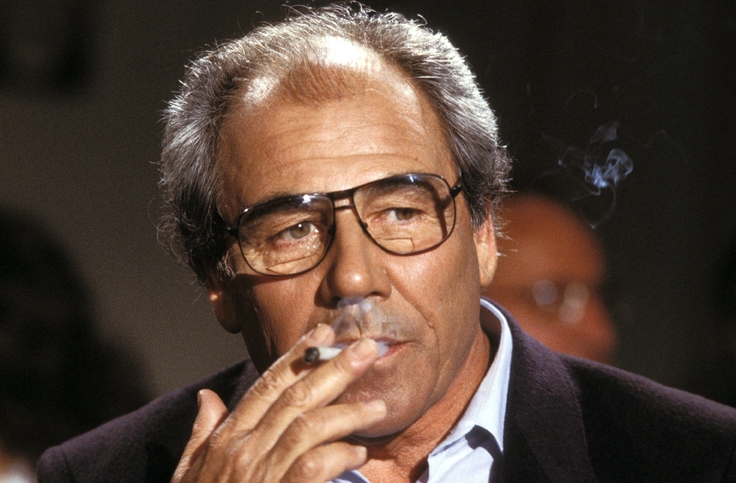
"From the anthropological point of view, art no longer seems to have a vital function; it is afflicted by the same fate that extinguishes value, by the same loss of transcendence. Art has not escaped this tendency to effectuate everything, this drive to make everything totally visible to which the West has arrived. But hypervisibility is a way to extinguish sight. I consume this art visually, I can even take a certain pleasure in it, but it does not provide me either illusion or truth. Now that the object of painting has been called into question, then the subject of painting, it seems to me that this hard term has not received as much attention: the viewer. He or she is increasingly solicited but held hostage. Is there a way of looking at contemporary art that would not be the way the artistic milieu views itself?"
The Pan-European Journal tweet media
The White House@WhiteHouse

WAKE UP! IT'S FIGHT NIGHT. 🇺🇸🥊

English
0
3
18
1.5K