Dan Fahy-O’Connell

1K posts

Dan Fahy-O’Connell

Dan Fahy-O’Connell

@PlayBasedDan

Passionate about the power of play, inquiry, environment as 3rd teacher & documentation. Experienced early years & PYP educator. MEd. 🇬🇧 🇪🇬 🇰🇭 🇹🇿 🇱🇺

Luxembourg Entrou em Ekim 2011
750 Seguindo290 Seguidores
Dan Fahy-O’Connell retweetou
Naomi Fisher
Naomi Fisher@naomicfisher·
I was talking to a grandmother last week about schooling. ‘I can see the difference’ she said. ‘When my children were young, primary school was relaxed. If the weather was good, they went outside and ran around. If they were sick, they stayed at home. Now with my grandchildren they are seated in desks for more of the day and if they are ill, they are worried that they’ll lose their 100% attendance for the term. The pressure is on to pass their phonics test when they are six and then to learn their times tables at speed by the time they are nine. They feel it and their parents feel it too’. There’s lots of talk about SEND (special educational needs and disabilities) at the moment, and how increasing numbers of children are being identified as SEND. It’s less common to ask questions about what SEND really means, and whether the education system creates more children ‘with SEND’ as it becomes more pressured and rigid. For what SEND really means is that a child cannot learn in the way which mainstream education expects. They cannot keep up with expectations, either for academic work or for behaviour. SEND is something which happens in the interaction between a child and the education system. In a system where no 6-year-old is expected to sit still and learn to write their name, then a 6-year-old who just wants to run around outside isn't a problem. In a system where everyone is meant to be able to read by age 6, then they are. We know from research that if a child is young in their year, they are more likely to be identified as ‘having SEND’. We know that summer born boys are far more likely to be identified as ‘having SEND’ than autumn born girls. We know that the impact of this immaturity resonates through the years, with the youngest in the year doing less well at GCSE. We know that the number of children ‘with SEND’ is going up year on year. It's not really plausible that more children each year have difficulties in learning, nor that being born in August makes you more likely to have learning problems than if you are born a few weeks later in September. It’s far more likely that in the push to ‘drive up standards’ the education system is becomes less, not more, suited to how children develop and learn. It’s more likely that the system is penalising immaturity – and children are inherently immature. That isn’t a lack or a defect, it’s a defining part of childhood. As the education system becomes more rigid and pressured, we’d expect more children not to be able to manage without adaptations. This is exactly what we see. Those children are holding up the flag for all the others, saying that this system is not child-friendly and doesn’t take account of developmental needs and differences. What if, instead of having higher expectations of the children, we had higher expectations of the education system? What if those expectations were of flexibility, reducing pressure and prioritising lifelong learning and wellbeing instead of short-term testing? What if we saw the increasing number of children ‘with SEND’ as a sign that the system isn’t working for the many ways in which children develop, rather than a sign that more and more children have learning difficulties? We’ll never sort the ‘SEND crisis’ until we start looking at SEND as an interaction between children and the education system. The more rigid the system is, the more children it will fail. Illustration by @_MissingTheMark from the book A Different Way to Learn.
Naomi Fisher tweet media
English
65
401
1.4K
114.4K
Dan Fahy-O’Connell retweetou
Square Peg
Square Peg@teamsquarepeg·
Ableism in plain sight. So so so harmful. The marble mouthing, the indignation, the entitlement. Until I had kids that needed accommodations and reasonable adjustments (phrases I’d neither heard of nor known previously), my dark secret is I thought like Emma. I didn’t admit it, not out loud. But easily fell into outrage and gossip via narratives in press or socially, the echo chamber of implicit bias and discrimination where one finds themselves nodding. Let’s unpick why that is. In evolutionary terms, pack mentality is strong. Rejecting differences = survival. Lower parts of our brain trigger feelings & responses that are instinctive and powerful when we see someone different requiring support. We feel threat therefore it’s real. However, and here’s the rub: the higher parts of the brain, the more evolved thinking parts, the part that allows critical analysis, social responsibility, positive relationships, enlightenment, progression, compassion, care; this part of the brain can do better, we do know better. Humans want to be better, learn, strive, improve, grow. Our brains are hungry for it. For some of us, we find that hard. Maybe we’ve experienced relational wounds or hardship in childhood which means we’re less tolerant (an acquired protective behaviour to avoid hurt). Maybe we have unearned privilege and simply are unaware which leads to blinkered thinking. Maybe we lack time, resources, capacity to allow anything else into our thoughts; it’s more expedient to reject complexity. Maybe we just feel ashamed we don’t do more, can’t do more, aren’t pulled to do more. Regardless. Until you’ve walked alongside someone who’s different, cared for someone with additional needs, or acquired them yourself, you won’t have faced discrimination, ableism, intolerance. If we dig deep though, we can do better. And the majority of us hold experiences where we felt impotent, judged, labelled, blamed, rejected. Gender, ethnicity, class, income, heritage, nationality, language, physiology, biology, we’ve all experienced discrimination or toxic bias in some form, however infrequently. So dig deep. Ask ourselves if our opinions are as informed as they could be. Aspire to do better, be curious, question our mindset. And maybe, less polarising narratives like Emma’s will be shared. We can do better. Together.
John Harris@johnharris1969

Here's Emma Duncan in The Times, on Special Educational Needs. What is the matter with these people? (Paywalled: thetimes.com/comment/column…)

English
3
11
28
2.7K
Dan Fahy-O’Connell retweetou
TeacherGoals
TeacherGoals@teachergoals·
So true! 🙌
TeacherGoals tweet media
English
9
302
1.3K
72.6K
Dan Fahy-O’Connell retweetou
John Sutherland
John Sutherland@policecommander·
And if you're looking for a resource to help you - calmly and intelligently - confront the hatred of the Far Right, I can highly recommend this, by the remarkable @AdamRutherford
John Sutherland tweet media
English
10
63
220
47.4K
Dan Fahy-O’Connell retweetou
Alfie Kohn
Alfie Kohn@alfiekohn·
Punished by Meta-Rewards
Alfie Kohn tweet media
English
0
30
97
8.6K
Dan Fahy-O’Connell retweetou
Alfie Kohn
Alfie Kohn@alfiekohn·
"One ironical consequence of the drive for so-called higher standards in schools is that the children are too busy to think." -John Holt (more than 60 years ago)
English
3
29
107
6.2K
Dan Fahy-O’Connell retweetou
Esther O'Connor
Esther O'Connor@EstherOConnor5·
This 👌. Play in upper primary still needed. Seeing possibilities, endless links, joy and lots of creative thinking!
English
2
5
23
2.6K
Dan Fahy-O’Connell retweetou
Tonya Gilchrist
Tonya Gilchrist@Mrs_Gilchrist·
Rejecting False Dichotomies... How might we universally design for core learning experiences & protect time for differentiation in small groups & 1:1? What about inquiry & agency? How can all of these aspects work together? I❤️ed reuniting w/@UWCThailand! #just4you #PYPchat #UDL
Tonya Gilchrist tweet media
English
0
3
16
655
Dan Fahy-O’Connell retweetou
Tania Lattanzio IGE
Tania Lattanzio IGE@igeeducators·
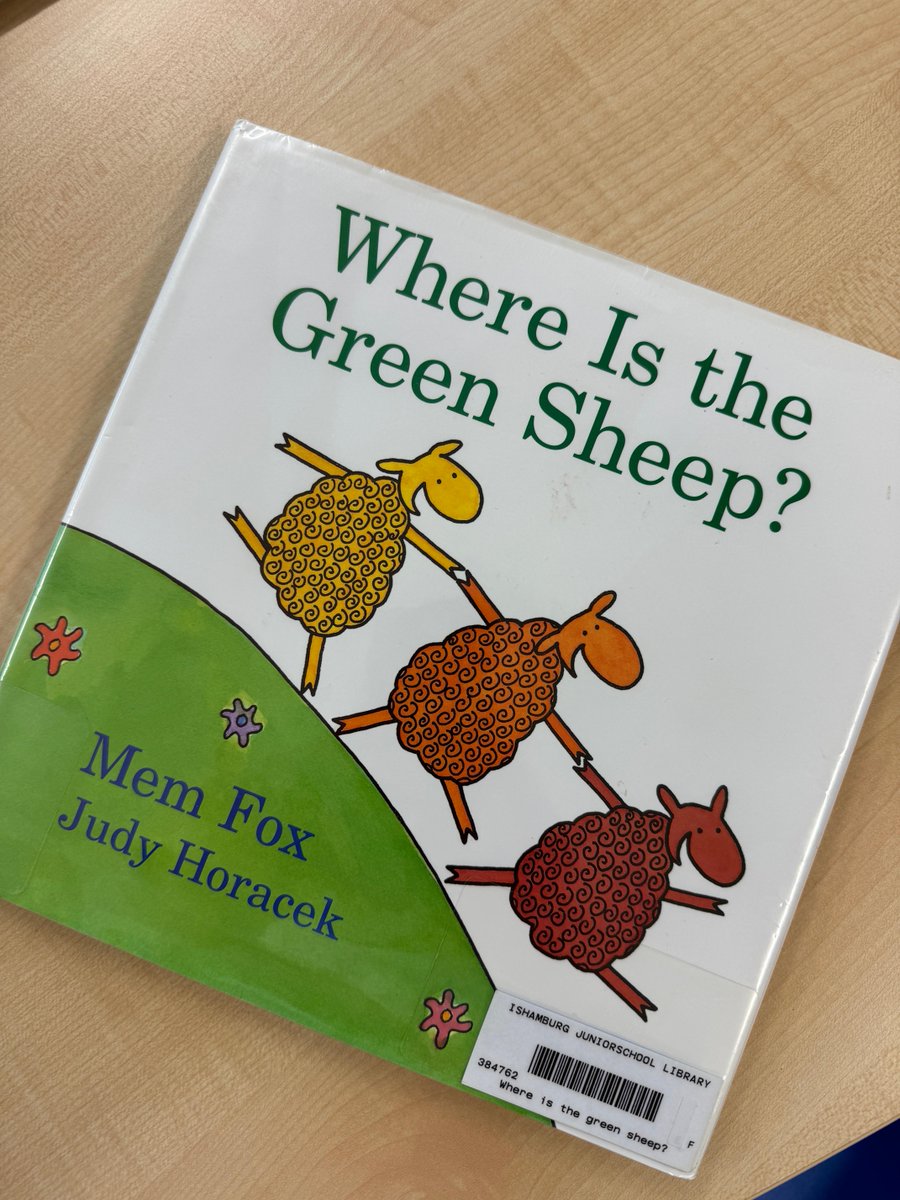
Always grateful to Mem Fox for this gem of a book. Such a joy to read it to the EY2 children at International School of Hamburg. I think I enjoyed it more than them!
Tania Lattanzio IGE tweet media
English
1
2
9
473
Dan Fahy-O’Connell retweetou
Naomi Fisher
Naomi Fisher@naomicfisher·
‘Lily, another year 11 pupil, adds: “It’s safe now. I don’t ever feel scared. And there’s always someone you can talk to.” “They put a lot in place for us,” her friend Keira agrees. “If they just kick you out of school, people carry on misbehaving. But here they give people a chance to fix their ways.”’ Turning around a school doesn’t have to start with ‘no excuses’ for behaviour. It can also start with second chances. theguardian.com/education/2024…
English
9
24
161
25K
Dan Fahy-O’Connell retweetou
Simon Gregg
Simon Gregg@Simon_Gregg·
Student: "The ones on the left are negative triangle numbers" Me: "Oh, wow. And what's in the middle?" Student: "That's zero."
Simon Gregg tweet media
English
9
13
97
11.6K
Dan Fahy-O’Connell retweetou
Sir Ken Robinson
Sir Ken Robinson@SirKenRobinson·
Remembering Sir Ken Robinson on his 74th Birthday 🌟
Sir Ken Robinson tweet media
English
33
171
1.7K
77.5K
Dan Fahy-O’Connell retweetou
Tania Lattanzio IGE
Tania Lattanzio IGE@igeeducators·
Our environments mirror what we value. What a joy to collaborate with the team at Xi'an Hanova International School. Where in their environments they put an emphasis on inquiry through invitations across the elementary school. How do your environments promote inquiry?
English
0
2
2
401
Dan Fahy-O’Connell retweetou
Alfie Kohn
Alfie Kohn@alfiekohn·
Someone should write a book for kids called How to Handle Your Difficult Parents Possible chapters: "The Behavioral Challenges of the Middle-Aged Brain," "How to Be Caring but Firm in Resisting a Controlling Parent," "When Mom or Dad's Self-Esteem Hinges on Your Accomplishments"
English
7
51
279
18.6K
Dan Fahy-O’Connell retweetou
The Quirky Brain Coach PhD, PGCap, PPDip, L5 Coach
I am watching repeats of a programme about the daily life of schools and the pupils in it. It's from a few years ago but not that far in the past. It's not a comfortable watch. In one episode, a studious, anxious and socially-awkward girl is essentially told that other kids are intimated by her smartness, that she has an unusual personality and that she has to act more confident. The teachers are saying among themselves that the pupil needs to learn to rub along with people in order to be able to make it out there in the world. What is happening is that the teachers perceive how she naturally is as unhelpful and to be fixed or changed. Instead of teaching and encouraging different ways of being and socialising, especially in terms of her more popular peers that don't befriend her, there is a deliberate and implicit intention to encourage the young person to mould her authentic way of being to be easier or more palatable for others. I can see several times in the programme where the girl subtlety changes her behaviour or avoids her natural way of being. The teachers do seem well intentioned, and the programme is probably about 12 years old now, but it's clear to me that this approach would lead to masking behaviour in neurodivergent young people. It's just awkward and sad to watch. When I was younger, I was sometimes told I need to get along with people and encouraged to diminish my intellect or my interests in case it put others off in order to do this. As a result of messaging like this, I learned to mask heavily. In later life, that meant I had no sense of who I authentically was, and I do believe my masking led (as we see reported in the literature) to a later diagnosis of autism and attendant mental health challenges, as no one saw my autism, including me. I do think that it's important that all kids are supported to learn about social relationships and ways of being and interacting. I also think it's important to learn about and discuss different thinking and interaction styles, and how to recognise them in the self and other so that people can be included and accommodated. But I don't think we should be teaching young people to cover up or diminish who they naturally are because other people might be uncomfortable with them for their natural, non-harmful, equally valid and beautiful ways of being.
English
15
23
115
11.8K
Dan Fahy-O’Connell retweetou
Alfie Kohn
Alfie Kohn@alfiekohn·
Hey, let's list our favorite clichés for rationalizing one's failure to speak out against harmful policies. I'll start: “Like it or not, this is reality." (Alternate version: "That train has left the station.”) Then there's “We need a seat at the table.” Your turn.
English
25
12
53
15K
Dan Fahy-O’Connell retweetou
MrLewisPYP
MrLewisPYP@LewisNewman12·
Something a little different than the normal beach shot for this holidays reading.
MrLewisPYP tweet media
English
1
2
6
440
Dan Fahy-O’Connell retweetou
Ms. Benison-
Ms. Benison-@BenisonMrs·
The relationship between executive function and reading... 1/6
Ms. Benison- tweet media
English
10
79
322
105.3K
Dan Fahy-O’Connell retweetou
Alfie Kohn
Alfie Kohn@alfiekohn·
"Forces are gathering on the Right that see their political aspirations as something worth killing for," yet much of the media "omit the mounting potential for political violence from their political coverage." Unsettling essay from @rickperlstein: tinyurl.com/mwtpstkk
English
3
13
36
7.4K