
Prajna retweetou
Prajna
1.9K posts


Prajna
@PrajnaPrayas
Software Writer AI@ProjectTech4Dev Doing GCPP43 @TakshashilaInst alum @CreworkHQ @nitrourkela alum '21
New Delhi, India Entrou em Nisan 2016
3.4K Seguindo240 Seguidores

Prajna retweetou

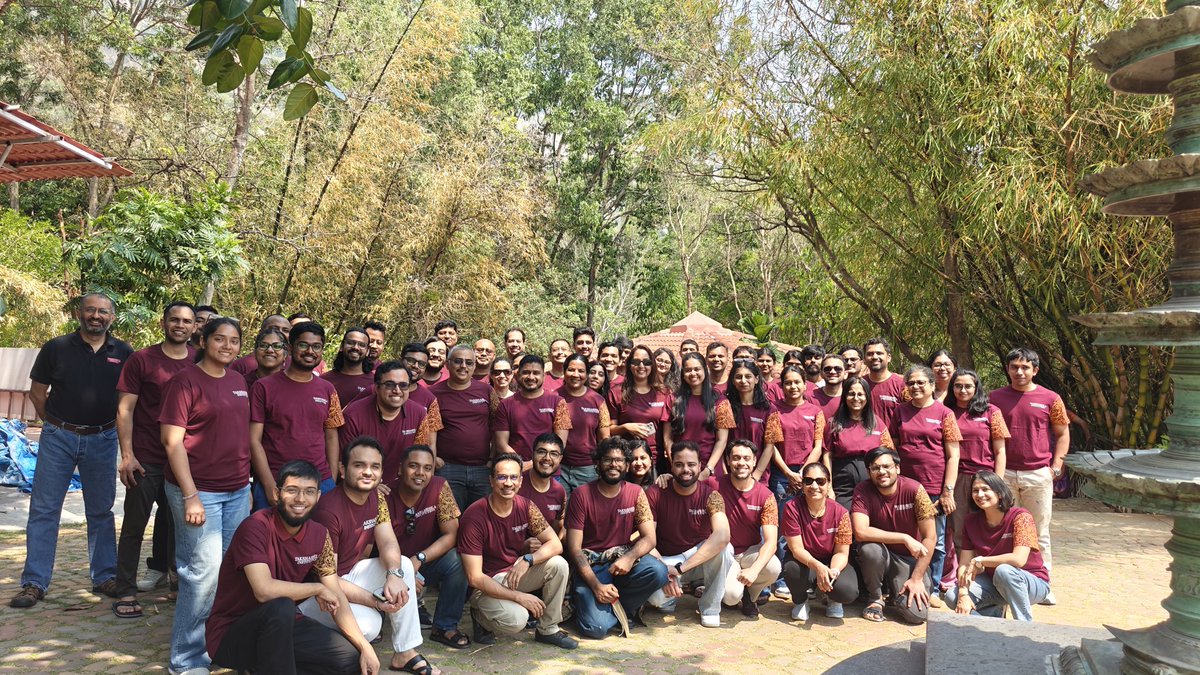
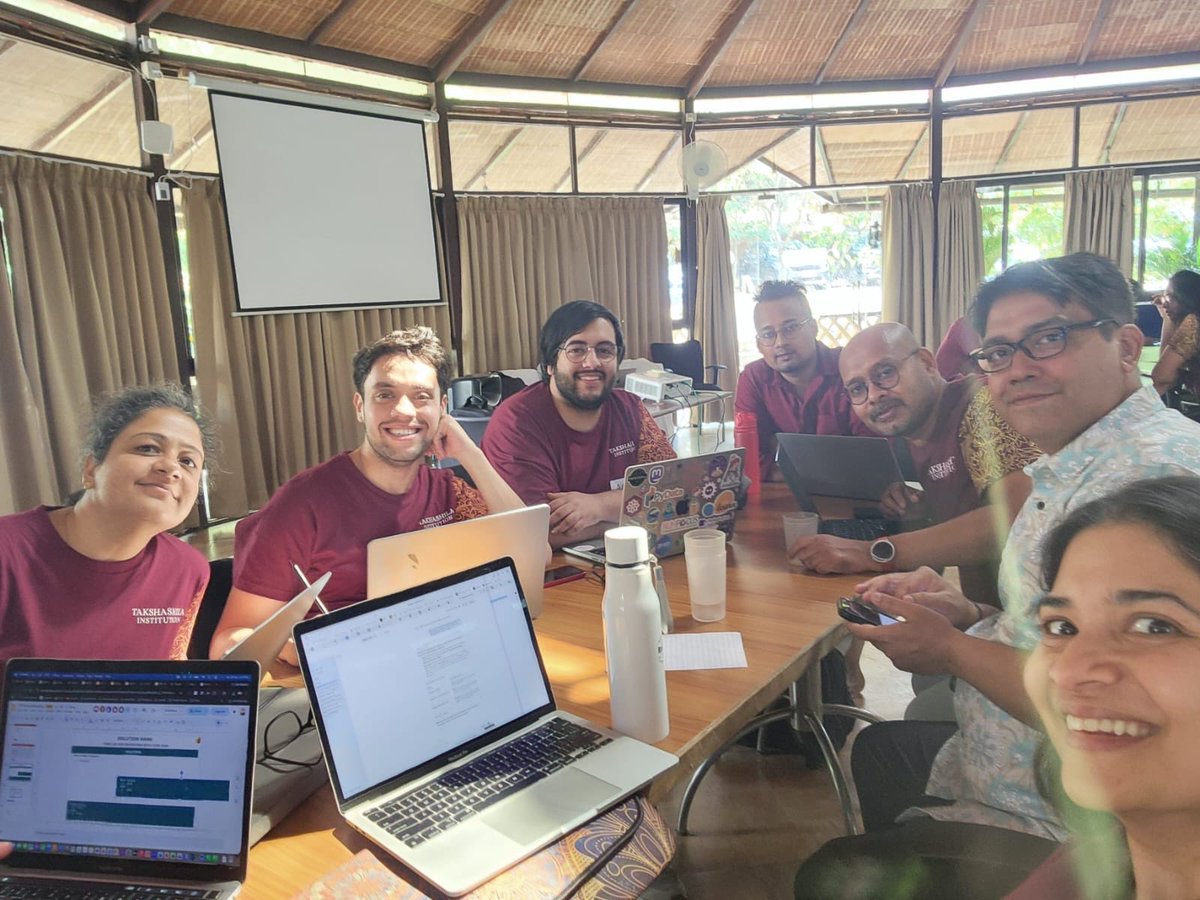
It was a privilege to be a part of the GCPP-43 cohort at @TakshashilaInst . Had a lot of fun and spirited discussions with people at the forefront of policy making in India and curious minds genuinely interested in discussing tech, defence and agrarian policies of India.


English
Lovely to be a part of this cohort
Ivan Ganguly@ivan_ganguly
It was a privilege to be a part of the GCPP-43 cohort at @TakshashilaInst . Had a lot of fun and spirited discussions with people at the forefront of policy making in India and curious minds genuinely interested in discussing tech, defence and agrarian policies of India.
English
Prajna retweetou

Another thread on Iran.
The attack (or the “excursion”) on Iran, after the forceful removal of Venezuela’s President Nicolas Maduro, may have brought US foreign policy to an all-time low – both in terms of how the world views US power and for how damaging American foreign action will be to the domestic economy.
This isn’t, of course, the first time the US has undertaken an ill-fated, poorly-planned intervention abroad.
Arguably, an important one was CIA’s toppling of Iran’s popularly-elected prime minister Mohammad Mossadegh in 1953, after he nationalized the British-owned oil industry of Iran with the strong support of Iran’s parliament.
History is contingent, and it would be a stretch to say that Mossadegh’s ouster necessarily caused the Iranian revolution and its aftermath. But there should be little doubt that CIA’s brazen intervention shaped the way that many Iranians viewed the regime of Mohammad Reza Pahlavi, instituted (or “restored”) as Shah by the Americans, as a puppet of an imperialist power.
This was the reason why many segments of Iranian population, including communists, conservatives and liberals, supported the Iranian revolution of Ayatollah Khomeini against Pahlavi. Khomeini was, in hindsight, anything but a consensus leader, quickly turning violently against his erstwhile allies and setting up a hugely repressive, theocratic regime, which is still in power in Iran.
The general lesson for today should be that US interventions will have plenty of unforeseen consequences, in part because they will inevitably create resentment. Most people around the world don’t like the power from the outside coming in and acting like a bully.
This is all the more so when the outside intervention doesn’t have a coherent ideological justification – during the Cold War, the United States had the overarching objective of stopping the spread of communism (which was a real threat).
It is even more so when the action is ill-planned, shows no understanding or concern for the lives of the people it is affecting, and is arrogant.
We may now expect US soft power around the globe to reach an all-time low (except that the Trump administration doesn’t seem to care about soft power).
True, the Iranian regime under Ayatollah Khamenei (Khomeini’s successor as the supreme leader) was singularly vicious and repressive. The majority of the population holds no love for either Khamenei or the Revolutionary Guard. But this doesn’t mean the regime will collapse. Nor does it imply that the intervention will bring peace and stability to the region.
The most remarkable thing about the Israeli-American attack on Iran is how poorly planned it was – even compared to CIA actions during the Cold War that sometimes had disastrous outcomes.
I don’t mean that the American Israeli military did not have well-scoped targets and precision bombs, which they did (for the most part). Rather, they did not have a clear (or any) exit plan.
It should have been obvious that the Iranian regime wouldn’t collapse, even if its head were cut off. It should have also been viewed as probable that Iran would retaliate in a way that would bring instability to the region and higher oil prices. After all, the Iranian regime’s strongest trump card is to block the Strait of Hormuz, which would hike global oil prices.
In fact, many in the Iranian elite may think that they have a fairly solid hand. Americans wouldn’t have an appetite for a prolonged war, while the Iranian regime can continue with the blockade for a long time and still suppress the population to ensure its survival. All the current market consternation seems to confirm this.
The consequence is higher oil prices and uncertainty in the global economy.
At a time when the economy seems fragile (as witnessed by the frequent discussions of an AI bubble), this is a recipe for trouble. Higher oil prices will slow down investment and economic growth, and push up prices. The resulting higher unemployment and inflation are bound to be costly for any government (including those in Europe who are being threatened by right-wing populist outsiders, despite the fact that most European leaders are opposing the war).
In the United States, this will be seen as Trump’s war (or a Trump-Israeli war). So he should pay the political price for it.
But here is the catch. Trump himself is the anti-establishment leader. If a segment of the US electorate blames not Trump primarily but the political establishment for the ensuing economic problems, this can further polarize the country and weaken US institutions. Trump himself is likely to throw oil on this fire (if a pun could be forgiven), by trying to further polarize Republicans and Democrats, and even attempt more incendiary actions domestically in order to mobilize his base and force Democrats into a corner. After all, Trump’s agenda favors weaker institutions, and he is likely to take any opportunity to achieve this outcome.
It remains to be seen whether the ill-planned foreign adventures led by an anti-establishment president will further weaken US institutions. If they do, the toll for Trump’s actions will be paid by all of us, even more than we can fully comprehend now – in terms of a greater risk to democracy, social peace and economic resilience.
English
Prajna retweetou

1/5: India’s new SIM-binding mandate is now in force. Messaging platforms—like WhatsApp, Telegram and Signal—must ensure their services work only when the registered, KYC-verified SIM is present in the user’s phone.
English
Prajna retweetou

Districts of Haryana closer to Delhi or highways are wealthier, yet don't always demonstrate better outcomes for women. Without focused public policy, rising incomes may not dismantle entrenched patriarchal norms. @MrinaliniJha22 @jitendra_econ write
theindiaforum.in/public-policy/…
English
This is such a sad explanation for a despotic step, sigh
Anthropic@AnthropicAI
Distillation can be legitimate: AI labs use it to create smaller, cheaper models for their customers. But foreign labs that illicitly distill American models can remove safeguards, feeding model capabilities into their own military, intelligence, and surveillance systems.
English
Prajna retweetou

@Aunindyo2023 This is reaaĺllllly bad take. A company is not a country
English

We must revive central planning.
The constraints that made central planning a plodding, inefficient system have now disappeared.
Thanks to AI and mass data collection.
There is endless amount of human data being collected daily, and AI can be used to analyse it at light speed.
So, it is now much easier to centrally decide how and where to allocate resources.
And, by the way, this has nothing to do with 'socialism.'
Central planning based on data collection and AI is now the life blood of global mega monopolies.
English
Prajna retweetou

Faculty of Culture and ethics, Galgotia University.
English
Prajna retweetou

Mf will spend 3biilliom but still shut down Washington Post
Kekius Maximus@Kekius_Sage
🚨: Jeff Bezos and a group of investors are reported to have committed around $3 billion to Altos Labs — a longevity startup focused on cellular rejuvenation and cell reprogramming approaches that could help pave the way for future AGE REVERSAL GENE THERAPY.
English

people joke about how post claude code opus 4-5 the question isn't 'can i build it?' but rather 'what should i build?'
i'm now starting to suspect it's no joke, that it is in fact a great filter staring all knowledge workers in the face: you can now be superhumanly productive.
1. it's got a steep learning curve, will you figure out how?
2. and if you get past 1, what will you do with your superhuman productivity?
i suspect this pressure will split the workforce into 3 segments:
- power users, constantly figuring out more+better+faster with AI
- the routine user, the ones who save hours of labour a day using simple, repetitive AI workflows
- the AI burnout, the ones who never get over the initial very steep learning curve involved in shifting most of your work into the beautiful sunlit valley of wild hulk-smash level AI productivity, let alone the next level of creative expression unlocked when human agency meets literal superhuman productivity
English
Prajna retweetou

The EU sometimes is too slow:
FO SHUR 😎
and it needs to be reformed:
FO SHUR 👉😎👉
English
Prajna retweetou

Me defending my O(n^3) solution to the coding interviewer.
English
Prajna retweetou

So we have a small cousin that stays with us, he's the youngest in the house, so my mom recently got him a laptop a week or two ago as a gift and on sunday he was eating while watching a movie and he mistakenly...
Ojay★彡@oiseoje_
Ai will actually be the end of this generation😭
English
Prajna retweetou

Fun fact: The 1998 paper that introduced Google and PageRank to the world ends with this acknowledgment:
"Supported by the National Science Foundation under Cooperative Agreement IRI-9411306. Funding also provided by DARPA and NASA."
Sergey Brin was on an NSF Graduate Fellowship. Larry Page was a PhD student on the grant.
Google—now worth $2 trillion—exists because American taxpayers funded "the Stanford Integrated Digital Library Project."
Not a startup garage myth. A government grant.
Every time someone says public research funding "picks winners and losers" or "crowds out private innovation," remember: the most dominant technology company of the 21st century was incubated entirely with public money, inside a public university, by researchers on federal fellowships and grants.
The private sector didn't see it coming. VCs passed. The government funded it anyway—not because it would become Google, but because fundamental research into information retrieval seemed worth understanding.
That's the point. You can't predict which grants will change the world. You fund the science and let researchers explore.
The internet (DARPA). GPS (DoD). Touchscreens (CIA/NSF). mRNA vaccines (NIH). Google (NSF/DARPA/NASA).
Public investment in basic research isn't wasteful spending. It's the seed corn of the entire modern economy.
English
Prajna retweetou

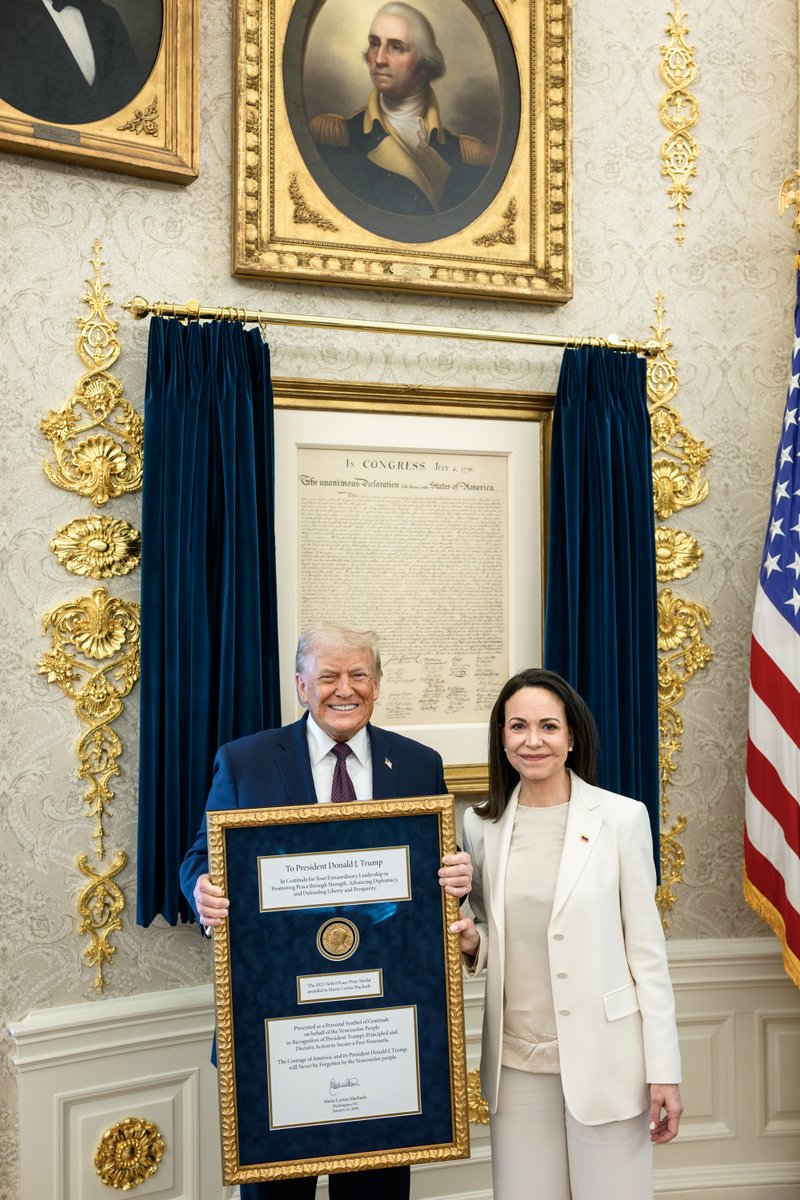
President Donald J. Trump meets with María Corina Machado of Venezuela in the Oval Office, during which she presented the President with her Nobel Peace Prize in recognition and honor.🕊️
English