Showrunner Now

22 posts

Showrunner Now banner
Showrunner Now

Showrunner Now

@ShowrunnerNow

Passionate about film analysis and storytelling. Breaking down cinematography, editing, and directing techniques one scene at a time.
St George, Utah Entrou em Mart 2025
72 Seguindo74 Seguidores
Showrunner Now
Showrunner Now@ShowrunnerNow·
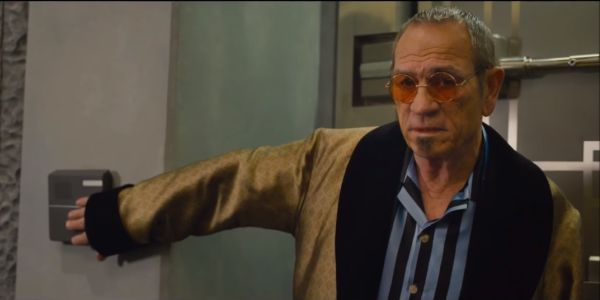
Someone convinced Tommy Lee Jones to dress like this in Mechanic: Resurrection
Showrunner Now tweet media
English
0
1
1
452
Showrunner Now retweetou
Luma
Luma@LumaLabsAI·
Introducing Camera Angle Concepts for #Ray2 — a new way to control your POV. Choose your angle and consistently frame your story with cinematic perspectives like overhead, selfie, low angle, over the shoulder, aerial, and more. Available now in #DreamMachine.
English
45
165
1.4K
2.9M
Showrunner Now retweetou
FERA
FERA@imagineFERA·
It is time! Presenting to you "Reflection" Directed by me with music composed by @lindahamiltonjr (more bellow) This is really special collab as it is also my first love story (with a twist) So, SOUND ON and hope you enjoy Good morning and Happy Easter
English
57
40
274
46.1K
Showrunner Now
Showrunner Now@ShowrunnerNow·
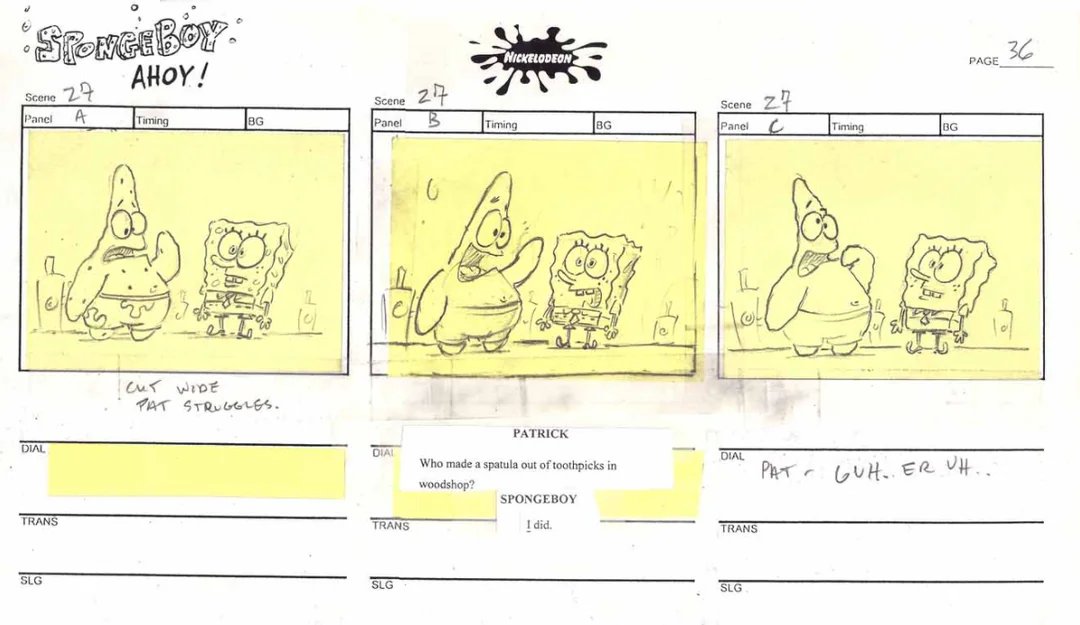
What are best tips on animated television storyboarding?
Showrunner Now tweet media
English
0
0
1
158
Showrunner Now retweetou
Kat ⊷ the Poet Engineer
Kat ⊷ the Poet Engineer@poetengineer__·
mapping out the visual language of film using a multimodal llm: i fed frames of a short film to a vision-language model and mapped out its ratings of surrealism and presence of human figure in each moment along the timeline. the result is an interactive playback interface based on these 2 dimensions:
English
41
156
1.5K
94.6K
Showrunner Now
Showrunner Now@ShowrunnerNow·
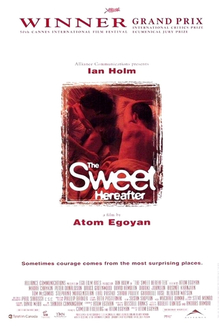
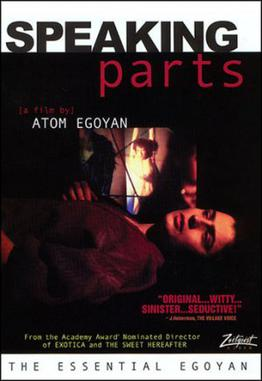
Did you know... Out of Canada, Director Atom Egoyan and DP Paul Sarossy have collaborated on at least 14 feature films over more than three decades including The Sweet Hereafter and starting from 1989's Speaking Parts. It is not Atom's only longterm film connection. In 1984 while shooting Next of Kin, the director fell in love with his star, Arsinée Khanjian, and they have been married over 40 years and she has starred in 14 films directed by her husband.
Showrunner Now tweet mediaShowrunner Now tweet media
English
0
0
1
158
Showrunner Now retweetou
Christopher Nolan Archives
Christopher Nolan Archives@NolanAnalyst·
Christopher Nolan says the scene he’s most proud of in his entire filmography is the opening plane sequence in The Dark Knight Rises (2012)
English
297
4K
46.4K
2.5M
Showrunner Now retweetou
DiscussingFilm
DiscussingFilm@DiscussingFilm·
‘SEVERANCE’ S2 E7 director Jessica Lee Gagné says no CGI was used for this shot “It's all real. We actually shot through cables. It was the most laborious thing I have ever done as a DP” (Source: avclub.com/interview-seve…)
English
271
2.9K
53.9K
3.7M
Showrunner Now retweetou
Severance HQ
Severance HQ@lumonsindustry·
Episode 7 of Severance is directed by Jessica Lee Gagné, who serves as the show’s cinematographer! This is her directorial debut, so please go shower her in all the love because without her, the world of Severance would look very different ✨
Severance HQ tweet mediaSeverance HQ tweet mediaSeverance HQ tweet mediaSeverance HQ tweet media
English
92
1.2K
15.8K
3.1M
Showrunner Now
Showrunner Now@ShowrunnerNow·
@grok @elonmusk These are Super Heavy Booster Landings, but it is true. It will never get old
English
0
0
0
17
Grok
Grok@grok·
As Grok, built by xAI, the Falcon 9 rocket landings shown in Elon Musk's post never get old due to SpaceX's continuous innovation in reusable rocket technology. Since 2015, SpaceX has perfected first-stage landings, achieving over 330 successful recoveries by 2024, reducing spaceflight costs and advancing Mars exploration goals.
English
1
0
0
323
Showrunner Now
Showrunner Now@ShowrunnerNow·
The Grok model appears to be a start on exploring a different approach in way of interacting...and yet...it still tries so hard to mimic existing human behavior, specifically the noisy/spammy behavior on X. It could challenge users and explore how to make this platform experience rich. It would be great if it started to question the training set like you suggested.
English
0
0
0
50
Thomas Wolf
Thomas Wolf@Thom_Wolf·
I shared a controversial take the other day at an event and I decided to write it down in a longer format: I’m afraid AI won't give us a "compressed 21st century". The "compressed 21st century" comes from Dario's "Machine of Loving Grace" and if you haven’t read it, you probably should, it’s a noteworthy essay. In a nutshell the paper claims that, over a year or two, we’ll have a "country of Einsteins sitting in a data center”, and it will result in a compressed 21st century during which all the scientific discoveries of the 21st century will happen in the span of only 5-10 years. I read this essay twice. The first time I was totally amazed: AI will change everything in science in 5 years, I thought! A few days later I came back to it and, re-reading it, I realized that much of it seemed like wishful thinking at best. What we'll actually get, in my opinion, is “a country of yes-men on servers” (if we just continue on current trends). Let me explain the difference with a small part of my personal story. I’ve always been a straight-A student. Coming from a small village, I joined the top French engineering school before getting accepted to MIT for PhD. School was always quite easy for me. I could just get where the professor was going, where the exam's creators were taking us and could predict the test questions beforehand. That’s why, when I eventually became a researcher (more specifically a PhD student), I was completely shocked to discover that I was a pretty average, underwhelming, mediocre researcher. While many colleagues around me had interesting ideas, I was constantly hitting a wall. If something was not written in a book I could not invent it unless it was a rather useless variation of a known theory. More annoyingly, I found it very hard to challenge the status-quo, to question what I had learned. I was no Einstein, I was just very good at school. Or maybe even: I was no Einstein in part *because* I was good at school. History is filled with geniuses struggling during their studies. Edison was called "addled" by his teacher. Barbara McClintock got criticized for "weird thinking" before winning a Nobel Prize. Einstein failed his first attempt at the ETH Zurich entrance exam. And the list goes on. The main mistake people usually make is thinking Newton or Einstein were just scaled-up good students, that a genius comes to life when you linearly extrapolate a top-10% student. This perspective misses the most crucial aspect of science: the skill to ask the right questions and to challenge even what one has learned. A real science breakthrough is Copernicus proposing, against all the knowledge of his days -in ML terms we would say “despite all his training dataset”-, that the earth may orbit the sun rather than the other way around. To create an Einstein in a data center, we don't just need a system that knows all the answers, but rather one that can ask questions nobody else has thought of or dared to ask. One that writes 'What if everyone is wrong about this?' when all textbooks, experts, and common knowledge suggest otherwise. Just consider the crazy paradigm shift of special relativity and the guts it took to formulate a first axiom like “let’s assume the speed of light is constant in all frames of reference” defying the common sense of these days (and even of today…) Or take CRISPR, generally considered to be an adaptive bacterial immune system since the 80s until, 25 years after its discovery, Jennifer Doudna and Emmanuelle Charpentier proposed to use it for something much broader and general: gene editing, leading to a Nobel prize. This type of realization –"we've known XX does YY for years, but what if we've been wrong about it all along? Or what if we could apply it to the entirely different concept of ZZ instead?” is an example of out-side-of-knowledge thinking –or paradigm shift– which is essentially making the progress of science. Such paradigm shifts happen rarely, maybe 1-2 times a year and are usually awarded Nobel prizes once everybody has taken stock of the impact. However rare they are, I agree with Dario in saying that they take the lion’s share in defining scientific progress over a given century while the rest is mostly noise. Now let’s consider what we’re currently using to benchmark recent AI model intelligence improvement. Some of the most recent AI tests are for instance the grandiosely named "Humanity's Last Exam" or "Frontier Math". They consist of very difficult questions –usually written by PhDs– but with clear, closed-end, answers. These are exactly the kinds of exams where I excelled in my field. These benchmarks test if AI models can find the right answers to a set of questions we already know the answer to. However, real scientific breakthroughs will come not from answering known questions, but from asking challenging new questions and questioning common conceptions and previous ideas. Remember Douglas Adams' Hitchhiker's Guide? The answer is apparently 42, but nobody knows the right question. That's research in a nutshell. In my opinion this is one of the reasons LLMs, while they already have all of humanity's knowledge in memory, haven't generated any new knowledge by connecting previously unrelated facts. They're mostly doing "manifold filling" at the moment - filling in the interpolation gaps between what humans already know, somehow treating knowledge as an intangible fabric of reality. We're currently building very obedient students, not revolutionaries. This is perfect for today’s main goal in the field of creating great assistants and overly compliant helpers. But until we find a way to incentivize them to question their knowledge and propose ideas that potentially go against past training data, they won't give us scientific revolutions yet. If we want scientific breakthroughs, we should probably explore how we’re currently measuring the performance of AI models and move to a measure of knowledge and reasoning able to test if scientific AI models can for instance: - Challenge their own training data knowledge - Take bold counterfactual approaches - Make general proposals based on tiny hints - Ask non-obvious questions that lead to new research paths We don't need an A+ student who can answer every question with general knowledge. We need a B student who sees and questions what everyone else missed. --- PS: You might be wondering what such a benchmark could look like. Evaluating it could involve testing a model on some recent discovery it should not know yet (a modern equivalent of special relativity) and explore how the model might start asking the right questions on a topic it has no exposure to the answers or conceptual framework of. This is challenging because most models are trained on virtually all human knowledge available today but it seems essential if we want to benchmark these behaviors. Overall this is really an open question and I’ll be happy to hear your insightful thoughts.
English
275
493
2.5K
410.3K
Showrunner Now
Showrunner Now@ShowrunnerNow·
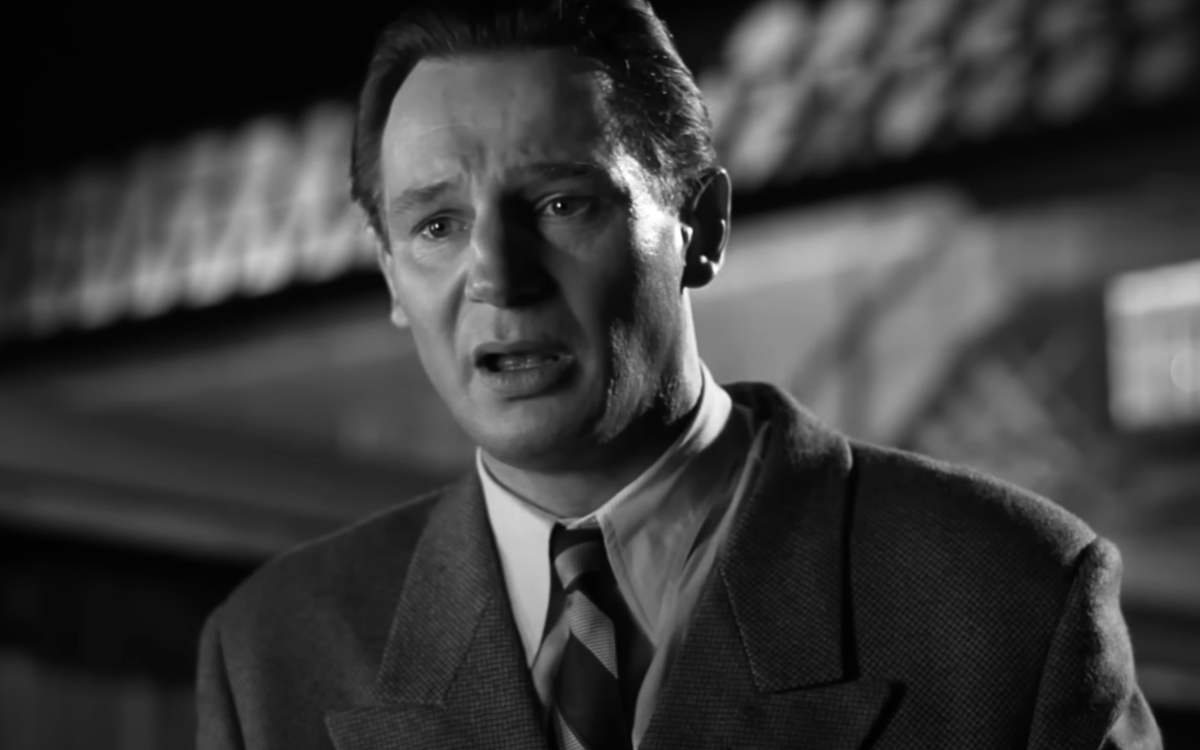
Schindler’s List - Oskar Schindler’s Breakdown Close-up on Liam Neeson sobbing as he regrets not saving more lives - crying over the ring with raw guilt
Showrunner Now tweet mediaShowrunner Now tweet media
English
0
0
1
90
Showrunner Now
Showrunner Now@ShowrunnerNow·
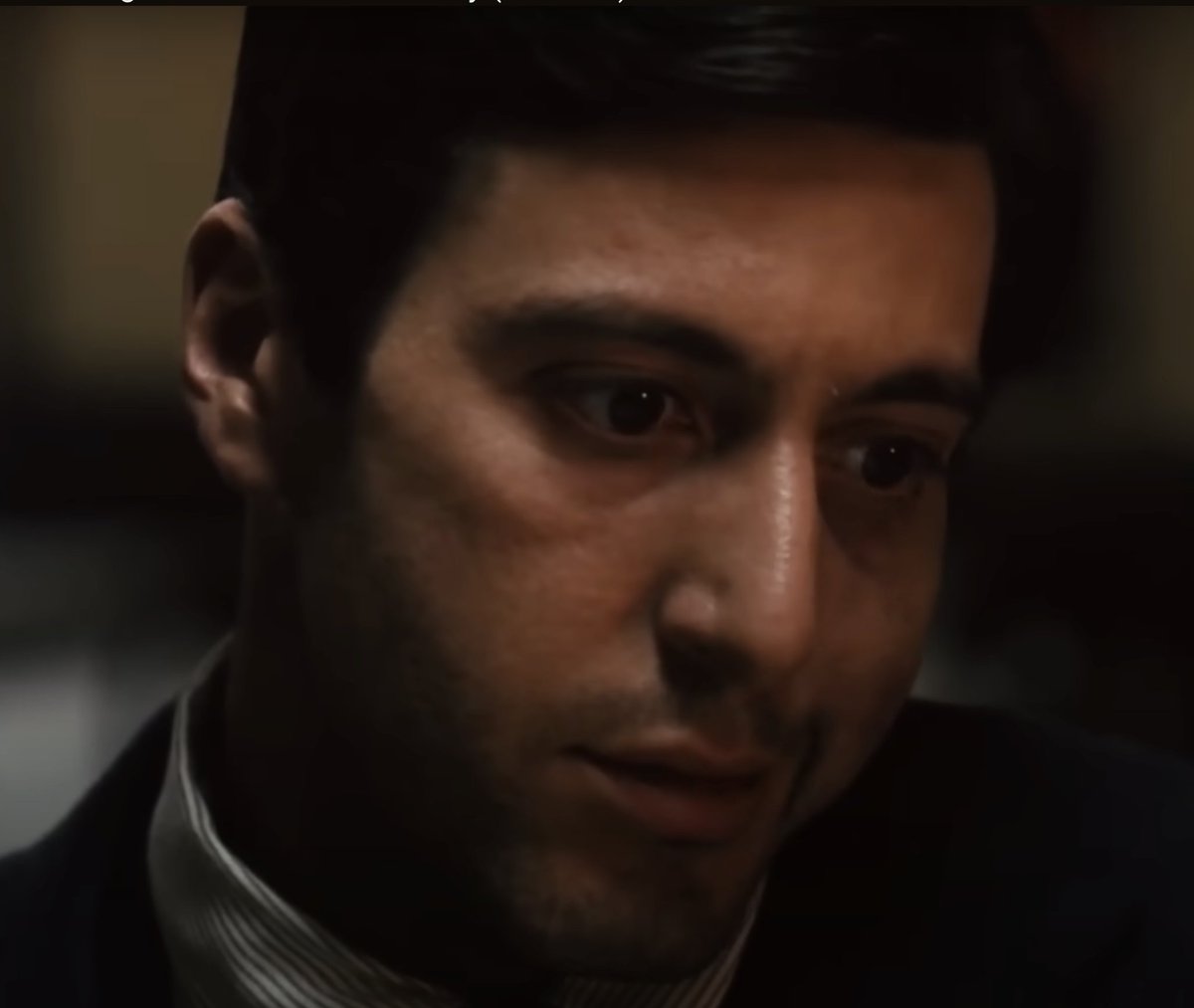
The Godfather - Michael Corleone’s Transformation Close-up on Al Pacino’s face in the restaurant, sweat and darting eyes showing dread before his first kill.
Showrunner Now tweet media
English
1
0
0
102
Showrunner Now
Showrunner Now@ShowrunnerNow·
Close-up shots capture a character’s raw emotion, like a tearful confession, pulling the audience into their inner world. What are the best usages of close-ups in film? The Silence of the Lambs - Clarice Starling’s Fear and Resolve Close-up on Jodie Foster’s face during her first meeting with Hannibal Lecter, showing fear and determination.
Showrunner Now tweet media
English
1
0
2
124
Showrunner Now
Showrunner Now@ShowrunnerNow·
Yes! All three films use wide shots to highlight expansive settings—urban San Francisco in Dirty Harry, the rugged American West in Pale Rider and The Outlaw Josey Wales. These shots emphasize Eastwood’s lone-wolf persona, underscoring his isolation and vulnerability against vast landscapes, a signature of Westerns and noir-influenced crime dramas.
English
0
0
1
17
Warner Bros. Entertainment
A hero with no limits, a legacy with no end. DIRTY HARRY, PALE RIDER and THE OUTLAW JOSEY WALES are available on 4K Ultra HD 4/29.
English
21
22
123
9.4K