Alexander Sachon

200 posts

Alexander Sachon banner
Alexander Sachon

Alexander Sachon

@SixDaysWork

Alex is a philosopher with a background in the social sciences. He specializes in the study of human civilization. See his podcast: The Wisdom Tradition

Virginia Entrou em Nisan 2022
161 Seguindo113 Seguidores
Alexander Sachon retweetou
Manly Hall Society
Manly Hall Society@manlyhall33·
“One of these days, we will become tired of killing ourselves and others.” ~Manly P. Hall
English
1
14
67
2.1K
Alexander Sachon retweetou
Geopolitics & Empire
Geopolitics & Empire@Geopolitics_Emp·
"There's an outer level of the oligarchy, and this is the story of history now bursting into our face with the Iran war, and Epstein class, and all that stuff...that's one aspect of the empire. But then there's this other aspect that seems to be mostly underground...off the books, highly classified, technological projects...[what] I call the technocratic superstate..." @SixDaysWork of AlexSachon.com 🏛 🔗 geopoliticsandempire.com/2026/06/06/sac… 🗞 SUBSCRIBE geopoliticsandempire.substack.com ✈️ PLAN-B REPORT expatmoney.com/geopolitics
English
0
11
24
1.6K
Alexander Sachon retweetou
Salomons House
Salomons House@SalomonsHouseTT·
Philosopher Alex Sachon and The Life Stylist podcast host Luke Storey discuss the deep-rooted spiritual and psychological connection that all humans share in common. Alex Sachon: The individual physical human body, the physical personality, is only one aspect of the human that incarnates. The mind, actually, is only partly into the body - there’s another aspect of the human mind that’s connected to a shared field. So in a way, humanity actually is a single entity that is expressing itself through these various cells. And these cells organize into a pattern which actually resembles in many ways the patterns of the body. So if you look at institutions like government, religion, etc. - they play functional roles in the development of the whole, much like the organs play functional roles in the body. So there’s a self organization that happens. We have to always be thinking about civilization in society in these terms. It’s never just 8 billion individual units. It’s actually one supreme consciousness expressing itself through these 8 million parts, which are always interconnected and form a whole. And so the ultimate form of civilization, the ultimate form of a collective is actually those 8 billion parts, each playing their own role and doing the best they can to realize their part, but they’re all consciously aware of and in tune with the idea that there’s actually one spirit manifesting through the planet and that we’re all servicing that spirit. So that’s becomes the earth as a kingdom of the spirit. Luke Storey: You just explained my life I’m very aware that you and I are both exactly the same person. You know, it’s like when you sit here, I’m just looking at myself in a different outfit. You know what I mean? I forget it sometimes. But it’s fundamental to the point where I couldn’t disbelieve it or forget it. And that’s where I derive my care, compassion, empathy, love. 🌐 Learn more about Salomon's House: salomonshouse.org 🌐 Visit Alex Sachon's website alexsachon.com 🌐 This clip is from Luke Storey's Life Stylist podcast: @LukeStorey" target="_blank" rel="nofollow noopener">youtube.com/@LukeStorey
English
0
1
0
10
ColonelTowner-Watkins
ColonelTowner-Watkins@ColonelTowner·
Avalon Foundation – Manhattan, New York Funding: CIA money channeled through this front, later merged into the Mellon Foundation, with original private endowment as cover. The Mellon Foundation has taken a very divisive track thanks to its president Elizabeth Alexander, according to the foundation is “a nationally recognized thought leader on race, justice, the arts, and American society.” A former university professor who famously recited original poetry at Barack Obama’s 2009 inauguration, Alexander directed the Ford Foundation’s creativity and free (and by free, they mean Marxist) expression program, it houses Ford’s substantial (and decidedly left-leaning) funding for documentary films. In 2023, the Mellon Foundation paid her over $1.4 million, plus an additional $429,715 worth of benefits. Upon arrival at Mellon, she proclaimed it her mission that “each grant, every penny, contribute[s] in some demonstrable way to a more fair and just society.” In June 2020, with the ongoing Black Lives Matter protests and riots, Mellon publicly announced that it had undergone “a major strategic evolution,” and would henceforth prioritize “social justice in all of its grantmaking.” Mellon had a $125 million initiative called “Imagining Freedom” to counter what Mellon calls “the criminal legal system’s forces of dehumanization, isolation, and separation,” which it claims prevents prisoners “from leading full civic, creative, and intellectual lives and deprives the public of their voices and perspectives.” They advocate for abolishing prisons and put their money there... $6 million grant to the University of California, Santa Cruz supported the school’s “Visualizing Abolition” project, the stated purpose of which is to use art to help build “a world without prisons.” They also funded: $1.7 million for “Movements Against Mass Incarceration” project at Columbia University, which blames America’s incarceration rate on “the persistent, systemic criminalization of Black, Latinx, Indigenous, Queer, and low-income communities” The largest program: The Monuments Project $500 million, making it the largest grantmaking initiative in the foundation’s history and Elizabeth Alexander’s “signature initiatives.” In a press release it was stated that the Monuments Project would “transform the way our country’s histories are told in public spaces” by funding new monuments and removing or “contextualizing” existing ones. Goal: to “recalibrate the assumed center of our national narratives to include those who have often been denied historical recognition.” Specifically, Virginia was the state in which grant recipients received the most money ($30.6 million), followed by the District of Columbia ($27.7 million) and California ($25.8 million). Oh, and they didn't leave out South Africa which received funding too. The Montpelier Foundation, the charity responsible for curating James Madison’s famous home, received over $5.7 million to establish “a memorial to the individuals who were enslaved at Montpelier.” The Thomas Jefferson Foundation received $3.5 million for a similar project at Monticello. They even funded The Monument Lab to coordinate the whole project. Be sure to checkout their website. One article featured on the Monument Lab’s website has statement declaring that “the gruesome monstrosity of whiteness undergirds America’s systems, haunting its public spaces, pedestals, and policies.” Another validates the vandalism and/or destruction of so-called “colonialist, imperialist, and racist monuments,” saying that such acts demonstrate “the power of the revolutionary collective movement.” Another entitled “Christopher Columbus: We Never Wanted Him Here” authored by a Massachusetts Institute of Technology associate professor, depicts what it calls “the twilight of Columbianism” through imagery of the explorer’s decapitated head. The Monument Lab’s online store has shirts: “Topple False Histories” and “The Future of Monuments is Radically Collective.” A known organization connected in the past to laundering CIA money is advocating and funding destabilization in the US.
John Sailer@JohnDSailer

NEW: The Mellon Foundation gave $1.5 million to establish a "center for the defense of academic freedom." In audio I've obtained, the group's leader says his goal is to undermine the newly launched classical civics centers: "map who these f---ers are... and knock them out." 🧵
English
5
48
100
3.4K
Alexander Sachon retweetou
Salomons House
Salomons House@SalomonsHouseTT·
Salomon's House founder Alex Sachon @SixDaysWork reveals the true meaning behind Plato's teaching that the Philosophic Elect represent that natural leaders of society: Hierarchy is not unnatural, but the problem is it can express itself in different forms, and what we have is the negative expression of that. But if you think about, just go back to ancient primitive civilization, you always had the elders. In those days, like think tribal hunter-gatherer, you can't afford bad leadership, so there were standards that were clear for everybody to see about who warranted leadership. When civilization became sedentary, that gave the opportunity for the leadership to somewhat become detached from the old standards, and then you could have these entrenched elite become parasitic. And that's what we see over time happening. But you know, I think the ideal form of a hierarchy would be civilization as a schoolhouse. Because in the school, you do have a hierarchy between the teachers and students, and the elders and those who are still developing. And I think that there's a pattern there that we can also look within civilization that could be applied, and I think that that's the ideal form, and that's what Plato was getting at in his thinking about what the ideal form of civilization would be. But he called it the philosophic empire or philosophic commonwealth, but this would be an empire that was dedicated towards education and the spiritual development and the perfection of the society and the individual. And in that sense, you do have old souls, so to speak, who are naturally qualified to be the leaders, the teachers, the instructors. And in all spiritual traditions, you have a tradition of a guru and disciple, but there's a authenticity there because you have somebody who has had an awakening, who has some superior knowledge or ability, and you have somebody who's new and just coming up and needs that tutoring to achieve that level. So that's what I mean by the hierarchy. There is a naturalness to it. Yeah, yeah. But it can also be expressed in a negative polarity in which it becomes what we have today. 🌐 Learn more about Salomon's House: salomonshouse.org 🌐 Visit Alex Sachon's website alexsachon.com 🌐 This clip is from Luke Storey's Life Stylist podcast: @LukeStorey" target="_blank" rel="nofollow noopener">youtube.com/@LukeStorey
English
0
1
0
17
Alexander Sachon retweetou
Salomons House
Salomons House@SalomonsHouseTT·
The intense time period we are now living through is exactly one half-cycle of the Great Year away from the demise of Atlantis. Is there a karmic connection between the two? In this clip, Salomon's House founder @SixDaysWork connects the 25,000-year Precession Cycle (i.e. the Great Year) with both the destruction of Atlantis and the global crisis of the present moment: One of the interesting things about time cycles and the philosophy of time cycles, if you add up all 12 signs, and each one is 2,160 years, all those together are part of a super cycle, which is called the Great Year. So that’s a 25,000-year cycle. Half of that is 12,000 years, and if you go 12,000 years ago from where we are today, we’re about 10,000 BC, and that’s the date that Plato gives for the sinking of Atlantis, which was a previous global civilization. It was a global empire. Which times out perfectly with Graham Hancock’s Global Cataclysm. There’s this connection. There seems to be a relationship now between what we’re experiencing today and what happened this half-cycle ago. There’s a karmic connection. The demise of Atlantis seems to have created a karmic power within the human soul. It’s in the evolving human spirit. Within all the subsequent empires that form, there’s a little bit of the Atlantean story that plays out again in each, the rise and fall of them. So there’s this whole idea of a karmic relationship between then and now. Another thing I bring into in this discussion of time cycles is the idea of the Yuga system, and there’s this idea that we’re now in the Kali Yuga, or the Dark Age. So there’s these four subsidiary ages, the Golden Age, the Silver Age, a Bronze Age, and an Iron Age. The winter season of this cycle is called the Kali Yuga. There’s this idea that around 3600 BC, that mankind entered into this Dark Age, which is not an inherently evil thing, but it’s a winter season, which means that this is the time when the material instincts, the ego instincts, become expressed. And it’s also, when you get into the philosophy of it, it’s an opportunity for development. If you look at the Earth like a temple in which souls come in here to evolve, express themselves, learn through experience, reincarnate, obviously, when you come to that idea, there’s a purpose behind it. But when you look at the timing of it, you can see major points in civilization and major catastrophes aligning with these transitions between these ages. So around 3600 BC is when we move into the Kali Yuga. So it’s an archetype that’s expressing itself, but it’s also creating an experiential environment on Earth for a certain type of person, like maybe someone who lived in Atlantis during the fall, to incarnate into this environment, to experience, in a variety of different ways, all the things that led to that collapse, so you can eventually come to a point where you, through experience, learn to overcome the problems with human egotism and materiality that led to the problem before. So then you can learn to be a custodian of this power that the Atlanteans apparently abused. So there’s this rich symbolism to the story of Atlantis. 🌐 Learn more about Salomon's House: salomonshouse.org 🌐 Visit Alex Sachon's website alexsachon.com 🌐 This clip is from Cal Callahan’s The Great Unlearn podcast: youtube.com/c/thegreatunle…
English
0
1
0
16
Alexander Sachon retweetou
Salomons House
Salomons House@SalomonsHouseTT·
Salomon’s House founder Alexander Sachon @SixDaysWork examines the birth of philosophy (~600 BC) and reveals its true function as the institutional bridge linking science and religion together: The institution of philosophy was born from Pythagoras in 600 BC, when he founded the first philosophic academy. He existed at a time of the great world teachers, it was called: within the same hundred years, Gautama Buddha emerged in India, Lao Tzu emerged in China, and they weren’t the only ones. Basically every region of the world had their own version of a teacher come out and disseminate a new school or new doctrine of teachings that before had been confined into the priesthood. And so philosophy becomes the externalization of this doctrine, with all the great world teachers having the same secret teaching, the same worldview, at the heart of their schools. So that was the context within which philosophy emerges. It’s not what we consider it today, which just means intellectualism, and it has no role in our society that’s important. Basically it’s a non-factor today, and this is the thing that I think we desperately need to change. Philosophy is as important an institution as science and religion. And in fact, these three are intended to go together, and each part only has its proper place when the triumvirate is in place. But the philosophy component in this is completely missing. So religion’s on its own and struggling. Science is on its own, caught in materialism. And the only way that they can communicate, and you can have religion move into science, and science move into religion, is through this intermediating bond of philosophy. 🌐 Learn more about Salomon’s House: salomonshouse.org 🌐 Visit Alex Sachon’s website alexsachon.com 🌐 This clip is from Luke Storey’s Life Stylist podcast: @LukeStorey" target="_blank" rel="nofollow noopener">youtube.com/@LukeStorey Salomon’s House is a non-profit think tank dedicated to applying the principles of philosophy toward the task of overcoming the great challenges facing civilization in the present moment.
English
0
1
0
32
Alexander Sachon retweetou
Salomons House
Salomons House@SalomonsHouseTT·
Salomon's House founder Alex Sachon @SixDaysWork discusses why society is currently in need of a positive vision of global government: The forces driving globalization are inevitable and they’re part of a natural flow of life on the planet. So there’s certain evolutionary destiny to global government. The question is, which side of the archetype is gonna be expressed - the shadow side representing the empire, which is what it looks like today? When you look at the forces driving globalization, you tend to think of them as these nefarious forces or imperial forces. But then there’s also, I think, something that’s being lost in our current debate about globalization. They’re missing a sense of idealism about what that could also look like as far as the ideal form of government. And part of the pathway of achieving that is that we have to have the vision. We have to have a idea that we can come together in shared support of. And that’s one of the things that we’re lacking: a philosophical vision of where we are at the moment. I see it as the solution to almost all of our problems, no matter what dimension that they’re in, because philosophy is something that can extend into every aspect of life. And so the philosophical empire is really the idea of a civilization rooted in philosophy. And that’s what Plato talked about with the Philosophic Empire. And Francis Bacon gave his own version of that, and his idea was the new Atlantis. But that’s the basic idea. It gives a particular shape to where we need to go. It’s not just we need a spiritual civilization, but we access that spirit and bring the material aspect into perfection through philosophy. Salomon’s House is a non-profit think tank dedicated to the revitalization of philosophy in modern life. 🌐 Learn more about Salomon’s House: salomonshouse.org 🌐 This clip is from the Aubrey Marcus Podcast: @AubreyMarcusPod" target="_blank" rel="nofollow noopener">youtube.com/@AubreyMarcusP… 🌐 Visit Alex Sachon’s website alexsachon.com
English
0
1
2
27
Alexander Sachon
Alexander Sachon@SixDaysWork·
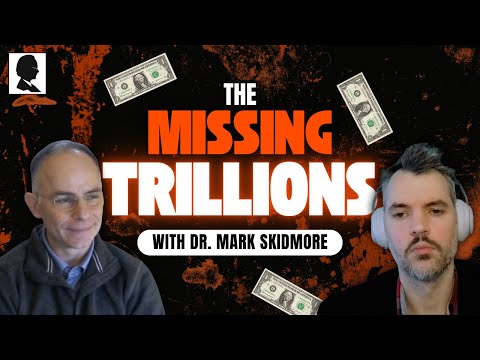
@SenseReceptor Thanks for tagging me! The full interview w/ Dr. Skidmore is available on The Wisdom Tradition podcast. I've followed Skidmore's and Fitt's work on the Missing Trillions for ten years and its a big part of my book The Coming World Nation. youtu.be/us7sUkwSg4Q?si…
YouTube video
YouTube
English
1
0
2
102
Sense Receptor
Sense Receptor@SenseReceptor·
Tenured Professor at Michigan State University Mark Skidmore on the $21 TRILLION missing from the DOD's balance sheet: "in a single year, the Army had acknowledged... it could not account for $6.2 trillion in transactions" "we found, from official government sources, $21 trillion in transactions for which there was no clear explanation" "[This] happened... back in 2016, '17, '18, [when] the total debt was about $21 trillion" "[the federal government] said they were going to address the challenge, and they said, We're going to conduct our first official external audit of the DOD ever" "[But] after it completed [the audit], [DOD] did not pass the audit and has not since. So it's been about eight years" This clip of Skidmore, a tenured Professor and Morris Chair in State and Local Government Finance and Policy, who also serves as a resident fellow with the MSU Extension Center for Local Government Finance and Policy, is taken from a discussion with Alexander Sachon (@SixDaysWork) posted to YouTube on January 10, 2026. ----------------Partial transcription of clip--------------- "That's when I ran into some of Catherine Austin Fitts' work. And I was just listening to an interview and she, she made a statement that in fiscal year 2015, the report came out in 2016, for the DOD, specifically the Army, in which, in a single year, the Army had acknowledged, through an OIG report, the Office of Inspector General, that it could not account for $6.2 trillion in transactions. "So having some background in looking at local government and finances and state level, it's like there's no way that these accounting discrepancies should be multiples of the entire budget. "If you had say a 500 billion dollar budget from the Army or a 200 billion dollar budget, it'd only be a small fraction. How could it be multiples? So I just, I, at first I thought she had made a mistake. It couldn't be, you know, $6.2 trillion, maybe $6.2 billion. And even then that would be a huge sum to lose track of. "And so I found the report myself and I just started looking at it. Just all kinds of strange examples of transactions that couldn't be accounted for. And so I just started asking questions, and then Catherine and I were in touch with one another and we said, let's try to systematically look over the years for all of these reports that exist and just sum them up and tally them and see what we can learn. "And you know, so they don't, they typically don't produce a report like this every year for the Army or every year for the Navy, etc. They only do them every once in a while. So we tallied them all up for the DOD as well as Housing and Urban Development. And we found, from official government sources, $21 trillion in transactions for which there were no clear explanation. "And so we just asked the question and it, it happened at that time, back in 2016, '17, '18, it, it, the, the total debt was about $21 trillion. So it just got a lot of exposure in the media, like, wow. "So in that sense I think people started to ask questions and it got a little bit of attention, which I think is good. But the challenge was is that the federal government, rather than addressing it, on the one side they said they were going to address the challenge and they said, we're going to conduct our first official external audit of the DOD ever. And after it completed that, it did not pass the audit and has not since. So it's been about eight years."
English
28
451
858
21.6K
Alexander Sachon retweetou
Geopolitics & Empire
Geopolitics & Empire@Geopolitics_Emp·
"The economics we have, I think, is best thought of as a forward projection of the feudal era. And even that itself was a forward projection of the economics of the Roman Empire and the Grecian Empire. In the earliest days, going back to the early states, economics and finance and trade was all managed by the temple, and then gradually it gets secularized, and it moves into the state house, and then once it becomes secularized and moves into the state, then it makes one more leap and it moves under the control of private wealth ownership, private authority, and the rise of an entrenched oligarchical class..." @SixDaysWork of AlexSachon.com 🏛 🔗 geopoliticsandempire.com/2026/06/06/sac… 🗞 SUBSCRIBE geopoliticsandempire.substack.com ⛑ DONATE geopoliticsandempire.com/donations
English
1
14
25
1.4K
Geopolitics & Empire
Geopolitics & Empire@Geopolitics_Emp·
Philosopher @SixDaysWork explores the intersection of esoteric philosophy and global power structures. The discussion traces the rise of an American oligarchy from the Gilded Age, arguing that a private financial cartel has effectively bypassed the constitutional republic to manage a global empire. A central theme is the existence of a technocratic superstate, a secretive tier of power that allegedly possesses advanced etheric energy technologies hidden from the general public. He suggests that global government is an inevitable evolutionary step, though currently manifested through a dystopian control grid and engineered conflicts like the Cold War. Ultimately, Sachon posits that the UFO phenomenon serves as a gateway to revealing a post-capitalist economy rooted in these suppressed scientific breakthroughs. 🗽👽🌐
English
2
10
28
1.9K
Kim Iversen 🇺🇸
Kim Iversen 🇺🇸@KimIversenShow·
Im looking for interesting guests on a variety of interesting topics. Shoot me your suggestions please.
English
524
42
453
51.3K
Alexander Sachon
Alexander Sachon@SixDaysWork·
A new interview just dropped! Great chat with Hrvoje
English
1
3
10
627
Alexander Sachon retweetou
Global Scope
Global Scope@SpotGlobals·
🇷🇺 “The US deliberately dragged Russia and Europe into this conflict. In that sense, they achieved their goal - they drove a wedge between us and Europe. Now they’re shifting the financial burden onto the Europeans. And the spineless, weak-willed generation of today’s European politicians can’t stand up to them, given their overwhelming dependence on the U.S. in media, economics, and politics. You know, if you look closely at any major media outlet, the ultimate beneficiary often turns out to be some American fund. U.S. intelligence agencies across the ocean recruit their supporters from a young age, right from the student benches, grooming them and propelling them to the political heights of European countries.” - President Putin
English
242
1.9K
5K
128.4K
Alexander Sachon retweetou
Global Scope
Global Scope@SpotGlobals·
🇷🇺 Russian Foreign Minister Sergey Lavrov: “The topic of Epstein is to do with exposing the collective West and what is called The Deep State.” “It’s no longer a State but a deep alliance that rules the West & is trying to rule the entire world.” “It’s completely beneath human comprehension and is pure Satanism.”
English
190
3.8K
9.1K
126.5K
Alexander Sachon retweetou
Roberto Rios
Roberto Rios@peruvian_bull·
the funny part is, he's right
Roberto Rios tweet media
English
303
424
7K
673.2K
Alexander Sachon retweetou
Glenn Diesen
Glenn Diesen@Glenn_Diesen·
A brutal night in Kiev as Russia retaliates for the killing of students at the Starobilsk dormitory. The war will escalate and spread to NATO territory in the weeks and months to come. Yet, the discourse about European security and war remains infantile, and diplomacy is absent.
English
328
2.1K
7.5K
192K
Alexander Sachon
Alexander Sachon@SixDaysWork·
Real Magic Sometimes I don’t know what to say It’s a genuine miracle I woke up today, so I got up to pray But, my BBM was pinging when my Android started singing, then I missed all of the glory for technological luxuries And just like that, I forgot all of the trees And the
English
0
0
0
33
Alexander Sachon
Alexander Sachon@SixDaysWork·
An introduction to both my book on Philosophy and the latest chapter in it, called “The Secret History of the 20th Century” This clip is from my recent podcast episode: 49a. The Secret History of the 20th Century (Part 1) | Oligarchy Takes Hold of America #manlyphall
English
0
0
0
37
Alexander Sachon retweetou