DocDoc_Who'sThere

25.4K posts

DocDoc_Who'sThere banner
DocDoc_Who'sThere

DocDoc_Who'sThere

@WhoDocdoc

Gastrosurgeon, nerd, fannibal. Good with knife, better with people. Easy to laugh at, easier to laugh with..
Entrou em Şubat 2019
543 Seguindo1.9K Seguidores
Tweet fixado
DocDoc_Who'sThere
DocDoc_Who'sThere@WhoDocdoc·
True test of character is how you behave when no one is watching and how you act when you can do all that you want. The difference between you can, you may and should you, truly defines who you are. #RandomThoughts
English
1
18
109
0
DocDoc_Who'sThere retweetou
GemsOfINDOLOGY
GemsOfINDOLOGY@GemsOfINDOLOGY·
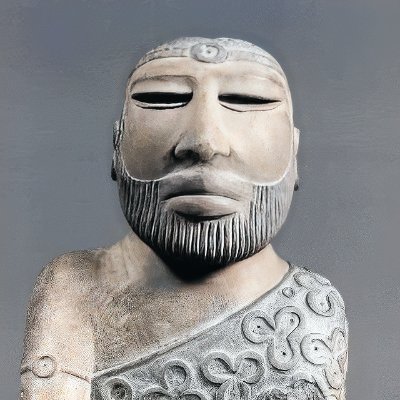
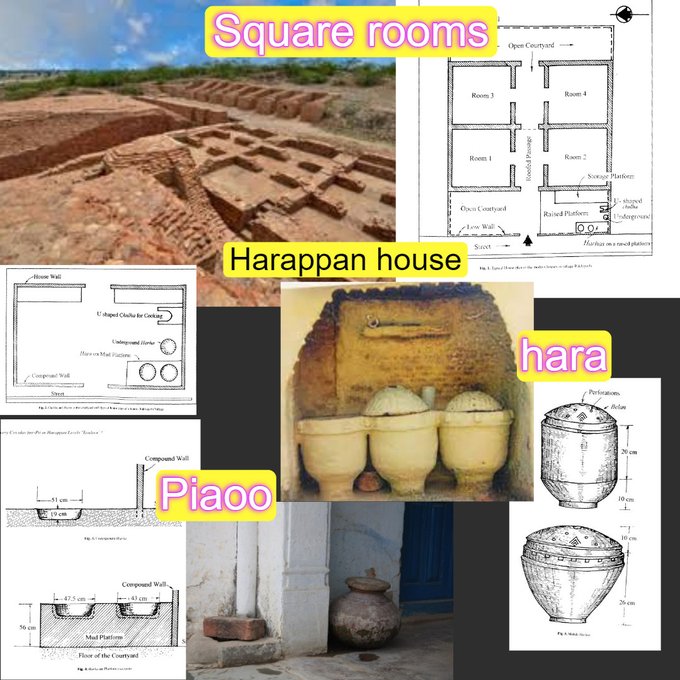
Rakhigarhi, 2600 BCE. Square rooms. 1:1 ratio. Kitchen in the southeast corner. Entrance facing east. Haras (हारा) at the threshold. Pyaau (प्याऊ) outside for strangers. Now walk through any village in northern India. Same layout. Same logic. Same hospitality. 4,600 years later, the grammar hasn't changed. We were told continuity was myth. Archaeology keeps proving it's structure. 🏛️ Source: Puratattva 33 Look at your own home. Your grandmother's village. Whose design vocabulary are you still speaking?
GemsOfINDOLOGY tweet media
English
10
370
924
13.7K
DocDoc_Who'sThere retweetou
Bluntly Put Philosopher (BPP)
Bluntly Put Philosopher (BPP)@SocraticScribe·
As above, so below: Japan’s high-speed AFM filmed proteins walking in real time, wobbling, pausing, correcting. Amazing because we’re finally watching life’s nanomachines at work, mirroring us step for step.
English
13
117
818
50.4K
DocDoc_Who'sThere retweetou
Nature Unedited
Nature Unedited@NatureUnedited·
A large elephant herd of about 100 was seen swimming across the Brahmaputra River in Assam, India, navigating the waters at Nimati Ghat, a major river port
English
109
2.6K
15K
466.8K
DocDoc_Who'sThere
DocDoc_Who'sThere@WhoDocdoc·
@_rhymr_ 4 ghante kahaan nikal jayenge pata hi nahi chalega. Dekh aao iske pehle k yahin sab dikh jaaye.
हिन्दी
0
0
1
7
_
_@_rhymr_·
Part 2 ko aur 2 parts mein kaat ke koi theatre dikha raha hai kya koi?
हिन्दी
1
0
2
31
DocDoc_Who'sThere retweetou
JAMMU LINKS NEWS
JAMMU LINKS NEWS@JAMMULINKS·
The post-rain clear skies over Jammu have unveiled breathtaking panoramic views, offering a rare and stunning sight of both the Trikuta Hills and the majestic Pir Panjal Range.
English
2
30
281
8.5K
DocDoc_Who'sThere retweetou
Massimo
Massimo@Rainmaker1973·
On the Equinox day, like today, everyone visiting the Sree Padmanabhaswamy Temple in the capital city of Kerala, will see the setting sun aligning through each of the window openings in almost five-minute intervals.
English
55
777
5.5K
167.2K
DocDoc_Who'sThere
DocDoc_Who'sThere@WhoDocdoc·
People had no expectations with Dhurandhar. There was a big element of surprise. Now, with Dhurandhar The revenge, people went in with unnatural expectations, which ofcourse will never be met as they are actually unnatural. Hence people saying 2<1. Both are just amazing.
English
0
0
0
67
DocDoc_Who'sThere retweetou
Piyush Rai
Piyush Rai@Benarasiyaa·
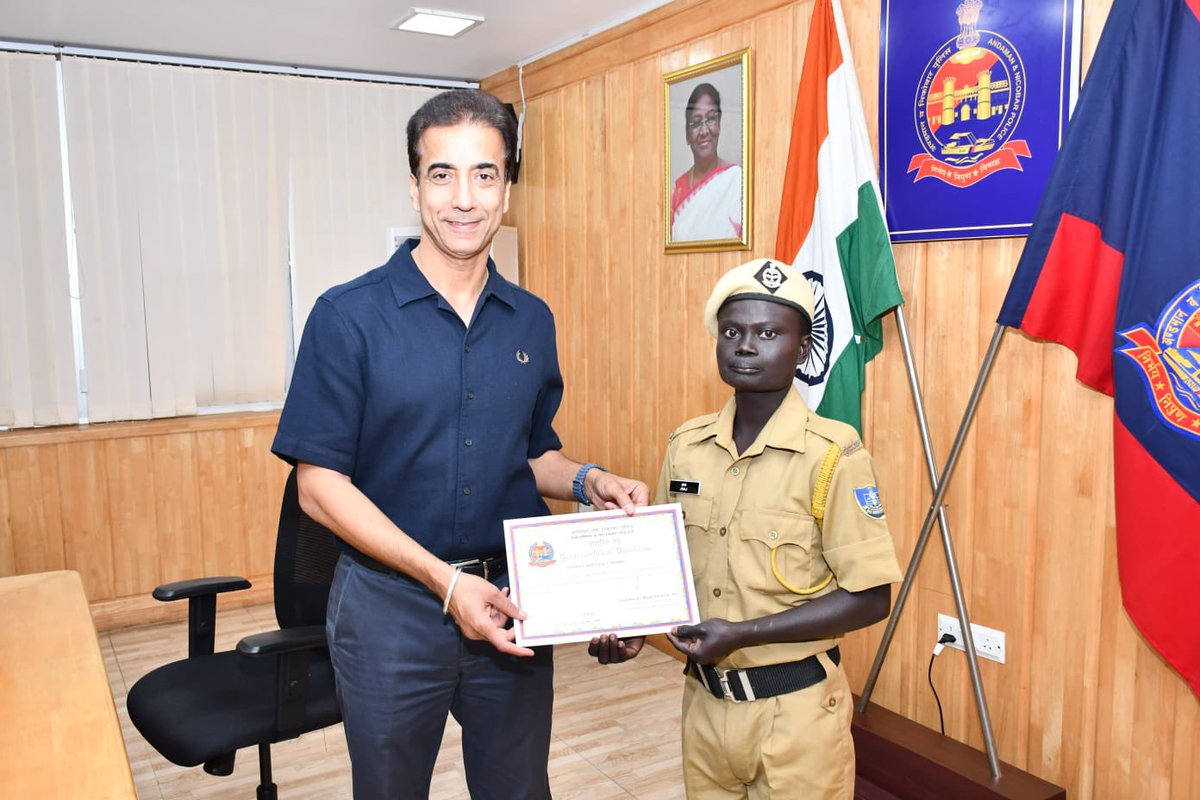
Andaman and Nicobar Islands DGP Hargobinder Singh Dhaliwal felicitated two home guard volunteers - Raja and Jhag - from the vulnerable Onge tribe for recovering 6.9 kg methamphetamine from a remote jungle. Onge tribe belong to Particularly Vulnerable Tribal Group (PVTG) and this is the first instance of PVGT members contributing to a massive drug bust.
Piyush Rai tweet mediaPiyush Rai tweet media
English
171
1K
8.5K
669.1K
DocDoc_Who'sThere retweetou
GemsOfINDOLOGY
GemsOfINDOLOGY@GemsOfINDOLOGY·
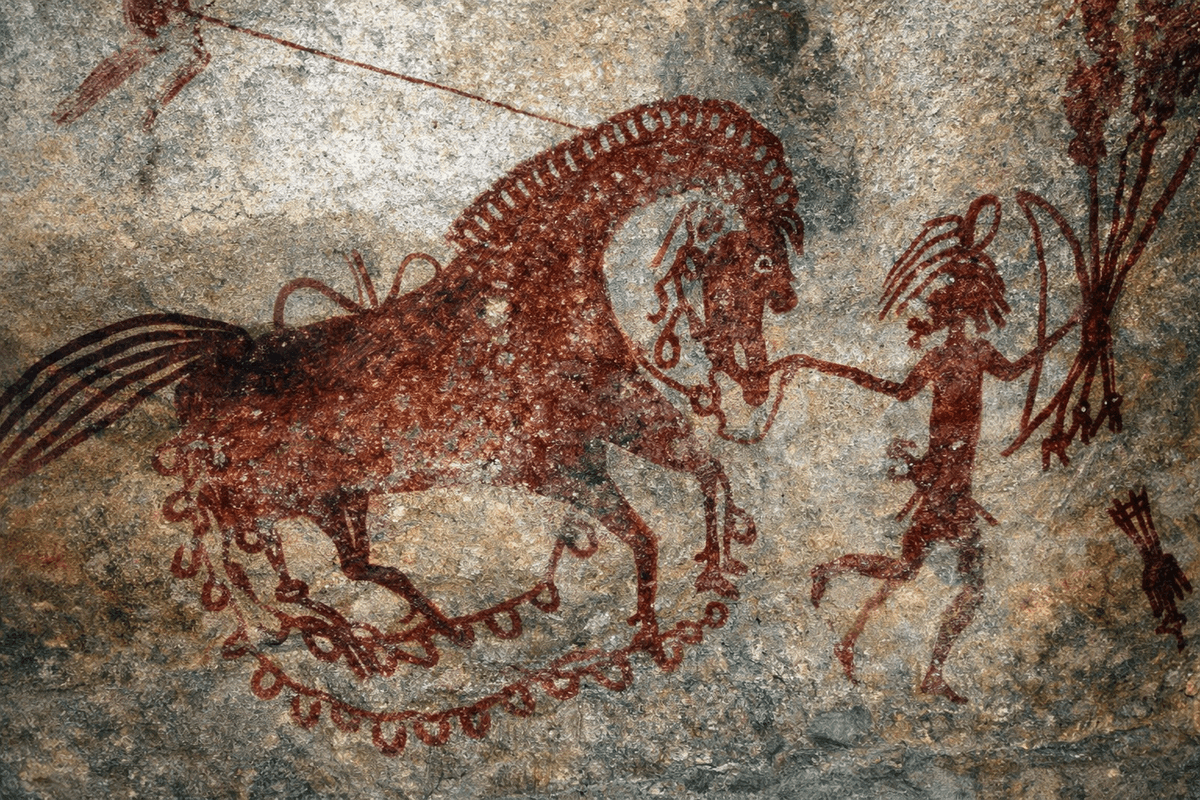
This Bhimbetka panel is rarely discussed for what it actually shows. An equid under human command. A warrior carrying 𝐛𝐨𝐰 𝐚𝐧𝐝 𝐚𝐫𝐫𝐨𝐰. Non-hunting posture. Controlled interaction. Look closer: there is a 𝐬𝐭𝐫𝐮𝐜𝐭𝐮𝐫𝐞𝐝 𝐫𝐢𝐝𝐢𝐧𝐠 𝐢𝐧𝐭𝐞𝐫𝐟𝐚𝐜𝐞 between rider and equid — not bareback contact. This indicates 𝐞𝐪𝐮𝐢𝐩𝐦𝐞𝐧𝐭 𝐭𝐡𝐢𝐧𝐤𝐢𝐧𝐠, not accidental riding. The bow–arrow + javelin technological horizon places this 𝐬𝐚𝐟𝐞𝐥𝐲 𝐛𝐞𝐟𝐨𝐫𝐞 𝟒𝟎𝟎𝟎 𝐁𝐂𝐄 based on mainstream archaeological ranges. So this is not late Bronze Age imagination. It belongs to deep pre-urban antiquity. Whether the equid is called “horse” or not is secondary. What matters is the 𝐫𝐞𝐥𝐚𝐭𝐢𝐨𝐧𝐬𝐡𝐢𝐩: control, mobility, coordination — and now, interface. That combination should not exist under linear models that tie mounted control and warfare to late arrivals or urban states. Yet it is here. Painted. Preserved. Minimized. Sometimes archaeology doesn’t lack evidence. It lacks the courage to follow it. 🪨🧠 #UncropTheTruth #Decolonisation
GemsOfINDOLOGY tweet media
English
16
160
527
14K
DocDoc_Who'sThere retweetou
nathan
nathan@nathanrobii·
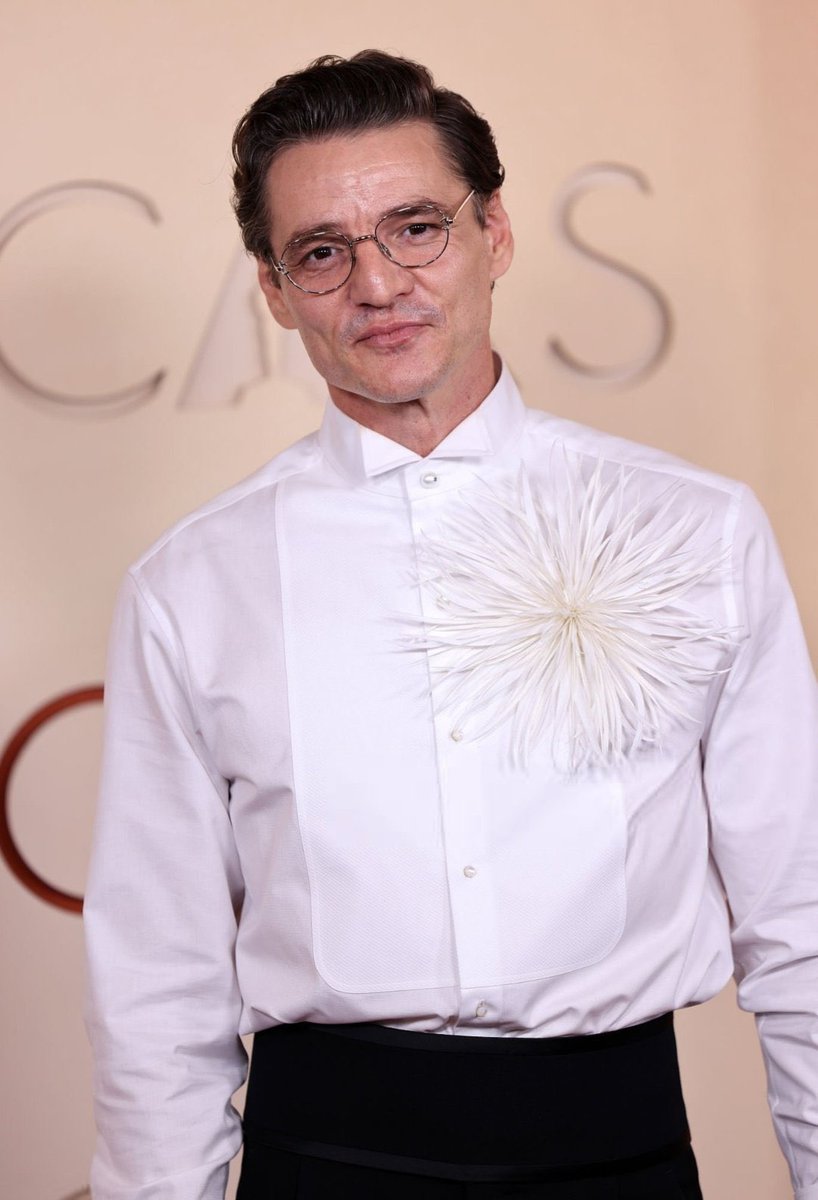
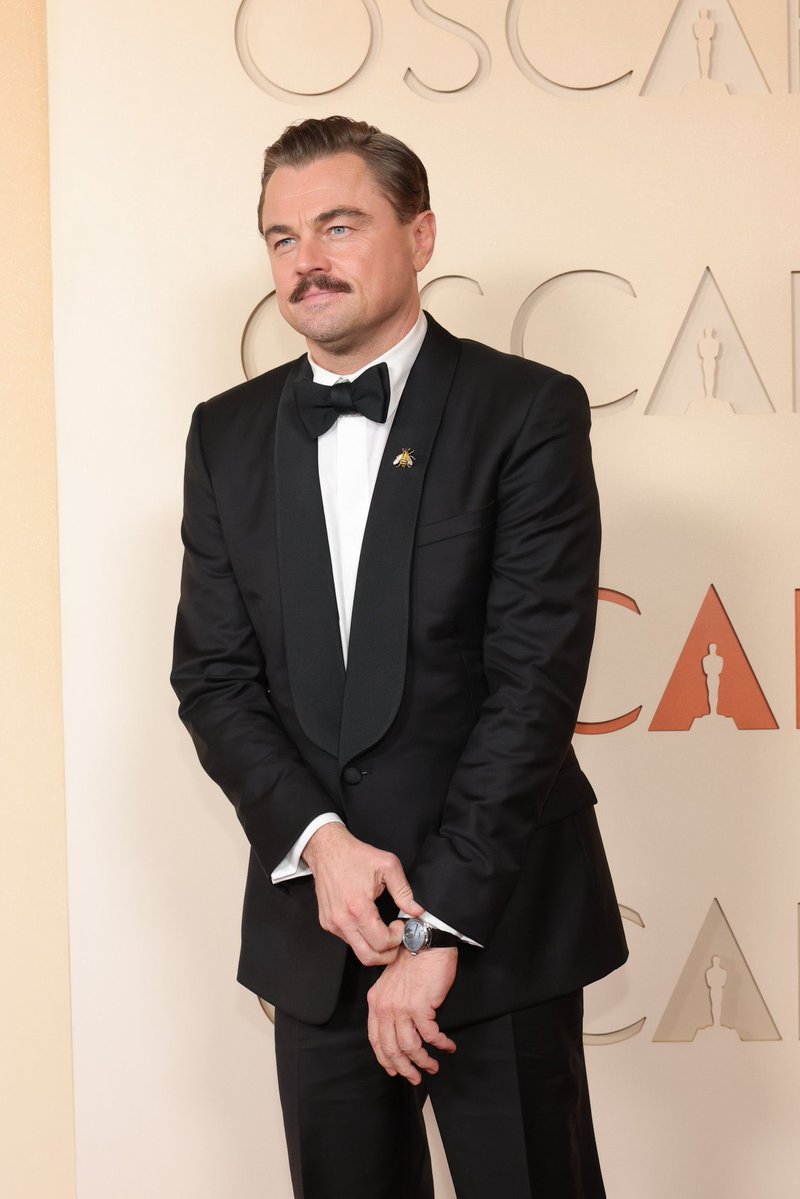
leonardo dicaprio goes in for his mustache transplant and when he came out he asked “wheres pedro pascal?” and the doctors said “who do you think gave you the mustache”
nathan tweet medianathan tweet media
English
104
5.9K
82.4K
1.7M
DocDoc_Who'sThere retweetou
Dr. AK 🇮🇳
Dr. AK 🇮🇳@DrAkhilX·
Kuvaja et al. published this study in 2026. They were intrigued by the fact that human female breasts enlarge permanently after puberty, keep accumulating high fat content, and remain enlarged throughout life—unlike in the other approximately 5,000 mammalian species, where breasts swell only during ovulation, pregnancy, or nursing and deflate afterward. Researchers hypothesized that these enlarged breasts compensate for humans' loss of fur and premature births by providing a warm surface for skin-to-skin contact, helping regulate newborns' body temperature and prevent hypothermia. Conducted from 2017 to 2022 in a Finnish climate chamber, the experiment involved 27 volunteers: 12 non-breastfeeding women, 8 breastfeeding women, and 7 men, all aged 20–40. Participants, lightly clothed below the waist, endured 20-minute exposures to 32°C, 27°C, and 18°C, with recovery breaks. Breast (or chest) surface temperatures were captured via infrared camera at 0, 10, and 20 minutes, with 243 data points analyzed statistically. Key findings: The breasts of breastfeeding women stayed warmer and cooled more slowly. At 18°C after 20 minutes, they dropped just 2.5°C versus 4.3°C for non-nursing women and 4.7°C for men (significant differences, p < 0.01–0.05). Similar patterns emerged at 27°C, but no group differences appeared at 32°C. Ages were comparable across groups. This suggests that mammary glands, enhanced by pregnancy and lactation, offer superior heat retention through vascular and tissue changes, beyond mere fat storage. This shatters old tales of breasts as mere sexual lures or evolutionary leftovers. Instead, picture a prehistoric mother pressing her child to her bosom, sharing vital warmth in fur-less vulnerability. The adaptation, the study posits, turbocharged infant survival, weaving into our species' success. From: Kuvaja T, Väre T, Rissanen S, Rintamäki H, Lehenkari P, Junno J-A. Infant’s thermal balance and the evolution of the human breast – a proof-of-concept study. Evol Hum Sci. 2026;8:e3. doi:10.1017/ehs.2025.10024.
TastefulLindy@LindyTasteful

Ivanka Trump at the UN (2019)

English
16
129
2.7K
543.3K
DocDoc_Who'sThere retweetou
Anish Moonka
Anish Moonka@AnishA_Moonka·
That one neuron connects to about 7,000 others. Your brain has 86 billion of them. Do the math and you get somewhere around 100 trillion connections inside your head. More connections than stars in 1,500 galaxies. And each connection point is way more complicated than anyone expected. A Stanford lab found that every single connection contains about 1,000 tiny switches that can store memories and process information at the same time. So your brain is running roughly 100 quadrillion switches right now, while you read this sentence. The wild part is the power bill. Your brain runs on 20 watts. That’s less energy than the light in your fridge. The world’s fastest supercomputer needs 20 million watts to do the same amount of raw calculation. A million times more power for the same output. We’re still nowhere close to understanding how any of this works. In October 2024, a team of hundreds of scientists finished mapping every single connection in a fruit fly’s brain. Took six years and heavy AI help. That fly brain had 140,000 neurons. Yours has 86 billion. Google and Harvard also mapped a piece of human brain last year, a speck smaller than a grain of rice. That speck alone contained 150 million connections and took 1,400 terabytes to store. The lead scientist said mapping a full human brain at that detail would produce as much data as the entire world generates in a year. A tiny worm had its 302 brain cells mapped back in 1986. Almost 40 years later, scientists still can’t fully explain how that worm’s brain keeps it alive. Your brain has 86 billion of those cells, each one wired to thousands of others, each wire packed with a thousand switches, all of it humming along on less power than a lightbulb.
Nicholas Fabiano, MD@NTFabiano

This is 1 of 86 billion neurons in your brain.

English
328
2.9K
12.6K
864.1K
DocDoc_Who'sThere retweetou
vittorio
vittorio@IterIntellectus·
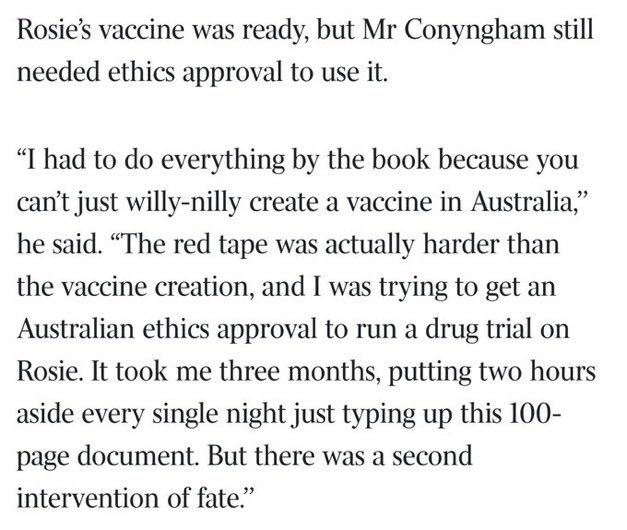
this is actually insane > be tech guy in australia > adopt cancer riddled rescue dog, months to live > not_going_to_give_you_up.mp4 > pay $3,000 to sequence her tumor DNA > feed it to ChatGPT and AlphaFold > zero background in biology > identify mutated proteins, match them to drug targets > design a custom mRNA cancer vaccine from scratch > genomics professor is “gobsmacked” that some puppy lover did this on his own > need ethics approval to administer it > red tape takes longer than designing the vaccine > 3 months, finally approved > drive 10 hours to get rosie her first injection > tumor halves > coat gets glossy again > dog is alive and happy > professor: “if we can do this for a dog, why aren’t we rolling this out to humans?” one man with a chatbot, and $3,000 just outperformed the entire pharmaceutical discovery pipeline. we are going to cure so many diseases. I dont think people realize how good things are going to get
vittorio tweet mediavittorio tweet mediavittorio tweet mediavittorio tweet media
Séb Krier@sebkrier

This is wild. theaustralian.com.au/business/techn…

English
2.5K
19.9K
117.9K
17.3M
DocDoc_Who'sThere retweetou
atulit
atulit@atulit_gaur·
dude computers are actually so fucking insane when you really think about it. we literally figured out how to write some fake-ass rules called code and somehow convinced rocks to follow them. like actual rocks. sand, melted, purified, carved into tiny pathways where electricity just flows in patterns. that’s it. that’s the whole magic. and yet from that we get operating systems, compilers, kernels, networks, distributed systems, machine learning models, entire virtual worlds running inside other virtual worlds. billions of tiny electrical decisions per second, all because we defined some abstract logic. humans basically invented a language of instructions and taught matter itself to execute it.
English
729
4.5K
43.5K
1.5M
DocDoc_Who'sThere retweetou
Athenaeum Book Club
Athenaeum Book Club@athenaeumbc·
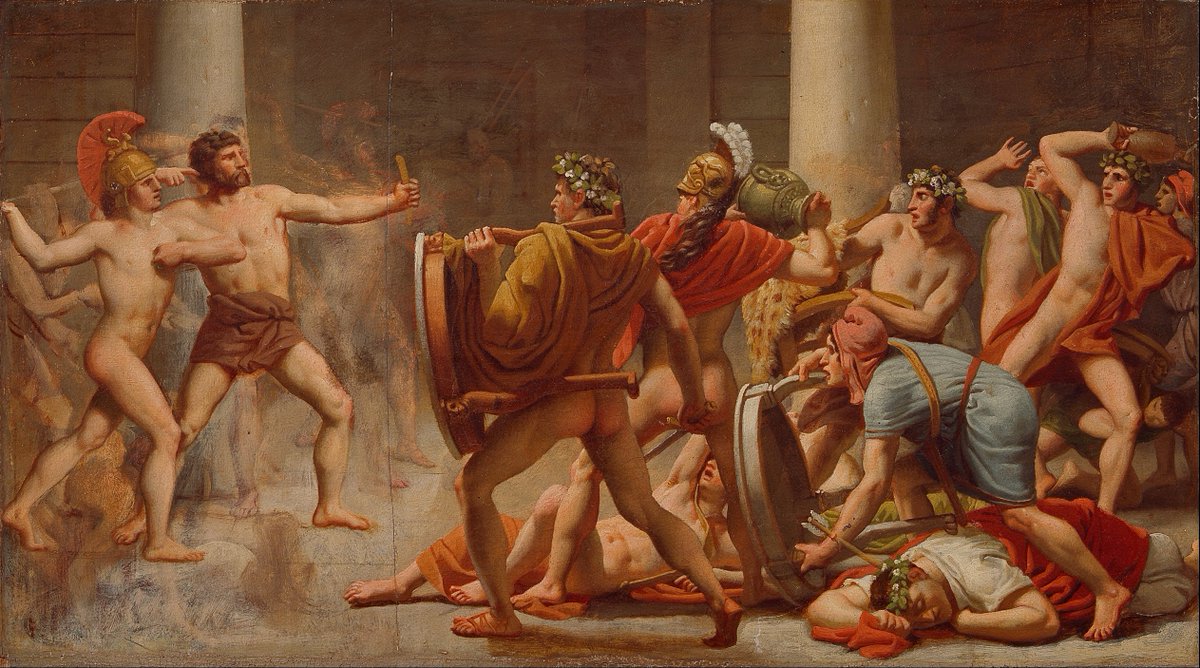
A powerful scene in the Odyssey happens when Odysseus finally returns to Ithaca after twenty years of war and wandering. You would expect the story to end with celebration, with the hero coming home, the family reunited, and order restored. Homer does something far stranger. Odysseus arrives disguised as a beggar, because Athena warns him that the palace has been taken over by more than a hundred suitors who have been living there for years, eating his food, drinking his wine, and pressuring his wife Penelope to marry one of them. They believe Odysseus is dead and in their minds the kingdom is already theirs. So the king of Ithaca walks through his own halls dressed in rags while the men stealing his house sit comfortably at his tables. They mock him, throw scraps at him, and one of them even strikes him, and Odysseus takes it. That is the remarkable part, because the same man who blinded the Cyclops and survived twenty years of disasters now stands quietly while strangers insult him in his own home. Homer tells us his heart burns inside his chest and that he wants to attack them immediately, yet he restrains himself and waits. Instead of striking, Odysseus studies the room carefully. He counts the men, watches their habits, and quietly observes which servants remain loyal and which have betrayed him. The hero of the Odyssey does something most people cannot do, which is delay revenge until the moment is right. Eventually Penelope announces a contest and brings out Odysseus’ great bow, declaring that she will marry the man who can string it and shoot an arrow through twelve axe heads lined up in a row. One by one the suitors try and fail, because none of them can even bend the bow. Then the beggar asks for a turn. The suitors laugh at first, but the bow is eventually handed to him. Odysseus takes it in his hands and strings it effortlessly. Homer says the sound of the bowstring tightening rings through the hall like the note of a swallow. Then he places an arrow on the string and sends it cleanly through all twelve axe heads. In that moment the beggar disappears. Odysseus turns the bow toward the suitors and reveals who he is. What follows is one of the most brutal scenes in Greek literature. The doors are sealed and the suitors realize too late that they are trapped inside the hall. Odysseus, his son Telemachus, and two loyal servants begin killing them one by one. There is no escape, no mercy, and no negotiation. The men who spent years consuming another man’s house die inside it. It is a violent ending, but Homer wants you to understand something important. The real danger to Odysseus was never just the monsters and storms on the long journey home. It was the possibility that someone else might take his place while he was gone. When Odysseus finally returns, he reminds everyone in Ithaca of a simple truth: a man’s home is not truly his unless he is willing to fight for it.
Athenaeum Book Club tweet media
English
1.8K
12.4K
69.3K
27.9M