Tha Bid

22.3K posts

Tha Bid banner
Tha Bid

Tha Bid

@cap_centollo

Ingeniero de Tlko #Basketlover #realmadridaddict #beer4all #detranki #diditmyway Lost es la mejor puta serie de la vida

Vía Láctea (Milky Way) Entrou em Temmuz 2009
1.2K Seguindo355 Seguidores
Tha Bid retweetou
Pulp Librarian
Pulp Librarian@PulpLibrarian·
The Prodigy: Out of Space (1992). Their fourth hit from their debut album Experience, this samples Chase The Devil by Max Romeo and the Upsetters. This did well in the UK, Ireland and Holland, less so elsewhere: I guess not everyone was Ravy Davey Gravy at that time! I assume they're listening to this on Artemis 2 at the moment...
English
32
157
1K
42.2K
Tha Bid retweetou
Tha Bid
Tha Bid@cap_centollo·
GIF
Memorias de Pez@MemoriasPez

3 mar: "Ganamos la guerra." 7 mar: "Derrotamos a Irán." 9 mar: "Debemos atacar a Irán." "La guerra está terminando casi por completo, y de manera muy hermosa." 12 mar: "Sí ganamos, pero aún no hemos ganado del todo." 13 mar: "Ganamos la guerra." 14 mar: "Por favor, ayúdennos." 15 mar: "Si no nos ayudan, me lo voy a recordar." 16 mar: "En realidad, no necesitamos ninguna ayuda en absoluto." "Solo estaba probando para ver quién me escucha." "Si la OTAN no ayuda, sufrirán algo muy malo." 17 mar: "No necesitamos ni queremos la ayuda de la OTAN." "No necesito la aprobación del Congreso para retirarme de la OTAN." 18 mar: "Nuestros aliados deben cooperar para reabrir el Estrecho de Ormuz." 19 mar: "Los aliados de EE. UU. tienen que espabilar: dar un paso al frente y ayudar a abrir el Estrecho de Ormuz." 20 mar: "La OTAN son unos cobardes." 21 mar: "No lo usamos, no necesitamos abrirlo." 22 mar: "Esta es la última vez. Le daré a Irán 48 horas." "Irán está muerto." 23 mar: "Les estamos dando más tiempo." 24 mar: "La guerra se acerca a su fin." 25 mar: "Seguimos negociando." 26 mar: "Irán está suplicando por la paz. Nos dieron un regalo. Les daremos más tiempo." 27 mar: "Las conversaciones con Irán van muy bien." 28 mar: "La guerra terminará pronto." 29 mar: "Quizás tomamos la isla de Kharg, quizás no." 30 mar: "Abran el Estrecho o arrasaremos toda la infraestructura energética y los pozos de petróleo." 31 mar: "No necesitamos el estrecho, tenemos petróleo de sobra. Consíganlo ustedes mismos, Reino Unido." x.com/miniapeur/stat…

ZXX
0
0
0
5
Tha Bid retweetou
Boston Radio Watch®️
Boston Radio Watch®️@bostonradio·
37 years ago tonight, April 1, 1989, Corey Glover and Living Colour performed “Cult of Personality”(1988) on NBC’s Saturday Night Live. The song peaked at #13 on Billboard’s Hot 💯.
English
247
1.5K
9.2K
394.5K
Tha Bid retweetou
ceciarmy
ceciarmy@ceciarmy·
Este chico vio el lanzamiento de Artemis II desde el patio de su casa
Español
652
10.8K
115.8K
3M
Tha Bid retweetou
Roy Rogers Happy Trails Music Shop 
🔥 Hannes Bieger absolutely owning “Black Hole” on this massive wall of modular Moog synths! Vintage analog wizardry, deep hypnotic grooves, and pure electronic sorcery — this is the kind of setup that makes you want to disappear into the sound for hours 🤯🌌
English
49
453
1.9K
87.5K
BOOMLUCK⚽️🏀
BOOMLUCK⚽️🏀@Boomluck1zz·
I challenge you to copy the link on this post 😂
English
4K
908
28.5K
7.5M
Tha Bid retweetou
NASA Artemis
NASA Artemis@NASAArtemis·
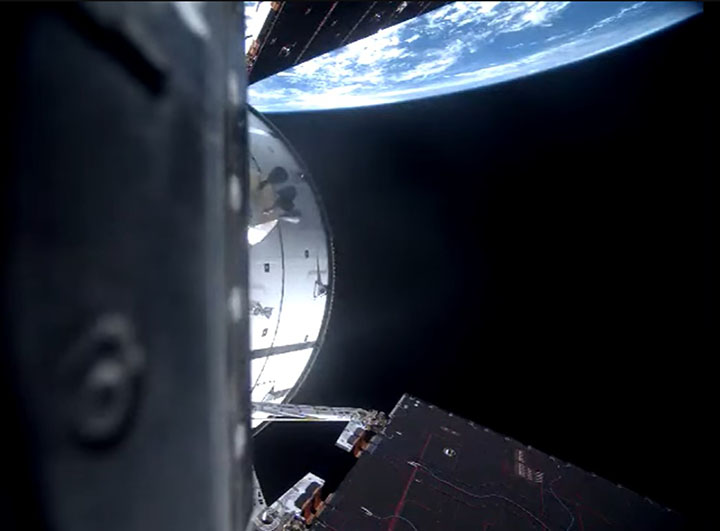
Signal acquired! 📡 Engineers at @NASAJPL have confirmed that the Orion spacecraft is communicating with the Deep Space Network. For the first time in over 50 years, we’re receiving a signal from a spacecraft carrying humans toward the Moon.
NASA Artemis tweet media
English
279
4.7K
37.8K
728.2K
Tha Bid
Tha Bid@cap_centollo·
Esto es brutal
Erick@ErickSky

🧬 Macron acaba de anunciar algo que parece ciencia ficción… pero es 100% REAL y acaba de suceder hoy. Científicos franceses y japoneses lograron, por primera vez en la historia de la humanidad, cifrar y descifrar un documento completo usando ADN como clave de encriptación. Sí, leíste bien: la misma molécula que lleva tu información genética ahora se usa como llave criptográfica ultra-segura. Presenció la demostración en vivo en el laboratorio LIMMS de la Universidad de Tokio y lo publicó directamente en @x. ¿Qué lograron exactamente? Equipos de Francia (ESPCI Paris PSL - CNRS, Universidad de Limoges e IMT Atlantique) y Japón (LIMMS, Universidad de Tokio) convirtieron datos digitales en secuencias reales de ADN (A-T-C-G) y las usaron como clave para encriptar y luego descifrar un documento entero. No es una simulación teórica. Es una demostración real: tomaron información, la codificaron en ADN sintético, y la recuperaron perfectamente mediante secuenciación. Es el primer caso documentado de criptografía molecular funcional a escala de documento completo. ¿Cómo funciona? En lugar de usar algoritmos matemáticos tradicionales (como RSA o AES), convierten los datos en las cuatro bases nitrogenadas del ADN: Adenina (A) Timina (T) Citosina (C) Guanina (G) Es como traducir tu documento a un lenguaje biológico. Luego sintetizan físicamente esa cadena de ADN, la guardan y, cuando quieren leerla, la secuencian (el mismo proceso que se usa para leer genomas humanos). El resultado: una clave que es extremadamente difícil de romper con computadoras clásicas o incluso cuánticas, porque está anclada en la química de la vida misma. Pero el verdadero bombazo es el almacenamiento El ADN no solo sirve para encriptar. Es también el futuro del almacenamiento de datos: ✅ Con solo unos pocos gramos de ADN puedes guardar la información equivalente a todo un data center entero. ✅ Dura cientos de miles de años sin necesidad de mantenimiento ni refrigeración. ✅ Consume energía prácticamente nula una vez almacenado (a diferencia de los servidores que hoy devoran electricidad a escala planetaria). Estamos hablando de resolver uno de los mayores problemas de la humanidad: cómo guardar la explosión de datos que generamos sin destruir el planeta en el proceso. ¿Qué significa esto para el futuro? Este avance abre la puerta a: - Ciberseguridad molecular para comunicaciones ultra-sensibles (gobiernos, bancos, salud). - Almacenamiento ecológico y ultra-denso. - Archivos históricos que podrían sobrevivir milenios en un simple tubo de ensayo. Una nueva era donde la biotecnología y la informática se fusionan por completo.

Español
0
0
0
14
Tha Bid retweetou
Black Hole
Black Hole@konstructivizm·
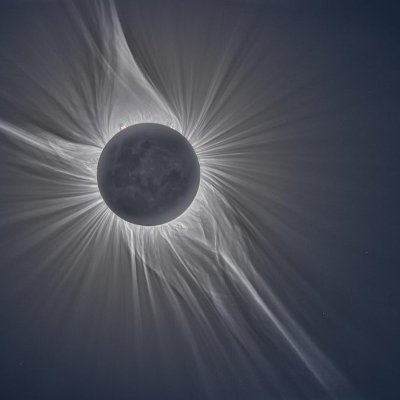
What will the Artemis-2 astronauts do during the entire 10-day mission? Day by day overview: Day 1. Launch. Launch on the SLS rocket, stage separation, orbital insertion. Maneuvers around the spent stage, initial system checks, change from spacesuits to everyday clothing. Day 2. Beginning the journey to the Moon: Simulator exercises, then the main maneuver—translunar injection (TLI), which places Orion on a trajectory to fly around the Moon and return to Earth. Day 3. Preparation Rehearsals for lunar observations in zero gravity, corrective maneuver, emergency procedures training (e.g., CPR). Day 4. Course correction Second minor maneuver, communication with Mission Control, media sessions, photography of Earth and the Moon at the midpoint. Day 5. Lunar Entry For the first time since 1972, humans will be in cislunar space. Spacesuit tests: rapid pressurization, life support systems checks. Another course correction. Day 6. Lunar Flyby The main day: The Orion spacecraft will fly at an altitude of 6,400–9,650 km above the lunar surface. This distance is approximately 15–24 times greater than the orbital altitude of the ISS. Plus, the Moon itself is smaller. Visually, the Moon will look like a basketball at arm's length to the astronauts. There will be only three hours for observations during closest approach. The astronauts will take photographs and record geological data. Depending on the launch time, the Artemis 2 crew could break the record for the longest distance from Earth. Day 7. Lunar Exit Data transfer to scientists, psychological and physical debriefings. Symbolic call with the ISS crew. First maneuver of the return trajectory. Day 8. Demonstrations Radiation protection training (using water and thermal protection as barriers). Testing the Orion attitude control systems in various modes. Day 9. Preparing for reentry The last full day of the flight. Technological demonstrations, course corrections, fitting of compression suits to help the body adapt to weightlessness. Day 10. Return Final maneuver, atmospheric reentry, during which the temperature will reach 1650°C. Parachute deployment, splashdown in the Pacific Ocean off San Francisco. Crew pickup by US Navy ships.
Black Hole tweet media
English
60
2.8K
7.5K
427.8K
Tha Bid retweetou
Maxarick
Maxarick@Maxarick·
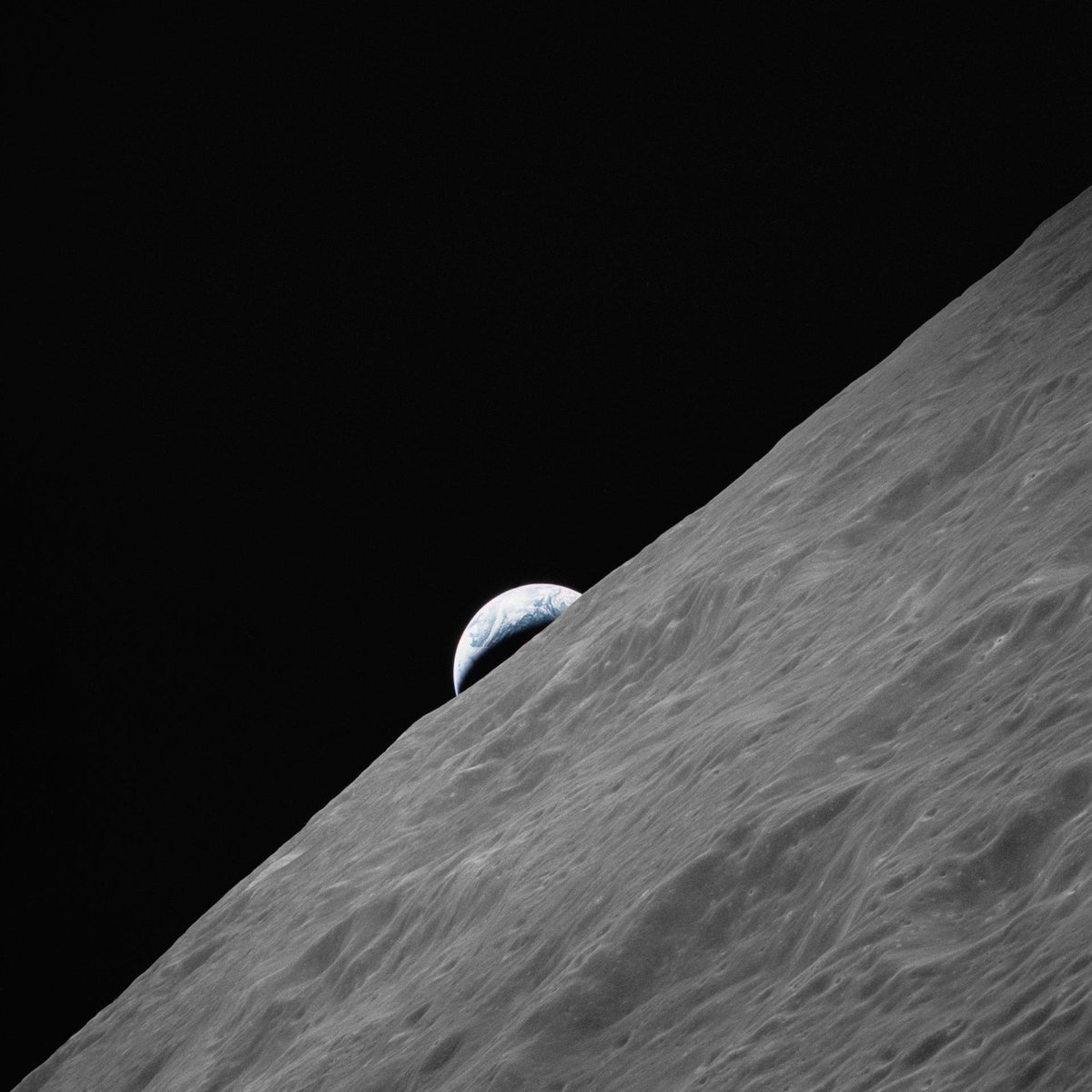
This photo was taken by the crew of Apollo 17 19,473 days ago. If everything goes well, we should have a new one in 6 days.
Maxarick tweet media
English
78
2.4K
32.3K
377.2K
Tha Bid retweetou
▪️ Macroski ▪️🇪🇸
Hace 34 años fallecía Juanito. Eterno 7. Honor absoluto! El Cielo lo guarda.
Español
32
280
1.2K
20.2K
Tha Bid retweetou
Agencia Espacial Española (AEE)
¡España monitoriza el camino a la Luna! 🚀🌕 Este vídeo de 15s muestra la órbita de la cápsula Orión (#ArtemisII) y su señal Beacon (verde). No solo observamos: medimos el efecto Doppler para corregir su trayectoria en tiempo real. ¡Ingeniería de precisión! 🇪🇸🛰️ 🧵👇
Español
1
64
251
19.9K
Tha Bid retweetou
Anish Moonka
Anish Moonka@anishmoonka·
If you're under 53 years old, you have never once been alive while a human was farther than 250 miles from Earth. Tonight, four astronauts are heading 252,000 miles out. That's a thousand times farther than any person has gone in your lifetime. The 250-mile ceiling is where the International Space Station floats. Every astronaut since December 1972 has been stuck in that zone. Spacewalks, science experiments, cool photos from orbit, sure. But nobody left the neighborhood. The last crew to go farther was Apollo 17. December 1972. Nixon was president. The internet didn't exist. Cell phones were 11 years away. The youngest member of that crew is now 90 years old. The farthest any human has ever been from Earth is 248,655 miles. The Apollo 13 crew set that number in 1970, and they didn't mean to. Their oxygen tank blew up, and the emergency route home took them farther out than anyone before or since. Tonight's crew will break that record on purpose. And the crew itself. Victor Glover becomes the first Black astronaut to leave Earth's neighborhood. Christina Koch becomes the first woman. Jeremy Hansen, a Canadian fighter pilot, becomes the first non-American to do so. When they come home, they'll slam into the atmosphere at 25,000 mph, faster than any human has ever traveled. The Moon's south pole has ice. Water ice, sitting in craters so deep that sunlight hasn't hit them in billions of years. A 2024 NASA study found way more of it than anyone expected. You can split water into hydrogen and oxygen, which gives you rocket fuel, breathable air, and drinking water, all made on the Moon instead of hauled up from Earth. George Sowers at Colorado School of Mines calculated that Moon-made fuel could shave $12 billion off a single trip to Mars. The Moon is a gas station on the road to Mars. NASA Administrator Jared Isaacman announced last week a $20 billion plan to build a permanent base at the South Pole over the next seven years, with landings every six months. China is developing its own lunar lander and spacesuit, aiming for a crewed landing by 2030. The Artemis program has burned through $93 billion so far, and the first actual surface landing is penciled in for 2028. There's a real question of who gets there first this time around. Harrison Schmitt walked on the Moon in December 1972 as part of Apollo 17. He's 90. Asked about it this week, he sounded pretty relaxed. "Mars is attainable," he said. "We're humans. That's what we've always done."
NASA@NASA

We're going around the Moon. Come watch with us. Artemis II's four-astronaut crew is lifting off from @NASAKennedy on an approximately 10-day mission that will bring us closer to living on the Moon and Mars. The launch window opens at 6:24pm ET (2224 UTC). twitter.com/i/broadcasts/1…

English
218
2.8K
18.4K
2.6M