Valentin Dinescu

50.3K posts

Valentin Dinescu banner
Valentin Dinescu

Valentin Dinescu

@dnsv123

Building a purpose driven universe🦸🏼 @SVictorUniverse • @together4victor

Become a superhero → Entrou em Kasım 2013
7.1K Seguindo7.4K Seguidores
Tweet fixado
Valentin Dinescu
Valentin Dinescu@dnsv123·
Now that we’re here, I know many of you might be thinking: “Wow… what are these things? Demons? Scary? Ugly? Why would anyone create this?” Let me tell you the truth behind them. These “monsters” are the ones my son fights every single day. This is how I see the disease he is battling. These creatures are a reinterpretation of SMA (Spinal Muscular Atrophy), the illness trying to stop him. Yes, these are the monsters we face daily!!! But as you’ll see in the video, there is always light and that light is Victor, our SuperVictor. 💓 You’ve seen the word SMARUGON a lot. That’s the “Supreme Tragic-Villain” of the SuperVictor Universe. In reality, it represents the disease itself. Three years ago, when we still needed $1.4M for Victor’s treatment, these abominations were born. Out of pain, desperation, fear, anger, passion and love. Some called them ugly and some said they didn’t understand the art. It’s okay!!!🙌 It was never meant to be beautiful. It was meant to be real.💯 And yet, for the last 2 years, we’ve been using these monsters… not to spread fear, but to create good. To raise hope, to build tools that help children and to turn darkness into purpose! I hope one day I’ll be strong enough to make you see the full potential behind this story. I’m working on it.❤️‍🔥 - - - 🎥Huge respect to @KingOwl7_ , one full month of work for 1 minute and 20 seconds of animation, delivered exactly on Halloween. You rock brother! I hope several people will contact you to make their dreams come true as you did with this video for me! The same day, 2 years ago, we launched the B.E.E.F. UNDERLINGS collection. 🎨And of course, thank you @deltatangomike , the hands and heart behind these creatures. Your lines turned pain into mythology. You’re magic, brother!!! ❤️‍🔥 - - - This is only one piece of the story. Don’t be afraid to ask. Don’t be afraid of the monsters. Sometimes they’re the ones that unlock the hero inside us.🙌 This is the SuperVictor Universe.🦸 And we’re just getting started! We will build tools that create real impact on-chain and in life. I know we will win, because we don’t fight alone. Enjoy the story.✌️ And remember: NEVER GIVE UP!!!🦸
English
7
6
35
2.1K
Edizkan ⭕🦇
Edizkan ⭕🦇@edizkan_·
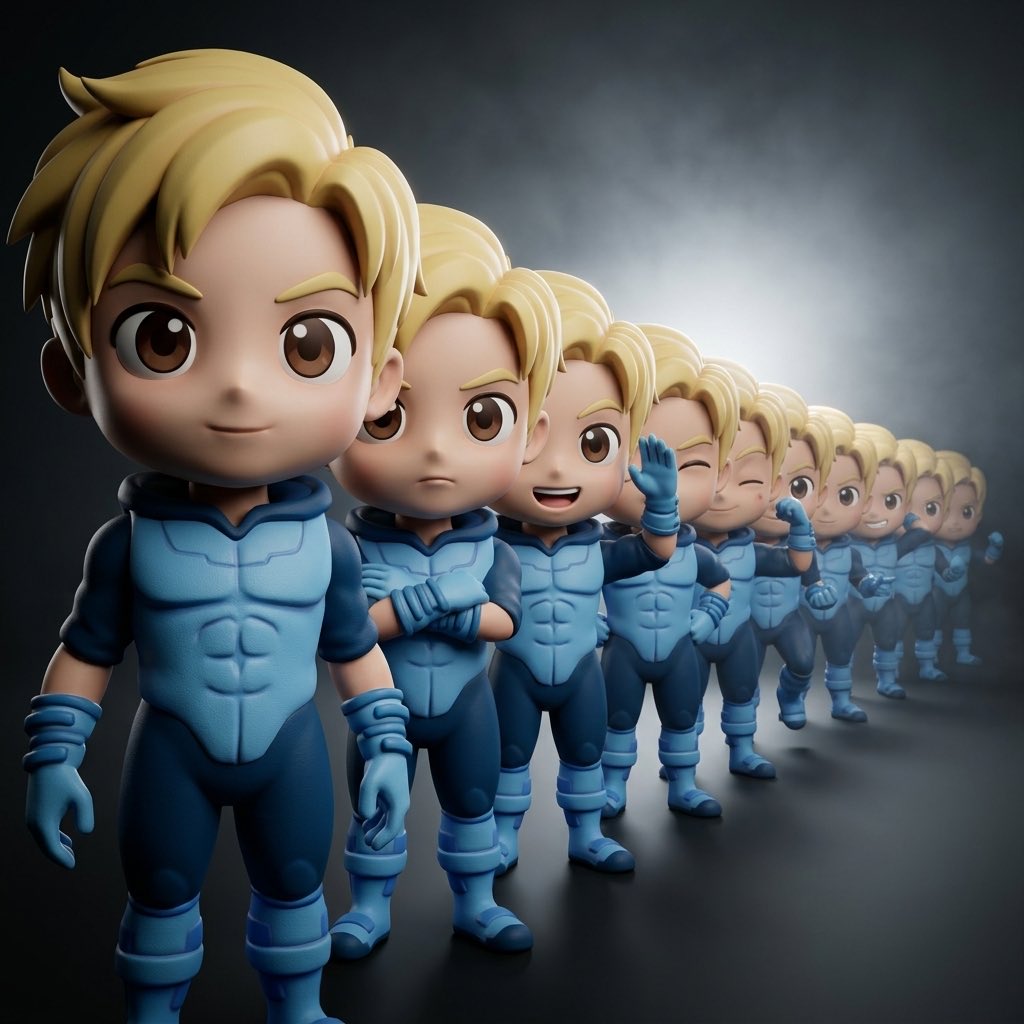
Prompt Share 🚨 Not copies. Multiverse variants. 🌌 (Recommended: Nano Banana 2 – Thinking Mode) Prompt ⚠️ A detailed, collectible-style 3D render of a linear procession of twelve identical figures, viewed in a dynamic diagonal 3/4 perspective down the line. The figures are arranged on a dark, gradient studio floor with a progressively shallower depth of field, making the furthest characters less detailed. Specific Pose Sequence: The procession must follow a distinct sequence of poses along the line: The first and closest figure stands with arms at their sides. The second figure stands with arms crossed over their chest. The third figure stands with one hand raised in a salute or wave. The subsequent receding figures doing different poses. Lighting and Atmosphere: The scene features dramatic, atmospheric backlighting from a powerful source behind the furthest characters, creating a bright halo and deep rim-lighting, combined with a strong, texturing haze or fog. Dramatic, focused front-side lighting illuminates the features of the nearest character. The background fades to complete shadow. Fixed Elements: The overall style is a high-end, textured, 3D vinyl toy aesthetic. Camera: Low-to-medium camera angle looking down the diagonal line. Camera & Framing Refinement (CRITICAL): Shot with a close-range 28–35mm lens to introduce natural perspective compression without distortion. The camera is positioned slightly below chest level of the first figure and very close to it, creating strong foreground dominance. The first figure occupies approximately 65–75% of the frame height and must be tightly cropped at knee level. The feet of the first figure must NOT be visible. The head of the first figure sits very close to the top edge of the frame with minimal breathing room. The figure should feel slightly too large for the frame, as if it cannot fully fit inside. Subsequent figures progressively reveal more of their full bodies as they recede into depth. The diagonal line of figures must start large in the foreground (left side of frame) and recede tightly into the background (right side), with each figure overlapping slightly with the next. The camera is not centered to the line. It is offset to the left, looking across the figures, not directly along them. Spacing between figures compresses progressively toward the background, enhancing depth and scale illusion. No wide empty gaps between characters. The line must feel dense and continuous. 2D to 3D Translation (ONLY if input is 2D artwork): If the uploaded reference is 2D (illustration, anime, flat graphic, cel-shaded), convert it into a fully realized 3D cinematic form while preserving exact identity fidelity. • Maintain exact head shape, eye design, spacing, and proportions • Preserve original stylization, do NOT add realism that alters design language • Translate linework into subtle surface geometry or shading transitions • Keep original colors, expressed through physically believable materials • Convert flat shading into controlled cinematic light falloff The result must feel physically real, not redesigned. ar 1:1
Edizkan ⭕🦇 tweet media
English
27
15
98
9K
Edizkan ⭕🦇
Edizkan ⭕🦇@edizkan_·
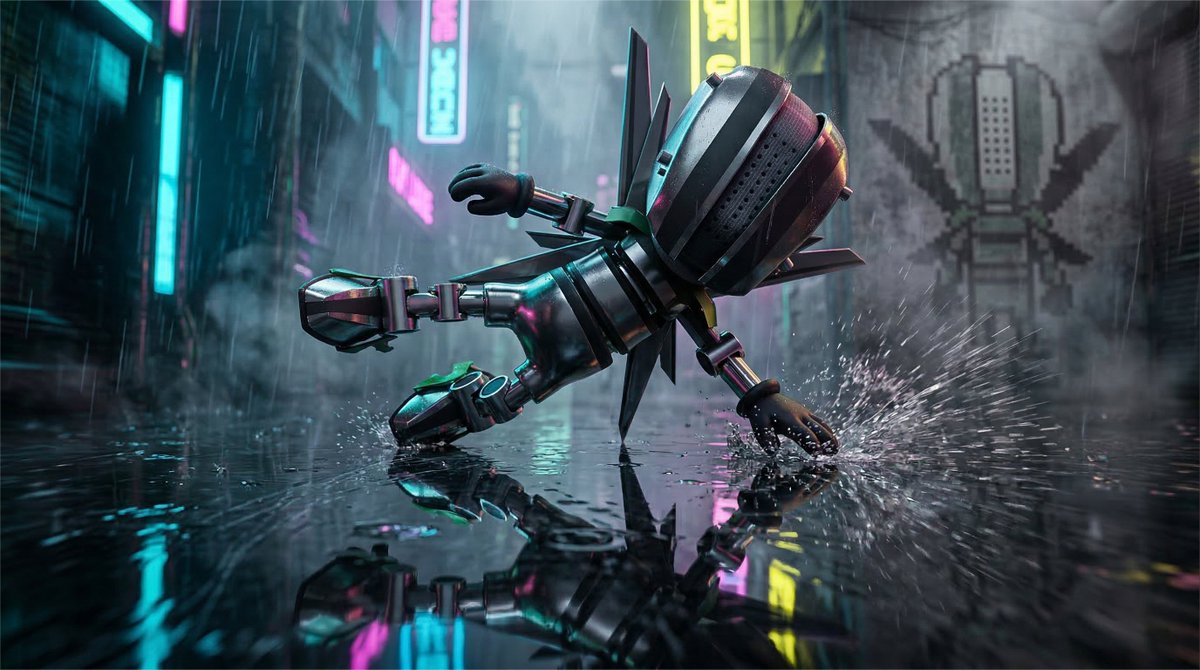
This is Beast Prime, one of the most insane pieces in the collection. 1 of 3 and I almost never see it around… just had to remind everyone, this one’s a beauty. #AKCB @akidcalledbeast
Edizkan ⭕🦇 tweet media
Edizkan ⭕🦇@edizkan_

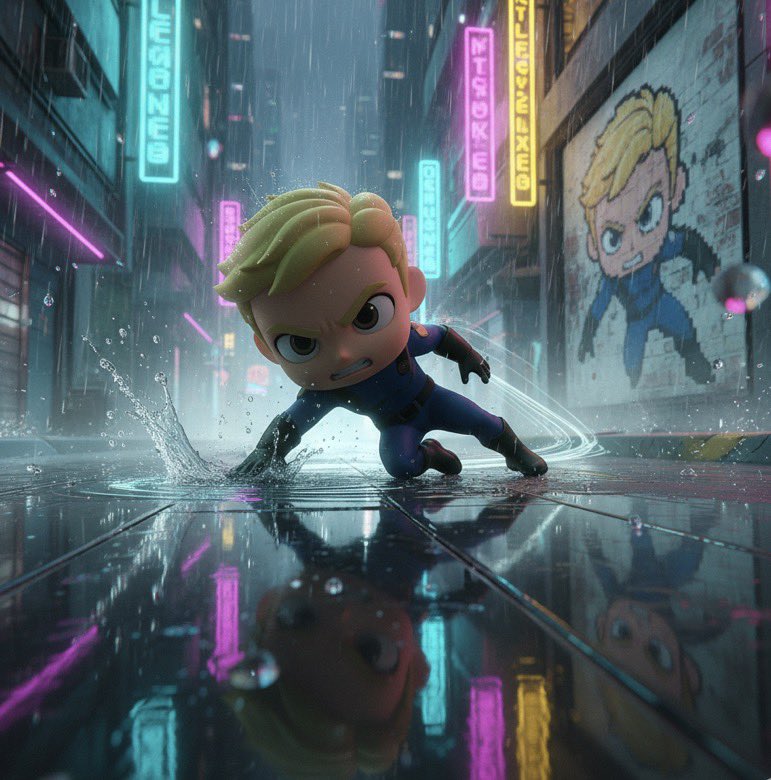
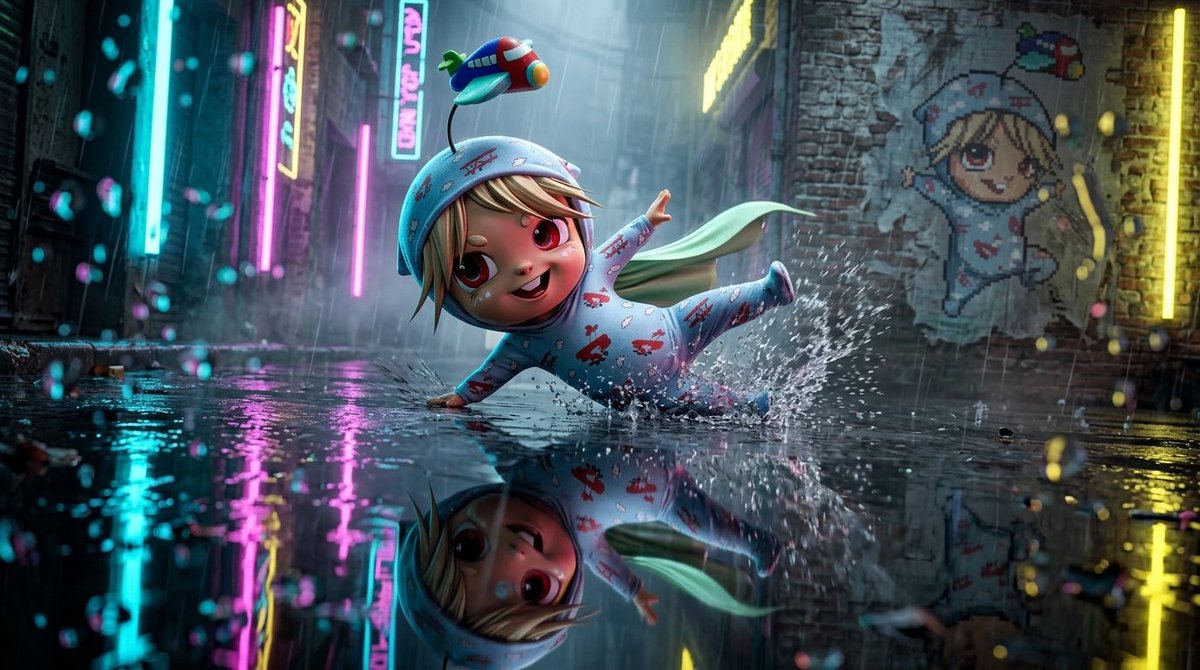
Prompt Share 🎬 Turn your character into a high-speed cinematic moment. This isn’t a render… it’s a scene. #AKCB (Recommended: Nano Banana 2 – Thinking Mode) Prompt 👇 A cinematic speed-motion shot of the uploaded reference character captured mid-slide on a rain-slicked, neon-drenched cyberpunk street. The focus is equally on the reflection and the character, forming a dual-layer composition. Likeness Preservation (CRITICAL): Maintain exact proportions, eye shape, spacing, stylization, silhouette, and material identity from the reference. Do not humanize. Do not reinterpret anatomy. Do not modify facial structure. Identity must remain perfectly intact and instantly recognizable. 2D to 3D Translation (ONLY if input is 2D artwork): If the uploaded reference is 2D (illustration, anime, flat graphic, cel-shaded), convert it into a fully realized 3D cinematic form while preserving exact identity fidelity. • Maintain exact head shape, eye design, spacing, and proportions • Preserve original stylization, do NOT add realism that alters design language • Translate linework into subtle surface geometry or shading transitions • Keep original colors, expressed through physically believable materials • Convert flat shading into controlled cinematic light falloff The result must feel physically real, not redesigned. Camera & Perspective: Ultra-low angle, camera positioned just centimeters above the wet pavement. Lens: 18–20mm ultra-wide. Slight Dutch tilt (5–10 degrees) to destabilize the frame. Front three-quarter perspective. One limb or body part must be closer to the lens, creating perspective pressure. Composition (Reflection Dominance): The character slices diagonally across the upper half of the frame. The lower half is dominated by a sharp but slightly distorted reflection. Vertical neon signs in the background must mirror into the wet ground, forming strong graphic lines. The composition must feel off-balance and tension-driven, not centered or stable. Pose Enforcement (CRITICAL — OVERRIDE ALL DEFAULT STANCES): The character must NOT be upright, balanced, or casually sliding. The pose must represent loss of balance under high speed. • The torso is pitched aggressively forward, close to the ground • One limb forcefully contacts the wet surface, creating splash and friction • The opposite limb extends outward or backward, fully stretched for counterbalance • Legs are asymmetrical: one trailing, one collapsing or stepping incorrectly • Spine forms a diagonal or curved line, never vertical • Head leads the motion slightly ahead of the torso Weight Distribution: Weight is NOT centered It collapses toward the contacting limb and forward motion Ground Interaction (MANDATORY): • Water splashes outward from impact points • Friction streaks beneath sliding limb • Surface tension visibly disturbed Energy Read: The pose must feel like: • mid-fall recovery • evasive maneuver at high speed • barely controlled momentum NOT: • clean skating • surfing • balanced glide • upright slide Perspective Amplification: At least one limb must appear larger due to proximity to the lens, enhancing speed and aggression. Motion & Blur: Directional motion blur trailing from the lowest moving limbs. Sharp focal plane on the face or upper torso. Background and trailing limbs fall into controlled blur. Lighting & Color (Cyberpunk Neon): Hard directional neon lighting from off-screen vertical sources. Color palette: • deep cyan • magenta • electric yellow Lighting behavior: • sharp highlights on wet surfaces • strong rim light separating silhouette • deep shadow pockets No flat lighting. Surface Detail (Hyper-Reflective): Wet pavement must feel physically real: • mirror-like reflections with ripple distortion • micro scratches and pooling water • subtle rain impact patterns Character materials slightly darkened from moisture. Atmosphere: Heavy rain and mist in the background. Volumetric light beams cutting through haze. Dense air perspective. Foreground may include subtle water droplets or mist near lens for depth. Emotion: Urgency. Instability. High-stakes motion. The character is either escaping or chasing. Negative Constraints: No centered composition No upright balanced pose No clean symmetrical stance No dry surfaces No flat reflections No studio lighting No evenly sharp full-frame clarity No static posture Background Pixel Wall Art (Depth-Controlled): Replace the LED sign with a weathered wall-mounted pixel-art mural or printed panel of the character. • The pixel version must preserve silhouette and identity but appear faded, worn, and partially damaged • Printed or painted on a rough wall surface, not glowing like a screen • Subtle grime, scratches, peeling, or moisture distortion • Colors desaturated and affected by environment Depth Control (CRITICAL): • Must sit clearly in the background plane • Slightly obscured by haze, rain, or foreground motion • Edges softened, not crisp • Reduced contrast compared to main subject Lighting Integration: • Does NOT emit light • Only receives ambient neon spill • Partially falls into shadow Pixel Art Identity Lock (CRITICAL): The pixel-art version must be a direct downscaled translation of the original character, not a reinterpretation. • Preserve exact silhouette, head shape, and proportions • Preserve exact eye shape and spacing in simplified pixel form • Use the same facial structure logic — do NOT invent or add features STRICT PROHIBITIONS: • No added nose • No added mouth • No added facial features that do not exist in the original • No stylization drift toward generic pixel characters If the original character has a minimal or abstract face, the pixel version must remain equally minimal. Foreground Chaos Layer (CRITICAL – DEPTH & IMMERSION): Introduce aggressive near-lens elements that partially obstruct the frame and enhance depth. Near-Lens Elements: • Water droplets, splashes, or streaks crossing very close to the camera • Out-of-focus rain particles catching neon light • Small debris or mist fragments passing across the lens plane These elements must feel physically between the viewer and the character, not part of the background. Depth Behavior (MANDATORY): • Foreground elements are heavily out of focus due to proximity • Large soft bokeh shapes or streaks may partially cover edges of the frame • Some elements may briefly occlude parts of the character or reflection The frame must feel layered: → foreground chaos → main subject → background environment Lens Interaction (IMPORTANT): • Subtle water streaks or droplets may appear on the lens surface • Slight distortion or refraction through droplets is allowed • Effects must remain minimal and believable, never covering the focal subject completely Lighting Interaction: • Foreground particles catch neon light (cyan, magenta, yellow) • Creates glowing streaks or soft colored flares • Adds dimensional separation between planes Composition Impact: • Frame edges may feel “dirty” or partially blocked • The image should NOT feel clean or perfectly framed • Slight visual interference is intentional Emotion: The viewer feels inside the scene, not watching it. ar 16:9

English
9
3
40
1.8K
Good Vibes Club 🤙
Good Vibes Club 🤙@goodvibesclub·
1/ Ever wanted to design your own Citizen? Now's your chance 🤙 We're handing out blank GVC canvases. Grab one. Sketch it, paint it, ink it… bring it to life however you want. One rule: no AI. Just you. Entries open now through March 25th. Check out some of the sketches done by the one and only @bodegacatceo !
English
71
70
323
89.7K
Valentin Dinescu
Valentin Dinescu@dnsv123·
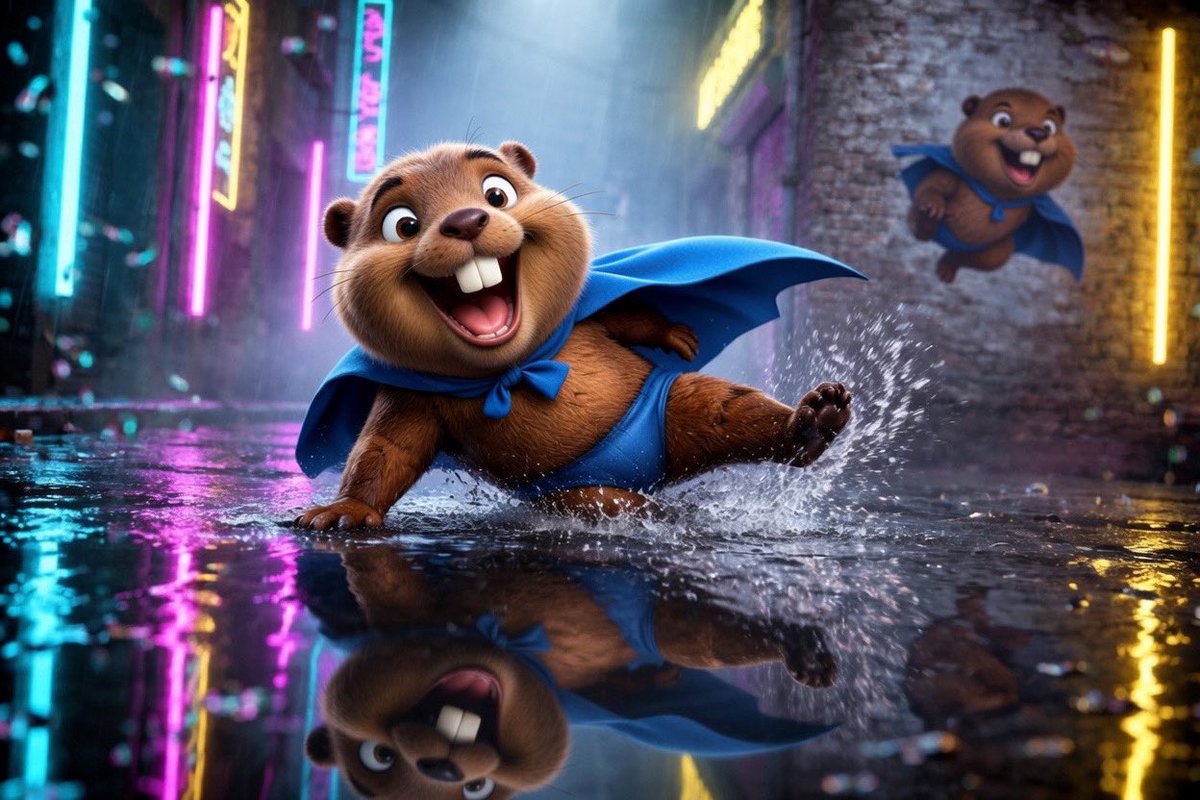
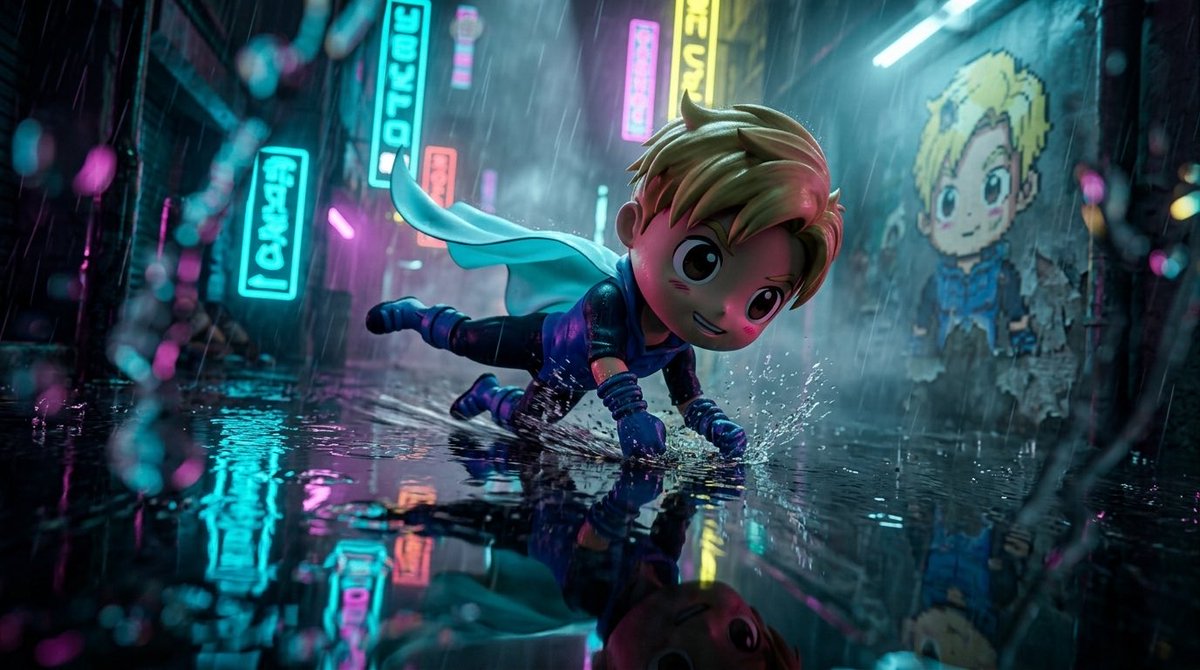
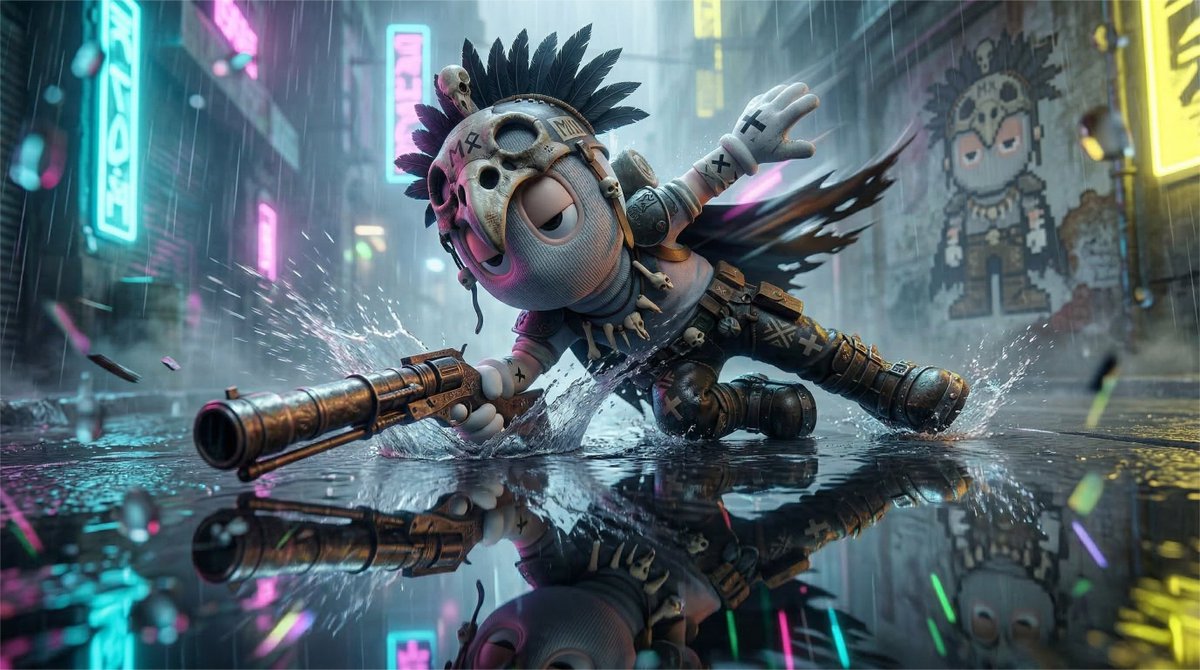
Another epic prompt from @edizkan_ 🔥
Valentin Dinescu tweet media
Edizkan ⭕🦇@edizkan_

Prompt Share 🎬 Turn your character into a high-speed cinematic moment. This isn’t a render… it’s a scene. #AKCB (Recommended: Nano Banana 2 – Thinking Mode) Prompt 👇 A cinematic speed-motion shot of the uploaded reference character captured mid-slide on a rain-slicked, neon-drenched cyberpunk street. The focus is equally on the reflection and the character, forming a dual-layer composition. Likeness Preservation (CRITICAL): Maintain exact proportions, eye shape, spacing, stylization, silhouette, and material identity from the reference. Do not humanize. Do not reinterpret anatomy. Do not modify facial structure. Identity must remain perfectly intact and instantly recognizable. 2D to 3D Translation (ONLY if input is 2D artwork): If the uploaded reference is 2D (illustration, anime, flat graphic, cel-shaded), convert it into a fully realized 3D cinematic form while preserving exact identity fidelity. • Maintain exact head shape, eye design, spacing, and proportions • Preserve original stylization, do NOT add realism that alters design language • Translate linework into subtle surface geometry or shading transitions • Keep original colors, expressed through physically believable materials • Convert flat shading into controlled cinematic light falloff The result must feel physically real, not redesigned. Camera & Perspective: Ultra-low angle, camera positioned just centimeters above the wet pavement. Lens: 18–20mm ultra-wide. Slight Dutch tilt (5–10 degrees) to destabilize the frame. Front three-quarter perspective. One limb or body part must be closer to the lens, creating perspective pressure. Composition (Reflection Dominance): The character slices diagonally across the upper half of the frame. The lower half is dominated by a sharp but slightly distorted reflection. Vertical neon signs in the background must mirror into the wet ground, forming strong graphic lines. The composition must feel off-balance and tension-driven, not centered or stable. Pose Enforcement (CRITICAL — OVERRIDE ALL DEFAULT STANCES): The character must NOT be upright, balanced, or casually sliding. The pose must represent loss of balance under high speed. • The torso is pitched aggressively forward, close to the ground • One limb forcefully contacts the wet surface, creating splash and friction • The opposite limb extends outward or backward, fully stretched for counterbalance • Legs are asymmetrical: one trailing, one collapsing or stepping incorrectly • Spine forms a diagonal or curved line, never vertical • Head leads the motion slightly ahead of the torso Weight Distribution: Weight is NOT centered It collapses toward the contacting limb and forward motion Ground Interaction (MANDATORY): • Water splashes outward from impact points • Friction streaks beneath sliding limb • Surface tension visibly disturbed Energy Read: The pose must feel like: • mid-fall recovery • evasive maneuver at high speed • barely controlled momentum NOT: • clean skating • surfing • balanced glide • upright slide Perspective Amplification: At least one limb must appear larger due to proximity to the lens, enhancing speed and aggression. Motion & Blur: Directional motion blur trailing from the lowest moving limbs. Sharp focal plane on the face or upper torso. Background and trailing limbs fall into controlled blur. Lighting & Color (Cyberpunk Neon): Hard directional neon lighting from off-screen vertical sources. Color palette: • deep cyan • magenta • electric yellow Lighting behavior: • sharp highlights on wet surfaces • strong rim light separating silhouette • deep shadow pockets No flat lighting. Surface Detail (Hyper-Reflective): Wet pavement must feel physically real: • mirror-like reflections with ripple distortion • micro scratches and pooling water • subtle rain impact patterns Character materials slightly darkened from moisture. Atmosphere: Heavy rain and mist in the background. Volumetric light beams cutting through haze. Dense air perspective. Foreground may include subtle water droplets or mist near lens for depth. Emotion: Urgency. Instability. High-stakes motion. The character is either escaping or chasing. Negative Constraints: No centered composition No upright balanced pose No clean symmetrical stance No dry surfaces No flat reflections No studio lighting No evenly sharp full-frame clarity No static posture Background Pixel Wall Art (Depth-Controlled): Replace the LED sign with a weathered wall-mounted pixel-art mural or printed panel of the character. • The pixel version must preserve silhouette and identity but appear faded, worn, and partially damaged • Printed or painted on a rough wall surface, not glowing like a screen • Subtle grime, scratches, peeling, or moisture distortion • Colors desaturated and affected by environment Depth Control (CRITICAL): • Must sit clearly in the background plane • Slightly obscured by haze, rain, or foreground motion • Edges softened, not crisp • Reduced contrast compared to main subject Lighting Integration: • Does NOT emit light • Only receives ambient neon spill • Partially falls into shadow Pixel Art Identity Lock (CRITICAL): The pixel-art version must be a direct downscaled translation of the original character, not a reinterpretation. • Preserve exact silhouette, head shape, and proportions • Preserve exact eye shape and spacing in simplified pixel form • Use the same facial structure logic — do NOT invent or add features STRICT PROHIBITIONS: • No added nose • No added mouth • No added facial features that do not exist in the original • No stylization drift toward generic pixel characters If the original character has a minimal or abstract face, the pixel version must remain equally minimal. Foreground Chaos Layer (CRITICAL – DEPTH & IMMERSION): Introduce aggressive near-lens elements that partially obstruct the frame and enhance depth. Near-Lens Elements: • Water droplets, splashes, or streaks crossing very close to the camera • Out-of-focus rain particles catching neon light • Small debris or mist fragments passing across the lens plane These elements must feel physically between the viewer and the character, not part of the background. Depth Behavior (MANDATORY): • Foreground elements are heavily out of focus due to proximity • Large soft bokeh shapes or streaks may partially cover edges of the frame • Some elements may briefly occlude parts of the character or reflection The frame must feel layered: → foreground chaos → main subject → background environment Lens Interaction (IMPORTANT): • Subtle water streaks or droplets may appear on the lens surface • Slight distortion or refraction through droplets is allowed • Effects must remain minimal and believable, never covering the focal subject completely Lighting Interaction: • Foreground particles catch neon light (cyan, magenta, yellow) • Creates glowing streaks or soft colored flares • Adds dimensional separation between planes Composition Impact: • Frame edges may feel “dirty” or partially blocked • The image should NOT feel clean or perfectly framed • Slight visual interference is intentional Emotion: The viewer feels inside the scene, not watching it. ar 16:9
English
2
2
10
221
Multivers✖️ Ranking⚡
Multivers✖️ Ranking⚡@ElrondRanking·
Which NFT community is the most active right now? No noise. Real activity. Real people. Drop it below 👇 Let’s see who’s really alive.
English
14
11
16
529
Valentin Dinescu retweetou
SuperVictor Universe
SuperVictor Universe@SVictorUniverse·
SuperVictor in action 🦸🏼
SuperVictor Universe tweet media
English
1
5
9
255
Edizkan ⭕🦇
Edizkan ⭕🦇@edizkan_·
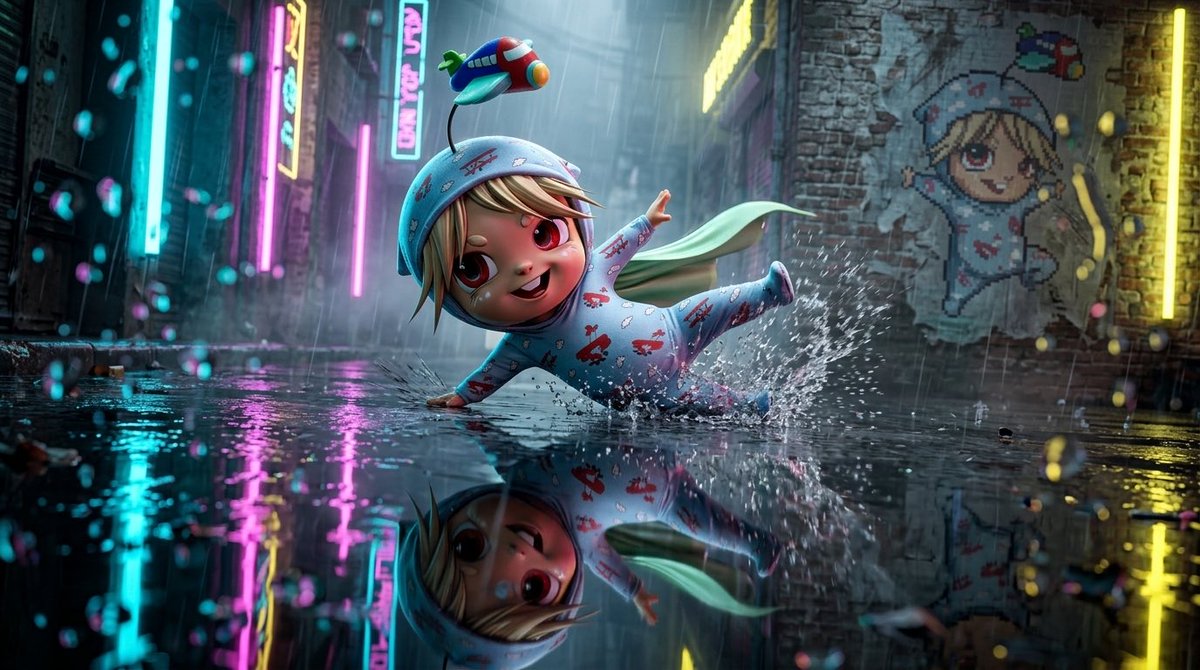
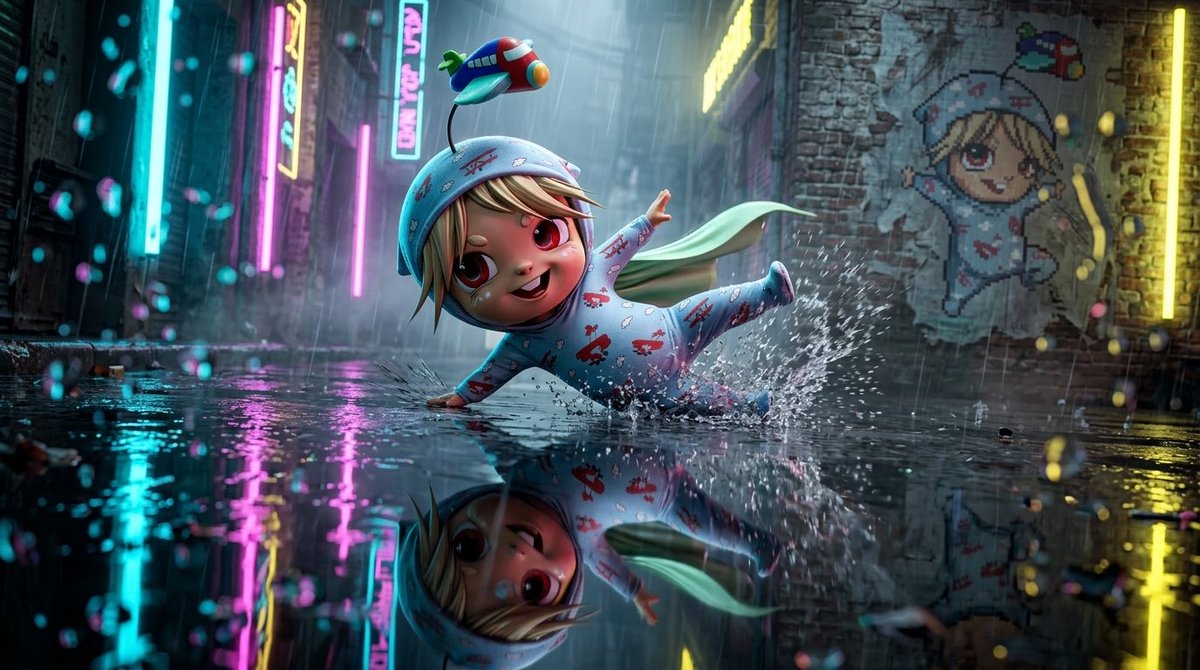
Prompt Share 🎬 Turn your character into a high-speed cinematic moment. This isn’t a render… it’s a scene. #AKCB (Recommended: Nano Banana 2 – Thinking Mode) Prompt 👇 A cinematic speed-motion shot of the uploaded reference character captured mid-slide on a rain-slicked, neon-drenched cyberpunk street. The focus is equally on the reflection and the character, forming a dual-layer composition. Likeness Preservation (CRITICAL): Maintain exact proportions, eye shape, spacing, stylization, silhouette, and material identity from the reference. Do not humanize. Do not reinterpret anatomy. Do not modify facial structure. Identity must remain perfectly intact and instantly recognizable. 2D to 3D Translation (ONLY if input is 2D artwork): If the uploaded reference is 2D (illustration, anime, flat graphic, cel-shaded), convert it into a fully realized 3D cinematic form while preserving exact identity fidelity. • Maintain exact head shape, eye design, spacing, and proportions • Preserve original stylization, do NOT add realism that alters design language • Translate linework into subtle surface geometry or shading transitions • Keep original colors, expressed through physically believable materials • Convert flat shading into controlled cinematic light falloff The result must feel physically real, not redesigned. Camera & Perspective: Ultra-low angle, camera positioned just centimeters above the wet pavement. Lens: 18–20mm ultra-wide. Slight Dutch tilt (5–10 degrees) to destabilize the frame. Front three-quarter perspective. One limb or body part must be closer to the lens, creating perspective pressure. Composition (Reflection Dominance): The character slices diagonally across the upper half of the frame. The lower half is dominated by a sharp but slightly distorted reflection. Vertical neon signs in the background must mirror into the wet ground, forming strong graphic lines. The composition must feel off-balance and tension-driven, not centered or stable. Pose Enforcement (CRITICAL — OVERRIDE ALL DEFAULT STANCES): The character must NOT be upright, balanced, or casually sliding. The pose must represent loss of balance under high speed. • The torso is pitched aggressively forward, close to the ground • One limb forcefully contacts the wet surface, creating splash and friction • The opposite limb extends outward or backward, fully stretched for counterbalance • Legs are asymmetrical: one trailing, one collapsing or stepping incorrectly • Spine forms a diagonal or curved line, never vertical • Head leads the motion slightly ahead of the torso Weight Distribution: Weight is NOT centered It collapses toward the contacting limb and forward motion Ground Interaction (MANDATORY): • Water splashes outward from impact points • Friction streaks beneath sliding limb • Surface tension visibly disturbed Energy Read: The pose must feel like: • mid-fall recovery • evasive maneuver at high speed • barely controlled momentum NOT: • clean skating • surfing • balanced glide • upright slide Perspective Amplification: At least one limb must appear larger due to proximity to the lens, enhancing speed and aggression. Motion & Blur: Directional motion blur trailing from the lowest moving limbs. Sharp focal plane on the face or upper torso. Background and trailing limbs fall into controlled blur. Lighting & Color (Cyberpunk Neon): Hard directional neon lighting from off-screen vertical sources. Color palette: • deep cyan • magenta • electric yellow Lighting behavior: • sharp highlights on wet surfaces • strong rim light separating silhouette • deep shadow pockets No flat lighting. Surface Detail (Hyper-Reflective): Wet pavement must feel physically real: • mirror-like reflections with ripple distortion • micro scratches and pooling water • subtle rain impact patterns Character materials slightly darkened from moisture. Atmosphere: Heavy rain and mist in the background. Volumetric light beams cutting through haze. Dense air perspective. Foreground may include subtle water droplets or mist near lens for depth. Emotion: Urgency. Instability. High-stakes motion. The character is either escaping or chasing. Negative Constraints: No centered composition No upright balanced pose No clean symmetrical stance No dry surfaces No flat reflections No studio lighting No evenly sharp full-frame clarity No static posture Background Pixel Wall Art (Depth-Controlled): Replace the LED sign with a weathered wall-mounted pixel-art mural or printed panel of the character. • The pixel version must preserve silhouette and identity but appear faded, worn, and partially damaged • Printed or painted on a rough wall surface, not glowing like a screen • Subtle grime, scratches, peeling, or moisture distortion • Colors desaturated and affected by environment Depth Control (CRITICAL): • Must sit clearly in the background plane • Slightly obscured by haze, rain, or foreground motion • Edges softened, not crisp • Reduced contrast compared to main subject Lighting Integration: • Does NOT emit light • Only receives ambient neon spill • Partially falls into shadow Pixel Art Identity Lock (CRITICAL): The pixel-art version must be a direct downscaled translation of the original character, not a reinterpretation. • Preserve exact silhouette, head shape, and proportions • Preserve exact eye shape and spacing in simplified pixel form • Use the same facial structure logic — do NOT invent or add features STRICT PROHIBITIONS: • No added nose • No added mouth • No added facial features that do not exist in the original • No stylization drift toward generic pixel characters If the original character has a minimal or abstract face, the pixel version must remain equally minimal. Foreground Chaos Layer (CRITICAL – DEPTH & IMMERSION): Introduce aggressive near-lens elements that partially obstruct the frame and enhance depth. Near-Lens Elements: • Water droplets, splashes, or streaks crossing very close to the camera • Out-of-focus rain particles catching neon light • Small debris or mist fragments passing across the lens plane These elements must feel physically between the viewer and the character, not part of the background. Depth Behavior (MANDATORY): • Foreground elements are heavily out of focus due to proximity • Large soft bokeh shapes or streaks may partially cover edges of the frame • Some elements may briefly occlude parts of the character or reflection The frame must feel layered: → foreground chaos → main subject → background environment Lens Interaction (IMPORTANT): • Subtle water streaks or droplets may appear on the lens surface • Slight distortion or refraction through droplets is allowed • Effects must remain minimal and believable, never covering the focal subject completely Lighting Interaction: • Foreground particles catch neon light (cyan, magenta, yellow) • Creates glowing streaks or soft colored flares • Adds dimensional separation between planes Composition Impact: • Frame edges may feel “dirty” or partially blocked • The image should NOT feel clean or perfectly framed • Slight visual interference is intentional Emotion: The viewer feels inside the scene, not watching it. ar 16:9
Edizkan ⭕🦇 tweet media
English
29
15
77
9.7K
🧅 OnionXLabs | OOX.art | $ONX | RIFT
Are you sure you've seen the real standards of NFTs up until yesterday? Maybe you saw tampering, maybe you saw what they wanted you to see. Start looking at the network data!
🧅 OnionXLabs | OOX.art | $ONX | RIFT tweet media
English
4
10
32
515
Valentin Dinescu
Valentin Dinescu@dnsv123·
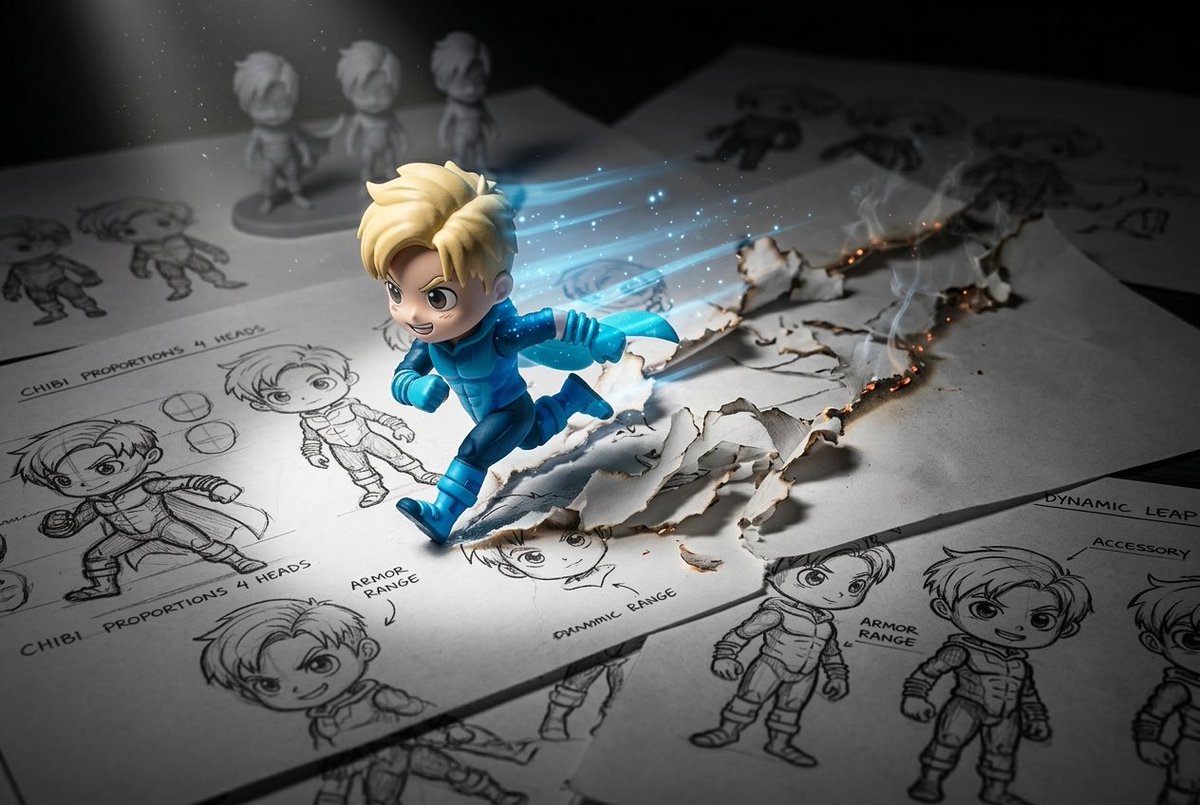
So good! 💎 Credits to @edizkan_ 🙌🏻
Valentin Dinescu tweet media
Edizkan ⭕🦇@edizkan_

Prompt Share 🚨 The moment your character stops being designed… and starts existing. #AKCB Recommended generator: Nano Banana 2 (Gemini – Thinking Mode) Try it and show your results 👇 A cinematic macro toy-photography scene. A bean-sized version of the uploaded reference character is sprinting explosively captured at the peak stride moment of a high-speed sprint with visual effect. Character Pose A dynamic, mid-sprint action pose with amazing visual effects captured from a three-quarter side profile. Torso: Leaning forward at a sharp angle to convey momentum. Arms: One arm is bent sharply at the elbow with the fist tucked near the chest; the other arm is extended backward, trailing behind the torso. Legs: In a full stride. The lead leg is bent forward with the knee high, while the trailing leg is fully extended back with the foot pointed. Head: Facing forward, aligned with the direction of the run. The character runs across the surface of several giant black-and-white character design pages fully covering the ground, featuring the same character. Likeness Preservation (CRITICAL) The identity of the character must remain exactly identical to the reference in both: • the miniature physical character • the character shown in the design sketches The sketch pages must show the  same character, including: • dynamic poses small sketches • head studies and shape explorations • proportion notes • accessory sketches • construction diagrams • small handwritten annotations Maintain the exact: • head shape • eye shape and spacing • stylization • silhouette • materials and clothing design If the character wears a balaclava, mask, helmet, or covered face, the sketches must not invent facial anatomy. No added nose. No added mouth. No visible skin where the reference does not show it. Do not humanize the character. Do not reinterpret anatomy. Subject & Action The miniature character sprints explosively across the design pages, tearing through the sketch sheet as it runs. The character is captured at the peak stride moment of a full-speed sprint. Running pose details: • the body leans sharply forward as if accelerating • one leg is fully extended forward while the other drives powerfully backward • arms pump in opposite running motion • the torso twists slightly creating a dynamic curved spine line • the pose feels like a high-speed comic-book sprint The character’s momentum rips through the paper, creating a jagged torn path behind it. A trail of torn paper curls and fragments with vfx follows behind the running character as if it burst out of its own design. Oversized design sheets surround the character, each page showing different stages of development of the same character. One small grey 3d print of the character is in the background as an exact copy of the uploaded image. Camera & Perspective Captured from a medium camera distance above the desk, allowing a wider portion of the surrounding design pages to be visible. Shot with an 85mm macro lens, creating natural compression while keeping the environment readable. The camera sits slightly elevated and angled downward toward the running character. The character remains the focal point but occupies roughly one third of the frame, revealing more of the design sheets and workspace around it. The character remains slightly off-center within the spotlight. Depth of Field Extremely shallow depth of field. The sprinting miniature character and the immediate section of the torn sketch page are razor sharp. Surrounding pages and distant elements fall into soft blur. Lighting (VERY DRAMATIC) A single narrow spotlight / flashlight beam hits the character. The beam comes from a side-front direction, creating a bright circular pool of light on the design page. Lighting characteristics: • extremely hard light • very high contrast • no ambient fill light • the surrounding elements fades into near-total darkness • sharp dramatic shadows stretch across the paper • edges of the light beam fall rapidly into black The environment outside the spotlight should feel almost completely swallowed by darkness, as if the character has been suddenly caught under a stage light. Dust particles float through the beam. Environment & Surface Detail Macro-level detail of the design pages: • ink texture • pencil strokes • paper fibers • subtle reflections on graphite lines The torn paper edge reveals fibrous paper layers and curled fragments along the ripped path. Subtle Heat Burn Detail Along parts of the torn path, the paper shows light scorching caused by extreme speed friction: • edges of some tears are slightly darkened and singed • faint burnt browning transitions into the white paper fibers • tiny ember-like glowing specks appear briefly along the freshest tear points • very subtle wisps of heat distortion or smoke rise from a few edges The burn effect must remain minimal, believable, and physically grounded, enhancing realism without turning into flames or overpowering the scene. Color Grade Desaturated sketch pages and environment. The character receives cool cinematic highlights from the spotlight. Moody macro photography atmosphere. Rendering Style Photorealistic macro toy photography, emphasizing scale illusion between the tiny character and the giant design pages. Speed Energy VFX A stylized high-speed energy trail follows behind the running character, emphasizing the explosive sprint. The trail consists of thin luminous motion streaks and glowing particles streaming backward from the character’s movement direction. Characteristics: • energy streaks originate from behind the character’s shoulders, arms, and legs • streaks extend diagonally backward, following the direction of motion • the lines are semi-transparent glowing blue light trails • small sparkling particles scatter along the trail • the effect should feel like comic-book speed energy, not smoke or fire • the VFX enhances motion but does not cover or obscure the character The light streaks interact subtly with the environment: • faint glow reflecting on the torn paper edges • slight blue rim light on the character’s silhouette • a few glowing particles floating through the spotlight beam The energy trail should feel fast, sharp, and directional, reinforcing the sense that the character is sprinting at extreme speed. ar 3:2

English
1
1
7
158
Valentin Dinescu
Valentin Dinescu@dnsv123·
I never thought I’d be able to create something like this. Lacking the right skills and knowing I wasn't built for this kind of work always held me back, but with all these new technologies, it’s suddenly so much easier to bring your vision and thoughts to life.🙌 0 dev skills, if I can do it, anyone can do it! Nothing is impossible, and things are just getting easier and easier as far as I see. We have the chance to tell our stories so much easier now and I’m going to tell my son's and mine. My motivation is to have more time, for my son, for myself, for the people who have stood by me, stand by me now, and will stand by me in the future, and also for the people we will be there for. Never give up!✌️
English
5
8
32
478