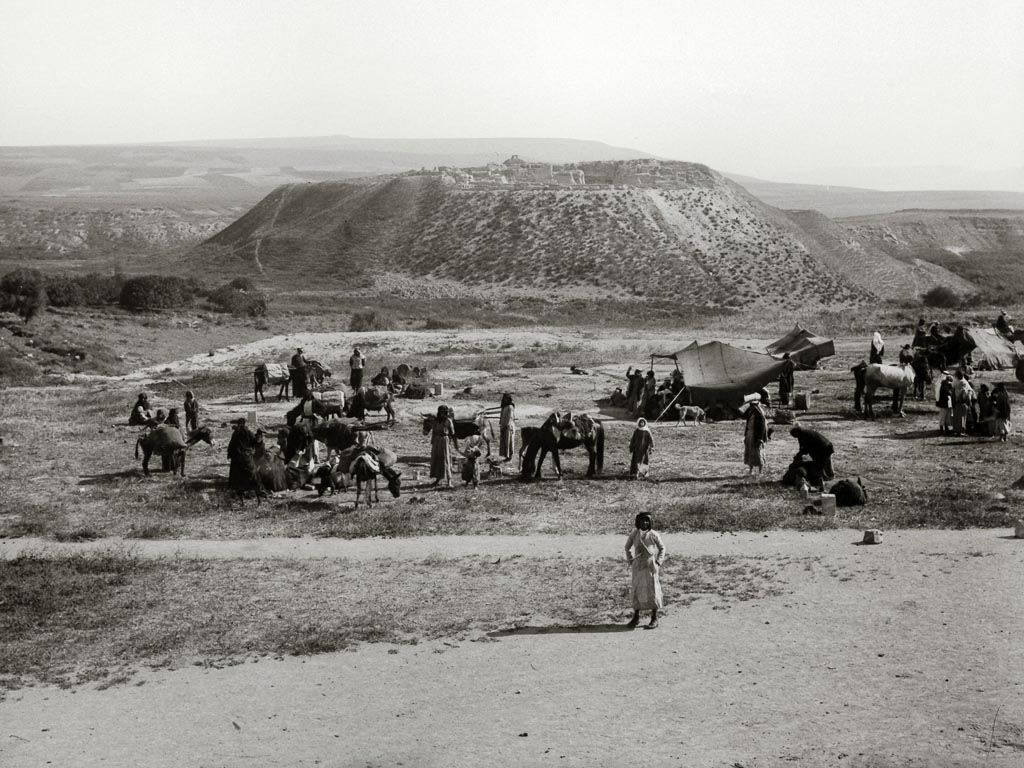
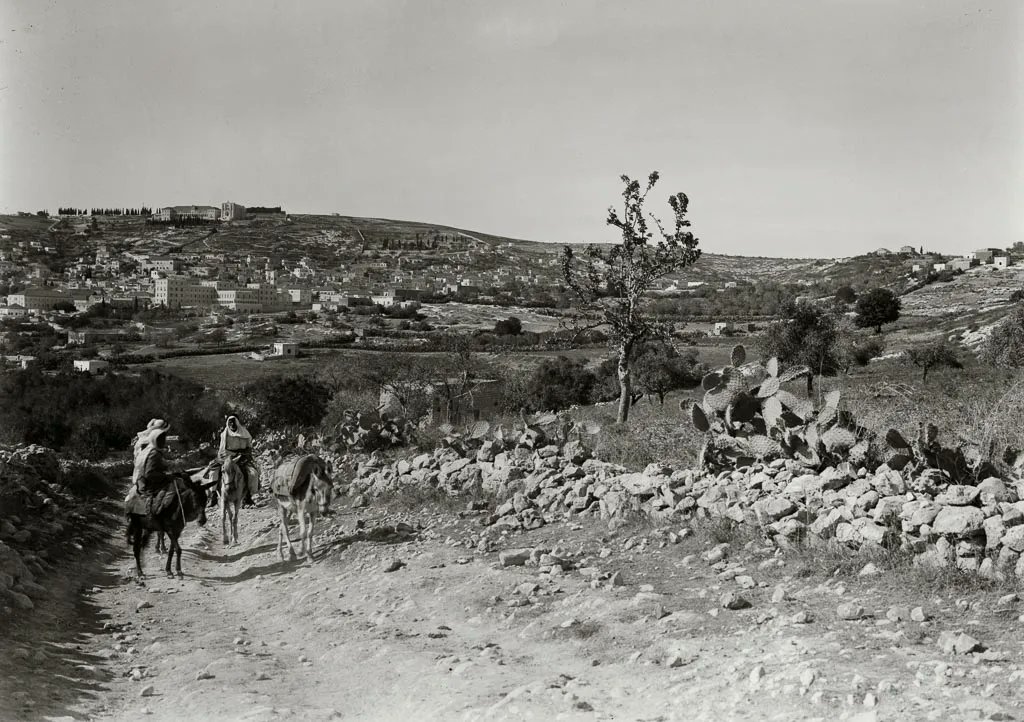
Before there were Roman bathhouses, paved streets, and collapsed archways for tourists to see, this was the view at Beth Shean. On top of the tell, you can see recent excavations. This photo was taken circa 1930.
In ancient times, most people took one of the passes through Mount Carmel. The route around the mountain along the coast was not ideal for several reasons. But swamps have been drained and a highway built.
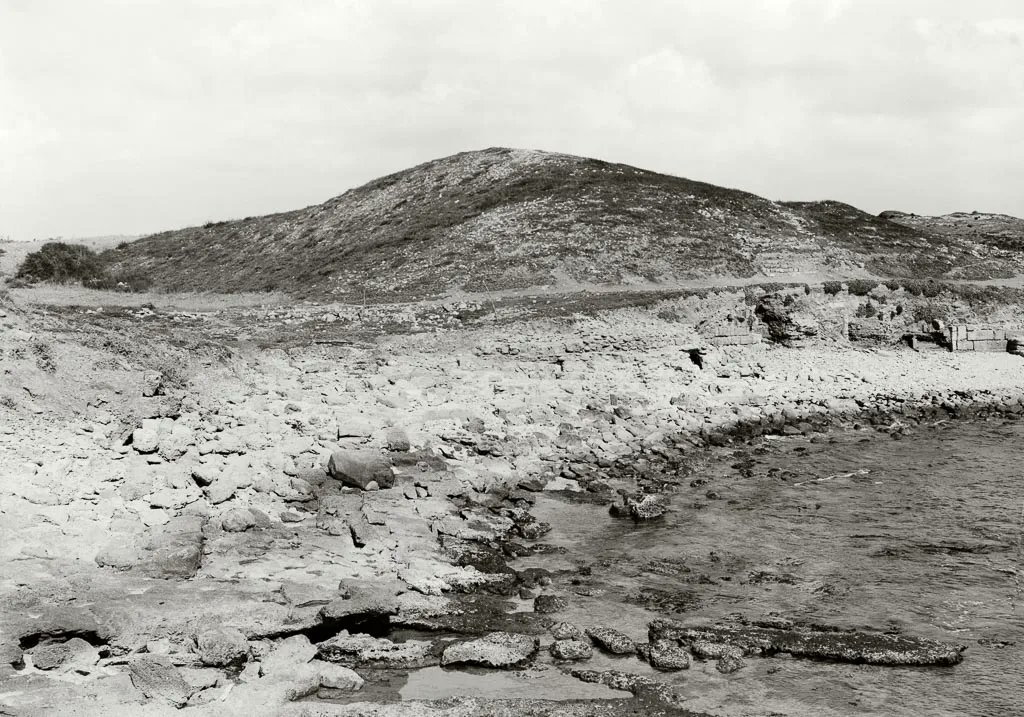
Eric Matson labeled this photo "Caesarea. Site of southern theatre." What do you think? Can you see anything? The photo was taken in June 1938; the theater was excavated around 1960.
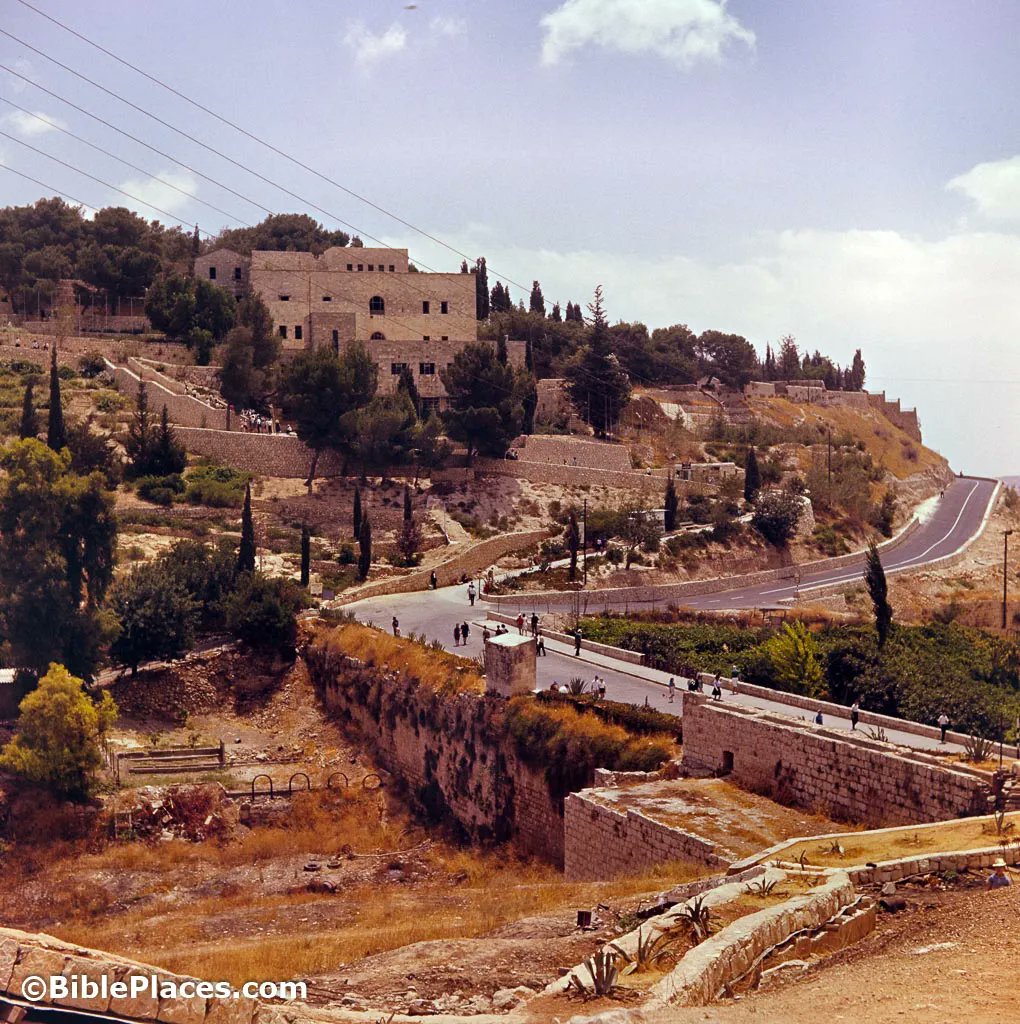
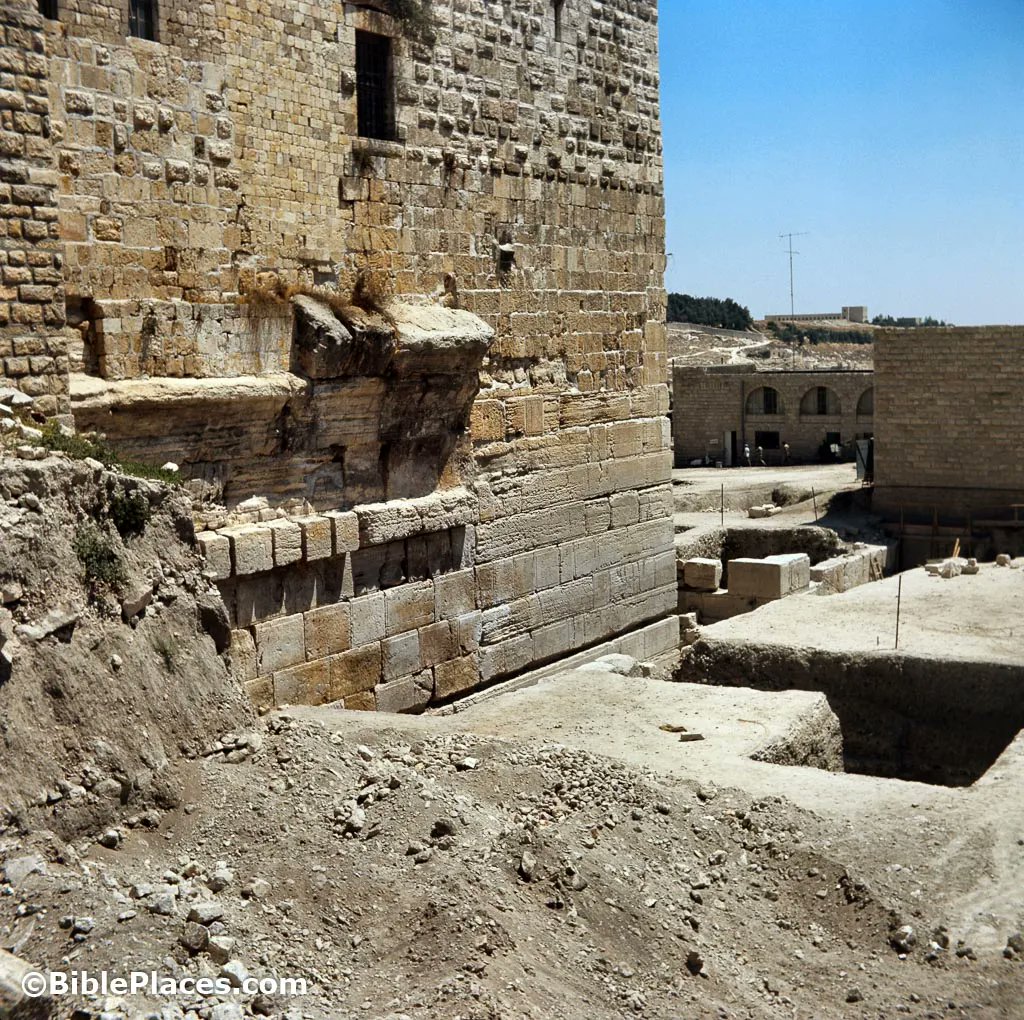
In 1966, this is what the Hinnom Valley, the road to Mount Zion (but not Jaffa Gate), and the Bishop Gobat school (today's Jerusalem University College) looked like.
"And Ahab said to Naboth, 'Give me your vineyard, that I may have it for a vegetable garden'" (1 Kgs 21:2). This winepress on Tel Jezreel is not too far from where Ahab uttered those words.
"The god that answers by fire, let him be God" (1 Kgs 18:24). Baal got the good end of the deal, since his specialty was sending fire (lightning) down from heaven, as shown on this stele from Ugarit, circa 1400 BC.
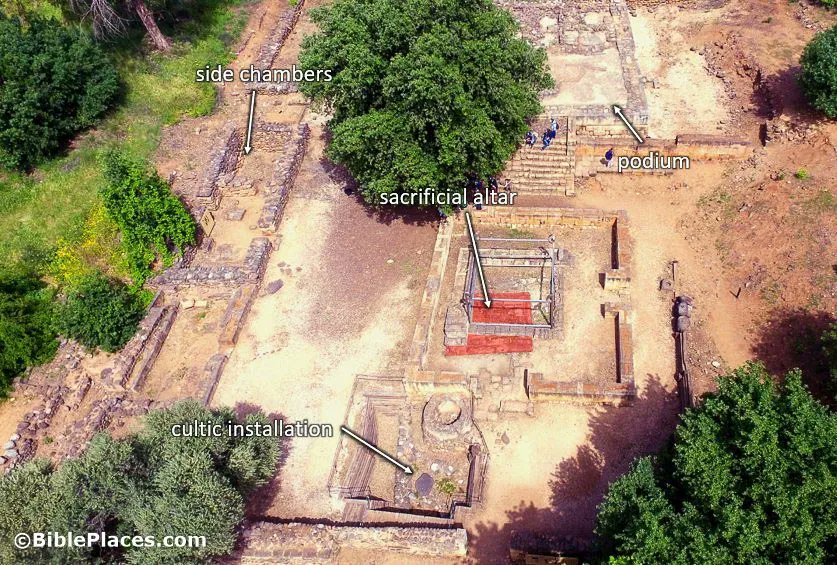
How many buildings in the Bible can we positively identify today? Not many, but one of them is Jeroboam's high place at Dan (1 Kgs 12). The golden calf is gone, but remains of the altar and temple podium stand as a witness to the nation's folly.
Before tourists could visit the southern Temple Mount excavations, the archaeologists moved a whole lot of earth. Robinson's Arch is on the left. Taken in 1968 by David Bivin.
Jerusalem, the city of redemption - where God will wipe away every tear from our eyes, and death will be swallowed up in Christ's victory (Rev 21; Isa 25)
St. Stephen's (aka Lions) Gate once required a sharp left turn to get through the gatehouse (like Jaffa, Damascus, and Zion Gates). Today you can drive straight on through.