たの丼

139.7K posts

たの丼 banner
たの丼

たの丼

@tanodoon

グラブル(rank300台 ) つげ櫛 万年筆 多肉植物 天然石 گوشت خوک خوشمزه است!(豚肉美味しい)インプレゾンビ通報部

修羅の國 Entrou em Eylül 2010
73 Seguindo66 Seguidores
たの丼 retweetou
Olena Rohoza
Olena Rohoza@OlenaRohoza·
🇷🇺🧐The first one’s gone. In Moscow, Lieutenant General Sergei Kobylaš, commander of the Russian Air Force, accidentally fell out of a window.
Olena Rohoza tweet media
English
351
1.5K
8K
222.6K
たの丼 retweetou
犬を吸うヨシ子🇺🇸 in MD
なぜかこれが今更リポストされてるので近況。娘の市民バレエに引き込まれた夫、一回だけの出演のつもりが、意外と小芝居がうまかったり、真面目なので言われた振り付けは頑張ってこなたりしているうちに、重宝がられて完全にレギュラーとなってしまいましたとさ。今は夏公演に向けてリハーサル中⭐︎
日本語
46
2.8K
21.8K
1.3M
たの丼 retweetou
Dominic Hauschild
Dominic Hauschild@domhauschild·
Ukraine has just done something astonishing. The Ukrainian Ministry of Defence has just launched TrophyLab - essentially making access to all captured Russian weapon technologies free for foreign governments, research institutions and the defence industry. They will even send physical hardware to allies for examination and to rip it apart to discover Russian military secrets. As well as technical specifications, blueprints and research results. The website includes listings for armoured vehicles, missiles, aircraft, UAVs, EW assets, UGVs, cruise missiles etc. Governments usually want to keep this kind of captured tech a secret for its own advantage. Ukraine has decided to make it (relatively, I think) open access for the benefit of the West.
English
121
1.6K
5.9K
295.5K
たの丼 retweetou
開明墨汁
開明墨汁@kaimei1898·
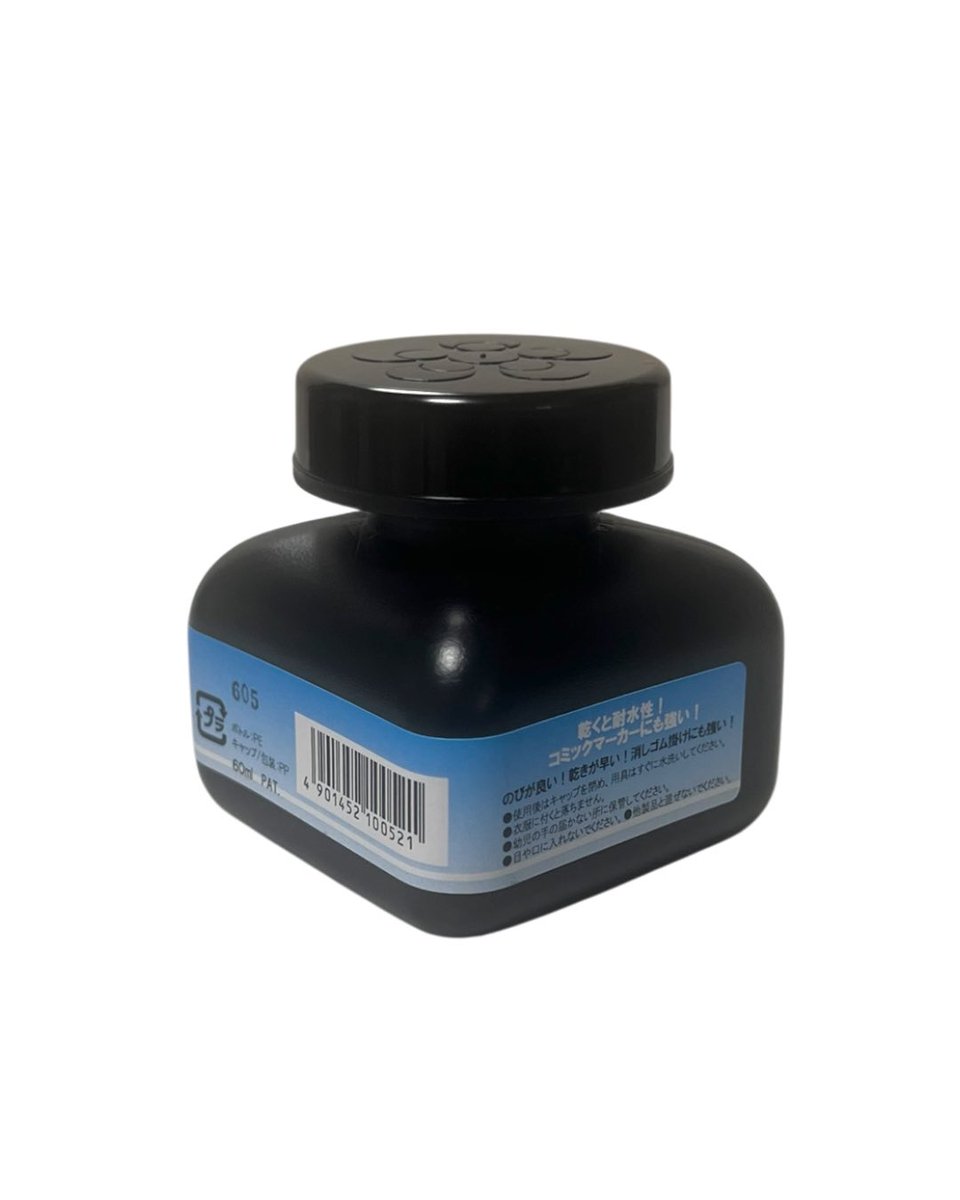
\発売決定/ ついに登場 「#まんが墨汁 墨池型」 漫画をかく人のために 見た目も使い勝手もこだわった 墨池型ボトル 机の上に置くだけで、 創作スイッチが入る一本🖊️ いつもの作業机に、 ちょっとしたワクワクを 近日中にモニター募集も予定 気になる方は、ぜひフォロー&拡散で 応援していただけるとうれしいです
開明墨汁 tweet media開明墨汁 tweet media開明墨汁 tweet media
日本語
0
46
112
4.6K
たの丼 retweetou
Millie Marconi
Millie Marconi@MillieMarconnni·
A Japanese immunologist spent 20 years proving that the chemicals trees release into the air walk into your bloodstream, hunt down your stress hormones, and arm your immune system in ways no therapist or pharmaceutical has ever matched, and most of the data has been sitting in Japanese medical journals for two decades waiting to be translated. His name is Qing Li. He is a clinical professor at Nippon Medical School in Tokyo and the president of the Japanese Society of Forest Medicine. The Japanese government has been funding his research since 2004, and the body of work he has produced is the reason forest bathing is now an officially prescribed clinical therapy in Japan and Korea. The story actually starts in 1982, when the Japanese Ministry of Agriculture, Forestry and Fisheries coined the term shinrin-yoku to describe the practice of slow, mindful walking in a forest. They did it for a practical reason. Japan was urbanizing fast, stress-related illness was climbing, and the country had thousands of square kilometers of forest sitting unused. The idea was to give people a reason to walk into the trees... They had no idea what was actually happening to the human body during those walks until Qing Li ran the first proper experiment in 2005. He took twelve healthy adult men on a three-day, two-night trip to a forest park. They walked for a few hours each day. Nothing strenuous. No prescribed routes or breathing exercises. They simply walked slowly through the trees, breathing the air, looking at the forest. Li drew blood and urine samples before the trip, on the second day, on the third day, on day seven after returning home, and again on day thirty. The numbers that came back from the lab were not what anyone expected. The activity of a specific type of immune cell called the natural killer cell, which is the cell your body uses to hunt down cancer cells and virus-infected cells before they can spread, had jumped by roughly 50 percent during the forest trip. The actual number of natural killer cells circulating in the bloodstream had increased significantly. Three different anti-cancer proteins that those cells produce, called perforin, granzymes, and granulysin, had all risen sharply. And the effect did not disappear when the men went home. The immune boost was still measurable on day seven and was still partially present on day thirty. Two hours a day in a forest had upgraded the immune system for a full month. Li ran the same experiment with women a year later and found nearly identical results. Then he ran it with a control group who took a three-day trip through an urban area with the same amount of walking, the same hotel quality, and the same diet. The urban group showed no measurable change in natural killer cell activity at all. The forest was doing the work, not the vacation. The mechanism turned out to be a class of airborne molecules called phytoncides. Trees produce these compounds to defend themselves against insects, bacteria, and fungi. Pine, cedar, oak, and cypress trees release them in particularly large amounts, especially in warmer weather and after rainfall. When you walk through a forest, you are inhaling those molecules into your lungs and absorbing them through your skin, and once inside your body they appear to directly stimulate the production and activity of the very immune cells Li was measuring in his lab. Roughly 50 percent of the health benefit of a forest walk, according to Li's data, comes from the chemistry of the air itself. The other half comes from what the forest is doing to your nervous system. This is where it stops being only about the immune system and starts being about stress. A separate Japanese research team measured cortisol, the body's main stress hormone, in 84 participants across 35 different forest sites. They drew samples before and after a 30-minute walk in each forest and compared them to control walks in matched urban environments. The cortisol levels of the people who walked in the forest were lower than the cortisol levels of the people who walked in the city by a significant margin. Their heart rates were lower. Their blood pressure was lower. The activity of their parasympathetic nervous system, which is the part responsible for rest and recovery, had gone up. The activity of their sympathetic nervous system, which is the part that drives fight or flight, had gone down. Then a researcher at the University of Michigan named MaryCarol Hunter ran the cleanest version of this experiment ever done. She recruited participants from a city and told them to take a nature pill three times a week for eight weeks. They were free to choose the time, the place, and the duration of the nature experience, as long as it was outside, in daylight, and free of phones, conversations, and aerobic exercise. They sent her saliva samples before and after each session so she could measure cortisol changes accurately and rule out the normal daily drop in stress hormones that happens to everyone. The result was that participants experienced a 21.3 percent drop in cortisol per hour spent in nature, with the biggest payoff happening between minutes 20 and 30 of the walk. After that, the cortisol kept dropping, but more slowly. The threshold dose for measurable stress relief was just 20 minutes outside in something that looked and felt like nature. What none of this means is that nature is a substitute for therapy or for medication when someone genuinely needs them. Therapy treats different things than a walk does, and Li himself has been careful in interviews to call forest bathing a complementary intervention rather than a replacement for clinical care. But what the research has settled is that the human body has a physiological response to being among trees that operates on the same biological systems modern medicine is trying to reach with drugs and clinical protocols, and that response is fast, measurable, and free. The strangest part of Li's work is the implication he keeps repeating in interviews. The average person now spends more than 90 percent of their life indoors. Their cortisol stays elevated. Their natural killer cells stay sluggish. Their parasympathetic nervous system rarely gets a chance to take over. The system that was tuned by millions of years of life under a canopy of trees is being asked to run permanently inside a box made of drywall and screens. Your body has not forgotten what it is supposed to do in a forest. It is waiting for you to walk into one.
Millie Marconi tweet media
English
27
515
2K
66.6K
たの丼 retweetou
Massimo
Massimo@Rainmaker1973·
Croatian freediver Vitomir Maričić achieved one of the most extraordinary feats in human history by holding his breath underwater for 29 minutes and 3 seconds, a new Guinness World Record. Experts had long considered such a duration impossible. While a trained dolphin can typically hold its breath for 8–10 minutes and most humans can barely manage one or two, Maričić remained completely still underwater for nearly half an hour on a single breath. The attempt pushed his body to extreme limits. As the minutes passed, powerful contractions wracked his diaphragm and his organs endured intense physiological stress. Yet through years of rigorous training, mental discipline, and specialized breathing techniques, he stayed calm and focused until the end. What makes this record even more impressive is Maričić’s purpose. He didn’t do it for fame or personal glory, he used the achievement as a powerful platform to raise global awareness about ocean conservation, marine protection, and the urgent threats facing our oceans. A stunning demonstration of human potential and a heartfelt call to protect the planet’s most vital ecosystem.
Massimo tweet media
English
140
1K
6.6K
296.9K
たの丼 retweetou
🇧🇪 Belgium MFA
🇧🇪 Belgium MFA@BelgiumMFA·
🇧🇪 🇯🇵 From 23 to 24 June, Their Majesties the King and Queen of the Belgians will welcome Their Majesties the Emperor and Empress of Japan for a State Visit. The visit celebrates the strong friendship & cooperation between our countries.
🇧🇪 Belgium MFA tweet media
English
7
193
1.2K
16.6K
たの丼 retweetou
All day Astronomy
All day Astronomy@forallcurious·
DID YOU KNOW🚨: Cricket's chirp are consistent with air temperatures. By counting the chips in the span of 25 seconds, dividing by 3, then adding 4, then it will equal the temperature in Celsius.
All day Astronomy tweet mediaAll day Astronomy tweet media
English
20
191
890
31.5K
たの丼 retweetou
Dailyscienceinfo
Dailyscienceinfo@NatureScienceA1·
For less than two seconds, the Sun turned green. 🟢☀️ Known as a green flash, this rare optical phenomenon can appear just as the Sun disappears below the horizon. Many people spend years trying to see one. Most miss it completely.
Dailyscienceinfo tweet media
English
34
276
1K
36.1K
たの丼 retweetou
Hiroshi Suzuki
Hiroshi Suzuki@AmbJapanUK·
I was interviewed at Royal Ascot!!👍
Hiroshi Suzuki tweet media
English
144
977
16.2K
218.9K
たの丼 retweetou
ゆ
@_uixsy·
話題のつるとんたんのドバイチョコかき氷食べに行ったんだけど、個体差激しすぎて映え難しすぎた w w w w w なんでこんなに差ができるん?爆笑 芸術作品やん、もう
ゆ tweet mediaゆ tweet mediaゆ tweet mediaゆ tweet media
日本語
123
1.3K
37K
2.8M
たの丼 retweetou
Epic Maps 🗺️
Epic Maps 🗺️@theepicmap·
It’s wild how the world basically runs on nothing but this.
Epic Maps 🗺️ tweet media
English
977
1.3K
34.1K
4.5M
たの丼 retweetou
Rocks for the Spirit
Rocks for the Spirit@rocksforthe·
Blue Needle Quartz Sphere 🤯 The blue needles inside this Quartz sphere are not mineral inclusions, but tiny gas-filled voids. Under bright light they glow blue due to the Tyndall effect, the same phenomenon that makes our sky appear blue. They only become visible at specific angles and create beautiful feather-like patterns within the Quartz.
English
6
157
691
20.2K
たの丼 retweetou
Massimo
Massimo@Rainmaker1973·
The boss saw the waitress being humiliated by a customer, went up to him, showed him that he was being filmed, made him pick the money up from the floor, and kicked him out of the restaurant.
English
158
1.3K
19.8K
1.1M
たの丼 retweetou
𐙚𓍢ִ໋ ˚ ෆ
違うそうじゃない
𐙚𓍢ִ໋ ˚ ෆ tweet media
日本語
140
2.8K
38.8K
704.1K