Ryan O'Donnell

713 posts

Ryan O'Donnell banner
Ryan O'Donnell

Ryan O'Donnell

@BooleanAnalysis

Videos: https://t.co/vy9r4V6aOZ

Pittsburgh, PA Присоединился Ekim 2011
0 Подписки6.7K Подписчики
Закреплённый твит
Ryan O'Donnell
Ryan O'Donnell@BooleanAnalysis·
I'm releasing a series of videos called "Quantum Computer Programming in 100 Easy Lessons". youtube.com/playlist?list=… It will cover the 'usual' content (...CHSH, Grover, Factoring), but with some expositional innovations that I *hope* will make it easier for beginners.
English
0
23
135
13.8K
Ryan O'Donnell
Ryan O'Donnell@BooleanAnalysis·
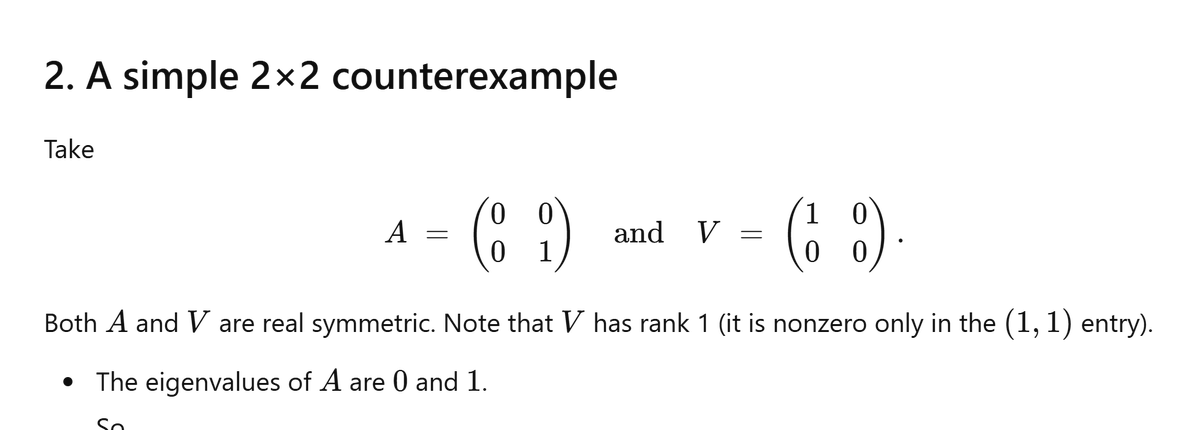
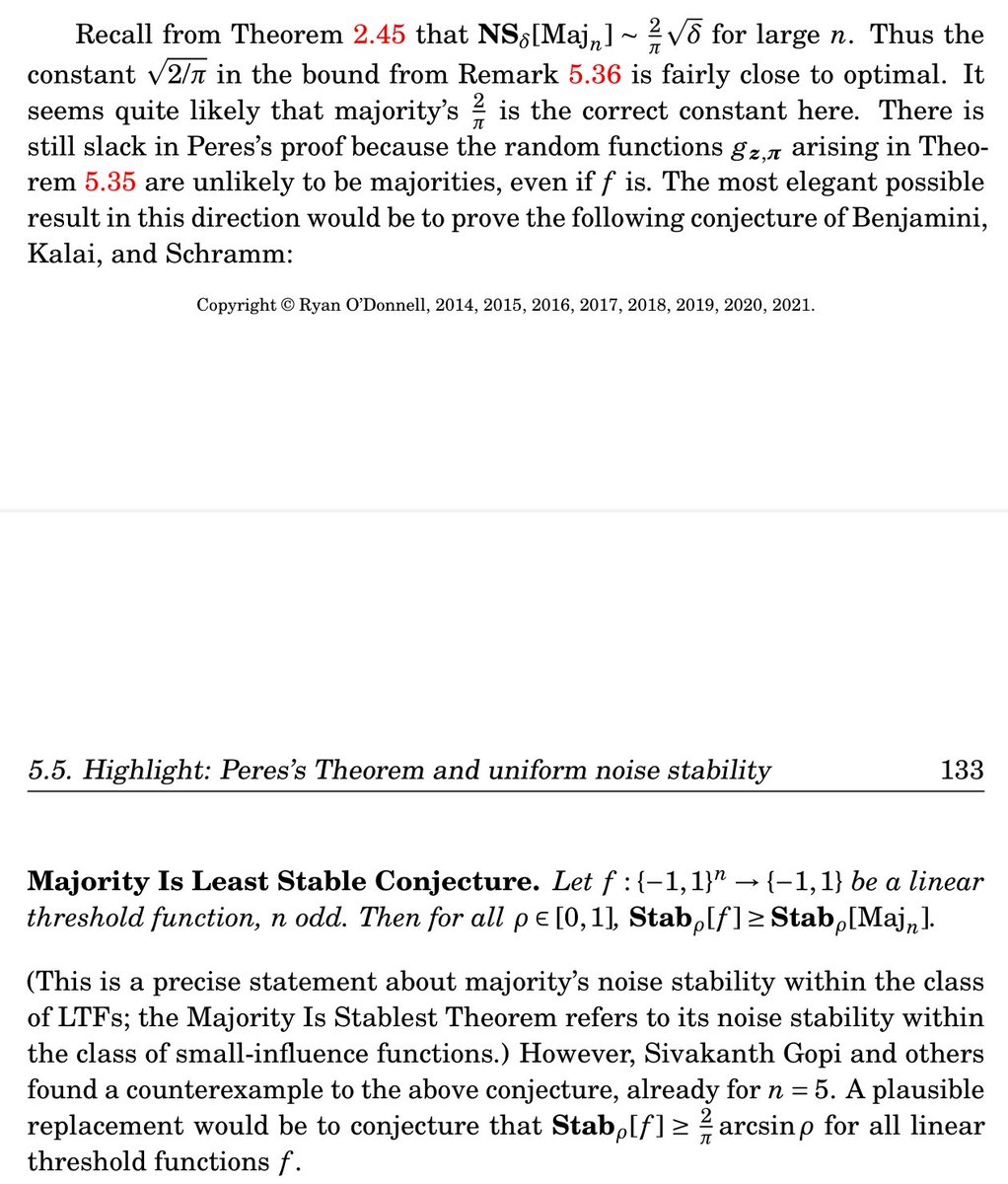
@SebastienBubeck To be fair, many people (e.g. Sivakanth Gopi) gave a simple n=5 counterexample to the similar 'Majority Is Least Stable' problem 10+ years ago...
Ryan O'Donnell tweet media
English
3
4
54
4.9K
Ryan O'Donnell ретвитнул
Noah Singer
Noah Singer@singerng_·
New w/ Meghal Gupta, William He, @BooleanAnalysis arxiv.org/abs/2508.09422 We give a quadratically faster classical algo for noisy planted kXOR (k > large const), dispelling (for now) claimed quartic speedup for quantum algos. 🧵 (1/10)
English
1
7
31
3.4K
Barna Saha
Barna Saha@B1ar2n3a·
In my undergraduate algorithms class: The free version of ChatGPT scored 26 out of 36 in midterm 1 while the class median was 20. The highest was 36. ChatGPT did not do well where the question required understanding a figure in the process of designing an algorithm. In midterm 2, ChatGPT scored 32 out of 36. The median was 19. The highest was 36. The class has about 500 students. In the final, ChatGPT scored 98 out of 108. Looking forward to see how the class average/median turns out to be in the final. To be noted: The questions are freshly prepared, no run-off-the-mill coding questions, require reasoning and algorithmic thinking. The questions are not super hard and I expect top students (1% of the class) to get full marks.
English
4
8
89
18K
Ryan O'Donnell
Ryan O'Donnell@BooleanAnalysis·
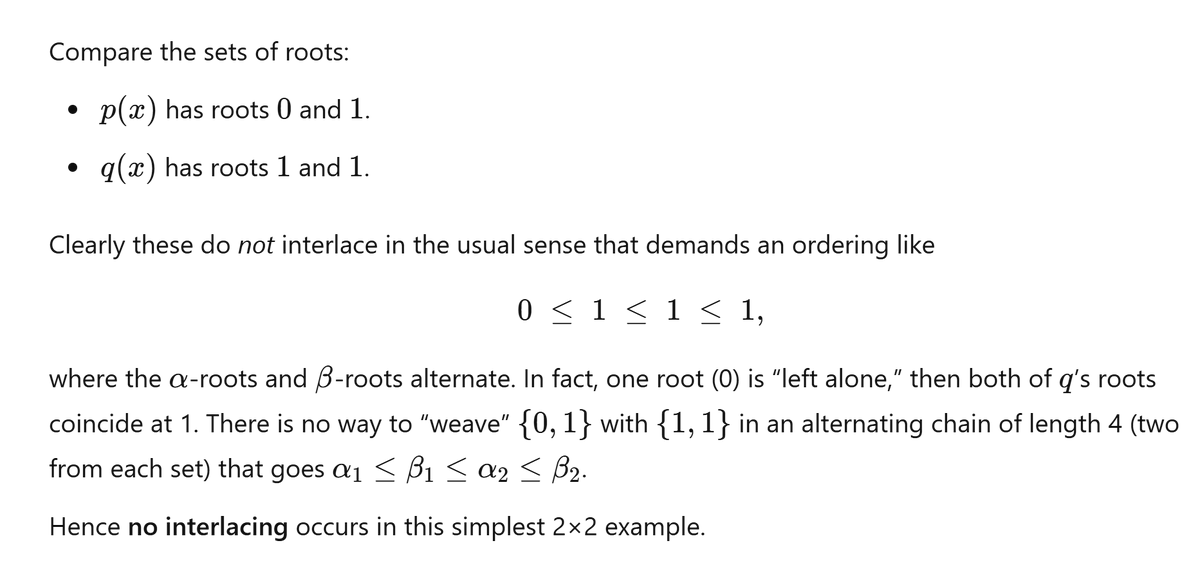
@AlgoSvensson @B1ar2n3a Am I the only one who's no good at this? I tried to get the $20 o3-mini-high to solve an elementary complex analysis problem and it gave nonsense despite huge hints. (On another recent attempt it insisted that 0<=1<=1<=1 is false.) What am I doing wrong...?
English
3
0
7
428
Ola Svensson
Ola Svensson@AlgoSvensson·
@B1ar2n3a Deepseek solved all our questions in the Master Algorithms exam and OpenAI o1 solved all but one. I found those models to be significantly better than the non-reasoning ones for these tasks.
English
1
0
12
719
Ryan O'Donnell
Ryan O'Donnell@BooleanAnalysis·
@thesasho I know it's a trap, but I still can't help but point out: he proved Gödel's 2nd Incompleteness theorem independently, but let Gödel have it.
English
1
0
1
632
Ryan O'Donnell
Ryan O'Donnell@BooleanAnalysis·
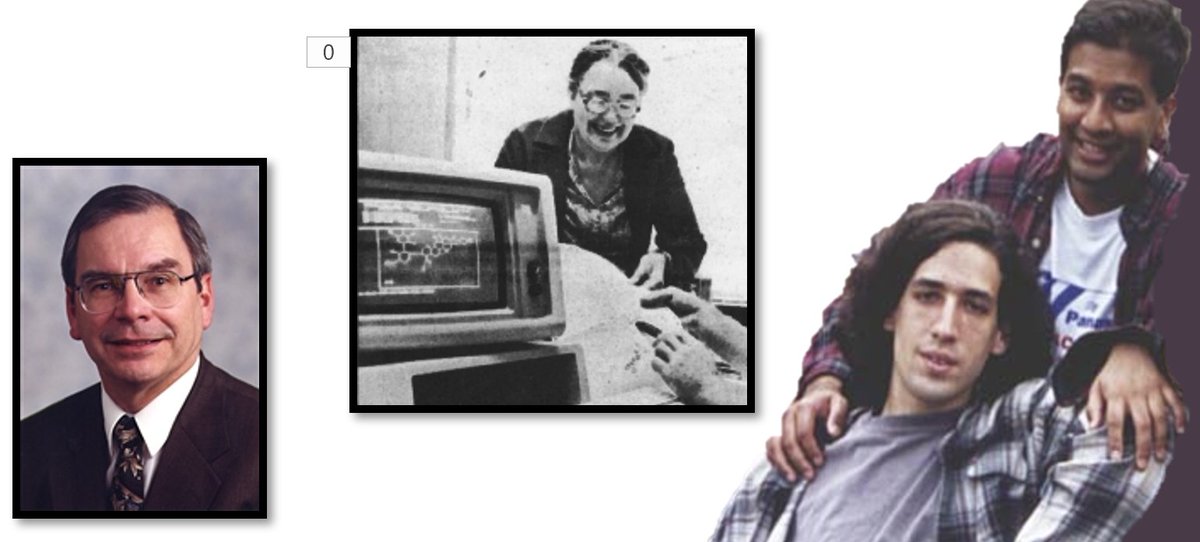
In case you're in Cambridge, MA on Tue. Dec. 10, I'll give a talk at 4pm (MIT 32-G449) about coboundary expansion in high-dimensional expanders. It's kind of about group theory, though. toc.csail.mit.edu/node/1671 Besides coauthor @singerng_, here's the cast of characters:
Ryan O'Donnell tweet media
English
1
2
23
3.1K
Gautam Kamath
Gautam Kamath@thegautamkamath·
Name a better source for high-quality technical CS content than the @SimonsInstitute YouTube channel. I'll wait. Everyone in TCS already knows this. But for the ML folks, this year has a program on LLMs (simons.berkeley.edu/programs/speci…), see, e.g., this playlist youtube.com/playlist?list=…
Sushant Sachdeva@sushnt

@karpathy @trickylabyrinth If I may, the youtube channel of @SimonsInstitute is an excellent source. They have different themes each term, with a week-long bootcamp introducing the topic. All (excellently recorded) videos are online: youtube.com/simonsinstitute

English
3
25
275
41.7K
Jay Cummings
Jay Cummings@LongFormMath·
Math 🤝 Halloween
Jay Cummings tweet mediaJay Cummings tweet mediaJay Cummings tweet mediaJay Cummings tweet media
English
20
298
1.7K
104.3K
Ryan O'Donnell
Ryan O'Donnell@BooleanAnalysis·
Student I know wants to apply for a PhD program doing quantum computing. But she also wants to be in the *math* department. My brain couldn't do the lookup "QC person but in Math dept." Any suggestions for universities having such a person? Diverse suggestions (by DM) welcome!🙏
English
26
1
48
12.9K
Bjørn Kjos-Hanssen
Bjørn Kjos-Hanssen@kjoshanssen·
@AlexKontorovich One issue is that students may not ask questions if they know they're being recorded. Another, that they may not attend if they know they can watch it later.
English
2
0
5
881
Alex Kontorovich
Alex Kontorovich@AlexKontorovich·
Had an interesting discussion offline about whether posting all my lectures to YouTube for free diminishes the value of the experience for students paying tuition at Rutgers (or this semester, Princeton). I claim it does not. Those students are paying for the opportunity to attend lectures live, ask questions in real-time, and engage with their professor during office hours and elsewhere outside of class. In fact, I would argue that recording and sharing lectures enhances the experience for paying students—they can review the material any time to study. It also has the potential added benefit to the broader community by providing free access to the same content. I’m curious to hear what you think?
English
144
68
1.1K
84.3K
Ryan O'Donnell
Ryan O'Donnell@BooleanAnalysis·
After doing quantum counting by Grover+Binary Search, I found it natural also to do Phase Estimation by Binary Search plus the Hadamard Test. It felt less "magical" than doing it with QFT (even if maybe it's sort of the same thing in the end). (The you also have the option of doing Factoring via Phase Estimation, rather than via QFT...)
English
0
0
0
260
Michael Nielsen
Michael Nielsen@michael_nielsen·
@BooleanAnalysis ... could have done Grover first, then QFT, and simply put quantum counting in the QFT chapter as an application. I don't recall seriously considering that - think I was too stuck on it having to go in the search chapter
English
1
0
2
354
Ryan O'Donnell
Ryan O'Donnell@BooleanAnalysis·
Final quantum course tidbit #10: In the course, we do Grover's algorithm (i.e., SAT in (√2)ⁿ quantum time) before doing the Factoring algorithm. Always seems funny to me that most courses do them in the other order. (Why is this? To follow the historical order?) Not only is Grover much easier than Factoring, there's a straight through-line: 1. Distinguishing two 1-qubit states. 2. Distinguishing two 1-qubit rotations (or reflections). 3. Elitzur-Vaidman Bomb. 4. Grover. 5. Grover when you don't know the fraction of satisfying assignments, by binary search. 6. Rotation (Phase) Estimation for 1-qubit rotations. 7. Very high-precision 1-qubit Rotation Estimation, if you can do any power of the rotation efficiently. 8. General Rotation Estimation when you don't know the plane of rotation (i.e. Phase Estimation with an input eigenvector). 9. Applying Rotation Estimation to the permutation induced by "multiply by B, mod N". 10. Factoring N.
English
2
4
41
4.2K
Ryan O'Donnell
Ryan O'Donnell@BooleanAnalysis·
I just posted the 100th and final video in my YouTube course, "Quantum Computer Programming in 100 Easy Lessons". If you're interested in learning quantum computing, and you have some 100 consecutive days with a half-hour free, maybe check it out :-) youtube.com/playlist?list=…
English
1
24
158
12.5K
Ryan O'Donnell
Ryan O'Donnell@BooleanAnalysis·
In case you're in the Boston area, I'll talk about "Quartic quantum speedups for planted inference" tomorrow (Sep. 13) at Harvard at 4pm. This is at the Freedman CSMA Seminar. cmsa.fas.harvard.edu/event/freedman…
Ryan O'Donnell tweet media
English
0
1
11
1.9K
Ryan O'Donnell
Ryan O'Donnell@BooleanAnalysis·
@diveshaggarwal Yes, I was kind of following how other people did it :) But then I came to feel Grover-first was better.
English
1
0
0
295
Ryan O'Donnell
Ryan O'Donnell@BooleanAnalysis·
@MHop_Theory Let this be a lesson to students out there: Yes, people may well read your actual PhD thesis document! :-) Thanks Max!
English
0
0
17
918
Max Hopkins
Max Hopkins@MHop_Theory·
Thanks Tom :) -- this paper was inspired by an elegant proof of hypercontractivity due to Yu Zhao and @BooleanAnalysis appearing in Yu's PhD thesis. My hope is the techniques will eventually extend to weak HDX and beyond simplicial complexes -- still much to be done!
Tom Gur@TomGur

A fabulous result by @MHop_Theory, extending Bourgain’s symmetrisation theorem to high dimensional expanders, yielding optimal global hypercontractivity for partite HDX. This resolves the main open problem in my paper with Lifshitz&Liu. Congrats Max! arxiv.org/pdf/2408.16687…

English
1
0
28
4.3K