Cde Progressive

5.4K posts

Cde Progressive banner
Cde Progressive

Cde Progressive

@CdeProgressive

Присоединился Nisan 2021
2.5K Подписки3.4K Подписчики
Закреплённый твит
Cde Progressive
Cde Progressive@CdeProgressive·
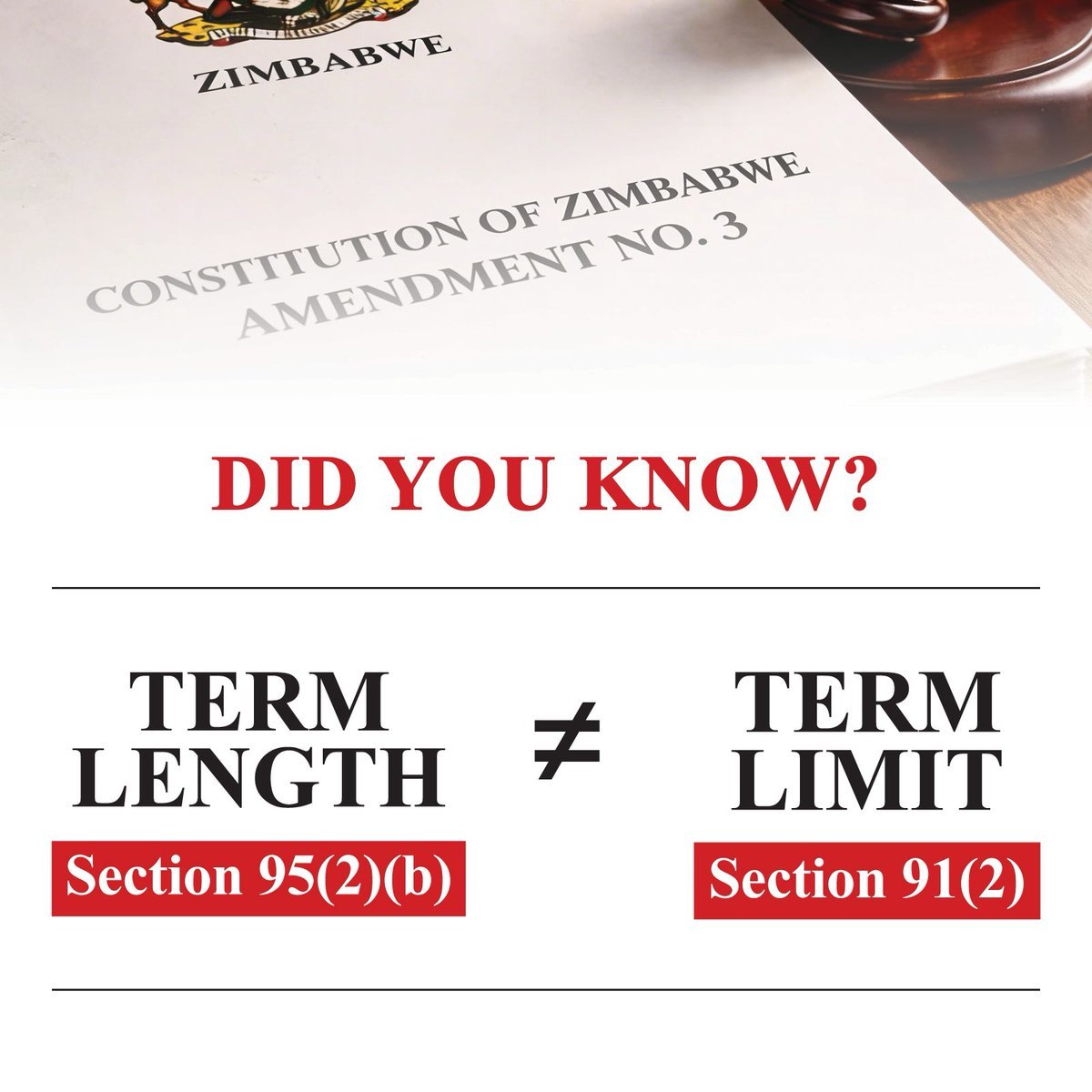
Minister Ziyambi Ziyambi had to take Parliament back to Constitutional Studies 101 today, patiently explaining the difference between a term length and a term extension during the CA3 debate. In simple terms, changing how long a future term lasts is not the same thing as extending someone's current term. Judging by the confusion that has dominated some of the public discourse, the refresher was probably overdue.😄
Cde Progressive tweet media
English
6
7
12
8.2K
Cde Progressive ретвитнул
TheNewsHawks
TheNewsHawks@NewsHawksLive·
CA3’s absolute majority threshold is the provision that structurally widens the base of presidential support any aspirant must secure, and it is what distinguishes CA3’s model from Botswana’s. The opposition’s argument holds that removing the direct presidential vote removes a public signal of minority dissent, or in other words that even a marginal minority vote registers nationally and constitutes meaningful democratic participation. The relationship between electoral mechanism and minority inclusion is structural, not automatic: it depends on what the mechanism incentivises (Norris, Electoral Engineering, Chapter 9, Cambridge University Press, 2004). A signal that registers nationally and produces no change in campaign behaviour or executive attention across four consecutive election cycles is visibility without consequence. A parliamentary vote that an aspirant seeking an absolute majority has a structural reason to court is political weight that the direct presidential arithmetic never assigned. The difference is between 69,723 votes absorbed into a national contest decided elsewhere, and two parliamentary votes that carry equal weight to every other seat in the chamber. Zimbabwe is choosing between two architectures for how democratic power is distributed across a heterogeneous society. The 2018 polling station data, the four-cycle presidential itinerary record, and the admission at Siabuwa High School on 19 March 2022 document what the first architecture has produced. Whether Clause 3’s logic is realised in practice depends on whether Zimbabwe’s Parliament retains the genuine political competition that prevents any single party from bypassing the breadth the absolute majority threshold demands. But the arithmetic of that threshold, and what it requires of any presidential aspirant who wants to govern, represents the first structural opportunity in Zimbabwe’s post-independence electoral history for communities like Binga to move from the margin of the presidential calculus to its centre. 🟢Tafadzwa Wakatama is a political communications consultant based in Zimbabwe, with a focus on constitutional law, electoral systems, and public advocacy. Suggested citation: Tafadzwa Wakatama, Presidential Selection and Zimbabwe’s Minority Communities, Int’l J. Const. L. Blog, June 5, 2026, at iconnectblog.com/presidential-s…
TheNewsHawks tweet media
English
1
19
22
1.6K
Cde Progressive ретвитнул
TheNewsHawks
TheNewsHawks@NewsHawksLive·
The district is not inaccessible: Morgan Tsvangirai held a rally at Binga Rest Lodge in June 2013, confirming the district can be reached when the political calculus justifies the visit. On 19 March 2022, at a by-election rally at Siabuwa High School in Binga, President Mnangagwa was widely reported to have stated: “Since independence in 1980, we did not visit this area under President Mugabe.” The campaign record is not a commentary on the character of successive administrations. Among the structural factors that shaped it, the arithmetic of a direct popular vote stands out: Binga could not deliver a margin that justified the visit. The ZEC data produces one further finding that the current debate has not engaged. Binga’s registered electorate is 60.46% female, 6.51 percentage points above the national average of 53.96%. Harare Metropolitan sits at 50.78%. The community most structurally invisible to direct presidential campaign arithmetic is simultaneously a community where women constitute a registered voter supermajority. Under Clause 3, the MPs representing those women carry votes no aspirant can discount. Grindle’s comparative analysis of how political executives shape public resource allocation in developing states, the central argument of Jobs for the Boys (Harvard University Press, 2012), and Burgess et al.’s empirical demonstration that expenditure follows executive selection arithmetic establish that when the incentive structure changes, the allocation pattern follows. For Binga’s two MPs, the structural consequence is direct: a presidential aspirant who must court their votes has, for the first time, an institutional reason to engage the constituency’s infrastructure deficit, healthcare access, and development needs as a matter of executive priority rather than electoral afterthought. This argument operates on different terrain from the legal debate about Section 328 and the referendum requirement, but it connects to the same constitutional moment. The distinction between Section 95(2)(b), which governs how long a term lasts, and Section 91(2), which limits how long a person may serve, is the legal architecture within which CA3’s minority representation consequence becomes possible: the cycle changes, the two-term ceiling does not, and the parliamentary selection mechanism that results from that combination creates the incentive architecture this piece documents. The government’s citation of Botswana as a positive precedent requires direct engagement. Botswana has operated a parliamentary selection model since 1966, but the Botswana Democratic Party held an unbroken parliamentary majority from independence to 2024, meaning the president emerged automatically from the dominant party’s internal choice without any requirement to secure support beyond its own caucus. The Basarwa and San communities, roughly 3% of Botswana’s population and dispersed across the Kalahari, have been systematically excluded from political representation under this model, as the 2001 Kamanakao High Court ruling on the Wayeyi paramount chief’s exclusion from the House of Chiefs and the subsequent Balopi Commission process confirm. CA3’s absolute majority threshold creates a different structural condition from Botswana’s automatic majority mechanism. Lijphart’s framework, developed across Patterns of Democracy (Yale University Press, 1999; 2nd ed. 2012) and his 1996 analysis in the American Political Science Review, explains why: territorially concentrated minorities can be protected through federal and territorial arrangements, but geographically dispersed minorities require consensus institutions. In Zimbabwe, the Tonga, Kalanga, Venda, Nambya, Shangani and Khoisan communities hold constitutional language recognition under the 2013 Constitution. But they have neither territorial autonomy nor proportional representation.
TheNewsHawks tweet media
English
1
20
20
3.1K
Cde Progressive ретвитнул
TheNewsHawks
TheNewsHawks@NewsHawksLive·
Presidential Selection and Zimbabwe’s Minority Communities By Tafadzwa Wakatama On 16 February 2026, the Constitution of Zimbabwe (Amendment No. 3) H.B.I. Bill 2026, CA3, was gazetted for a 90-day public consultation period constitutionally required before parliamentary consideration. Among its 21 amendments, the Bill proposes replacing the direct popular election of the President with selection by a joint sitting of both houses of Parliament. The government’s stated precedents are Botswana and South Africa. Among the concerns the opposition has placed before the public consultation process is the claim that parliamentary selection diminishes the voice of minority communities. In this post, I examine that claim using the Zimbabwe Electoral Commission, ZEC, polling station record for 2018, and find that it does not hold up to empirical scrutiny. Executive selection systems tend to produce their distributive consequences not through the intentions of candidates but through the rational calculus that governs where political attention, campaign investment, and eventually public resources flow. Burgess, Jedwab, Miguel, Morjaria and Padro i Miquel demonstrated this with road expenditure data across six decades of Kenyan electoral history: districts whose populations aligned with the sitting president received roughly three times the road investment of those that did not (American Economic Review, 105(6), 2015). Van de Walle’s survey of 87 African multiparty elections identifies the same logic as the defining characteristic of African presidentialism: resources follow the arithmetic that produced the executive, and that arithmetic determines which communities receive attention and which do not (Journal of Modern African Studies, 2003). Clause 3 of CA3 changes that arithmetic. Under a direct popular vote, the rational calculus of a presidential candidate concentrates attention where registered voter populations are large enough to determine the national outcome. Under Clause 3, a presidential aspirant must secure an absolute majority across both Houses. The vote of every MP carries equal weight regardless of the population of the constituency they represent. Binga district’s 69,723 voters are represented by two MPs, Binga North with 33,716 registered voters and Binga South with 36,007. Under Clause 3, each carries one vote equal in weight to the MP from Harare South, whose single constituency holds 76,425 registered voters. The community that was invisible as a district in a national popular contest holds two votes in a selection process where every vote carries equal weight. The structural incentive this produces is not that any single minority community MP becomes uniquely decisive. It is that an aspirant seeking an absolute majority cannot afford to concentrate attention narrowly. The threshold requires breadth, and that breadth is the mechanism through which historically bypassed communities enter the presidential calculus for the first time. ZEC’s 2018 polling station data establishes what the current mechanism has produced. Binga district, the geographic heartland of the Tonga community, one of Zimbabwe’s 16 constitutionally recognised language groups and a population displaced from the Zambezi River plains by the construction of Kariba Dam in the late 1950s, held 69,723 registered voters in 2018. The national electorate stood at 5,695,706. That is 1.22% of the vote in an election decided by a margin of 313,027. At maximum mobilisation, Binga’s entire registered electorate could contribute 22% of that winning margin: meaningful in a judicial recount, insufficient to determine a national popular outcome. The rational campaign calculus produced by that arithmetic is confirmed by the itinerary record. Across four consecutive presidential election cycles, 2002, 2008, 2013, and 2018, no ZANU-PF presidential candidate held a primary star rally in Binga. In each cycle, the Matabeleland North event was held in Lupane.
TheNewsHawks tweet media
English
20
62
56
4K
Cde Progressive
Cde Progressive@CdeProgressive·
😂 Jealous, this is both a masterclass in takedown writing AND a public service announcement. I must confess, I read this twice, once for the content and once just to appreciate the range. And look, I won't pretend I agree with everything politically. You know where I stand on CAB3, I believe it followed due constitutional process and I will defend that position. But that's a separate debate. What you've described about a certain loudmouth-for-hire who records private conversations, claims personal credit for removing sanctions, and now wants to be crowned the sole champion for fighting CA3, well, that's spot on character profile. The funniest part? The very traits that make him useful as a noise machine, the shrillness, the grandiosity, the inability to be quiet, are precisely what now makes him useless as a serious political actor. You're right, Zimbabwe's political tapestry is complex. It has no room for one-man superhero narratives.
English
1
1
1
270
mawarire mbizvo jealousy
Cde, eat your loot quietly. You were fighting people who were fighting #CAB3 since last year but you now want to crown yourself, not only the biggest opponent of #CAB3, but the only person who was fighting it. If that is not being delusional, then it's some political mischief right from the heart of a psychiatric institution. In your own words, you were hired by Tagwirei to fight Cde Geza who, together with many, saw the regime's plan of coming up with #CAB3, many moons ago when you were still twerking for Tagwirei. There are many Zimbabweans who have done massive things for this country, they are not parochial, garullous and delusional like you to believe that you are some sort of political superman who does greater things than even Hercules. You are nothing but a sonorous, inconvenient and nuisance variable that the regime seeks to silence. Knowing the kind of people you are hobknobbing with, you will be lucky to be silenced verbally, you might be mortally silenced. Being garullous, shrill-tongued and uncouth is not a skill my young brother. It's unmitigated lunacy which needs admission at the Annex at Parirenyatwa, Enguthsheni or Ngomahuru. The worst that Zimbabweans can do to you, my brother, is to urge you on when clearly you need mental health care. Tell me, which serious politician would want to work with you with your self-confessed penchant for recording private conversations? Which state institution would want to work with you on sensitive state issues when you need the slightest provocation to divulge everything even your so-called "reports to CIO" and meetings with the president? It's only fools and fellow mental patients, politically naive characters like Tungwarara who see value in a deluded bat of esoteric erudition like you. Don't confuse noise for effect and delusion for reality. You are nothing in the greater scheme of things my brother. Zimbabwe has a very complicated political tapestry, you will be very foolish to think you, alone, can be a main actor in shaping how the country moves forward, or is governed. Your claim that you single-handledly removed sanctions on Zimbabwe reflects on your limited appreciation of how the system works. For what it is, it's the very first sign yekuti hauna kukwana. Anyway, enjoy the money you were given and the contrived importance your delusions create in your mental faculties. But know my brother, we are born into families, communities and nations because we have serious limitations to exist on our own. There is no superhuman being, in politics, in sport and in life in general. In fact, the more you advance with education, which I know you did not attempt, you will discover that you know so much about a very small area in life. The more you advance with education, the more you know about a very small area in the greater body of knowledge. Be humble my brother and know that, what you have is not any skill, you are just a sonorous loud mouth for hire. There isn't anything special in being that. It, in fact, needs more foolishness than wisdom to do what you do my brother. I have chosen to give you this advice because I know you were one of the people hired to troll me whenever I had interviews against #CAB3 or Tagwirei's Land Tenure Implementation Committee. You can take my advice or let your political naivety massage your delusions, the choice is yours! But whatever you are smoking, dai wawanza bepa!
mawarire mbizvo jealousy tweet media
Rutendo Matinyarare@matinyarare

The nation will always have poor people but there are people who are working to change the lives of the poor, like me, who has been fighting against sanctions, xenophobia and food security for years, to ensure better healthcare, access to clean water, access to food and jobs without pay. What the advisor did was to show appreciation for someone who has been working hard for Zimbabwe without recognition. In his own way he was also appreciating the grievances we raised about CAB3 and its potential impact on the poor if not handled properly. So, not every cent must go to the poor. Some money must also go to support the work of those working to eliminate poverty and inequality because those people must also sustain themselves to continue to fight for the nation.

English
34
30
130
46.5K
Cde Progressive
Cde Progressive@CdeProgressive·
Rest in peace, Victor Matemadanda. A liberation war veteran, former Deputy Minister of Defence and War Veterans Affairs, and Zimbabwe's Ambassador to Mozambique, Cde Victor Matemadanda dedicated much of his life to the service of his country. His passing marks the end of a chapter in Zimbabwe's political and liberation history. May his family, friends, comrades, and all who knew him find comfort and strength during this difficult time. Go well, Cde Victor Matemadanda. Your contribution and sacrifice will be remembered. 🕊️
Cde Progressive tweet media
English
0
0
2
319
Cde Progressive ретвитнул
Prof Jonathan Moyo
Prof Jonathan Moyo@ProfJNMoyo·
#SUNDAYREFLECTION: Facts, law, and history stand independent of—and are in no way determined by—any individual’s political affiliation or attachment to a party or personality. To imagine otherwise, to believe that political affiliation alone makes one factually, legally, or historically correct, is the very definition of self-indulgent folly. This is why a cardinal methodological canon of political science is that theory follows practice. Only dilettantes suppose the opposite, that practice must follow theory. Those who claim to occupy the “right side of history” or to stand “with the people” solely by virtue of their political affiliation are delusional. History admits of no right side, no wrong side, and no single side. It comprises multiple sides, all embodied in and expressed through society’s always inclusive self-interpretation!
English
71
104
115
20.4K
Cde Progressive ретвитнул
Prof Jonathan Moyo
Prof Jonathan Moyo@ProfJNMoyo·
The "effect" has to be of "an amendment to a term-limit provision"; not of ANY amendment. There are many provisions in the Constitution of Zimbabwe that deal with (or provide for) time but they're not all "term limit provisions". Once you use an indiscriminate "effect basis" without being clear about the premise or cause of that effect, you end up with a bambazonke interpretation, which by definition would be unworkable and untenable in terms of its practical application. The ConCourt resolved this in the landmark Mupungu case, when it rejected a precisely similar argument that the "effect" of raising the retirement age of judges of the apex courts from 70 to 75 years amounted to triggering the "non-benefit" rule in section 328(7). The ConCourt held that an age limit is not a term limit. That logic or legal reasoning employed by the ConCourt regarding an age limit, applies to a term length (such as in sections 95(2)(b) and 143(1). Various versions of term-lengths or institutional durations of the elective public offices of the President, Parliament and Local Government have been in the Constitution of Zimbabwe since 1980; and they have never been treated as term limits; because they're not. All constitutions have term lengths for elective public offices; but not all have term limits. President Mugabe stayed in office for 37 years under term-lengths with no term limits. In North America Franklin D. Roosevelt served four terms as President of the United States. Elected in 1932, 1936, 1940, and 1944, he remains the only U.S. president in history to be elected to more than two terms. Before Roosevelt's presidency, there was no legal or constitutional term limit a US president could serve until the 22nd Amendment was passed in 1951. Prior to that, US presidents had only four-year term lengths which were open to unlimited tenure or re-election. Similarly, in Zimbabwe, the various term length provisions in place since 1980 did not suddenly become term limit provisions by the introduction of section 91(2) in 2013 under the new Constitution; the true and only term limit provision governing a term limit provision for an elective public office in Zimbabwe. Notably, there's still no term limit provision in the Constitution for Members of Parliament or Local Authority Councillors. Only the President is subject to a term limit provision; and only under section 91(2) and nowhere else in or under the Constitution
English
29
101
87
4.4K
Cde Progressive
Cde Progressive@CdeProgressive·
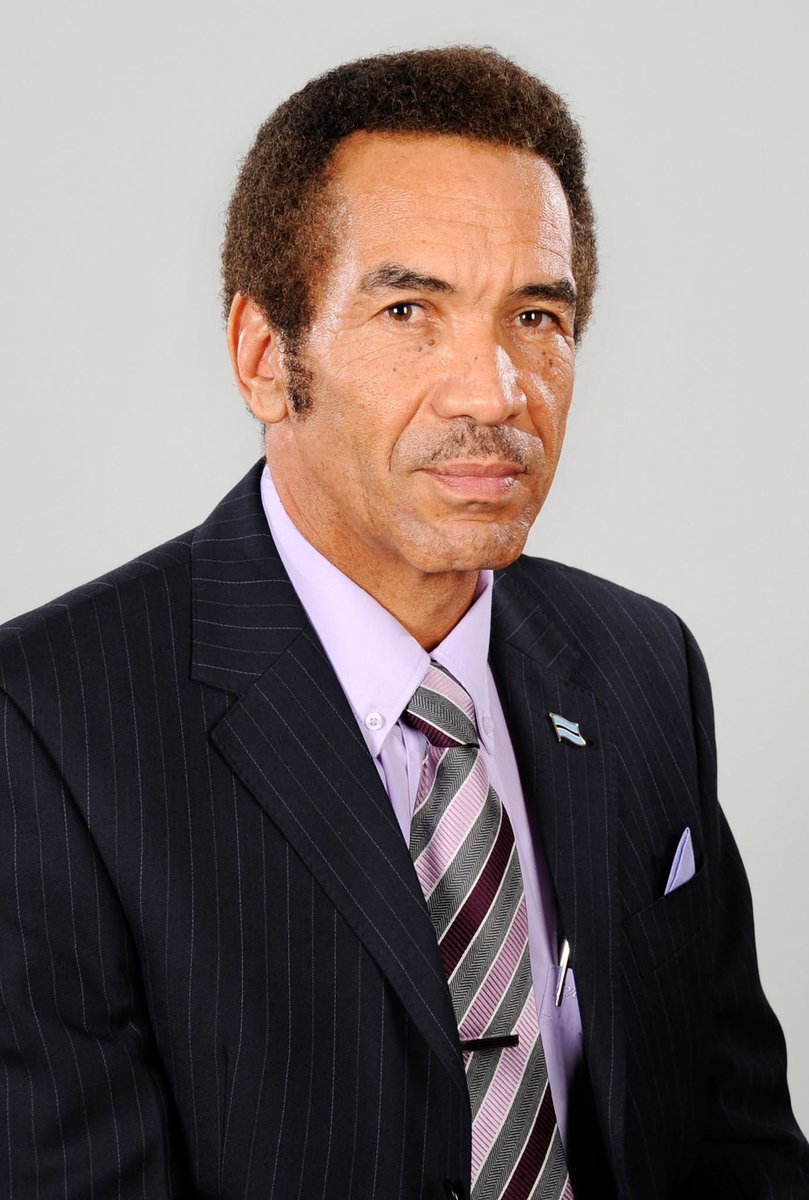
Ian Khama should stop projecting Botswana’s politics onto Zimbabwe. CA3 is a constitutional amendment passed through Parliament, not some backdoor plot. It's astonishing that a former Head of State would peddle falsehoods without bothering to understand the clear distinction between term limits and term length. Zimbabwe’s constitutional processes are determined by Zimbabweans, not by retired leaders chasing relevance through reckless commentary.
English
1
0
0
136
The Instigator
The Instigator@Am_Blujay·
Former Botswana president Seretse Ian Khama has criticised moves in Zimbabwe to extend presidential term limits, alleging that constitutional changes are being driven by electoral manipulation and financial inducements to keep leaders in power. In a Facebook post, Khama said Zimbabwe had joined a growing list of African countries where presidents seek to prolong their rule by altering constitutions. He cited Cameroon’s Paul Biya, Uganda’s Yoweri Museveni and Rwanda’s Paul Kagame as examples. Khama also accused what he described as authoritarian regimes of relying on political assassinations, fabricated charges, detentions, kidnappings and enforced disappearances, pointing to recent incidents in Tanzania and Uganda. Referring to Zimbabwe’s history, he said the country and its people had endured oppression from the era of Gukurahundi to the present day. He recalled telling opposition politician Job Sikhala during the launch of his book Footprints in the Chains that, in his view, the only changes since the days of Rhodesia and Ian Smith were the country’s name and the identities of its leaders, adding that “oppressors come in all colours.”
The Instigator tweet media
English
44
151
430
19.1K
Cde Progressive
Cde Progressive@CdeProgressive·
@peterndoro Section 328(7) applies only to amendments of a term-limit provision. Where it applies, incumbents cannot benefit unless the amendment is approved by a referendum. Since the Bill does not amend any term-limit provision, section 328(7) is not triggered.
English
0
1
1
128
Peter Ndoro
Peter Ndoro@peterndoro·
Section 328(7) contains the “no-benefit rule.” It states that where a constitutional amendment extends the length of time a person may hold a public office, the amendment does not apply to anyone who held that office before the amendment was made. In other words, even if Parliament lawfully extends presidential terms from five to seven years, the incumbent President cannot benefit from that extension.
Wellington Marowa@Wettomr

@peterndoro @ZANUPF_Official The constitution has a clause which allows the parliament to amend it. Zvimwe muchinyara asi

English
35
16
49
7.4K
Cde Progressive
Cde Progressive@CdeProgressive·
@BarbaraRwodzi @TateMavetera @HonJMuswereJnr, Sheila Chikomo Angeline ​Gata Congratulations on staying quiet when it mattered most. At the very moment #CA3 needed all hands on deck, you just didn’t show up. That silence? It’s as good as an emphatic No! making it clear you’re stepping away from your own leader, President ED Mnangagwa, and the 2030 agenda. People remember those who stand in the way of progress, they also remember those who vanish when it’s time to act. Your absence said everything. #ED2030 #Vision2030 #ParliamentZW #Accountability
English
0
3
2
44
Cde Progressive
Cde Progressive@CdeProgressive·
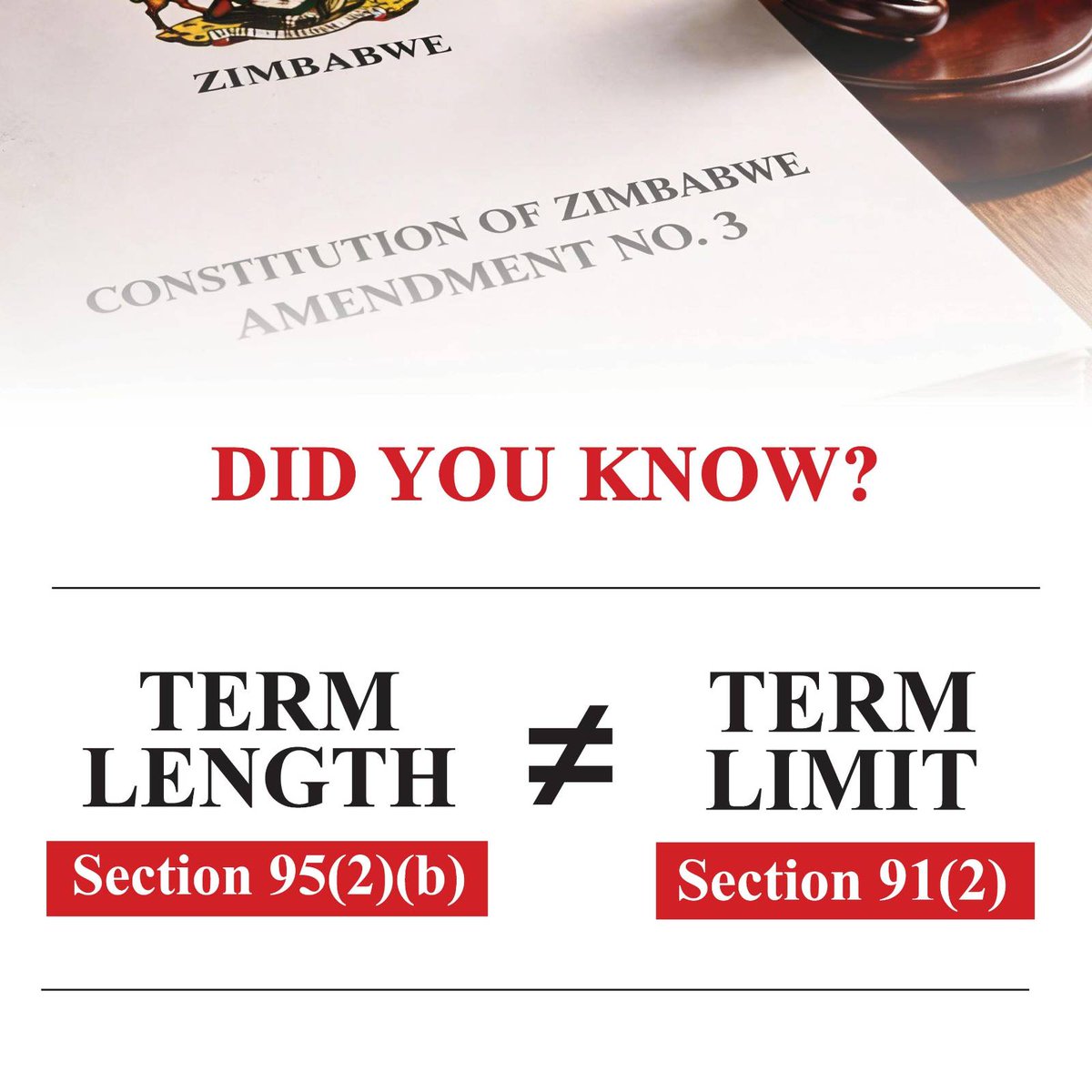
Term length and term limits are two different things. Term length is simply how long one term lasts. Term limits, however, determine how many times someone can hold that office. Longer terms are meant to provide continuity and give governments time to implement their policies. Term limits serve a different purpose: ensuring leadership changes hands and preventing the indefinite concentration of power. As the debate around #CA3 continues, blurring the line between these two concepts only creates confusion and makes serious discussion more difficult.
Cde Progressive tweet media
English
0
0
0
18
Cde Progressive ретвитнул
TheNewsHawks
TheNewsHawks@NewsHawksLive·
Billboards Bring Zimbabwe’s Constitution Back To The Streets BY Nomuzikayise Ngwenya and Karabo Ngoepe A modest billboard has done something the political class has not managed in months: it has put the constitutional text back in front of public discourse. Drive through Kuwadzana Roundabout in Harare this week and a billboard meets you, plain and unadorned, with a question and an answer. The question is whether you know that term length is not the same as term limit. The answer is in the small print, two section citations beneath the headline: section 95(2)(b) and section 91(2) of the Constitution. It is a modest piece of out-of-home advertising. It is also one of the more interesting interventions in our public life in recent months, and it is worth pausing on why. For the better part of a year, the conversation about the Constitution of Zimbabwe (Amendment No.3) H.B.1. Bill, 2026 has been conducted almost entirely in slogans. Supporters and detractors alike have reached for the easy phrase, the political shorthand, the conclusion without the working. What has been missing is the text. Not the text in summary, but the text itself: the actual words of the Constitution, the section numbers, the provisions in their precise wording. The billboard at Kuwadzana asks the passing motorist to do something unusual. It asks them to read. Two provisions sit at the heart of the question the billboards raise. Section 95(2)(b) governs how long a single term of office of the President, as an institution, lasts. Section 91(2) governs how many terms a President may serve, and the minimum length of each term. The two work together, but they do different things. One sets the duration of the electoral cycle. The other caps or limits the number of the cycles. A change to the first is not, by definition, a change to the second, and vice versa. That distinction is not a clever lawyerly trick or semantic sophistry. It is the architecture the Constitution itself has put in place, and the Constitutional Court has read provisions of this kind in precisely those terms. In Mupungu v Minister of Justice, Legal and Parliamentary Affairs and Ors CCZ 7/21, the Court approached the textual relationship between provisions like these with a discipline that supports the reading the billboards make visible. A term length provision and a term limit provision are not interchangeable. They are different drafting tools, doing different constitutional work. That is the affirmative case. What the billboards do, with admirable economy, is put that affirmative case in front of the public so that the public can read it for themselves. The reaction has been instructive. The conversation on the streets On one side of the response, ordinary commuters and online observers have begun, perhaps for the first time in this debate, to refer to sections by number. Posts have appeared on social media in which passing motorists describe the billboard, name the sections, and conclude that the constitutional argument has finally come to the streets. A working lawyer's thread, widely shared, walked through the distinction without prompting and without ambiguity. Term length is one thing, the thread observed; term limit is another; the two-term cap stays where it is. The billboards have surfaced, rather than supplied, the legal answer. A parliamentary contribution from one of the Bill's supporters captured the same point in a different register, suggesting that the legacy of the liberation struggle was secured by universal franchise, not by any specific term structure. That argument is for the parliamentary record, and the speaker can carry it. The narrower point to make is that the billboards themselves do not enter the sovereignty debate at all. They draw a distinction. The distinction is between two provisions in the same Constitution. That is all.
TheNewsHawks tweet mediaTheNewsHawks tweet media
English
25
86
69
10.4K
Cde Progressive
Cde Progressive@CdeProgressive·
@NewsHawksLive The CDFs grief is understandable. After all, nothing hurts quite like discovering that press statements don't count as votes.
Cde Progressive tweet media
English
0
0
0
74
TheNewsHawks
TheNewsHawks@NewsHawksLive·
🟣The Constitution Defence Forum led by former Finance minister Tendai Biti has reacted with deep anger and outrage to the passing of Constitution Amendment Bill N0.3 two days ago.
TheNewsHawks tweet media
English
21
8
17
4K