Conduct Science

688 posts

Conduct Science banner
Conduct Science

Conduct Science

@ConductScience

🔬 ConductScience | Research Tools & Innovation Advancing AI driven animal behavior analysis, open-access publishing, tech transfer. Posts by PhD's

United States Присоединился Mayıs 2015
461 Подписки182 Подписчики
Conduct Science
Conduct Science@ConductScience·
We've been supplying labs for years. The hardest problem was never the equipment. It was that researchers couldn't get from a published paper to a protocol they could actually run. @ShuhanHe built the fix. replicatescience.com
Dr. Shuhan He 🫀🫁@shuhanhemd

I am a physician and a researcher. I also build software. And the longer I spent in all three of those worlds, the more one thing became impossible to ignore: science methodology is the most important part of research, and it is the least developed as infrastructure. In software, we solved this problem 20 years ago. Code is versioned. Pipelines are automated. Tools compose. You can call a function from a terminal, chain it into a workflow, test it, diff it, deploy it. The entire discipline is built on the principle that process should be reproducible by design, not by memory. Science has never had that. A protocol is a document. It lives in a methods section written in passive voice prose, in a PDF nobody can query, in a Word file on someone's desktop. More than 70% of researchers have tried and failed to reproduce another lab's experiment. That failure is not because scientists are careless. It is because the tools we use to describe methodology were never designed to be instructions. They were designed to satisfy journal reviewers. ReplicateScience started as an answer to a simpler problem: take open-access papers, pull the methods, and turn them into something a person can actually follow. Structured steps, evidence quotes from the original text, equipment mapped to real suppliers. That part exists today, across 1,529 protocols from 639 papers. But the reason I keep building it is the bigger problem. I want science methodology to become programmable infrastructure. Not a UI you browse, but a protocol layer you can query from a terminal, integrate with ML pipelines, version like code, and trigger from automated systems. The kind of thing where a behavioral rig can advance a protocol step based on sensor output, or where a lab can diff their actual procedure against the canonical one and log the deviation automatically. That is what software engineering already is. Science deserves the same primitives.
English
0
0
0
50
Conduct Science
Conduct Science@ConductScience·
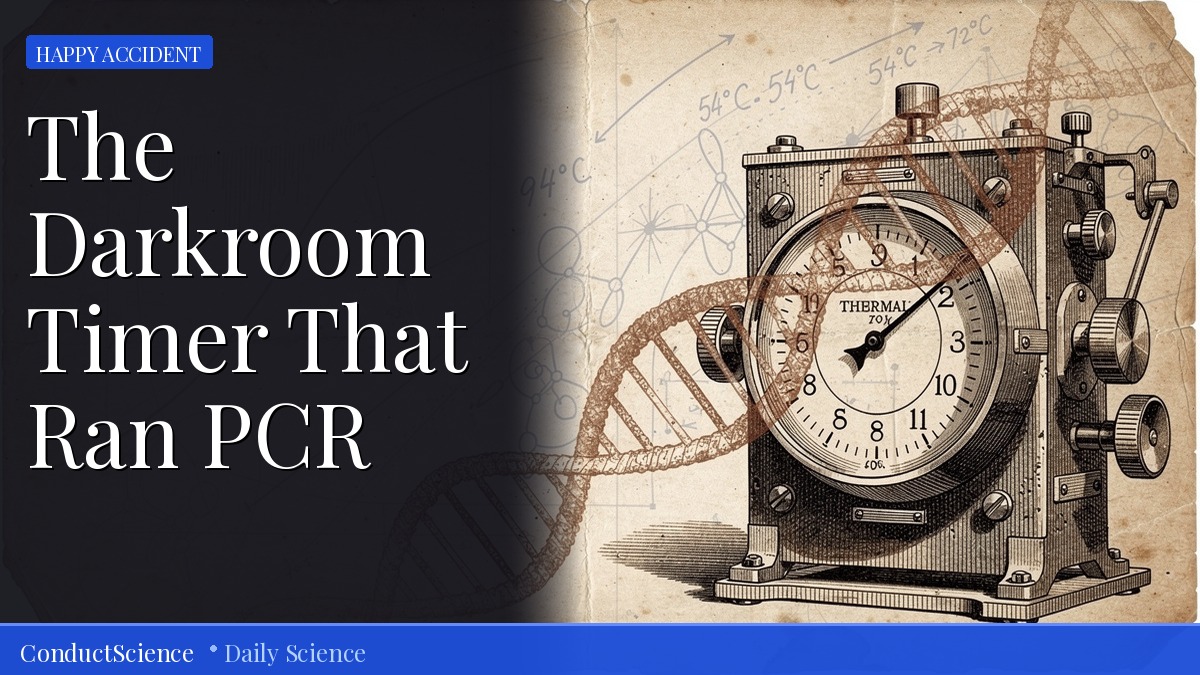
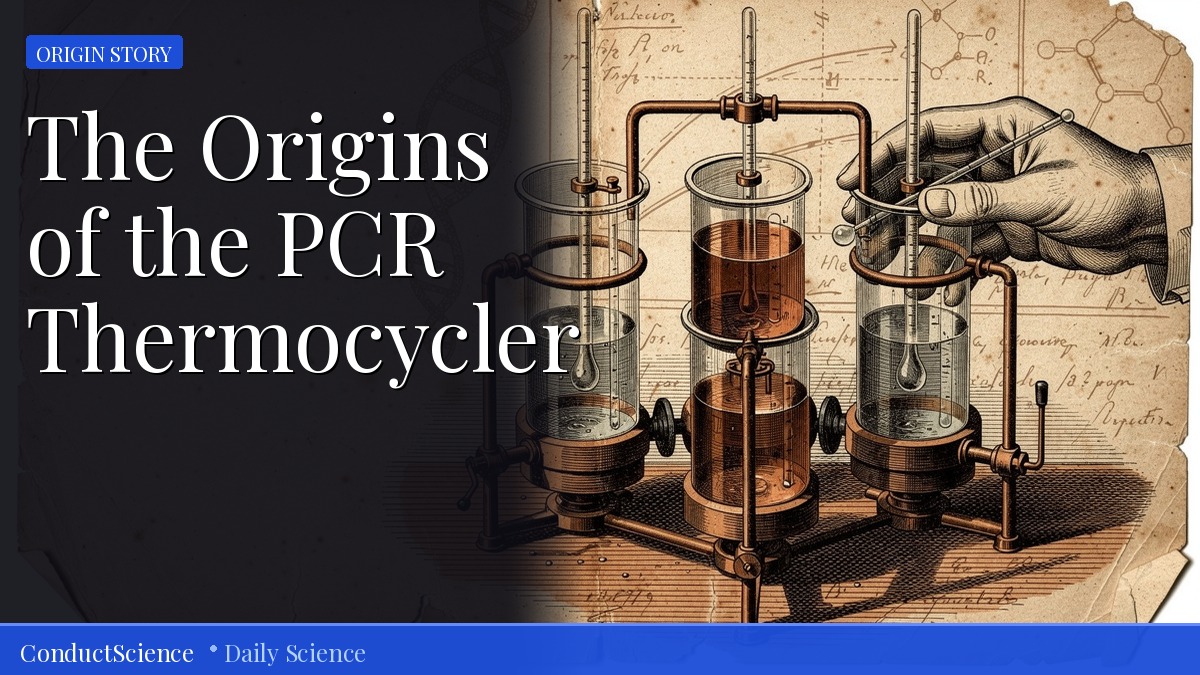
The first PCR machine at Cetus Corporation in 1983 was built from water baths on a lab bench. Kary Mullis moved test tubes between them by hand, repeatedly, for hours. Mullis needed DNA to copy itself without cloning bacteria, which took weeks and failed constantly. The chemistry required heating, cooling, then heating again. Repeatedly. Precisely. Multiple cycles to see anything. His hands got blisters from the hot water. They used a timer. The tubes cracked if you moved them too fast, split if the thermal shock hit wrong. The lab smelled like burnt plastic and spilled ethanol. Mullis worked nights because the daytime staff kept borrowing his water baths. He'd arrive late with coffee and a stopwatch. The first successful amplification took hours of manual transfers. Heat the bath to denature the DNA strands. Grab with forceps, don't splash. Plunge into the cool bath for annealing. Count. Watch the condensation bead on the tube caps. Back into the medium bath for extension. His hands cramped. He missed cycles when he blinked too long, lost count, had to start over. The company wanted automation but didn't want to fund it. Mullis kept a lab notebook with water temperatures recorded regularly, proof that human hands could hold the rhythm if they had to. Eventually someone invented a rotating rack to move multiple tubes at once. It helped but increased the breakage rate. The thermal shock still killed samples. They started buying tubes in bulk, budgeting for waste. Later, an automated block was built that could cycle temperatures without hands. Mullis got the Nobel in '93. The device had a thermal block with holes where tubes holding the reaction mixtures could be inserted. The cycler raised and lowered the temperature of the block in discrete, pre-programmed steps.
Conduct Science tweet media
English
0
0
0
17
Conduct Science
Conduct Science@ConductScience·
The researcher Jonas Salk worked on killing poliovirus for his vaccine in Pittsburgh in 1952. He needed dead virus that still looked alive to the immune system. Too much heat would damage the protein coat. Too little could leave dangerous particles. He grew his virus in lab cultures, processing batches at a time. The cells died as the virus reproduced. He'd pour off the liquid, filter it, then treat it. Formaldehyde was one method to inactivate the virus, but heat was another approach. He tested batches carefully, refining his methods through trial and error. His work required finding the right balance, inactive virus that could still trigger an immune response. The challenge was scale. A single dose needed very little. A field trial needed much more. He couldn't use small equipment for large volumes and expect consistent results. Industrial equipment existed, but coordinating with manufacturers took time. A major trial was planned. The vaccine Salk developed became one of the first successful polio vaccines. It used inactivated poliovirus given by injection. Combined with other vaccination efforts, these vaccines eliminated polio from most of the world and reduced reported cases from an estimated 350,000 in 1988 to 33 in 2018. Salk had been born in New York City and attended the City College of New York and New York University School of Medicine before his groundbreaking work on the polio vaccine.
English
0
0
0
12
Conduct Science
Conduct Science@ConductScience·
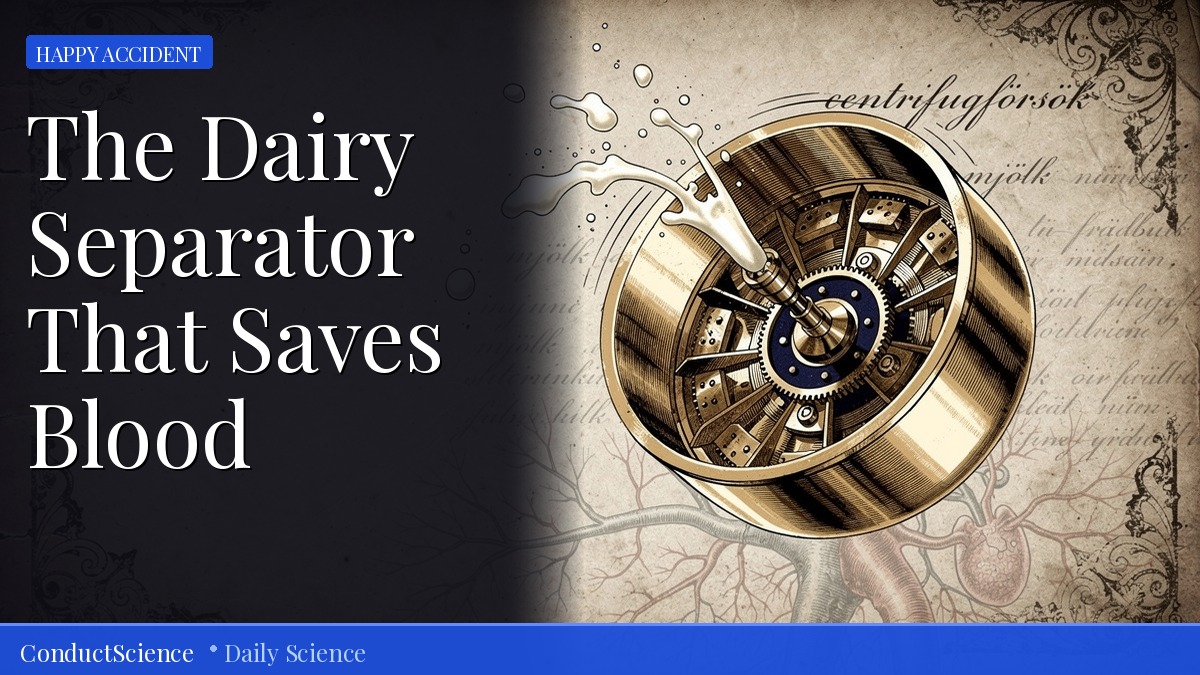
Gustaf de Laval's cream separator, patented in 1878, didn't work smoothly at first. His Stockholm workshop saw plenty of failed attempts. The device wobbled and leaked. Farmers needed their butterfat separated reliably. De Laval had experience with steam turbines when he turned his attention to dairy machinery. Traditional separation methods were slow and inefficient. The old approach meant waiting for cream to rise naturally in shallow containers. The process took hours, and quality suffered during the wait. Farmers lost money. De Laval applied principles from his turbine work and built a drum with stacked discs inside, spinning milk at high speed. Early tests failed. The forces were too strong, or the spacing wasn't right. He adjusted the design repeatedly, changing gasket materials and disc configurations. Eventually he got it working. Two streams emerged from the separator, one was cream, one was skim milk. Both came out cleaner than before. He had figured out that denser liquid moves outward in the radial direction during spinning, while less dense substances move toward the center. The physics matched what happens in any centrifuge: different densities separate under rotation. The separator found use beyond dairy. Medical facilities eventually adapted centrifugal separation technology for blood processing. Modified versions of similar machinery were used in various settings over the following decades. De Laval had been gone for years by the time these applications became widespread. The basic principle he applied to cream, using rotation to separate fluids of different densities, proved useful in contexts he never anticipated.
Conduct Science tweet media
English
0
0
0
15
Conduct Science
Conduct Science@ConductScience·
Lise Meitner helped discover nuclear fission in 1938, working from Stockholm while her longtime lab partner Otto Hahn published from Berlin. She had fled Germany earlier that year as a refugee. No passport protections, no secure position, no laboratory of her own. For decades she had run experiments beside Hahn in Berlin, her notebooks filled with observations that didn't match existing theory. Now she lived in Stockholm, where she had limited resources and uncertain professional standing. She corresponded with Hahn about ongoing experiments, work she had helped design before leaving. The results troubled her. The data suggested something impossible: that uranium nuclei were splitting apart, releasing fragments far lighter than expected. Her nephew Otto Frisch, also a refugee physicist, visited that winter. They discussed the problem during a walk in the woods because she had no other workspace. She worked through calculations on whatever paper was available, using borrowed materials, her cold hands making the work difficult. The uranium nucleus could deform and split, she realized. She calculated the energy release from Einstein's mass equation. The numbers were staggering. Frisch contacted other physicists to share the insight. Hahn's paper describing the experimental results had already been submitted for publication. It did not include her name. The 1944 Nobel Prize went to Hahn alone. Meitner continued working, gave lectures, outlived most of her generation. Element 109 is named meitnerium. The snow that day had been wet, the kind that soaks through wool and freezes later.
Conduct Science tweet media
English
0
0
0
62
Conduct Science
Conduct Science@ConductScience·
Arnold Beckman's first pH meter, assembled in 1934 at Caltech, measured the difference in electrical potential between electrodes to determine acidity. The device translated hydrogen-ion activity into readable numbers. Before pH meters, measuring acidity was imprecise and slow. Litmus paper showed color changes but gave no exact values. Titration required careful laboratory work, adding base drop by drop until solutions changed color, then calculating backward from volumes used. Every batch was different. Every technician read the color shifts differently, and no one could agree on results. Beckman built a device that read voltage differences between electrodes placed in solution. The hydrogen ions in acidic solutions generated electrical potential that could be measured. More ions meant different readings, producing exact numbers. The glass electrodes were fragile and had to be thin to function properly, which made them easy to break. The readings could drift. The reference electrode used a salt bridge that required maintenance. The apparatus sat in a case, and the instrument was designed to turn pH measurement from imprecise guesswork into reliable dial readings. The device found customers. Caltech's chemistry labs bought them. Breweries wanted instruments that could measure pH precisely. Pharmaceutical plants ordered them. Beckman left teaching in 1940 to manufacture the meters full time. He founded Beckman Instruments based on his invention, a device later considered to have revolutionized the study of chemistry and biology. He never went back to the classroom.
Conduct Science tweet media
English
0
0
1
12
Conduct Science
Conduct Science@ConductScience·
Fleming's contaminated petri dish, September 1928, sat in his laboratory at St Mary's Hospital in London. The mold was from the Penicillium family. He kept it because the bacteria around it had died. He wrote a paper describing what he'd observed. He tried to isolate the active compound, but the substance proved difficult to stabilize and work with in practical applications. The mold-derived material was challenging to extract and preserve. Standard laboratory methods of the time weren't able to produce a stable, usable form. The mold itself had limitations that prevented immediate therapeutic use. Fleming tested it in laboratory conditions. It showed antibacterial properties in controlled settings but the gap between laboratory observation and clinical application remained wide. This was 1929. Fleming had made an observation about antibiotic activity, but lacked the resources to develop it into a medicine that could treat infectious diseases in patients. He presented his findings to colleagues. His paper described the antibacterial properties he'd observed. He continued culturing the mold and shared samples with other researchers who wanted to investigate. The substance remained unstable outside carefully controlled conditions. The discovery stayed largely dormant as a laboratory curiosity, something that killed bacteria in a dish but hadn't been transformed into a working treatment. Howard Florey later found Fleming's paper during research. It took years of work to develop the observation into a usable antibiotic. Fleming had identified penicillin's antibacterial activity, but the chemistry needed to make it therapeutic came later. This development would eventually become what was described as the "single greatest victory ever achieved over disease," earning Fleming, Florey, and Ernst Chain the 1945 Nobel Prize in Physiology or Medicine.
Conduct Science tweet media
English
0
0
0
14
Conduct Science
Conduct Science@ConductScience·
The ultracentrifuge had a rotor that required careful handling. Matthew Meselson spent months at Caltech learning the technique. The machine was expensive equipment. Meselson was trying to prove DNA copied itself through semi-conservative replication. He used density labeling with nitrogen isotopes, growing bacteria in heavy nitrogen until their DNA became denser, then switching to light nitrogen and analyzing samples over time. The cesium chloride density gradient centrifugation was supposed to separate DNA by density. Early attempts didn't work clearly. For weeks, results were unclear. The centrifuge had to run for extended periods. Temperature control was critical or the cesium chloride would crystallize. Meselson monitored conditions carefully, including overnight. The sample tubes required meticulous cleaning to avoid interfering with UV absorption readings. He cleaned each one carefully to prevent contamination. Franklin Stahl, his collaborator, worked with him on troubleshooting. They adjusted salt concentrations. They tried different centrifugation speeds and conditions. They tested various approaches. Progress was difficult. The breakthrough involved timing. One sample run at different timing showed clearer separation. That approach worked consistently. The DNA was separating correctly at certain intervals but not at others. The technique revealed the pattern of semi-conservative replication. When conditions were right, the density gradient showed DNA bands that demonstrated how replication worked. Their 1958 demonstration of semi-conservative DNA replication became a landmark finding. The work required persistence through many failed attempts.
Conduct Science tweet media
English
0
0
1
10
Conduct Science
Conduct Science@ConductScience·
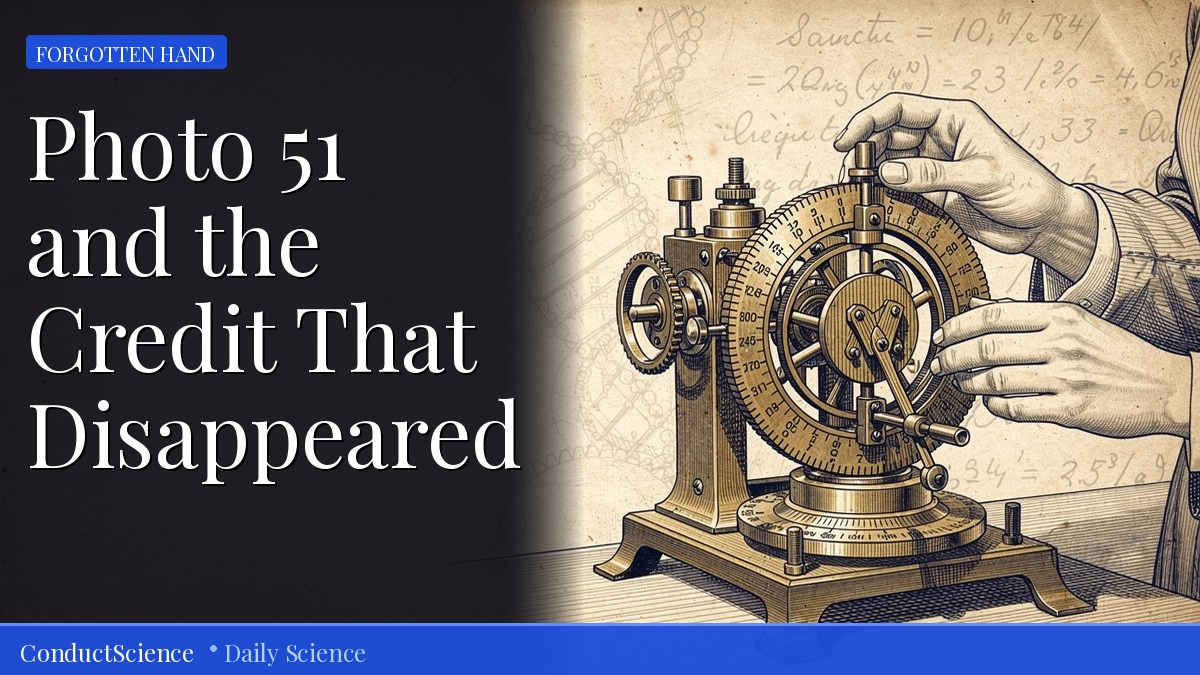
Franklin was mapping chaos. X-ray diffraction scattered in patterns only if the sample was perfect, wet, aligned. Most crystallographers gave up on DNA because it wouldn't sit still. The molecule existed in different forms and switched between them unpredictably. She built humidity chambers, sealed samples carefully, timed exposures precisely. The lab smelled like developer fluid and warm metal. She threw out frames where the fiber twitched, where the beam wandered, where calculations were slightly off. Each failed exposure meant starting over. The famous photograph took months of failed attempts. She worked alone most nights because tensions ran high in the lab. Some colleagues misunderstood her role. The helical crosshatch appeared in 1952. She filed it carefully, unconvinced. DNA might be two helices, maybe three, maybe something else entirely. The X-shaped diffraction pattern was clean, but questions remained. She needed more data, better samples, more time. She wrote cautiously in her notebook: evidence, not proof yet. Others saw the photo without asking. Franklin had left King's College by then, moved to work on viruses. She published the DNA work around the same time as other papers on the structure. Her contributions went largely unrecognized during her lifetime. Lab notebooks were filed away for decades. The experimental work was central to understanding molecular structures, though recognition came late. Her crystallography revealed what the molecule looked like when no one else could make it sit still long enough to see.
Conduct Science tweet media
English
0
0
1
20
Conduct Science
Conduct Science@ConductScience·
More: conductscience-org
English
0
0
0
1
Conduct Science
Conduct Science@ConductScience·
The result: meta-analyses that were functionally impossible—comparing injury markers across 8 labs using 5 different TBI models—are now afternoon projects. The constraint wasn't computing power. It was interoperability.
English
1
0
0
3
Conduct Science
Conduct Science@ConductScience·
127 preclinical TBI datasets uploaded since 2018. Zero require custom parsing. ODC-TBI standardized inputs so an ML model trained on rat cortical impact data from Pittsburgh can test on mouse fluid percussion from UCSF without a single ETL script. What took months now takes minutes.
English
1
0
0
31
Conduct Science
Conduct Science@ConductScience·
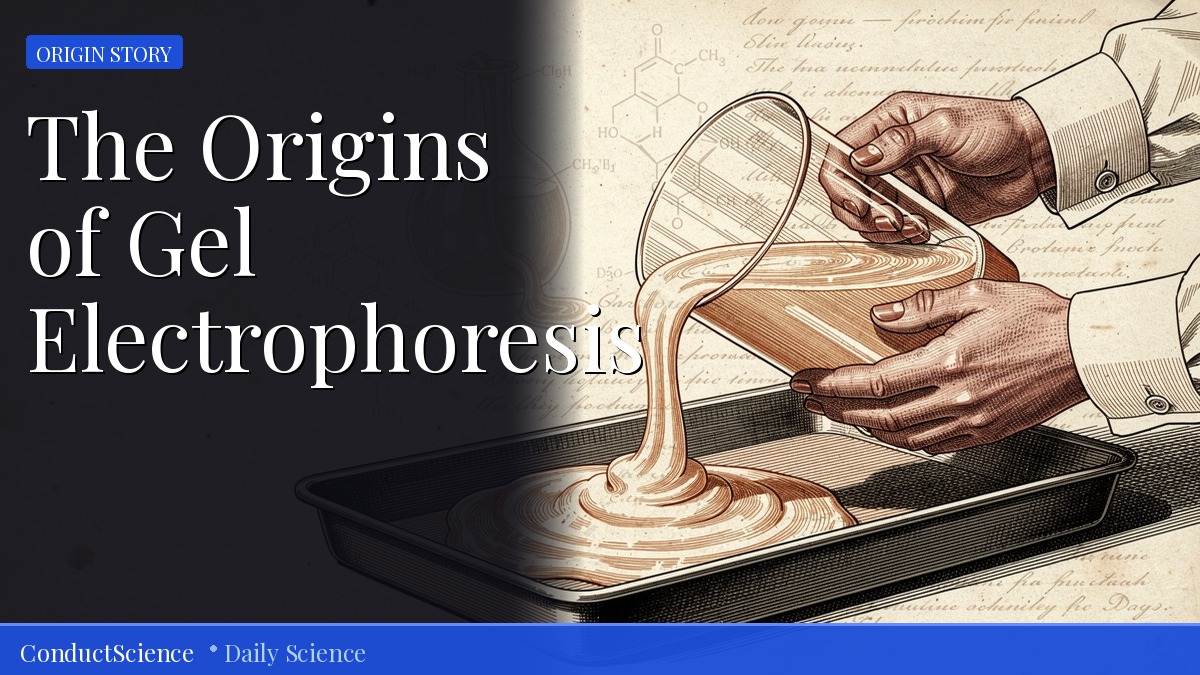
Oliver Smithies was working with starch in Toronto in 1955. Potato starch, the kind used in cooking. He boiled it in a beaker, poured it into a tray, and let it set overnight. In the morning, he had a gel. He was trying to separate blood proteins without them smearing into each other. Earlier methods turned everything into streaks. He needed something porous enough to let proteins move but stable enough not to fall apart. The starch was inexpensive. When he ran current through it, the proteins split into clean bands. He could see individual protein variants. He was studying protein differences, trying to understand biological variation. He needed to see the proteins individually, not as a smudged mess. Paper methods absorbed too much sample. It spread the proteins sideways as much as forward, turning sharp bands into clouds. Other gel materials seemed promising at first but failed under electrical current. Potato starch was different. Cooked properly, it formed a matrix dense enough to sieve proteins by size but loose enough to let them migrate. He loaded samples into a slot, applied voltage, and waited. The gel stayed stable. The proteins moved in straight lines. When he stained it, he could count distinct bands where earlier methods had shown fewer. The resolution was dramatically better than anything previously achieved. The method worked so well that protein labs adopted starch gel electrophoresis. Smithies introduced starch as a medium for gel electrophoresis in 1955. He later did different work entirely, discovering homologous recombination techniques for altering animal genomes, the technique behind gene targeting and knockout mice. He received the Nobel Prize in Physiology or Medicine in 2007 for that genetics work, fifty-two years after his gel electrophoresis innovation.
Conduct Science tweet media
English
0
0
0
16
Conduct Science
Conduct Science@ConductScience·
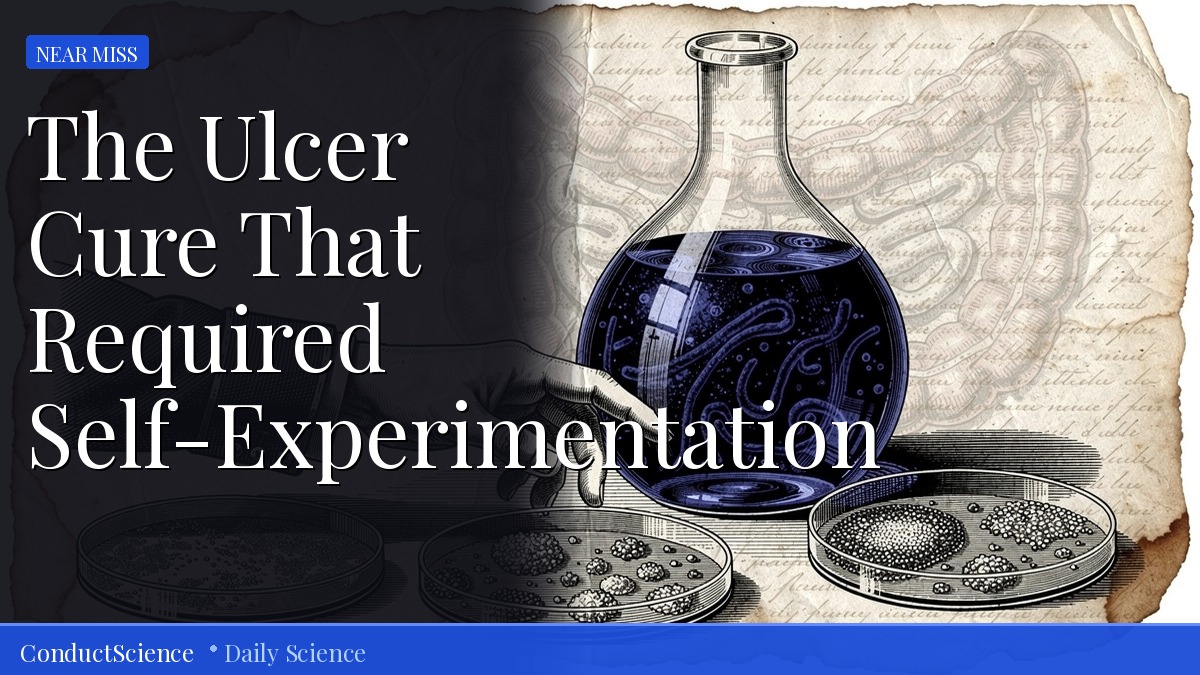
The Helicobacter pylori culture broth Barry Marshall swallowed in 1984 tasted unpleasant. He'd prepared carefully. The flask contained bacteria grown from a patient's stomach sample. He drank it at his hospital in Perth before his shift. Marshall needed proof that bacteria caused ulcers, not stress or spicy food. Every gastroenterologist had dismissed the idea. Stomach acid kills everything, they said. The environment down there was too hostile for bacterial survival. He'd tried animal models in the lab. Their stomachs were too different. He'd explored other research options. Too expensive, too slow. Robin Warren had the microscope images, beautiful spiral-shaped bacteria tucked against gastric tissue, but images alone weren't enough. They wanted proper scientific proof: isolate the organism, introduce it to a healthy host, reproduce the disease, re-isolate the same bug. Marshall had isolated it. He had it growing in the flask, its flagella helping it move through the culture medium. He had no healthy host. No ethics committee would approve infecting a patient. No volunteer would sign the form. He had himself. He had a deadline approaching. He had a wife who wouldn't know until it was done. Days later his wife said his breath smelled terrible. Endoscopy showed acute gastritis, the stomach lining inflamed, crawling with helical bacteria. He took antibiotics. The infection cleared but he felt unwell for some time afterward. His ethics committee found out later from a colleague. They never formally approved the experiment. No one had asked.
Conduct Science tweet media
English
0
0
0
15
Conduct Science
Conduct Science@ConductScience·
Kary Mullis was developing PCR in 1983 in California. The technique needed precise temperature steps, repeated many times. Heat the DNA, cool for primers, raise temperature for polymerase. Each step timed carefully. Early PCR was done manually, before automated equipment existed. Researchers moved samples between different temperatures by hand, using whatever lab equipment was available. Temperature control was primitive. The process was tedious and required focus. Mullis worked on refining the technique, often during quiet hours when he could concentrate. The manual process involved heating blocks and cooling baths. Samples had to be transferred at the right moments. It took practice to develop a reliable technique. The equipment was basic, salvaged or improvised from what was on hand. Running multiple samples meant working in small batches. Temperature monitoring was imprecise. Researchers learned to judge conditions through experience and observation. The manual method was eventually replaced when automated thermal cyclers became commercially available in the mid-1980s. The Nobel committee awarded Mullis the 1993 Nobel Prize in Chemistry for his role in the invention of PCR. The technique became central to biochemistry and molecular biology, described by The New York Times as "highly original and significant, virtually dividing biology into the two epochs of before PCR and after PCR."
Conduct Science tweet media
English
0
0
0
9
Conduct Science
Conduct Science@ConductScience·
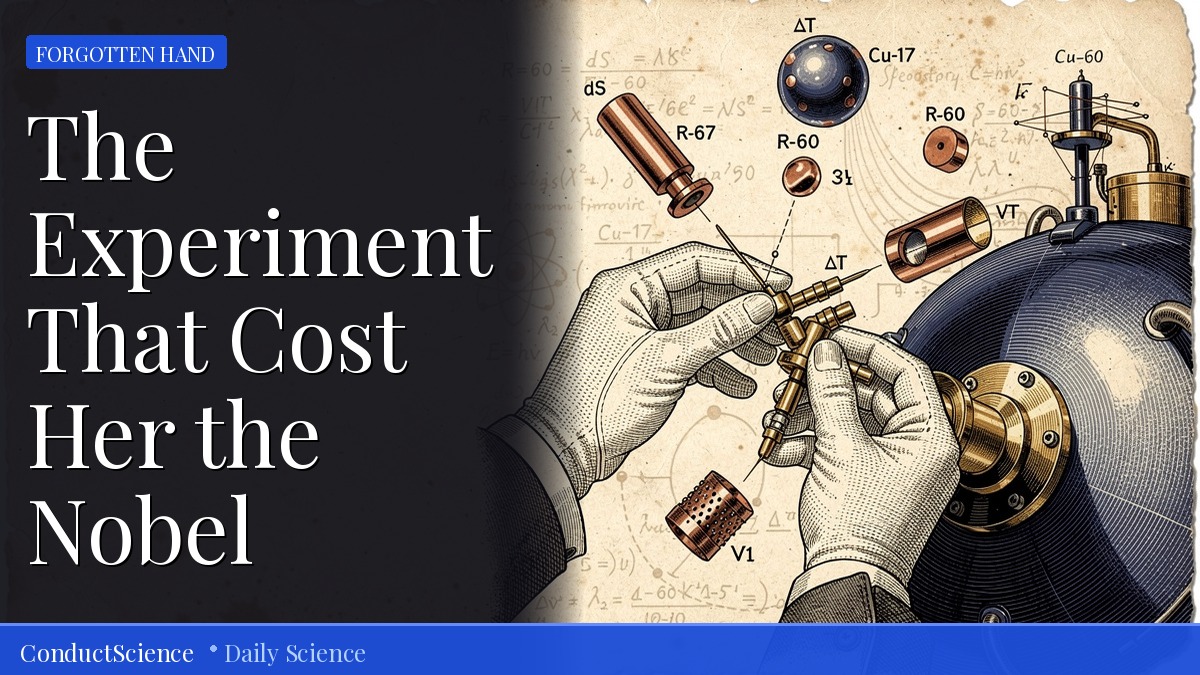
The sample had to stay extremely cold or the nuclei would wobble. Wu spent time in the basement at Columbia in 1956, nursing a dilution refrigerator that required constant attention. Theorists had a hunch about symmetry. They thought nature might have a handedness, that particles could tell left from right. No one believed it. Wu believed in cold metal and counting rates. She wrapped her sample in cooling apparatus, submerged it in cryogenic fluid that boiled off faster than she could replace it. The dilution refrigerator was a prototype. It leaked at the seals. She packed them with wire, which worked until the temperature dropped, then the wire turned brittle and cracked. She replaced it. It cracked again. The dewars had to be refilled constantly, which meant someone had to be in the lab through the night. Wu did most of those shifts herself. The detectors sat close enough to catch beta particles but far enough to avoid the magnetic field she was using to align the nuclei. That field had to be rotated by hand to check for systematic drift in the detector response. The crank was cold enough to burn skin through gloves. Her hands cramped. The first run showed uneven counts. She thought the detector was broken. She ran it again with a calibration source. The detector was fine. More beta particles flew toward one pole of the magnet than the other. She flipped the field. The asymmetry flipped with it. She flipped it back. Same result. Parity, the assumption that physics looked the same in a mirror, was wrong. She wrote it up with her name first. Lee and Yang won the Nobel Prize in 1957. Wu got the Wolf Prize in 1978, over twenty years after the experiment. The original sample is not in any museum. No one kept track of which direction she rotated the field first.
Conduct Science tweet media
English
0
0
0
13
Conduct Science
Conduct Science@ConductScience·
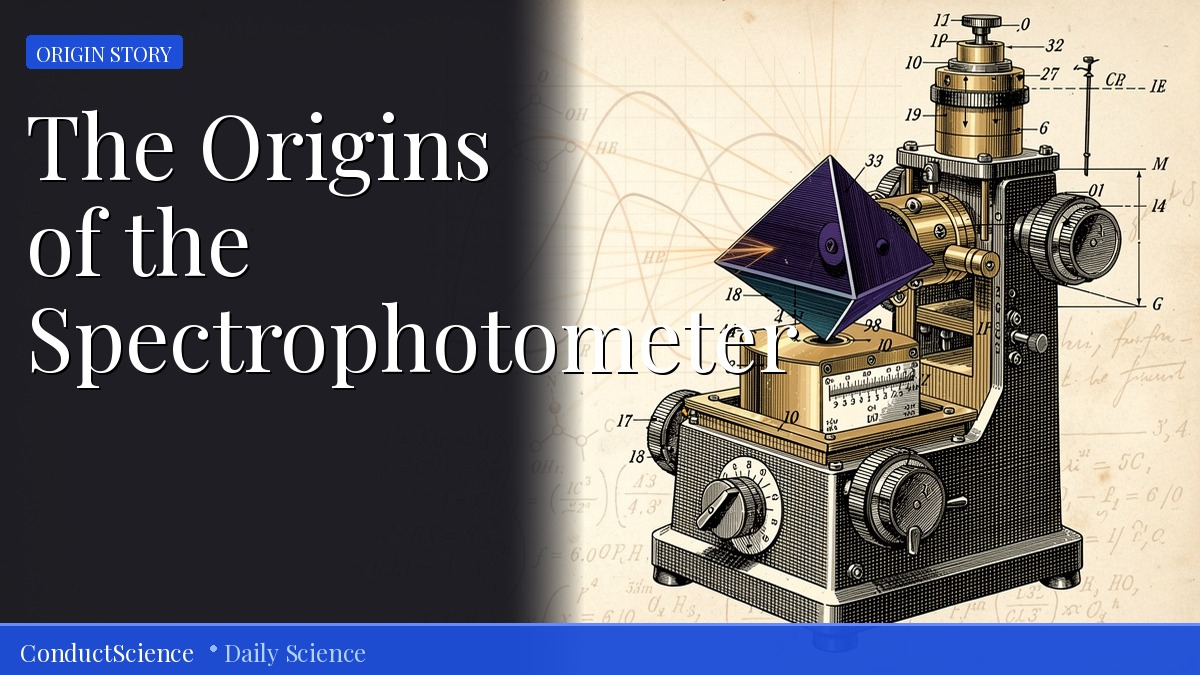
Arnold Beckman worked in Pasadena, California in 1940, developing spectrophotometers that would measure light properties in materials. The technology wasn't simple to perfect. Early instruments faced technical challenges common to new scientific equipment. Light-measuring devices required careful calibration. Phototubes needed precise electrical control. Environmental conditions affected readings. Beckman spent long hours refining the circuits and mechanisms, working through problems that prevented consistent measurements. Some units required extensive adjustment before they performed reliably. The work was painstaking and largely undocumented. His wife Mabel worked alongside him during these years. Testing procedures were demanding. Standards had to be established somehow, though the origins of many industry practices from this era went unrecorded. Beckman had already invented the pH meter in 1934, a device that revolutionized chemistry and biology by reliably measuring acidity. He brought that same determination to spectrophotometry. The DU spectrophotometer eventually became what experts called "probably the most important instrument ever developed towards the advancement of bioscience." By the time Beckman retired as president of Beckman Instruments in 1965, his light-measuring devices were standard equipment in laboratories. After retirement, he and Mabel became major philanthropists. She passed away in 1989. The company merged with SmithKline in 1981. The garage work led to Silicon Valley. Beckman's success with instruments let him fund the Shockley Semiconductor Laboratory, the first silicon transistor company in California.
Conduct Science tweet media
English
0
0
0
9
Conduct Science
Conduct Science@ConductScience·
César Milstein's hybridoma technique, published in 1975, included no patent application. The MRC's legal team read the paper, saw "antibody production," and filed it under basic research. Milstein didn't argue. The problem was specificity. Natural antibodies were messy, a crowd of similar proteins all grabbing at slightly different targets. You couldn't purify one type because B cells, the white blood cells that made antibodies, died within days outside the body. Drug companies needed pure streams, identical copies that recognized one antigen and nothing else. Milstein spent months trying to keep B cells alive in culture. They'd divide a few times, then stop. He tried different conditions, different approaches. Nothing worked. The cells had a death clock and no one knew how to reset it. His lab partner, Georges Köhler, suggested something backwards. Cancer cells don't die. They're immortal, dividing forever in the wrong way. What if you forced a B cell to merge with a myeloma cell, a blood cancer? The B cell would bring its antibody recipe. The cancer cell would bring immortality. Milstein thought it was too crude to work. They tried it anyway. The first attempts produced nothing useful, just dead cells or contamination or genetic messes that made multiple antibody types at once. Then one batch contained cells that survived, divided, and secreted a single antibody type. Milstein checked the data multiple times before he believed it. By the early nineties, monoclonal antibodies had become a significant industry. Companies held patents on variations of Milstein's method. The MRC received nothing. Milstein told reporters that patents seemed unnecessary. He won the Nobel in 1984. Interviewers asked if he had regrets. Milstein said the cells were still finicky, still died for reasons no one understood. He wanted to know why.
Conduct Science tweet media
English
0
0
0
13
Conduct Science
Conduct Science@ConductScience·
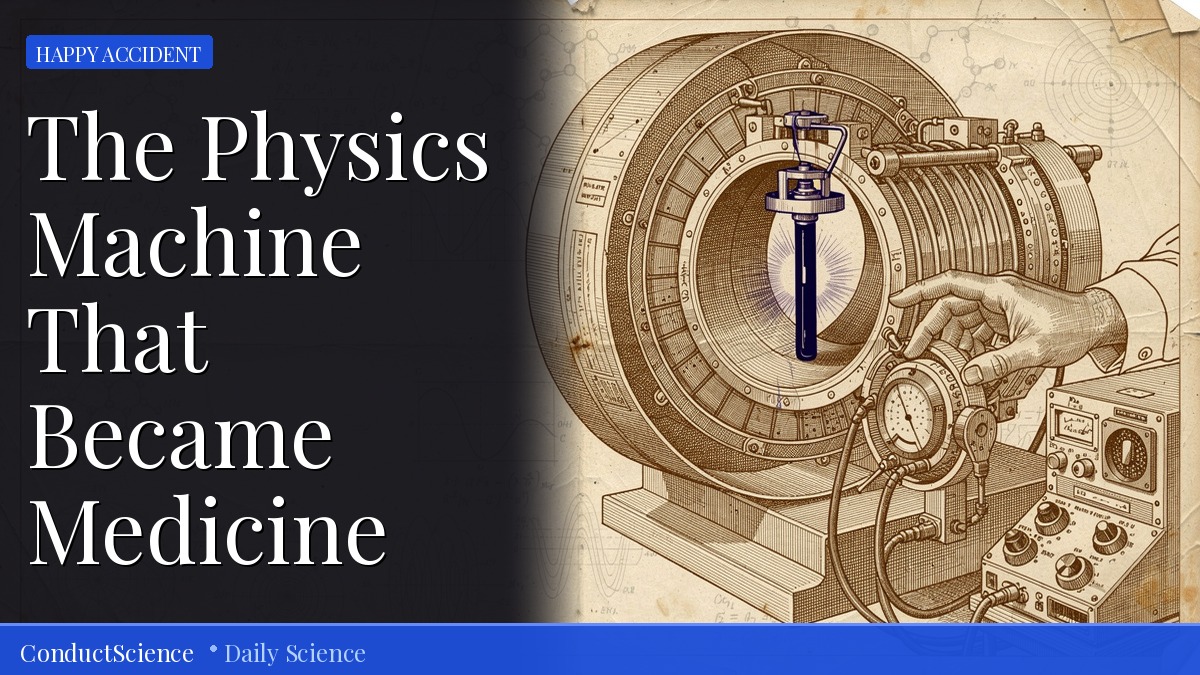
Paul Lauterbur was working with nuclear magnetic resonance equipment at Stony Brook in 1973, technology designed to study molecules. The instruments analyzed chemical samples. The key insight came to him while eating at a restaurant. If you varied the magnetic field across space instead of keeping it uniform, the signals would echo back with position data encoded in their frequency. Each hydrogen atom would sing at a different pitch depending on where it sat in the gradient. He could map water in tissue without cutting anything open. The problem was that NMR equipment was built to keep magnetic fields obsessively uniform. Any variation was considered contamination, a flaw to eliminate. Lauterbur needed to do the opposite, to deliberately warp the field in controlled ways. He had to modify the equipment, creating gradient coils. The coils kept overheating. The signals were so faint that vibrations from someone walking past the lab would ruin a scan. The first image took hours to render on a computer. Two test tubes of water, shown as blurry circles on a printout. The resolution was poor. You could barely tell the tubes apart. His colleagues questioned the work's value. The chemical analysis applications seemed more practical than pictures of water. He devised a method to encode the nuclear magnetic resonance relaxation information in an object spatially and to reproduce it as an image. Getting it published proved difficult. Medical applications weren't immediately obvious. Eventually, human scans showed chest cavities. Doctors saw tumors that X-rays missed. Some radiologists were skeptical. Early images took a long time to produce. Patients had to hold perfectly still. Support from the spectroscopy community was uncertain. When Lauterbur won the Nobel Prize in 2003 with Peter Mansfield, the recognition came thirty years after that first breakthrough at Stony Brook.
Conduct Science tweet media
English
0
0
0
17