Together, these results suggest that concussion history in young adult collegiate athletes is not associated with changes in cortical volume. If you're interested, or want to chat more about these findings, please reach out.
Is brain morphology different in young adults with and without concussion history? We examined a large (~300) population of college athletes and compared brain morphology between participants with concussion history and those with no history of concussion journals.plos.org/plosone/articl…
The Decision Neuroscience Lab at CB3 in Lincoln, NE (decisionneurosciencelab.org) is looking for a lab coordinator. The job ad can be found here: employment.unl.edu/postings/93143. This is a wonderful group to work with and I'd be happy to answer any questions.
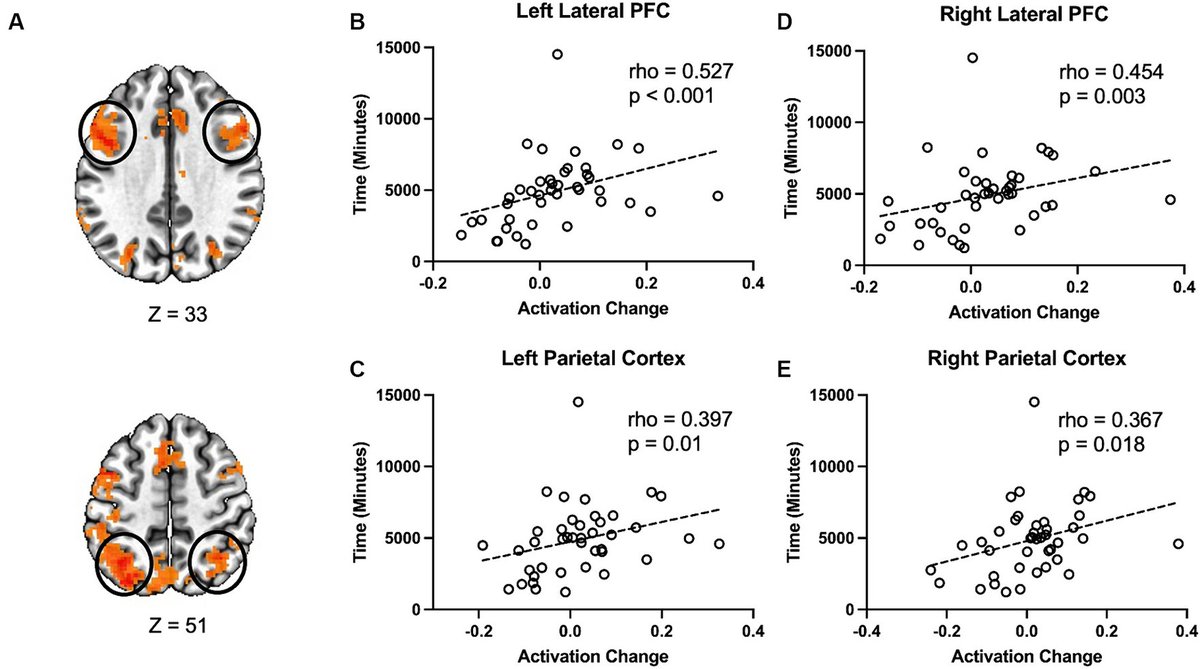
New paper published looking at how second language learning in older adults improves cognitive control and examining the brain changes underlying this improvement: frontiersin.org/journals/aging… Thanks to all coauthors, especially @SaidiLadan and @Zoha_Deldar
Future work may be better served by examining how other measures (white matter, functional connectivity, electrophysiology, etc.) can serve as a brain marker of concussion history rather than focusing on cortical morphology.
Another update on our concussion research project: medrxiv.org/content/10.110…. There are mixed results in the literature regarding the possible influence of concussion history on gray matter morphology. We looked at this issue in ~300 college athletes.