Andrew Stott

7.8K posts

Andrew Stott

Andrew Stott

@DirDigEng

Andrew Stott was on the UK Transparency Board & the UK Gov first Director of Transparency & Digital Engagement. Tweets here on data, IT & new media are his own.

London, UK Присоединился Mayıs 2009
6.6K Подписки10.3K Подписчики
Andrew Stott ретвитнул

Owen Boswarva
Owen Boswarva@owenboswarva·
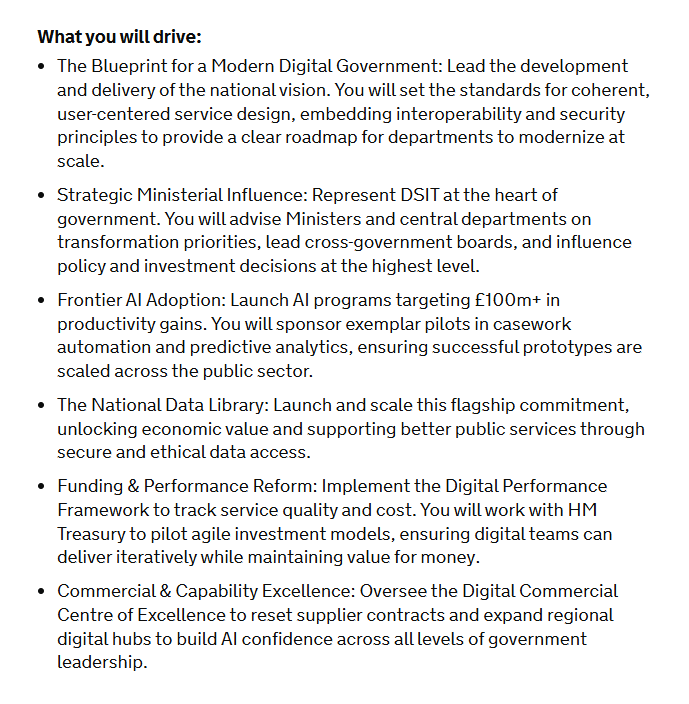
Big job – Director General for Digital Transformation at the UK's Department for Science, Innovation & Technology (DSIT) in Bristol, London, Manchester civilservicejobs.service.gov.uk/csr/jobs.cgi?j… Scope includes the National Data Library and other fashionable #govtech notions
Owen Boswarva tweet media
English
1
2
0
265
Andrew Stott
Andrew Stott@DirDigEng·
@owenboswarva the move, enabled by reliable, up to date data flows, to data-driven enforcement of car tax and car insurance without relying on vehicle stops by the police.
English
0
0
0
11
Andrew Stott
Andrew Stott@DirDigEng·
@owenboswarva Example: Car Tax Online. It saved a lot of transaction costs in Post Offices (some of which then needed greater subsidy from elsewhere in government). But the main benefit was the digitisation of all the data flows (including from insurance companies and MOT testers) and ...
English
1
0
1
11
Andrew Stott ретвитнул
Owen Boswarva
Owen Boswarva@owenboswarva·
Digital and Data Benefits framework gov.uk/government/pub… developed by economists in GDS This lost me pretty early on – any common framework for "digital" and "data" is bound to be reductive – but your mileage may vary #govtech #techpolicy #datapolicy
English
1
1
0
128
Andrew Stott ретвитнул
Brian Stone
Brian Stone@briandstone·
I can’t go out with you tonight, I have to update my toaster.
Brian Stone tweet media
English
458
3.8K
51.9K
916.9K
Andrew Stott ретвитнул
Yohan
Yohan@yohaniddawela·
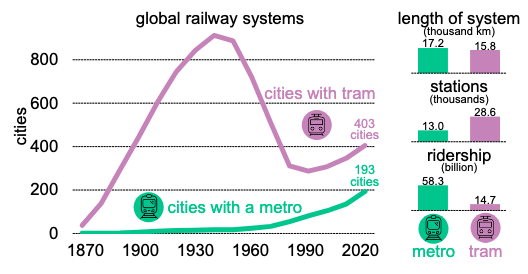
Building a tram network doesn’t get people out of their cars. It just stops them from walking. Researchers analysed mobility data from nearly 400 European cities to understand how infrastructure changes daily commutes. They tracked three core categories: active mobility, public transport, and private cars. The goal was to isolate the exact impact of building a metro versus laying down tram tracks. The data for underground metros perfectly matches urban planning theory. Cities with metro systems see a massive boost in public transport use and a direct drop in car journeys. Metros successfully convince drivers to leave their vehicles at home. Trams show a completely different pattern. In cities that rely on trams but lack a metro, the car share remains heavily dominant. The drivers keep driving. The tram network completely fails to disrupt car dependency. A Dirichlet regression model applied to the dataset reveals exactly who is actually riding the tram. The presence of a tram system correlates with a severe reduction in active mobility. The new public transport infrastructure merely convinces pedestrians and cyclists to buy a ticket and sit down. Europe has 60 percent of the global tram network and generates 75 percent of total ridership. Governments fund these street-level programmes under the assumption they will fix traffic congestion and lower emissions. The data proves that assumption is entirely wrong. If a city wants to pull cars off the road, it has to build a metro. Funding a tram line might look like a green victory on a political brochure. The reality is that it just destroys walking and cycling rates while leaving the traffic jams completely untouched. Link to article: nature.com/articles/s4428…
Yohan tweet media
English
34
52
363
60.4K
Owen Boswarva
Owen Boswarva@owenboswarva·
@DirDigEng Definitely. My second tweet was sarcasm; removing spending controls will drastically reduce GDS's influence, and vendors will be delighted
English
1
0
0
20
Andrew Stott ретвитнул
Owen Boswarva
Owen Boswarva@owenboswarva·
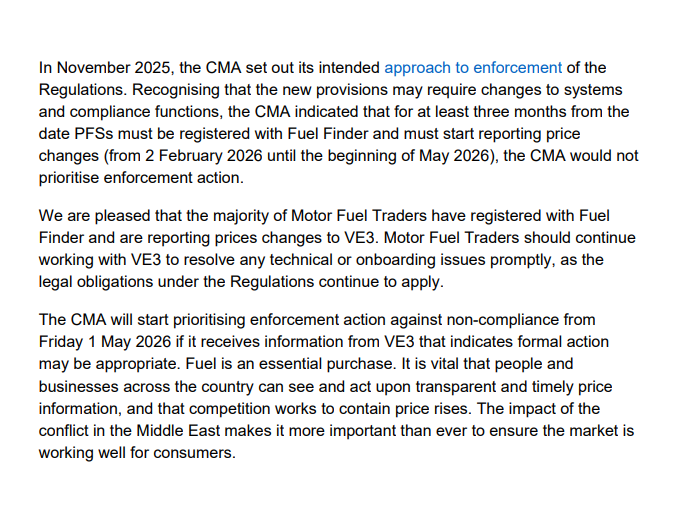
Open letter: from 1 May 2026 the CMA will start enforcing against road fuel traders that aren't reporting their price changes to Fuel Finder, provided VE3 (the scheme operator) dobs them in gov.uk/government/pub… (UK) #fuelprices #govtech #opendata
Owen Boswarva tweet media
English
0
1
1
190
Andrew Stott
Andrew Stott@DirDigEng·
@owenboswarva Seems bad for convergence/joining up and innovation and good for incumbent suppliers. Technical expertise is necessary but, as pre-Maude experience showed, not sufficient to achieve higher coherence and lower costs.
English
1
0
0
17
Owen Boswarva
Owen Boswarva@owenboswarva·
It's okay though. GDS's status as the UK's digital centre of government is based mainly on the regard that delivery departments have for its technical expertise
English
1
0
0
81
Andrew Stott ретвитнул
Tim Hirschel-Burns
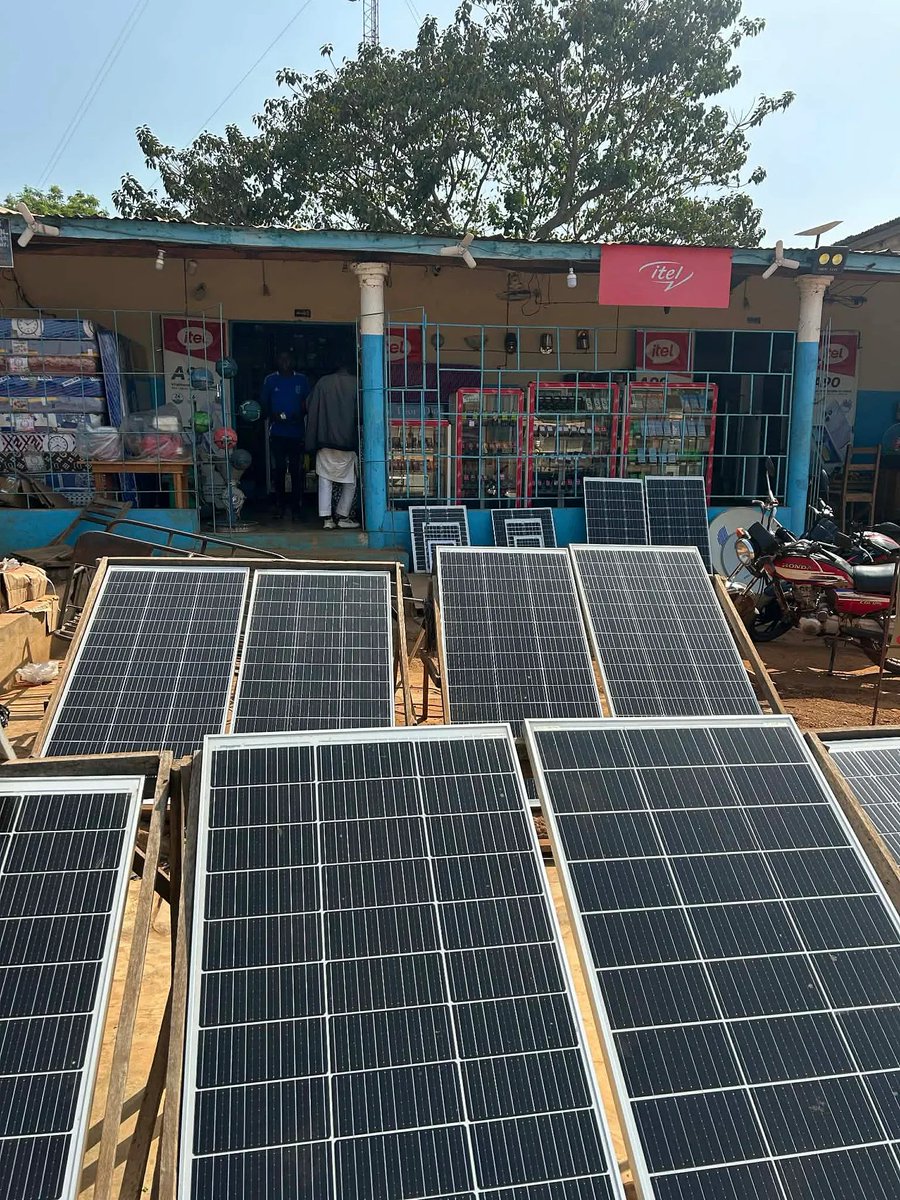
If you want to understand how the solar revolution is playing out across the Global South, a pretty good place to start is Agbon, Benin, where I lived for 2 yrs. It's an exceedingly unexceptional place: the reason solar is taking off there is because it's taking off everywhere🧵
Tim Hirschel-Burns tweet media
English
11
190
891
55.2K
Andrew Stott ретвитнул
FAO Statistics
FAO Statistics@FAOstatistics·
#DYK #FAOSTAT provides FREE access to food & agriculture data for over 245 countries & territories from 1961 to the most recent year available? 🤔Want to explore the data, but don't know how? Watch this tutorial & dive in!👇 youtube.com/watch?v=LdF6mH… 💻#home" target="_blank" rel="nofollow noopener">fao.org/faostat/en/#ho
YouTube video
YouTube
FAO Statistics tweet media
English
0
6
11
696
Andrew Stott ретвитнул
Yohan
Yohan@yohaniddawela·
City intersections generate 29 times more pollution than open roads. Half of those toxic emissions come from cars doing absolutely nothing but stopping and accelerating at traffic lights. In 2020, a Google software engineer was brainstorming massive climate mitigation ideas at his family dinner table. His wife told him they should just fix the annoyance of waiting at red lights for no reason. He assumed the problem was unsolvable. Then he looked at the mechanics of urban traffic engineering. Cities traditionally try to optimise traffic lights by installing incredibly expensive hardware sensors or paying people to manually count vehicles. The infrastructure is usually outdated. The data is almost always incomplete. The Google Research team realised they possessed a massive structural advantage. They had over a decade of Google Maps driving trends from billions of journeys across the globe. They built an AI model called Project Green Light. The system measures exactly how traffic flows through an intersection. It tracks the precise patterns of starting, stopping, and average wait times. Then it calculates exactly how to coordinate adjacent intersections to create continuous waves of green lights. City traffic engineers receive a simple dashboard with actionable recommendations. They review the AI's suggestions and implement the timing changes in about five minutes. They don't need to buy new software. They don't need to dig up roads to install new hardware integrations. They just adjust the dial on the infrastructure they already own. The scale of the impact is massive. The model is currently live in 12 cities, from Manchester to Bangalore to Seattle. It analyses thousands of intersections simultaneously. Early data shows a 30% reduction in vehicle stops and a 10% drop in total emissions at those junctions. That single AI model is already saving fuel and lowering emissions for 30 million car rides every single month. A casual complaint about a frustrating daily commute revealed a massive blind spot in urban design. Fixing the climate crisis involves deploying solar panels and scaling electric vehicles. It also involves using artificial intelligence to shave three seconds off a red light so millions of engines don't have to idle.
English
5
30
183
11.2K
Andrew Stott ретвитнул
Dave W Plummer
Dave W Plummer@davepl1968·
I hear you all, but part of the problem with "just use WinUI, WPF, MAUI, XAML, or whatever" is that there are so many multiple abstractions of Win32. If two men say they're Jesus, one of them must be wrong, so the fact that we've had a half-dozen "canonical" ways to write Windows apps means we have zero good ones.
English
9
2
35
5.5K