

Recloner
132 posts


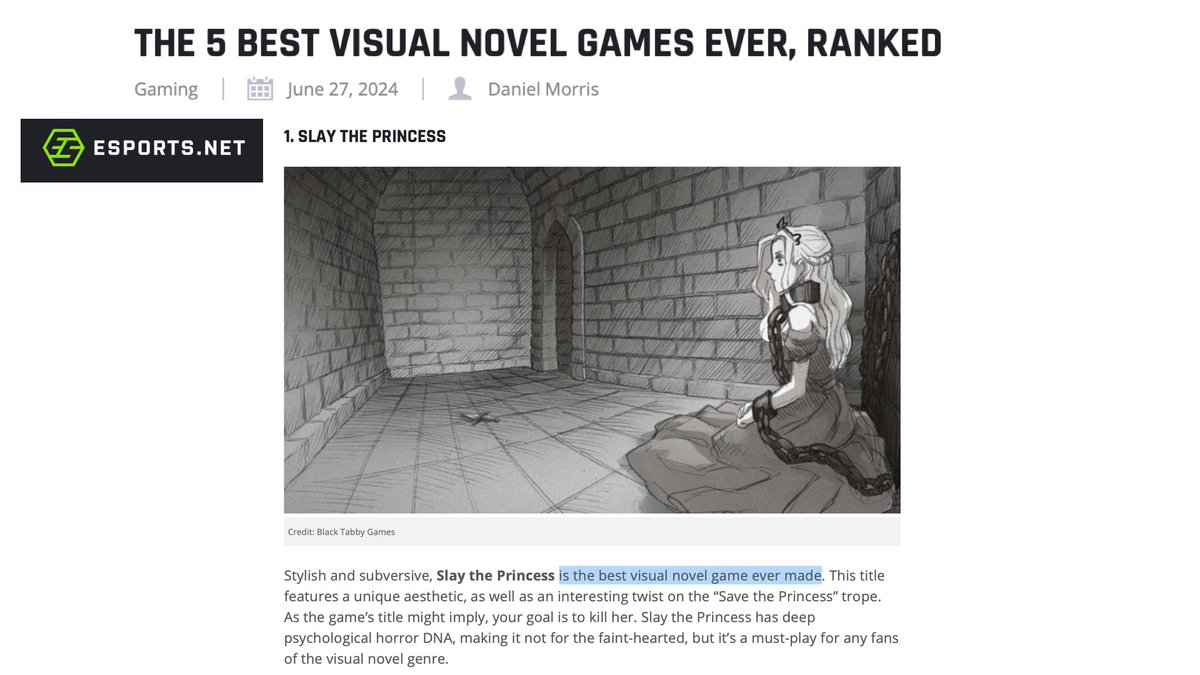
@blacktabbygames In fact, the best visual novel of all time would be a logical continuation of the ideas of the Slay the Princess demo. So yes this is not right
English
@pet3rpan_ Gamers don't need game engines or copyright laws, but without them there wouldn't be a modern gaming industry. Decentralization does not bring a new gaming experience, but it allows you to create it
English

This thread is gaining some steam so I'm going to provide a response, mostly agree with a lot of the core ideas shared but also feel like there's additional nuance that should be considered here.
tax cuts 🇺🇸@tax_cuts
Putting an entire game onto the blockchain is a solution in search of a problem, or so they say. I’ve been building an onchain game for the last year, and here are some of the real problems onchain games solve: 🧵
English

Putting an entire game onto the blockchain is a solution in search of a problem, or so they say.
I’ve been building an onchain game for the last year, and here are some of the real problems onchain games solve: 🧵

English
@VaderResearch The conclusion boils down to the fact that for good projects tokenomics works, but for bad ones it does not. However, how to distinguish a good project from a bad one before the start is still a mystery
English

After 3 yrs of tokenomics consulting, I realized one thing:
Games have no idea what they are doing with player token emissions
Why should they care?
Token incentives are the ultimate retention & growth tool for web3.
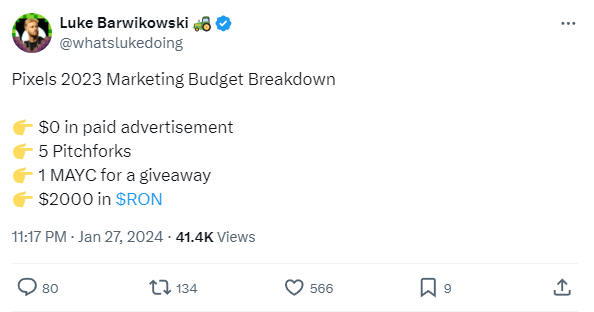
Web2 games spend 30-50% of their revenue on marketing while Web3 games spend pennies on traditional marketing - yet Pixels hit $30m ARR and $4bn FDV.
How?
What Luke doesn’t tell you is that Pixels distributed $60m worth $PIXEL & $BERRY token rewards to acquire & retain users.
Token incentives are the secret ingredient behind the most successful web3 companies; $AXS, $PIXEL, $UNI, $AVAX, $BLUR.
Get it right, you get a multi-billion dollar FDV. Get it wrong - your token collapses.
Token-Led Growth is all about using token incentives effectively to acquire users & retain capital.
The target addressable market for token incentives is 10% of the crypto market cap (excluding BTC, ETH, stables); $250bn worth tokens with an annual token inflation of 10% equates to token incentives worth $25bn per year.
$25bn worth token incentives are allocated ineffectively every year.
This is not only a waste of marketing dry powder, but also a waste of market cap as unsustainable token inflation leads to price collapse.
Can Devs Do Sth?
To tackle this problem, we built a proprietary AI engine that helps optimize user token emissions based on web3 LTV.
It is a plug-and-play solution that helps games dynamically determine the optimal macro token emissions and number of token incentives per user.
The engine is the output of a 3 yr R&D work analyzing, deconstructing and building web3 game token economies.
I helped advise top-tier web3 games on tokenomics and my co-founder built Uber’s dynamic pricing algorithm.
Reach out if you want to have a higher market cap!


English

A custodial centralized L3 chain on top of a custodial centralized L2 chain. Welcome to Crypto 2024 where "not your keys, not your coins" means exactly "no keys for you, we'll hold your coins".
English
@meta_alchemist It must be taken into account that marketing costs will be very high, and the result will be minimal, given the past reputation of web3 among players. Therefore, there will always be a temptation to fake success using familiar methods
English

𝐴𝑛 𝑜𝑏𝑠𝑒𝑟𝑣𝑎𝑡𝑖𝑜𝑛 𝑟𝑒𝑔𝑎𝑟𝑑𝑖𝑛𝑔 𝑡ℎ𝑒 𝘀𝘁𝗮𝘁𝗲 𝗼𝗳 𝘄𝗲𝗯𝟯𝗴𝗮𝗺𝗶𝗻𝗴, 𝑤ℎ𝑒𝑟𝑒 𝑤𝑒 𝑎𝑟𝑒 ℎ𝑒𝑎𝑑𝑖𝑛𝑔 𝑎𝑛𝑑 𝑤ℎ𝑎𝑡 𝑛𝑒𝑒𝑑𝑠 𝑡𝑜 𝑏𝑒 𝑑𝑜𝑛𝑒:
I've been very vocal about the need for more gamers for the past couple of weeks. But there is more:
Playable games that work on bringing user adoption from outside of web3 are still a dire need.
I know you heard many people start to say: "We now have more games than gamers", which is an exaggeration of course, but in it, there is a collective observation.
The speculative market started to realize that the same people hopping from one mint to another isn't too sustainable without new users coming in.
And with it, we need a new solution. We can't stop funding new games with potential because:
Each game with a good gameplay loop and 𝐚 𝐦𝐚𝐫𝐤𝐞𝐭𝐢𝐧𝐠 𝐬𝐭𝐫𝐚𝐭𝐞𝐠𝐲 𝐭𝐡𝐚𝐭 𝐝𝐨𝐞𝐬𝐧'𝐭 𝐨𝐧𝐥𝐲 𝐜𝐨𝐯𝐞𝐫 𝐰𝐞𝐛𝟑 will start to grow the pie, for everyone.
The real problem is most web3gaming studios market to the same web3 audience.
With little to no budget spent getting user acquisition from outside of web3, this turns into a vicious cycle. This is the 𝐧𝐨𝐭 𝐬𝐮𝐬𝐭𝐚𝐢𝐧𝐚𝐛𝐥𝐞 part.
If each game that gets funding works toward bringing new people into web3, the space will blossom into its new form.
A collective shift here will change the tides.
English
@STEVEW00DY In fact, this is all just a symptom of the impasse that Web3 games have found themselves in. Having failed to create a unique and interesting gaming experience, they simply compete in increasingly sophisticated falsification of the number of players
English

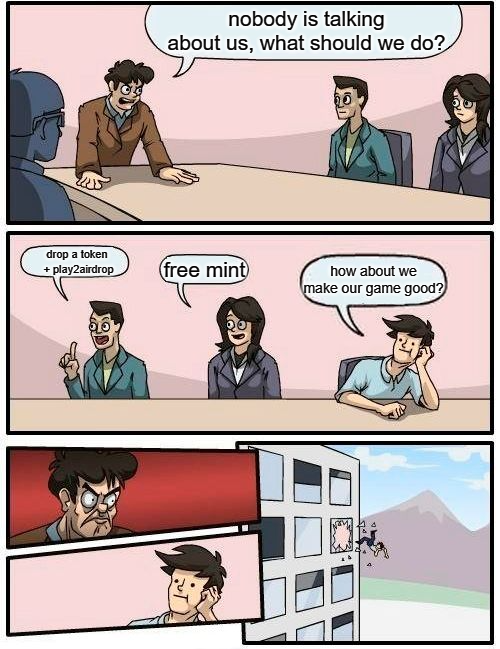
I have zero interest in the play 2 airdrop narrative. It’s just another trend for people to jump on and distract themselves. So many people are going to get scammed from this latest craze.
I want to see games that are better than this !
English
@VaderResearch So far, the general conceptual question remains unanswered - what can WEB3 games give the player other than suffering and unreasonably high costs?
English
What are the major problems of web3 game devs?
Fundraising
> Getting access to VC funding
> Getting access to speculator liquidity for tokens/NFTs
> Getting listed on exchanges
Growth
> Player acquisition
> GTM strategy
> Getting access to influencers/DAOs/KOLs
> Community & social media management
Product
> Designing & maintaining sustainable open economies
> Getting better insights from combining web2 & web3 data
> Dealing with poor UX (wallets, gas)
> Lack of available dev tooling & external support
> Recruiting key talent
What else am I missing?
English
@VaderResearch Investing in games and don’t play them, then it’s just gambling with a very low RTP
English
Investing in web3 gaming is volatile
Your investment can 10x in the next 3 months
Or lose 90% of its value
This is the nature of early-stage investing in liquid crypto assets
The game can be awesome and generate revenue but won’t avert the price crash if it was priced at $2bn FDV at market peak
This concept is not a ponzi/pyramid scheme - it is capital markets where participants vote with their capital
If the game can retain/monetize players long-term, the price will recover in the long-term
Alternatively, if the devs are masters in marketing/pumpamentals, the price will recover in the next bull
Others won’t recover

English
@0xKepler @sparkcsays @VaderResearch Most likely, the uncertainty of rewards will force users to distribute risks between many projects at once, in order to be guaranteed to get something in at least one
English


@huntersolaire_ I think you just need to accept the fact that you are playing in a casino with an RTP below 80%. If this suits you, then just enjoy the process, if not, look for something else
English
@VaderResearch KYC does not particularly protect against sybil attack, and plus it has nothing to do with the principles of blockchain. Yes, players can be motivated to spend money, but it will be a zero-sum game
English
The best part about Play2Airdrop is that the rewards are uber probabilistic - enabling flexibility for developers to balance the economy while achieving virality
Play2Earn --> play 10 hours, earn 100 SLP, withdraw it in 2 weeks (you take the risk of SLP falling in price in the next 2 weeks but the SLP earned is more or less certain)
Play2Airdrop --> play 10 hours, earn points that will be converted into tokens with no market price at an undisclosed date (no idea on how many tokens will be farmed, price per token, TGE date or vesting schedule!)
sparkc@sparkcsays
One of the best things about Play2Airdrop is that it requires an actual game to play So it's an option that's only available to teams with a product. It rewards builders and excludes vaporware.
English

@VaderResearch To put it briefly, we believe that locking significant liquidity into the game, with strict rules for its withdrawal, can ensure the long-term interest of both players and creators
English
The endgame of web3 gaming is FOCG
1. Permanence: Storing everything on blockchain allows for true permanence; the game lives on forever irrespective of the original developers
2. Permissionless Composable Modding: Anyone can fork an existing web3 game, change whatever parameters/logic/assets/state they want and ship their own versions. This is UGC on steroids but obviously requires the original developers to give up on IP rights, EULA terms, player data, UGC royalties, etc.
3. Trustlesness: Code is law. All game algorithms & data are stored on blockchain so you can verify. I never understood people who spent money on online casinos; their randomness algorithms are not verifiable. Imagine verifying the underlying algos of valuable loot boxes (CS GO) or skill-based high-stakes web3 games (Shrapnel) to ensure the devs are not rigging the outcome
4. True Ownership: Ownership is a meme if the developer stores the underlying JPEG on a centralized server, can change the underlying JPEG & metadata anytime, can blacklist your NFT from the game, runs the game on a centralized permissioned blockchain with few validators
Fully On-Chain Gaming is inevitably the endgame of web3 gaming but we are VERY EARLY (5-10 years) and there are many technical problems to be tackled to reach the endgame
h/t @damor_eth @DangerWillRobin @mdion_games @0x_Clon

English
@DroegeDaniel @VaderResearch To avoid confusion in terms, I would divide games into moderated and unmoderated. Unmoderation games have real ownership, but suffer from bots; games with moderation can fight bots, but without true ownership
English

@MagicBets4 @VaderResearch I agree with you, but even in regards to games that are only partially on chain. I don't think a game will every really take off until we break out of this web2 game design box.
English
@DroegeDaniel @VaderResearch Yes, that's why FOCG requires a special approach to game design. The problem here is that such game design will be very different from what the average player is used to seeing in games. Not to mention the marketing issues
English
@VaderResearch This sounds more like a haven for bots than anything humans would enjoy.
English
@cette_adresse @VaderResearch This assumption is a good justification for the developers and allows them to remain in the comfortable zone of “eternal development”. In fact, all the necessary technologies already exist
English

@VaderResearch Why in 5-10 years ? why not now ?
It's more a people problem than technical problems imo
English